

Learn Exactly How Your Monthly Utility Fees Work and Discover Actionable Strategies to Lower Your Total Energy Costs
Key Takeaways
- TNMP TDU charges update twice a year in March and September, directly impacting your monthly electricity bill.
- Delivery charges are non-negotiable fees that pay for maintaining the physical power grid, poles, and wires in your service area.
- While you cannot change your utility company, you can offset high delivery costs by locking in a competitive energy plan and improving home efficiency.
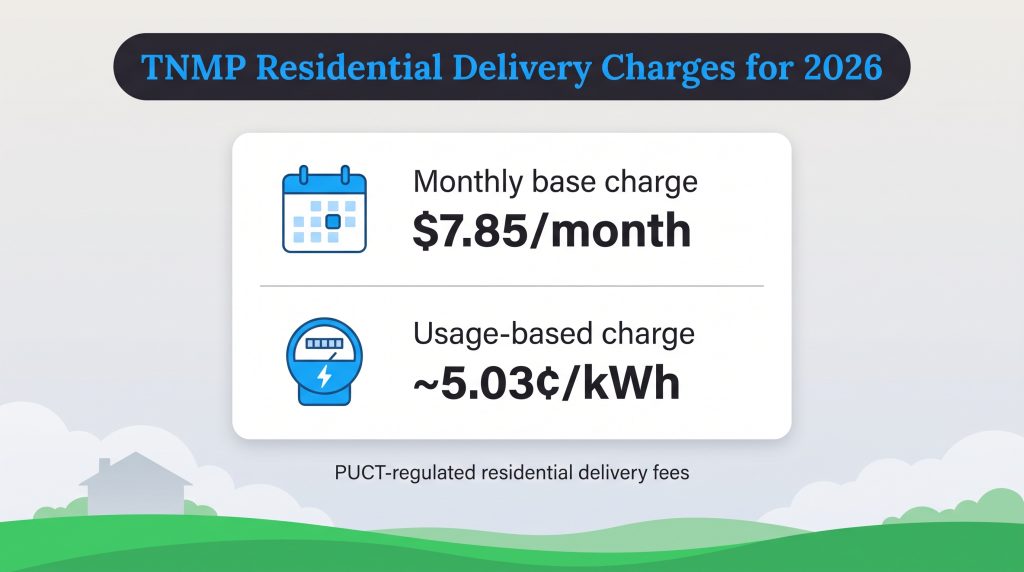
If you are staring at a surprisingly high utility bill, understanding your Texas-New Mexico Power Delivery Charges is the first step toward effectively managing your household budget. For 2026, the current TNMP rates include a fixed monthly base customer fee of $7.85 and a variable rate of ~5.03¢/kWh. While these regulated grid fees are unavoidable, learning what TDU delivery charges on your electricity bill actually cover empowers you to make smarter, eco-conscious energy decisions. We want to demystify these mandatory grid expenses and share straightforward strategies to help you confidently lower your total electricity costs.
What Are Texas-New Mexico Power (TNMP) Delivery Charges?
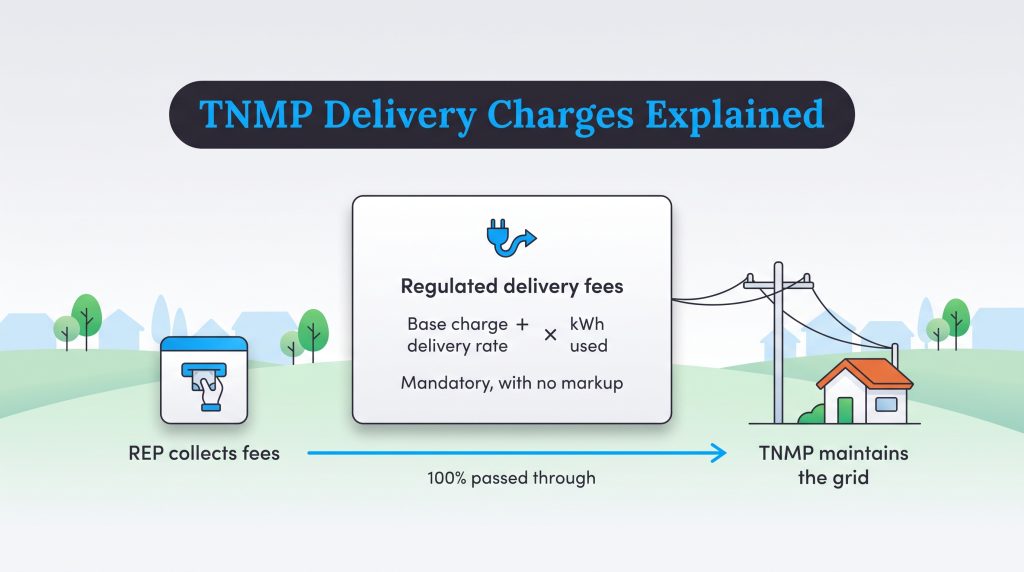
In the deregulated Texas energy market, generating power is separated from delivering it. This historical shift created regional monopolies for physical grid management, meaning your billing statement will always reflect two distinct entities performing two very different jobs.
TDU Vs. Retail Electric Provider (REP): What’s The Difference?
The Retail Electric Provider (REP) is the company you actively choose to buy your electricity supply from, such as Gexa Energy or TXU Energy. These competitive companies purchase wholesale energy and sell it to you through various plan structures.
On the other hand, the terms TDSP (Transmission and Distribution Service Provider) and TDU (Transmission and Distribution Utility) refer to the local utility company that owns the physical infrastructure carrying electricity to your house. Texas-New Mexico Power (TNMP) serves as the designated utility for specific regions across the state, and their fees are strictly classified as pass-through charges without markup.
🚩 Heads Up: Texas New Mexico Power pass-through charges are regulated, mandatory fees that your retail electricity provider collects on your behalf. They send 100% of these funds directly to your utility company to finance local grid repairs.
Current TNMP Delivery Charges For 2026
Utility rates are not arbitrarily decided behind closed doors. The Public Utility Commission of Texas (PUCT) heavily regulates these costs to protect consumers from sudden price gouging. Knowing the current TNMP per kWh delivery charge allows you to forecast your seasonal energy expenses accurately.
📌 Quick Fact: Texas-New Mexico Power TDU rates change annually on March 1 and September 1 based strictly on PUCT approvals.
Residential Rates
According to the official tariffs from Texas-New Mexico Power, the verified PUCT approved TNMP rates for 2026 residential accounts include a small fixed base fee and a variable consumption fee. Here is a clear breakdown of what you are paying for:
| Charge Type | Current 2026 Rate |
|---|---|
| Fixed Monthly Base Charge | $7.85 |
| Variable Per-kWh Charge | ~5.03¢ ($0.0503) |
Commercial Rates
If you operate a business within the TNMP network, commercial utility rates will apply differently based on your peak kW demand and specific meter configuration. Small commercial accounts generally see a slightly different base charge and variable structure than standard residential homes, reflecting the heavier load they place on neighborhood transformers.
What Do TNMP TDU Fees Actually Cover?
It is perfectly normal to feel frustrated when you spot unexpected extra charges on your utility bill. However, these localized fees are crucial for maintaining the backbone of your community’s power grid. Without this funding, basic electrical reliability would collapse. Specifically, your monthly contribution pays for:
- Maintaining poles: Replacing aging wooden or concrete utility poles before they fail.
- Wires: Upgrading the high-voltage transmission lines and local neighborhood distribution cables.
- Substations: Ensuring the heavy transformers that step down high-voltage power operate safely.
- Smart meters: Operating the digital meter on your home that tracks accurate usage data without requiring a physical reader.
- 24/7 storm repair crews: Funding the emergency personnel who work through dangerous weather events to restore your power after a blackout.
How To Calculate Your TNMP Delivery Fee
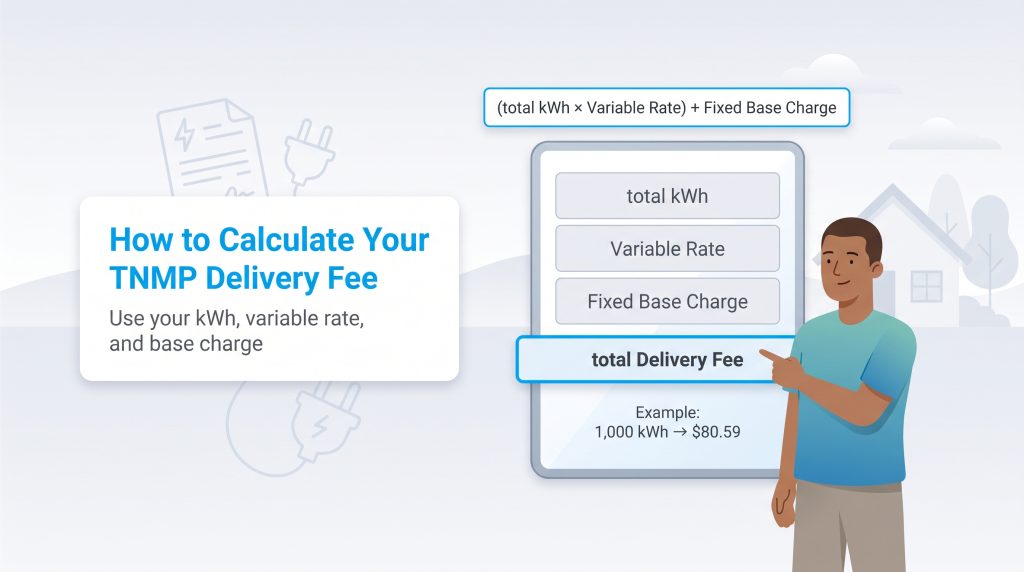
Predicting your utility expenses is a crucial part of budgeting, especially if you are managing total electricity costs across different utility zones. Because the base charge remains static, your variable consumption is the true driver of your monthly total. To run your own math, simply check your most recent electric bill or log into your retail provider’s digital portal to find your exact kilowatt-hour usage for the month.
You can calculate your localized delivery fee by using this exact formula:
Total Delivery Charge = Base Fee + (Per-kWh Rate x Monthly Usage)
For example, let’s calculate the cost for a home using exactly 1,000 kWh in a standard 30-day billing cycle:
Step 1: Multiply your usage by the variable rate: 1,000 kWh x $0.0503 = $50.30
Step 2: Add the fixed base charge: $50.30 + $7.85
Step 3: Your estimated Total Delivery Charge = $58.15
Keep in mind that this $58.15 represents the delivery portion only. Your retail provider’s separate energy supply charge and minor state taxes will be listed as distinct line items on your total bill.
Are Texas-New Mexico Power Delivery Charges Negotiable?
When searching for ways to reduce TNMP delivery charges, many homeowners wonder if they can simply call their utility and ask for a better rate. The direct answer is no — these rates are strictly non-negotiable. The Public Utility Commission of Texas acts as the sole regulatory authority overseeing what these utility monopolies can legally charge you.
Because you cannot choose your physical grid operator, the identical delivery rate applies to your home regardless of which chosen Retail Electric Provider (REP) supplies your energy. Switching from one REP to another will change your energy supply rate, but your local pass-through fees will remain exactly the same as long as you live in that service territory.
Comparing Delivery Charges And Reporting TNMP Outages
Depending on where you live, your utility provider is assigned by geographic location on the TNMP service area map. Each utility company maintains its own infrastructure and operates dedicated emergency response teams. For example, if you experience a blackout in a TNMP zone, you must report it to their automated outage line at 888-866-7456, rather than contacting your retail electric provider.
Because the PUCT regulates these localized grids based on the unique geographic challenges of each region, delivery costs vary significantly across the state. Here is a look at how TNMP’s rate structure currently compares to other major Texas TDUs:
| Texas TDU Provider | Fixed Base Charge | Variable Rate (per kWh) |
|---|---|---|
| Texas-New Mexico Power (TNMP) | $7.85 | ~5.03¢ |
| Oncor Electric Delivery | $4.23 | 5.419¢ |
| CenterPoint Energy | $4.39 | 5.452¢ |
| AEP Texas North | $4.79 | 4.520¢ |
| AEP Texas Central | $4.79 | 4.882¢ |
How To Lower Your Total Electricity Bill In The TNMP Service Area
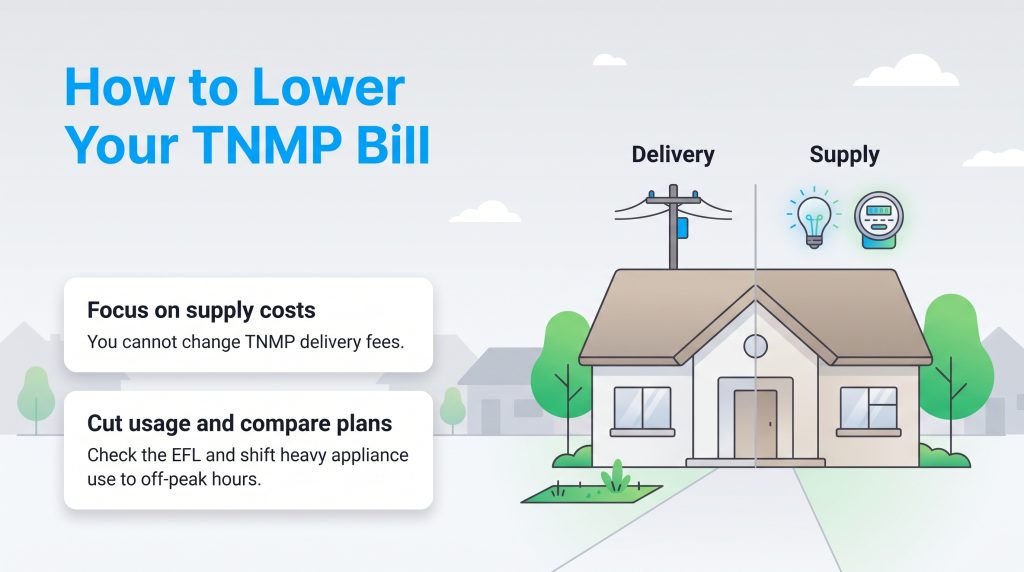
While you cannot negotiate standardized utility delivery fees or switch to a competing utility, you hold significant power over the energy supply side of your statement. When reviewing your comprehensive electric bill, adopting actionable, energy-efficient habits can dramatically reduce your household usage, organically lowering both your supply costs and your variable delivery passthrough.
- Compare fixed-rate energy plans using an Electricity Facts Label: When you select a competitive retail electric provider, always scrutinize the Electricity Facts Label (EFL). This legally required document itemizes the provider’s pure energy charge separately from the TNMP delivery fees, protecting you from hidden billing gimmicks.
- Reduce usage during peak hours: Wait until the evening to run heavy appliances like dishwashers and clothes dryers. This simple shift relieves strain on the grid and actively lowers your variable delivery footprint.
Do Solar Panels Eliminate TNMP Delivery Charges?
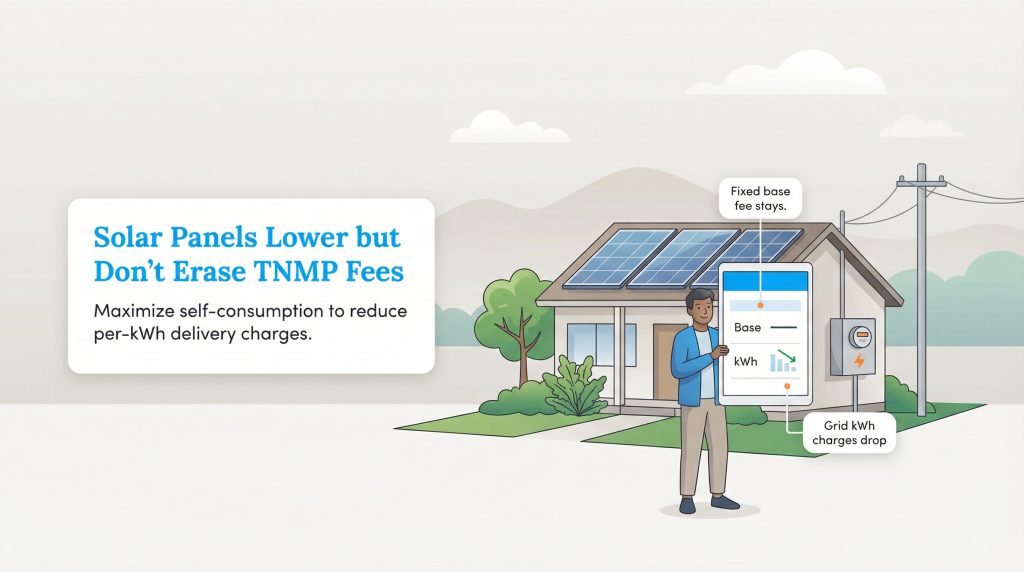
If you are looking for an eco-conscious alternative to traditional grid power, investing in a residential solar system is an excellent option. While solar panels do not eliminate the $7.85 fixed TNMP base charge, generating your own environmentally mindful energy during daylight hours radically drops the amount of power you pull from the local utility. This cuts your variable per-kWh delivery fees down to a fraction of their original cost, providing significant long-term savings.
Actionable Ways To Offset High Delivery Rates

You can aggressively protect your household budget by targeting your daily energy consumption. Embracing smart routines and high-efficiency appliance upgrades makes a tremendous financial impact over the course of a year.
- Upgrade your home’s efficiency: Swap out power-hungry refrigerators for ENERGY STAR certified appliances, which significantly reduce daily energy consumption. Additionally, automating your heating and cooling schedules with a smart thermostat prevents unnecessary HVAC system usage when you are away.
- Adopt mindful household routines: Consistently applying proven strategies to lower your electric bill — such as sealing drafty windows and installing LED lighting — is a dependable, energy-saving option to offset those rigid utility fees.
Preparing For Seasonal TNMP Rate Changes
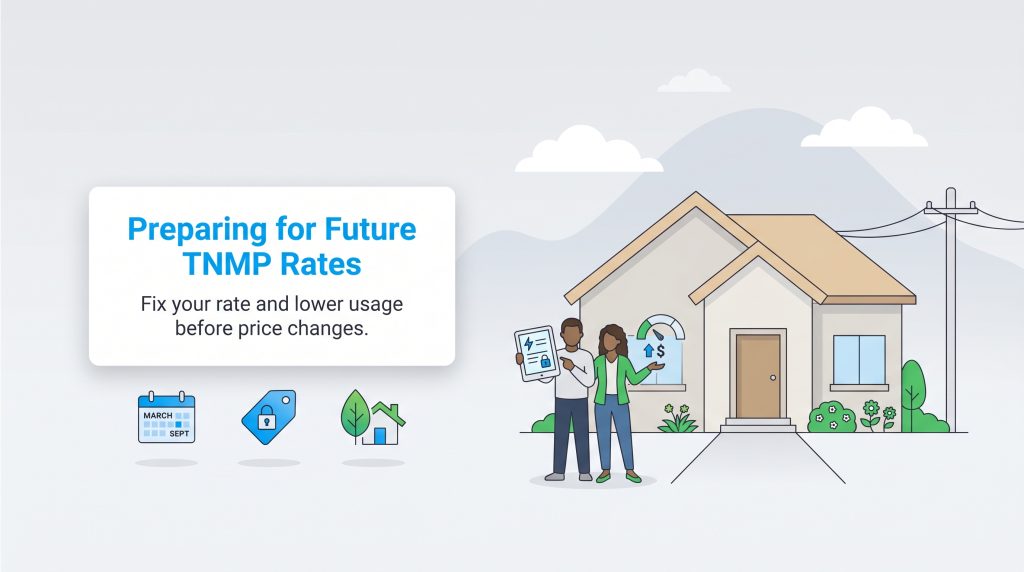
Because the state evaluates and approves utility rate adjustments biannually every March and September, preparing your budget ahead of these seasonal shifts is crucial. Texas-New Mexico Power delivery charges reliably fund the essential maintenance that keeps the lights on, so these minor changes are simply a reflection of ongoing grid improvement costs.
The most effective way to shield your household from the impact of looming TDU rate increases is to actively control what you can. By locking in a highly competitive fixed-rate energy supply plan, scrutinizing the fine print on your EFL, and investing in eco-conscious household upgrades, you can successfully manage the impact of these pass-through fees.
Taking Control Of Your Energy Costs
Navigating the complexities of the deregulated electricity market requires a bit of research, but understanding how the system operates empowers you to make smarter financial decisions. Taking charge of your baseline consumption ensures you maintain a lower total utility footprint and enjoy peace of mind year-round, no matter what happens with local delivery rates.
Frequently Asked Questions About Texas-New Mexico Power Delivery Charges
What is the current TNMP base charge?
Why did my Texas-New Mexico Power delivery charge increase this month?
Can I avoid paying TNMP TDU fees by switching my electric provider?
How often does the PUCT update Texas-New Mexico Power rates?
Do solar panels eliminate my TNMP TDU charges?
Is Texas-New Mexico Power an energy provider?
How do I find TNMP charges on my Electricity Facts Label?
About the Author

LaLeesha has a Masters degree in English and enjoys writing whenever she has the chance. She is passionate about gardening, reducing her carbon footprint, and protecting the environment. She also recently served as President of the Board for City Sprouts (a community garden).

David has been an integral part of some of the biggest utility sites on the internet, including InMyArea.com, HighSpeedInternet.com, BroadbandNow.com, and U.S. News. He brings over 15 years of experience writing about, compiling and analyzing utility data.