

Understanding the Difference Between Delivery and Supply Charges Is the First Step Toward Lowering Your Electric Bill
Key Takeaways
- The PECO delivery charge is a fixed cost covering the maintenance of poles, wires, and grid reliability, meaning you cannot shop around for a lower rate on this portion of your bill.
- Your supply charge is variable and determined by the electricity generator you choose, offering the biggest opportunity for savings through the Pennsylvania Customer Choice program.
- You can lower your total monthly costs by comparing competitive supplier rates against PECO’s Price to Compare and implementing energy-efficient home improvements.
Opening your electric bill during a freezing Pennsylvania winter can be a real shock, especially when you encounter confusing line items like the PECO delivery charge. Thanks to Pennsylvania electricity deregulation, you have the power to make strategic choices about your energy service and understand exactly where real savings hide. We are here to help you break down how your utility bill functions, decode the mandatory infrastructure fees, and reveal actionable ways to dramatically lower your monthly costs.
What Is the PECO Delivery Charge?
The PECO delivery charge covers the physical transportation of electricity from power plants directly to your home, typically accounting for roughly 30% to 40% of your total monthly electric bill. These base rates are strictly regulated by the Pennsylvania Public Utility Commission (PUC), meaning PECO cannot arbitrarily raise prices without proving the extra funds are genuinely necessary for essential grid maintenance.
To better understand your costs, think of the classic pizza delivery analogy. You pay the restaurant for the actual food, but you also pay a dedicated fee to the driver who brings it safely to your door. In this scenario, electricity is the pizza, and PECO acts as your reliable local delivery service. Their mandatory charge directly funds the infrastructure needed to keep your lights on, from maintaining neighborhood utility poles to dispatching emergency crews after severe summer storms.
The Two Big Buckets: Delivery Vs Supply
Understanding your utility bill starts by separating it into two primary buckets. Here is a brief look at how PECO structures your service:
- Delivery (Unavoidable): PECO manages the local infrastructure, charging non-negotiable fees for maintaining the grid, utility poles, and wires that bring power directly to your door.
- Supply/Generation (Shoppable): This covers the actual electricity you consume in your home, allowing you to choose a competitive supplier for better rates.
Breaking Down Your PECO Delivery Charge
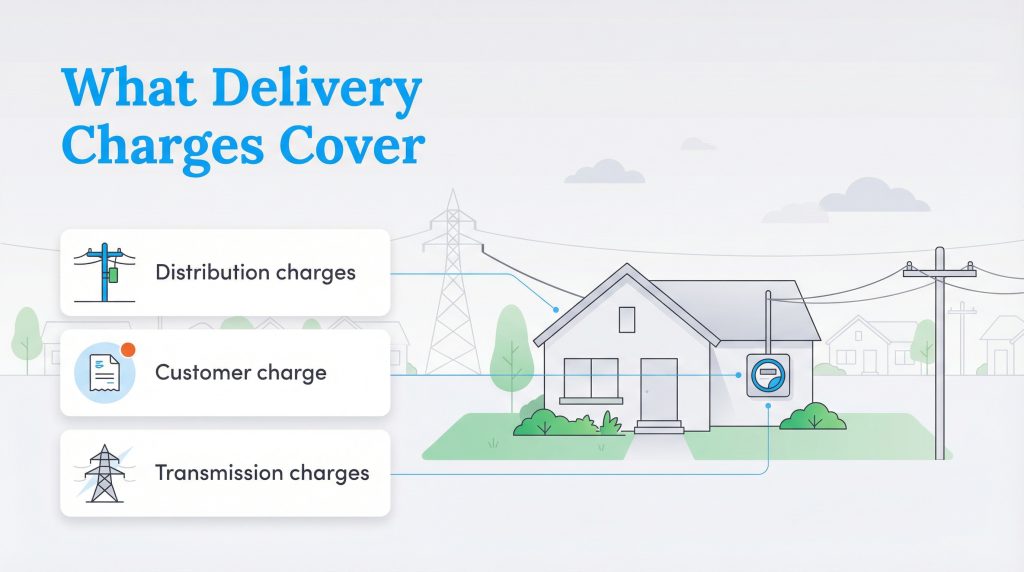
The delivery portion of your bill is not a simple lump sum. Instead, it consists of granular riders and sub-charges that fund different operational layers of the electrical grid. Knowing what these PECO fixed vs variable delivery charges mean helps you verify that your billing is accurate every single month.
| Charge Type | Nature of Charge |
|---|---|
| PECO Customer Charge | Fixed Monthly Fee |
| PECO Distribution Charge | Variable Cent-per-kWh Rate |
The PECO Customer Charge (Fixed)
The PECO customer charge is a fixed, flat-rate fee that you pay every month, regardless of how much electricity you consume. Currently, the estimated range for this charge sits between $7.00 and $12.00 per month depending on your specific residential classification. Even if you shut off your main breaker and used exactly 0 kWh while away on vacation, you would still see this base fee applied to your account to cover essential administrative costs like meter reading, customer support, and billing operations.
The PECO Distribution Charge (Variable)
The PECO distribution charge covers the essential poles and wires in the local grid that funnel electricity from high-voltage substations directly into your house. It pays for the green transformer boxes in your neighborhood and the power lines on your street. Unlike the fixed customer fee, this is a variable rate calculated directly from your exact energy usage — usually hovering around 4 to 6 cents per kWh. Because this specific charge scales directly with your consumption, lowering your total energy usage is the absolute only way to lower this specific line item.
System Improvement Charge (DSIC)
Another item you will inevitably notice is the PECO system improvement charge, officially known as the Distribution System Improvement Charge (DSIC). This specific rider funds proactive grid modernization projects rather than standard day-to-day maintenance. It pays for long-term critical upgrades, such as replacing aging utility poles, deploying advanced smart meters, and installing weather-resistant equipment to reduce the frequency of future neighborhood outages.
Universal Service Charge and State Taxes
PECO also includes community-focused fees and state-mandated taxes designed to support the broader Pennsylvania public. These line items include:
- Universal Service Fund Charge: A small, usage-based fee that directly funds low-income assistance programs, such as the Customer Assistance Program (CAP) and the Low Income Home Energy Assistance Program (LIHEAP). This ensures vulnerable residents retain critical heating and power during extreme weather.
- State Tax Adjustment Surcharge (STAS): A fluctuating fractional percentage reflecting recent changes in Pennsylvania state tax codes applied to utility companies.
PECO Generation Charge Vs Delivery Charge: What Is the Difference?
When analyzing an expensive bill, you must understand the distinction between the PECO generation charge vs delivery charge. While you are stuck paying the regulated delivery infrastructure rates, you have complete freedom to fire your supplier if their generation rates climb too high. PECO strictly controls the delivery pricing, which is approved by the state to fund localized grid maintenance. However, consumers can and should actively shop the generation rate.
By comparing the PECO Price to Compare against offers from competitive alternative suppliers, you can take full advantage of Pennsylvania’s deregulated market. The generation portion reflects the raw cost of the electricity you consume, meaning securing a lower per-kWh rate directly shrinks this half of your overall monthly expense.
Why Is My PECO Delivery Charge So High?
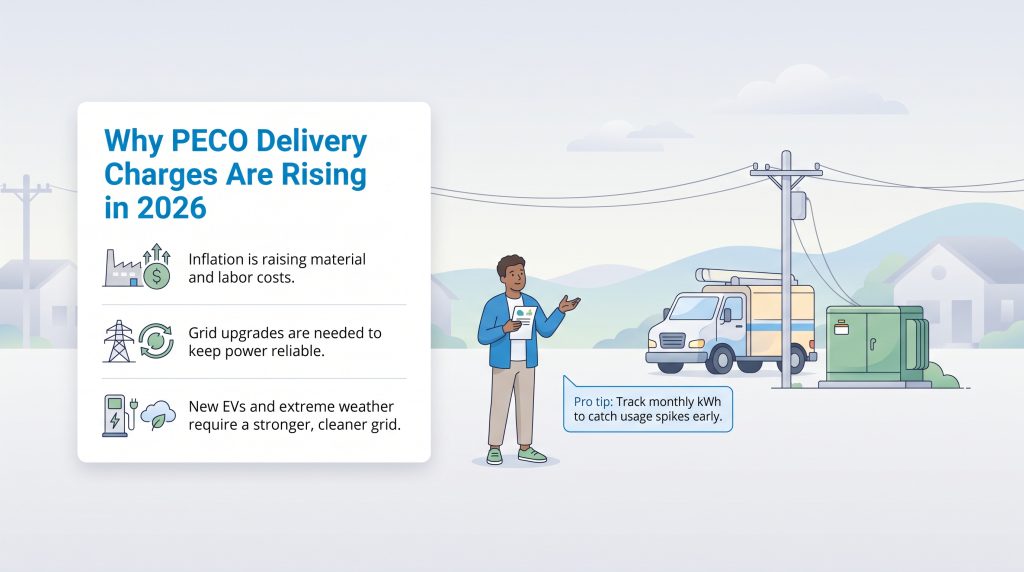
If you find yourself frequently asking, “why is my PECO delivery charge so high?” you are certainly not alone. The recent 2025 and 2026 PA PUC PECO rate increase cases have impacted utility bills across the entire state. The Pennsylvania Public Utility Commission evaluates these rate hikes meticulously but ultimately approves adjustments necessary to keep the regional grid functional amidst rising economic pressures. Heavy inflation has driven up the core costs of raw materials, labor, and the heavy machinery required to maintain PECO’s expansive infrastructure network, which currently serves over 1.6 million residential and commercial customers.
Furthermore, structural grid modernization is no longer an optional investment. To accommodate a growing reliance on electric vehicles, mitigate the devastating impacts of extreme weather events, and transition toward sustainable energy distribution, PECO is executing sweeping infrastructure upgrades. While these long-term enhancements create a much more resilient local power grid, the immediate financial reality is a noticeable uptick in the monthly distribution fees passed down to everyday consumers.
Actionable Ways to Lower Your Average PECO Bill
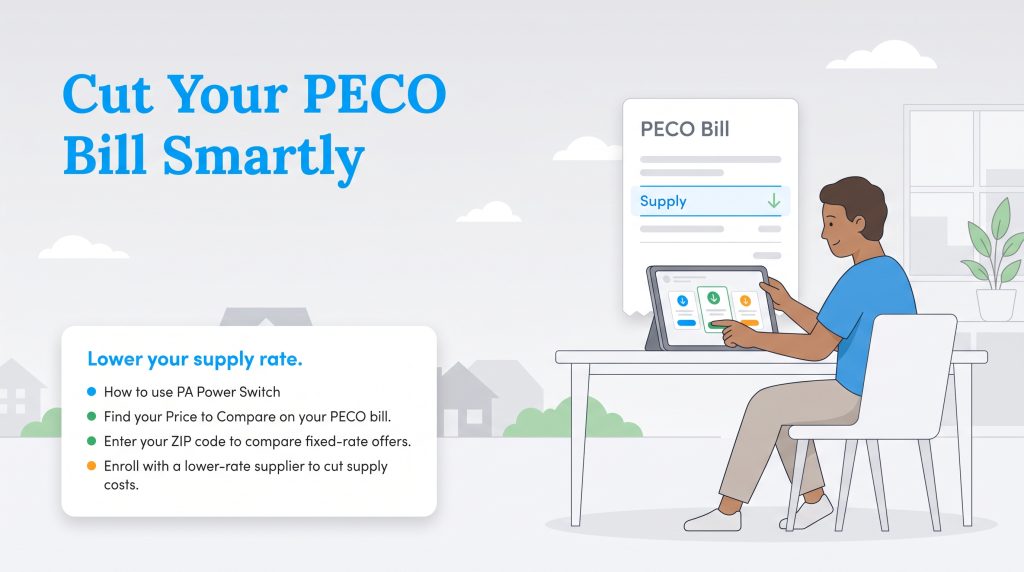
While you cannot shop for a competing delivery company to transport your power, you are not entirely powerless against rising utility costs. If you want to lower your average PECO bill, taking deliberate steps to reduce your overall energy burden is essential. Here is a step-by-step guide to taking charge of your energy expenses.
Shop Supply Rates Via PA Power Switch
The easiest way to offset expensive delivery fees is by securing cheaper PECO supply charges. Follow these steps using the official PA Power Switch website to lock in a better rate:
- Find your baseline: Check your latest statement to find your current PECO Price to Compare.
- Visit PA Power Switch: Navigate to the official state website and enter your zip code.
- Compare offers: Look for fixed-rate plans from alternative suppliers that comfortably beat the utility’s default pricing.
- Enroll directly: Sign up through the supplier, and PECO will seamlessly update your billing without any service interruptions.
Reducing Energy Consumption During Peak Hours
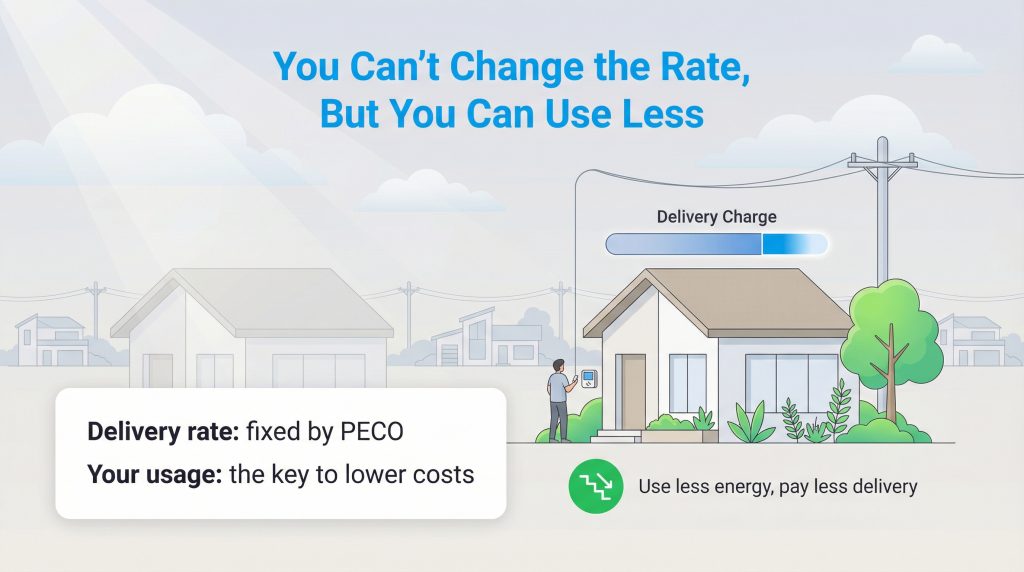
Because your distribution charge is a variable fee directly tied to your total consumption, using less electricity inherently lowers your delivery costs. Consider these practical reduction tactics to keep your usage minimal:
- Shift heavy usage: Run your dishwasher, clothes dryer, or EV charger during late evening or early morning off-peak hours when grid demand is at its absolute lowest.
- Upgrade appliances: Replacing old, energy-hungry refrigerators or aging HVAC units with certified ENERGY STAR models will permanently trim both the supply and delivery sides of your bill.
- Unplug energy vampires: Disconnect electronics that drain power even when turned off to combat hidden, passive usage.
Consider Solar Solutions
Investing in solar panels is a highly effective way to offset your overall grid reliance. By generating your own electricity, you drastically reduce the amount of power you need to pull from the local infrastructure. This environmentally mindful choice permanently lowers your variable distribution charges and provides long-term protection against future utility rate hikes.
Benchmarking Your Monthly Delivery Costs
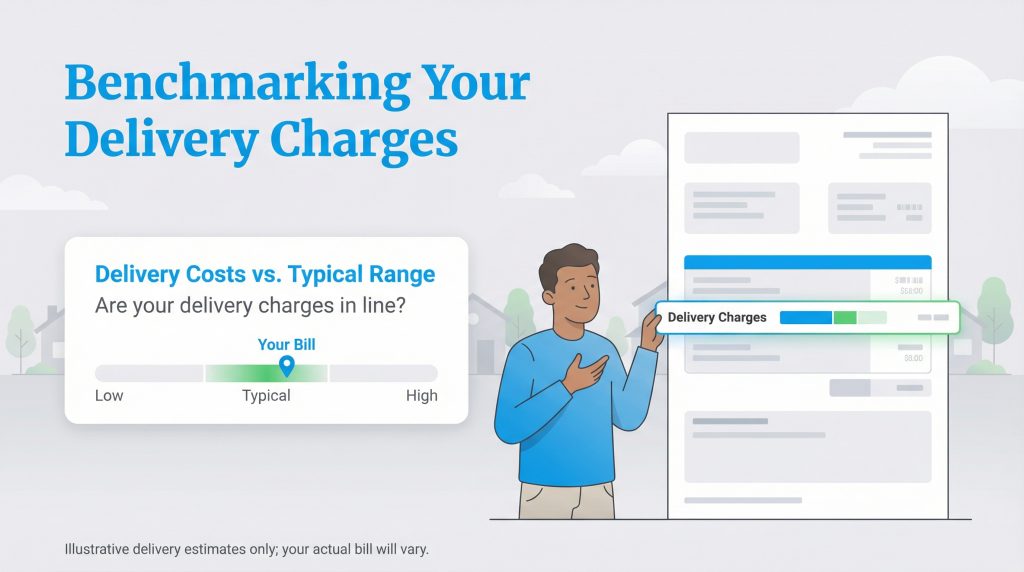
To ensure your household is on the right track, it helps to benchmark your usage against regional averages. For instance, a small apartment consuming 500 kWh might see around $57 in delivery costs, while an average family home utilizing 1,000 kWh can expect delivery fees near $102. If your costs far exceed these estimates, it is time to perform a home energy audit and hunt down vampire power drains to reclaim your budget.
Preparing for Your Next Billing Cycle
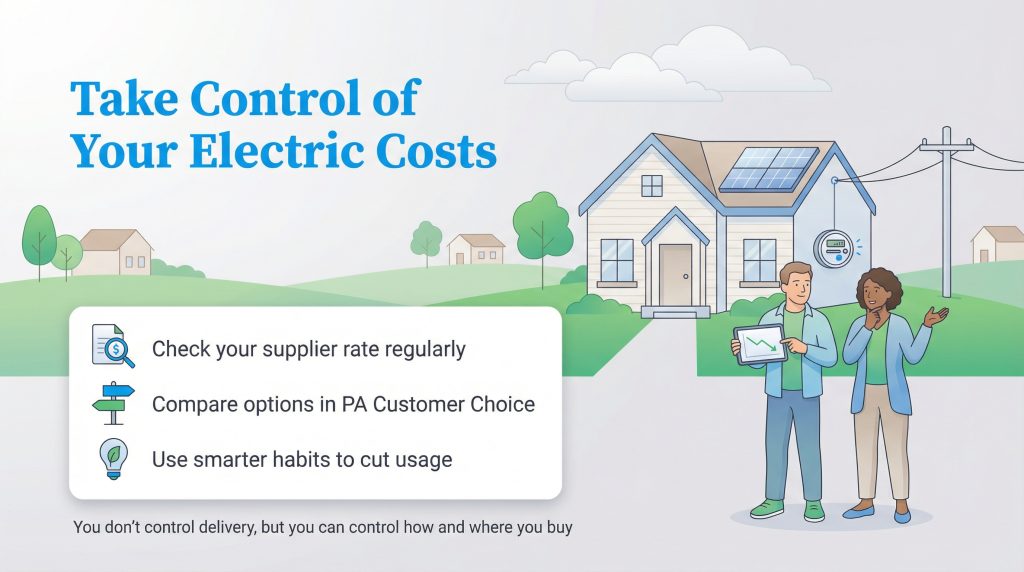
While PECO delivery charges are a mandatory necessity for sustaining a robust regional grid, you possess significant leverage over your monthly expenses. By actively participating in Pennsylvania’s energy choice program, utilizing assistance tiers if you are income-qualified, and leveraging energy-saving home upgrades, you can keep your utility budget perfectly manageable. If you need more comprehensive strategies, review our complete guides on how to save on your electric bill and how to find cheap electricity plans.
Locate your latest bill, identify your exact delivery charge, and verify your current supply rate against competitors. Taking these simple steps today ensures you are ready to secure the best possible rates before your next billing cycle begins.
Frequently Asked Questions About PECO Delivery Charges
Why is my PECO delivery charge higher than my supply charge?
This frequently happens during milder months when you consume very little electricity. Because the PECO customer charge is a fixed mandatory fee (usually between $7.00 and $12.00), it represents a larger percentage of your total bill when your overall usage drops. Furthermore, if market supply rates plummet while PECO’s regulated delivery rates increase to fund grid modernization, your delivery costs can easily eclipse your generation costs.
Can I choose a different company for my PECO delivery charge?
No. Even if you seamlessly switch to a cheaper competitive supplier for the generation portion of your electricity, PECO maintains a natural monopoly over the physical infrastructure in your service territory. You will continually pay PECO for the delivery service, and they will exclusively handle any local power outages or downed wires.
How often does the PA PUC allow PECO to raise delivery rates?
Delivery rates adjust periodically based on extensive formal filings thoroughly vetted and approved by the Pennsylvania Public Utility Commission (PA PUC). These deliberate adjustments account for inflation, extensive storm damage repairs, essential grid modernization, and shifting state tax policies.
Does PECO profit from the delivery charge?
Yes. PECO operates as a regulated investor-owned utility, and the Public Utility Commission permits them to earn a strictly controlled rate of return on the physical infrastructure investments they make. However, they are legally prohibited from making a profit on the actual supply charge if you remain on their default utility service; that generation portion is an exact pass-through cost.
What is the current PECO Price to Compare?
The PECO Price to Compare (PTC) is the baseline supply rate the utility charges, and it systematically changes every quarter — typically in March, June, September, and December. You can easily locate this exact figure in the “Message Center” on your most recent statement or verify it on the official PECO website to benchmark against competitive market offers.
I just moved into a new home: why is my first PECO bill higher than expected?
Initial bills often surprise new residents due to mandatory one-time connection fees or required security deposits. Moreover, if your first billing cycle covered an irregular timeframe exceeding 30 days, your total will naturally appear elevated. Always review the specific dates of service on your statement to confirm you are only paying for the exact days you occupied the property.
Does using the PA Power Switch affect my PECO delivery charge?
No, choosing a new competitive supplier through the PA Power Switch website does not affect your PECO delivery charge. Your delivery rates are strictly regulated by the state and remain exactly the same regardless of who supplies your actual electricity. Shopping around only changes the generation supply portion of your monthly bill.
About the Author

David has been an integral part of some of the biggest utility sites on the internet, including InMyArea.com, HighSpeedInternet.com, BroadbandNow.com, and U.S. News. He brings over 15 years of experience writing about, compiling and analyzing utility data.

Claudio is a sustainability-focused writer with a background in Anthropology and Psychology from NC State University. He has spent over 15 years working in writing, interpretation, and translation, driven by a deep interest in how human culture shapes the environment. Today, he shares his curiosity with readers by writing about sustainable living solutions and the connection between everyday choices and environmental impact.