
Understanding the unavoidable fees that keep the lights on and how to manage your total bill.
Key Takeaways
- Delivery charges cover infrastructure like poles, wires, and storm repairs, while supply charges cover the actual electricity you use.
- You cannot switch delivery providers or negotiate these rates, as Eversource is the regulated utility for your specific region in MA or CT.
- Reducing energy consumption is the only way to lower the variable portion of your delivery charge, though switching suppliers can lower your total bill.
Opening your electric bill can sometimes feel like a punch to the gut, especially when the delivery fees rival, or even exceed, the cost of the electricity itself. It’s a common frustration for households across Massachusetts and Connecticut, leaving many to wonder what they’re actually paying for. While you cannot shop around for a different delivery provider, understanding where these costs come from is the first step to regaining control. We’re here to decode the confusion so you can make smarter decisions for your household budget.
Eversource Supply vs. Delivery Charge: The Core Difference
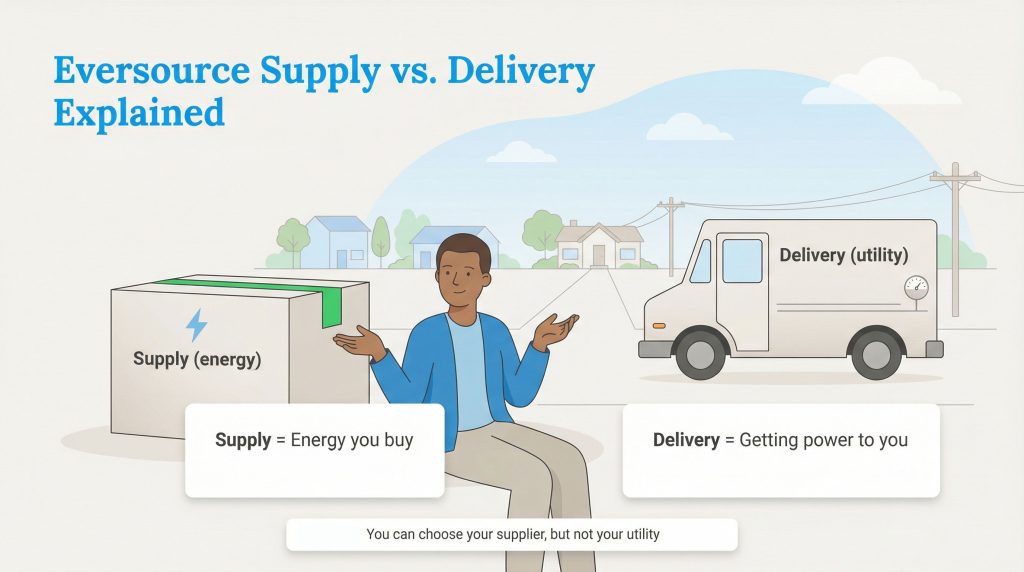
To understand your bill, it helps to think of electricity like buying a package online. The “Supply” charge is the cost of the item itself, the actual energy you consume. The “Delivery” charge is the shipping and handling fee required to get that package to your door. Regardless of where you buy the product (the Supplier), you still have to pay the shipping company (the Utility) to maintain the trucks and roads that ensure it arrives safely. If you’re new to this setup, our guide to electric utilities for your new home explains the basics in more detail.
In deregulated states like Massachusetts and Connecticut, you have the power to choose your Supplier, but your Utility is determined by where you live. For most residents in this region, Eversource owns the infrastructure, meaning their delivery fees are mandatory expenses for remaining connected to the grid.
| Supply Charge | Delivery Charge |
|---|---|
| Pays For: The generation of electricity (burning gas, spinning wind turbines, etc.). | Pays For: The poles, wires, meters, and maintenance to bring power to your home. |
| Who You Pay: A Competitive Supplier OR Eversource (Standard Service). | Who You Pay: Eversource (The Utility). |
| Can You Switch? Yes. You can shop for lower rates. | Can You Switch? No. This is a regulated monopoly based on your location. |
Understanding the difference between the eversource supply vs delivery charge is critical because while you can’t fire your delivery company, you can often lower your bill by managing your supplier vs utility charges ma/ct effectively.
Eversource Bill Breakdown: What You’re Actually Paying For
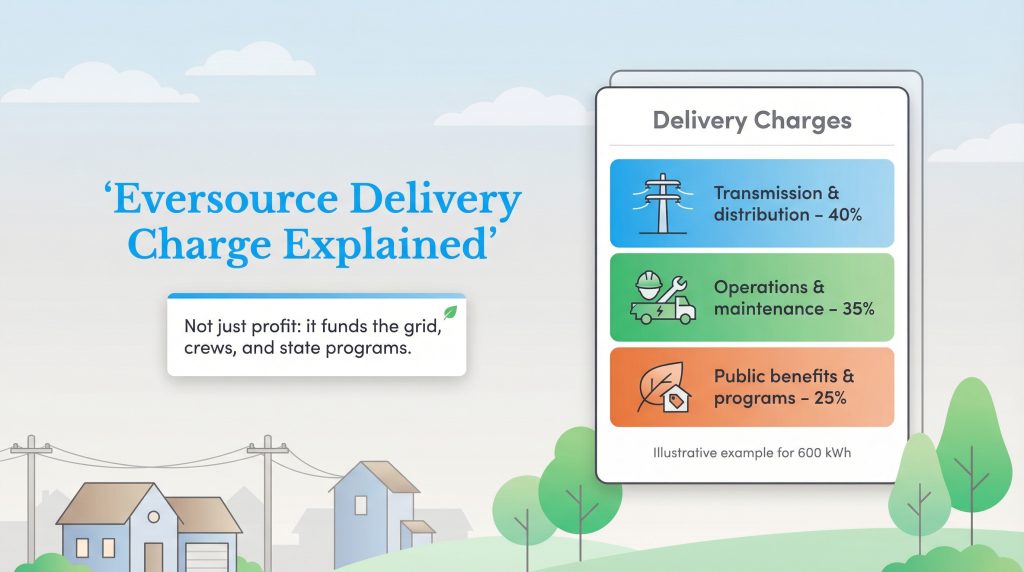
You might assume the delivery charge is pure profit for the utility company. In fact, this part of your bill is heavily regulated and covers the massive overhead required to maintain a physical electric grid. When you look closely at the line items, you’ll see exactly where that money goes.
- Transmission & Distribution: This is the backbone of the grid. It covers the installation and upkeep of high-voltage transmission lines, local substations, and the poles and wires on your street.
- Operations & Maintenance: In New England, this is a significant cost driver. It funds the crews who repair lines after winter nor’easters, trim trees to prevent outages, and maintain the fleet of trucks required for service.
- Public Policy/Benefits: This is often the most confusing part of the bill. These charges fund state-mandated programs, such as energy efficiency rebates, solar incentives, and low-income assistance. Essentially, the state government uses the utility bill as a mechanism to collect funds for public initiatives.
Here is a simplified example of how these charges might look on a bill for a household using 600 kWh in a month. Note: These are illustrative figures to show the breakdown, not current rate card prices.
| Charge Type | What It Covers | Est. Cost (Example) |
|---|---|---|
| Customer Charge | Fixed monthly fee for billing and metering. | $10.00 |
| Distribution Charge | Cost to deliver power to your home (Variable). | $55.00 |
| Transmission Charge | Cost to move high-voltage power across the region. | $25.00 |
| Public Benefits | State-mandated energy efficiency & assistance programs. | $15.00 |
| Total Delivery | Infrastructure & Services Only | $105.00 |
Why Is Eversource Delivery Charge So High?
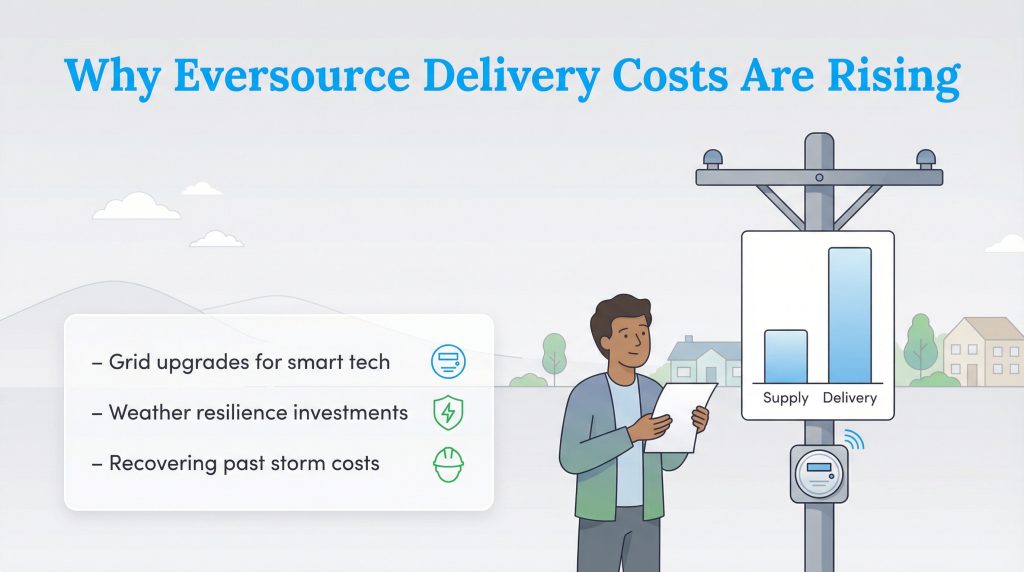
If you’re asking, “why is eversource delivery charge so high,” you’re not alone. Several compounding factors are driving these costs up for 2025 and 2026, making delivery more expensive than in previous years.
- Grid Modernization: The electric grid is undergoing a massive overhaul to handle “smart” technology. Upgrading meters and substations to accommodate two-way energy flow, essential for home solar panels and electric vehicles, requires billions in investment.
- Climate Resilience: New England weather is becoming more volatile. The frequency of severe storms has forced utilities to spend more on “hardening” the grid, which includes installing stronger poles and tree trimming to prevent widespread damage.
- Rate Increases & Recovery: Utilities are allowed to recover the costs of past storms from ratepayers. In both Massachusetts and Connecticut, regulatory bodies have approved rate hikes to help Eversource recoup the millions spent on restoring power after recent major weather events.
For a deeper dive into recent regulatory decisions, you can review filings at the Massachusetts Department of Public Utilities or the Connecticut Public Utilities Regulatory Authority.
Eversource Delivery Rates in 2025 and 2026
As we move through 2025 and into 2026, Eversource delivery rates 2025 2026 continue to adjust based on regulatory approvals. Eversource rates are reviewed regularly and often change on a seasonal schedule after state regulators approve new levels.
In Connecticut, significant attention has been on the Public Benefits portion of the bill, which has included costs tied to long-term contracts with power plants and protections for customers who fell behind on bills during past payment moratoriums. Meanwhile, in Massachusetts, grid modernization projects continue to put upward pressure on delivery fees. While the specific rate per kilowatt-hour (kWh) fluctuates, the trend points toward higher costs to support a cleaner, more resilient grid.
How to Lower Your Electric Bill When Delivery Charges Are High
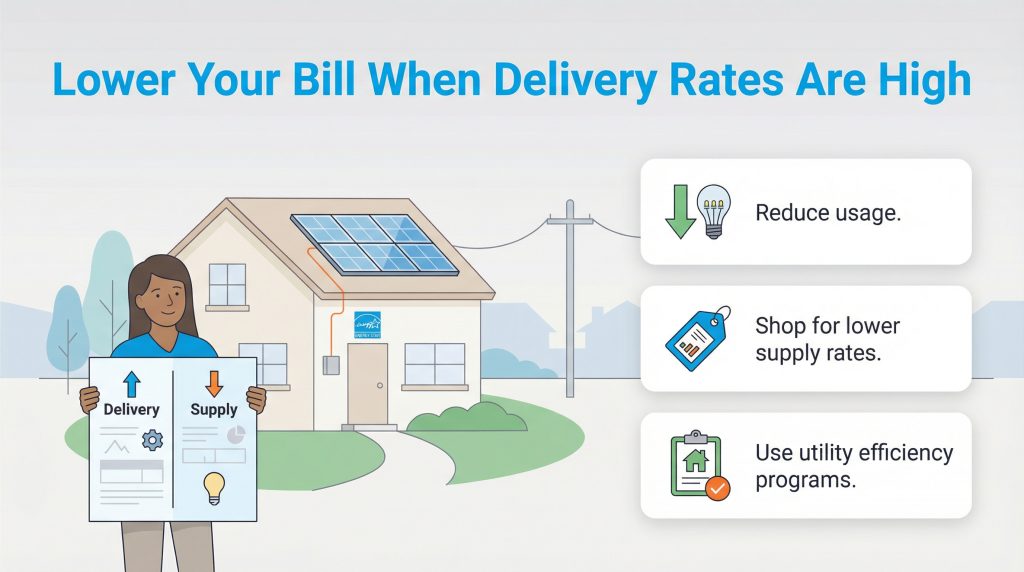
It can be discouraging to learn that you cannot negotiate your delivery rate. However, you’re not powerless. Because the delivery fee is charged per kilowatt-hour, using less electricity directly lowers this “fixed” cost. Here is how you can take action:
- Reduce Usage: This is the most effective way to lower your delivery fee. Every kWh you save keeps money in your pocket. Simple changes like using ENERGY STAR appliances, installing LED bulbs, running appliances during off-peak hours (if on a time-of-use plan), and sealing drafty windows can add up.
- Shop for Supply: While you can’t change the delivery charge, you can lower the supply portion of your bill. Compare the Eversource Standard Service rate with offers from competitive suppliers. If you find a lower rate, your total bill decreases, softening the blow of the delivery fees.
- Energy Efficiency Programs: Take advantage of the very programs your fees are funding. In Massachusetts, programs like Mass Save (administered by your utility) offer no-cost home energy assessments. We walk through how to use them in our guide to how to save on your electric bill. In Connecticut, Home Energy Solutions provides similar services. These audits often include free installation of eco-conscious alternatives that lower your consumption immediately.
By reducing your load on the grid, you’re not just saving money today; you’re helping to reduce the strain that leads to future rate hikes.
Putting It All Together: Managing Eversource Costs
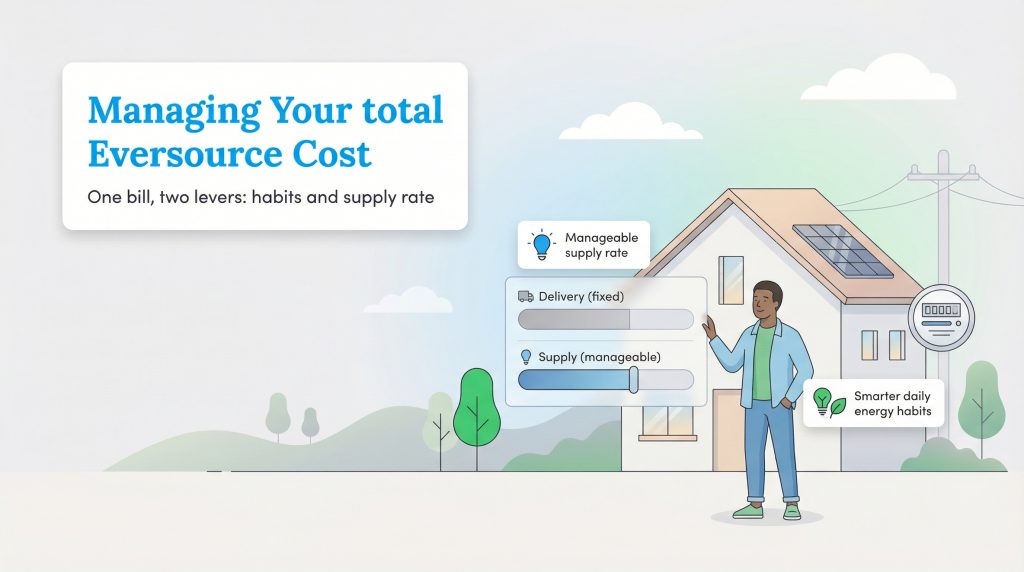
The Eversource delivery charge is the price we pay for a reliable infrastructure that keeps our homes warm and our lights on. While you cannot opt out of these fees, you can control how they impact your wallet. By combining smart energy habits with a competitive supply rate, you can manage your total household costs. We encourage you to view your bill not just as a monthly expense, but as a roadmap to becoming a more energy-efficient, environmentally mindful homeowner.
FAQs About Eversource Delivery Charges
Why is my delivery charge higher than my supply charge?
Can I switch my electric delivery provider?
Does solar power eliminate the delivery charge?
What is the Public Benefits Charge?
How often do Eversource rates change?
About the Author

David has been an integral part of some of the biggest utility sites on the internet, including InMyArea.com, HighSpeedInternet.com, BroadbandNow.com, and U.S. News. He brings over 15 years of experience writing about, compiling and analyzing utility data.