
Monthly Utility Bills Will Rise up to $8 for Most Residents as the County Upgrades Wastewater Systems
Key Takeaways
- Miami-Dade County commissioners approved a 6% systemwide water and sewer rate increase starting Oct. 1 to finance critical environmental mandates.
- Typical residential households will see an estimated increase of $4 to $8 per month, depending on individual water usage and meter size.
- The rate adjustment directly finances mandatory ocean outfall mitigation projects, which require eliminating wastewater discharges into the Atlantic Ocean.
If you open your water bill in Miami-Dade County next month, you will notice a higher total due at the bottom of the page. In a narrow 7–6 vote, the Miami-Dade Board of County Commissioners passed a 6% systemwide rate increase for retail water and wastewater services. While the county recently finished major repairs under a federal consent decree, this fresh revenue stream is dedicated to funding multi-billion-dollar infrastructure mandates required by Florida law. Below, we break down why rates are going up, what your household will actually pay, which communities are affected, and how you can soften the blow on your monthly utility budget.
Why Miami-Dade County Approved Higher Water Rates
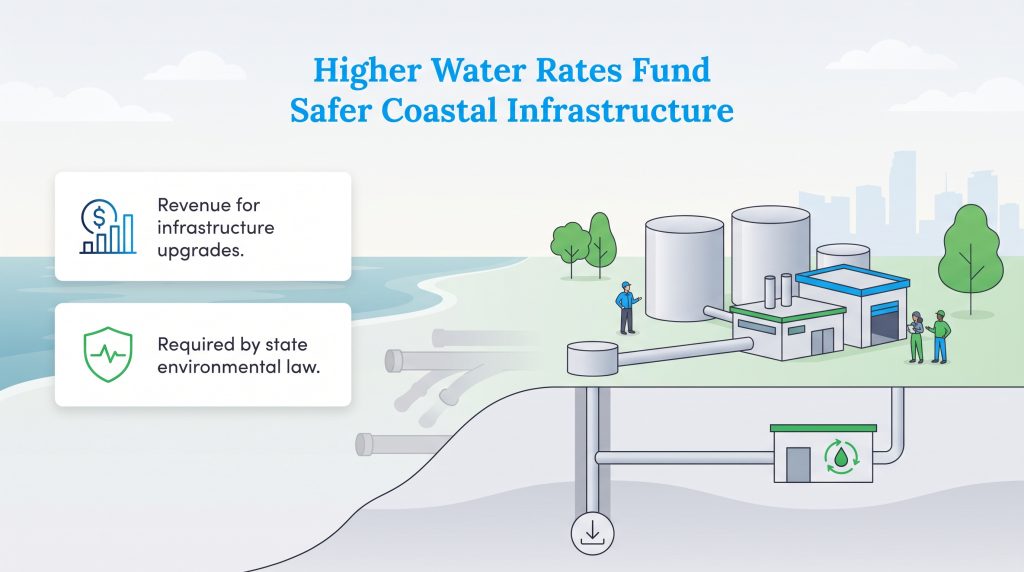
The newly adopted rate adjustment will generate roughly $65.6 million in recurring annual revenue for the Miami-Dade Water and Sewer Department (WASD). This predictable cash flow enables the department to back approximately $435 million in municipal bond financing to support its extensive Capital Improvement Plan. Rather than funding routine daily operations, these borrowed funds target massive engineering works required to keep South Florida’s coastal ecosystem safe and compliant with environmental regulations.
The Mandate Behind the Ocean Outfall Legislation
The driving engine behind this rate adjustment is Florida’s Ocean Outfall Legislation, established under Section 403.086(9) of the Florida Statutes. According to the Florida Department of Environmental Protection Ocean Outfall Study, wastewater utilities in Southeast Florida must eliminate the routine discharge of treated domestic effluent directly into the ocean.
To satisfy the state mandate, WASD must shut down routine outfalls connected to both the Central District Wastewater Treatment Plant on Virginia Key and the North District facility in North Miami Beach. County engineering plans outlined in Miami-Dade County Legislative Records call for replacing ocean discharges with deep injection wells, modern filtration systems, and advanced industrial reuse facilities capable of recycling over 100 million gallons of water every day.
More Adjustments Expected Over the Next Five Years
Commissioners weighed this decision carefully during budget deliberations because county residents already manage rising living expenses. While some officials hoped that finishing federal consent decree repairs would stabilize utility bills, county leadership confirmed that outfall compliance work will take roughly five more years to build out. Ratepayers should prepare for additional incremental rate adjustments through the end of the decade as these environmental construction phases wrap up.
What the 6% Increase Means for Your Monthly Bill
Because Miami-Dade WASD bills residential accounts on an inclining tier structure, your exact dollar increase depends on how many gallons your household consumes. Low-volume users pay the lowest rate per 1,000 gallons, while high-volume users pay escalating rates designed to discourage water waste.
The table below illustrates projected monthly impacts across standard single-family residential tiers:
| Household Water Usage Tier | Typical Gallons per Month | Estimated Monthly Increase | Estimated Annual Increase |
| Low Consumption (Tiers 1–2) | 1,000 to 3,000 gallons | $2 to $4 | $24 to $48 |
| Average Consumption (Tier 3) | 4,000 to 7,000 gallons | $4 to $8 | $48 to $96 |
| High Consumption (Tier 4) | 8,000 to 12,000 gallons | $9 to $15 | $108 to $180 |
| Heavy Irrigation / Estate Usage | 13,000+ gallons | $18 to $30+ | $216 to $360+ |
Most single-family homes fall within the middle tier — averaging roughly 5,000 to 6,000 gallons per month — which produces a typical increase between $4 and $8 on each billing cycle. If you run extensive lawn sprinklers or have an undetected toilet flapper leak, however, your monthly cost increase could easily double.
Regional Breakdown of Impacted Cities and Communities
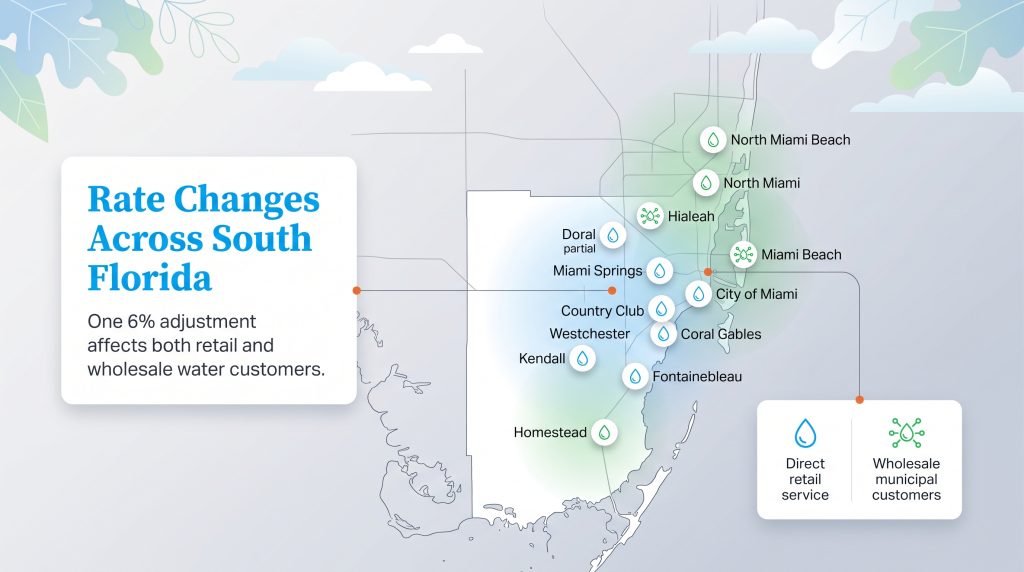
This rate adjustment reaches far beyond unincorporated neighborhoods, affecting approximately 2.3 million people across South Florida. Because WASD operates both retail customer accounts and wholesale regional supply contracts, the financial ripple spreads through two distinct customer groups.
Direct Retail Service Territories
WASD supplies retail water and sewer services directly to more than 450,000 customer accounts. Residents living in these jurisdictions will see the 6% rate adjustment applied directly to their October WASD statements:
- Unincorporated Miami-Dade County communities (including Kendall, Westchester, Fontainebleau, and Country Club)
- City of Miami
- Coral Gables
- Miami Springs
- Doral (partial retail service areas)
- South Miami
Wholesale Municipal Customers
In addition to retail households, Miami-Dade WASD sells bulk treated water to 15 municipal utility systems and provides wholesale wastewater treatment for 13 municipal systems. As wholesale treatment costs climb by 6%, local city councils and water boards routinely pass those expenses along to their own municipal water customers:
- Hialeah: City leaders have historically grappled with retail markups and municipal franchise fees tied to wholesale county rate increases.
- Miami Beach: City stormwater and water rates reflect bulk wholesale purchases from WASD’s mainland distribution pipes.
- North Miami & North Miami Beach: Municipal utilities operating near the North District wastewater plant face adjusted treatment disposal charges.
- Homestead: Southern service areas tied into regional transmission networks absorb shifting bulk wastewater tariffs.
Actionable Ways to Lower Your Water Bill
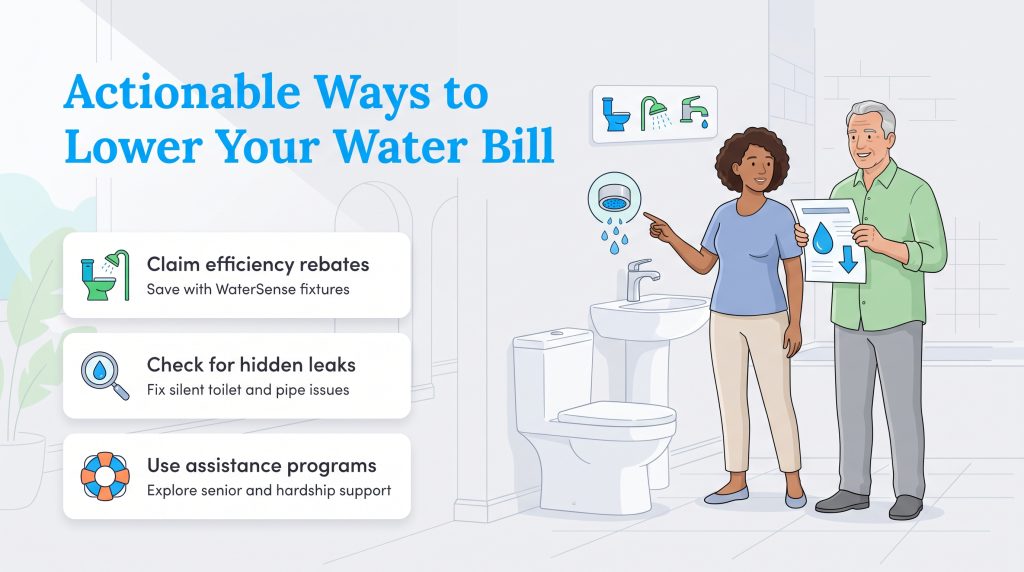
While you cannot vote down utility tariff schedules on your own, you can take immediate, practical steps to protect your household budget from rising water rates. Simple changes around your home can easily save 1,000 to 2,000 gallons every month, effectively erasing the 6% rate hike.
Claim WASD Efficiency Rebates
Miami-Dade County offers financial incentives to homeowners who make an environmentally mindful choice when updating older plumbing. You can receive single or multi-fixture credits when you replace older, water-wasting toilets with EPA WaterSense-certified high-efficiency models. Installing high-efficiency aerators and low-flow showerheads also provides an easy, low-cost path to noticeable monthly savings.
Check for Hidden Household Leaks
A silent toilet leak can waste up to 200 gallons of water every day, rapidly driving your account into the county’s highest pricing tier. Place a few drops of food coloring into your toilet tank; if the color seeps into the bowl within 15 minutes without flushing, you have a worn flapper that requires a quick repair. If a concealed pipe leak causes an unexpected spike on your bill, WASD allows you to apply for a one-time leak adjustment credit once a licensed plumber certifies the repair.
Tap into County Financial Assistance Programs
If you or an older family member live on a limited income, you may qualify for targeted ratepayer relief programs:
- Senior Citizen Water Discount: Qualified residents aged 65 and older with an annual household income meeting county thresholds can receive ongoing monthly credits on their WASD statements.
- Emergency Hardship Relief: Income-qualified households facing disconnection or sudden financial hardship can access grant assistance via Miami-Dade County Community Services.
- Conservation Guidance: For step-by-step guidance on testing water meters and reducing indoor water consumption, explore our comprehensive UtilitiesForMyHome Water Resource Guide.
Taking Control of Rising South Florida Utility Costs
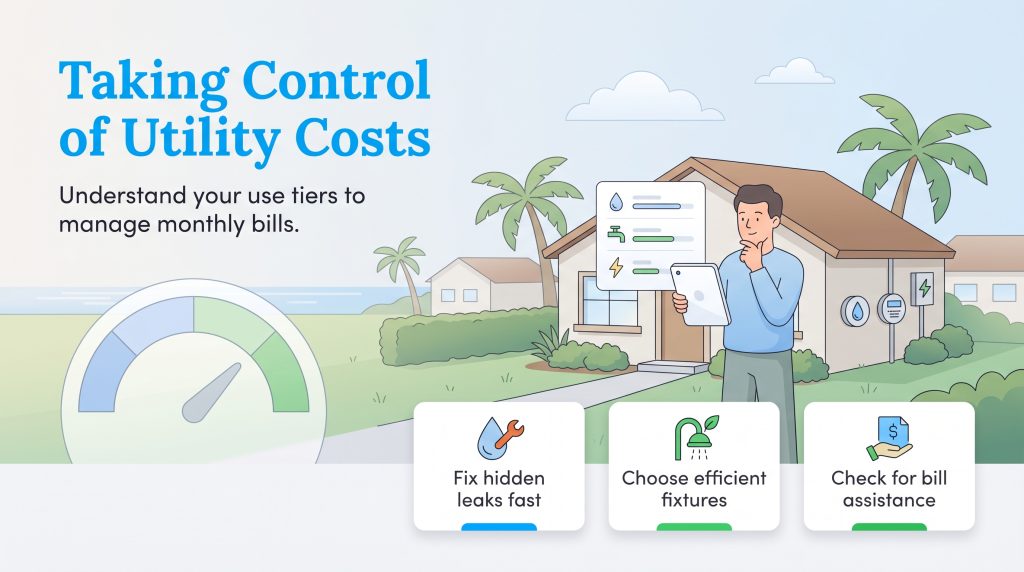
Utility rate adjustments are becoming a standard reality across Florida as municipalities modernize aging pipes and adapt to strict environmental laws. While major projects like the ocean outfall transition require massive capital investments, understanding your consumption tiers puts you in control of your final bill. By fixing hidden plumbing leaks promptly, switching to certified efficient fixtures, and tapping into county assistance if you qualify, you can keep your monthly utility spending manageable throughout the upcoming year.
About the Author

Claudio is a sustainability-focused writer with a background in Anthropology and Psychology from NC State University. He has spent over 15 years working in writing, interpretation, and translation, driven by a deep interest in how human culture shapes the environment. Today, he shares his curiosity with readers by writing about sustainable living solutions and the connection between everyday choices and environmental impact.