
State Regulators Approved A $74.9 Million Revenue Increase That Raises Monthly Water And Wastewater Bills Across 38 Counties
Key Takeaways
- The Pennsylvania Public Utility Commission approved an overall $74.9 million annual revenue increase, which takes effect on Aug. 13, 2026.
- Average residential water bills rise by 4.75%, while monthly wastewater charges climb by 14.17% for impacted households.
- Eligible ratepayers can access expanded bill discounts and arrearage forgiveness through state-mandated consumer assistance programs.
If you receive your water or sewer service from Pennsylvania American Water Company (PAWC), your monthly utility costs are about to shift. State regulators recently finalized a major rate ruling that impacts roughly 810,000 customer accounts — representing more than 2.5 million residents — across 38 Pennsylvania counties. While rate hikes are never welcome news for household budgets, the approved increase is significantly lower than what the utility originally sought, and new consumer protections are rolling out alongside the new pricing structure. We have broken down the key figures, the drivers behind the change, and the steps you can take to keep your utility expenses manageable.
Understanding the Approved Rate Adjustment
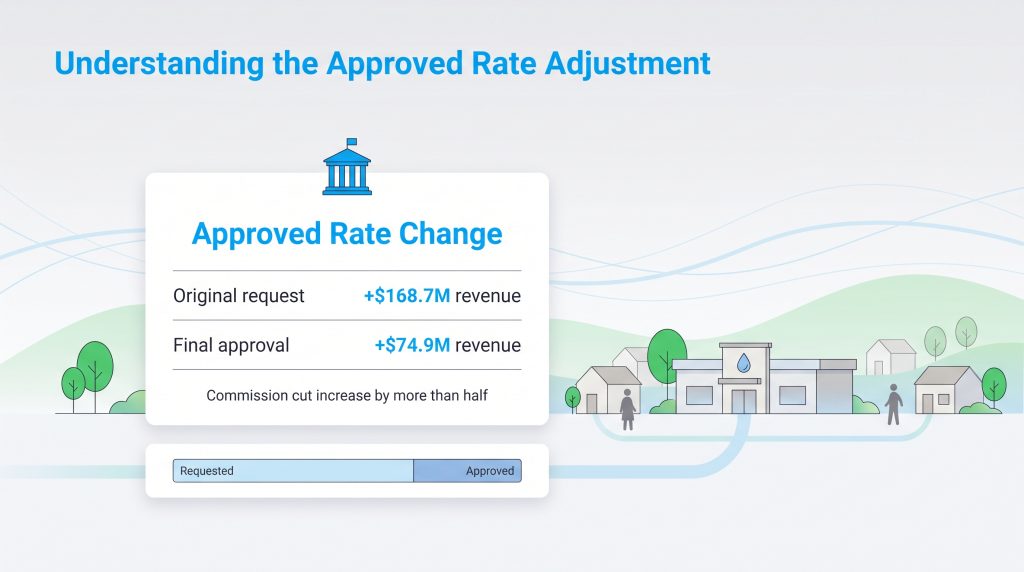
The recent decision by state regulators marks the conclusion of a multi-month review into the operational costs and capital investments of the commonwealth’s largest private water utility. On July 16, 2026, the Commission voted 4–1 to approve a compromise order that balances system reliability with ratepayer affordability. You can review the complete regulatory context in the Pennsylvania Public Utility Commission official rate ruling.
How the PUC Modified the Original Request
When PAWC initially submitted its rate request in late 2025, the utility sought an overall annual revenue bump of approximately $168.7 million. That initial proposal would have increased water operations revenue by about 15% ($143.4 million).
The Commission ultimately cut the company’s requested increase by more than half. Under the final approved order, water operations receive an additional $45,299,821 in annual revenue (a 4.75% increase), while wastewater operations receive $29,623,619 in annual revenue (a 14.17% increase), bringing the total approved adjustment to approximately $74.9 million effective Aug. 13, 2026.
Breaking Down Your Estimated Monthly Bill Impact
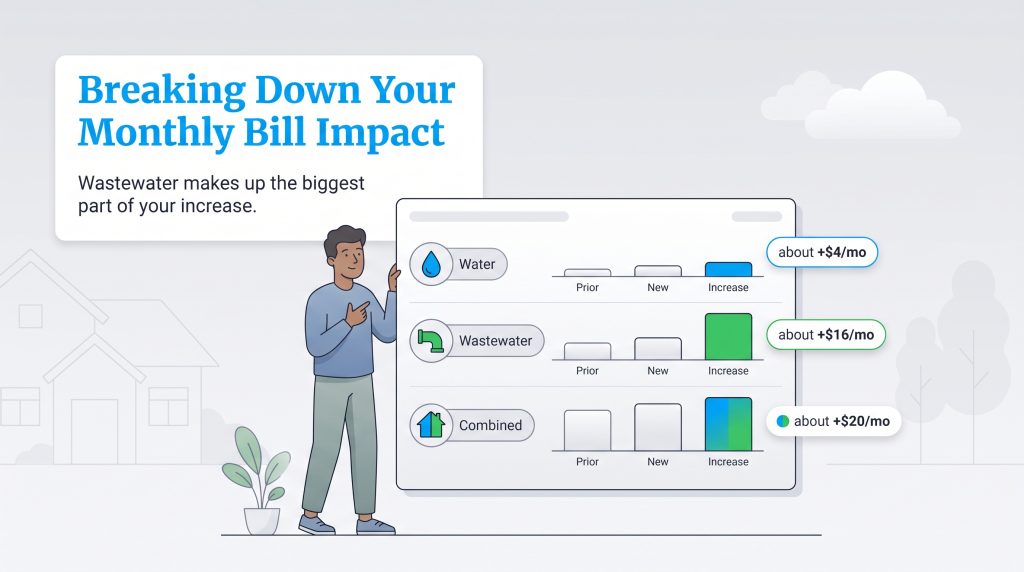
The exact dollar change on your monthly statement depends on whether you receive drinking water, wastewater collection, or both services from PAWC. Volumetric usage and local rate zones also play a role in your final total.
The table below highlights the estimated average monthly bill impact for typical residential customers:
| Service Type | Average Monthly Usage | Prior Average Bill | Estimated New Bill | Average Monthly Increase |
| Residential Clean Water | ~3,200 gallons | ~$81.55 | ~$85.42 | +$3.87 (4.75%) |
| Residential Wastewater | ~3,150 gallons | ~$109.50 | ~$125.02 | +$15.52 (14.17%) |
| Combined Services | Typical Household | ~$191.05 | ~$210.44 | +$19.39 (~10.15%) |
Water vs. Wastewater Increases
The largest percentage and dollar jump occurs on the wastewater side of your bill. While the average clean water increase is relatively modest at roughly $4 per month for a typical household, wastewater fees are climbing by more than $15 per month. If your home relies on PAWC for both services, you should prepare for a combined monthly increase near $20.
Major Pennsylvania Communities and Counties Affected
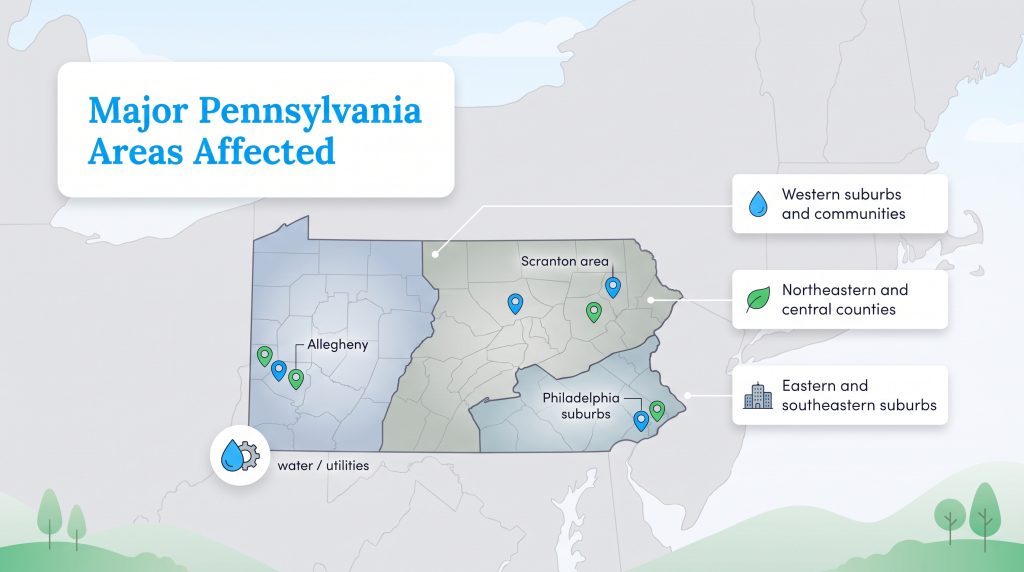
Pennsylvania American Water operates an expansive utility footprint across the commonwealth, serving residential, commercial, and industrial customers in 38 separate counties. Because service territories span diverse geographic regions, ratepayers from western suburbs to northeastern valleys will see these rate adjustments reflected on upcoming bills.
Western Pennsylvania Service Territories
In western Pennsylvania, PAWC serves major suburban communities in Allegheny County (including Mount Lebanon and Bethel Park), alongside large customer bases in Butler, Washington, Lawrence (including New Castle), Beaver, Fayette, and Indiana counties.
Northeastern and Central Pennsylvania Regions
In northeastern and central Pennsylvania, the rate adjustments apply across Lackawanna County (including Scranton and Carbondale), Luzerne County (including Wilkes-Barre and Pittston), and Pocono communities throughout Monroe, Pike, and Wayne counties. Central service territories include Cumberland County (Mechanicsburg and Camp Hill), Dauphin County (Hershey), and York County (where PAWC manages municipal wastewater service).
Southeastern and Eastern Suburbs
In eastern and southeastern Pennsylvania, impacted customer zones include Montgomery County (Norristown and Royersford), Chester County (Coatesville), Berks County (Reading and Exeter Township), Bucks County, and Northampton County.
Why Water and Wastewater Rates Are Going Up
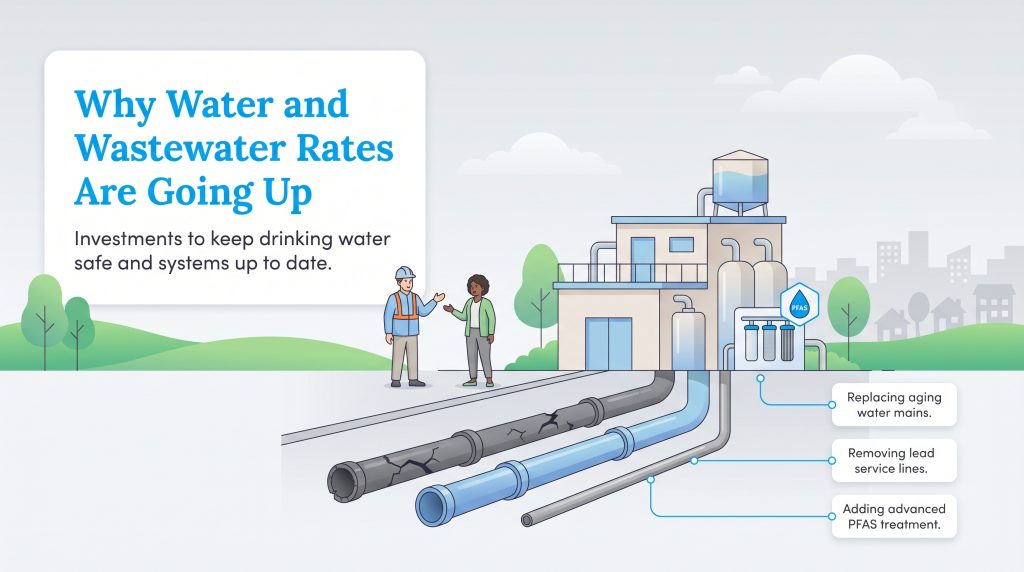
Water utility rates are closely tied to the capital investments required to maintain thousands of miles of underground pipes and complex treatment facilities. These rate adjustments fund ongoing system modernizations that ensure clean drinking water and environmental compliance across Pennsylvania.
Major Infrastructure and Environmental Projects
- Replacing Aging Water Mains: Upgrading century-old cast iron and ductile iron pipes to reduce service interruptions and main breaks.
- Lead Service Line Removal: Replacing lead intake lines to ensure drinking water meets modern safety regulations.
- Advanced PFAS Filtration: Installing specialized treatment systems to filter per- and polyfluoroalkyl substances (“forever chemicals”) out of community water supplies.
- Troubled System Rehabilitation: Upgrading more than a dozen municipal water and sewer networks that PAWC acquired across the state to bring them up to environmental standards.
Practical Steps to Lower Your Monthly Water Costs
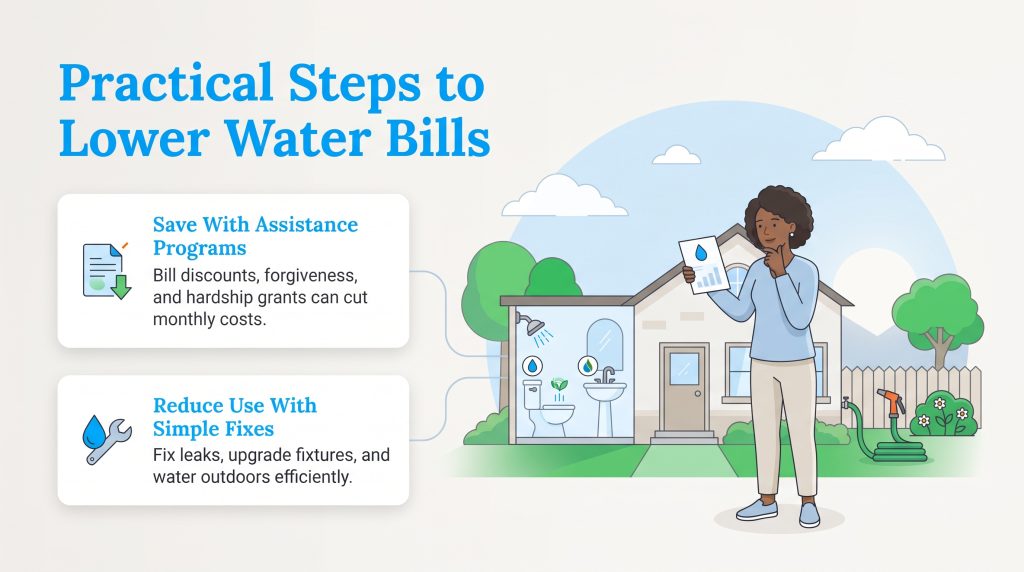
Even with higher base rates, you can take proactive measures to manage your monthly utility bill. Combining utility-sponsored assistance programs with everyday water-efficiency habits is the most effective approach.
Tap Into Expanded Customer Assistance
The Commission’s order mandates substantial enhancements to utility customer service and low-income programs. If you are struggling with your bills, explore these options:
- Bill Discount Program: Low-income households can qualify for monthly discounts ranging from 37% to 85% on their water and sewer charges. Review program requirements and apply through the Pennsylvania American Water H2O Help to Others program.
- Enhanced Arrearage Forgiveness: The monthly debt forgiveness credit is expanding from $25 to $40 for each on-time payment, helping customers clear past-due balances over a 24-month cycle.
- Emergency Hardship Grants: Qualifying households can receive crisis grants of up to $500 per year distributed via the Dollar Energy Fund assistance portal.
Make Simple, Water-Saving Home Improvements
Adopting environmentally mindful choices indoors can quickly offset rate increases by cutting unnecessary gallons:
- Fix Silent Toilet Leaks: A worn flapper can waste hundreds of gallons each week without making a sound. Drop a food coloring tablet in your toilet tank — if color appears in the bowl before flushing, replace the flapper.
- Upgrade to EPA WaterSense Fixtures: Installing high-efficiency aerators on sink faucets and low-flow showerheads can trim indoor water use by 20% to 30% without sacrificing water pressure.
- Adjust Outdoor Watering Habits: Water lawns early in the morning before 8:00 a.m. to minimize evaporation loss, and use a nozzle with an automatic shut-off valve on garden hoses.
Protecting Your Household Budget Moving Forward
Navigating utility price increases requires staying informed about what you pay and understanding the relief options available to you. By auditing your monthly household water usage, fixing hidden plumbing leaks, and enrolling in payment assistance or budget billing if needed, you can soften the impact of these new rates on your family’s budget. We will continue monitoring state regulatory filings and utility rate changes to bring you the latest cost updates and practical savings strategies.
About the Author

Claudio is a sustainability-focused writer with a background in Anthropology and Psychology from NC State University. He has spent over 15 years working in writing, interpretation, and translation, driven by a deep interest in how human culture shapes the environment. Today, he shares his curiosity with readers by writing about sustainable living solutions and the connection between everyday choices and environmental impact.