
Following a state decision, more than 150,000 Ohio households will see their water and sewer bills increase by $9 to $15 each month.
Key Takeaways
- The PUCO approved a scaled-back annual revenue increase of $10.54 million for Aqua Ohio, resulting in an average monthly water bill increase of $9.00 to $15.00 for most residential customers.
- Because water utility providers are regulated monopolies, you cannot switch to a different water company to find a lower rate.
- You can offset these new water costs by shopping for a fixed-rate electric plan on Ohio’s deregulated energy market or utilizing utility assistance programs if you qualify.
Setting up a home requires a careful balance of your household budget, and a sudden jump in utility bills can throw everything off. If you are one of the 150,000 Ohioans served by Aqua Ohio, you probably recently noticed — or will soon notice — your monthly bills rising by $9.00 to $15.00. On June 10, 2026, the Public Utilities Commission of Ohio (PUCO) approved a combined $10.54 million annual revenue increase for the utility. While a utility rate hike is never fun to deal with, we want to walk you through exactly why these rates are changing, which cities are affected, and the smart, practical strategies you can use to offset these costs and protect your wallet.
Why Are Aqua Ohio Water and Sewer Rates Rising?
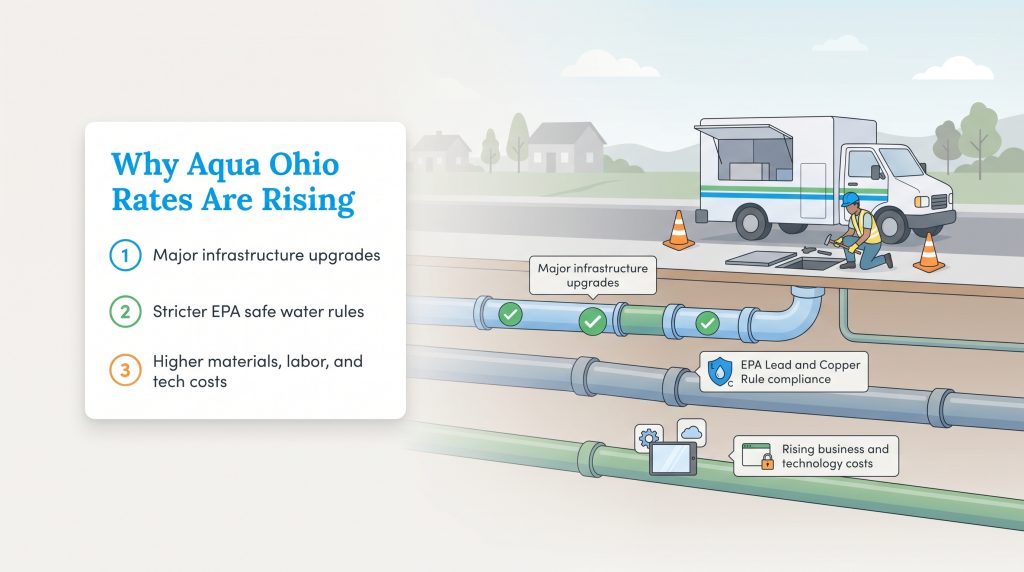
Aqua Ohio originally asked state regulators for a much larger increase of $14.6 million. However, the PUCO scaled that request back to $10.54 million, approving a $9.5 million annual revenue increase for water services and a $1.04 million increase for sewer services. Aqua Ohio noted that its current revenues were no longer enough to recover the real costs of operating its massive physical network.
The rate change is driven by three main factors:
- Major Infrastructure Upgrades: Aqua Ohio spent over $70 million across the state in a single year to replace aging water mains, treatment systems, and wells to keep your tap water safe and reliable.
- EPA Safe Water Rules: The utility must meet strict federal guidelines under the U.S. Environmental Protection Agency (EPA) Lead and Copper Rule, which requires continuous main upgrades and testing.
- Rising Business Costs: High inflation has driven up the cost of physical construction materials, labor, and necessary administrative systems. For example, the utility invested approximately $1.15 million in modernized cloud enterprise software to manage customer accounts more efficiently.
How the Rate Changes Impact Your Household Bill
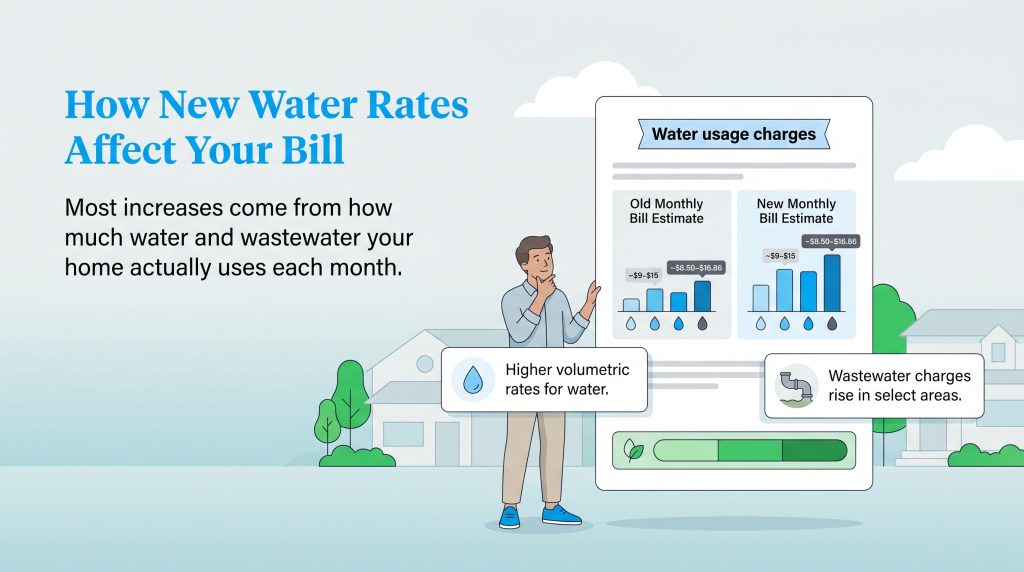
The financial impact of this decision depends heavily on where you live and how much water your family uses. If you are a typical customer using about 4,000 gallons of water per month, you can expect an estimated increase of $9.00 to $15.00 on your water bill.
There is some good news, though. The PUCO completely rejected Aqua Ohio’s proposal to raise its flat monthly customer charge. This means your base service fee stays exactly the same, and the entire rate increase is tied directly to your volumetric usage. If you practice water conservation, you can keep your monthly costs down because you are only paying more for the actual gallons you run through your tap.
The table below shows the estimated proposed water rate adjustments for standard usage across several regional water systems before the PUCO finalized the slightly lower revenue targets:
| Former Water System Area | Average Monthly Usage (Gallons) | Old Monthly Bill | Proposed Monthly Bill | Proposed Monthly Increase |
| Auburn Crossing | 4,000 | $56.40 | $82.20 | $25.80 |
| Auburn Lakes | 4,000 | $56.40 | $82.20 | $25.80 |
| Firestone Trace | 4,500 | $48.02 | $58.53 | $10.51 |
| Lake Erie | 4,000 | $46.58 | $53.92 | $7.34 |
| Lake Erie East | 4,000 | $56.40 | $82.20 | $25.80 |
| LaRue Village | 4,500 | $123.43 | $127.71 | $4.28 |
| Masury | 4,000 | $56.40 | $82.20 | $25.80 |
| Midvale Village | 4,500 | $63.70 | $69.20 | $5.50 |
| Mohawk | 4,000 | $56.40 | $82.20 | $25.80 |
| Norlick Place | 4,000 | $56.40 | $82.20 | $25.80 |
| Ohio American Water | 4,000 | $68.27 | $80.21 | $11.94 |
| Seneca | 4,000 | $56.40 | $82.20 | $25.80 |
| Southwood Estates | 4,000 | $68.27 | $80.21 | $11.94 |
| Tomahawk | 4,000 | $46.58 | $53.92 | $7.34 |
Additionally, wastewater customers in specific sewer service territories will see rates rise by $8.50 to $16.86 each month to fund local wastewater infrastructure.
Which Ohio Communities and Major Cities Are Affected?
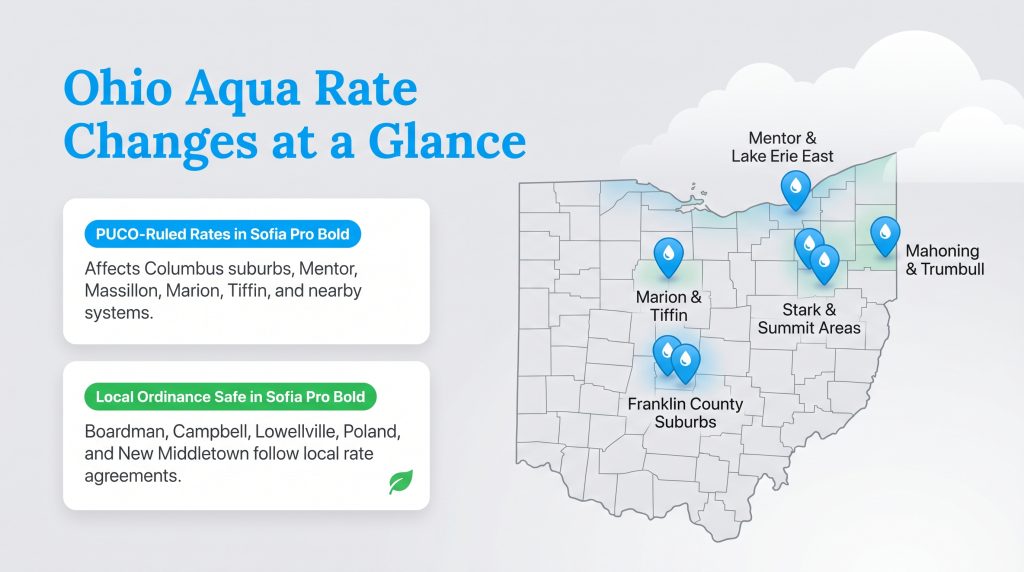
Aqua Ohio operates across 20 counties in the state, serving a mix of suburban pockets and smaller municipalities. The PUCO decision primarily impacts customers in the following local service areas:
- Franklin County and Columbus Suburban Fringe: Worthington Hills, Huber Ridge, and Lake Darby.
- Northeast Ohio Corridors: Mentor and Auburn Lakes.
- Stark and Summit County Systems: Massillon and Green.
- Central and Northwest Ohio Hubs: Marion (including LaRue Village) and Tiffin (including the Seneca division).
- Mahoning and Trumbull Counties: Struthers and Masury.
The Local Ordinance Exemption: Are You Safe?
Not everyone who uses Aqua Ohio will see their bills change because of this PUCO case. Under Ohio law, municipal governments can bypass the PUCO rate-setting process and negotiate rates directly with the utility. If your community operates under a local rate ordinance, you are completely exempt from this state ruling.
For example, local leaders in Boardman, Campbell, Lowellville, Poland, and New Middletown negotiated a localized agreement with Aqua Ohio in late 2025. They agreed to a 20.5% rate increase spread over a four-year period in exchange for Aqua Ohio committing $40 million to upgrade local pipes and remove lead lines. If you live in one of these areas, your rates are locked into that local agreement, not this state PUCO ruling.
What You Can Do to Lower Your Utility Bills
When a bill goes up, the natural reaction is to look for a different provider or see if you can shop around for a better rate. Unfortunately, the water market works differently than other services. Because the physical infrastructure required to pipe clean water into your home is so massive, water utilities operate as regulated natural monopolies. This means you cannot switch water providers or negotiate a lower rate on your own; if you live in Aqua Ohio’s territory, they are your only water option.
Fortunately, you still have excellent ways to lower your overall monthly expenses.
Leverage Ohio’s Deregulated Energy Market to Save
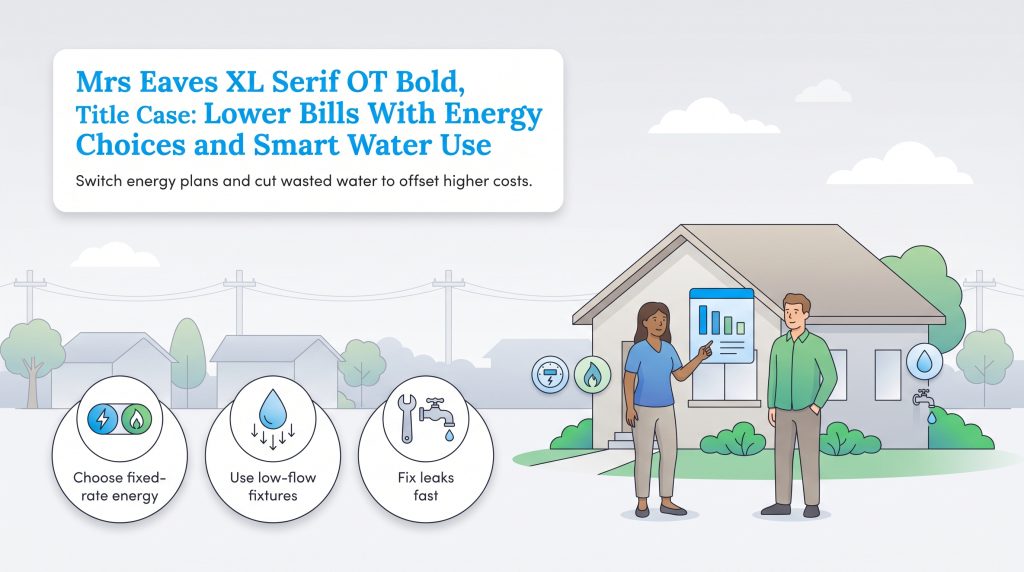
While you cannot shop for water, you absolutely can shop for your electricity and natural gas. Ohio has a deregulated energy market, which gives you the freedom to choose your energy generation supplier. If your electric bill is currently set to your utility’s default rate, you are likely paying more than you need to.
You can easily compare competitive offers on the state’s official Energy Choice Ohio Apples-to-Apples Tool to find a plan that works for you. Transitioning from a utility default to a fixed-rate supply contract — ideally a 12-to-36-month term with no early termination fees — can help you lock in a stable, lower rate. This simple budget adjustment can easily save you enough money to neutralize the financial impact of the water rate hike.
Water Conservation as an Eco-Conscious Alternative
Because the PUCO tied the rate increase entirely to the volume of water you use, water conservation is now your most effective tool to save money. By choosing environmentally mindful habits, you protect both the planet and your household budget.
Some of the easiest energy-saving and water-saving options include:
- Low-Flow Fixtures: Installing low-flow faucet aerators and showerheads can reduce your water use by up to 30% without changing your daily routine.
- Smart Appliances: Look for high-efficiency washing machines and dishwashers that carry the ENERGY STAR label to minimize volumetric usage.
- Address Leaks Quickly: A running toilet or dripping faucet can waste thousands of gallons of water a month. Inspect your home regularly, and make sure to submit Aqua Ohio’s official leak adjustment form if an underground pipe leak impacts your bill.
Utility Assistance and Financial Support Programs
If you or someone you know is struggling to keep up with rising utility bills, there are structured support networks designed to help.
Aqua Aid and Salvation Army Support
Aqua Ohio offers a dedicated assistance program called Aqua Aid for qualifying customers who have fallen behind on their bills. This program is administered by the Salvation Army and is open to households with an income at or below 175% of the federal poverty guidelines. If you qualify, you can receive a one-time grant of up to $300 for your water bill, or up to $500 if you receive both water and sewer services from the utility. To inquire about available funds, you can call Aqua Ohio customer service directly at 1-877-987-2782.
State and Federal Relief Programs
For broader support, Ohio homeowners can access the Save the Dream Ohio program, which provides financial relief for past-due utility bills and other essential housing costs. While federal emergency water funding through LIHWAP has expired nationally, your local Community Action Agency can still connect you to localized emergency assistance, payment plans, or weatherization services to lower your long-term energy use. If you are facing a sudden medical emergency, you can also have your healthcare provider submit a 30-day medical certificate form to Aqua Ohio, which temporarily halts any service disconnections while you set up a payment arrangement.
Navigating Your Next Steps with Aqua Ohio
Taking control of your utilities doesn’t have to be overwhelming, even when rates are on the rise. While the PUCO decision means slightly higher bills for many of us, understanding the volumetric nature of the hike allows you to take direct action through water conservation and smart energy shopping. Whether you are setting up service in a new home in Westerville, moving into Mentor, or managing a property in Massilon, we are here to help you simplify the entire utility process. To stay on top of state utility cases or to review the formal PUCO decision, you can track the active water docket through the PUCO Case No. 25-0594 Case Record.
Frequently Asked Questions About Aqua Ohio Rate Changes
Can I switch to a different water provider to get a lower rate?
Who is affected by this specific rate increase?
How can I check if my community has a local rate agreement?
What is the best way to offset these new monthly charges?
About the Author

Claudio is a sustainability-focused writer with a background in Anthropology and Psychology from NC State University. He has spent over 15 years working in writing, interpretation, and translation, driven by a deep interest in how human culture shapes the environment. Today, he shares his curiosity with readers by writing about sustainable living solutions and the connection between everyday choices and environmental impact.