

A little preparation in the autumn months can protect your property from winter damage and set your garden up for success when spring arrives
Key Takeaways
- Winterizing your outdoor water utilities prevents expensive burst pipes and reduces unnecessary water waste.
- Choosing battery-powered tools over gas alternatives creates a more eco-conscious, quieter, and energy-efficient yard maintenance routine.
- Mulching fallen leaves directly into your lawn naturally fertilizes the soil and keeps organic waste out of local landfills.
Fall yard cleanup isn’t just about maintaining curb appeal. The right maintenance tasks can prevent frozen irrigation lines, reduce unnecessary yard waste, protect your roof and drainage systems, and help your lawn come back healthier in the spring. Rather than spending weekends hauling heavy plastic bags to the curb, we want to help you tackle seasonal maintenance with strategy and purpose. By following these 10 fall yard cleanup tips, you can safeguard your home against harsh winter weather while making smart, sustainable decisions that ultimately lower your monthly utility costs.
Fall Yard Cleanup Checklist for a Winter-Ready Home
Having a fall yard cleanup checklist keeps you organized before freezing temperatures arrive. Here’s a quick look at the most essential tasks and how to approach them sustainably.
| Task | Why It Matters | Sustainable Option |
|---|---|---|
| Mulch fallen leaves | Feeds soil and prevents lawn smothering | Mow leaves into small pieces instead of bagging them |
| Drain hoses and outdoor faucets | Prevents freeze damage | Store hoses indoors to extend their lifespan |
| Clear gutters and downspouts | Protects your roof, foundation, and drainage | Compost clean organic debris when possible |
| Prune hazardous branches | Reduces storm damage risk | Leave healthy seed heads or hollow stems for wildlife where safe |
1. Mulch Leaves Instead of Bagging Them
Traditional autumn maintenance often involves stripping every last piece of organic debris from the property, but an eco-friendly fall yard cleanup actually requires less intensive labor. When you obsessively rake and remove every fallen leaf, you inadvertently strip the soil of essential nutrients and disrupt the habitats of local pollinators. Leaving a moderate amount of organic matter on your property acts as a natural insulator for plant roots and provides a vital food source for the ecosystem.
If you’re wondering if ignoring those massive piles of leaves is actually good for your property, the answer depends on the amount. While leaving a thick, suffocating blanket of wet leaves untouched can smother your grass and invite fungal diseases, mulching them is incredibly beneficial. Running over moderate leaf coverage with a mower shreds the organic material into small, easily digestible pieces that filter down into the soil. This environmentally mindful choice saves you hours of manual raking while providing excellent organic nutrients to your lawn, which may lower your need for supplemental fertilizer over time.
2. Prep Your Lawn Without Overdoing It
Taking care of your lawn in the fall sets the stage for healthy growth in the spring, but you don’t need an excessive chemical routine. Start by giving your lawn a final mow at the appropriate height for your specific grass type, which helps prevent snow mold in cooler climates. If your soil is compacted from summer foot traffic, aeration allows water and nutrients to reach the roots more effectively.
Fall is also a great time to overseed bare patches and apply an organic fall lawn fertilizer. However, before applying any fertilizer, check local rules and consider a soil test, especially if you live near waterways or in a region with fertilizer runoff restrictions. Warm-season and cool-season grasses require different timing, so adjusting your approach to your specific region ensures you aren’t wasting money on unnecessary lawn treatments.
3. Clean Garden Beds While Protecting Pollinators
It’s tempting to cut everything down to the dirt, but sustainable fall landscaping means leaving some natural habitat intact. Remove diseased plants and invasive weeds to prevent them from spreading next year, but consider leaving healthy seed heads, hollow stems, and a light layer of leaf litter in your beds. These natural elements provide essential winter shelter for beneficial insects, bees, and local birds.
Rather than bagging up all your debris, explore composting at home to manage your yard waste naturally. Creating a dedicated compost bin or simply redistributing leaves into your garden beds transforms seasonal waste into rich, dark soil for next year. Working with nature rather than fighting against it keeps your garden ecosystem thriving.
4. Winterize Sprinklers, Hoses, and Outdoor Faucets
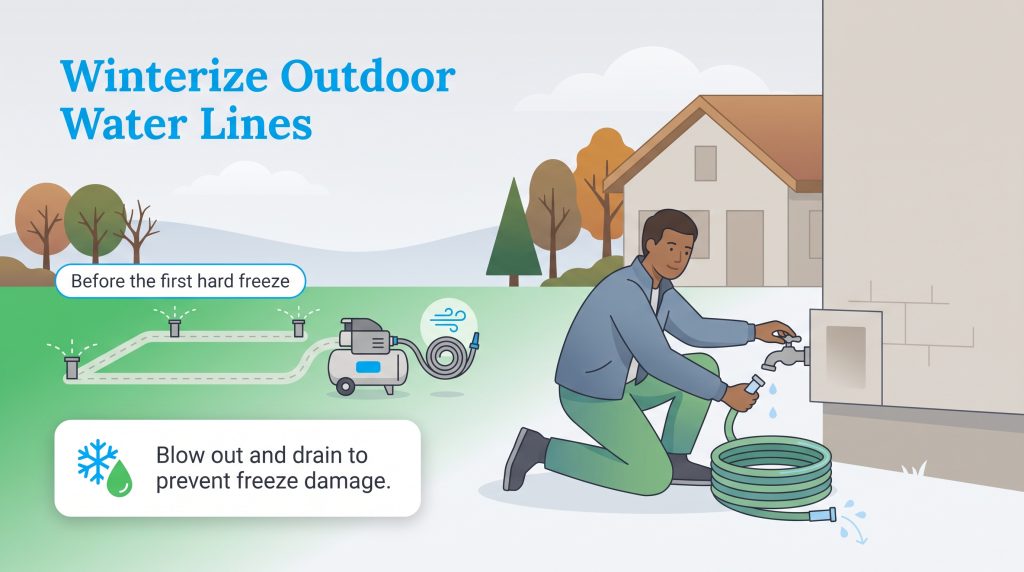
Failing to protect your outdoor water utilities before freezing temperatures arrive is a mistake that frequently leads to costly property damage. Water expands as it freezes, which can easily shatter plastic irrigation lines, burst outdoor faucets, and destroy costly sprinkler valves. Protecting these systems involves completely draining your garden hoses, shutting off exterior water valves from inside your home, and using an air compressor to blow out underground irrigation lines.
Taking the time to address this chore prevents unnecessary water waste and shields you from major utility repair bills in the spring. Following EPA guidelines for outdoor water efficiency during your winterization routine ensures your systems remain intact and fully operational when warmer weather returns. While you’re sealing up your exterior lines, this is also a great opportunity to inspect for minor leaks that might be silently inflating your monthly statements, helping with your broader goal of lowering your household water usage.
Timing your winterizing efforts perfectly is essential because waiting too long can be disastrous for your pipes. The USDA plant hardiness zones map can help you understand your area’s general winter severity, but you’ll still want to use a local weather forecast or state extension office tool to time your sprinkler winterization before the first hard freeze. Keeping a close eye on localized climate data ensures you never get caught off guard by an early cold snap.
5. Clear Gutters, Downspouts, and Drainage Paths
Fallen leaves and pine needles can quickly clog your gutters, leading to water backing up under your shingles or spilling out right next to your foundation. Clearing these pathways is a critical step in preparing your yard for winter, as proper drainage prevents severe ice dams and foundation cracking. Make sure your downspouts are securely attached and direct water at least a few feet away from your home.
If your neighborhood has storm drains or driveway grates, clear those of debris as well, provided your local municipality allows it. You can compost any clean organic material you pull from the gutters to keep it out of the trash. If you live in a multi-story home or have a steep roof, always prioritize safety and consider hiring a professional to handle high-level gutter cleaning.
6. Prune Trees and Shrubs Safely
Dormant trees might look harmless, but rogue branches can become serious hazards once they are weighed down by heavy winter snow or ice. An essential part of your fall home maintenance checklist should involve inspecting your property for dead, diseased, or dangerously overhanging limbs. Pruning these weak spots protects your roof, windows, and surrounding property from sudden impact damage during a fierce winter storm.
More importantly, proactive tree trimming protects your vital home utilities. A snapping branch can easily tear down overhead power lines, leaving your family without heat or electricity during the coldest months of the year. Assess your trees while the leaves are falling so you can clearly see the underlying branch structures and identify potential risks.
7. Switch to Battery-Powered Yard Tools Where It Makes Sense
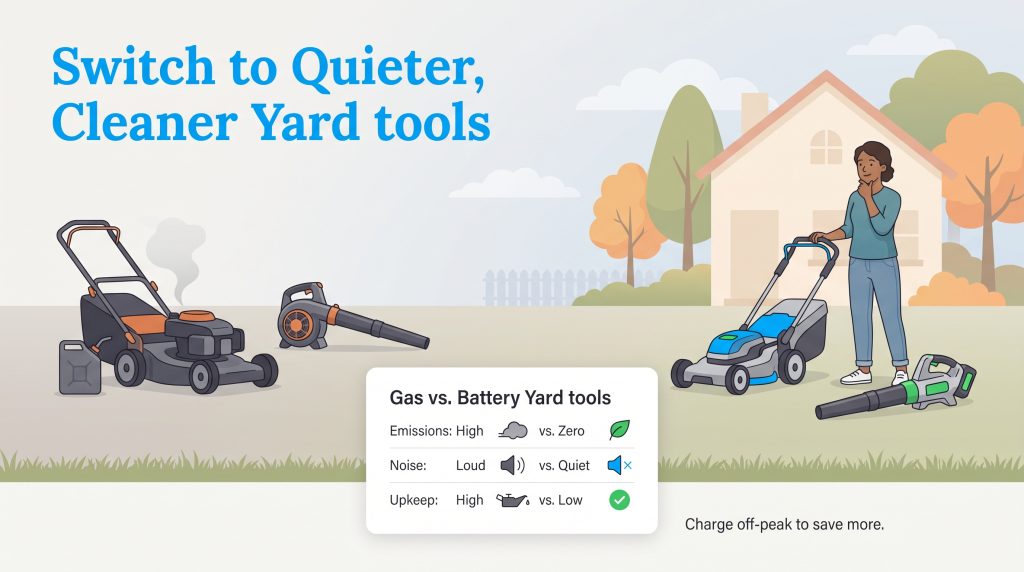
If you’re still firing up a noisy, gas-powered mower or leaf blower, autumn is the perfect time to upgrade your equipment. Modern battery-powered mowers, trimmers, and leaf blowers now perform well for many residential yards, especially smaller and midsize properties. Making the transition significantly lowers your household emissions, virtually eliminates neighborhood noise pollution, and frees you from the hassle of storing gasoline in your garage.
While lithium-ion batteries do require electricity to charge, the overall expense of plugging in a battery is substantially lower than purchasing constant gallons of gasoline and engine oil. By charging your equipment during off-peak hours, you can efficiently reduce your overall electric costs while keeping your yard pristine.
When deciding whether to upgrade, use this quick comparison to see how electric alternatives stack up against traditional gas models.
| Feature | Gas-Powered Tools | Battery-Powered Tools |
|---|---|---|
| Emissions | High exhaust output | Zero direct emissions |
| Noise Level | Loud and disruptive | Quiet and neighborhood-friendly |
| Maintenance | Requires oil changes and spark plugs | Minimal upkeep required |
| Fuel Source | Gasoline (volatile, requires storage) | Rechargeable lithium-ion battery |
8. Upgrade Exterior Lighting for Shorter Days
As the days grow shorter and daylight saving time ends, your reliance on exterior home lighting naturally increases. Leaving outdated incandescent porch lights burning for 12 hours a night can put a noticeable dent in your utility budget. Transitioning to LED bulbs or installing solar-powered pathway lights is a highly effective, environmentally mindful choice that keeps your property illuminated without wasting electricity.
Smart lighting timers and motion sensors add another layer of efficiency by ensuring your yard is only lit when absolutely necessary. Combining these technology upgrades with strategic energy-efficient landscaping strategies — such as trimming back shrubs that block your light fixtures — maximizes visibility while keeping your winter electricity consumption firmly in check. For more ideas on illuminating your space sustainably, look into energy-efficient outdoor lighting options.
9. Store Yard Gear Before Freezing Weather Arrives
Patio furniture, ceramic planters, and garden tools aren’t designed to withstand months of freezing and thawing. When water seeps into porous materials and freezes, it expands, causing terracotta pots to crack and wooden furniture to splinter. Cleaning and storing these items in a garage or shed extends their lifespan and keeps your yard looking tidy all winter long.
Don’t forget to maintain your yard tools before putting them away. Drain the fuel from any remaining gas-powered equipment to prevent carburetor damage, and clean the dirt off your shovels and rakes to stop them from rusting. If you use battery-powered tools, bring the lithium-ion batteries indoors, as extreme cold can severely degrade their charging capacity.
10. Build a Lower-Waste Fall Yard Routine
A truly sustainable fall yard routine minimizes the amount of material you send to the local landfill. Instead of automatically reaching for single-use plastic bags, check with your municipality about seasonal leaf pickup programs or drop-off composting sites. Many cities now ban organic yard waste from landfills entirely, making natural disposal methods your best option.
By planning ahead, you can turn autumn chores into an opportunity to enrich your property’s soil. Whether you’re mulching leaves into the grass, building a compost pile, or just leaving some natural habitat for the bees, every small choice adds up. Adopting these habits reduces community waste and saves you the physical effort of bagging up nature’s fertilizer.
A Cleaner Yard Can Also Be a Smarter Home
Tackling your outdoor chores with an organized strategy in the autumn guarantees a much smoother transition when the winter thaw finally arrives. Proactive steps like winterizing your sprinkler system, mulching your leaves, and clearing your gutters do more than just improve your home’s appearance. They actively protect your essential household utilities and prevent expensive structural damage from ice and snow.
We know outdoor maintenance can occasionally feel overwhelming, but these eco-friendly adjustments ultimately save you time and money. When you view yard care through the lens of efficiency and conservation, you create a resilient landscape that thrives year after year. Focus on the tasks that protect your property first, and you’ll enjoy peace of mind all winter long.
Frequently Asked Questions About Fall Yard Cleanup
When Is the Best Time to Start My Fall Yard Cleanup?
Can I Use My Lawn Mower to Mulch Leaves?
At What Temperature Should I Winterize My Sprinkler System?
Are Battery-Powered Leaf Blowers as Strong as Gas Ones?
Is It Necessary to Fertilize the Lawn in the Fall?
Should I Bag Leaves or Mulch Them?
What Should I Do With Yard Waste in the Fall?
Do Renters Need to Handle Fall Yard Cleanup?
About the Author

LaLeesha has a Masters degree in English and enjoys writing whenever she has the chance. She is passionate about gardening, reducing her carbon footprint, and protecting the environment. She also recently served as President of the Board for City Sprouts (a community garden).

Claudio is a sustainability-focused writer with a background in Anthropology and Psychology from NC State University. He has spent over 15 years working in writing, interpretation, and translation, driven by a deep interest in how human culture shapes the environment. Today, he shares his curiosity with readers by writing about sustainable living solutions and the connection between everyday choices and environmental impact.