

Deciphering Your Monthly Natural Gas Statement Empowers You to Track Household Energy Usage, Spot Unusual Spikes, and Find Practical Ways to Reduce Your Carbon Footprint
Key Takeaways
- Your total costs are split into two main buckets: the cost of the raw gas you used and the utility’s cost to deliver it to your home.
- Weather drastically impacts your bottom line, making sudden winter bill spikes a common but manageable occurrence.
- Small home efficiency upgrades can significantly cut the amount of natural gas you burn, saving you money and supporting a greener environment.
If you are feeling overwhelmed by confusing industry jargon and sudden rate spikes on your utility statement, you are certainly not alone. In this comprehensive guide, you will learn exactly how to decode your natural gas bill, separate supply from delivery charges, and take actionable steps to lower your costs. Understanding your natural gas bill empowers you to take absolute control of your household budget and stop overpaying for energy you do not actually need. We break down the complex line items and measurements — like therms and CCFs — so you can quickly spot billing errors and reduce your monthly consumption. This is an essential skill, especially if you are setting up services in a new residence.
The Anatomy of a Typical Natural Gas Bill
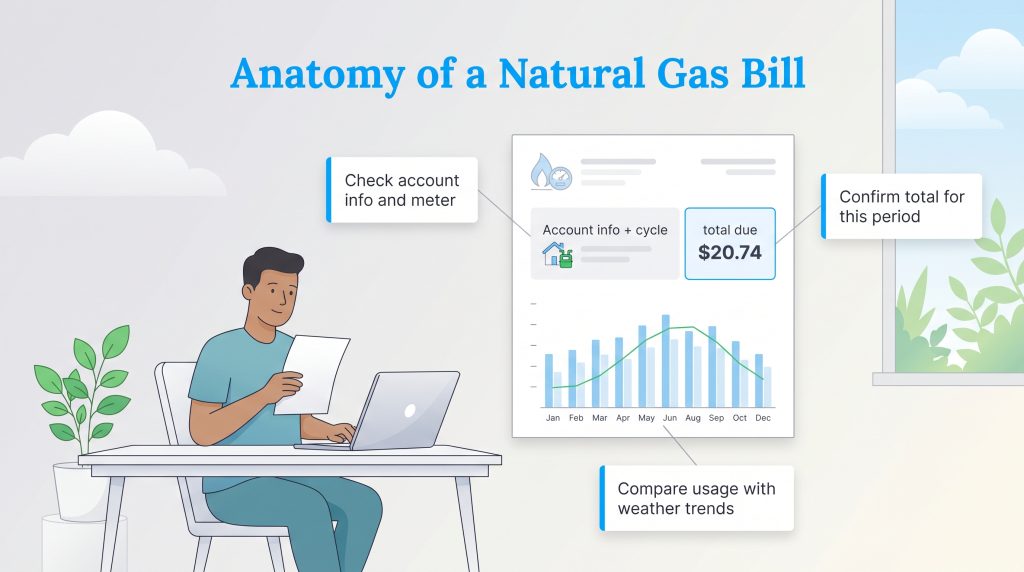
Every utility provider uses a slightly different template design, but visualizing a standard document reveals a highly predictable breakdown of costs. Learning how to read natural gas bill formats gives you the high-level summary necessary to verify billing accuracy before you ever submit a payment. Knowing exactly where to look for critical account data is your first line of defense against administrative errors. Match the key components below to your own statement to easily navigate your monthly charges.
- Account Number: Your unique identification sequence tied to your specific household and local meter.
- Billing Cycle: The exact dates covering your current energy usage, usually spanning anywhere from 28 to 33 days.
- Therms Used: The total amount of physical heat energy your home consumed during the specific billing cycle.
- Total Amount Due: The final, bolded sum of your supply costs, utility delivery fees, and municipal tax liabilities.
Locating Your Account Info and Billing Cycle
Your essential account details typically sit at the very top of your statement, listing your service address and the specific meter number attached to your home. Always verify these match your actual residence so you aren’t accidentally paying for a neighbor’s usage due to a simple clerical mix-up. A longer billing cycle naturally results in higher overall costs simply because you are paying for several extra days of continuous energy consumption.
Reading Your Usage History Graph
Most modern statements feature an integrated visual bar chart comparing your current consumption directly to the same month from the previous year. These helpful graphs usually display the average daily outdoor temperature directly alongside your usage metrics. This visual tool helps you instantly connect a massive winter spike to a well-documented regional cold snap rather than an expensive, sudden appliance malfunction.
Decoding Natural Gas Measurements (Therms, CCF, and BTUs)
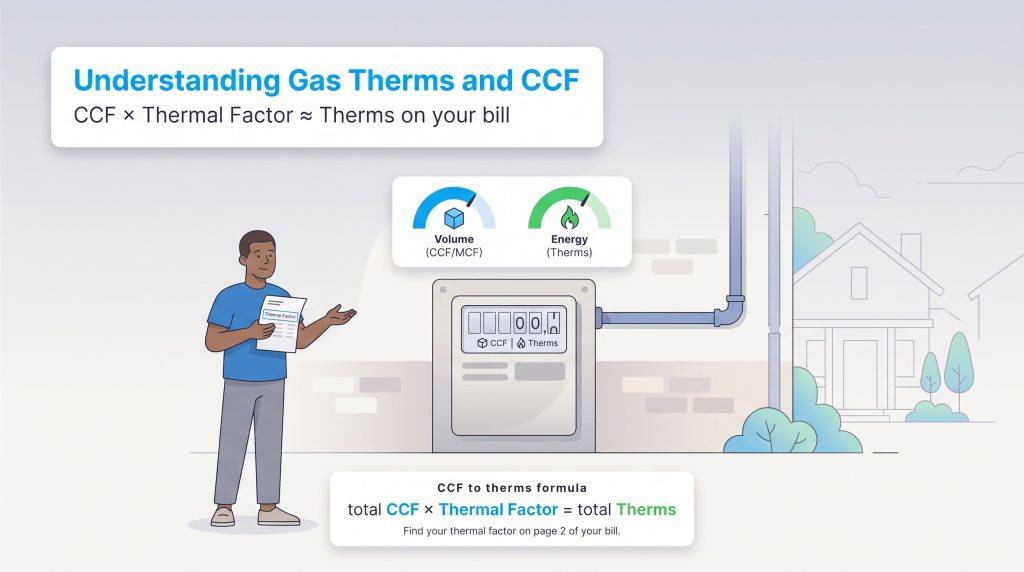
When you sit down to evaluate your monthly usage, determining the core difference between CCF and therms requires distinguishing the physical space the fuel occupies from its raw heating potential. Because natural gas expands and contracts wildly based on outdoor temperatures and underground pipeline pressure, billing purely by volume is inherently unfair. Utilities rely on a specific natural gas conversion factor to guarantee that you are billed accurately for the true thermal output provided to your home.
| Measurement Type | Unit Name | Definition |
|---|---|---|
| Volume | CCF (Hundred Cubic Feet) | The natural gas ccf meaning refers to the pure physical volume of the gas delivered directly to your home’s meter. |
| Volume | MCF (Thousand Cubic Feet) | Often utilized for much larger residential properties or commercial accounts, measuring in MCF simply scales the total volume up by a factor of 10. |
| Heat Energy | BTU (British Thermal Unit) | The foundational measurement of energy required to raise the temperature of exactly one pound of water by one degree Fahrenheit. |
| Heat Energy | Therm | Equivalent to 100,000 BTUs. A therm is the standardized billing unit measuring the raw heat energy contained deep within the gas itself. |
If you want to confidently learn how to read a gas meter, you must first master this vital mathematical conversion. Simply multiply your total CCF volume by your utility’s specifically assigned conversion factor (usually resting around 1.037) to determine your true total therms.
Breaking Down Your Gas Bill Charges
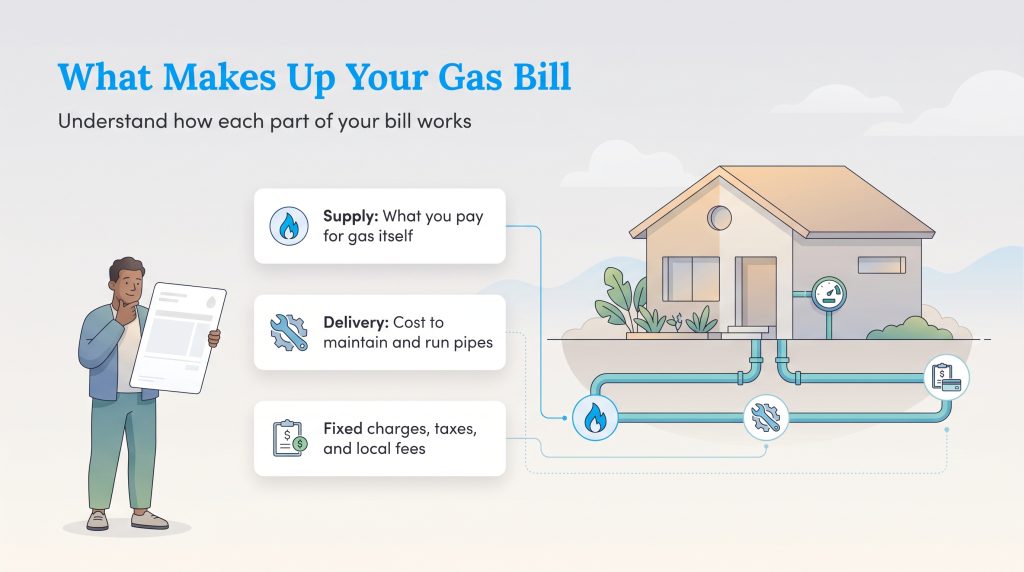
No matter which utility provider safely services your neighborhood, your monthly statement almost always splits your overall household costs into distinct primary categories. To truly grasp the financial impact of your billing cycle, you absolutely must separate the physical gas you burn from the underground pipeline infrastructure carrying it.
Supply Charges (Commodity Costs)
Your natural gas supply charges exclusively cover the cost of the actual raw fuel molecules your household consumed during the month. If you reside in a deregulated natural gas market, you hold the rare power to actively shop around and choose your own supplier, which allows you to lock in a fixed-rate contract and shield your budget from volatile winter price spikes. If you live in a regulated state, utilities pass this wholesale cost directly through to you using a “gas cost recovery rate” with zero additional retail markup.
Delivery and Distribution Charges
Your distribution and delivery charges pay for the physical maintenance of the local pipeline infrastructure routing the gas straight to your home. These rates are strictly regulated by your state’s public utility commission to cover essential grid safety protocols, meter readers, and specialized emergency service crews. You cannot shop around for delivery services; your local utility retains a strict monopoly on maintaining the physical pipes in your specific geographic area.
Fixed Customer Charges, Taxes, and Fees
Beyond raw supply and physical delivery, utilities always charge state and local civic taxes based on your specific municipality laws. You will also see a fixed natural gas customer charge applied just to keep your account open and active on the grid. This means you must pay a baseline administrative amount even if you use absolutely zero natural gas during a summer vacation. You might also encounter small franchise fees or environmental riders designed to fund local weatherization assistance programs.
Why Does My Natural Gas Bill Fluctuate?
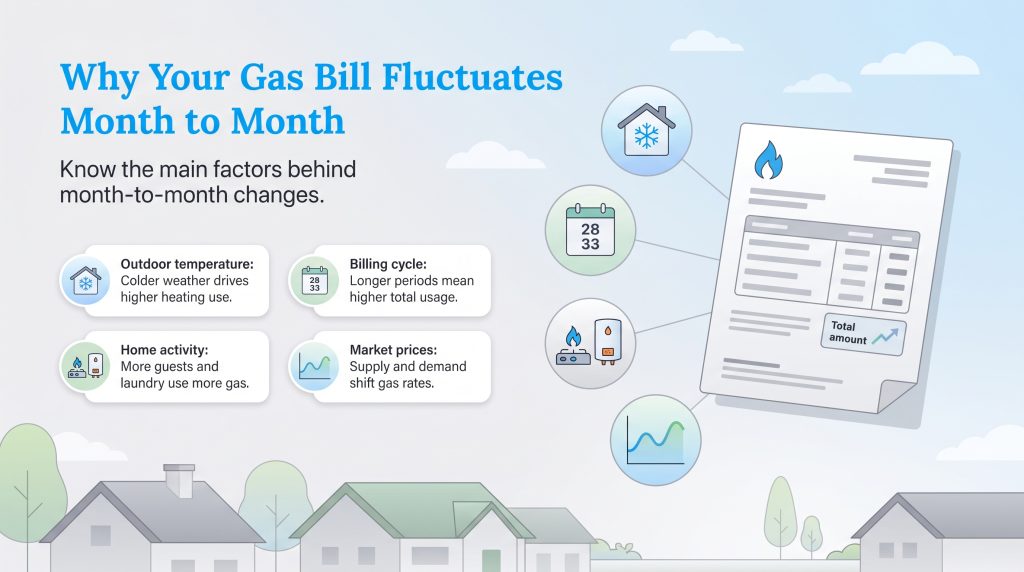
Opening an unusually high utility statement can cause an immediate wave of financial panic for any homeowner. If you are frantically searching online asking “why is my gas bill so high?“, a few common culprits always provide a clear, logical explanation. These four primary factors dictate exactly how much energy you draw and precisely what you pay for it throughout the year.
- Severe winter weather: Frigid temperatures aggressively force your central furnace to work overtime just to maintain a baseline warmth. Because heating your home makes up the vast majority of residential gas consumption, extreme cold snaps always cause massive usage spikes.
- Length of the billing cycle: A monthly statement covering 32 days of continuous appliance usage will naturally look significantly more expensive than a shorter 28-day cycle, even if your daily heating habits stayed exactly the same.
- Global natural gas market prices: Geopolitical events, severe storms, and supply chain disruptions routinely create sudden natural gas price fluctuations that severely impact your wholesale costs.
- Aging home appliances: Older, inefficient furnaces and traditional water heaters burn significantly more fuel than modern ENERGY STAR models just to produce the exact same amount of heat energy for your family.
Identifying Utility Billing Errors and Estimated Reads
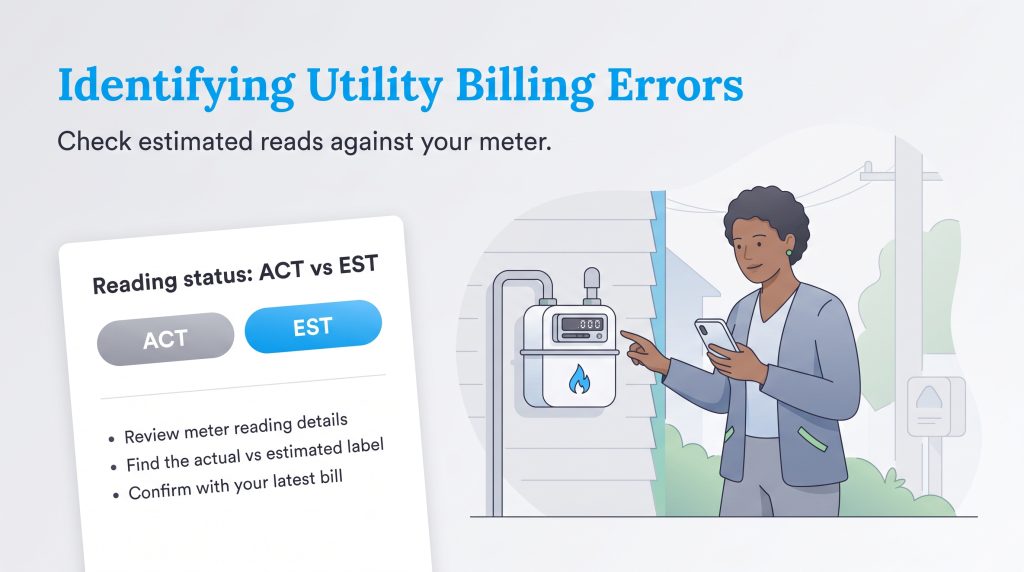
While local utility companies rely on highly advanced digital tracking systems, human error and mechanical failures still occur with surprising regularity. Catching an artificially inflated statement — usually caused by an estimated versus actual gas reading discrepancy — protects your bank account. Here is a brief guide on how to actively audit your own meter reading:
- Locate the reading status: Check the main usage section of your bill to see whether the reading is clearly marked as “ACT” (actual) or “EST” (estimated).
- Check your physical meter: If the bill reads “EST,” walk outside to your gas meter and write down the exact sequence of numbers displayed on the screen from left to right.
- Compare the data: Match the physical numbers you just recorded against the estimated volume printed on your statement.
- Request a true-up adjustment: If your physical meter shows significantly less usage than the estimated bill claims, call your utility provider’s customer service line immediately to request a manual read adjustment.
Taking Control of Your Energy Costs
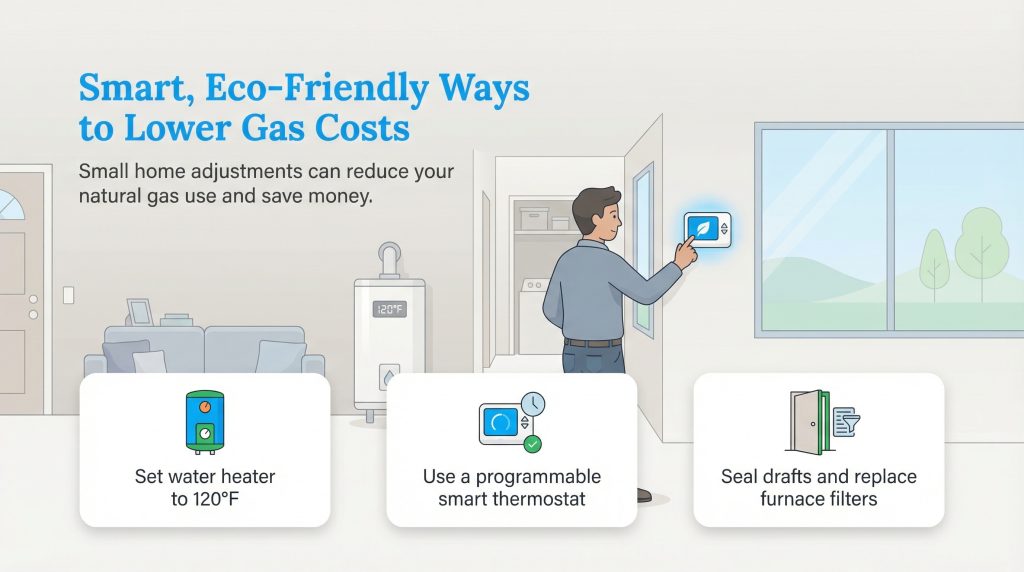
Understanding the varied, complex charges on your monthly statement is only half the battle. The real value comes directly from leveraging that detailed knowledge to make meaningful, energy-saving upgrades around your house. Implementing these five imperative, low-cost steps will significantly lower your natural gas consumption while keeping your home thoroughly comfortable.
- Adjust your water heater: Turning your primary water heater thermostat down to an even 120 degrees prevents accidental scalding and slashes the passive energy required to keep that massive reservoir hot all day long.
- Wash clothes in cold water: Switching your washing machine to a permanent cold cycle reduces the immense energy strain on your gas water heater, significantly extending its overall mechanical lifespan.
- Seal exterior drafts: Weatherstripping exterior doors and caulking drafty windows successfully traps warmth inside, preventing your furnace from constantly kicking on to compensate for thermal loss.
- Install a smart thermostat: Upgrading to a highly responsive smart thermostat allows you to intelligently program your central heating to drop a few degrees while you sleep, effectively cutting fuel consumption without ever sacrificing your personal comfort.
- Shop for competitive rates: If you reside in a deregulated market, do not settle for the default utility rate. Compare alternative gas suppliers online to lock in a significantly more favorable supply rate using our tips for choosing a natural gas plan.
Many of these reliable techniques closely mirror similar strategies used to lower your electric bill, proving that comprehensive home efficiency directly benefits both your personal finances and the broader environment. You can also dive deeper into strategies to save on your gas bill with proper weatherization techniques to maximize your savings year-round.
Preparing Your Household for Winter Energy Expenses
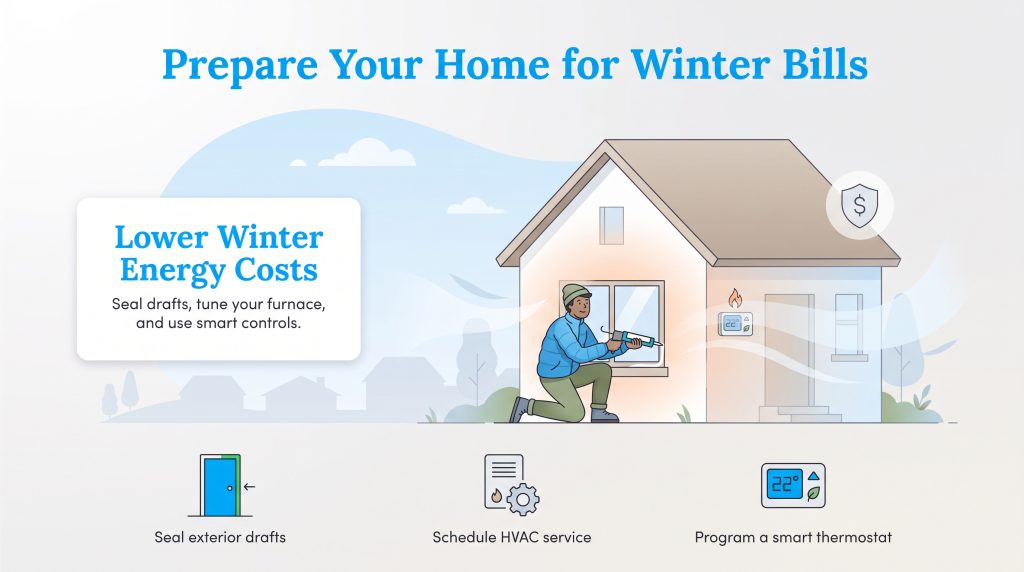
When the temperature inevitably drops in late autumn, your central furnace rapidly kicks into high gear, making winter the absolute most expensive season for natural gas consumers. Rather than anxiously waiting for an astronomical January bill to arrive in the mail, you can proactively winterize your property to mitigate those towering utility costs. Tackling these specific home maintenance tasks guarantees your heating system runs efficiently all season long.
- Schedule HVAC maintenance: Hire a licensed professional to thoroughly inspect your furnace long before the first freeze hits to ensure optimal combustion and safety.
- Replace air filters: Changing your furnace filters regularly ensures ideal airflow, allowing your system to operate at peak efficiency rather than struggling to pull clean air through a filthy barrier.
- Insulate your attic: Adding an extra layer of blown-in insulation to your attic floor keeps the expensive heat your furnace generates from escaping straight through your roof.
- Utilize sunlight: Open your south-facing window treatments during the day to capture free, passive solar heat, and close them tightly at night to add an extra layer of thermal insulation against the cold glass.
Mastering Your Annual Energy Budget
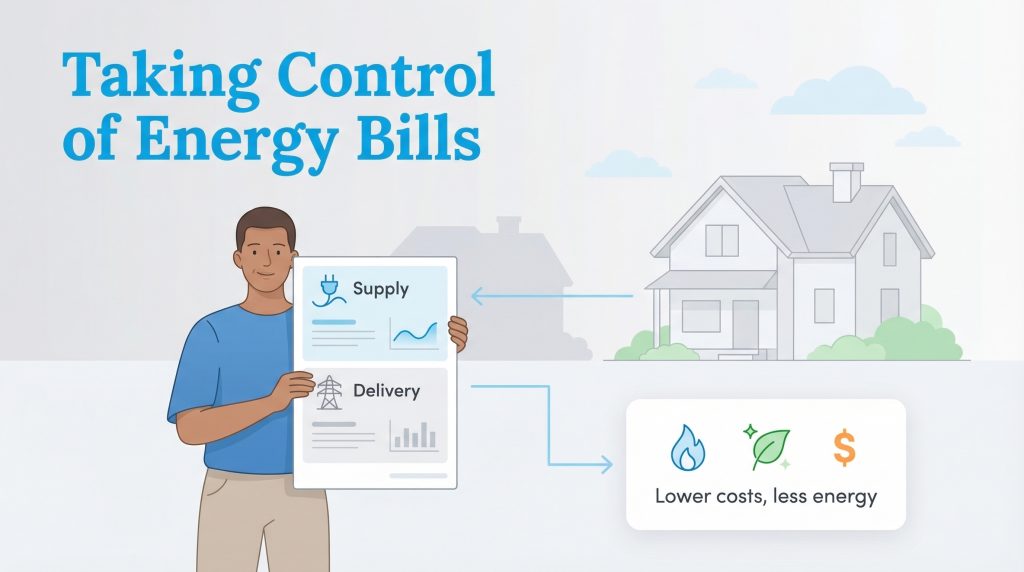
Routinely tracking your utility statements is one of the absolute easiest ways to definitively safeguard your household budget against creeping infrastructure costs and sudden seasonal rate spikes. Now that you fully understand the crucial difference between raw supply charges and mandatory delivery fees, those mysteriously high winter totals finally make perfectly logical sense. To truly master your finances, you need to establish a reliable baseline of what normal consumption looks like for your specific property.
We strongly recommend auditing your next three consecutive gas bills to calculate a highly accurate average natural gas bill baseline for your household. Once you map out this exact baseline, you can pinpoint exactly where targeted, energy-saving home upgrades will generate the biggest financial return over the coming years. This newfound clarity empowers you to make an environmentally mindful choice without breaking the bank. We actively encourage you to explore our natural gas resources for even more actionable advice on keeping your home warm, your monthly overhead low, and your environmental impact strictly contained.
Frequently Asked Questions About Understanding Your Natural Gas Bill
Why is my natural gas delivery charge higher than the supply charge?
Delivery charges often exceed supply costs because they fully fund the massive, expensive physical pipeline infrastructure required to safely route gas directly to your neighborhood. While the raw fuel itself might be relatively cheap on the wholesale market, maintaining safe, pressurized underground pipes and paying specialized utility crews requires significant capital year-round.
What is a therm of natural gas and how is it calculated?
A therm is a standardized unit of measurement that equals exactly 100,000 British Thermal Units (BTUs) of raw heat energy. Utilities calculate your billed therms by taking the physical volume of gas you used (measured in CCF) and multiplying it by a specific thermal conversion factor.
How can I lower my natural gas bill in the winter?
You can effectively lower your winter gas bill by sealing exterior window drafts, scheduling annual furnace maintenance, and installing a programmable smart thermostat. These proactive, energy-saving upgrades prevent expensive heat from escaping your home, ensuring your furnace burns significantly less fuel while keeping your family comfortable.
What is the delivery charge on my natural gas bill?
The delivery charge covers the utility’s absolute cost of safely transporting fuel from the main grid directly to your home. This mandatory fee actively pays for essential pipeline maintenance, accurate meter readings, regional safety protocols, and the expert service technicians managing the local infrastructure.
How do I convert CCF to therms on my bill?
You convert your physical gas volume into heat energy by multiplying your CCF reading by your utility’s specific thermal factor. This unique multiplier typically ranges from 1.02 to 1.05, meaning one CCF translates to roughly 1.037 total therms on your final statement.
Why is my natural gas bill suddenly so high?
Sudden financial spikes are almost always caused by plummeting winter temperatures that aggressively force your central furnace to run endlessly. Other common culprits include noticeably extended billing cycles or a rapid, unexpected increase in wholesale market supply rates during a regional pipeline disruption.
What is the average natural gas bill per month?
The average monthly cost varies drastically based entirely on your local climate, exact home square footage, and current regional utility rates. You will generally experience massive bills during peak winter heating months and significantly cheaper statements throughout the milder shoulder seasons.
Why do I have a gas bill in the summer when my heat is off?
You still receive a summer bill because utilities apply mandatory administrative customer charges just to keep your grid connection fully active. Additionally, passive household appliances like your gas water heater or gas oven continuously draw small amounts of fuel all year round.
Can I choose who supplies my natural gas?
You can absolutely choose your own natural gas supplier if you currently reside in a state that supports a deregulated energy market. This gives you the ultimate freedom to shop around and confidently lock in a competitive third-party supply rate, though your local utility will still physically deliver it.
What is a customer charge on a gas bill?
A customer charge serves as a fixed monthly base fee routinely levied by your utility provider just to keep your account open. It primarily covers the necessary administrative costs of generating physical statements, maintaining billing software, and staffing customer service desks, regardless of your actual consumption.
What is a gas cost recovery rate?
The gas cost recovery rate is a heavily regulated pricing mechanism utilities employ to smoothly pass the wholesale price of raw fuel straight to the consumer. Because state laws mandate that this fee offers no retail markup, you only pay exactly what the utility paid for the gas.
How do I know if my gas meter reading is estimated or actual?
You can easily verify your reading type by checking the main usage section printed on your statement for a highly visible “ACT” or “EST” tag. If it reads “EST,” your utility merely estimated the data, meaning you can easily challenge an unusually high bill by submitting a manual meter read.
Will weather affect my bill if I have a fixed gas rate?
Yes, extreme winter weather will absolutely increase your final bill due to a much higher overall volume of fuel consumption. While your locked-in rate per therm remains perfectly static, forcing your furnace to run constantly means you inevitably purchase significantly more therms overall.
About the Author

David has been an integral part of some of the biggest utility sites on the internet, including InMyArea.com, HighSpeedInternet.com, BroadbandNow.com, and U.S. News. He brings over 15 years of experience writing about, compiling and analyzing utility data.

LaLeesha has a Masters degree in English and enjoys writing whenever she has the chance. She is passionate about gardening, reducing her carbon footprint, and protecting the environment. She also recently served as President of the Board for City Sprouts (a community garden).