
Learn how Ohio’s default natural gas rate works and whether it’s the right choice for your home.
Key Takeaways
- The Standard Choice Offer (SCO) is the default natural gas rate in Ohio for eligible customers who haven’t chosen a specific supplier.
- Your monthly rate is calculated using the NYMEX market price plus a Retail Price Adjustment, meaning it changes every month based on demand.
- While the SCO guarantees a market-based price, switching to a Retail Choice plan can provide more predictable bills and eco-conscious options.
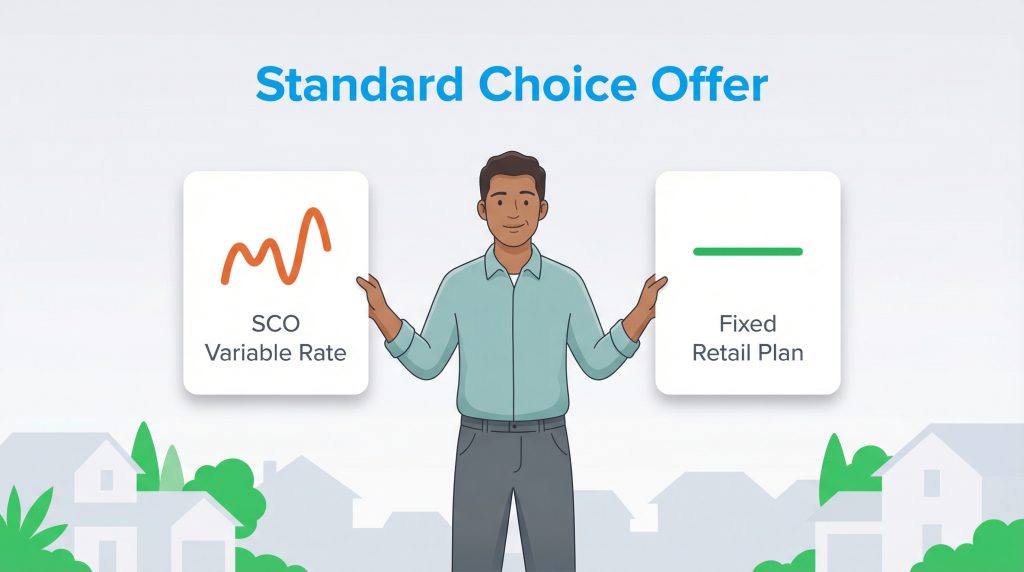
If you live in Ohio and use natural gas, you might have noticed the term “Standard Choice Offer” or “SCO” on your monthly bill and wondered exactly what you are paying for. For many residents, especially those served by Columbia Gas of Ohio or Enbridge (formerly Dominion East Ohio), the SCO is the default setting for their natural gas supply. It isn’t a penalty or a hidden fee. It is simply a regulated, market-based rate assigned to you because you haven’t actively selected an independent energy supplier. Understanding how this rate fluctuates can help you decide whether to stick with the default or shop around for a plan that offers more stability or green energy perks. We’ll walk you through when it makes sense to stick with SCO and when a fixed-rate retail plan might be worth a closer look.
What Is the Standard Choice Offer (SCO)?
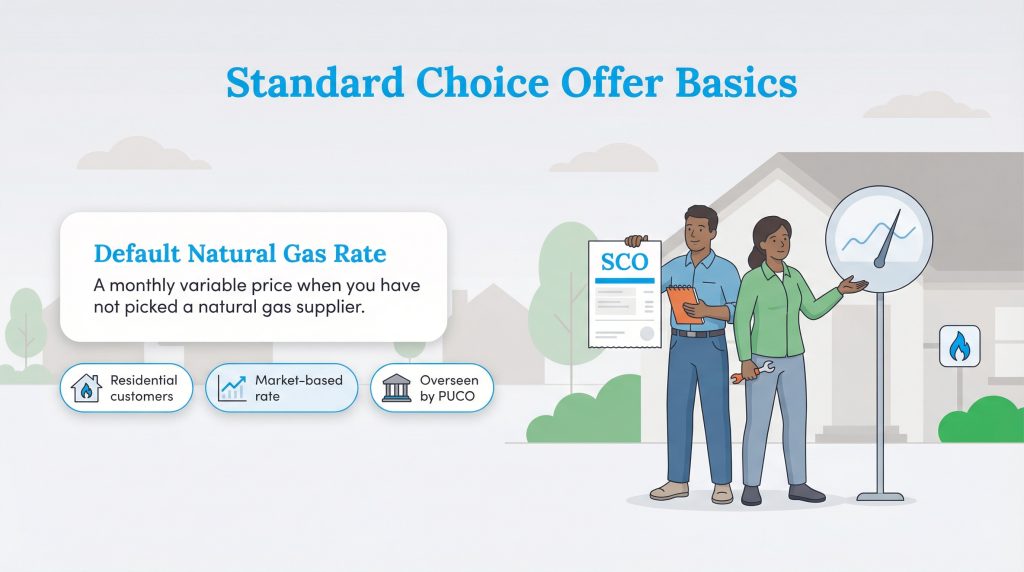
The Standard Choice Offer (SCO) is the default natural gas rate provided to residential customers who are eligible for “Choice” programs but have not selected a specific retail supplier. It ensures that everyone has access to a reliable supply of natural gas at a fair, regulated price. Unlike a fixed-rate plan where you pay the same amount per unit of gas for a year or more, the SCO is a variable rate that changes monthly.
This rate is overseen by the Public Utilities Commission of Ohio (PUCO). Its primary goal is to pass the commodity cost of gas through to you at a market-based rate, rather than allowing suppliers to set their own unregulated commodity prices. If you are a new homeowner in a participating service area, you are typically placed on this rate automatically after a short introductory period.
Who Is Eligible for the SCO?
The SCO applies primarily to customers of major investor-owned utilities in Ohio who participate in the Energy Choice program. You are likely on the SCO rate if you receive gas from Columbia Gas of Ohio or Enbridge Gas Ohio and have not signed a contract with an independent competitive retail natural gas supplier. This default status generally applies to residential customers and many small business customers who fall under the utility’s standard usage limits (for example, up to a certain annual Mcf threshold defined in your utility’s tariff).
How Is the SCO Rate Calculated?
One of the biggest advantages of the Standard Choice Offer is transparency. While the price changes monthly, the formula used to set that price is public and regulated. Understanding this formula helps you see why your bill might spike in the winter or drop in the summer. It provides a clear window into the actual state of the energy market.
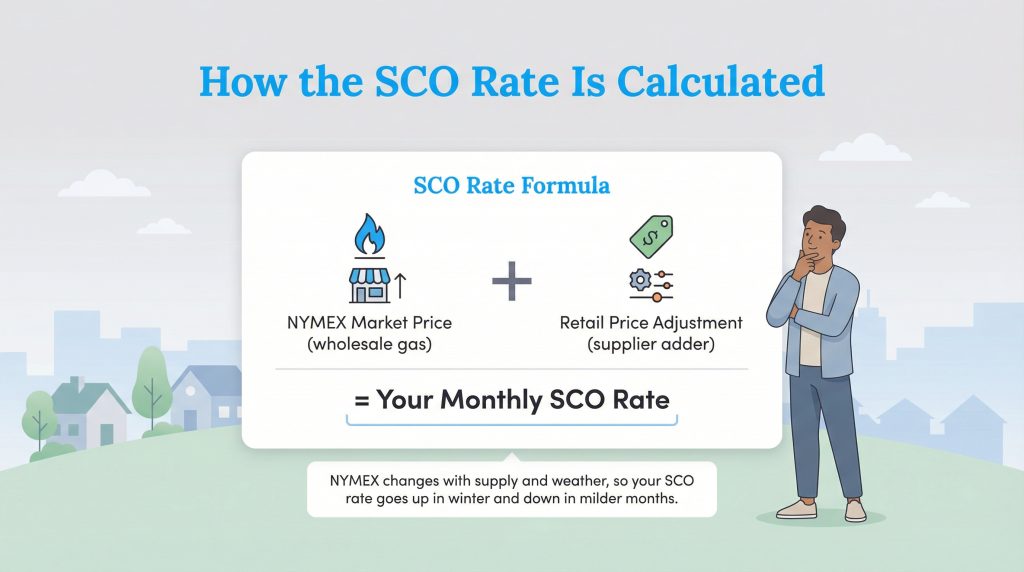
The SCO rate is determined by adding two main numbers together. First is the NYMEX Month-End Settlement Price, which is the wholesale cost of natural gas on the national market (the New York Mercantile Exchange) and reflects the raw cost of the fuel. The second component is the Retail Price Adjustment (RPA), a small, competitively bid adder determined by an annual auction that covers the supplier’s administrative costs and risks.
The SCO Formula Simplified
To figure out what you are paying, you can look at this simple equation:
NYMEX Market Price + Retail Price Adjustment = Your Monthly SCO Rate
Because the NYMEX price fluctuates based on global supply and weather (demand is higher in winter), your SCO rate will rise and fall in sync with the market. This is the definition of a variable rate, and it stands in contrast to fixed-rate plans where the supplier absorbs the risk of market volatility.
Standard Choice Offer vs. Retail Choice: Which Is Better?
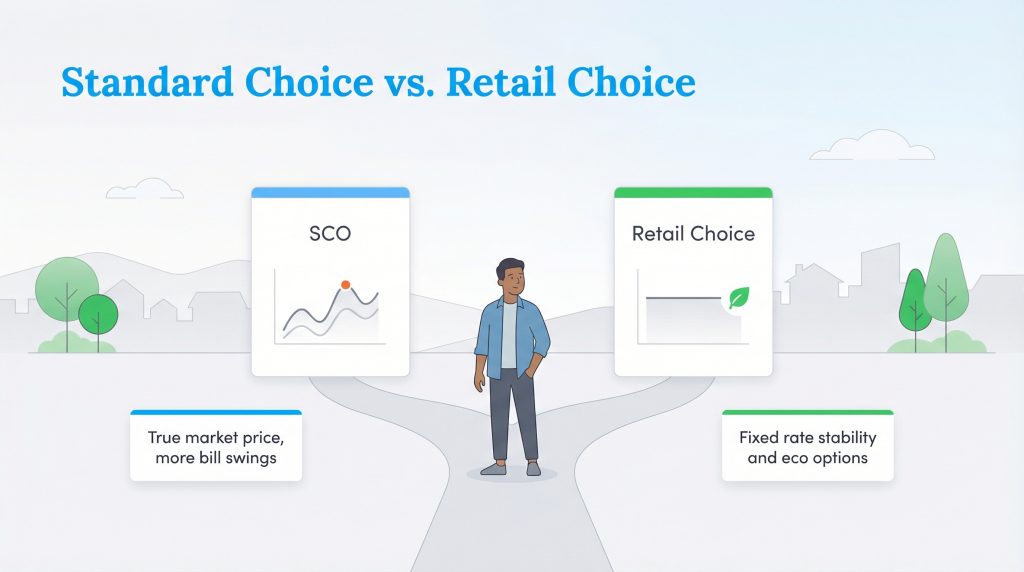
This is the most common question homeowners face: Should you stay on the Standard Choice Offer or switch to a Retail Choice supplier? There is no single “right” answer, as it depends on your budget, risk tolerance, and sustainability goals. You can explore more about the differences between fixed and variable rates to help inform your decision.
When to Stick with SCO
Staying with the Standard Choice Offer is often a good strategy if you want to pay the true market price for gas. Variable market rates can sometimes end up lower than fixed-rate offers, especially when gas prices are falling or during shoulder seasons like spring and autumn.
The pros of the SCO include having no contracts and no cancellation fees. However, the cons are significant for budget-conscious households: you face unpredictable bills in winter. For example, if you’re moving into a home in the spring and don’t want to commit to a long contract right away, staying on SCO for a few months can give you time to watch prices and compare offers.
When to Switch to Retail Choice
“Retail Choice” allows you to shop for a supplier through the Energy Choice Ohio website. This is similar to shopping for a mortgage rate, you are looking for terms that fit your life. You can browse offers from dozens of certified providers to find a plan that aligns with your financial needs.
The primary benefit here is stability. You can lock in a fixed rate for 12 to 36 months, protecting you from market spikes. If you’re on a tight monthly budget and a winter price spike would be stressful, a 12- or 24-month fixed plan can make your bills more predictable. Additionally, Retail Choice is usually the most practical way to choose an environmentally mindful option for your gas supply. Many suppliers offer carbon-neutral plans or carbon offset add-ons, which typically aren’t available through the standard SCO mix. If you’re focused on lowering your carbon footprint, our sustainable living tips can help you pair the right gas plan with everyday energy-saving choices.
Comparison at a Glance
| Feature | Standard Choice Offer (SCO) | Retail Choice (Supplier) |
|---|---|---|
| Rate Type | Variable (Changes Monthly) | Mostly Fixed (can be Variable) |
| Contract Length | None (Month-to-Month) | 6, 12, 24, or 36 Months |
| Cancellation Fees | None | Potential Early Termination Fees |
| Green Options | Standard Grid Mix | Carbon-Neutral / Offset Options Available |
| Best For | Flexible budgets & market watchers | Budget stability & eco-conscious users |
How To Check Current SCO Rates For Columbia Gas And Enbridge
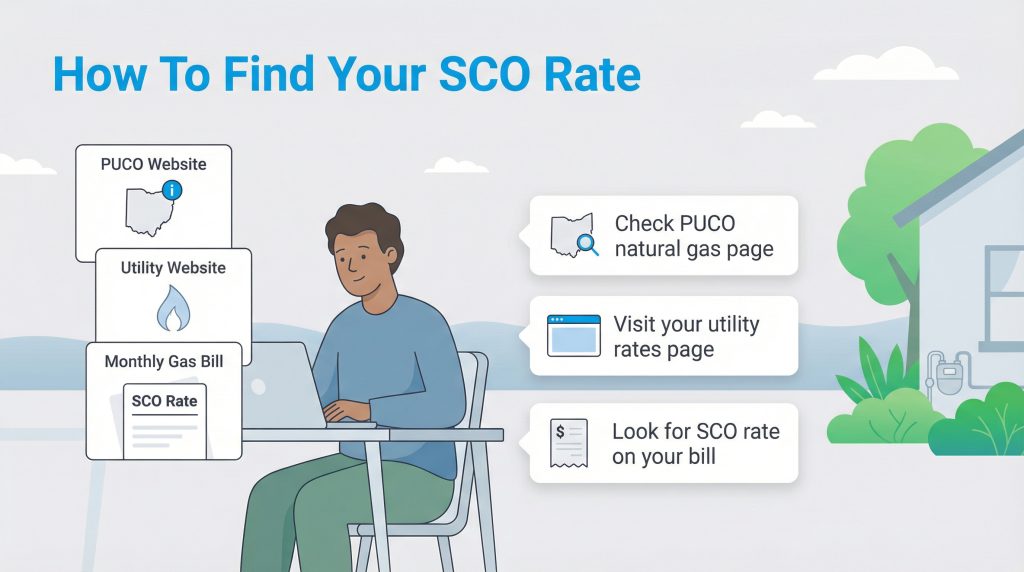
If you’re a Columbia Gas of Ohio or Enbridge (Dominion Energy Ohio) customer, you can find the current Standard Choice Offer rate in a few ways. PUCO publishes SCO information for each eligible utility, and your utility also lists current and historical gas rates.
To see today’s SCO rate, check the natural gas section of the Public Utilities Commission of Ohio (PUCO) website or look under “Rates” or “Gas Cost” on your utility’s site. Your current SCO supplier and rate will also appear on your monthly bill.
Making the Smart Choice for Your Budget
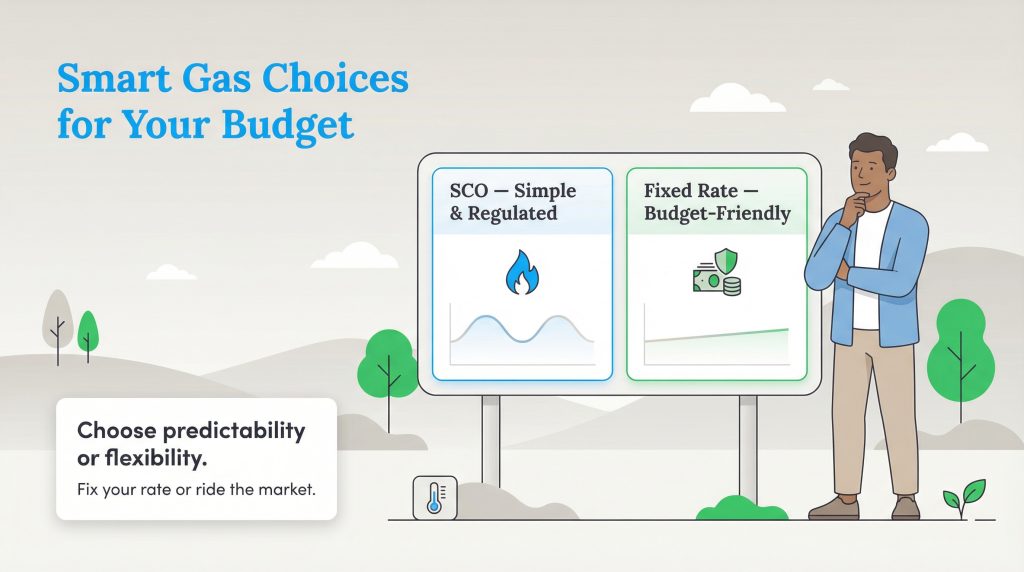
Deciding between the Standard Choice Offer and a retail supplier ultimately comes down to how much you value predictability versus market flexibility. If you prefer to “set it and forget it” and don’t mind your bill fluctuating with the seasons, the SCO is a regulated, safe option that ensures you never pay a supplier markup on the gas commodity itself. However, if you are managing a strict household budget or want to support green energy initiatives, taking the time to shop for a fixed-rate retail plan is likely the better move for your home. You can also reduce your natural gas usage with simple habit changes; learn more in our guide to saving on your gas bill. For more information on managing your home’s energy, visit our natural gas hub.
FAQs About the Standard Choice Offer
Is the Standard Choice Offer a variable rate?
Is the Standard Choice Offer usually cheaper than a fixed-rate plan?
Can I cancel the Standard Choice Offer at any time?
Why is there a supplier name on my bill if I’m on the SCO?
Does the SCO include carbon offsets or renewable gas?
Where can I check the current SCO rate?
How often does the SCO rate change?
About the Author

David has been an integral part of some of the biggest utility sites on the internet, including InMyArea.com, HighSpeedInternet.com, BroadbandNow.com, and U.S. News. He brings over 15 years of experience writing about, compiling and analyzing utility data.