
Major utilities are slashing procurement costs as the spring shoulder season begins, providing much-needed relief for homeowners and renters alike.
Key Takeaways
- Natural gas procurement rates are falling significantly across California this April, with SoCalGas leading the way with a price drop of over 52%.
- The annual California Climate Credit will be applied to most residential bills this month, which could cover the entire cost of gas for households with lower usage.
- While current variable rates are low, you can consider locking in prices through a Core Transport Agent to protect yourself from future winter price spikes.
If you’ve been dreading your utility bill after a chilly winter, we have some great news to share. As we move into the “shoulder season”, that sweet spot between the winter heating peak and the summer cooling rush, natural gas prices are taking a welcome dip. At UtilitiesForMyHome.com, we’re always looking for ways to help you save energy and money, so let’s break down exactly what’s happening with your bill this month.
The Big Drop: April 2026 Rate Changes
Starting April 1, California’s three largest investor-owned utilities are reducing the “procurement” part of your bill. This is the actual cost the utility pays to buy the gas they send to your home. By law, they pass this cost to you without any markup, so when wholesale prices drop, your costs drop too.
Here is how the procurement rates have shifted from March 2026 to April 2026:
| Utility | March Rate ($/therm) | April Rate ($/therm) | Percentage Decrease |
| SoCalGas | $0.35658 | $0.16863 | 52.7% |
| PG&E | $0.31276 | $0.21389 | 31.6% |
| SDG&E | $0.47 | $0.397 | 15.5% |
SoCalGas customers are seeing the biggest win this month, with rates falling by more than half. PG&E follows with a solid 31.6% reduction, while SDG&E maintains slightly higher rates but still offers a 15.5% break compared to last month.
Why are rates falling now?
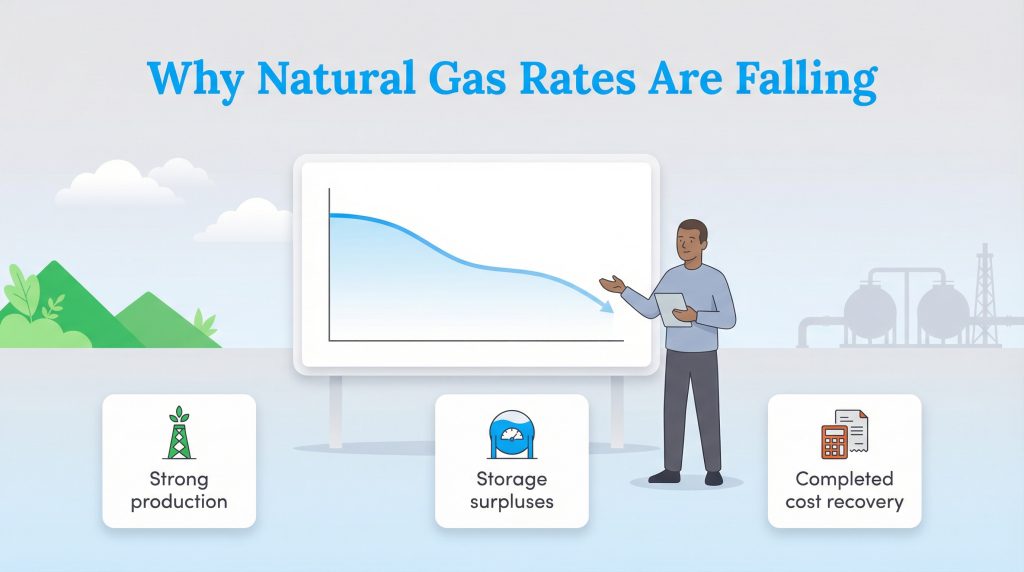
It isn’t just luck, it’s a combination of market timing and high supply. Wholesale natural gas prices at the Henry Hub benchmark hit a six-month low of $2.82 per $MMBtu$ (Million British Thermal Units) in early April.
Several factors are driving this:
- Strong Production: U.S. dry natural gas production reached record highs of nearly 118 billion cubic feet per day.
- Storage Surpluses: Thanks to a relatively mild end to the winter, storage levels in the Pacific region are currently about 48% above the five-year average.
- Accounting Wins: For PG&E customers, rates are also falling because the company completed a two-year cost recovery period related to previous infrastructure work.
Your Secret Weapon: The California Climate Credit
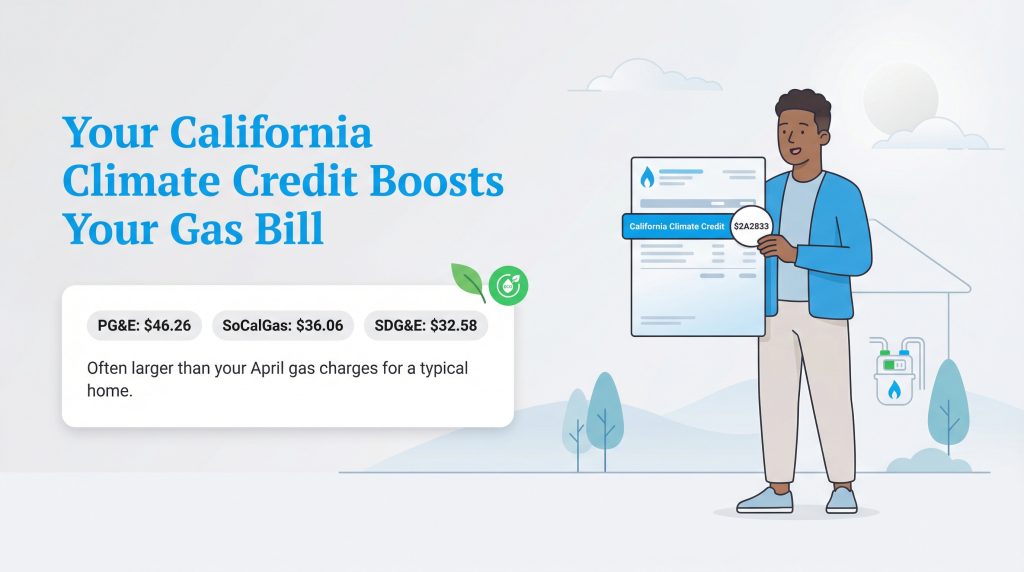
The best part about your April bill isn’t just the lower rate, it’s the California Climate Credit. This credit comes from the state’s Cap-and-Invest Program, which requires large polluters to pay for their emissions. That money is then sent directly back to you.
For April 2026, the gas climate credit amounts are:
- PG&E: $46.26
- SoCalGas: $36.06
- SDG&E: $32.58
Since a typical household uses only about 27 to 31 therms in April, this credit might actually be larger than your entire gas charge for the month.
Is it time to “lock in” your rate?
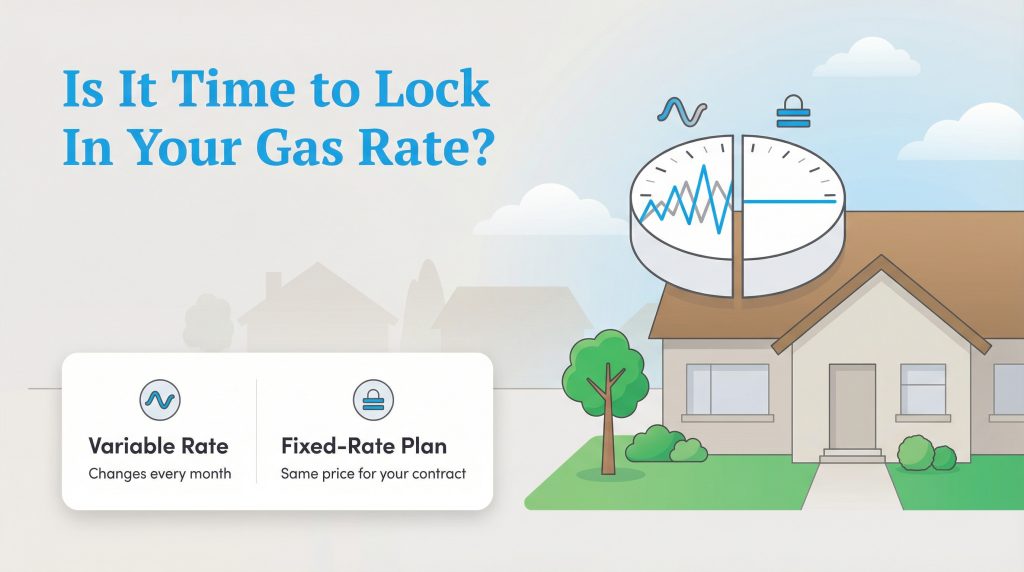
If you’re moving into a new home or just want more predictable bills, you don’t have to stick with your utility’s monthly variable price. Through the California Public Utilities Commission, you can choose a third-party supplier known as a Core Transport Agent (CTA).
Many CTAs offer fixed-rate plans. While the utility’s price changes every month, a fixed-rate plan stays the same for your entire contract (usually 12 months). This protects you from the massive price spikes that can happen during a sudden winter storm. Just keep in mind that if market prices keep falling, you’ll be “locked in” at that higher rate until your contract ends.
Who is impacted?
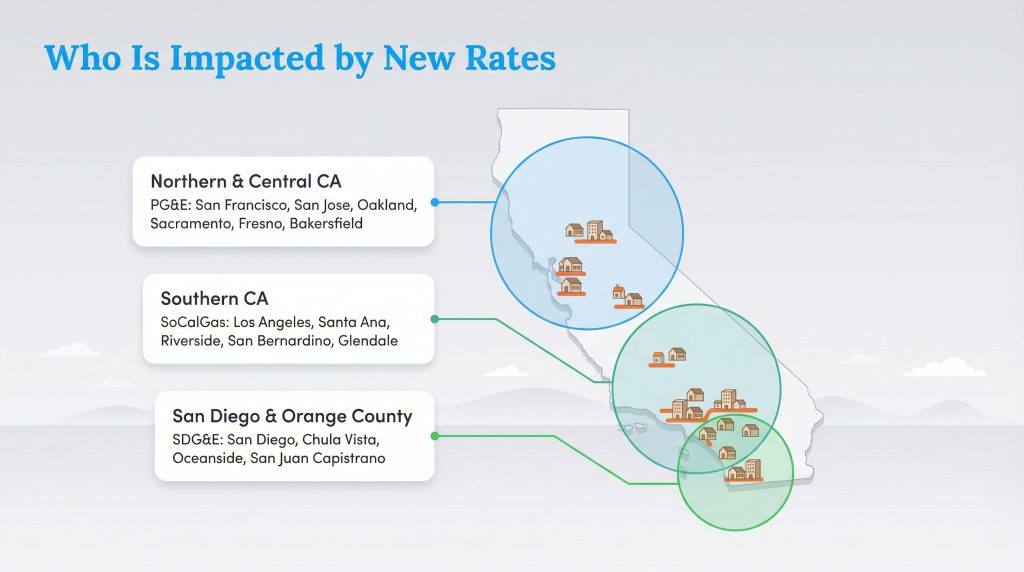
These rate changes affect millions of neighbors across the state. If you live in one of these major areas, you’ll see these updates on your next statement:
- Northern & Central CA (PG&E): San Francisco, San Jose, Oakland, Sacramento, Fresno, and Bakersfield.
- Southern CA (SoCalGas): Los Angeles, Santa Ana, Riverside, San Bernardino, and Glendale.
- San Diego & Orange County (SDG&E): San Diego, Chula Vista, Oceanside, and South Juan Capistrano.
Smart Steps to Take Now
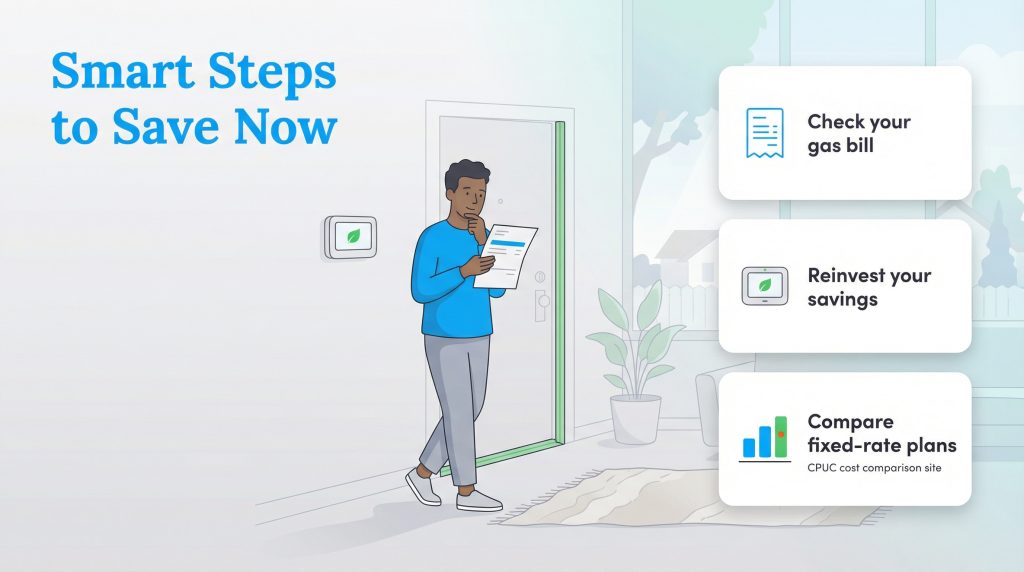
While we’re enjoying lower rates today, we know that prices can shift as demand for air conditioning picks up this summer. To stay ahead of the curve, we recommend:
- Checking your bill: Make sure that Climate Credit was applied correctly.
- Reinvesting savings: Use the money you save this month to upgrade to a smart thermostat or add weatherstripping to your doors.
- Comparing plans: Visit the CPUC CTA Price Comparison Guide to see if a fixed-rate plan makes sense for your budget.
About the Author

LaLeesha has a Masters degree in English and enjoys writing whenever she has the chance. She is passionate about gardening, reducing her carbon footprint, and protecting the environment.