
Determining the best natural gas provider in Georgia comes down to comparing your monthly recurring charges, price per therm, and the eco-friendly perks each marketer offers.
Key Takeaways
- Understanding the difference between the supply charge (controlled by your marketer) and the delivery charge (controlled by Atlanta Gas Light) is the first step to lowering your winter heating bills.
- True Natural Gas often shines with transparent pricing structures, while Gas South frequently appeals to values-conscious buyers through robust community donations and flexible rate plans.
- Switching your natural gas provider in Georgia is simple and won’t interrupt your service, allowing you to seamlessly lock in the cheapest natural gas in GA before temperatures drop.
Navigating Georgia’s deregulated utility market can feel a lot like driving through Atlanta traffic during rush hour, confusing, frustrating, and full of unexpected detours. If you’re a homeowner or renter moving into a new place and trying to avoid hidden fees, comparing Gas South vs True Natural Gas is likely at the top of your to-do list. We know how overwhelming it gets when every marketer claims to offer the best deal, so our goal is to help you cut through the noise and spot the real value. By understanding exactly how these two major competitors stack up against each other, you can make a confident choice that keeps your home warm and your wallet full this winter.

- $0.390 /THM
- $6.95-9.95
- None
- 1-24 Months
- $0.699 /THM
- $5.95
- None
- 1-24 Months
*rates may vary by location and household usage
Decoding the Atlanta Gas Light Marketers Comparison
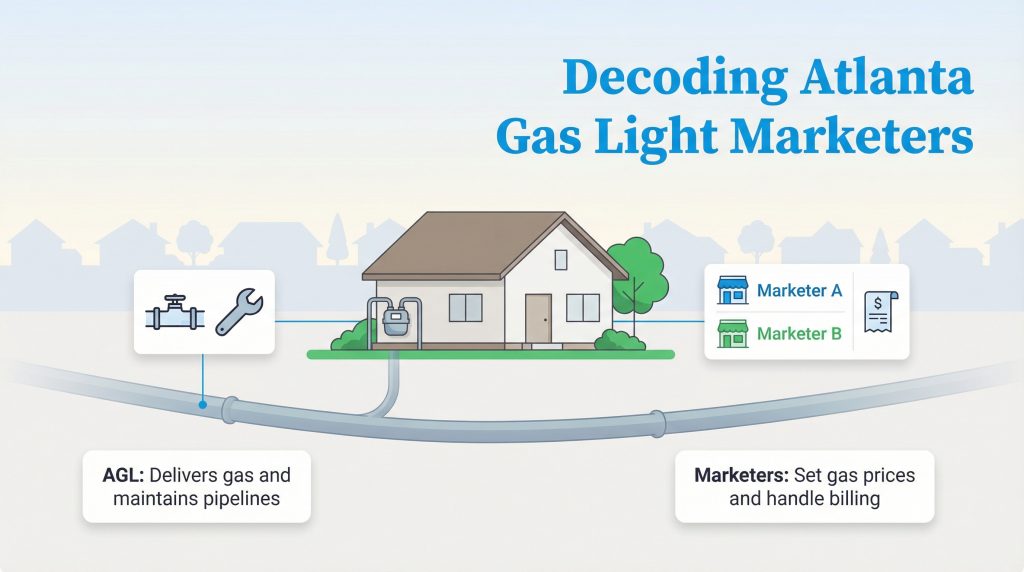
Before you dive into the nuances of specific plans, you need to understand the fundamental setup of the deregulated market in our state. An effective Atlanta Gas Light marketers comparison starts with recognizing the split responsibilities between the utility company and the retail marketers. Atlanta Gas Light (AGL) owns and maintains the physical pipeline infrastructure that snakes beneath your neighborhood. They’re the ones who fix leaks, respond to gas emergencies, and physically deliver the fuel to your meter.
On the flip side, retail marketers like Gas South and True Natural Gas handle the business end of your service. These companies buy the natural gas on the open market, sell it to you, and manage your billing and customer support. When you pay your monthly bill, a portion goes to the marketer for the actual gas you used, and another portion goes to AGL as a pass-through delivery charge. Because AGL sets the base delivery rates for everyone, your true savings come from selecting a marketer that offers the most competitive pricing structure and administrative fees.
To check current consumer protections and see how the state regulates these companies, the Georgia Public Service Commission’s natural gas explainer page offers excellent resources. They monitor the marketers to ensure fair practices, giving you peace of mind when comparing your options and locking in a new rate.
Clarifying Your Monthly Gas Bill Components
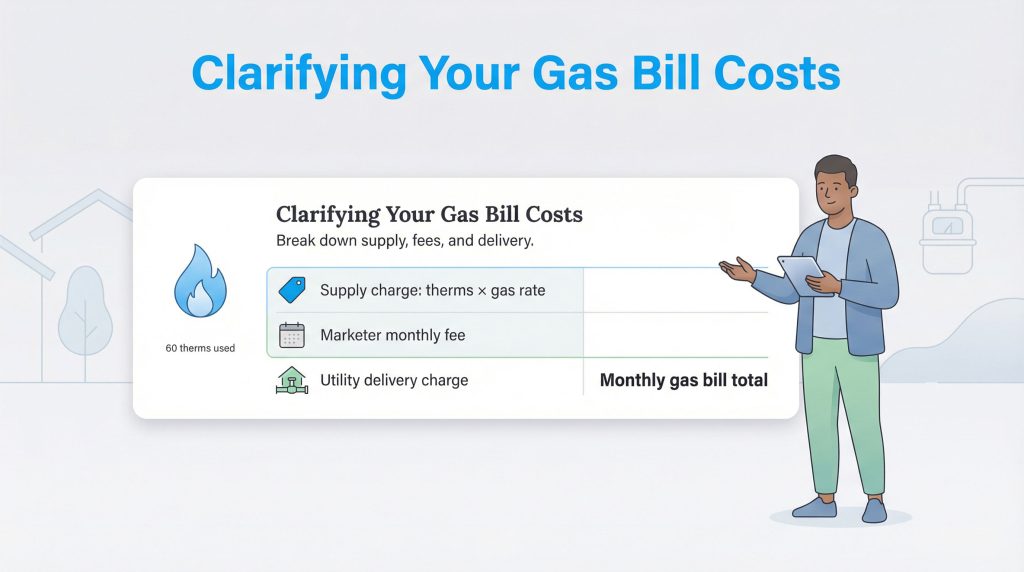
To truly compare providers, it helps to see how these charges play out in reality. Let’s look at a hypothetical example to illustrate how your monthly costs add up. Suppose you use 60 therms of gas during a winter month. Your bill will include the supply charge, which is those 60 therms multiplied by your marketer’s current rate, plus the marketer’s monthly recurring charge. On top of that, you will see Atlanta Gas Light’s pass-through delivery charge. By breaking down your bill this way, you can easily see why evaluating both the therm rate and the administrative fee is so critical for your household budget.
Head-to-Head: Gas South Natural Gas Rates vs. True Natural Gas
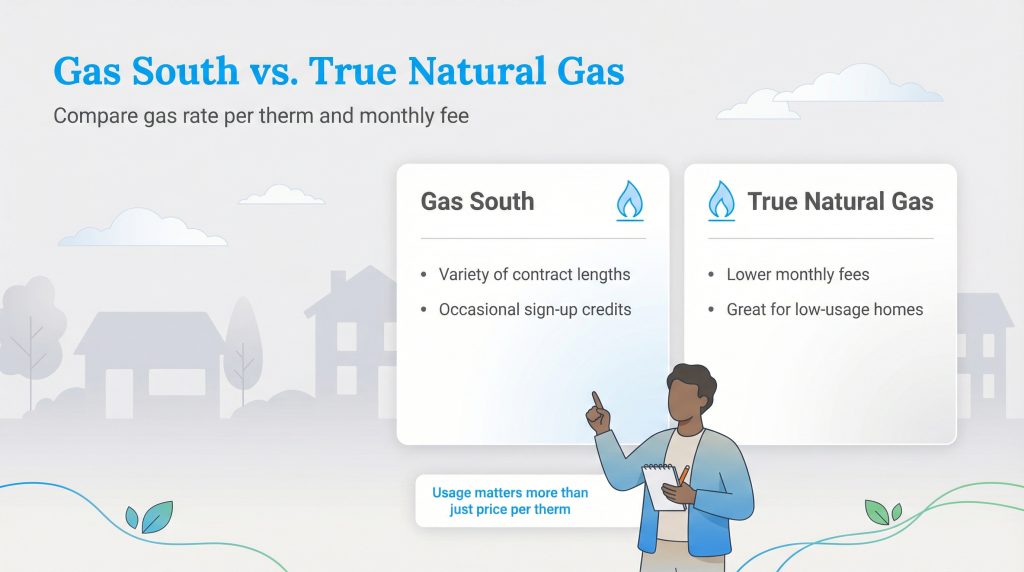
When you sit down to crunch the numbers, you have to look beyond just the advertised price per therm. Evaluating Gas South natural gas rates against the competition requires a close look at both the therm rate and the administrative costs. Your bill consists of the gas you consume multiplied by your rate, plus a monthly fee charged by the marketer just for servicing your account. If you live in a smaller apartment or have energy-efficient appliances that utilize electric power, a high marketer fee can completely wipe out the savings from a slightly cheaper therm rate. Conversely, larger households churning through gas in January might prioritize a rock-bottom rate over a higher fixed fee.
Gas South Plans and Pricing
| Plan Name | Rate | Plan Type | Base Charge | Cancellation Fee | |
|---|---|---|---|---|---|
| Intro Variable | $0.390 /THM | 1 Months Fixed Rate | $6.95-9.95 | $150 | Check Availability |
| 6 Month Fixed - $50 in Bill Credits | $0.650 /THM | 6 Months Fixed Rate | $6.95-9.95 | $150 | Check Availability |
| 12 Month Fixed - $50 in Bill Credits | $0.770 /THM | 12 Months Fixed Rate | $6.95-9.95 | $150 | Check Availability |
| 24 Month Fixed -$50 in Bill Credits | $0.810 /THM | 6 Months Fixed Rate | $6.95-9.95 | $150 | Check Availability |
| Variable | $2.050 /THM | 1 Months Fixed Rate | $6.95-9.95 | $150 | Check Availability |
The True Natural Gas monthly recurring charge frequently appeals to consumers because they tend to keep this administrative fee on the lower end of the spectrum, offering great value for low-usage households. Gas South, meanwhile, often provides a broader variety of contract lengths and occasional sign-up credits that can offset their slightly higher administrative fees. As you navigate comparing natural gas options, remember that while therm prices fluctuate with the broader energy market, fixed-rate plans can shield you from sudden winter price spikes.
True Natural Gas Plans and Pricing
| Plan Name | Rate | Plan Type | Base Charge | Cancellation Fee | |
|---|---|---|---|---|---|
| Senior Citizen Plan | $ /THM | Rate | $3.45 | Check Availability | |
| Six Month Plan | $0.699 /THM | 6 Months Fixed Rate | $5.95 | Yes | Check Availability |
| 12 Month Plan | $0.719 /THM | 12 Months Fixed Rate | $5.95 | Yes | Check Availability |
| 24 Month Plan | $0.769 /THM | 24 Months Fixed Rate | $5.95 | Yes | Check Availability |
| Variable Market Pricing Plan | $1.990 /THM | 1 Months Variable Rate | $5.95 | None | Check Availability |
| Metric | What to Check With Gas South | What to Check With True Natural Gas |
|---|---|---|
| Average Price per Therm | Compare their current promotional fixed rates against historical averages. | Review their standard pricing, which historically remains highly competitive. |
| Monthly Recurring Charge (MRC) | Verify the specific MRC for your chosen plan, as it can vary based on plan length and type. | Check their current MRC, which is often positioned on the lower end for low-usage households. |
| Contract Term Options | Look for their wide variety of six-, 12-, and 24-month fixed and variable plans. | Review their straightforward six- and 12-month fixed and variable options. |
| Cancellation Fees | Check the exact early termination fee on the plan details before signing, as breaking a contract early triggers a penalty. | Confirm their standard early termination fee in the terms and conditions. |
How to Choose Based on Your Usage Habits
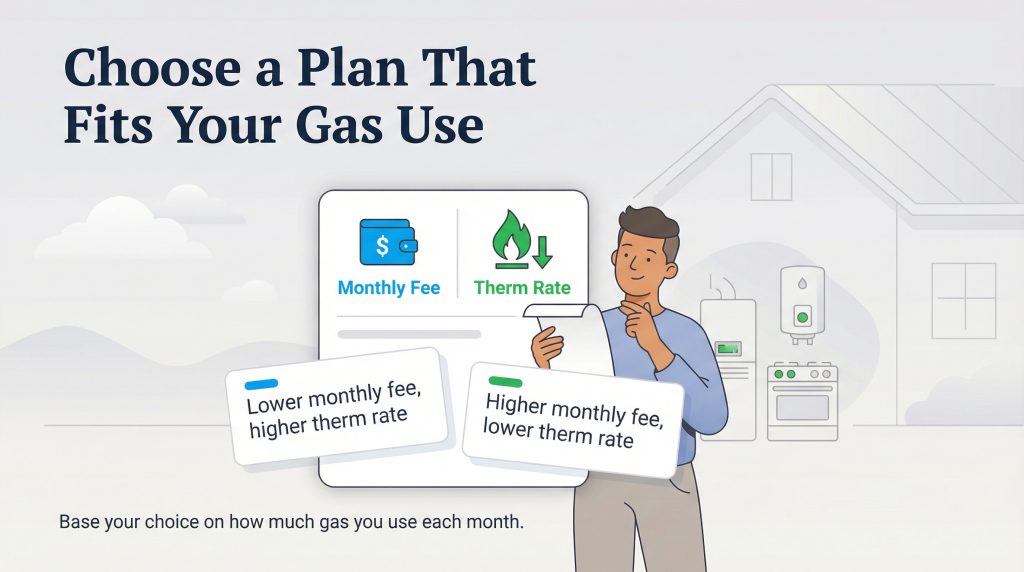
One of the biggest hurdles in choosing a new marketer is deciding whether to prioritize a lower monthly fee or a lower therm rate. Your decision should rely heavily on how much natural gas you actually consume each month.
| Household Type | Usage Level | What to Prioritize |
|---|---|---|
| Small Apartment or Mild Winter | Low | Lower Monthly Recurring Charge (MRC): A high monthly fee can easily wipe out any savings from a slightly cheaper therm rate. |
| Large Home or Gas Heating | High | Lower Therm Rate: When you churn through gas, securing the lowest possible price per unit is crucial. |
| New Home or Uncertain Usage | Variable | Shorter Term or Variable Plans: Consider a flexible option until you establish a reliable usage history. |
Evaluating Customer Service and Brand Reputation
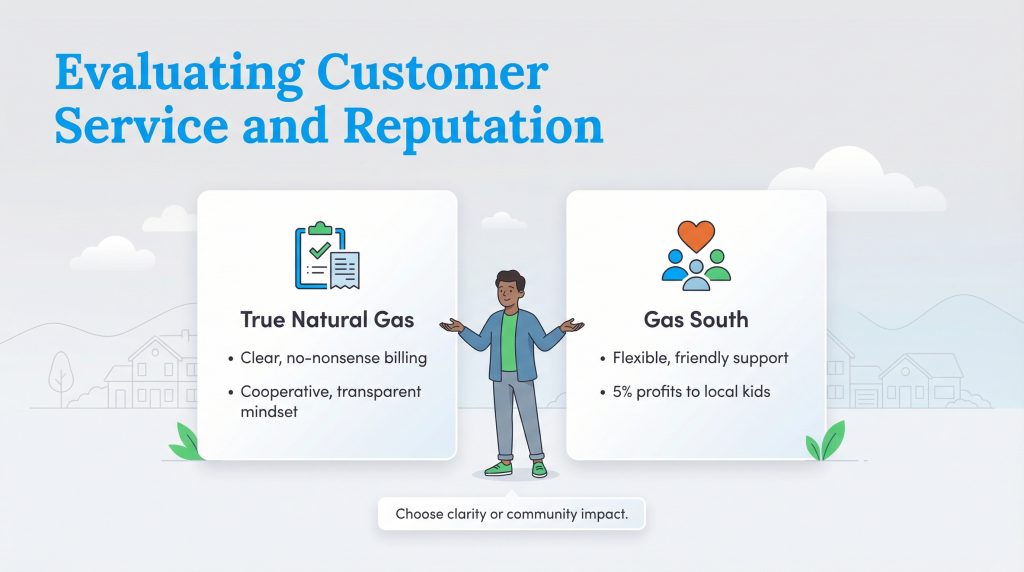
We know utility customers are incredibly wary of poor service, unexpected rate hikes, and confusing bills. Beyond the raw numbers, the corporate ethos of your provider plays a massive role in your overall satisfaction. True Natural Gas reviews consistently highlight the brand’s straightforward approach and billing clarity. Because they’re an affiliate of Coweta-Fayette EMC, they bring a distinct cooperative mindset to the deregulated market. This means they tend to prioritize straightforward communication and transparency, which strongly resonates with folks tired of deciphering cryptic utility statements.
On the other hand, Gas South customer service frequently earns praise for its flexibility and community-focused mission. They actively appeal to values-based shoppers by pledging 5% of their profits to support children in need across their service areas. For many consumers, knowing a portion of their heating bill goes directly toward local charities and educational initiatives is a compelling reason to stick with the brand. Both companies boast solid online reputations, but your preference will likely hinge on whether you value lean, no-nonsense billing or community-driven corporate responsibility.
Eco-Conscious Plans and Sustainability Efforts
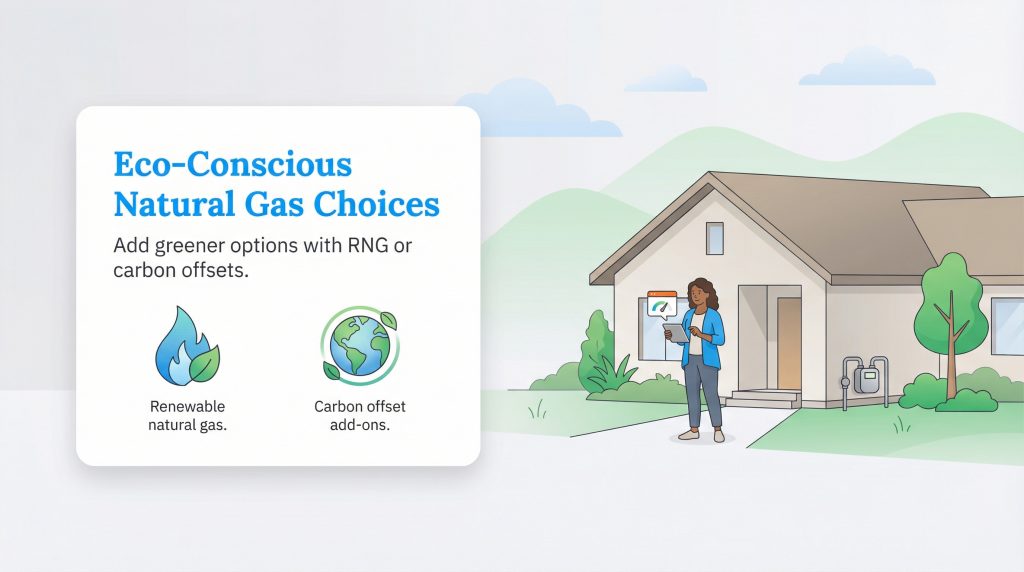
As we become more mindful of our environmental impact, choosing an eco-conscious alternative for your home heating needs is becoming a priority for many families. While natural gas is a fossil fuel, the U.S. Energy Information Administration’s natural gas overview notes that it burns cleaner than oil or coal. To further bridge the gap, some marketers offer green energy initiatives, such as carbon offset programs that neutralize your usage or renewable natural gas (RNG) captured from organic waste. Because product offerings change frequently, we recommend checking each marketer’s official website to see which specific eco-friendly add-ons are currently available.
Deciding if paying a premium for these environmentally mindful choice plans is worth it depends on your household budget and personal values. If a provider offers an RNG option or a carbon offset tier, it usually only adds a few dollars to your monthly bill. For those passionate about sustainable living, this small investment serves as an effortless energy-saving option to support sustainable energy developments while keeping your home comfortable during the colder months.
How to Switch Natural Gas Providers in Georgia
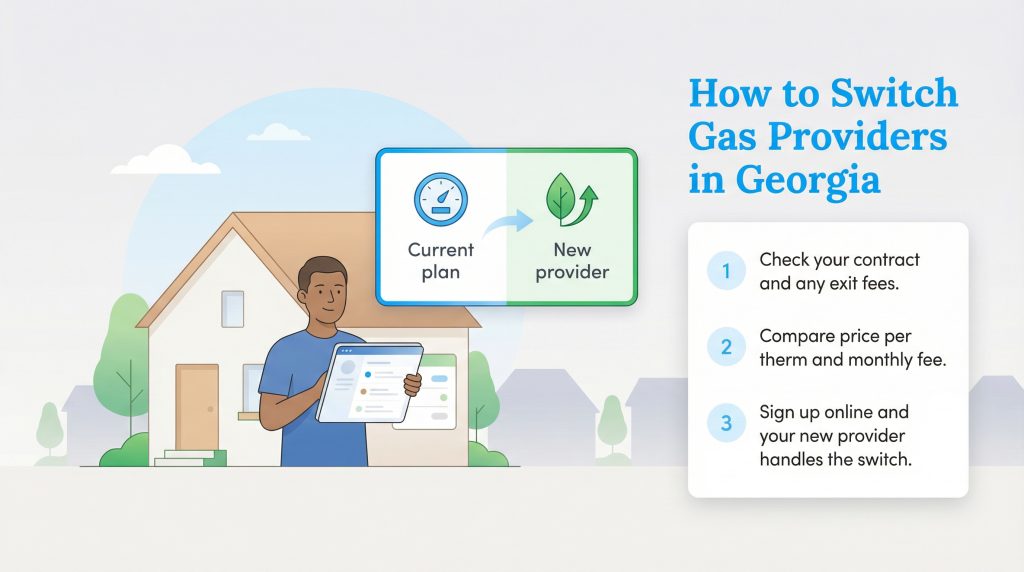
If you’ve found a better rate and are ready to make a move, you’ll be glad to know that the process to switch natural gas providers Georgia residents use is incredibly straightforward. You don’t have to worry about a technician coming to your house or losing heat during the transition. Once you select the company offering the cheapest natural gas in GA for your specific usage habits, your new marketer handles all the behind-the-scenes paperwork. To ensure a seamless break-up with your current provider and successfully transition to the best natural gas provider in Georgia for your needs, follow these quick steps.
- Review your current contract: Log into your current account or check your latest bill to see if you’re on a fixed-rate plan or a variable month-to-month rate.
- Identify early termination fees: If you’re locked into a fixed contract, check the expiration date. Leaving early usually triggers a cancellation fee that could negate your new savings.
- Compare new plans: Look closely at the price per therm and the monthly recurring charge for both True Natural Gas and Gas South.
- Sign up online: Go directly to your chosen new provider’s website, enter your address, and select your new plan.
- Let the marketers handle the rest: Your new company will securely notify Atlanta Gas Light and your old provider about the switch.
Making the Best Choice for Your Georgia Home
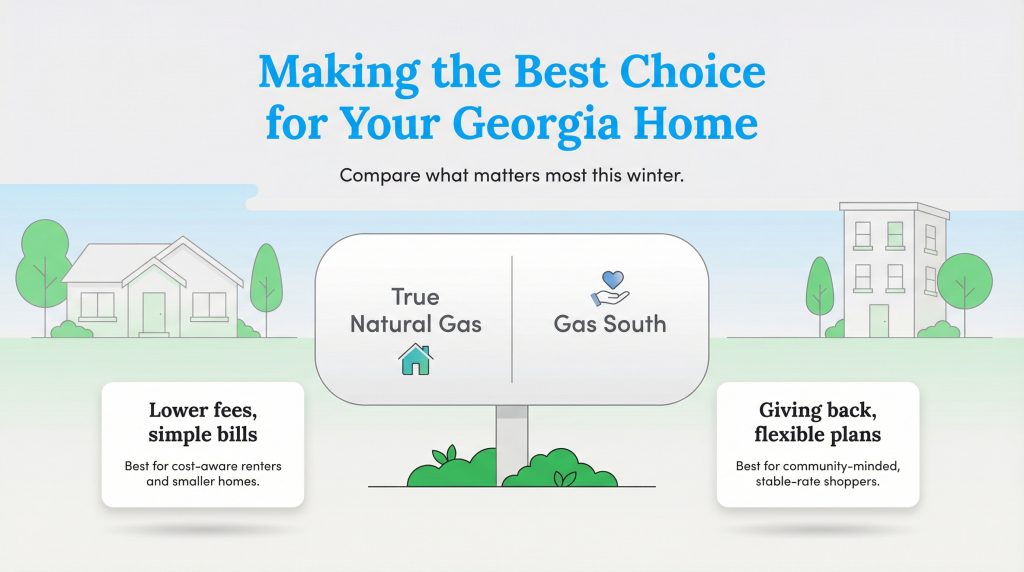
Deciding between these two heavyweights ultimately depends on your household’s unique priorities and budget constraints. We recommend True Natural Gas for folks who are heavily focused on securing the lowest consistent administrative fees and value a highly transparent, cooperative-style billing experience. Their straightforward pricing model makes them an excellent fit for smaller homes or cost-aware renters who want predictable, low-cost utility bills without any surprises.
Conversely, we recommend Gas South if you place a high value on corporate philanthropy and want the flexibility of diverse fixed-rate plan lengths. Their ongoing commitment to local charities makes them a standout choice for community-minded consumers willing to pay slightly more for a brand that aligns with their values. As the winter season approaches, take a moment to review your recent bills, weigh these pros and cons, and lock in your new rate before the chill sets in.
A Simple Way to Pick Your Plan This Week

Choosing between Gas South and True Natural Gas doesn’t have to be a drawn-out process. Start by evaluating your past usage to decide if you need to prioritize a lower monthly administrative fee or a lower therm rate. Then, review the latest fixed-rate promotions from both providers, keeping a close eye on early termination fees. By taking just a few minutes to compare these key factors, you can comfortably lock in a plan that keeps your home warm and aligns perfectly with your financial goals.
Frequently Asked Questions About Gas South and True Natural Gas
Is it better to choose a fixed or variable natural gas rate in Georgia?
What is a Monthly Recurring Charge (MRC) on my gas bill?
Will my gas be turned off if I switch from Gas South to True Natural Gas?
How long does it take to switch natural gas providers in Georgia?
Which natural gas provider has the cheapest rates in GA?
About the Author

David has been an integral part of some of the biggest utility sites on the internet, including InMyArea.com, HighSpeedInternet.com, BroadbandNow.com, and U.S. News. He brings over 15 years of experience writing about, compiling and analyzing utility data.