

Setting Up Your Massachusetts Utilities Before Moving Day Helps You Avoid Service Delays, Compare Energy Options, and Budget for Winter Costs With More Confidence
Key Takeaways
- Scheduling your utility transfers five to seven days in advance prevents service interruptions and stressful move-in days.
- Understanding the state’s deregulated energy market allows you to choose your own electricity supplier and potentially lock in lower rates.
- Taking advantage of local energy efficiency programs can significantly reduce the impact of high New England winter heating costs.
Managing your moving to Massachusetts utilities requires a solid understanding of the state’s deregulated energy market to avoid overpaying on your very first bill. Relocating across state lines is demanding enough without arriving before your electricity, heat, water, or internet is ready to go. This step-by-step guide helps you set up utilities in Massachusetts, understand your local electric and gas options, estimate average winter costs, and tap into energy-saving programs that make living in the Bay State significantly more affordable.
How the Massachusetts Deregulated Energy Market Works
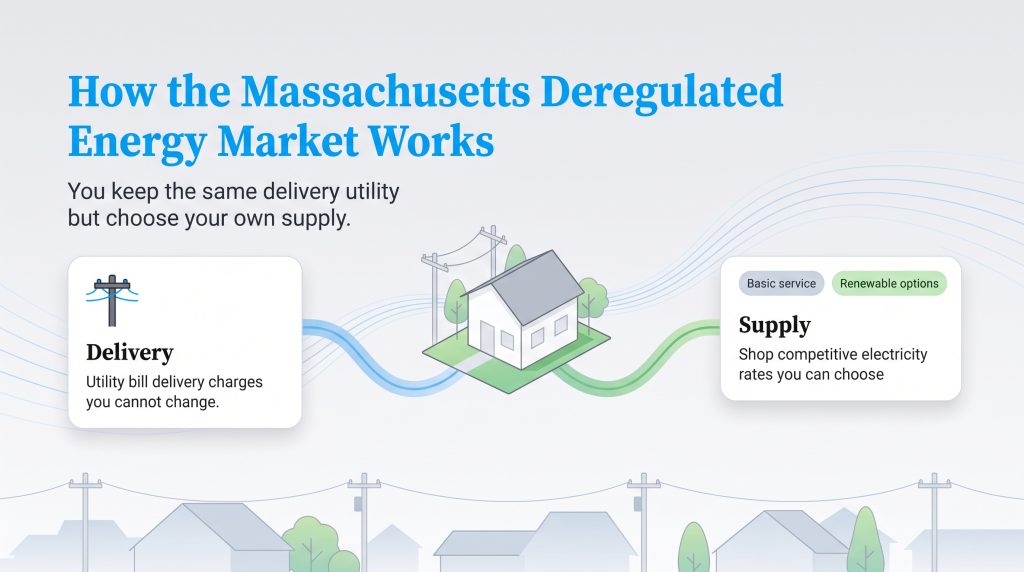
Stepping into the Massachusetts deregulated energy market means you hold the power to select who actually generates your home’s electricity. In this system, your monthly utility bill is legally split into two distinct parts: delivery and supply. Understanding how this legal separation works empowers you to take charge of your monthly expenses and shop for competitive rates.
- Utility/Delivery Provider: Your regional company maintains the poles, wires, physical meters, and outage responses. You cannot change this provider, as it is strictly assigned based on your address.
- Competitive Supplier: This is the independent company that purchases or generates the actual electricity you consume. You have the right to shop around for these Massachusetts competitive electric suppliers.
- Fixed Basic Service: If you don’t choose a competitive supplier upon moving, your delivery utility automatically enrolls you in their default basic service rate. The Department of Public Utilities (DPU) regulates this rate, which fluctuates seasonally and can sometimes be more expensive than competitive market offers.
Because you can shop for your own energy source, you easily have the option to support green initiatives by selecting an environmentally mindful choice for your home. You can compare these sustainable options directly through the official Massachusetts Energy Switch portal or via the DPU to find a renewable plan that fits your budget and values.
Step-by-Step: Setting Up Electricity and Gas
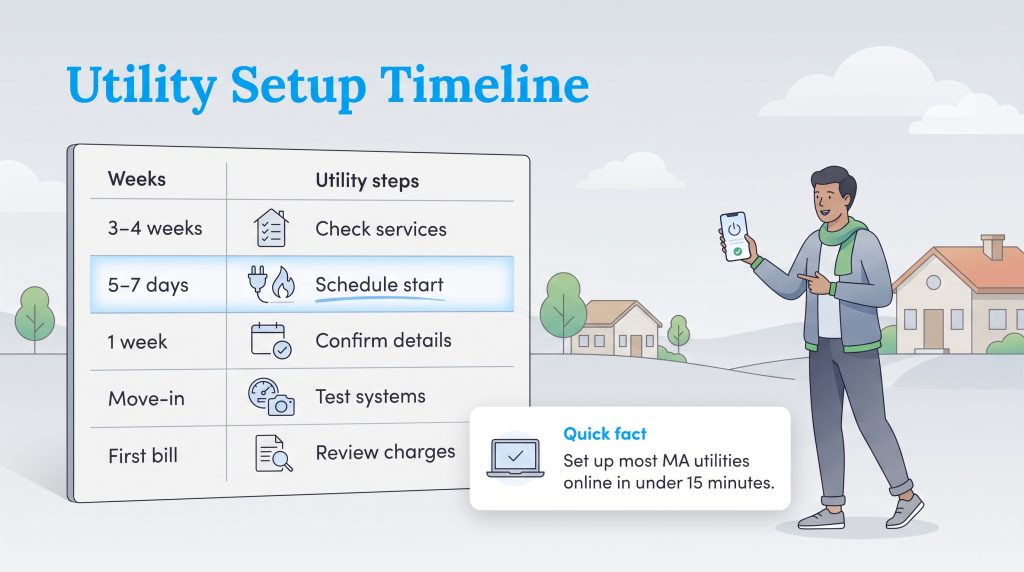
Setting up utilities in Massachusetts demands careful coordination, and timing dictates everything when you manage a relocation. To guarantee service connection and ensure a physical meter reading is completed on time, you must initiate requests to start, stop, or transfer electric service in MA exactly five to seven days before your move. Missing this window can lead to arriving on move-in day without essential power or heat.
| Timing | What to Do |
|---|---|
| Three to four weeks before moving | Confirm which services you’re responsible for and compare internet availability. |
| Five to seven days before moving | Submit electric, gas, and internet service requests to secure your physical connection. |
| One week before moving | Confirm start dates, account numbers, and any required utility deposits. |
| Move-in day | Take meter photos, test heat, check hot water, and confirm Wi-Fi installation. |
| First billing cycle | Review supply rates, delivery charges, and municipal fees. |
📌 Quick Fact: Many Massachusetts utility companies allow you to complete the entire transfer or setup process online in under 15 minutes, provided you have your new address and proper identification ready.
Understanding Renter and Homeowner Responsibilities
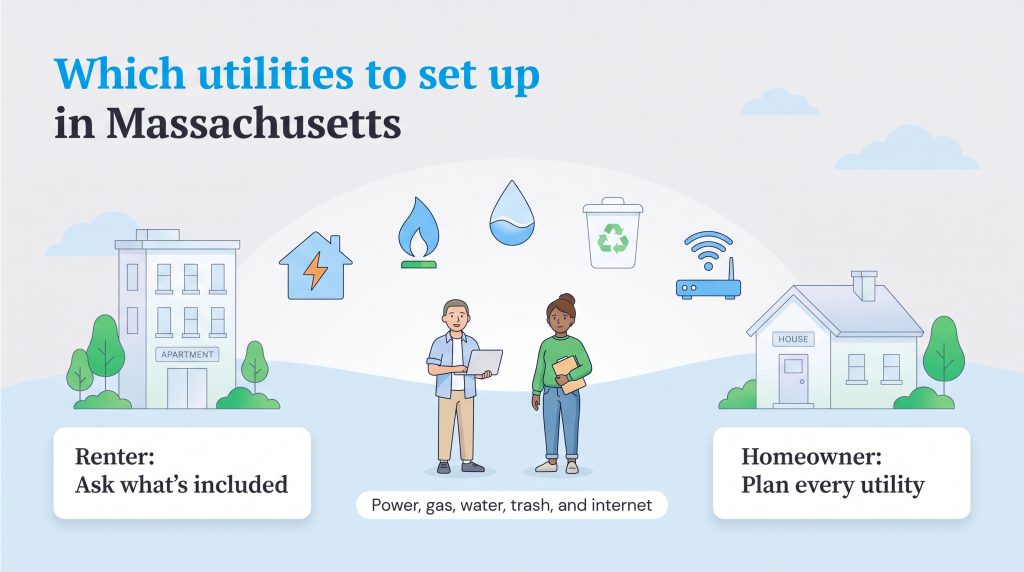
Massachusetts utility responsibilities differ significantly depending on whether you are renting or buying. If you rent, check your lease immediately to confirm if heat, hot water, or trash are included in your monthly rent. Homeowners, on the other hand, usually bear the responsibility for setting up all essential services themselves.
Additionally, new residents must prepare for Massachusetts utility deposit requirements. Utility companies frequently require an upfront security deposit for new customers who lack a local billing history. Fortunately, you can often get this fee completely waived by providing a letter of good credit from your previous out-of-state utility provider.
Comparing Regional Electric and Gas Providers
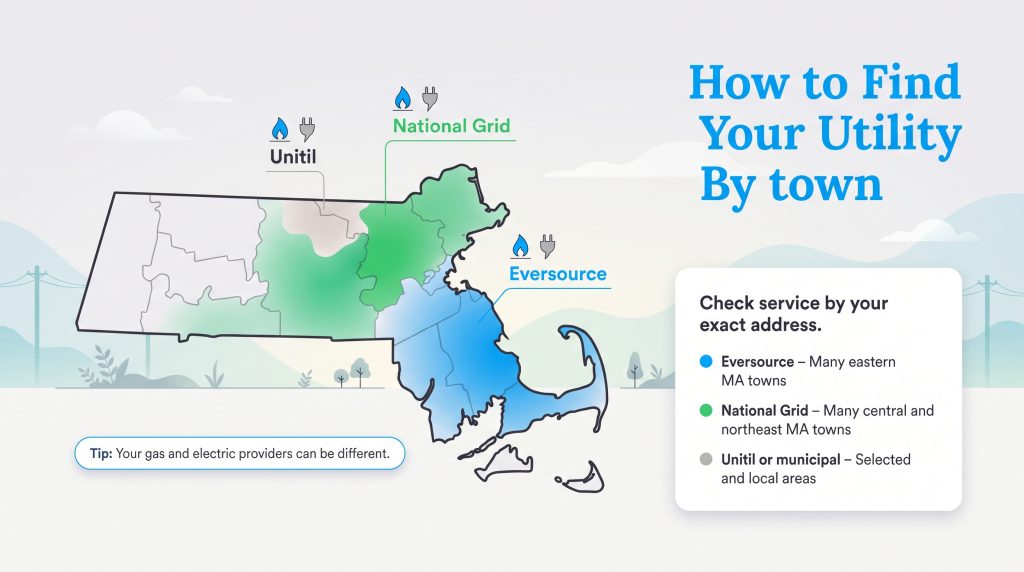
Comparing Eversource vs National Grid MA usually comes down to where your property sits on the state map. While you have the freedom to pick your energy supplier, these regional monopolies manage the physical delivery infrastructure in distinct territories across the state. Review the primary Massachusetts electric providers below to see who handles the initial setup in your new neighborhood.
| Utility Company | Primary Service Territories | Direct Setup Contact Method |
|---|---|---|
| Eversource | Eastern MA, Greater Boston, Cape Cod, Western MA | Start service online or call customer care |
| National Grid | Central MA, Northeast MA, Southeast MA | Request start/stop transfer via online portal |
| Unitil | Fitchburg area and specific Northern MA towns | Contact customer service directly online or by phone |
If you happen to be researching MA utility companies by town, you might discover that your new address doesn’t fall under these major investor-owned networks. Massachusetts also features roughly 40 independent municipal light departments serving dozens of communities. These locally owned utilities often have different rate structures, so it’s worth checking your town’s electric department before attempting to compare supplier plans.
Estimating Average Utility Bills in Massachusetts
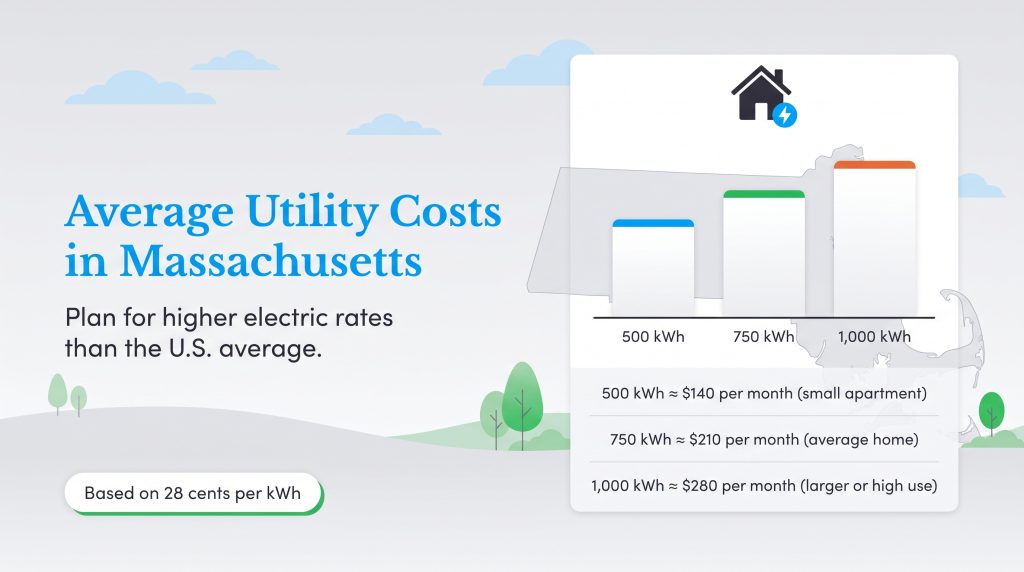
Anticipating the average utility bills in Massachusetts requires bracing yourself for some of the highest energy prices in the country. Recent U.S. Energy Information Administration data shows Massachusetts residential electricity prices frequently land well above the national average, often hovering in the high-20-cent range per kWh.
For planning purposes, budget for higher winter bills, especially in older homes with gas, oil, or electric resistance heat. Your actual cost will depend heavily on square footage, insulation, thermostat settings, and your chosen supplier rate.
| Monthly Electricity Use | Estimated Cost at 28 Cents/kWh | Best Fit |
|---|---|---|
| 500 kWh | $140 | Small apartment or efficient household |
| 750 kWh | $210 | Average apartment or small home |
| 1,000 kWh | $280 | Larger home or higher electric use |
💸 Money-Saver: These examples estimate electricity supply and delivery together only if the total effective rate is around 28 cents/kWh. Your actual bill may include fixed customer charges, municipal fees, supplier charges, and seasonal rate changes.
Managing Local Water, Sewer, and Trash Collection
While electricity and heating typically dominate the utility conversation, you can’t ignore the basic public services that keep a home running. Unlike statewide energy grids, Massachusetts water and sewer billing is handled entirely at the municipal or town level, not by massive statewide corporations.
If you purchase a home, your closing attorney often coordinates the final meter reading and account transfer. This step is critical because unpaid water bills act as a lien against the property in Massachusetts, meaning you want absolute certainty you aren’t paying for the previous owner’s usage. Otherwise, you will need to look up your specific town’s Department of Public Works (DPW) to establish service in your name. If you rent, you only need to set up an account if your lease explicitly requires it.
Trash and recycling protocols also vary dramatically from town to town. Many cities offer free municipal curbside pickup through the local DPW, while smaller towns might require you to hire a private hauler or purchase specialized town trash bags to fund disposal. Always check your local town hall website to review the pickup schedule, recycling guidelines, and bulk-item rules before your moving boxes pile up.
Top Internet Providers in Massachusetts
Securing a reliable web connection is essential, especially if you work from home or rely on streaming services for entertainment. When you set up home internet before moving day, you avoid the frustrating dead zones of relying on limited mobile hotspots. Massachusetts enjoys robust broadband coverage from major providers like Xfinity, Verizon Fios, Astound, and Spectrum. We recommend scheduling your installation appointment at least a week in advance, particularly in older multiunit buildings where technicians might need extra time to trace or install new wiring.
Utility Assistance and the Mass Save Program
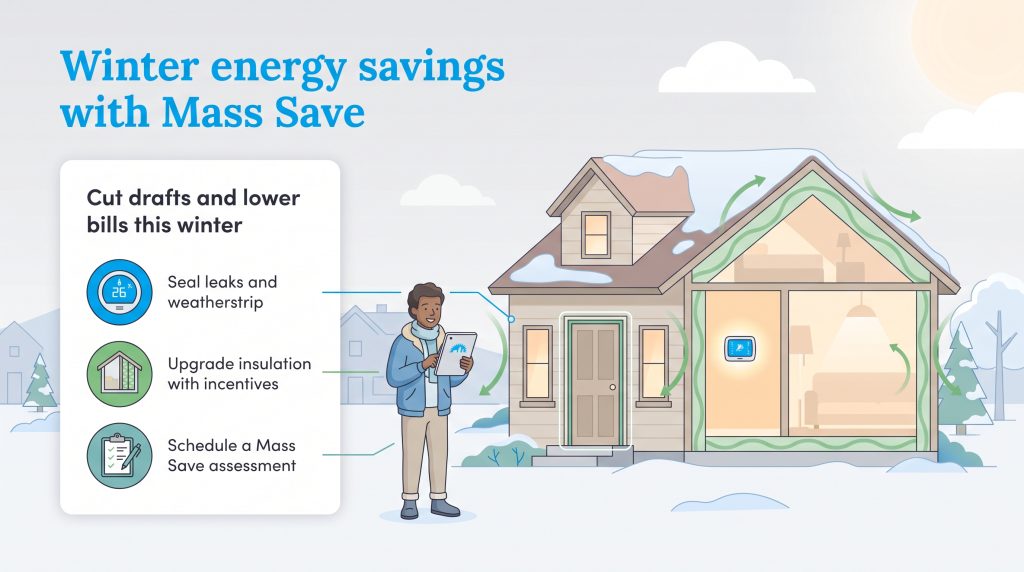
Mitigating the cold of a New England winter demands proactive home maintenance, especially if you move into a charming but drafty older property. Simple upgrades like replacing worn weatherstripping, sealing leaky window frames, and installing a smart thermostat optimize your heating system without demanding massive renovations. Small, consistent behavioral changes also heavily influence your consumption, and adopting these habits is an excellent way to sustainably reduce your monthly electric bill.
Beyond basic DIY weatherproofing, the state heavily incentivizes residents to improve their home’s thermal envelope through targeted eco-conscious programs. The Mass Save energy efficiency program is a massive collaborative initiative sponsored by Massachusetts’ natural gas and electric utilities. As a new resident, you can easily schedule a free home energy assessment where a certified expert evaluates your home from attic to basement. They check for air leaks, inspect your current insulation levels, and evaluate the efficiency of your heating and cooling equipment.
Based on their findings, they provide a custom energy report and may even install no-cost energy-saving products during the visit — like programmable thermostats, advanced power strips, and low-flow showerheads. Through this assessment, you can claim significant rebates on upgraded insulation and high-efficiency heat pumps. Program details and eligibility can change, so check current offers through the Mass Save residential programs page before you schedule work. Tapping into these resources slashes your environmental impact while shielding your bank account from winter rate spikes.
Preparing for Your Bay State Move
Transitioning your life to a completely different region certainly tests your patience, but securing your basic home services early establishes a strong foundation for your arrival. Learning how the deregulated market operates, checking with your municipal DPW regarding waste management, and actively utilizing efficiency programs allows you to immediately take control of your housing budget. By taking the time to plan the rest of your utility move in advance, you can finally relax and start enjoying everything the vibrant Bay State has to offer.
Frequently Asked Questions About Moving to Massachusetts Utilities
Many out-of-state movers encounter the exact same hurdles when transferring their services to New England. We compiled these common questions to help you quickly navigate the final details of your transition.
How much notice do I need to give to transfer utilities in Massachusetts?
Can I choose my electric company in Massachusetts?
Do I have to pay a deposit to start utility service in Massachusetts?
Who are the main Massachusetts electricity providers?
How do I handle Massachusetts water, sewer, and trash billing?
What should I ask my landlord about utilities before moving in?
About the Author

LaLeesha has a Masters degree in English and enjoys writing whenever she has the chance. She is passionate about gardening, reducing her carbon footprint, and protecting the environment. She also recently served as President of the Board for City Sprouts (a community garden).

David has been an integral part of some of the biggest utility sites on the internet, including InMyArea.com, HighSpeedInternet.com, BroadbandNow.com, and U.S. News. He brings over 15 years of experience writing about, compiling and analyzing utility data.