

Arrange electricity, internet, and heating before moving day, then prioritize improvements that fit your home and budget.
Key Takeaways
- Verify electricity delivery and supply options to navigate Maine’s deregulated market and understand contract risks before enrolling.
- Compare heating and weatherization upgrades like cold-climate heat pumps to manage winter energy costs based on your specific property.
- Follow a chronological moving checklist to ensure your internet, water, and essential services are fully functioning the moment you arrive.
Relocating to the Pine Tree State offers rugged coastlines, dense forests, and idyllic towns, but settling here requires more than just a love for the outdoors. Whether you are seeking a quieter lifestyle or a family seeking a fresh start, adjusting to rural power grids and famously fierce winters requires careful preparation. We created this guide to walk you through configuring your home utilities efficiently so you can settle into your new property without facing unexpected outages or heating issues. Before you schedule service, ask your delivery utility whether the home has an active meter, whether you need a deposit, and whether activation requires an appointment.
Tackling the Moving to Maine Checklist: Prioritizing Your Home Setup
Moving across state lines always brings a mountain of paperwork, but your physical home setup requires careful coordination. Prioritizing power, internet, heat, water, and waste services is crucial before the moving truck ever pulls into the driveway. If you are relocating to a rural pocket of the state or arriving during the colder months, securing these essential services early ensures you step into a safe and comfortable environment.
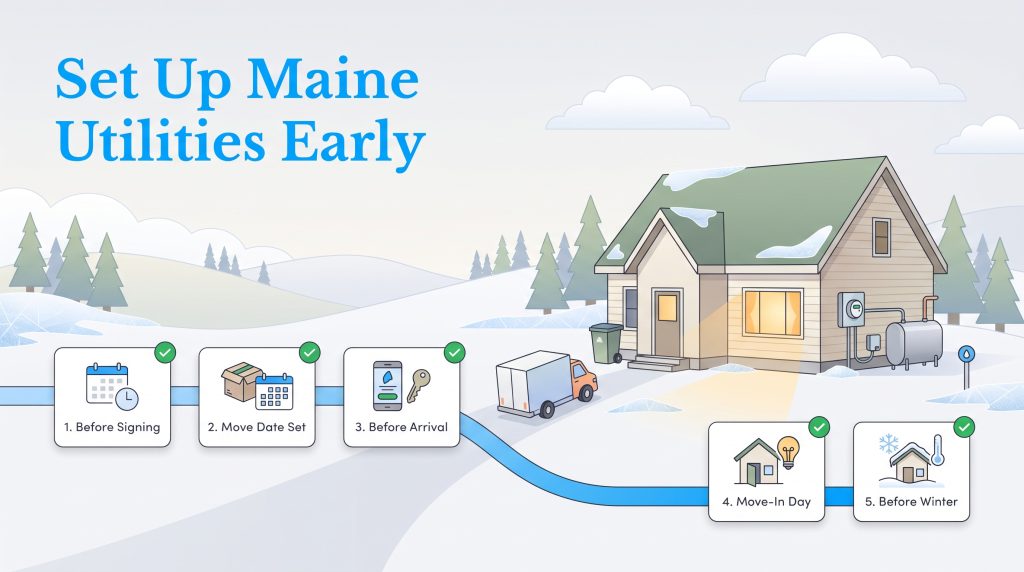
Your Chronological Utility Setup Checklist
Organize your transition by following this step-by-step timeline rather than waiting until the last minute:
- Before signing: Confirm internet availability, heating fuel type, water source (municipal vs. private well), wastewater system (sewer vs. septic), and who pays each bill if you are renting.
- Once your move date is firm: Arrange electricity and internet transfers, and establish heating-fuel delivery if your new home uses oil or propane.
- Before arrival: Confirm your heat is functioning, verify fuel supply levels, confirm any installation appointments, and clarify landlord responsibilities.
- On move-in day: Record meter readings where accessible and safe, locate your water and main power shutoffs, and test all smoke and carbon monoxide alarms.
- Before winter: Arrange professional heating service, assess drafts and insulation, protect vulnerable plumbing, and make an emergency outage plan.
Setting Up Utilities in Maine: Power, Water, and Connectivity
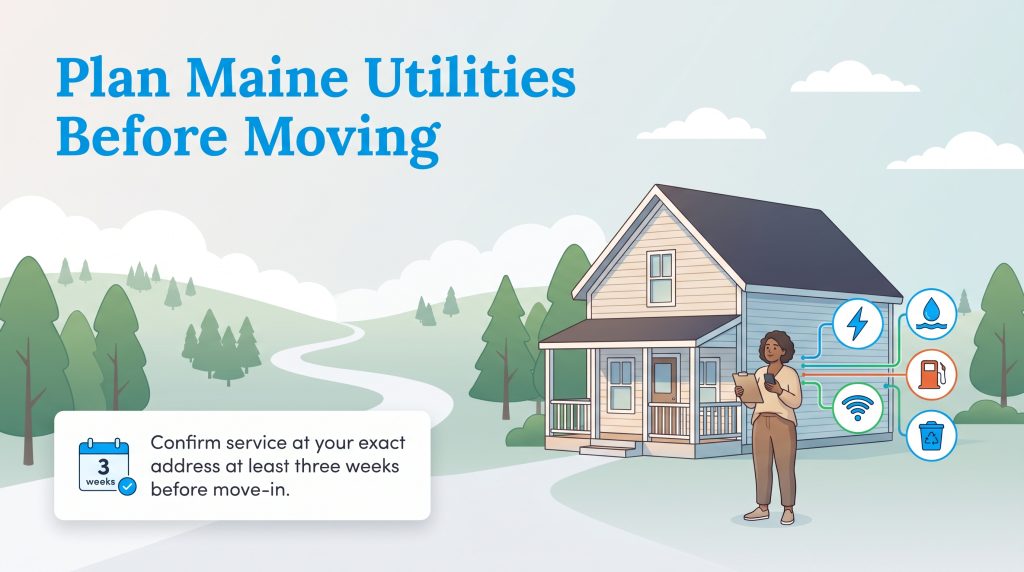
Because rural landscapes dominate much of the state, setting up utilities in Maine involves navigating varying regional providers, differing town services, and occasional spotty coverage zones. Understanding exactly whom to contact and what questions to ask will save you from moving-day headaches.
Utility Decision and Contact Guide
Use this table to track which entities manage your essential household services and what details you must confirm during setup.
| Utility Service | Whom to Contact | What to Confirm |
|---|---|---|
| Electricity Delivery | Central Maine Power, Versant Power, or your local municipal/co-op utility | Is there an active meter? Do you need a deposit? Is an activation appointment required? |
| Electricity Supply | Delivery utility (Standard Offer) or a Competitive Electricity Provider | What are the current supply rates, contract terms, and early termination fees? |
| Internet | Local fiber, cable, or satellite providers | Are the speeds available at your specific address? Are there data caps or construction charges? |
| Heating Fuel | Local oil or propane delivery companies | Do you need automatic delivery or will-call? Are tanks owned or leased? |
| Water and Sewer | Local water district or municipal office | Is the property on a private well and septic system, or municipal lines? |
| Trash and Recycling | Town office or private waste haulers | Does the town provide curbside pickup, or do you need a transfer station permit? |
Navigating Maine Electricity Providers
Maine operates with a deregulated retail electricity market. In Central Maine Power and Versant Power territories, you generally can keep the default Standard Offer supply or select a competitive supplier. Regardless of which supplier you choose, your delivery utility still maintains the local lines, handles outages, and sends your bill.
Exploring different Maine electricity providers allows you to choose your supply source, but a competitive supplier is not guaranteed to be cheaper than the Standard Offer. When comparing plans, carefully review the supply rate, contract term lengths, introductory pricing, renewal provisions, and hidden fees. If you opt for a renewable energy plan, check the product disclosure to understand the renewable percentage, location, and certificate treatment, as the electricity routed to your home comes from the shared regional grid. To compare current supplier rates safely, we recommend utilizing the Maine Office of the Public Advocate’s electricity supply guidance.
Finding Reliable Internet for Your Home
If you work from home, verify service at the exact address before committing to a property. Rural broadband availability varies wildly from one town to the next, and assuming a woodland retreat has fiber-optic speeds without checking can disrupt your remote career.
We advise checking local service providers using the FCC’s National Broadband Map as a starting point. However, reported availability on a map is not a guarantee of installation, capacity, or real-world performance. You must confirm availability directly with the provider and ask about upload speeds, latency, data caps, installation dates, and potential construction charges.
Pro Tip
Call your utility and internet providers at least three weeks before your scheduled move-in date. This buffer gives you plenty of planning time for rural activation timelines that often require physical appointments.
Managing Maine Winter Heating Costs Smartly
The state’s famously harsh winters bring heavy snowfall and plunging temperatures that test the limits of any residential heating system. Heating can be one of your largest household energy expenses, so understanding your home’s infrastructure and efficiency options is the best way to keep your Maine winter heating costs manageable.
Weatherizing Your Home Before the Frost
Blocking out the bitter chill starts with practical weatherization steps that seal your home’s thermal envelope. We recommend scheduling a professional energy assessment to identify your home’s highest-priority improvements, which often include upgrading attic insulation and air sealing. These steps should always be coordinated with your home’s ventilation, moisture control, and combustion-safety needs.
Quick Fact
Heating oil remains an important home-heating fuel in Maine. Before moving, confirm your home’s fuel type, tank condition, and delivery arrangements so you aren’t caught off guard by an empty tank during a freeze.
Transitioning to Cold-Climate Heat Pumps
Air-source heat pumps have become a popular eco-conscious alternative to traditional oil heating. Modern cold-climate models extract heat from the outside air and transfer it indoors, performing reliably even when temperatures drop below freezing. However, their real-world savings depend heavily on electricity prices, the fuel you are displacing, and your building’s overall efficiency.
Proper sizing, professional installation, and distribution matter immensely when relying on a heat pump. A partial-home installation may require you to keep supplemental or backup heat active during the coldest weeks. If you are considering an upgrade, check the Efficiency Maine residential heat pump program for qualified installers and review the current rebates available to offset installation costs.
Eco Edge
Ask your installer which controls work best with your heat pump system. Follow the manufacturer’s recommended settings rather than assuming a third-party smart thermostat or deep overnight setback will save energy, as improper settings can trigger inefficient auxiliary resistance heating.
Understanding Maine Solar Incentives and Billing
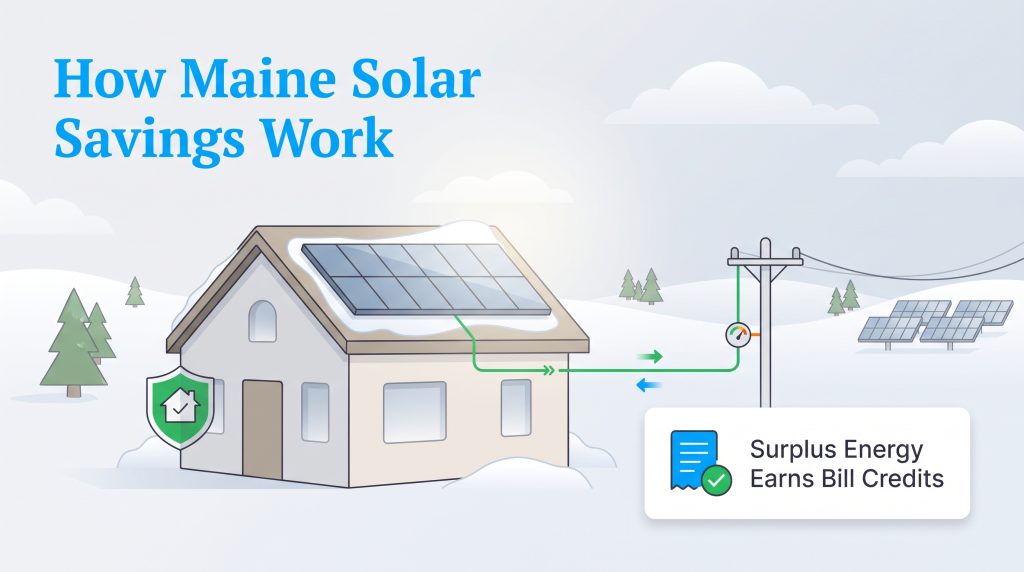
A common misconception is that northern New England doesn’t receive enough sunlight to make solar panels a worthwhile investment. In reality, modern solar arrays capture diffuse light during overcast days, and snow reflection can assist winter energy production. If your new property is a good candidate for rooftop solar, understanding the state billing structures and local incentives can help you make an environmentally mindful choice.
Net Energy Billing and Property Taxes
- Net Energy Billing: Maine’s net metering policies allow eligible solar owners to receive credits on their utility bill for surplus renewable energy sent back to the grid. Check the current Maine Public Utilities Commission rules for eligibility, credit expiration, and specific delivery charges that credits may not offset.
- Property Tax Exemptions: Adding a qualifying solar array can increase your property value without penalizing your tax bill, provided you meet specific filing requirements. Always verify the ownership rules, eligible equipment, and the municipal assessor’s role in your specific town.
- Community Solar Subscriptions: If your roof is heavily shaded or you are renting, you can still participate in the clean energy transition by subscribing to a local community solar project, which operates under different billing rules than a private rooftop installation.
Preparing for Your Maine Home Transition
Relocating to Maine from out of state is an exciting leap into a lifestyle surrounded by natural beauty and close-knit communities. The adjustment period might require a bit of extra coordination, but living closer to nature and escaping the bustle of urban centers is entirely worth the effort.
By making informed decisions during your initial home setup, you lay the groundwork for a safe, comfortable household. Checking broadband maps, coordinating your utility activations, and properly weatherizing your space will lead to predictable bills and fewer moving-day surprises. Welcome to your new home.
Frequently Asked Questions About Moving to Maine
Preparing for a move involves juggling countless details, especially when adapting to a new climate and utility market. Here are some of the most common questions new residents ask when setting up their household services.
How Long Does It Take to Set Up Electricity in a New Maine Home?
What Is the Most Cost-Effective Way to Heat a House in Maine?
Are There Local Rebates for Energy-Efficient Appliances?
Can I Choose My Own Electricity Supplier in Maine?
How Do I Deal With Frozen Pipes in Older Maine Homes?
About the Author

LaLeesha has a Masters degree in English and enjoys writing whenever she has the chance. She is passionate about gardening, reducing her carbon footprint, and protecting the environment. She also recently served as President of the Board for City Sprouts (a community garden).

David has been an integral part of some of the biggest utility sites on the internet, including InMyArea.com, HighSpeedInternet.com, BroadbandNow.com, and U.S. News. He brings over 15 years of experience writing about, compiling and analyzing utility data.