
Timing your electricity switch correctly can lower your monthly bills and unlock better renewable energy perks.
Key Takeaways
- Shop during spring and fall when heating and cooling demands drop significantly to secure the lowest possible electricity rates.
- Compare transfer options against new provider rates when moving to a new home to avoid hidden costs and expensive auto-renewals.
- Start shopping 30 to 60 days before your contract expires to comfortably lock in a competitive fixed rate and bypass unpredictable variable pricing.
Knowing exactly when to switch electric service can save you hundreds of dollars annually, but your strategy will depend entirely on whether you are relocating to a new home or simply hunting for a cheaper rate at your current address. Most homeowners and renters living in a deregulated electricity market don’t realize that energy prices fluctuate predictably throughout the year based on weather and grid demand, making your timing absolutely critical. Whether you need to transfer electric service to a new address or want to swap your current plan for a greener, more affordable option, understanding the right timelines and seasonal trends will protect your wallet from unnecessary fees and massive rate spikes.
- Are You Moving or Just Switching Providers?
- When to Switch Electric Service When Moving
- When to Switch Providers to Save Money (Same Address)
- Fixed vs. Variable Rates: What to Know Before You Switch
- Preparing for Your Electric Transition
Are You Moving or Just Switching Providers?
Before diving into timelines and rates, you need to identify your primary goal. The rules, fees, and processes differ significantly depending on whether you are packing up boxes or just tired of overpaying for power at your current house. Switching electric providers is generally straightforward, but categorizing your transition correctly is the essential first step to avoiding surprise charges and utility headaches.
| Moving to a New Address | Switching at the Same Address |
|---|---|
| You must manually cancel your old service and contact a provider to schedule your new service. | Your new provider automatically contacts your old supplier and cancels your old service when you switch. |
| Moving is typically considered a “qualifying event,” meaning no Early Termination Fees (ETFs) usually apply if you provide proof of your move. | If you decide to break an active fixed-rate contract early, you will likely have to pay an Early Termination Fee. |
| You must carefully consider overlapping service dates for moving days, deep cleaning, and property inspections. | Service transitions seamlessly on your monthly meter reading date with absolutely no power interruption. |
When to Switch Electric Service When Moving
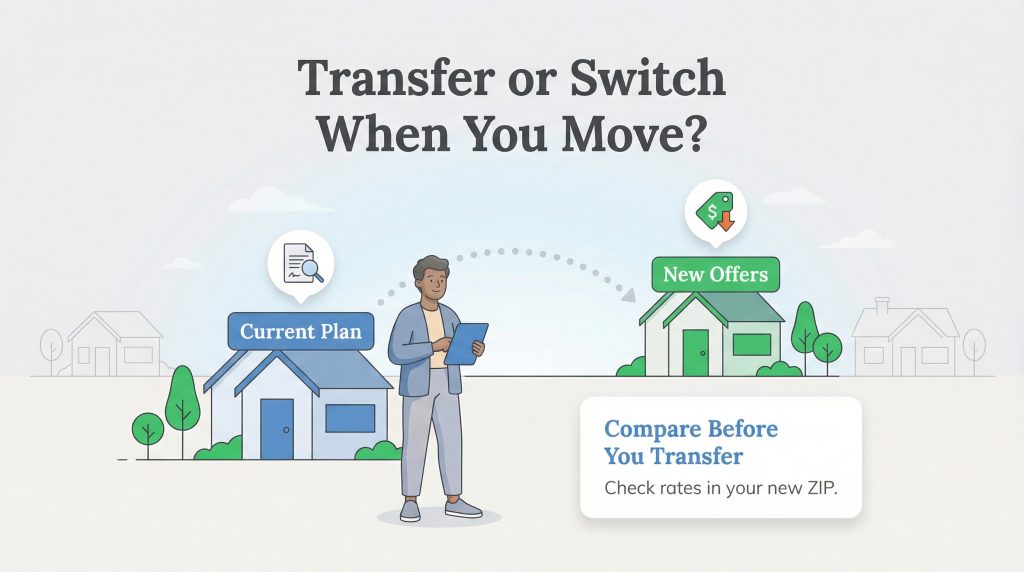
Relocating is chaotic, and it is incredibly tempting to simply check a box and bring your current utility provider with you. However, assuming that transferring service is your best option can be a costly mistake. Before you transfer electric service to a new address, take five minutes to evaluate your options. You might find that the rates available to new customers in that specific ZIP code are significantly lower than the rate you are currently paying. If the new offers are better, confidently cancel your old service and sign up fresh with a new provider. Changing companies when moving is one of the easiest ways to reset your energy costs, especially if you are moving into a home that is larger or less energy-efficient than your previous one. You can explore our complete guide on comparing electric providers to find the best deal for your new neighborhood.
The 2-3 Week Rule for Scheduling Utilities
If you are wondering exactly when to set up utilities when buying a house or signing a new lease, the golden rule is to schedule your electric service two to three weeks before closing or moving. Waiting until the last minute can leave you stranded without power on move-in day, particularly during busy summer months when utility companies are highly backlogged. By securing your connection 14 to 21 days in advance, you ensure your account is fully processed, the meter is ready to spin, and you have ample time to address any unexpected credit checks or address validation issues. Always schedule electric service in advance to guarantee a smooth, stress-free transition.
How to Overlap Service Safely
One of the most common mistakes people make when relocating is cutting off the power at their old house on the exact day they move out. To overlap utility service moving safely, follow this strict instruction: Leave the power on for one to two days after moving out of your old home, and turn it on one to two days before moving into your new home. Overlapping your dates is an absolute necessity for several reasons:
- Final Walkthroughs: Landlords and property buyers need functioning lights to comfortably complete their final property inspections.
- Deep Cleaning: You will absolutely need electricity for vacuums, carpet cleaners, and proper lighting while scrubbing empty rooms.
- Climate Control: Maintaining the HVAC system prevents mold in humid climates and avoids frozen pipes in cold weather during the brief vacancy.
- Avoiding the Dark: Arriving at your new home only to unpack heavy boxes by flashlight is a miserable way to start your first night.
When to Switch Providers to Save Money (Same Address)
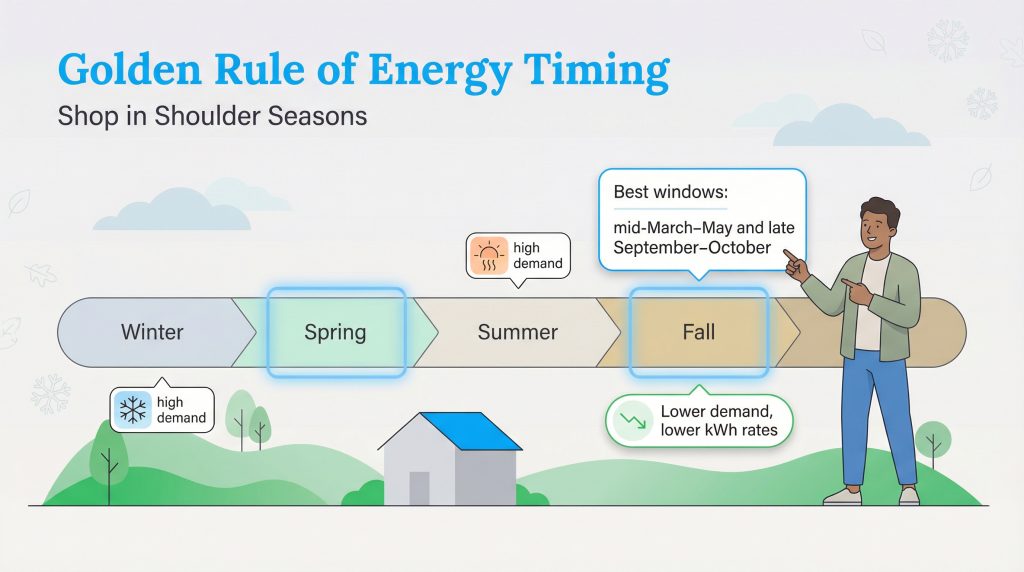
In the energy industry, timing is everything. Electricity prices are heavily influenced by supply and demand, which are driven almost entirely by weather extremes. According to the U.S. Energy Information Administration (EIA), electricity prices often rise when demand peaks. During the peak of summer, air conditioners work overtime, straining the power grid and driving prices up. Similarly, deep winter freezes increase the demand for heating, leading to another predictable price spike. If you plan to stay in your current home but want to lower your monthly bills, securing a cheaper rate requires strategic timing and a clear understanding of your current contract obligations.
The Best Time of Year to Switch Electricity Providers
To avoid seasonal premiums, smart shoppers purposefully look for the “shoulder months” — the mild transitional periods of spring and fall. The absolute best time of year to switch electricity providers is typically mid-March through early May and late September through October. During these months, homes naturally require significantly less energy for heating and cooling. Power plants aren’t working as hard to keep up with intense HVAC usage, resulting in a massive surplus of supply on the grid. This lower overall demand directly translates to a lower rate per kilowatt-hour (kWh) for consumers. If you can properly align your contract renewal with these windows, you will consistently find the cheapest month for electricity rates right when demand is at its lowest.

Timing your switch isn’t just about saving money; it is also an ideal moment to access cleaner power sources. As the grid rapidly evolves, renewable energy plans powered by 100% wind or solar are becoming incredibly price-competitive with traditional fossil fuel plans. Choosing an eco-conscious alternative is the single most impactful step you can take to lower your household’s carbon footprint without making expensive physical renovations to your home. It is an easy, energy-saving option that actively supports the development of green infrastructure. For more detailed information on how these plans work, you can explore resources from the Department of Energy, or you can even explore longer-term options like adding solar panels.
Avoiding the Early Termination Fee (ETF)
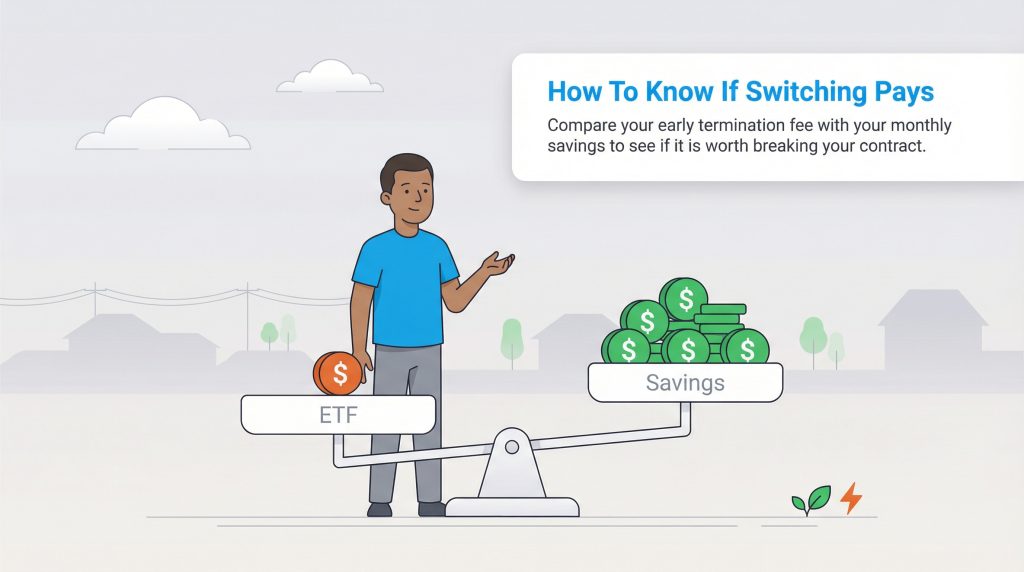
Sometimes you spot a deal that is simply too good to pass up, but you are still locked into a contract for another six months. Is it worth paying the early termination fee electricity providers charge for leaving early? To navigate this seamlessly and protect your bank account, follow these strict rules regarding fees and contracts:
- Do the Break-Even Math: Divide your ETF by your estimated monthly savings. If your provider’s ETF is $150 and your new plan definitively saves you $30 a month, it will take exactly five months to break even. If you have more than five months left on your contract, switching makes strong financial sense. You can save even more by pairing a well-timed switch with usage tweaks from our guide on how to save on your electric bill.
- Utilize the 14-Day Switching Window: In most deregulated electricity market regions, you are legally allowed to switch providers up to 14 days before your contract expires without paying a single penalty. Use this helpful buffer to transition smoothly.
- Look for Contract Buyouts: When shopping around, keep an eye out for retail energy suppliers that graciously offer bill credits or buyout reimbursements to explicitly cover your switching costs.
- Never Default to Holdover Rates: If you absentmindedly let your contract expire without choosing a new one, you will default to a highly volatile variable rate. Always switch or renew before the final day of your contract.
Fixed vs. Variable Rates: What to Know Before You Switch
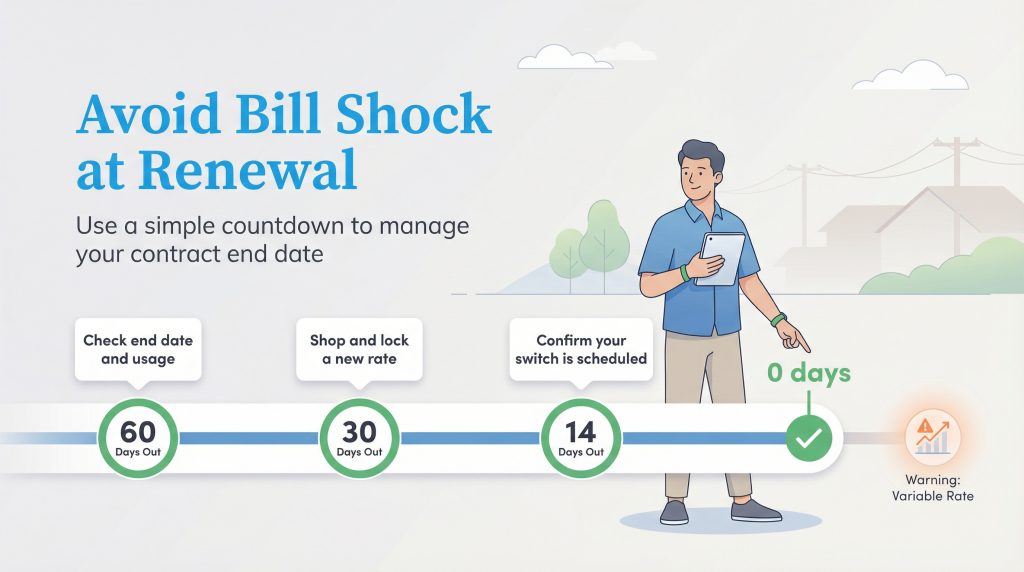
When selecting a new energy plan, understanding the fundamental difference between fixed vs variable electric rates is crucial for long-term budget stability. The biggest enemy of affordable electricity is inaction, and falling into the wrong rate structure can cost you dearly. A fixed-rate plan firmly locks in your price per kWh for the entire duration of the contract (usually 12 to 36 months). Conversely, a variable-rate plan fluctuates monthly based on the wholesale energy market. While a variable rate might occasionally look cheaper in the short term, it leaves you entirely exposed to massive price spikes during summer heatwaves or winter freezes.
Fixed-Rate Plan Pros and Cons:
- Pro: Predictable monthly bills that make household budgeting incredibly easy.
- Pro: Total financial protection against seasonal market volatility and extreme weather price surges.
- Con: You must pay an ETF if you decide to break the contract early (unless you are moving to a new address).
Variable-Rate Plan Pros and Cons:
- Pro: Ultimate flexibility with absolutely no long-term commitments or early cancellation fees.
- Pro: Rates can occasionally drop lower than fixed rates during very mild weather conditions.
- Con: High risk of sudden, exponential bill increases with zero advance warning from the provider.
For the vast majority of residential consumers, we strongly advise selecting a fixed-rate plan. Locking in your rate provides the reassuring peace of mind that your energy costs will remain perfectly stable, regardless of what chaos is happening in the broader energy market.
Preparing for Your Electric Transition
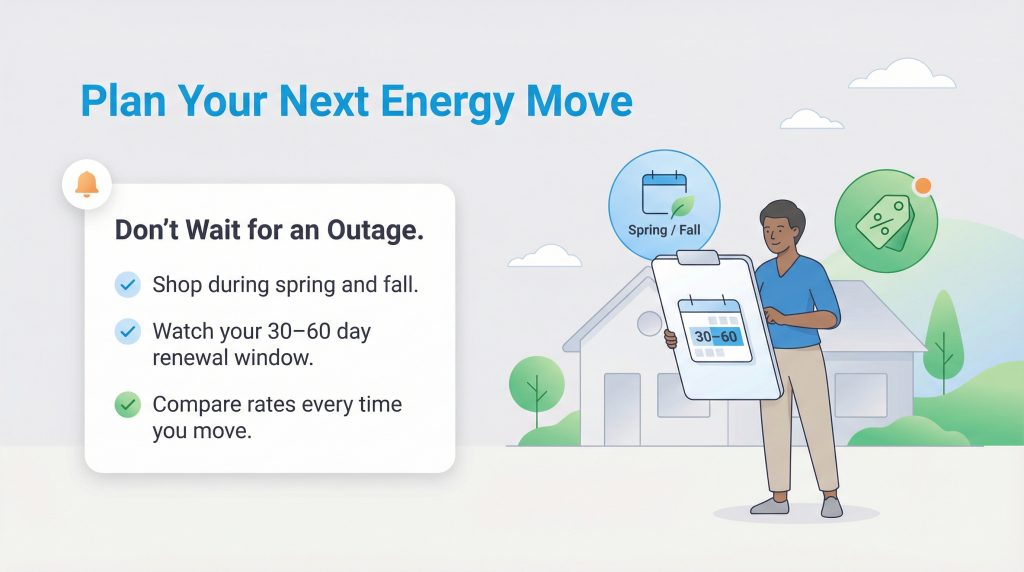
Taking confident control of your electricity service is less about perfectly predicting the future and far more about executing a solid game plan. Whether you are successfully transitioning to a greener, eco-conscious alternative or just hunting down the absolute lowest rate possible, thorough preparation ensures you won’t experience any stressful gaps in your power. Before you make the final phone call or hit submit on a provider’s enrollment form, thoughtfully complete this simple four-step checklist to guarantee a flawless switch:
- Verify Your Contract End Date: Review your current Electricity Facts Label (EFL) or a recent billing statement to confirm exactly when your existing plan expires. Identify any potential termination fees if you are switching early.
- Check Your Previous Usage Data: Log securely into your current utility portal and review your kilowatt-hour usage over the last 12 months. Providers price their tiers based on standard usage benchmarks (typically 500, 1,000, or 2,000 kWh), so knowing your average consumption ensures you pick a truly accurate rate.
- Compare Local Rates: Use state-sponsored energy choice websites or trusted comparison tools to evaluate active offers in your specific ZIP code. Look past the flashy promotional headlines and ensure you are comparing apples to apples based solely on your actual usage data.
- Pick a Strategic Start Date: If you are moving, smartly schedule your new service to start one to two days before you arrive. If you are staying at your current address, purposefully set the start date to seamlessly overlap with the very final day of your expiring contract.
Proactively managing your electricity service empowers you to confidently secure the best rates and the most reliable contract terms. By meticulously checking your contract expiration date today, marking your calendar for the spring or fall shoulder seasons, and diligently following the two-to-three-week rule for moving, you avoid the nagging anxiety of last-minute decisions. Whether you are eagerly settling into a brand-new home or simply optimizing your monthly budget at your current residence, a well-timed, thoughtful switch smoothly paves the way for long-term savings and lasting peace of mind.
Frequently Asked Questions About Switching Electric Service
Is it worth switching electric providers?
How long does it take to switch electric suppliers?
Can I switch electricity providers if I am renting?
What happens if I switch electric companies before my contract ends?
Does switching providers affect the reliability of my electricity?
What month is best to switch electricity providers?
How often should I shop for a new electricity plan?
Can I switch electricity providers before my contract ends?
How far in advance can I schedule electric service?
Does the title company handle transferring utilities when buying a house?
About the Author

Claudio is a sustainability-focused writer with a background in Anthropology and Psychology from NC State University. He has spent over 15 years working in writing, interpretation, and translation, driven by a deep interest in how human culture shapes the environment. Today, he shares his curiosity with readers by writing about sustainable living solutions and the connection between everyday choices and environmental impact.