
Understanding the difference between delivery and supply charges is the first step toward lowering your electric bill.
Key Takeaways
- The PECO delivery charge is a fixed cost covering the maintenance of poles, wires, and grid reliability, meaning you cannot shop around for a lower rate on this portion of your bill.
- Your supply charge is variable and determined by the electricity generator you choose, offering the biggest opportunity for savings through the Pennsylvania Customer Choice program.
- You can lower your total monthly costs by comparing competitive supplier rates against PECO’s Price to Compare and implementing energy-efficient home improvements.
Opening your electric bill during a freezing Pennsylvania winter or a sweltering summer can be a shock to the system. You scan the page for the total amount due, but then your eyes drift to the breakdown, Distribution Charges, Customer Charges, Transmission Charges, and it starts to look like a foreign language. If you are new to the Philadelphia area, have just moved into a new home, or are just trying to budget better, these line items can feel frustratingly out of your control. While you can’t negotiate every fee on your bill, understanding exactly what you are paying for is the secret to finding savings where they actually exist. We are here to decode the jargon so you can take charge of your bottom line. If you are setting up electric service in a new home, our main guide to electric utilities can also help you understand your options.
What Is the PECO Delivery Charge?
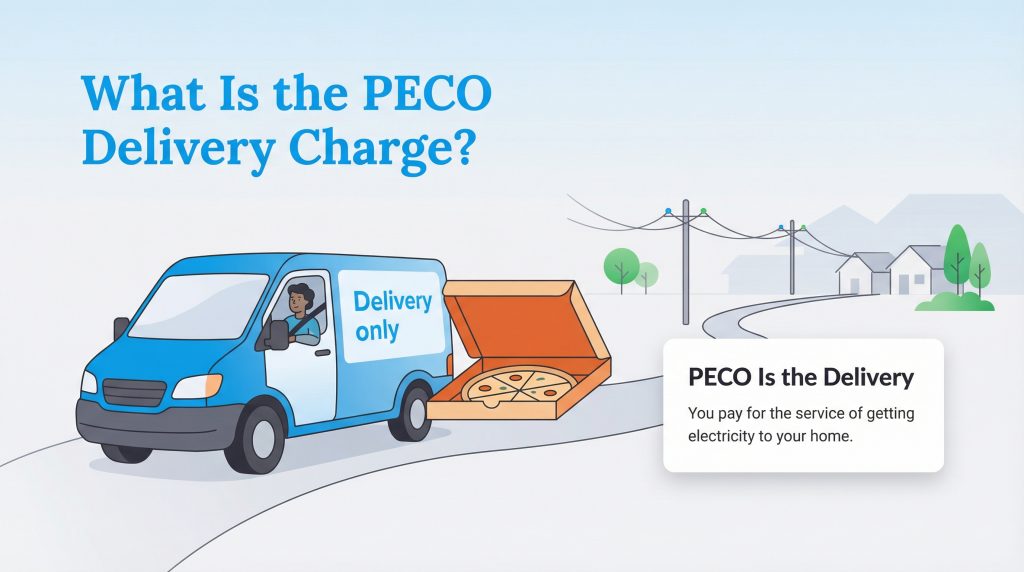
To understand your electric bill, it helps to think of the “Pizza vs. Van” analogy. Imagine you order a pizza for dinner. You pay the restaurant for the pizza itself (the product), but you also pay a delivery driver to bring it to your house in a van (the service). In this scenario, electricity is the pizza, and PECO is the van.
The PECO delivery charge is the cost of that “van.” It covers the infrastructure required to transport electricity from the power plant to your home. This includes maintaining the utility poles, fixing downed wires after a storm, upgrading the local grid, and reading your meter. Regardless of who generates the electricity (the “pizza” maker), PECO owns the van, so you must pay them for the delivery service.
These rates are not arbitrary; they are regulated costs approved by the Pennsylvania Public Utility Commission (PUC). This means PECO cannot raise these rates without filing a request and proving that the funds are necessary for grid maintenance and modernization.
Delivery vs. Supply: The Two Main Parts of Your Bill
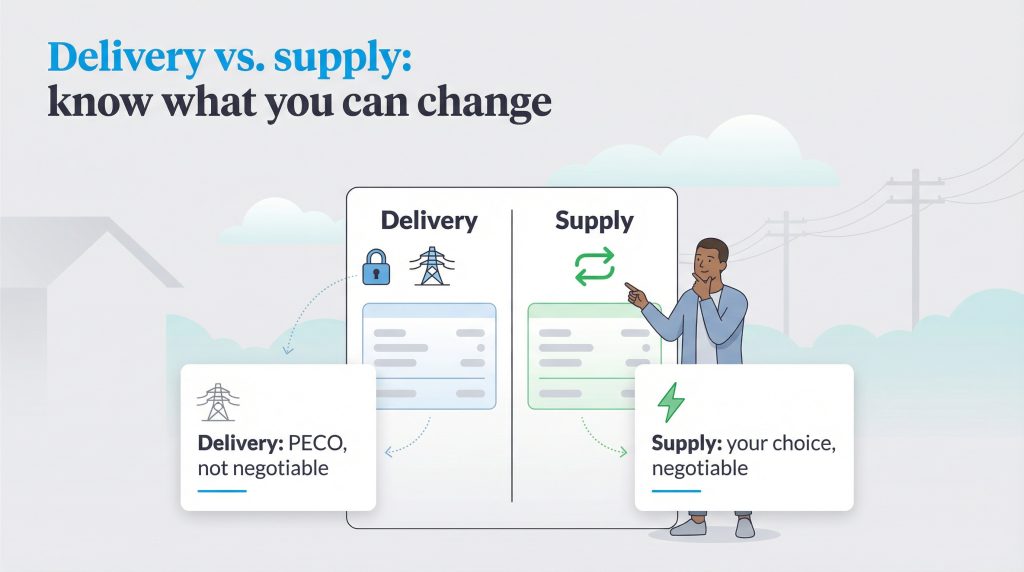
The most confusing part of a utility bill is often distinguishing between what you must pay PECO and what you can shop for. Your bill is essentially split into two main buckets. Understanding the difference between PECO supply vs delivery charges is critical because it highlights where your savings potential lies.
Here is the simple breakdown:
- Delivery Charges (Non-Negotiable): These are paid to PECO. They include distribution fees and the fixed customer charge. Everyone in the service territory pays the same rates for these services based on their rate class (residential, commercial, etc.).
- Supply Charges (Negotiable): These are paid to the generator. This covers the actual electricity you use. Under Pennsylvania law, you can choose a competitive supplier for this portion.
When customers ask, “Why is my PECO bill so high?”, the answer is often a combination of high usage, which drives up both delivery and supply costs, and rising rates in the supply category. While you are stuck with the delivery rates, you have the freedom to fire your supplier if their rates get too high.
Detailed Breakdown: What Is Included in Delivery Charges?
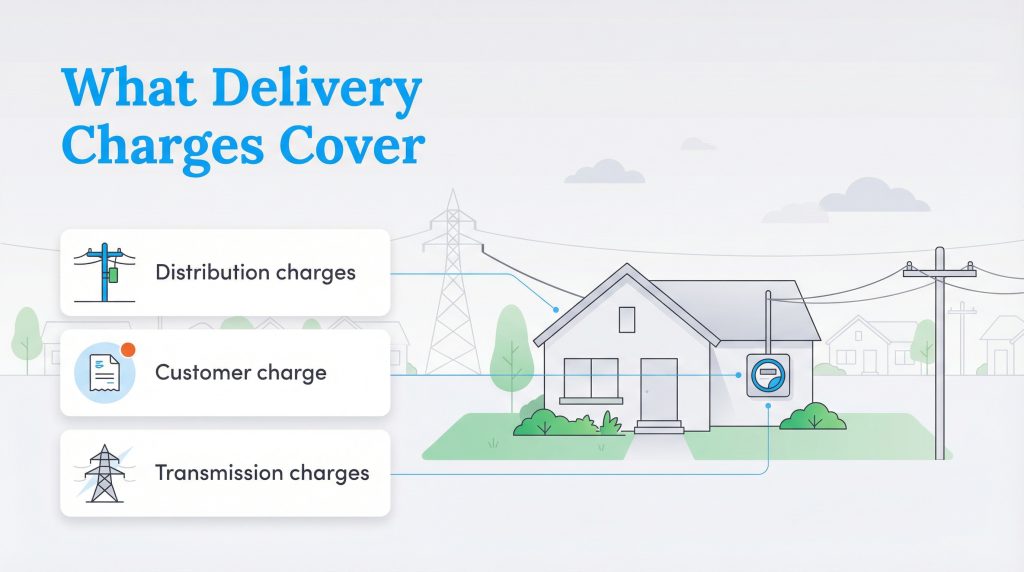
The delivery portion of your bill isn’t just one lump sum; it is a collection of specific fees that fund different parts of the grid. Knowing what these are helps you verify that your bill is accurate.
Distribution Charges
This fee covers the local equipment that brings electricity from high-voltage substations directly to your house. It pays for the transformers in your neighborhood, the wires on your street, and the crews that come out to repair them. This charge is calculated per kilowatt-hour (kWh), meaning the more electricity you use, the more you pay for distribution.
The Customer Charge
The PECO customer charge is a fixed monthly fee that you pay regardless of how much electricity you use. Even if you went on vacation for a month and used zero power, you would still see this charge on your bill. In recent years, PECO’s residential customer charge has been around the $10–$12 per month range, but your exact amount may differ. Always check your own bill or PECO’s current rate schedule for the latest figure. This fee covers administrative costs like billing, metering, and customer service operations.
Transmission Charges
PECO transmission charges cover the cost of moving high-voltage electricity from power plants over long distances to the local distribution system. Think of this as the “highway” toll for electricity before it gets to your local streets. These rates are federally regulated by FERC (Federal Energy Regulatory Commission) rather than the state PUC, but they are passed through to you on your bill.
Can You Lower Your PECO Delivery Charge?
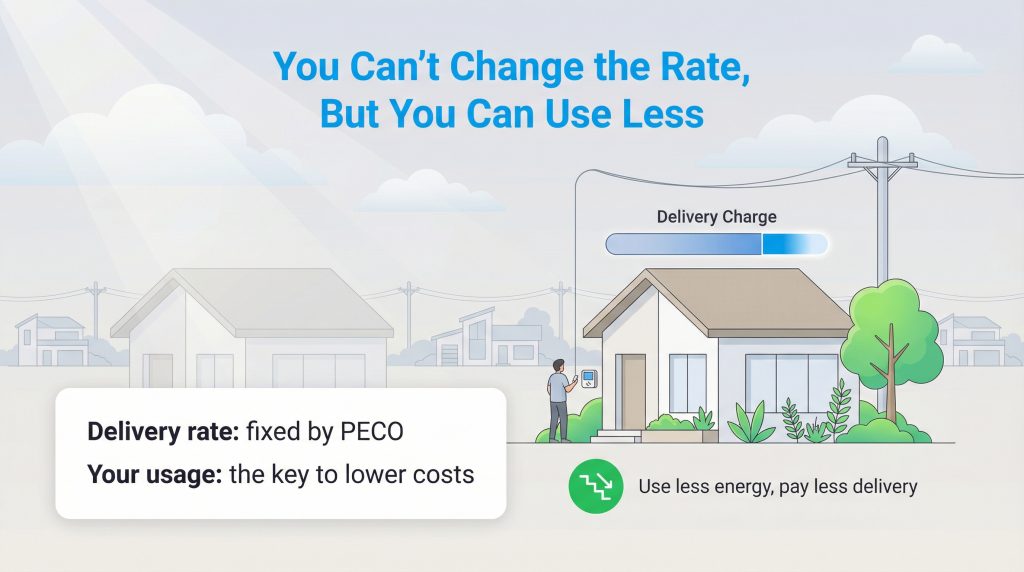
The short answer is no, you cannot negotiate a lower rate for delivery. PECO holds a natural monopoly on the infrastructure in your area, it wouldn’t make sense to have five different companies building power lines on the same street. Because of this, the state sets the rates to ensure fairness.
However, there is a “but.” Since the Distribution charge is volume-based (charged per kWh), you can lower the total amount you pay for delivery by using less energy. If you reduce your household energy consumption, you aren’t just saving on the electricity itself; you are also paying PECO less to deliver it. This is the most effective way to shrink this specific portion of your bill.
3 Ways to Lower Your Total PECO Bill
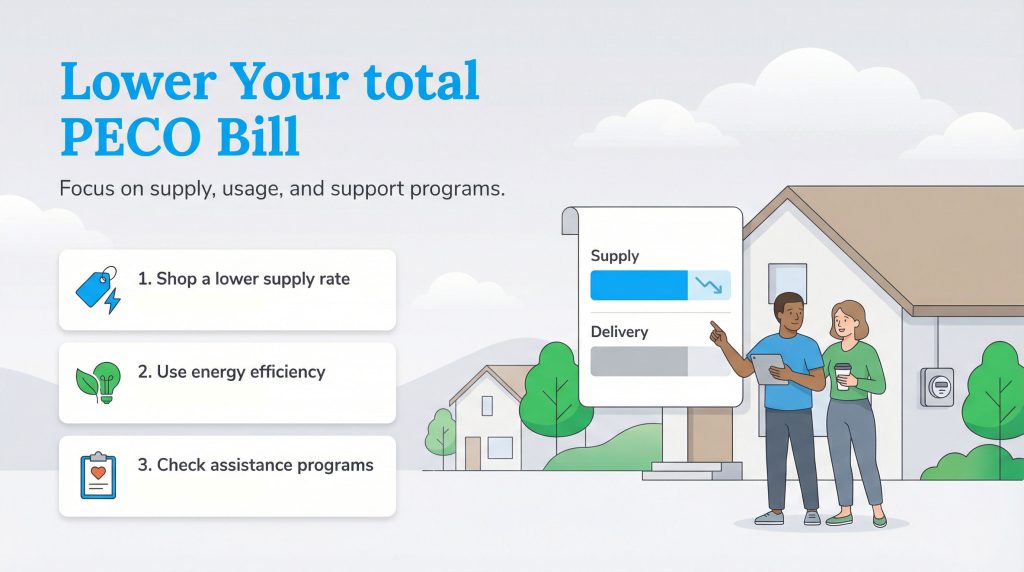
Since you can’t call PECO and ask for a discount on delivery, the smartest move is to attack the bill from other angles. By focusing on supply rates and efficiency, you can significantly reduce your total monthly spend. If you’ve just moved, start by checking who your current supplier is on your first PECO bill to see if you are on the default rate.
1. Shop for a Lower Supply Rate
Your bill includes a “Price to Compare” (PTC), this is the rate PECO charges for supply if you don’t choose your own provider. This rate changes quarterly. You can often find a competitive supplier offering a lower fixed rate than the current PECO Price to Compare. Visit PAPowerSwitch.com to compare offers. By locking in a lower rate for your supply, you offset the non-negotiable delivery costs.
2. Reduce Usage with Energy Efficiency
Every kilowatt-hour you save is a double discount: you avoid the supply cost and the distribution cost for that unit of energy. Simple changes can add up quickly.
- Swap out old incandescent bulbs for LEDs.
- Use smart power strips to kill “vampire power” from electronics.
- Audit your HVAC usage; heating and cooling often make up 50% of a bill.
For more detailed tips, check out our guide on how to save on your electric bill.
3. Explore Assistance Programs
If you are struggling to keep up with rising costs, you are not alone, and there are resources available. PECO offers several assistance tiers for income-qualified households.
- CAP (Customer Assistance Program): Provides a monthly credit for low-income households.
- LIHEAP: A federal grant program that helps pay for heating costs during the winter.
You can apply for these directly through the PECO Assistance Programs page.
Benchmarking: Is Your Bill Normal?
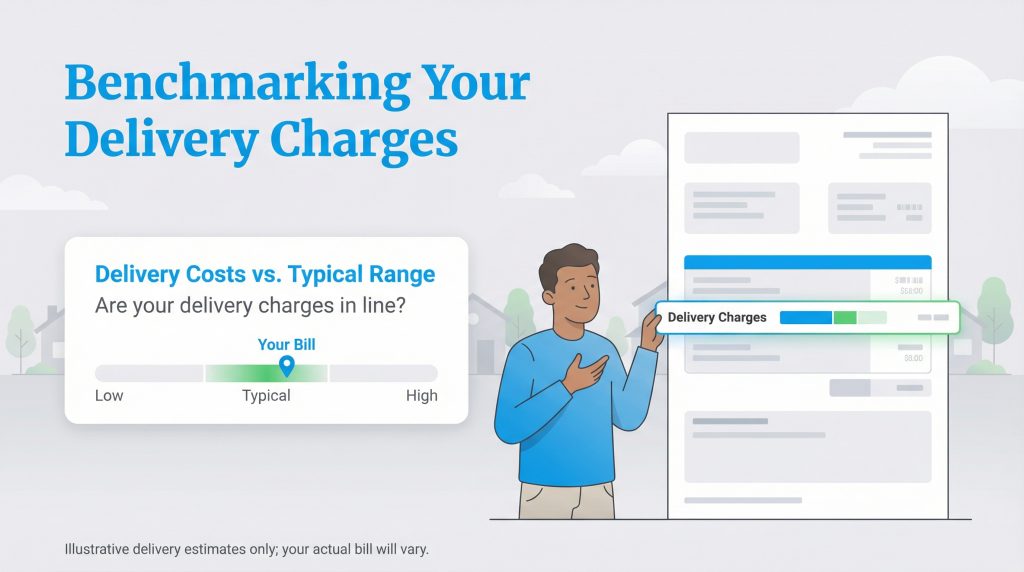
It helps to know if your costs are in the typical range or if something is off. The table below estimates what the Delivery Charges alone (excluding supply) might look like for different levels of usage. For illustration, these estimates assume a fixed Customer Charge of about $12.00 and a combined Distribution/Transmission rate of around $0.09 per kWh. Your actual delivery charges will depend on PECO’s current tariff and any riders that apply.
| Monthly Usage | Estimated Delivery Cost | Household Type |
|---|---|---|
| 500 kWh | $57.00 | Apartment / Condo |
| 1,000 kWh | $102.00 | Average Family Home |
| 1,500 kWh | $147.00 | Large Home / Heavy AC Use |
Note: These figures are estimates for educational purposes. Your actual bill will vary based on current tariff rates and taxes.
Take Control of Your Pennsylvania Electric Costs
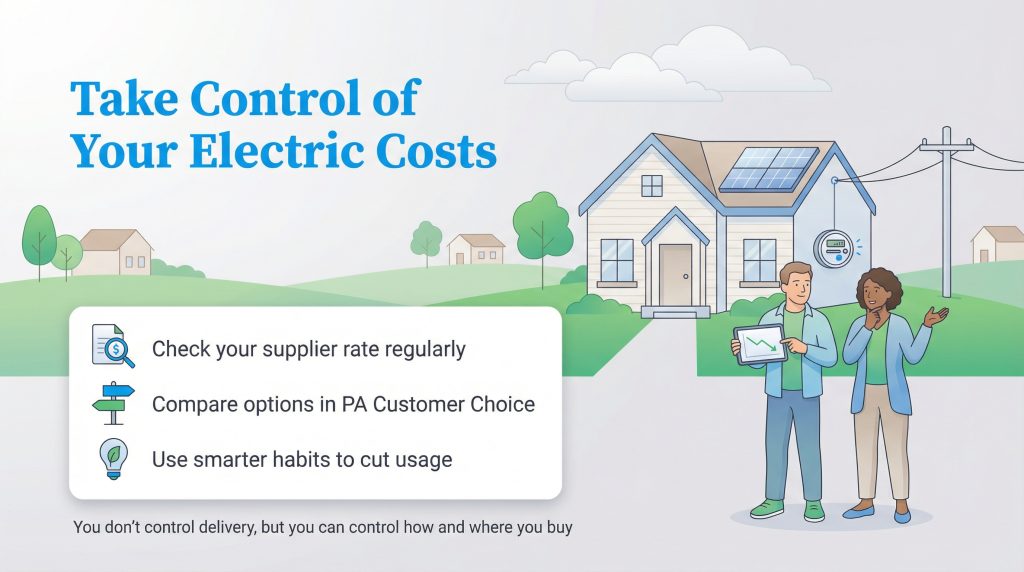
While PECO delivery charges are a mandatory part of maintaining a reliable grid, they don’t have to dictate your entire financial picture. You have more power than you think. By becoming an active participant in the PA Customer Choice program and adopting smarter energy habits at home, you can keep your total costs manageable. The grid delivers the power, but you decide how to use it, and who you buy it from. Stay proactive, check your rates regularly, and enjoy the peace of mind that comes with being a smarter energy consumer.
FAQs About PECO Bills
Why is my PECO delivery charge higher than my supply charge?
Does PECO make a profit on delivery charges?
What is the current PECO Price to Compare?
Can I switch electric providers to avoid delivery charges?
How often do PECO delivery rates change?
I just moved into a new home: why is my first PECO bill higher than expected?
About the Author

David has been an integral part of some of the biggest utility sites on the internet, including InMyArea.com, HighSpeedInternet.com, BroadbandNow.com, and U.S. News. He brings over 15 years of experience writing about, compiling and analyzing utility data.