
Understanding how nuclear power works, its environmental impact, and what it means for your monthly utility bill
Key Takeaways
- Nuclear energy provides reliable “baseload” power, meaning it keeps your lights on even when the sun isn’t shining or the wind isn’t blowing.
- While not technically renewable like solar or wind, nuclear power produces zero carbon emissions during operation, making it a strong contender for eco-conscious homes.
- Small Modular Reactors (SMRs) are an emerging technology that could make nuclear energy safer, cheaper, and more accessible for residential grids in the near future.
When you hear the word “nuclear energy,” your mind might jump to sci-fi movies or glowing green rods, but the reality is much more practical. Nuclear power is actually a silent workhorse for many electrical grids, providing a steady stream of carbon-free energy to millions of homes. We know the topic can feel complex or even a little intimidating, but it is a critical piece of the puzzle if you are looking to build a reliable, low-carbon lifestyle. We are here to demystify the science, analyze the real costs, and help you decide if a nuclear-backed energy plan is the right choice for your household.
What Is Nuclear Energy and How Does It Work?
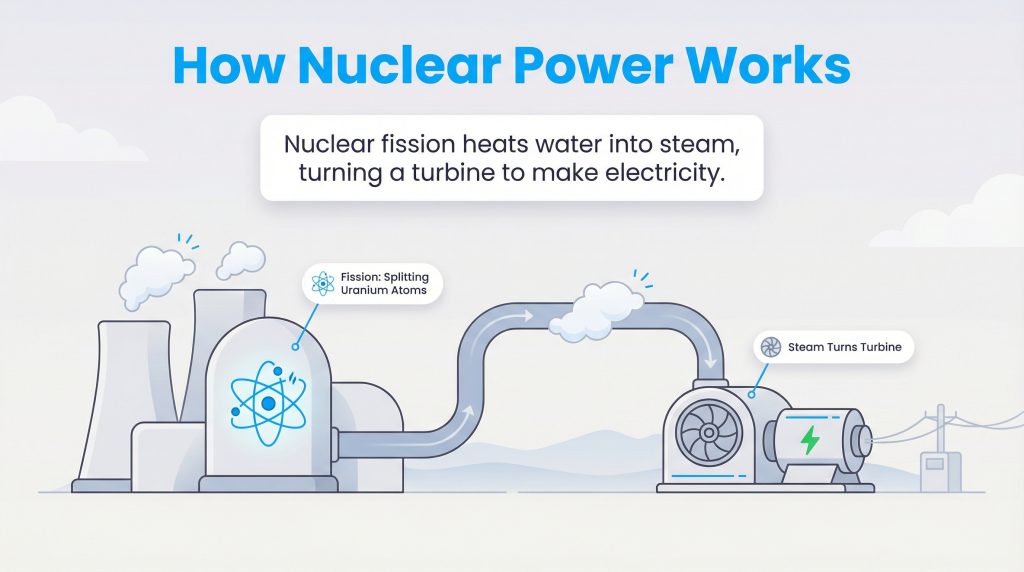
At its core, a nuclear power plant functions surprisingly like a coal or natural gas plant. They all heat water to produce steam, which then spins a massive turbine to generate electricity generation. The major difference lies in how they get that heat. Instead of burning fossil fuels, nuclear plants use a physical reaction called nuclear fission.
Fission occurs when uranium atoms are split inside a reactor. This splitting process releases a tremendous amount of heat, which is used to boil water into steam. It is important to distinguish this from fusion, which powers the sun and involves smashing atoms together. While fusion is the dream for the future, fission is the technology currently powering homes across the country. By understanding how nuclear power works, you can better appreciate how it differs from the fossil fuels that have traditionally dominated the grid.
Nuclear Power’s Environmental Impact: Carbon vs. Waste
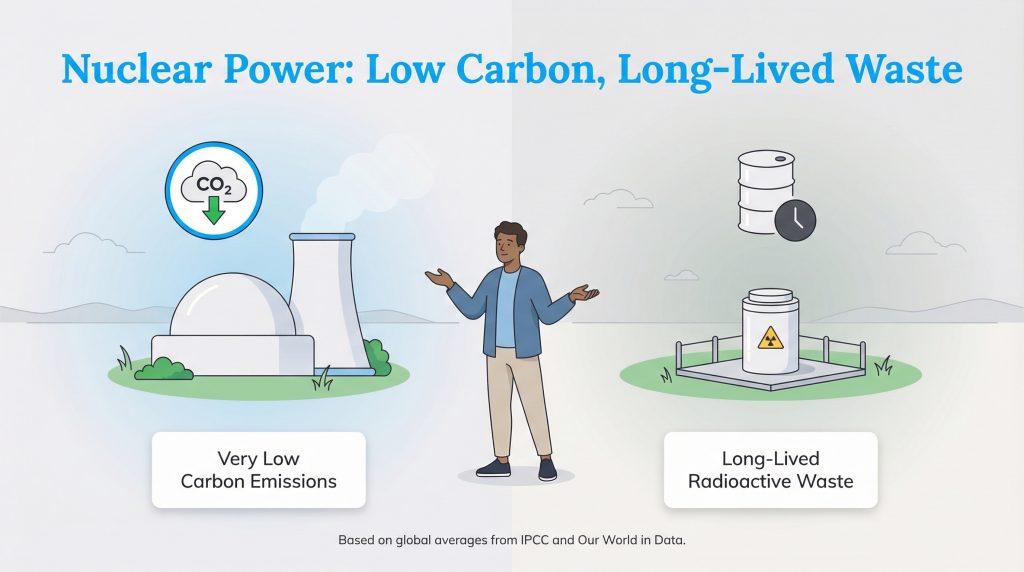
This is one of the most common questions we see, and the answer requires a little nuance. Technically, nuclear energy is not renewable. Renewable energy sources, like wind, solar, and hydro, rely on fuel sources that replenish themselves naturally. Nuclear plants run on uranium, which is a finite resource mined from the earth. Once we use it up, it’s gone, much like coal or oil.
However, nuclear energy is widely considered sustainable and clean. Unlike fossil fuels, which pump massive amounts of carbon dioxide and pollutants into the air, nuclear reactors emit virtually zero direct carbon emissions during operation. This makes nuclear an excellent partner for renewables. While solar panels need the sun and wind turbines need a breeze, nuclear plants can run 24/7 without adding to your carbon footprint.
To really understand the trade-offs, it helps to see how nuclear stacks up against other energy sources in terms of safety and emissions.
| Energy Source | Approx. CO₂ Emissions (g/kWh) | Safety (Deaths per TWh) |
|---|---|---|
| Coal | ~820 | 24.6 |
| Natural Gas | ~490 | 2.8 |
| Nuclear | ~12 | 0.03 |
| Wind | ~11 | 0.04 |
| Solar | ~45 | 0.02 |
Source: Our World in Data and IPCC. Note: Figures are approximate global averages.
The Pros and Cons of Nuclear Energy
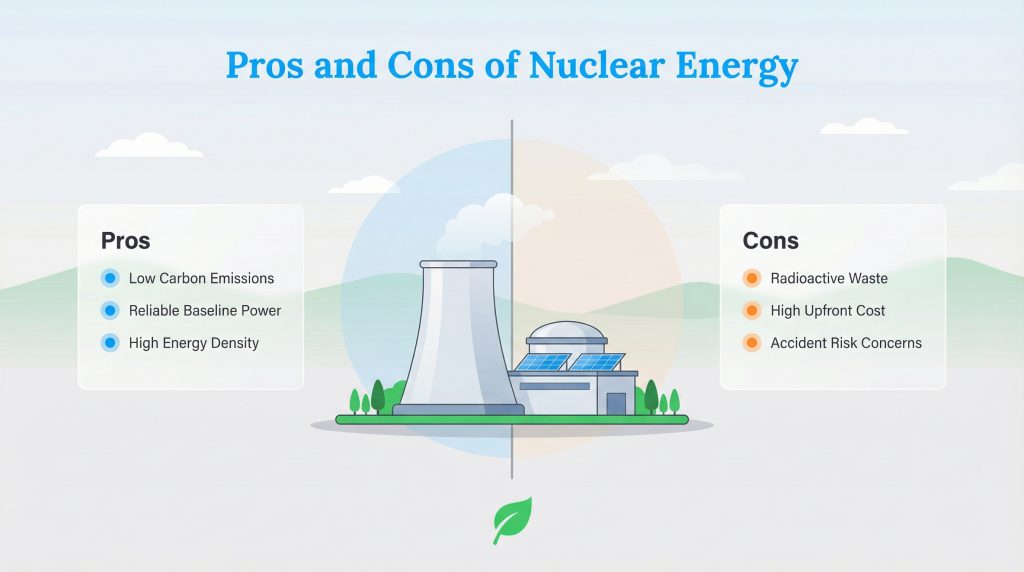
To see if nuclear fits your values, you’ll want to weigh its biggest benefits and drawbacks. Here is a breakdown of the pros and cons of nuclear energy to help you see the full picture.
| Pros | Cons |
|---|---|
| Low Carbon Footprint: Produces zero direct carbon emissions during electricity generation. | Radioactive Waste: Spent fuel remains hazardous for thousands of years and requires strict, long-term storage. |
| High Reliability: Provides consistent “baseload” power regardless of weather conditions. | High Initial Costs: Building new nuclear plants is incredibly expensive and time-consuming. |
| High Energy Density: A small amount of fuel produces a massive amount of energy. | Accident Risk: While extremely rare, accidents can have catastrophic environmental consequences. |
| Low Fuel Costs: Uranium is relatively inexpensive and prices are generally stable. | Non-Renewable: Relies on uranium mining, which is a finite resource. |
Nuclear Power Cost per kWh and Your Electric Bill
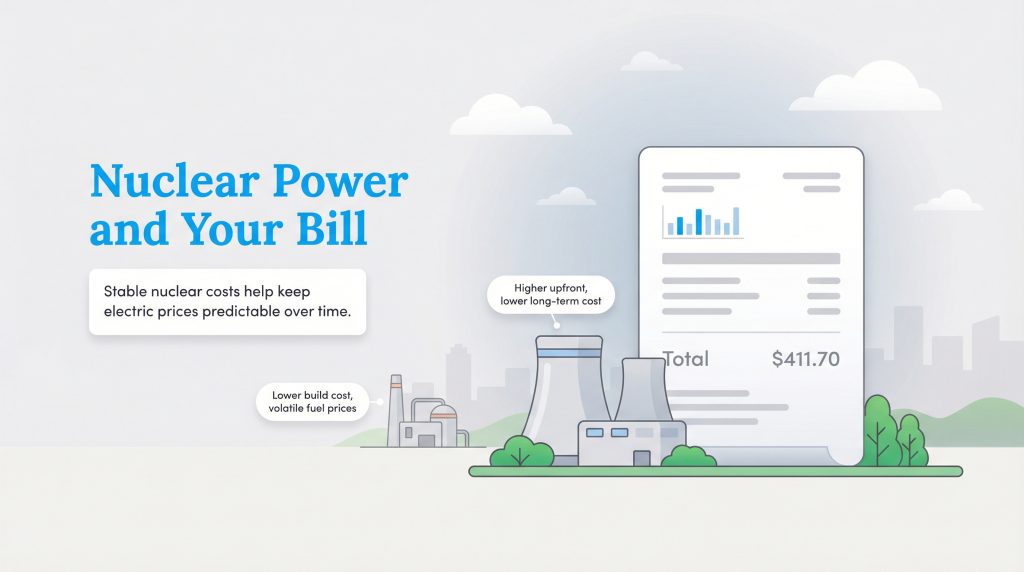
When you look at your monthly utility bill, you might wonder how nuclear power influences the bottom line. The economics of nuclear energy are unique. Building a nuclear power plant requires a massive upfront investment, billions of dollars and years of construction. However, once the plant is up and running, the actual cost to generate electricity is quite low.
This is because uranium fuel is relatively cheap compared to the energy it produces, and plants can operate for 18 to 24 months without needing to refuel. In contrast, natural gas plants are cheaper to build but are at the mercy of volatile fuel markets. If gas prices spike during a cold winter, your electricity bill often jumps with them. Nuclear power cost per kWh tends to be much more stable, acting as a buffer against these market swings. According to the U.S. Energy Information Administration (EIA), this stability helps keep overall grid prices predictable over the long term. If you want to further reduce your expenses, there are many other ways to save on your electric bill regardless of your energy source.
Safety and Reliability: The Truth About Nuclear Power
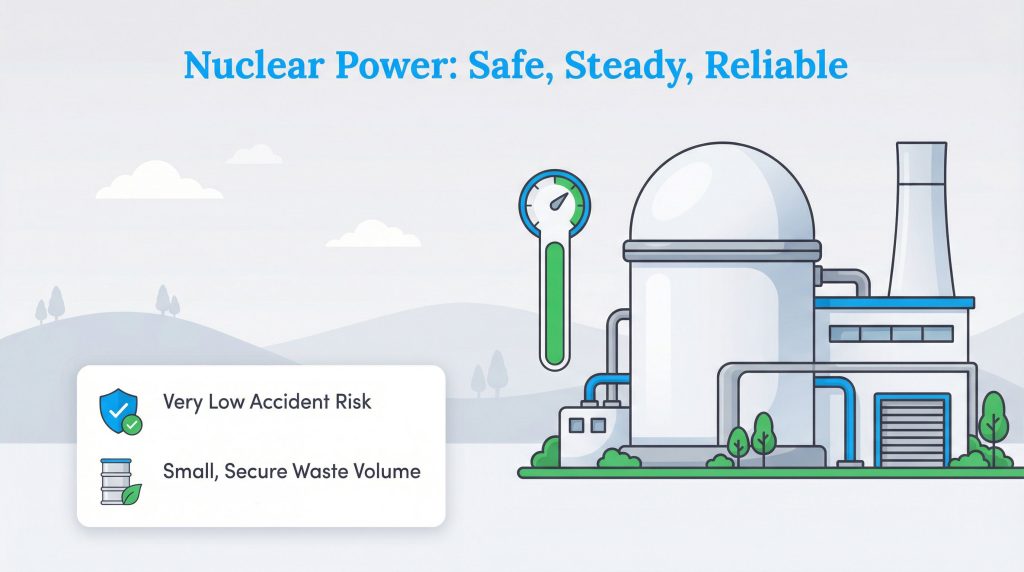
You can’t talk about nuclear power without addressing safety. High-profile incidents like Chernobyl and Fukushima have understandably created fear. However, the nuclear industry operates under some of the strictest safety regulations in the world. Modern reactors are designed with multiple redundant safety systems to prevent accidents, making them far safer than older designs. Studies show nuclear power has a very low death rate per unit of electricity produced compared with fossil fuels like coal and oil.
Beyond safety, the biggest asset of nuclear energy is its reliability. In the energy industry, this is called “baseload power.” Solar and wind are intermittent; they stop producing when the sun sets or the wind dies down. Nuclear power plants act as the steady tortoise to the renewable hare. They run continuously at near-full capacity, ensuring that your air conditioning stays on during a hot summer night when solar panels aren’t producing.
Regarding waste management, it is a serious challenge, but often misunderstood. Nuclear waste is not pumped into the air or dumped into rivers. It is solid fuel that is carefully stored on-site at power plants in steel-lined concrete pools or dry casks while long-term disposal solutions, such as deep geological repositories, are developed. While dangerous, the volume is surprisingly small compared to the millions of tons of ash and sludge produced by coal plants.
The Future of Home Energy: Small Modular Reactors (SMR)
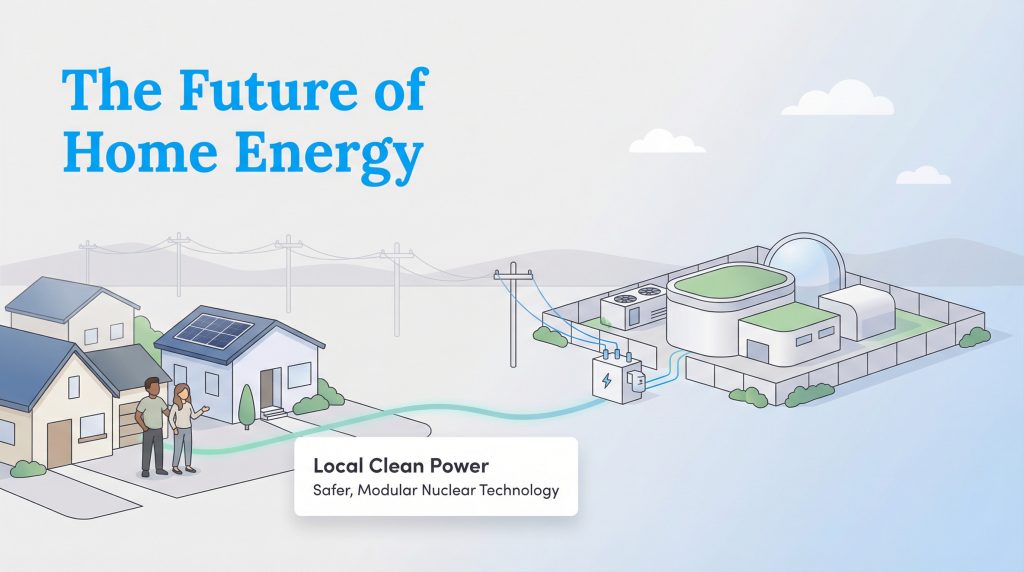
The future of nuclear energy might look very different from the massive cooling towers we see today. Enter Small Modular Reactors (SMRs). These are advanced nuclear reactors that are smaller, simpler, and can be built in factories and shipped to the site. This approach aims to solve the biggest problem with traditional nuclear: the cost and time of construction.
For homeowners, SMRs could mean more localized and resilient power grids. Because they are safer and require less space, they could potentially be sited closer to where power is needed, reducing transmission losses. This technology could allow remote communities or smaller utility grids to access reliable, carbon-free power without the billion-dollar price tag of a traditional plant. You can learn more about this developing technology through the Department of Energy.
How to Choose a Green Energy Utility Plan
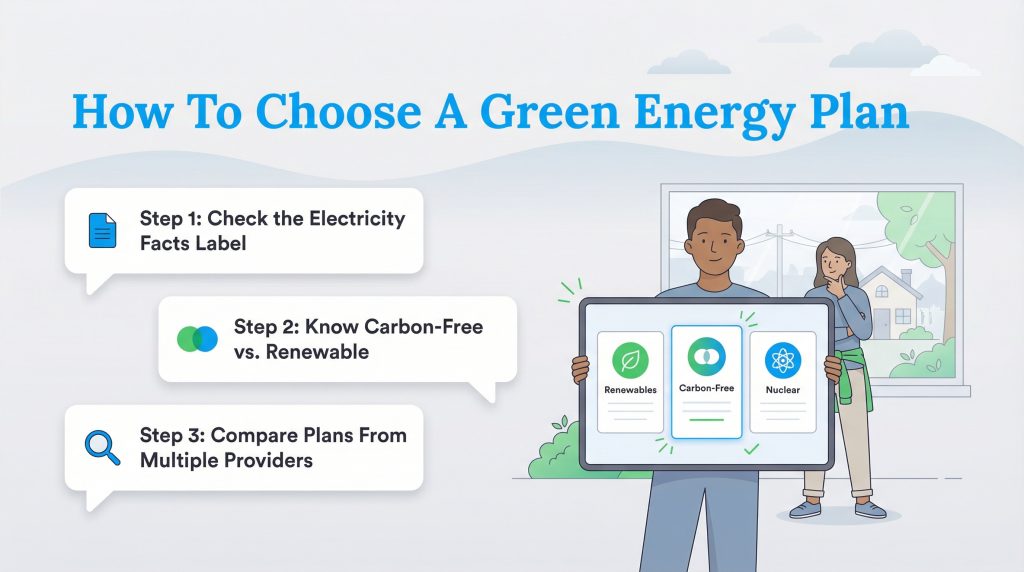
If you have decided that you want nuclear power to be part of your home’s energy mix, you might be wondering how to make that happen. In deregulated energy markets, like those in Texas, Pennsylvania, and Ohio, you have the power to choose your electricity provider and plan.
- Check the Label: Look for the “Electricity Facts Label” or “Fuel Mix” disclosure on a provider’s website. This document breaks down exactly where their power comes from. For example, if you live in New York, your plan’s fuel mix might show 30% nuclear, 40% natural gas, and 30% renewables.
- Carbon-Free vs. Renewable: This distinction matters. If you buy a “100% Renewable” plan, it usually includes wind and solar but excludes nuclear. If you want to support nuclear as a clean source, look for “Carbon-Free” or “Emission-Free” plans. Programs like EPA Green Power can help identify these options.
- Shop Around: Visit your state’s official energy choice website to compare plans. Many providers now offer specific green energy utility plans that prioritize low-carbon sources.
Why Nuclear May Be the Key to a Carbon-Free Home
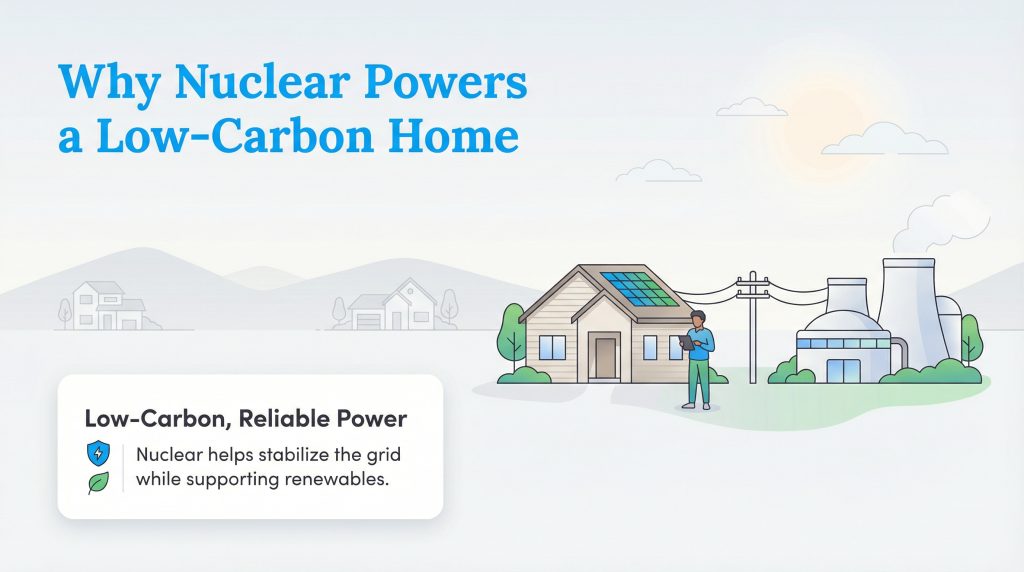
Nuclear energy isn’t a perfect solution, but it is a powerful tool in the fight against climate change. It offers the reliability we need to keep our modern lives running while producing virtually zero carbon emissions. By looking past the stigma and focusing on the data, you can see that nuclear power plays a vital role in stabilizing the grid and supporting renewable growth. Choosing an energy plan that includes nuclear is a practical step toward a cleaner, more sustainable home.
FAQs About Nuclear Power
Is nuclear energy considered clean energy?
Can I power my home entirely with nuclear energy?
What happens to the nuclear waste?
Is living near a nuclear power plant safe?
Why is nuclear power so expensive to build?
About the Author

David has been an integral part of some of the biggest utility sites on the internet, including InMyArea.com, HighSpeedInternet.com, BroadbandNow.com, and U.S. News. He brings over 15 years of experience writing about, compiling and analyzing utility data.