
Starting June 1, 2026, Duquesne Light is raising its default electricity rate by 2.84%, but you can take control of your utility costs by shopping for competitive suppliers or participating in local energy-saving programs.
Key Takeaways
- On June 1, 2026, Duquesne Light’s default residential rate will increase to 14.14 cents per kWh, which is a 2.84% jump from the previous rate.
- A typical household using 600 kWh of electricity per month will see bills rise by about $2.27 each month, though hot summer weather could push your actual consumption and costs higher.
- You can easily protect your wallet by switching to a competitive electric supplier with a stable, fixed-rate plan or by taking advantage of new energy efficiency rebates.
If you live in southwestern Pennsylvania, you know how crucial it is to keep your home cool and comfortable when summer heat waves roll through. But starting June 1, 2026, you’ll need to keep a closer eye on your energy bills, as Duquesne Light is officially increasing its default electricity generation rate. We’re here to break down exactly what this rate adjustment means for your household budget, why energy costs are rising across the state, and the simple, practical steps you can take today to lock in lower rates and make your home more energy-efficient.
Why Are Duquesne Light Electricity Rates Changing?
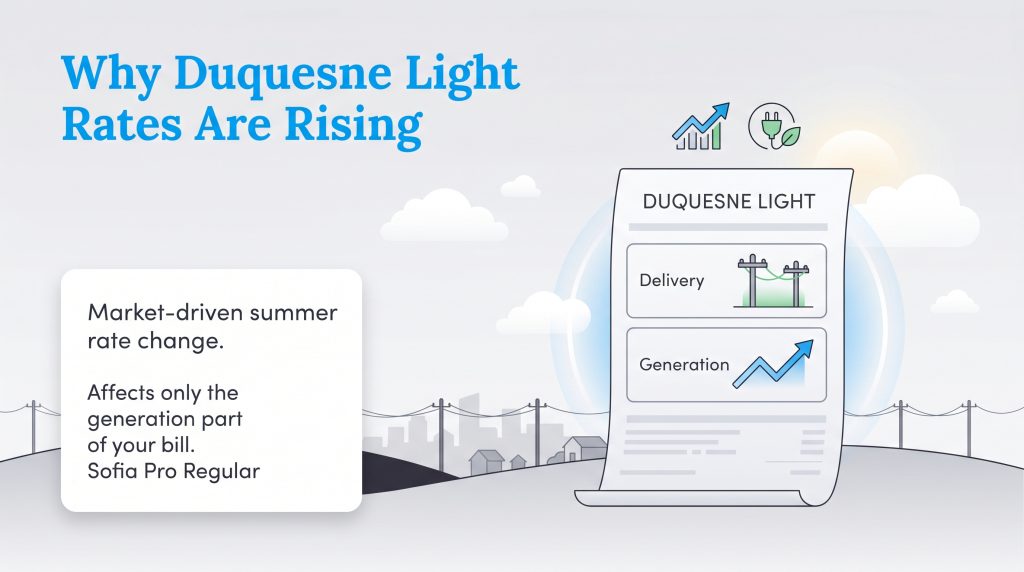
It is easy to assume that utility rate increases are just a way for power companies to make more money, but the truth is a bit more complicated. In Pennsylvania’s deregulated energy market, the cost of generating electricity is tied directly to regional energy markets that reset twice a year, on June 1 and Dec. 1. As summer temperatures climb and air conditioners turn on across the state, the demand on the regional power grid rises, which drives up wholesale electricity prices.
The Regional Power Grid Squeeze
The physical electricity you use is purchased through a wholesale market coordinated by PJM Interconnection, the regional transmission organization for Pennsylvania and 12 other states. Over the last year, regional energy demand has skyrocketed, largely due to industrial electrification and the massive growth of high-density artificial intelligence data centers. At the same time, the grid has faced delays in bringing new, low-cost clean energy projects online. This combination of soaring demand and lagging new supply has resulted in higher capacity costs during wholesale competitive auctions — costs that utilities must eventually pass along to default customers.
Understanding Your Bifurcated Electric Bill
To understand where these new charges go, it helps to look at how your monthly electric bill is structured. Your bill is split into two primary components: delivery (or distribution) and generation (or supply). Delivery charges are regulated by the Pennsylvania Public Utility Commission (PUC) and cover the cost of physical poles, wires, and operational services to deliver energy to your home. This portion remains with Duquesne Light no matter who supplies your power. Generation charges, on the other hand, represent the actual electricity you consume. The upcoming June 1 rate change only affects this supply portion, which is represented on your bill as the default Price to Compare.
Who is Impacted by the June 2026 Rate Adjustments?
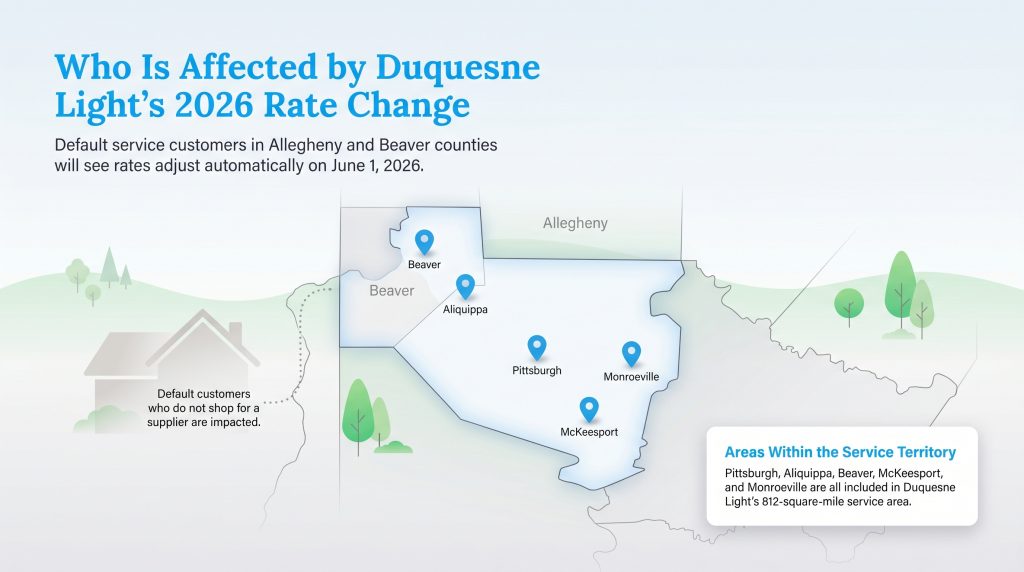
If you already shop for your electricity through a competitive supplier, this default rate increase won’t affect you immediately. The upcoming change only impacts customers receiving default service from Duquesne Light, which is about 80% of residential customers in the state who choose not to shop. However, if you are currently on a default plan, your rates will adjust automatically on June 1, 2026.
The Geographic Footprint of the Rate Change
Duquesne Light Company manages an 812-square-mile service territory across Allegheny and Beaver counties, delivering power to over 600,000 customers. If you are moving to southwestern Pennsylvania or already live in this regional corridor, you’ll be affected if your home is in any of the major municipal centers we serve. This footprint includes:
- Pittsburgh: The urban heart of the service territory.
- Aliquippa: A highly populated residential and commercial area in Beaver County.
- Beaver: A historic county seat borough.
- McKeesport: A bustling riverfront community.
- Monroeville: A prominent commercial and residential suburban center east of Pittsburgh.
How Will the Rate Increase Affect Your Monthly Bill?
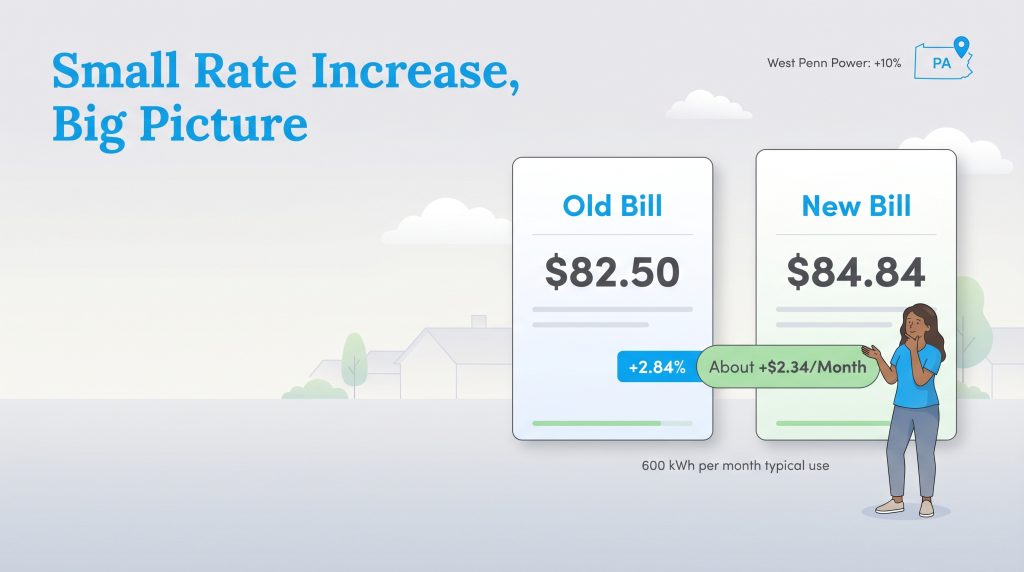
For the standard residential customer, this rate adjustment is relatively modest, especially compared to the double-digit hikes hitting other parts of Pennsylvania. Effective June 1, 2026, Duquesne Light’s residential default Price to Compare will rise from 13.75 cents per kWh to an estimated 14.14 cents per kWh. This represents an increase of approximately 2.84% on the supply portion of your bill.
Crunching the Numbers for a Typical Household
Because Duquesne Light’s average residential customer uses about 600 kWh of electricity each month, we can calculate the average impact on your wallet :
- Old Monthly Supply Cost: 600 kWh multiplied by 13.75 cents = $82.50
- New Monthly Supply Cost: 600 kWh multiplied by 14.14 cents = $84.84
- Estimated Monthly Increase: $84.84 minus $82.50 = $2.34
This calculation aligns with official reports projecting a bill increase of about $2.27 to $2.34 per month. For comparison, neighboring West Penn Power customers face a steep 10.3% rate jump on June 1, which will add about $11.28 to $17.00 to their average bills.
Residential Rate Class Breakdown
Your exact rate change depends on how your home is heated and which specific residential rate class you belong to. The table below outlines how Duquesne Light is adjusting supply charges across its three primary residential classes :
| Rate Class | Previous PTC (¢/kWh) | June 1, 2026 PTC (¢/kWh) | Percentage Change |
| RS (Standard Residential) | 13.75 | 14.14 | +2.84% |
| RH (Residential Heating) | 12.59 | 12.70 | +0.87% |
| RA (Add-On Heat Pump) | 13.27 | 13.48 | +1.58% |
As you can see, space-heating customers on the RH rate and heat pump users on the RA rate will experience even smaller percentage increases than standard RS accounts.
Practical Ways to Control Your Energy Costs
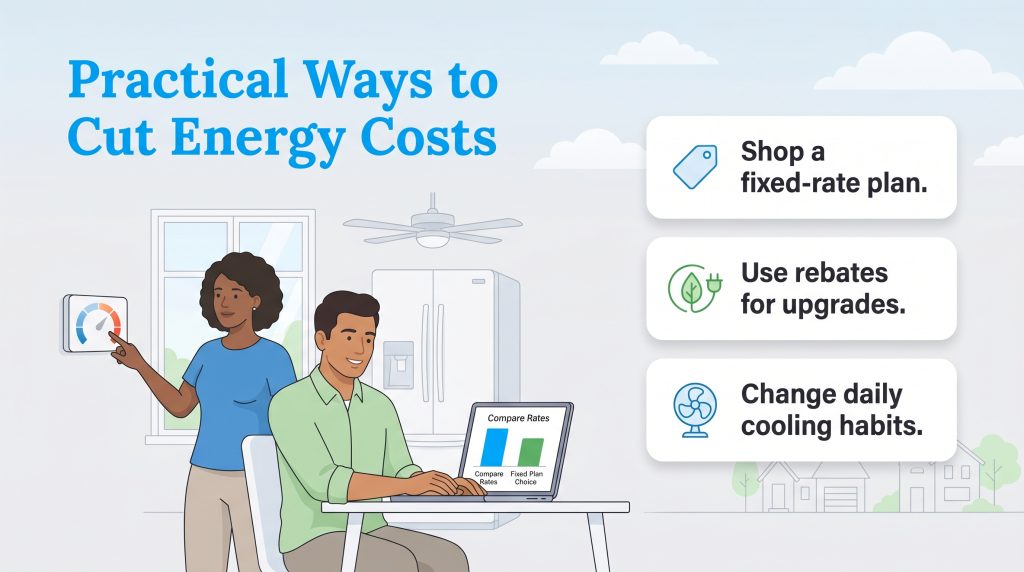
While we can’t control the weather or regional energy auctions, we have plenty of tools to help you manage your household’s electricity usage. Under Pennsylvania’s deregulation laws, you have the power to choose who generates your electricity. By combining smart shopping with energy conservation, you can easily offset this rate increase.
Shop and Switch to a Competitive Electricity Supplier
If you want to beat the default rate, you can compare available plans from licensed retail suppliers on the official PA Power Switch. When shopping, enter your ZIP code and compare competitive offers against Duquesne Light’s new Price to Compare baseline of 14.14 cents per kWh. Here are some key tips to keep in mind:
- Lock in a Fixed Rate: Fixed-rate plans protect you from seasonal wholesale spikes, making them the safest choice for most households. Avoid variable-rate plans, which can spike without warning during severe summer heat waves.
- Watch for Fees: Check the fine print for monthly recurring customer charges or early cancellation fees that can cancel out your savings.
- Read the Renewal Terms: Many fixed-rate contracts automatically roll over into expensive variable rates when they expire, so write down your contract’s end date and keep an eye out for renewal notices.
To help you shop with confidence, you can download the Office of Consumer Advocate’s free electric shopping guide to learn more about supplier standards and consumer rights.
Take Advantage of Act 129 Phase V Rebates
Energy efficiency is one of the most powerful, eco-conscious alternatives to paying high utility bills. Under Pennsylvania’s flagship energy conservation law, Act 129, Duquesne Light is launching Phase V of its energy efficiency program, running from June 1, 2026, through May 31, 2031. This program is funded by a small surcharge of 0.17 cents per kWh on all residential distribution bills, meaning you are already paying for these initiatives and should absolutely take advantage of them!
Through Duquesne Light’s program, you can access several energy-saving options:
- Appliance Recycling Rebates: Get paid $50 to let the utility haul away your old, energy-wasting refrigerator or freezer for free. You can also get a $35 rebate for recycling an old dehumidifier. The utility’s recycling partner will dismantle the units responsibly, recycling over 90% of the materials to prevent landfill waste.
- High-Efficiency Equipment Rebates: Earn cash back on high-efficiency, environmentally mindful choices like smart thermostats, central air conditioners, and home insulation upgrades.
- Whole-House Energy Audits: Schedule a professional energy assessment of your home to pinpoint structural air leaks and identify deep efficiency upgrades.
No-Cost Energy Efficiency Tips for Summer
If you want to see immediate results without spending a dime, a few daily habits can make a huge difference in your consumption :
- Use Window Blinds Strategically: Keep your window blinds closed on the sunny side of your house to block out solar heat.
- Move Air with Fans: Run ceiling or portable fans to create a breeze. Moving air can make a room feel up to four degrees cooler than stationary air, allowing you to raise your air conditioner’s thermostat setting without sacrificing comfort.
- Adjust Your Thermostat: Try raising your thermostat by just one or two degrees. Every single-degree adjustment on your thermostat can change your overall monthly electric usage by up to 3%.
Affordability and Utility Assistance Programs
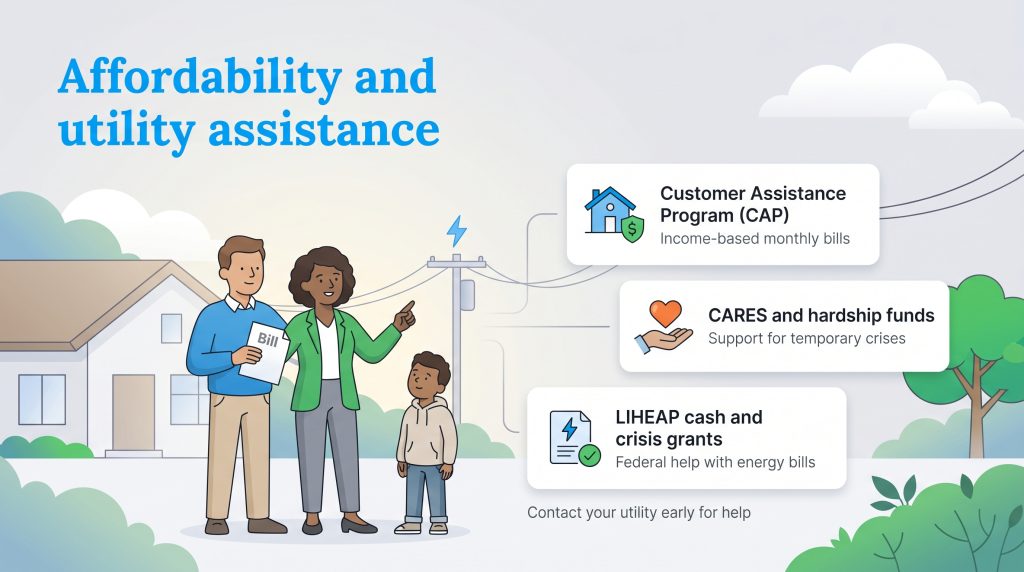
If you are concerned about falling behind on your bills or struggling to make payments, please contact Duquesne Light as early as possible. The utility coordinates several affordability programs designed to provide financial relief and prevent service termination.
Customer Assistance Program
For households with incomes at or below 150% of the federal poverty guidelines, Duquesne Light offers the Customer Assistance Program (CAP). CAP replaces standard volumetric billing with an affordable, predictable monthly payment plan based on a percentage of your household income (PIPP). Even better, for every month you make your CAP payment on time, the utility will forgive 1/36th of any unpaid debt you had before enrolling.
CARES Program and Hardship Funds
If you are experiencing a temporary hardship — such as a medical crisis, family emergency, or sudden job loss — the CARES program provides personalized case management to connect you with community resources. There are no strict income requirements to qualify for CARES. Additionally, the Dollar Energy Fund offers emergency hardship grants that apply directly to your outstanding electric balance.
LIHEAP Cash and Crisis Grants
The Low-Income Home Energy Assistance Program (LIHEAP) is a federally funded program administered by the Pennsylvania Department of Human Services that provides direct cash grants to help pay heating and energy bills. Although the standard winter LIHEAP season typically runs from November through May, receiving a LIHEAP grant serves as automatic income verification for Duquesne Light’s CAP. You can easily apply for LIHEAP and other state support online through the official Compass Web Site.
Taking Charge of Your Energy Future
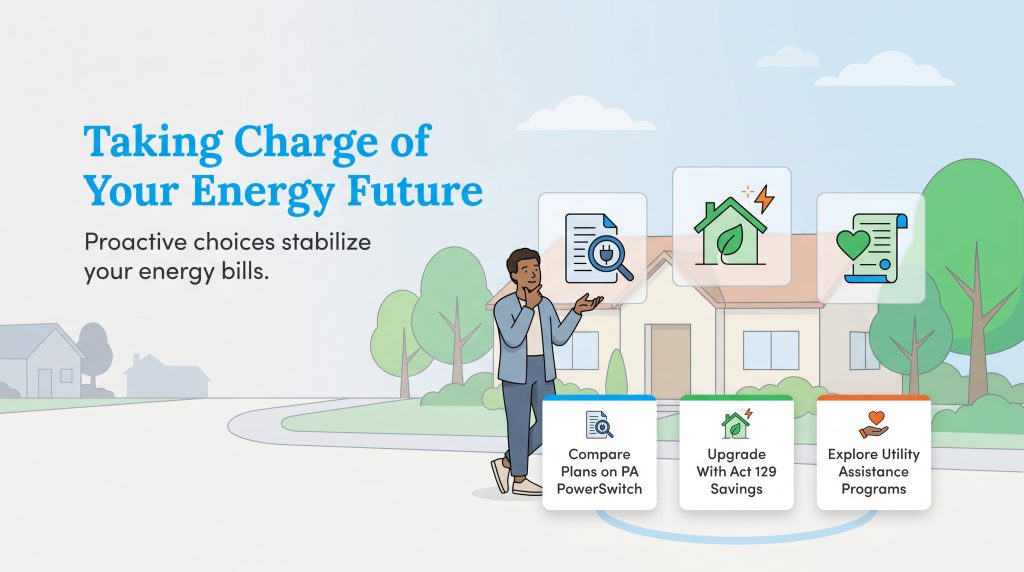
The upcoming Duquesne Light rate increase on June 1, 2026, is a timely reminder that energy markets are constantly shifting and that energy costs represent a significant chunk of our monthly household budgets. While a 2.84% hike may seem small, summer heat waves can quickly multiply your actual usage, leading to unexpected billing spikes. By taking a proactive approach today — whether that means comparing suppliers on PA PowerSwitch, upgrading to an energy-saving option through the Act 129 Phase V program, or applying for utility assistance — you can comfortably shield your household from rising costs. Remember, we are here to support you in making smart, eco-conscious, and sustainable decisions for your home every single day.
Frequently Asked Questions About Duquesne Light Rates
What is the Price to Compare and where can I find it?
Will my electric service change if I switch to a competitive supplier?
How do Duquesne Light’s energy efficiency programs work?
What should I do if I am struggling to pay my electric bill?
About the Author

Claudio is a sustainability-focused writer with a background in Anthropology and Psychology from NC State University. He has spent over 15 years working in writing, interpretation, and translation, driven by a deep interest in how human culture shapes the environment. Today, he shares his curiosity with readers by writing about sustainable living solutions and the connection between everyday choices and environmental impact.