
Hundreds of thousands of Pennsylvania homeowners will see default electric supply rates jump by up to 11.9% this summer, but you can take control of your bill right now.
Key Takeaways
- Default supply rates will increase by 6.9% to 11.9% on June 1, 2026, for customers who buy their power directly from FirstEnergy’s four Pennsylvania utility districts.
- A typical household using 1,000 kWh of electricity each month will see an extra $3.30 to $12.00 added to their standard monthly utility bill.
- You can bypass the rate hike by switching to an independent supplier, using the state’s official referral program, or installing energy-saving home upgrades.
If you get your electricity from a FirstEnergy utility company in Pennsylvania, your monthly budget is about to face some summer heat. Beginning June 1, 2026, default service supply rates are set to increase significantly across the state, hitting your wallet right as seasonal cooling demand kicks into high gear. At UtilitiesForMyHome.com, we want to help you get ahead of these changes so you can protect your hard-earned money. In this guide, we will break down exactly why these rates are climbing, show you which cities are affected, and share practical, energy-saving options to help you lower your monthly bill.
Understanding the Price to Compare Adjustments
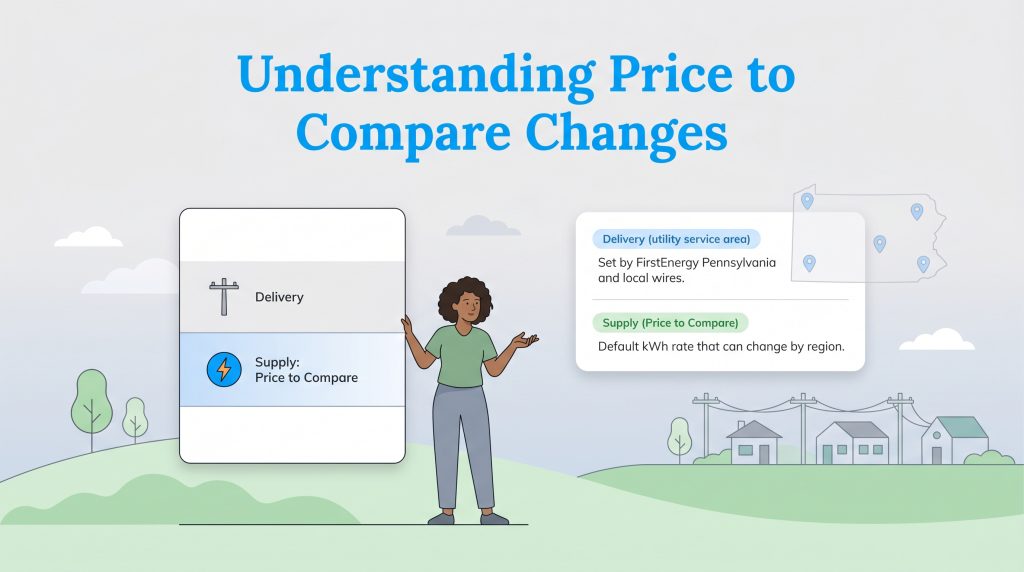
When you open your electric bill, you see charges split into two main parts: delivery and supply. The supply portion is known as the Price to Compare, which is the baseline rate per kilowatt-hour (kWh) you pay for electricity generation if you do not shop around for an independent supplier.
FirstEnergy consolidated its four separate Pennsylvania operating companies into a single utility company — FirstEnergy Pennsylvania — to improve physical operations, but each regional district still maintains its own specific rates. Based on recent procurement filings submitted to the state, here is how the upcoming default rate resets break down for residential customers across the four regional utility districts:
| Utility District | Current Supply Rate (Thru May 2026) | New Estimated Supply Rate (June 1, 2026) | Projected Increase |
| Met-Ed | 12.965¢ per kWh | 13.951¢ per kWh | 7.6% |
| Penelec | 11.747¢ per kWh | 13.142¢ per kWh | 11.9% |
| Penn Power | 12.606¢ per kWh | 13.477¢ per kWh | 6.9% |
| West Penn Power | 10.947¢ per kWh | 12.075¢ per kWh | 10.3% |
Why FirstEnergy Rates Are Rising Across Pennsylvania
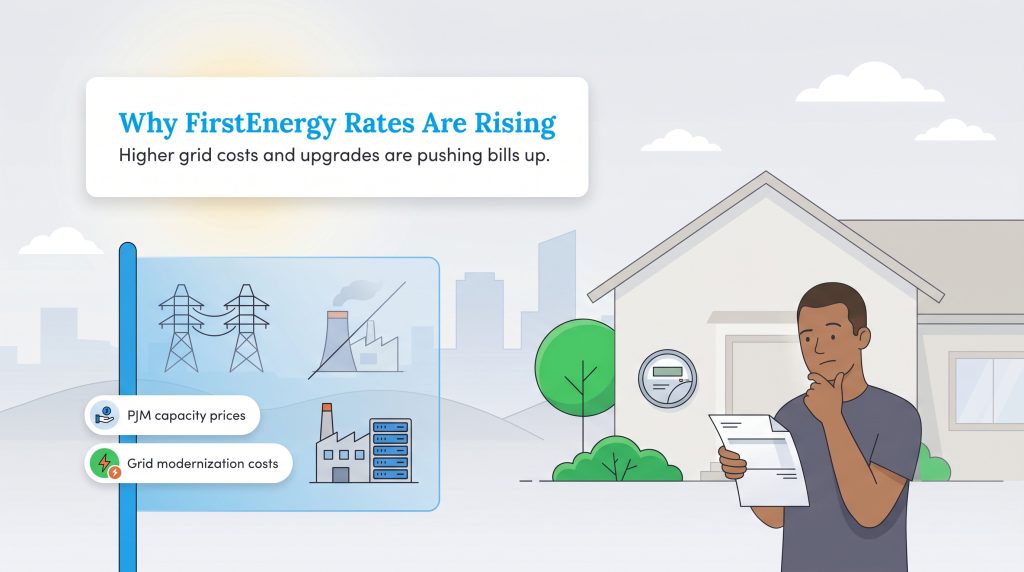
The primary reason your electricity supply costs are climbing comes down to systemic changes in the regional power grid. FirstEnergy utilities buy electricity for default service customers through rolling, long-term wholesale contracts, and those contracts are getting significantly more expensive.
A major culprit is the capacity market run by PJM Interconnection, the organization that coordinates the transmission grid across Pennsylvania and 12 other states. PJM pays power plants to ensure they are available to produce electricity during peak demand periods. Due to a wave of traditional fossil-fuel plant closures combined with an explosion of power demand from electronic manufacturing, vehicle electrification, and energy-hungry data centers, wholesale capacity prices have skyrocketed. These high capacity costs are now trickling down directly to residential utility customers.
Physical upgrades are also playing a role in your total energy costs. FirstEnergy is investing heavily in local grid modernization through its ongoing Energize365 infrastructure program. While rebuilding substations, replacing aging wires, and installing smart automated technologies help reduce storm outages, these continuous capital expenditures put steady upward pressure on customer utility rates.
Major Cities and Areas Facing the Rate Hike
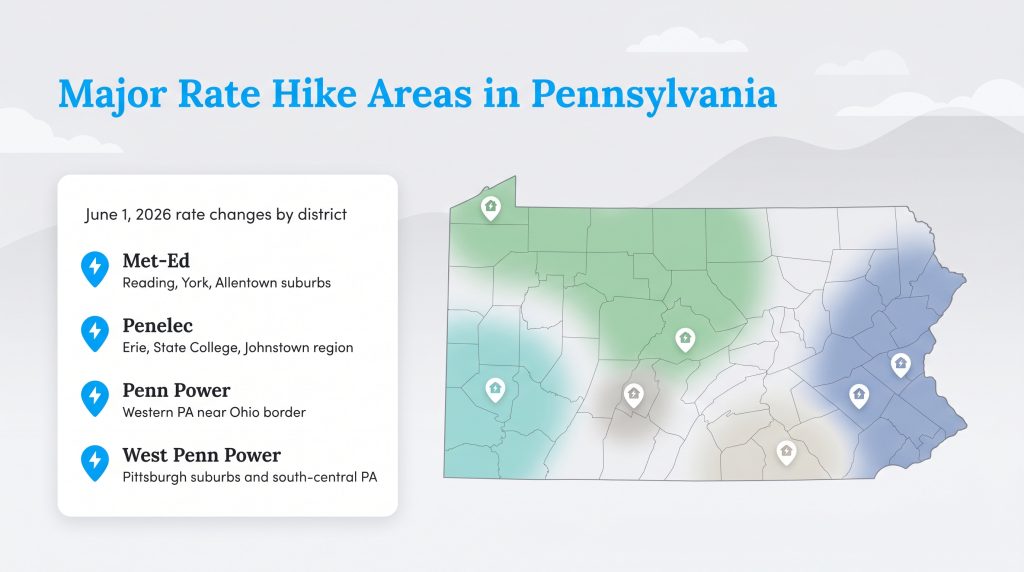
Because FirstEnergy serves roughly two million customers across a vast Pennsylvania footprint, this rate increase impacts a diverse mix of urban centers, suburban neighborhoods, and rural areas. Where you live determines exactly which utility district rate applies to your home.
The geographic boundaries and major municipal zones hit by the June 1, 2026, adjustments include:
- Met-Ed: Serves about 560,000 customers in densely populated regions of eastern and southeastern Pennsylvania, covering cities like Reading, York, and the outer residential fringes of Allentown.
- Penelec: Covers the largest, most rural geographic territory in northern and central Pennsylvania across 31 counties, including major hubs like Erie, State College, and Johnstown.
- Penn Power: Supplies electricity to around 160,000 accounts in western Pennsylvania right along the Ohio border, serving communities such as New Castle, Sharon, and Hermitage.
- West Penn Power: Handles utility distribution for 720,000 customers in southwestern and south-central Pennsylvania, wrapping around the outer Pittsburgh suburbs and hitting areas like Bethel Park, and Monroeville.
How the Rate Hike Impacts Your Monthly Utility Bill
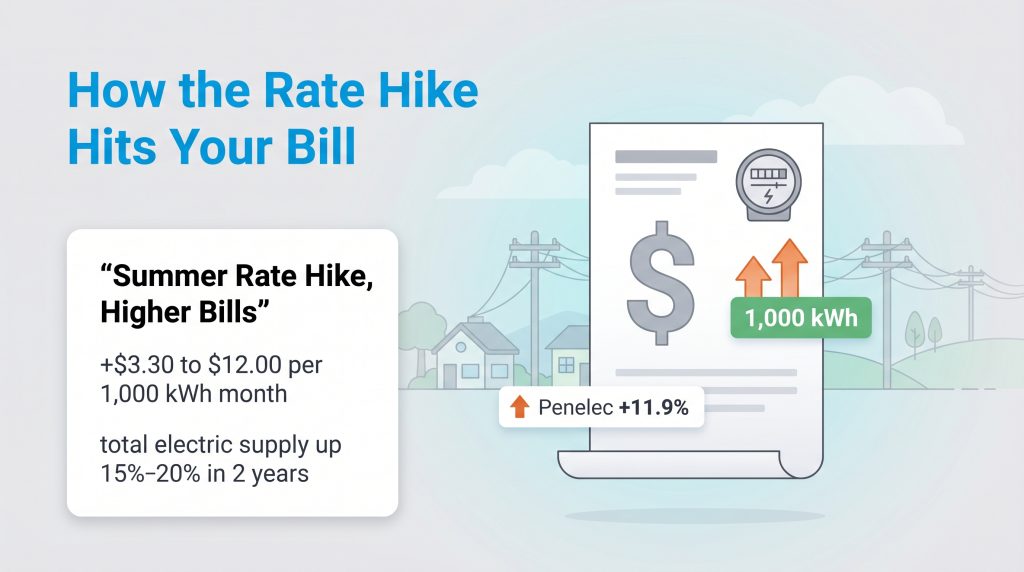
For a normal household using 1,000 kWh of electricity in a single month, this supply rate adjustment will translate to an immediate bill increase ranging from $3.30 to more than $12.00 depending on your location. Families living in the Penelec territory face the steepest climb, with rates jumping by 11.9% due to the higher underlying costs of distributing power across an expansive, rural terrain.
This upcoming adjustment continues a frustrating trend for Pennsylvania residents. When you combine this summer rate hike with the previous rounds of increases implemented throughout 2025, many homeowners are discovering that their overall electricity supply costs have climbed by 15% to 20% in just two years. Because electricity use naturally peaks during the hot summer cooling months, keeping your home on the default utility rate path makes your monthly budget highly vulnerable to unexpected bill spikes.
Smart Ways to Beat the Price Increase
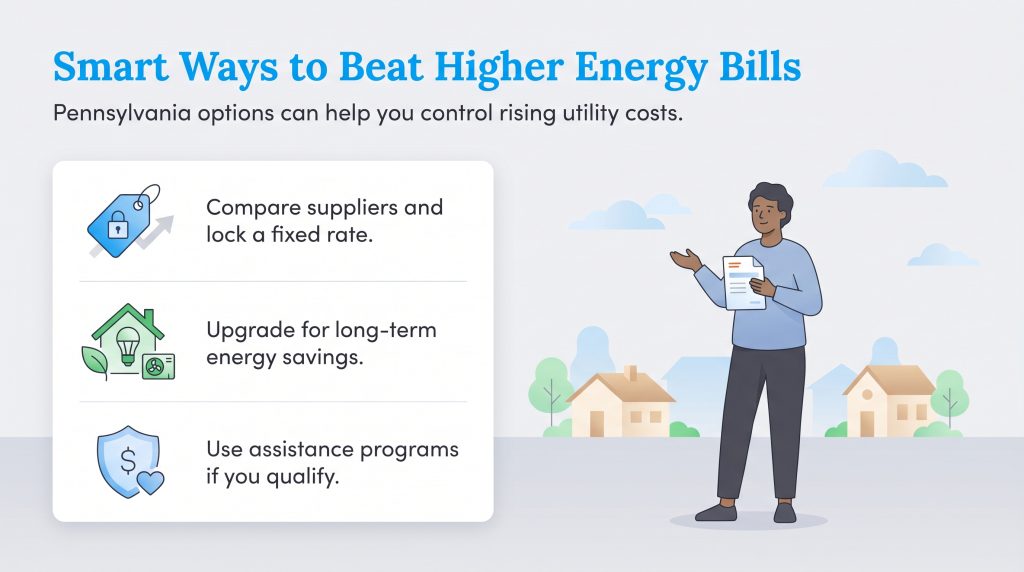
You do not have to just sit back and take these higher utility costs. Pennsylvania has a deregulated energy market, which gives you the power to choose who supplies your electricity and how you manage your home’s efficiency.
Switching Providers and Fixed-Rate Plans
The fastest way to guard against rising default utility rates is to shop around for an independent Electric Generation Supplier. By comparing options on the official PA Power Switch you can find alternative companies offering rates below the utility baseline. Choosing a 12-month or 24-month fixed-rate plan acts as a financial hedge, locking in your price per kWh and ensuring that your generation rate stays exactly the same even if default utility rates climb higher next winter.
The Pennsylvania Customer Referral Program
If shopping the open market feels a bit overwhelming, you can take advantage of a state-sanctioned safety net designed to give you easy savings. By calling the customer service number on your FirstEnergy bill, you can ask to enroll in the official Customer Referral Program. This program pairs you with a participating alternative supplier that will give you a guaranteed fixed rate set at 7% below the utility’s default Price to Compare at the time you sign up. This rate stays locked in for 12 months, and the contract strictly bans any early termination fees — the state referral program offers a guaranteed alternative that you can leave at any time without penalty.
Act 129 Energy-Saving Upgrades
Permanently reducing the amount of energy your home uses is the ultimate shield against rising utility rates. Coinciding with the rate hike, June 1, 2026, marks the launch of Phase V of the state’s Act 129 energy efficiency program, which expands consumer financial rebates for high-efficiency appliance installations. Choosing an energy-saving option like a certified ENERGY STAR air-source heat pump can qualify you for an immediate rebate of $300 to $500 through your FirstEnergy utility. Making an environmentally mindful choice by upgrading your home’s insulation, sealing air leaks, or swapping out old bulbs for LED lighting will structurally lower your monthly electricity consumption and keep your money in your bank account.
Low-Income Assistance Programs
If you are struggling to keep up with compounding utility bill hikes, several income-qualified support plans can help protect your home from a financial crisis. The utility-administered Customer Assistance Program provides low-income families with capped, income-based monthly utility bills to ensure power costs remain affordable. Additionally, you can apply for the federally funded Low Income Home Energy Assistance Program to secure direct cash grants that help offset seasonal cooling and heating spikes.
Avoiding Sneaky Utility Scams and Fraud
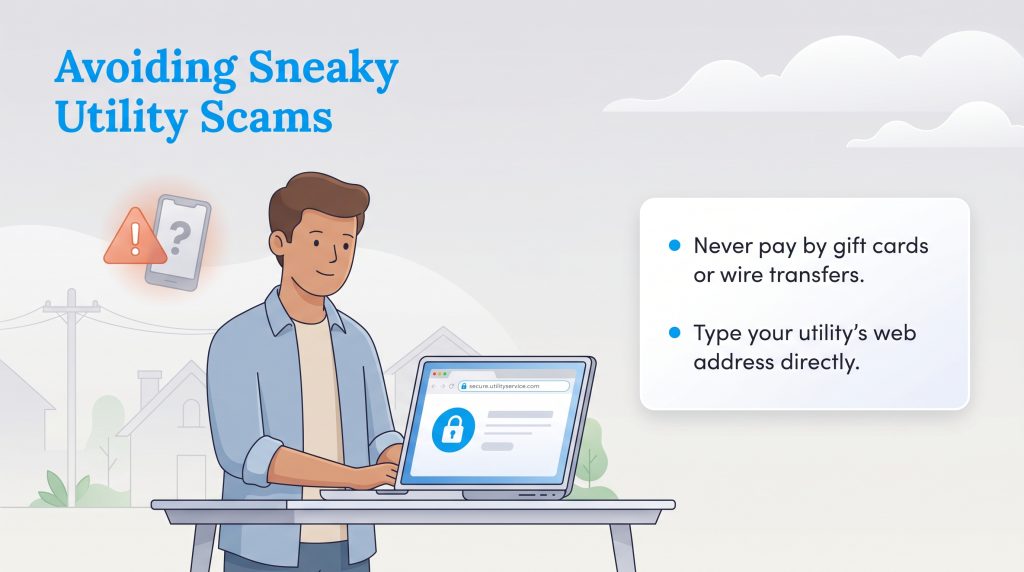
Whenever major utility rate changes dominate the local news, predatory scammers come out of the woodwork to target unsuspecting homeowners. These bad actors often create fake lookalike web advertisements or place aggressive phone calls threatening to shut off your power unless you pay them immediately.
Remember that a legitimate FirstEnergy representative will never demand payment via unconventional methods like prepaid gift cards or digital wire transfers. For your personal safety, always navigate directly to the official Pennsylvania Public Utility Commission website or type your utility’s web address directly into your browser rather than relying on unverified internet search engine links.
Taking Control of Your Home Energy Future
Navigating the shifting realities of the Pennsylvania energy market requires moving away from a passive relationship with your monthly utility bill. With wholesale capacity constraints and ongoing grid modernization projects guaranteed to keep pushing default electricity rates upward, staying informed is your best defense. Taking an afternoon to review your current FirstEnergy billing statement, evaluate competitive fixed-rate supplier plans, and identify easy energy-saving changes around your house will help you successfully dodge this summer rate shock while building a more sustainable, affordable home.
Frequently Asked Questions About the FirstEnergy Rate Increase
What is the Price to Compare on my electric bill?
Will switching suppliers change who fixes my power lines during an outage?
How much will the FirstEnergy rate increase add to my monthly bill?
Can I change my supplier if I am enrolled in an assistance program?
About the Author

Claudio is a sustainability-focused writer with a background in Anthropology and Psychology from NC State University. He has spent over 15 years working in writing, interpretation, and translation, driven by a deep interest in how human culture shapes the environment. Today, he shares his curiosity with readers by writing about sustainable living solutions and the connection between everyday choices and environmental impact.