

Your Electricity Rate Can Change Dramatically When You Move, So Comparing State Averages and Local Provider Options Can Help You Budget With Fewer Surprises
Key Takeaways
- The 2026 national average residential electricity rate is 18.34 cents per kWh, but moving to an extreme outlier like Hawaii or Nevada will completely reshape your monthly household budget.
- Relocating to a deregulated energy state gives you the power to choose your retail electric provider, allowing you to actively shop for lower rates and offset rising utility costs.
- Executing a home energy audit and shifting your usage away from peak hours are highly effective, eco-conscious strategies to permanently lower your bills.
Last updated: September 22, 2026. Opening your very first utility bill after relocating to a new home can quickly turn the excitement of moving into a sudden bout of bill shock. With the 2026 national average residential rate currently sitting at 18.34 cents per kilowatt-hour (kWh), assuming your new costs will simply mirror your old ones is a risky financial mistake. If you are moving across state lines, you might encounter massive pricing extremes — from Hawaii’s steep 52.72 cents per kWh down to Nevada’s highly affordable 13.11 cents per kWh. Factoring these average electric bills by state into your monthly expenses is a critical step in building an accurate and realistic household budget. Rather than crossing your fingers and hoping for a manageable power bill, we want to help you understand exactly what you’re walking into. By comparing accurate state-by-state data and learning how local energy markets operate, you can take proactive, eco-conscious steps to keep your new home comfortable and your wallet completely intact.
National Average Electricity Rates in 2026
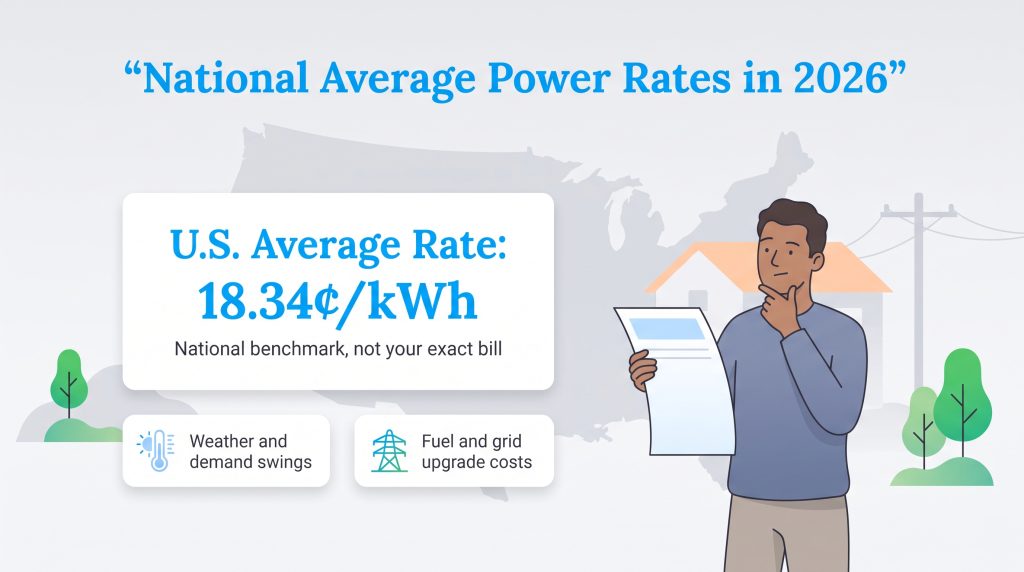
To provide the most accurate look at utility costs across the country, we analyzed the latest residential electricity price data from the U.S. Energy Information Administration’s Electric Power Monthly, Table 5.6.A. As of this year, the U.S. national average residential electricity rate is exactly 18.34 cents per kWh. While this baseline figure provides a helpful benchmark for the current market, it rarely paints the full picture of the charges you will actually see on your statement.
Average electricity rates fluctuate wildly depending on your specific zip code, the condition of local grid infrastructure, and the primary fuel sources powering your region. Relying solely on the national average can lead to budgeting blind spots, particularly if you are relocating from a state with historically cheap hydropower to a region heavily dependent on imported natural gas.
Key Factors Driving 2026 Electricity Prices
If your electric bill currently feels higher than expected, a combination of regional and economic variables is likely driving the increase. Rather than just paying for the raw energy itself, your modern electric bill reflects the massive operational costs required to deliver that power to your front door safely.
- Regional Weather Events: Extreme temperatures force regional grids to work significantly harder. Scorching summer heatwaves and deep winter freezes cause widespread spikes in consumer demand, which subsequently drives up the wholesale price of power.
- Natural Gas Commodity Prices: Because natural gas remains a primary fuel source for electricity generation in many populated states, any volatility in the global natural gas supply chain directly impacts your monthly statement.
- Grid Infrastructure Investments: Utility companies across the country are currently spending billions to replace aging transformers, upgrade physical power lines, and harden infrastructure against severe climate impacts. Unfortunately, those necessary capital upgrades ultimately trickle down to your rate.
Complete State-by-State Electricity Cost Comparison
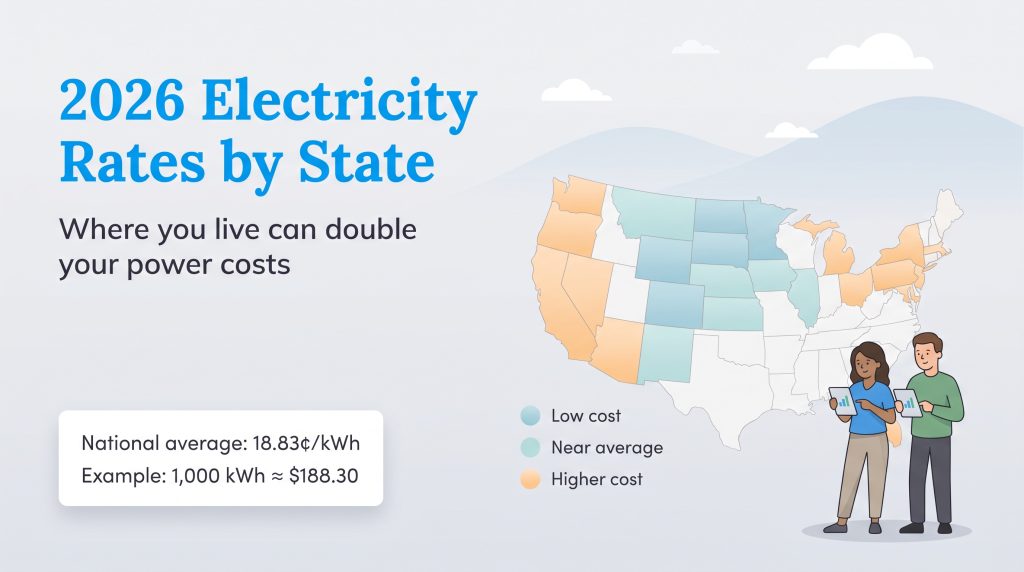
The comprehensive table below illustrates residential electricity rates across all 50 states and Washington, D.C., highlighting just how much your geographical location dictates your baseline energy costs. Reviewing the year-over-year changes can also help you anticipate whether your new state’s energy prices are trending upward.
| State | 2026 Rate (cents/kWh) | 2025 Rate (cents/kWh) | Year-Over-Year % Change |
|---|---|---|---|
| Alabama | 17.41 | 16.81 | +3.57% |
| Alaska | 27.35 | 25.96 | +5.35% |
| Arizona | 15.48 | 15.67 | -1.21% |
| Arkansas | 14.16 | 13.65 | +3.74% |
| California | 35.25 | 33.82 | +4.23% |
| Colorado | 15.30 | 14.90 | +2.68% |
| Connecticut | 32.24 | 32.23 | +0.03% |
| Delaware | 16.50 | 15.80 | +4.43% |
| District of Columbia | 20.10 | 16.25 | +23.69% |
| Florida | 15.50 | 14.70 | +5.44% |
| Georgia | 14.90 | 15.19 | -1.91% |
| Hawaii | 52.72 | 48.00 | +9.83% |
| Idaho | 13.25 | 12.80 | +3.51% |
| Illinois | 20.47 | 18.28 | +11.98% |
| Indiana | 17.90 | 16.89 | +5.98% |
| Iowa | 13.86 | 13.34 | +3.90% |
| Kansas | 14.25 | 13.95 | +2.15% |
| Kentucky | 13.40 | 13.10 | +2.29% |
| Louisiana | 13.70 | 13.38 | +2.40% |
| Maine | 28.42 | 28.11 | +1.10% |
| Maryland | 18.20 | 15.54 | +17.12% |
| Massachusetts | 29.45 | 30.63 | -3.85% |
| Michigan | 21.39 | 19.93 | +7.33% |
| Minnesota | 15.70 | 15.20 | +3.29% |
| Mississippi | 13.95 | 13.50 | +3.33% |
| Missouri | 14.05 | 13.60 | +3.31% |
| Montana | 13.80 | 13.48 | +2.37% |
| Nebraska | 13.60 | 13.27 | +2.48% |
| Nevada | 13.11 | 12.60 | +4.04% |
| New Hampshire | 27.24 | 23.66 | +15.13% |
| New Jersey | 23.53 | 20.15 | +16.77% |
| New Mexico | 15.25 | 14.85 | +2.69% |
| New York | 29.45 | 25.69 | +14.64% |
| North Carolina | 14.35 | 13.85 | +3.61% |
| North Dakota | 13.65 | 13.20 | +3.40% |
| Ohio | 19.49 | 16.32 | +19.42% |
| Oklahoma | 13.50 | 13.10 | +3.05% |
| Oregon | 13.70 | 13.20 | +3.79% |
| Pennsylvania | 21.47 | 18.96 | +13.24% |
| Rhode Island | 28.30 | 28.89 | -2.04% |
| South Carolina | 14.60 | 14.20 | +2.82% |
| South Dakota | 13.30 | 12.90 | +3.10% |
| Tennessee | 13.75 | 13.43 | +2.38% |
| Texas | 15.41 | 14.50 | +6.28% |
| Utah | 13.35 | 12.88 | +3.64% |
| Vermont | 24.56 | 22.97 | +6.92% |
| Virginia | 15.10 | 14.60 | +3.42% |
| Washington | 13.45 | 13.00 | +3.46% |
| West Virginia | 15.45 | 14.95 | +3.34% |
| Wisconsin | 19.21 | 18.21 | +5.49% |
| Wyoming | 13.50 | 13.05 | +3.44% |
Top 5 Most Expensive States for Electricity
When analyzing regional differences, the extremes at the top of the pricing spectrum often spark the most concern among movers. If you are relocating to any of the states listed below, preparing for higher-than-average utility costs is an absolute necessity. These regions face unique geographical constraints, stringent regulatory policies, or costly infrastructure upgrades that heavily inflate the price of keeping the lights on.
- 1. Hawaii (52.72 cents/kWh): Hawaii consistently maintains the highest electricity costs in the nation. The state operates an isolated island grid that depends heavily on imported petroleum, which inherently adds massive transportation and supply costs that mainland states never face.
- 2. California (35.25 cents/kWh): California’s rates are shaped by a complex mix of grid investment, delivery costs, and climate resilience spending. Utility providers have invested billions in wildfire mitigation and burying power lines, passing those long-term safety upgrades directly to consumers.
- 3. Connecticut (32.24 cents/kWh): Like much of New England, Connecticut experiences severe natural gas pipeline constraints during the winter months. When demand spikes for heating, the limited supply of natural gas creates bottlenecks that quickly escalate wholesale electricity prices.
- 4. Massachusetts (29.45 cents/kWh): Massachusetts relies heavily on natural gas for power generation. Combined with ambitious state-mandated clean energy transitions and high delivery charges, residents consistently see rates far exceeding the national average.
- 5. New York (29.45 cents/kWh): New York faces the costly burden of maintaining massive, aging grid infrastructure across dense urban areas like New York City, paired with robust state policy requirements aimed at greening the grid over the coming decades.
Top 5 Cheapest States for Electricity
Conversely, the cheapest states for electricity typically possess abundant access to natural energy resources right in their backyards. Movers coming from the East or West Coasts often experience immediate financial relief when unpacking in these regions.
- 1. Nevada (13.11 cents/kWh): Nevada claims the top spot for the lowest residential rate in the nation. The state leverages massive investments in solar energy across its sun-drenched landscapes alongside localized natural gas generation, keeping costs highly competitive.
- 2. Idaho (13.25 cents/kWh): Idaho benefits immensely from long-established hydroelectric dams. Generating power from rushing rivers provides the state with a massive supply of clean, reliable, and incredibly inexpensive electricity.
- 3. Utah (13.35 cents/kWh): Utah maintains low rates through a combination of locally sourced coal generation and a rapidly growing integration of utility-scale solar farms, ensuring steady supply at a low cost.
- 4. Washington (13.45 cents/kWh): Similar to Idaho, Washington taps into the immense power of the Columbia River. Its robust hydroelectric infrastructure consistently protects residents from the volatile pricing tied to fossil fuels.
- 5. Wyoming (13.50 cents/kWh): As an energy-rich state, Wyoming pairs extensive coal reserves with rapidly expanding wind energy developments, providing residents with rock-bottom power generation costs.
📌 Quick Fact: A state’s energy mix — the specific ratio of renewable energy sources versus fossil fuels in its grid — heavily influences your baseline utility rate. Regions utilizing robust, localized wind or hydroelectric power usually pass long-term operational savings down to the consumer.
Residential vs. Commercial Electricity Rates Explained
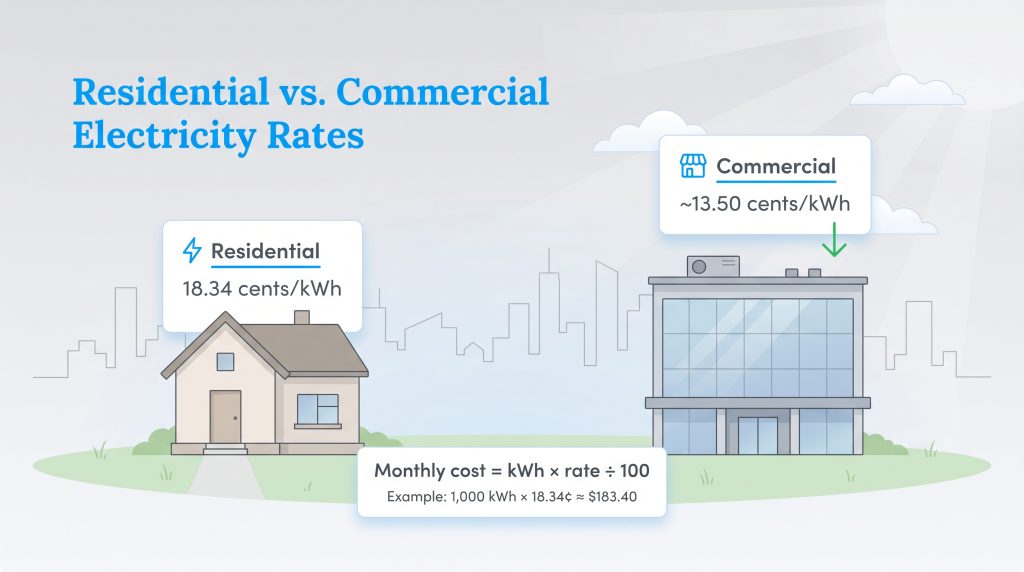
Whether you are calculating expenses for a single-family home to build your moving utility budget or analyzing costs for a commercial business space, understanding how different customer classes are billed is essential. When reviewing EIA data, you will quickly notice that commercial electricity rates are consistently lower than residential rates. This pricing discrepancy boils down to sheer volume and predictability. Commercial businesses and industrial facilities consume massive amounts of electricity at highly consistent levels, allowing utility companies to plan generation efficiently. Because commercial entities buy power in bulk and are cheaper to service on a per-kilowatt basis, providers pass those economies of scale directly into their lower commercial rates.
| Customer Class | 2026 National Average Rate | Typical Use Case |
|---|---|---|
| Residential | 18.34 cents/kWh | Single-family homes, apartments, condos |
| Commercial | ~13.50 cents/kWh | Retail stores, office buildings, restaurants |
To accurately estimate your own household’s upcoming charges, apply this simple residential formula: Monthly electricity cost = monthly kWh usage × local electricity rate ÷ 100. If you use an average of 1,000 kWh per month at the national average rate of 18.34 cents, your baseline energy charge will sit right around $183.40 before localized taxes and fixed delivery fees.
Navigating Regulated vs. Deregulated Energy Markets
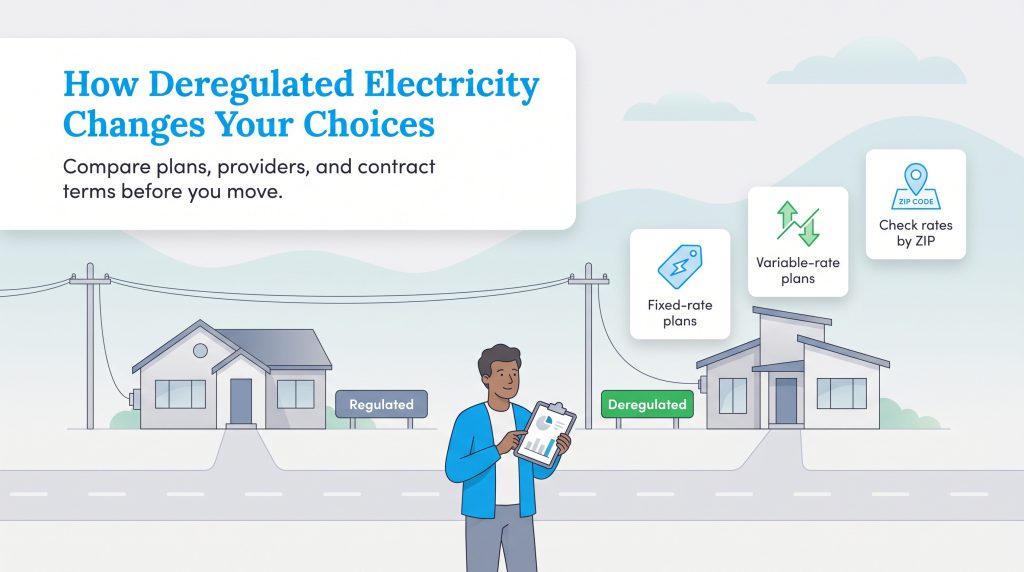
If you’re relocating from a traditional, regulated utility market, moving to a deregulated energy state can feel like learning an entirely new financial language. In a regulated market, a single utility company holds a monopoly over generating, transmitting, and selling your electricity — you simply pay whatever rate the state approves. However, deregulated markets split this process apart. The utility still manages the physical power lines and restores outages, but retail electric providers actively compete to sell you the actual electricity supply. Because these retail companies are fighting for your business, you gain the power to shop around, select your own provider, and secure a plan tailored to your exact household habits.
Several prominent states currently operate with robust deregulated electricity markets, including:
For instance, if you are setting up electricity service or handling utilities in Houston, you must select your own retail provider to activate your lights. Once you start shopping, you will face a choice between fixed-rate and variable-rate plans. A fixed-rate electricity plan locks in your specific price per kWh for the duration of your contract, shielding your budget from wild price spikes during scorching summers or freezing winters. Fortunately, states often provide official, unbiased choice sites — like the Public Utility Commission of Texas’s Power to Choose portal — allowing you to easily sort through localized plans and make a financially sound decision.
Proven Strategies to Lower Your Monthly Electric Bill
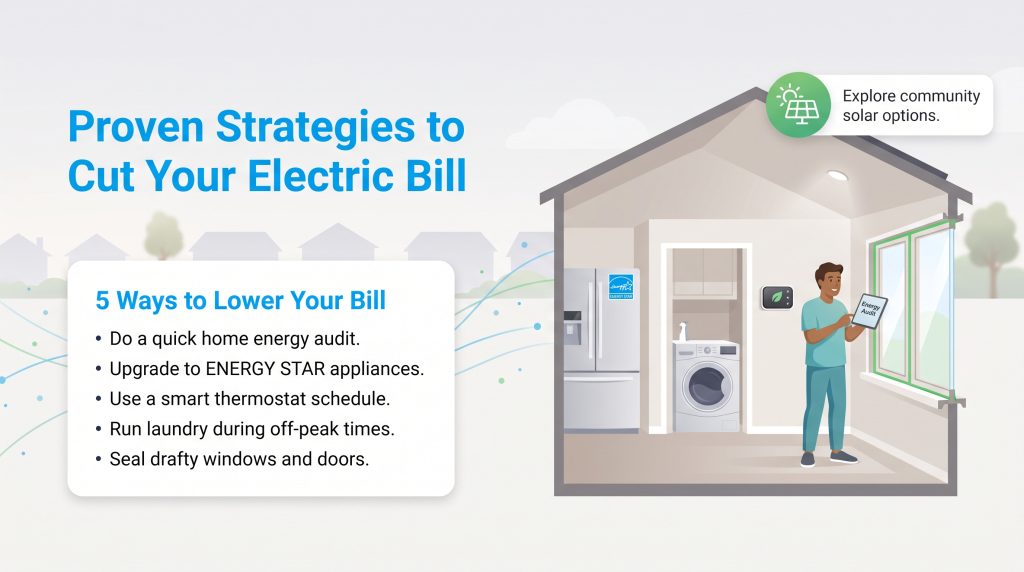
Based on the EIA’s latest Short-Term Energy Outlook, residential electricity prices are expected to remain relatively elevated in the near term. Because larger economic forces and foundational rates remain entirely out of your hands, optimizing how you use power inside your own home is your absolute best defense against rising utility costs. Fighting back against high bills requires more than just understanding the data — you need actionable, environmentally mindful solutions. If you want to explore long-term strategies for lowering your electric bill, here are five practical, eco-conscious upgrades you can tackle right after unpacking.
- Perform a Home Energy Audit: Before making any major changes, walk through your new home to identify glaring inefficiencies. A quick DIY audit helps you spot drafty windows, uninsulated attic spaces, or outdated HVAC filters that are quietly driving up your energy consumption.
- Upgrade to ENERGY STAR Appliances: If your move requires you to purchase a new refrigerator, washer, or dishwasher, always opt for certified energy-saving models. ENERGY STAR-certified appliances use significantly less electricity than standard models, which lowers your monthly costs over the entire lifespan of the unit.
- Utilize a Smart Thermostat: Heating and cooling account for roughly half of a typical home’s energy footprint. A smart thermostat learns your family’s schedule and automatically adjusts the temperature when you are away or sleeping, radically cutting down wasted kWh without sacrificing your comfort.
- Adopt Peak-Hour Energy Avoidance Habits: Many modern utility plans implement time-of-use (TOU) rates, meaning electricity costs more during high-demand evening hours. You can easily slash your bill by shifting heavy tasks — like running the dishwasher or doing laundry — to cheaper, off-peak morning or late-night hours.
- Seal Hidden Air Leaks: Drafty doors and poorly sealed windows force your HVAC system into overdrive. Sealing these hidden leaks with inexpensive weatherstripping keeps the conditioned air inside where it belongs, easing the daily burden on your equipment.
🌱 Eco Edge: Keep an eye out for local community solar initiatives or EPA Green Power programs offered in your new state. Community solar options can help you support renewable energy, and some programs may even reduce your bill through monthly credits. Always compare subscription fees, bill credits, and cancellation terms before officially enrolling.
Taking Control of Your Home Energy Expenses
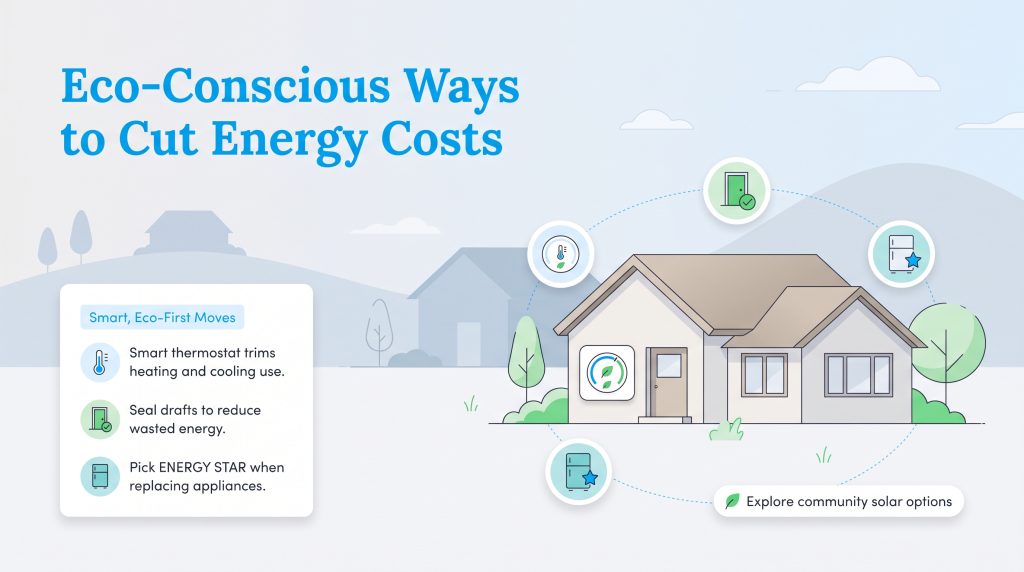
Relocating across the country introduces a host of new financial responsibilities, but your power bill doesn’t have to be a source of constant stress. While you cannot single-handedly alter the foundational average electric rate of the state you move to, you hold incredible leverage over how you manage your daily household usage. If you live in a deregulated market, you also hold the power to dictate exactly who supplies your energy. By actively comparing your local options, securing a competitive fixed-rate plan, and implementing smart, eco-conscious upgrades throughout your living space, you can confidently master your utility budget and settle into your new home with total peace of mind.
Frequently Asked Questions About Electricity Rates by State
What is the average electric bill per month in 2026?
Why is electricity so expensive in Hawaii and California?
How often do electricity rates change?
Can I negotiate my electric rate with my utility company?
Can I choose my electricity provider when I move?
How can I easily compare electricity rates by zip code?
About the Author

David has been an integral part of some of the biggest utility sites on the internet, including InMyArea.com, HighSpeedInternet.com, BroadbandNow.com, and U.S. News. He brings over 15 years of experience writing about, compiling and analyzing utility data.

LaLeesha has a Masters degree in English and enjoys writing whenever she has the chance. She is passionate about gardening, reducing her carbon footprint, and protecting the environment. She also recently served as President of the Board for City Sprouts (a community garden).