
Understanding the mandatory fees on your Houston electricity bill and how they impact your total costs
Key Takeaways
- CenterPoint delivery charges are non-negotiable fees set by the utility company, not your electricity provider, to cover the cost of maintaining poles, wires, and meters.
- These rates typically change twice a year (usually March 1 and September 1) with approval from the Public Utility Commission of Texas.
- While you cannot lower the rate itself, you can reduce your total cost by lowering your energy usage through home efficiency upgrades.
There is nothing more frustrating than signing up for a great electricity rate, only to open your first bill and see it’s higher than you expected due to “extra” fees. If you live in Houston or the surrounding areas, those line items are likely CenterPoint delivery charges. Whether you choose Gexa, Reliant, or any other retail provider, these Transmission and Distribution Utility (TDU) fees appear on every single bill. It’s not a mistake, and your provider isn’t hiding things from you, it’s simply the cost of keeping the grid running. We’re here to demystify these numbers so you can budget better and avoid monthly surprises.
Current CenterPoint Delivery Rates
Updated for December 2025. Always confirm the latest published rate before you do your own bill math.
| Fee Type | Current Rate |
|---|---|
| Monthly Base Charge | $4.90 per month |
| Per kWh Delivery Charge | 6.001 cents per kWh |
Rates reflect the December 8, 2025 update. Rates are subject to change semi-annually.
What Are CenterPoint Delivery Charges?
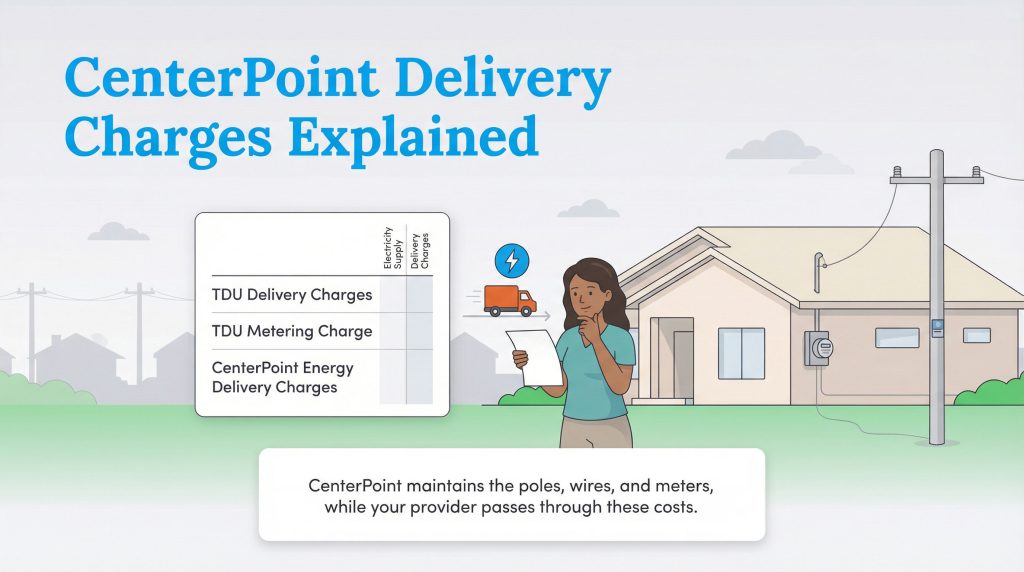
To understand your bill, you first need to understand who does what in the Texas electricity market. CenterPoint Energy is your Transmission and Distribution Utility (TDU). They own the actual poles, wires, transformers, and smart meters that deliver electricity to your home. In contrast, companies like TXU, Chariot, or Green Mountain Energy are Retail Energy Providers (REPs), they buy the power and handle your billing.
The fees you see listed as CenterPoint pass through charges are collected by your retail provider but sent directly to CenterPoint. On your bill, CenterPoint’s TDU fees may appear under line items like “TDU Delivery Charges,” “TDU Metering Charge,” or “CenterPoint Energy Delivery Charges,” depending on your provider’s layout. Your electricity company does not profit from these specific fees. Instead, this money funds the infrastructure that keeps the lights on, pays for storm repairs, and covers the personnel who fix outages. Think of it like shipping costs for an online order: you pay for the product (electricity), but you also have to pay the carrier (CenterPoint) to bring it to your doorstep.
Breaking Down the Fees: Fixed vs. Variable
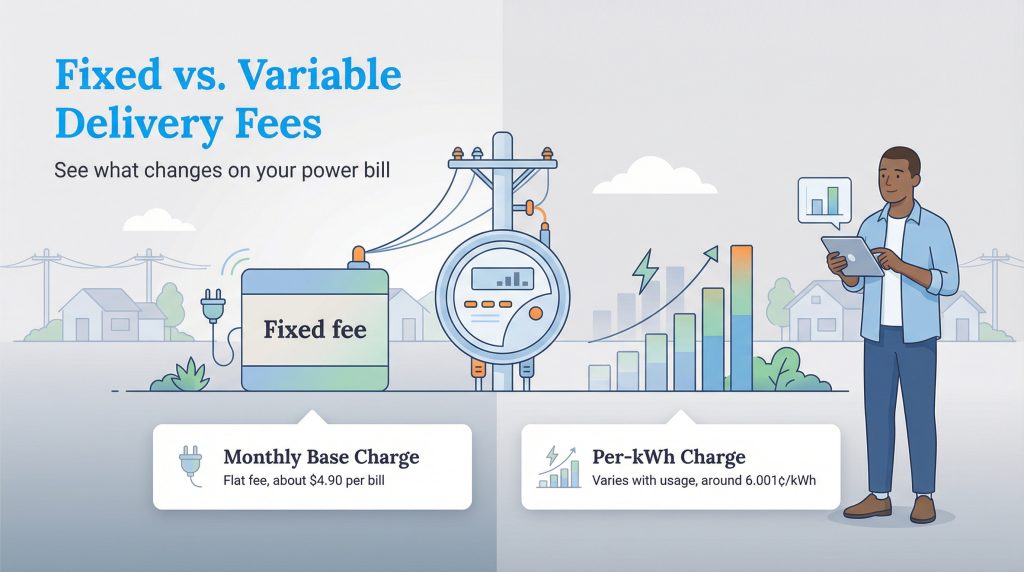
CenterPoint delivery costs are not just one lump sum; they are split into two distinct categories. Understanding the difference between them is key to predicting how your bill will fluctuate throughout the year.
The Monthly Base Charge
This is a flat fee you pay simply for being connected to the power grid. Whether you are on vacation for a month and use zero electricity or you run your AC 24/7, this number remains the same. It covers administrative costs and metering services. Currently, this fee sits around $4.90 per billing cycle.
The Per-kWh Charge
This is the variable portion of your delivery fees and the one that impacts your wallet the most. For every single kilowatt-hour (kWh) of electricity you consume, CenterPoint charges a specific rate (currently around 6.001 cents). This means in the hot summer months when your electricity usage spikes, your delivery charges will also skyrocket. It acts as a multiplier: the more you use, the more you pay to have it delivered.
Calculating Your Total Delivery Cost
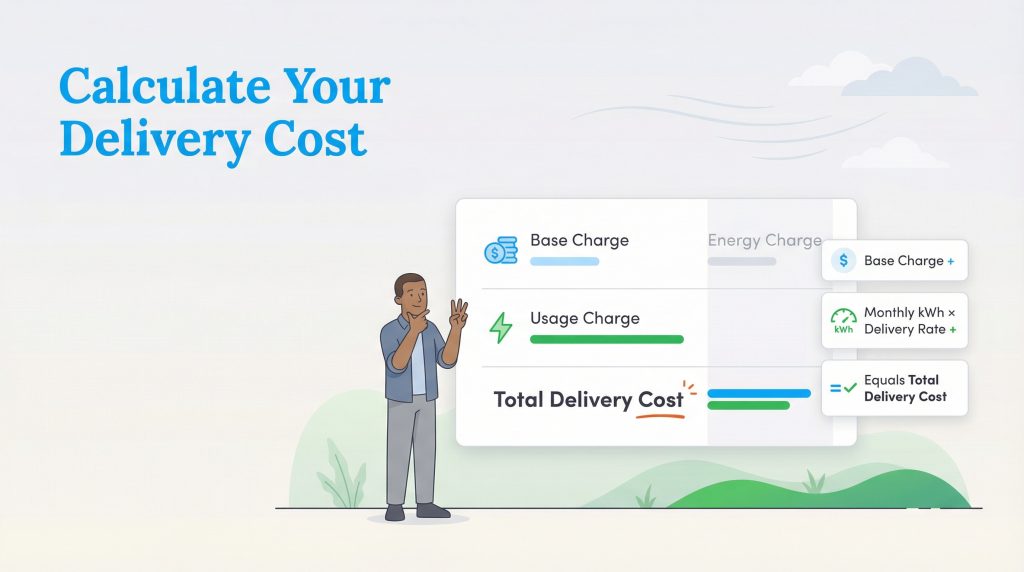
You don’t need a degree in accounting to figure out if your bill is accurate. You can verify your delivery charges with a simple mental math formula. Knowing this helps you separate the “energy charge” (what your provider charges) from the “delivery charge” (what CenterPoint charges).
The Formula:
($ Base Charge) + (Your Monthly Usage × $ Rate per kWh) = Total Delivery Cost
Example Scenario
Let’s say you used 1,000 kWh of electricity this month. Using the current rates effective December 2025:
- Start with the base charge: $4.90.
- Calculate the variable charge: 1,000 kWh × $0.06001 = $60.01.
- Add them together: $4.90 + $60.01 = $64.91.
In this example, nearly $65 of your total bill goes purely to delivery fees, before you even pay for the actual electricity.
Why Do These Rates Change?
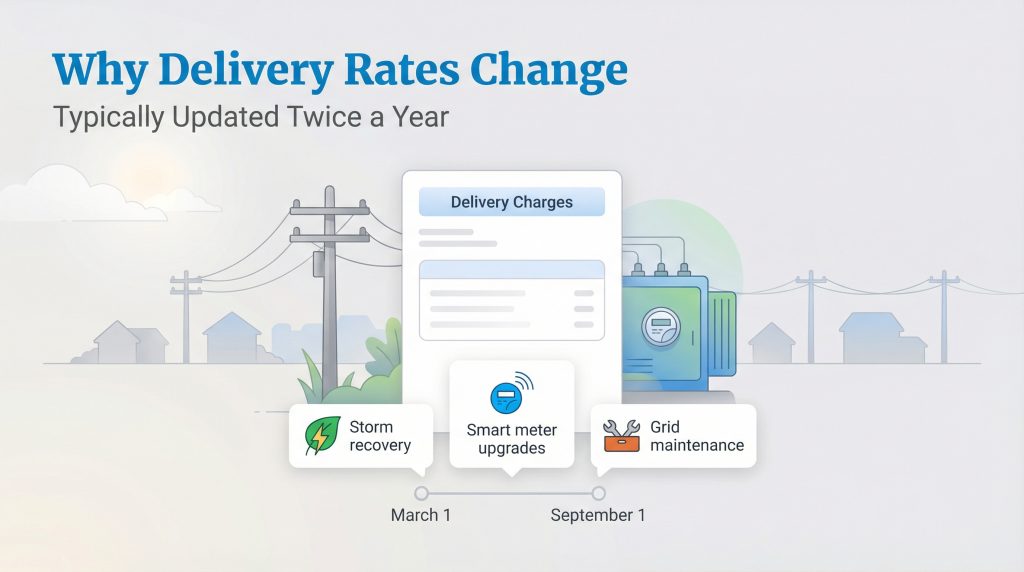
You might notice that your delivery charges creep up at certain times of the year. CenterPoint rates typically change twice a year, usually around March 1 and September 1, when updates approved by the Public Utility Commission of Texas go into effect. These adjustments are not arbitrary; they must be reviewed and approved by the Public Utility Commission of Texas (PUCT).
Several factors drive these rate changes. A significant portion of the funds goes toward storm recovery. When hurricanes, severe thunderstorms, or freezes damage the grid, CenterPoint spends millions on repairs, and these costs are eventually recovered through rate adjustments. Additionally, investments in smart meter technology and general grid maintenance contribute to the fluctuations. Generally, rates may dip in the spring and rise in the fall, or vice versa, depending on the PUCT’s approval of recent infrastructure spending. For the latest official tariff sheets and rate details, you can visit the CenterPoint Energy Rates & Regulations page.
Since You Can’t Lower the Rate, Lower the Usage
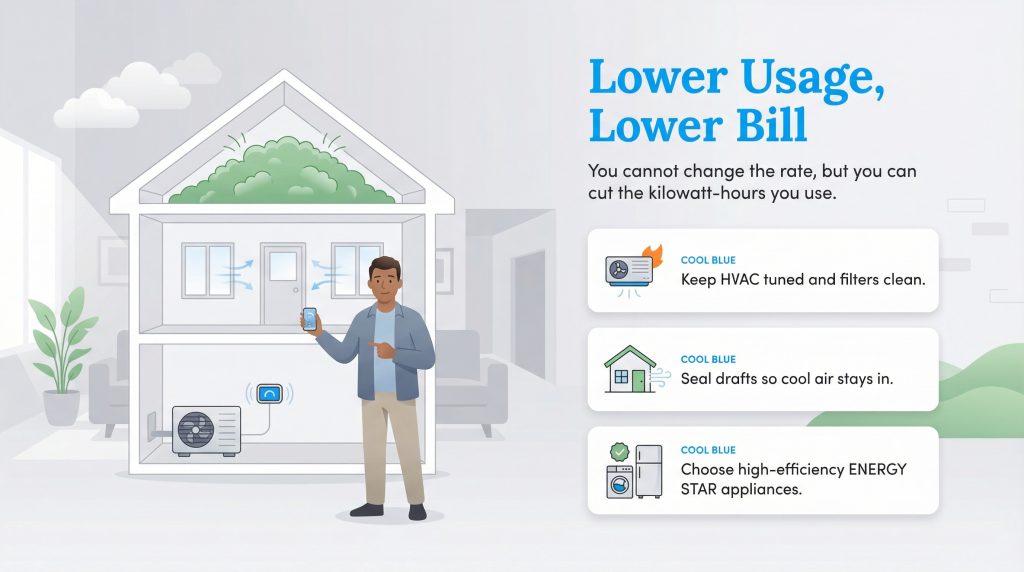
Because CenterPoint delivery charges are non-negotiable and fixed by regulators, you cannot shop around for a cheaper delivery rate. However, you can control the variable portion of the fee by reducing your energy consumption. Every kilowatt-hour you don’t use is roughly 6 cents you don’t pay to CenterPoint.
Here are three effective ways to lower your usage:
- HVAC Maintenance: Your air conditioner is the biggest energy hog in your home. Changing your air filters every one to three months ensures the system runs efficiently. Installing a smart thermostat can also help you reduce usage when you aren’t home.
- Seal the Envelope: Inspect your doors and windows for drafts. Simple weatherstripping or adding insulation to your attic keeps the cool air inside, meaning your AC doesn’t have to work as hard (or use as much power) to maintain the temperature.
- Upgrade Appliances: When it’s time to replace a washer, dryer, or refrigerator, look for the Energy Star label. These high-efficiency appliances are an energy-saving option that can cut your usage and make a more environmentally mindful choice each time they run.
For more deep-dive strategies on reducing your consumption, check out our guide on how to save on your electric bill.
Staying on Top of Your CenterPoint Bill
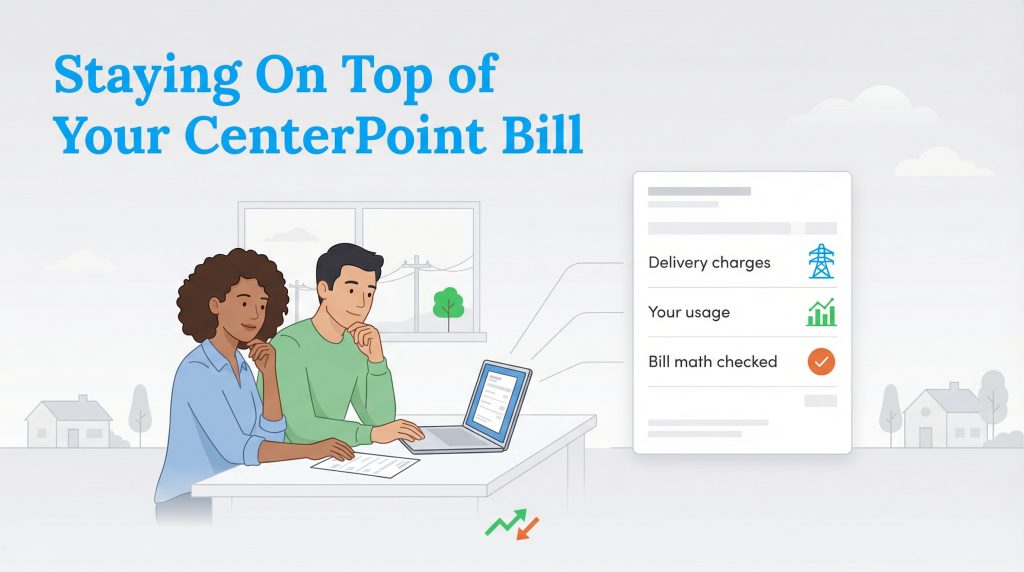
While CenterPoint delivery fees can feel like a nuisance, they are a standard part of living in the Houston area and ensuring we have a reliable electric grid. Understanding how these fees are calculated puts you in the driver’s seat of your household budget. By keeping an eye on your usage and verifying your bill math, you can ensure you’re never caught off guard by these necessary utility costs.
Making CenterPoint Delivery Fees Work For You
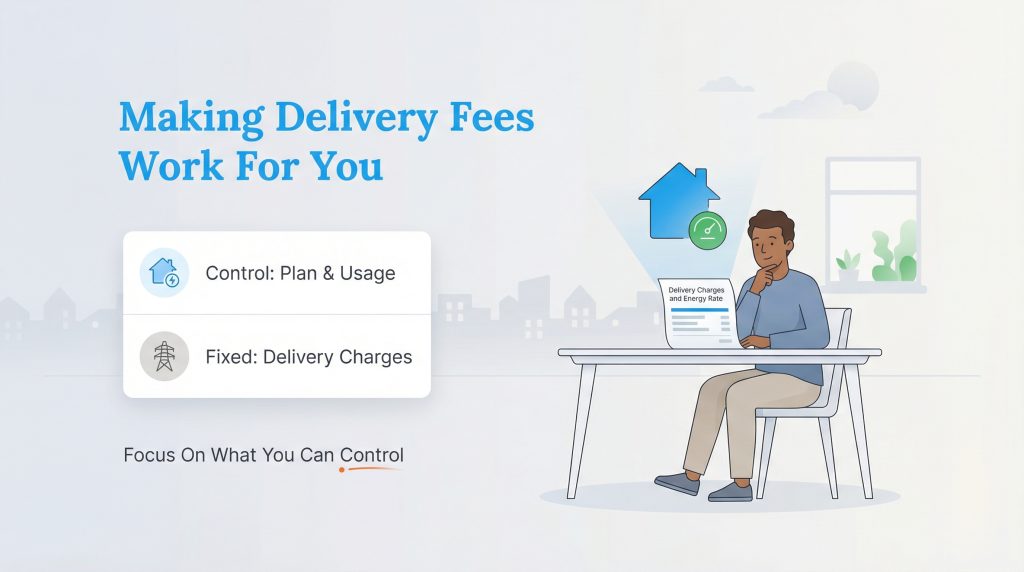
Ultimately, CenterPoint delivery charges are regulated and standard for everyone in the service area. You cannot change the rate, but you can control your usage and the electricity plan you choose. Understanding these charges helps you budget effectively and avoid bill shock. If you’re ready to focus on the part you can control, your energy rate, our guide to comparing plans can help you find the best option for your home.
FAQs About CenterPoint Delivery Charges
What are TDU delivery charges?
How often do CenterPoint rates change?
Can I choose a different TDU to lower my rates?
Why is my delivery charge higher than my energy charge?
Are CenterPoint charges the same for every provider?
About the Author

LaLeesha has a Masters degree in English and enjoys writing whenever she has the chance. She is passionate about gardening, reducing her carbon footprint, and protecting the environment.