
Residential SAWS Water and Sewer Bills Will Rise Up to 29% to Fund a $3 Billion Infrastructure Overhaul
Key Takeaways
- The San Antonio City Council voted 8–3 to approve compounding annual rate increases of up to 29% across water and wastewater services between 2027 and 2030.
- Average residential monthly water bills will rise from $56.58 to $60.59 in January 2027, ultimately reaching between $70.00 and $73.19 by 2030.
- Low-income households enrolled in the SAWS Uplift affordability program remain fully shielded from every phase of the approved rate adjustments.
San Antonio residents face steadily rising water and wastewater utility expenses over the next four years following a major municipal policy decision. On Oct. 8, 2026, the San Antonio City Council authorized the San Antonio Water System (SAWS) to implement a multi-year rate restructuring that will lift residential utility bills by up to 29.1% through 2030, according to local coverage from KSAT News. The council approved the measure in an 8–3 vote after delaying an earlier proposal in June to review utility operations and capital efficiency. While the first adjustment will not take effect until January 2027, household budgets will absorb four consecutive years of compounding rate escalations to finance emergency power backups, facility modernization, and public pipe replacements.
How the Multi-Year Rate Escalation Impacts Residential Monthly Bills
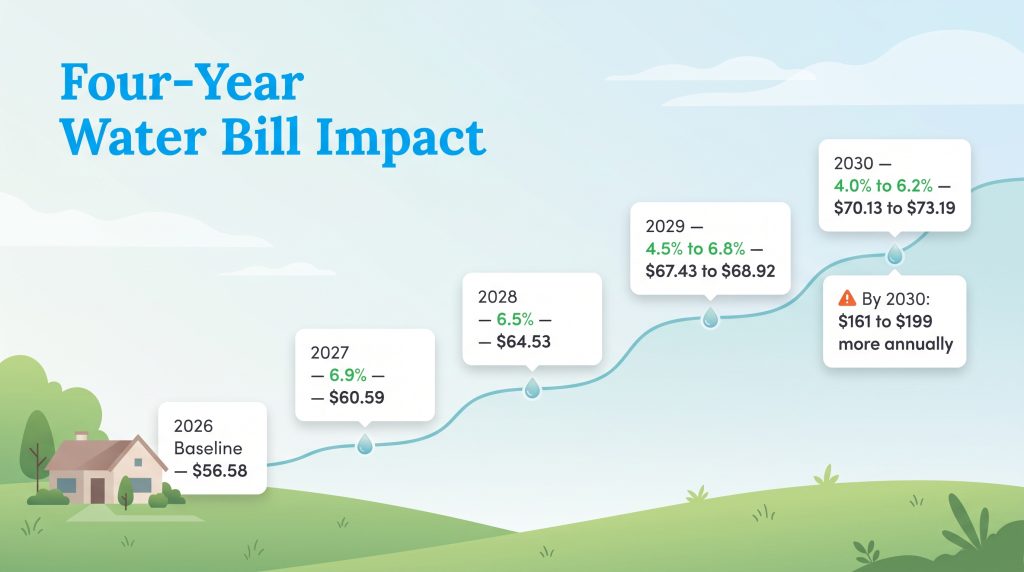
The approved plan spreads utility rate increases across four calendar years to mitigate the sudden shock of a single massive adjustment. Each compounding percentage increases the fixed service charges and volumetric tier rates applied to customer water and sewer usage.
Council members amended the utility’s original proposal before final passage, lowering the upper ceilings for the final two years. Under the authorized schedule, rates increase 6.9% in 2027, 6.5% in 2028, between 4.5% and 6.8% in 2029, and between 4% and 6.2% in 2030. For a household using an average of 7,000 gallons per month, the cumulative shift represents an additional $161 to $199 annually by the time the final adjustment is in place.
| Calendar Year | Approved Rate Escalation Range | Average Monthly Residential Bill | Projected Monthly Dollar Increase |
| Baseline (2026) | None (Current Baseline) | $56.58 | $0.00 |
| 2027 | 6.9% | $60.59 | +$3.91 |
| 2028 | 6.5% | $64.53 | +$3.94 |
| 2029 | 4.5% to 6.8% | $67.43 to $68.92 | +$2.90 to +$4.39 |
| 2030 | 4.0% to 6.2% | $70.13 to $73.19 | +$2.70 to +$4.27 |
The governing body passed the compromise package after Councilwoman Marina Alderete Gavito introduced amendments to cap the outer-year ranges. Council members Jalen McKee-Rodriguez, Marc Whyte, and Misty Spears cast the three dissenting votes, voicing concerns over cumulative household cost-of-living burdens. Mayor Gina Ortiz Jones supported the broader capital plan, pointing out that reliable water delivery remains vital for sustaining community health and economic growth.
Key Drivers Behind the Multi-Billion Dollar Capital Investment
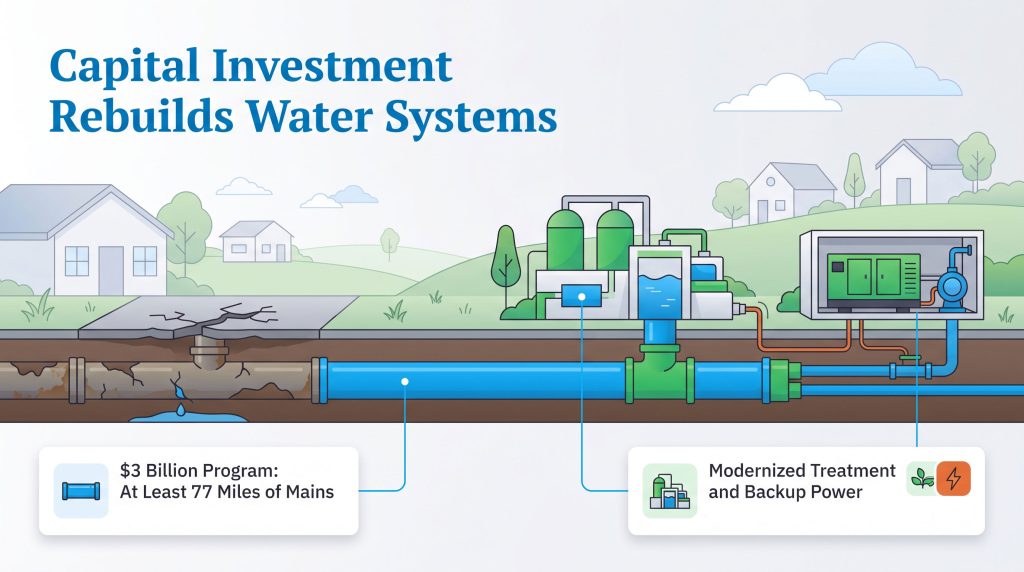
Municipal water rate increases are primarily driven by capital reinvestment mandates rather than ordinary operating cost inflation. The four-year rate escalation directly finances a $3 billion water and wastewater system capital program designed to rehabilitate deteriorating underground distribution networks.
Replacing Vulnerable Water and Wastewater Mains
A central component of the capital program involves replacing at least 77 miles of deteriorating public water mains across the utility’s territory. Chronic pipe failures and main breaks lead to treated water loss, street damage, and emergency repair costs. The infrastructure plan also funds extensive sanitary sewer upgrades to satisfy federal Clean Water Act standards and prevent raw sewage overflows during heavy rainfall events.
Treatment Plant Modernization and Emergency Resilience
Portions of the capital funds are earmarked for modernizing aging treatment facilities and adding emergency auxiliary power systems. Winter storms and summer heat waves have placed extreme stress on municipal pumping stations across Texas in recent years. Installing dedicated backup power generation ensures that treatment plants and high-pressure pumping stations maintain uninterrupted service during regional electric grid disruptions.
Service Territory and Regional Municipalities Affected
Understanding which communities are bound by the council decision depends on the operating footprint of the municipal utility. Because municipal water authorities operate as natural monopolies, residents within these boundaries cannot choose an alternate water supplier.
According to the San Antonio Water System Service Territory, the utility delivers retail drinking water and wastewater collection to approximately two million residents across Bexar County, along with small bordering segments in Medina and Atascosa counties. The approved rate adjustments apply across the following jurisdictions and service zones:
- City of San Antonio: All residential and commercial retail accounts within city limits receive services under the updated rate ordinance.
- Suburban Municipal Enclaves: Several incorporated suburban communities surrounded by San Antonio rely on SAWS for retail water delivery, wastewater collection, or wholesale treatment contracts, including Castle Hills, Hollywood Park, and Shavano Park.
- Unincorporated Bexar County: Residential developments, master-planned neighborhoods, and commercial corridors outside incorporated city limits that connect to SAWS water distribution mains.
- Cross-County Extensions: Select utility service areas extending across the county line into northeastern Atascosa County and eastern Medina County under regional service agreements.
Consumer Protection and Actionable Conservation Strategies
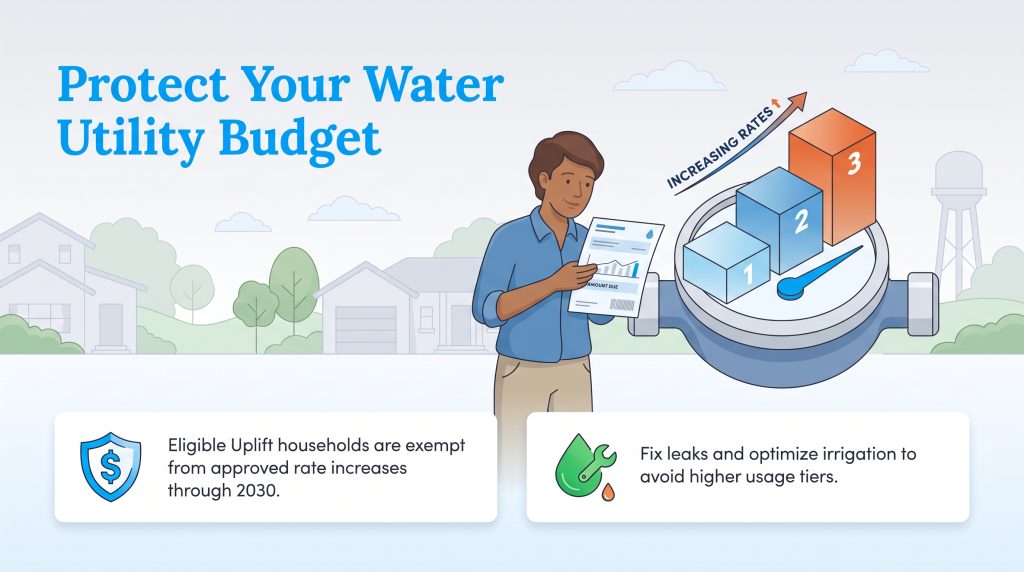
Because you cannot switch to a competitive water provider, defending your monthly utility budget requires managing volume tiers and taking advantage of utility-sponsored financial assistance. SAWS bills water usage using an inclining-block tier structure, meaning each gallon used above baseline consumption is billed at higher unit prices.
Enrolling in the SAWS Uplift Affordability Program
The City Council structured the rate ordinance to protect economically vulnerable ratepayers from rate shock. Households qualifying for the SAWS Uplift Affordability Program
are exempt from all approved rate increases through 2030. In addition, the utility expanded program eligibility criteria and added $550,000 in dedicated assistance funding. To qualify for Uplift rate protection, an applicant must be the primary residential account holder, meet household income requirements aligned with federal poverty benchmarks, and occupy a residential home with an assessed property tax value below $300,000.
Mitigating High Usage in Summer Volumetric Tiers
Volumetric water charges escalate sharply when consumption exceeds indoor baseline allowances, which typically happens due to outdoor lawn irrigation. You can avoid upper-tier pricing blocks by adhering strictly to local watering schedules, conducting an annual home irrigation audit, and using water-saving drip lines for landscaping. Fixing slow-leaking toilet flappers or dripping outdoor hose bibs can immediately save 1,000 to 3,000 gallons per month, preventing your bill from crossing into premium pricing brackets.
Protecting Your Household Budget Against Future Rate Hikes
Managing water utility expenses over the next four years will require consistent tracking and home efficiency upgrades. While the compounding rate adjustments will push average monthly bills above $70 by 2030, reducing unnecessary discretionary outdoor watering and upgrading indoor plumbing to certified water-saving models can offset the annual price adjustments. Checking your meter regularly for unnoticed leaks and verifying whether your household qualifies for the expanded Uplift program can help keep your monthly utility budget stable through every phase of the four-year escalation.
About the Author

Claudio is a sustainability-focused writer with a background in Anthropology and Psychology from NC State University. He has spent over 15 years working in writing, interpretation, and translation, driven by a deep interest in how human culture shapes the environment. Today, he shares his curiosity with readers by writing about sustainable living solutions and the connection between everyday choices and environmental impact.