
Understanding the activated carbon filtration process helps you choose the best system for safe, great-tasting water at home.
Key Takeaways
- Activated carbon filters work through a process called adsorption, acting like a magnet for contaminants.
- These filters effectively remove chlorine, VOCs, and bad tastes but leave healthy minerals behind.
- Choosing between granular activated carbon (GAC) and carbon block depends on your specific flow rate and filtration needs.
Whether it is the pitcher sitting in your refrigerator or the dispenser built into the door, carbon filters are likely a part of your daily routine. You have probably seen the black specks inside a new cartridge and wondered what exactly is happening inside that plastic casing. It isn’t magic that turns tap water into something crisp and refreshing; it is actually a simple but powerful chemistry process called adsorption. Understanding how this process works can help you make smarter decisions for your home, save money on utilities, and finally ditch those single-use plastic bottles for good.
The Secret Ingredient: What Is Activated Carbon?
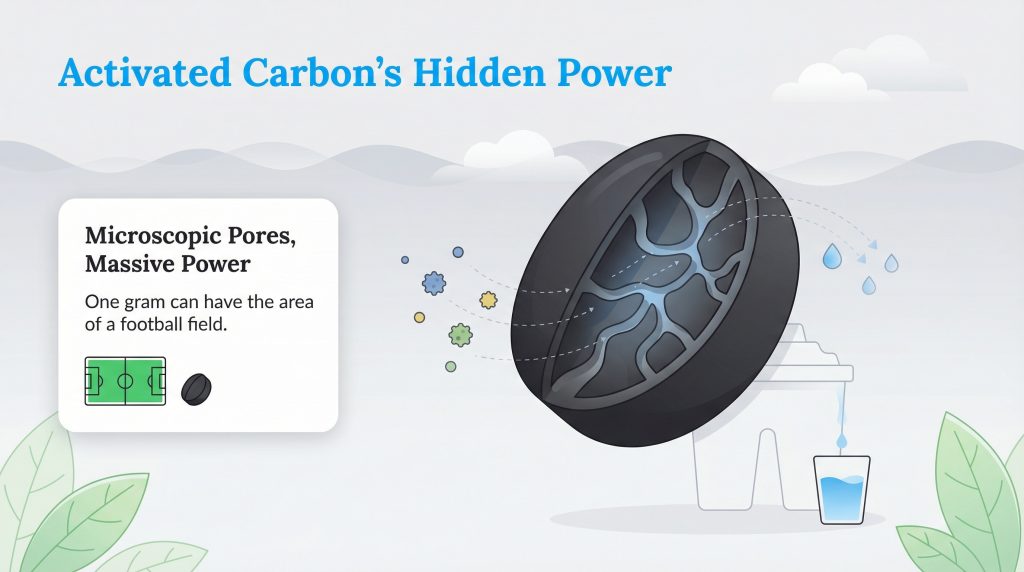
The “carbon” in your water filter is usually charcoal derived from organic materials like coconut shells, wood, or coal. However, you can’t just grind up a barbecue briquette and expect it to clean your water. To become “activated,” this carbon undergoes a special treatment process using extreme heat or oxygen. This process blasts open the structure of the carbon, creating millions of microscopic pores and crannies.
The result is a material with a staggering amount of surface area. In fact, just one gram of activated carbon, roughly the size of a fingernail, has a surface area equivalent to a football field. This massive internal network provides plenty of space for contaminants to get trapped, making it an incredibly powerful tool for improving home water quality.
Adsorption vs. Absorption: How the Magic Happens
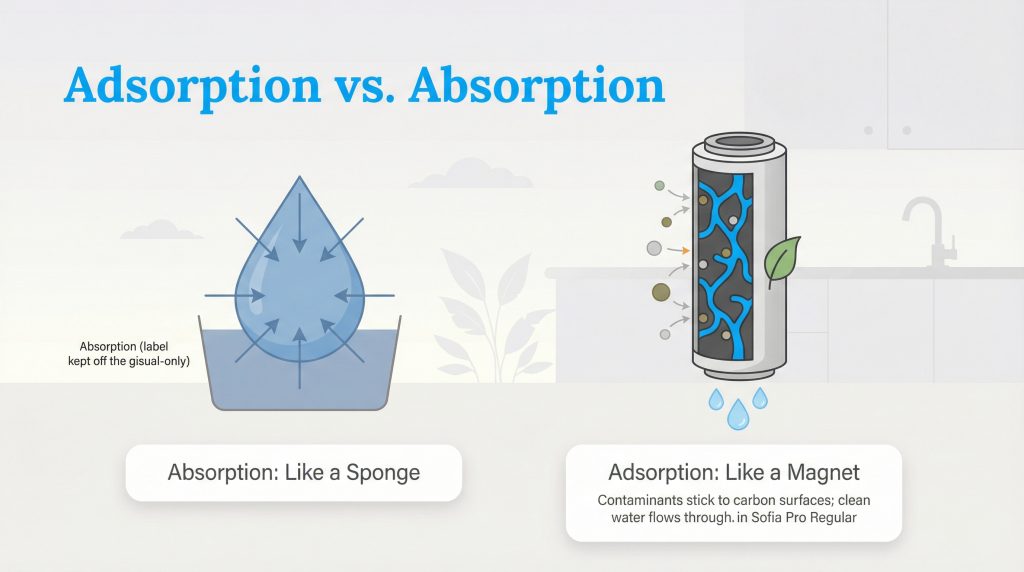
To understand how carbon water filters work, you have to distinguish between two very similar-sounding words: adsorption and absorption. Most people are familiar with absorption, which works like a sponge soaking up water. The liquid goes inside the material and stays there. Carbon filters, however, rely on adsorption.
Think of adsorption like a magnet. As water navigates the complex maze of pores within the carbon, contaminants are attracted to the carbon’s surface. Because of the chemical attraction between the carbon and organic compounds, impurities stick to the walls of the pores while the clean water molecules pass right through. This process allows you to improve your home water quality significantly without using harsh chemicals or energy-intensive machinery.
Granular Carbon vs. Carbon Block: Which Is Better?
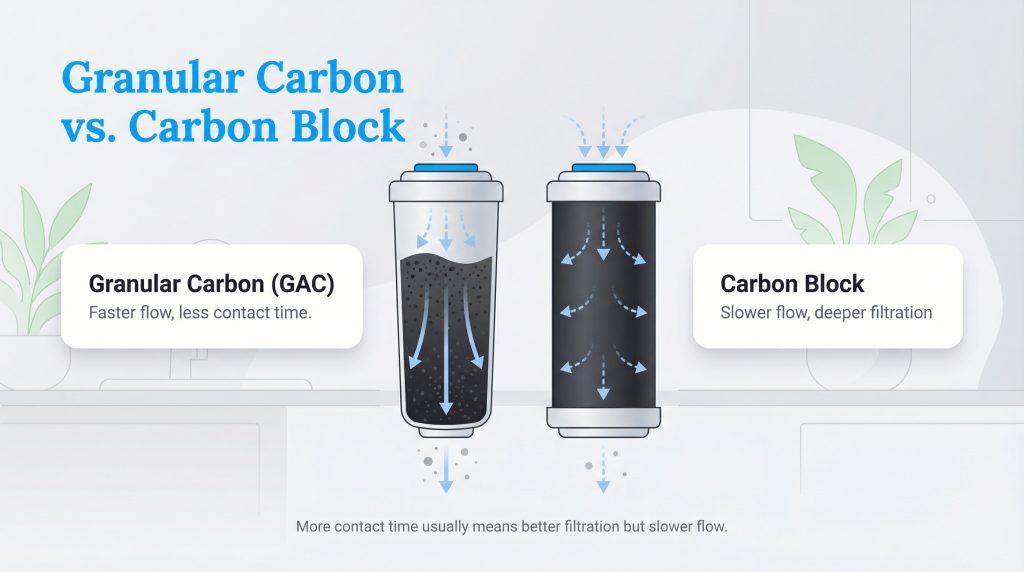
When shopping for a filter, you will typically see two main types: Granular Activated Carbon (GAC) and Carbon Block. Both use the same base material, but their physical form changes how they perform. GAC filters contain loose granules of carbon, similar to coarse sand. These allow for a faster flow rate, but the loose nature means water can sometimes create specific paths, or channels, around the carbon, potentially letting some contaminants sneak by.
Carbon block filters, on the other hand, are made by compressing carbon dust into a dense, solid block. The water has to fight much harder to push through this density. This resistance increases the “contact time” between the water and the carbon, leading to much more effective filtration. Longer contact time and a tighter pore structure (measured in microns) usually mean better removal of small contaminants, but they also slow down the flow and can clog faster, especially if your water has a lot of sediment.
| Feature | Granular Activated Carbon (GAC) | Carbon Block |
|---|---|---|
| Flow Rate | High (Fast water flow) | Low (Slower water flow) |
| Filtration Efficiency | Good (Susceptible to channeling) | Excellent (High contact time) |
| Clogging Potential | Low | High (Due to density) |
What Do Carbon Filters Actually Remove?
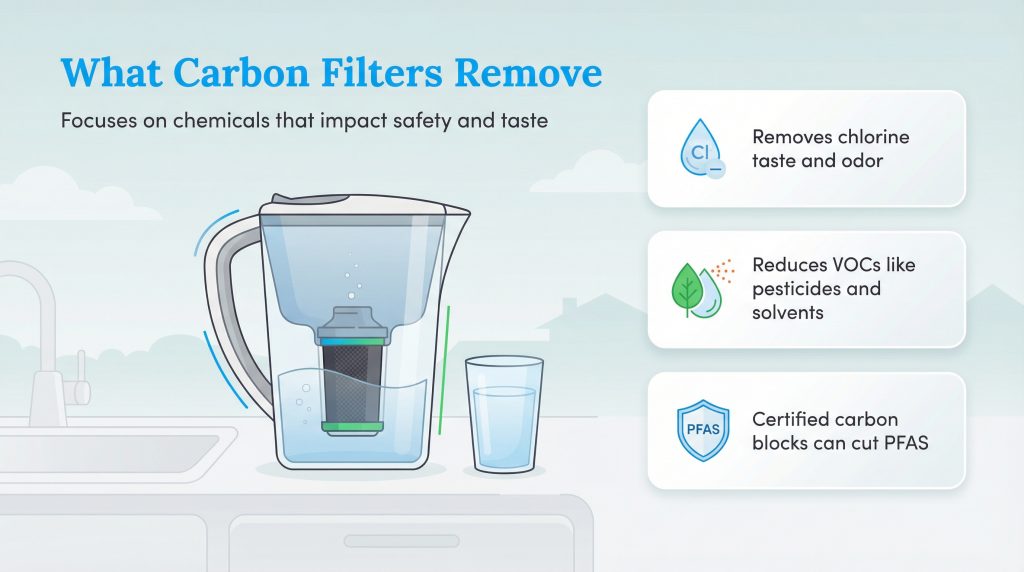
Carbon filters are the workhorses of residential water treatment, specifically targeting chemicals that affect the safety and taste of your water. The most common target is chlorine, which municipal water plants use to disinfect water but often leaves a swimming-pool taste and smell. Carbon removes this effectively, noticeably improving the drinking experience.
Beyond taste, activated carbon is highly effective at removing Volatile Organic Compounds (VOCs). These include herbicides, pesticides, and industrial solvents that can leach into groundwater. High-quality carbon block filters that are specifically tested and certified can also reduce PFAS, the “forever chemicals” that have become a major concern in water supplies across the country. For a deeper dive into these substances, you can review information from the EPA on drinking water contaminants.
What Carbon Filters Cannot Remove
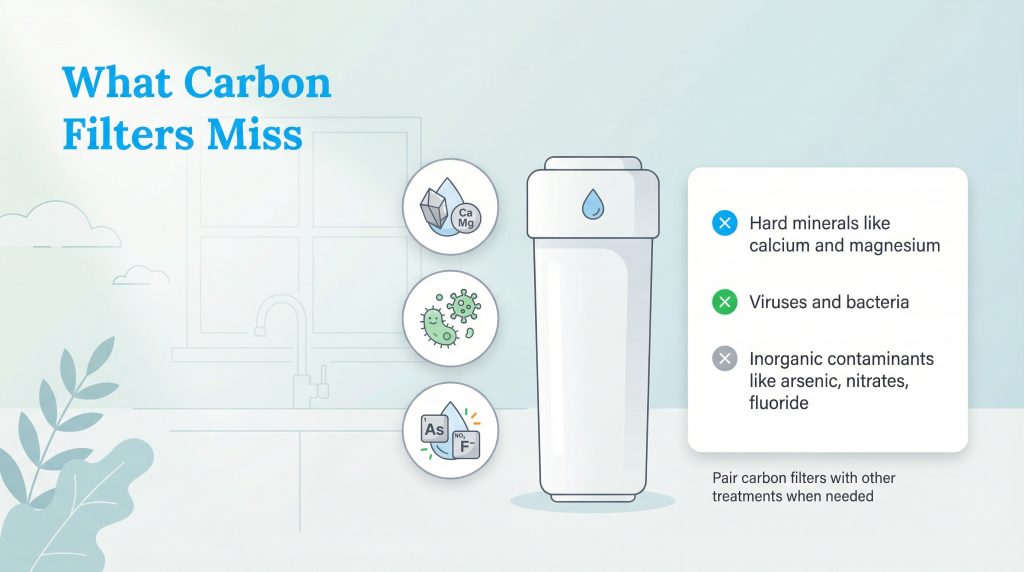
While carbon filters are excellent at chemical adsorption, they are not a cure-all for every water issue. It is important to know their limitations so you don’t expect results they cannot deliver. For instance, standard carbon filters do not remove dissolved minerals like calcium and magnesium. If you are dealing with scale buildup on your faucets, a carbon filter won’t help; you need a water softener.
Additionally, standard activated carbon filters are not designed to reliably remove or kill viruses and bacteria. If your water source is biologically unsafe (like an untreated well), you will need UV purification or reverse osmosis in addition to carbon. Furthermore, inorganic substances like arsenic, nitrates, and fluoride typically pass right through standard carbon filters. For issues related to mineral content, you might want to read more about hard water solutions.
Keeping It Fresh: When to Replace Your Filter

How long do carbon water filters last? The answer depends on your water quality and usage, but eventually, all those millions of pores will get full. When the adsorption sites are clogged, the filter stops working. You might notice sensory cues first, such as the return of a chlorine smell or an “off” taste. A significant drop in water pressure is another sign that the pores are physically blocked with sediment.
Ignoring these signs can be risky. A dirty filter that has trapped organic matter can eventually become a breeding ground for bacteria, potentially making your water quality worse than it was before filtration. A general rule of thumb is to replace standard pitcher filters every 2 months and larger under-sink cartridges every 6 months, but always follow the manufacturer’s specific guidelines.
Crystal Clear Choices for Your Home
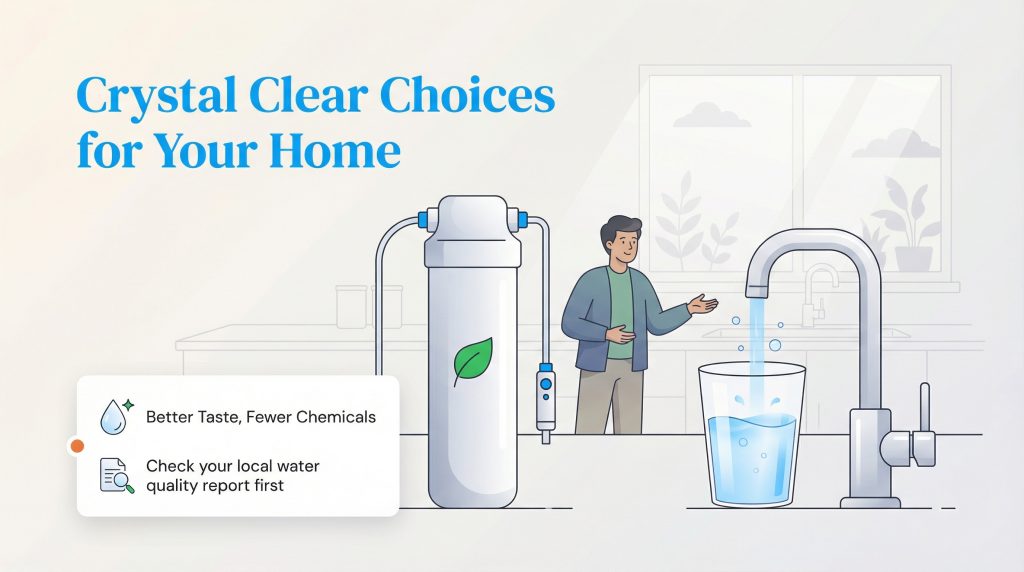
Activated carbon filtration is one of the most cost-effective and environmentally friendly ways to upgrade your home’s water quality. While it isn’t a solution for every single contaminant, it excels at removing the chemicals that make water taste bad and pose long-term health risks. We recommend looking at your local water quality report before choosing a filter so you can enjoy clean, refreshing water straight from your tap without the waste of bottled alternatives.
FAQs About Carbon Water Filters
Do carbon filters remove bacteria from water?
How long do carbon water filters last?
What is the difference between activated carbon and charcoal?
Can you clean and reuse a carbon filter?
Do carbon filters remove fluoride?
Why do I see black specks in my water?
About the Author

David has been an integral part of some of the biggest utility sites on the internet, including InMyArea.com, HighSpeedInternet.com, BroadbandNow.com, and U.S. News. He brings over 15 years of experience writing about, compiling and analyzing utility data.