

Don’t let your autumn yard waste end up in a landfill when it could be benefiting your local ecosystem and your wallet.
Key Takeaways
- Mulching leaves into your lawn provides free fertilizer and saves you from hours of tedious raking and bagging.
- Leaving some leaves creates a vital winter habitat for beneficial pollinators and local wildlife.
- Utilizing municipal yard waste pickup ensures your excess leaves are commercially composted rather than taking up landfill space.
If you’re staring at a golden sea of yard debris and wondering what to do with all those fallen leaves, you’re not alone. That dreaded autumn chore often feels like an endless cycle of raking, bagging, and hauling heavy plastic sacks to the curb. Fortunately, figuring out what to do with fallen leaves doesn’t have to be a frustrating burden. The best approach is usually a mix: mulch what you can, leave some leaves in garden beds, and send the excess to a municipal composting program. By rethinking how we handle this seasonal shedding, we can transform an exhausting weekend project into a surprisingly simple opportunity to save money and embrace an eco-friendly alternative.
| Leaf Disposal Method | Best For | Eco Benefit | Effort Level |
|---|---|---|---|
| Lawn Mulching | Light to moderate leaf coverage on grass | Returns nutrients directly to the soil | Low |
| Backyard Composting | Homeowners with active garden beds | Reduces reliance on synthetic fertilizers | Medium |
| Leaf Mold | Improving soil structure and moisture | Creates natural, slow-release soil conditioner | Low |
| Wildlife Habitat | Wooded edges or under large shrubs | Shelters beneficial pollinators and insects | Very Low |
| Municipal Pickup | Large properties with overwhelming debris | Diverts organic matter from local landfills | Medium |
| Community Donation | Urban areas with local farms or gardens | Supports local agriculture and food systems | Medium |
| Local Drop-Off | Homes without dedicated curbside pickup | Ensures proper commercial composting | High |
Why You Shouldn’t Just Bag and Trash Your Leaves
It seems natural to just scoop up all that yard debris, toss it into a heavy-duty trash bag, and wait for the garbage truck. However, stuffing organic matter into plastic bags completely deprives it of oxygen. When organic waste breaks down without oxygen in landfills, it can produce methane, a greenhouse gas the EPA identifies as far more heat-trapping than carbon dioxide over shorter time frames.
Instead of contributing to that unseen environmental strain, choosing an eco-friendly leaf disposal method keeps those precious nutrients circulating right where they belong. Your property acts as a tiny ecosystem, and removing every ounce of natural debris strips the soil of the raw materials it needs to thrive next spring. By keeping that organic matter on site, you actively nourish your own land while reducing the sheer volume of waste hitting your neighborhood trash circuit. If this is your first fall in a new home, don’t assume yard waste goes out with regular trash. Leaf collection rules often differ from garbage and recycling rules, and some cities only pick up leaves during specific fall windows.
1. Mulch Leaves Directly Into Your Lawn
One of the best alternatives to raking leaves is simply running over them with your mower. You don’t need any specialized equipment to pull this off. Just remove the bagging attachment from your standard lawnmower, set the blade height to about three inches, and mow right over the dry debris until it shreds into dime-sized pieces. These tiny fragments settle between the grass blades and usually become much less noticeable after a mowing or two.
This method of mulching leaves into lawn spaces acts as a powerful, slow-release fertilizer. As those shredded pieces break down, they add organic matter and return small amounts of nutrients to the soil. It encourages deeper root growth and helps the grass retain valuable moisture during sudden dry spells.
Ditching the rake altogether saves hours of back-breaking labor. It also aligns perfectly with a broader sustainable living strategy by eliminating the need for synthetic spring fertilizers. You get a healthier, greener yard without spending a single dime on chemical lawn treatments.
2. Create Nutrient-Rich Compost for Your Garden
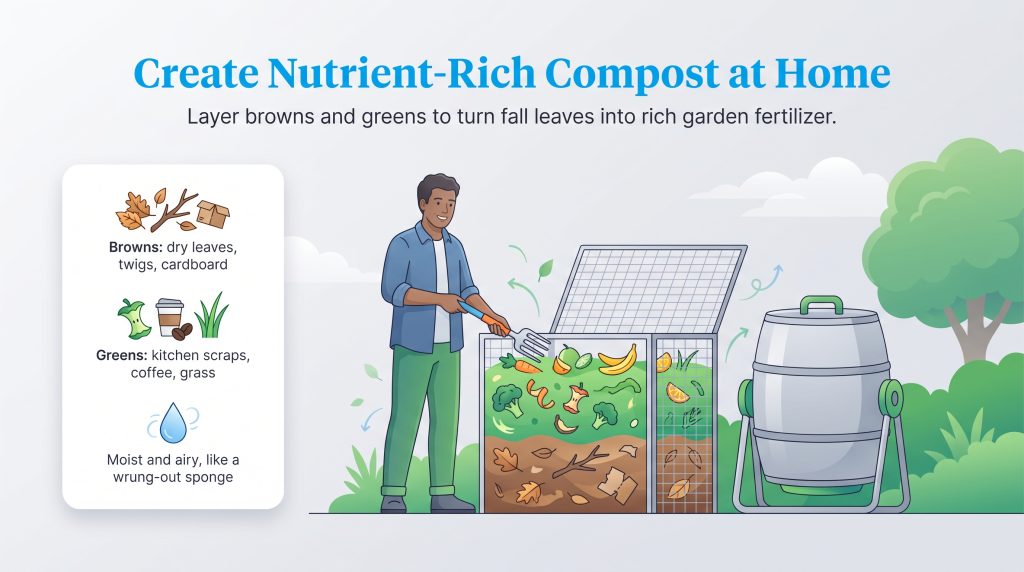
If your yard features dedicated garden beds, feeding a compost pile is a fantastic way to repurpose that autumn windfall. Dead leaves are packed with carbon, making them the ultimate “brown” material for your bin. Learning how to compost leaves for beginners really just comes down to mastering a basic ratio. You want to balance those dry, crunchy browns with fresh “green” materials like grass clippings or vegetable scraps to get the decomposition engine running hot.
Start by dedicating a shaded back corner of your property to a simple wire bin or an enclosed tumbler. Layer your shredded leaves with kitchen scraps, add a splash of water to keep things damp, and turn the pile every few weeks. For more detailed instructions on building and maintaining a healthy bin, check out the EPA’s guidelines on backyard composting.
- Carbon-rich browns: Dry leaves, twigs, cardboard, and paper egg cartons.
- Nitrogen-rich greens: Coffee grounds, fruit peels, vegetable scraps, and fresh grass clippings.
- Moisture and air: Turn the pile frequently and keep it as damp as a wrung-out sponge to speed up the process.
3. Insulate Your Plant Beds With Leaf Mold
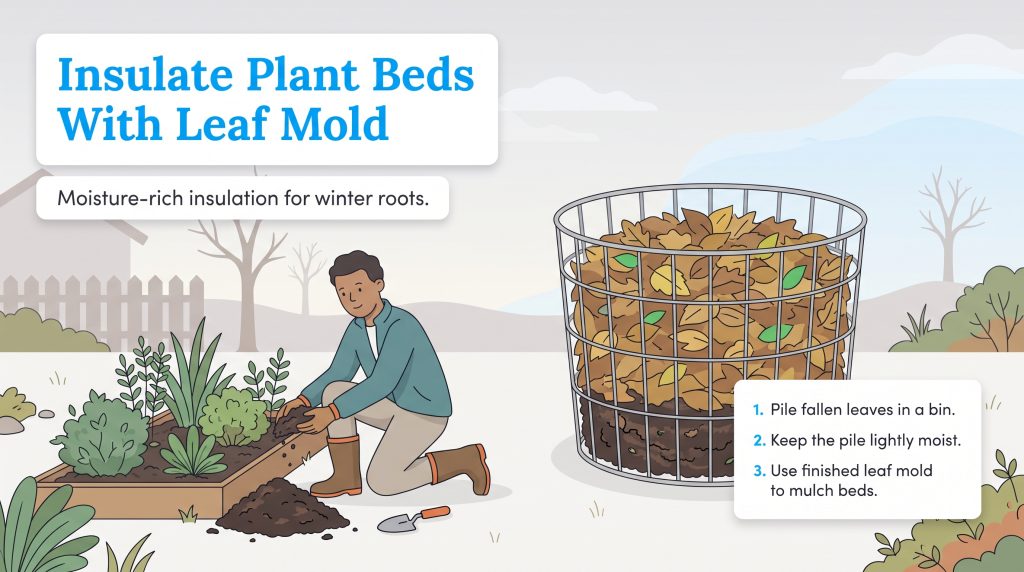
Composting takes a bit of active management, but creating leaf mold is arguably the most hands-off method available. While traditional compost relies on bacterial heat to break down a mix of greens and browns, leaf mold relies entirely on the slow, fungal breakdown of leaves alone. It produces a dark, crumbly, earthy-smelling soil conditioner that garden centers sell for a premium.
To make it yourself, just pile your excess leaves in a corner of your yard or stuff them loosely into a simple wire bin. Water the pile thoroughly, walk away, and let nature take over. Over the course of a year, fungi will gradually decompose the organic matter. You can then use this incredibly moisture-retentive material to insulate delicate plant beds, keeping roots warm through freezing temperatures while greatly improving your soil structure.
4. Leave the Leaves for Wildlife Habitat
We’ve been conditioned to think a perfectly clear yard is a healthy yard, but you really don’t need to scour every single garden bed clean. In fact, leaving leaves for wildlife habitat provides a crucial winter lifeline for your local ecosystem. A 2- to 3-inch layer of undisturbed leaf litter offers essential shelter for overwintering salamanders, box turtles, toads, and countless beneficial insects.
Tucking a cozy blanket of debris under shrubs and trees supports the very pollinators that will make your spring garden bloom. The National Wildlife Federation actively encourages homeowners to leave the leaves because this natural ground cover acts as an insulating nursery. You get a break from hauling heavy bags, and your yard’s native wildlife gets a safe place to ride out the freezing temperatures.
5. Navigate Municipal Yard Waste Pickup Rules
Of course, not everyone has the space or the desire to keep a massive mountain of oak or maple droppings on their property. If you have an overwhelming amount of trees, figuring out the municipal yard waste pickup rules in your area is the next best step. Most local governments run specific seasonal collection programs that route organic debris to commercial composting facilities instead of standard landfills.
Take a few minutes to check your specific county or city utility website for the local yard waste pickup schedule. For instance, managing your local waste services usually requires placing organic matter in biodegradable paper lawn bags rather than plastic. Before you rake everything to the curb, check your city or county’s solid waste department page for four details: accepted containers, collection dates, pile size limits, and prohibited materials. Some programs reject plastic bags, mixed trash, rocks, pet waste, or large branches, even if the rest of the pile is compostable. Understanding these guidelines guarantees your curbside leaf collection gets picked up promptly, making it the best way to get rid of yard waste when your own compost bins are already overflowing.
6. Share With Community Gardens or Neighbors
If your local government doesn’t offer curbside pickup, look into community-focused solutions to offload your excess. Local farms, urban community gardens, and even neighbors with large composting operations are often desperate for “brown” materials in the fall. Donating your yard waste prevents it from going to the dump and fosters goodwill in your neighborhood, effortlessly turning your seasonal chore into a valuable community resource.
7. Drop Leaves at a Local Composting Site
If you have a massive volume of yard waste and no curbside pickup, hauling your debris to a local drop-off facility is an excellent alternative. Many cities and counties operate seasonal yard waste drop-off sites, transfer stations, or commercial composting facilities specifically for residents. Just be sure to verify their hours and requirements before loading up your car, as some locations require proof of residency or charge a small drop-off fee.
When using a local composting site, you almost always need to empty your leaves out of any plastic bags. Most facilities prefer loose leaves or debris packed into biodegradable paper lawn bags to ensure their commercial compost remains free of microplastics.
What Not to Do With Fallen Leaves
While there are plenty of great ways to handle autumn debris, a few common disposal habits can actually harm your yard or violate local ordinances. Avoiding these missteps keeps your property healthy and ensures you stay on the right side of municipal regulations.
- Don’t blow leaves into the street: Unless your city operates a specialized street-sweeping collection program, loose leaves clog storm drains and contribute to localized street flooding.
- Don’t burn them without permission: Open burning is banned in many areas due to severe fire hazards and air quality concerns, so always check with your local fire department first.
- Don’t leave a thick mat on your turf: While a light layer of shredded leaves acts as fertilizer, a heavy, wet blanket of whole leaves suffocates grass and invites fungal diseases.
- Don’t use plastic bags for municipal compost: If your city collects organic waste, plastic bags will almost certainly be rejected at the curb because they contaminate the commercial composting process.
How Much Can Repurposing Leaves Save You?
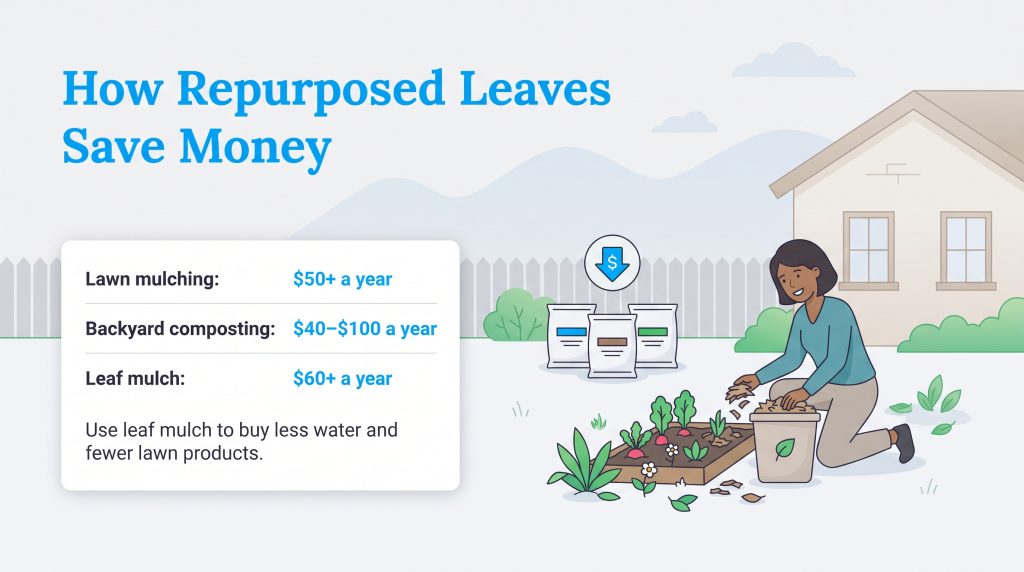
Keeping your leaves on-site doesn’t just benefit local wildlife; it actively keeps cash in your wallet. When you repurpose natural yard waste into mulch and compost, you instantly stop buying synthetic alternatives from the hardware store. Much like figuring out how to save on your water bill, optimizing your outdoor utility footprint helps stretch your overall household budget further.
These are rough household examples based on replacing a few bags of store-bought mulch, compost, or fertilizer. Actual savings depend on yard size, local prices, and how much material you usually buy.
| Method | Store-Bought Equivalent Cost | Potential Annual Savings |
|---|---|---|
| Lawn Mulching | $30 – $50 (Lawn Fertilizer) | $50+ |
| Backyard Composting | $5 – $10 per bag of compost | $40 – $100 |
| Leaf Mold Insulation | $4 – $8 per bag of wood mulch | $60+ |
A Smarter Fall Cleanup Starts With Reusing Leaves
Treating your seasonal yard debris as a resource rather than a nuisance completely changes the dynamic of fall maintenance. By mulching, composting, or strategically leaving organic matter in place, we protect our local ecosystems while saving countless hours of frustrating labor. Letting nature do the heavy lifting puts money back in your pocket and ensures your property is well prepared to thrive when the spring thaw finally arrives.
Frequently Asked Questions About Leaf Disposal
Is it illegal to burn leaves in my yard?
Will leaving leaves on my lawn kill the grass?
Can I put leaves in plastic trash bags?
Are pine needles safe to compost with my leaves?
Do I need to shred leaves before using them as mulch?
Can I put fallen leaves in my regular trash bin?
What is the easiest way to get rid of leaves without raking?
Should I remove leaves from storm drains?
About the Author

LaLeesha has a Masters degree in English and enjoys writing whenever she has the chance. She is passionate about gardening, reducing her carbon footprint, and protecting the environment. She also recently served as President of the Board for City Sprouts (a community garden).

David has been an integral part of some of the biggest utility sites on the internet, including InMyArea.com, HighSpeedInternet.com, BroadbandNow.com, and U.S. News. He brings over 15 years of experience writing about, compiling and analyzing utility data.