

Sort Thanksgiving Scraps by Your Composting Setup and Local Collection Rules to Reduce Waste and Help Protect Your Drains
Key Takeaways
- Know your composting system: Raw vegetable peels belong in your backyard bin, while meat and dairy require a compatible municipal collection service.
- Protect your kitchen plumbing: Keeping fibrous scraps and poultry fats out of the sink helps prevent garbage disposal clogs.
- Prep your space before guests arrive: Setting up a clearly labeled sorting station and checking local utility rules makes post-feast cleanup fast and frustration-free.
Hosting Thanksgiving in a new home brings plenty of cozy chaos, especially when your kitchen counters disappear under a mountain of potato peelings, herb stems, and half-eaten pie plates. Before you scrape everything into a giant trash bag or force it down the sink, take a moment to set up a smart sorting strategy. We put together these practical Thanksgiving composting tips to help you organize holiday scraps in seconds, find your municipal waste utility rules, and keep grease and food remnants out of your drains.
Why Holiday Food Waste Composting Matters for Your Home and Utilities
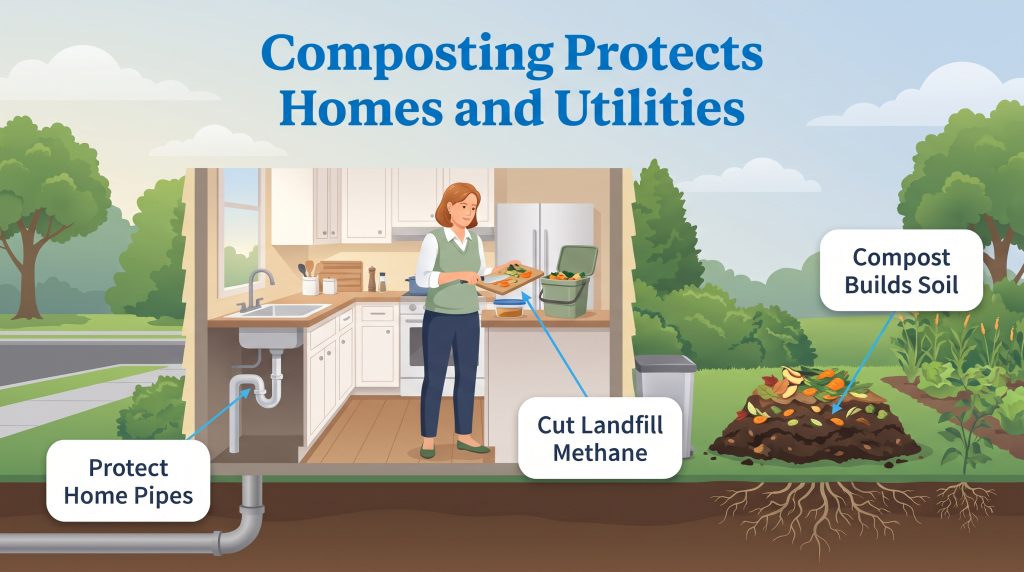
How you handle Thanksgiving kitchen cleanup impacts both your regional waste infrastructure and the pipes hidden inside your walls. According to the EPA’s home composting guide, food scraps and yard waste make up a significant portion of everything we throw away. When those holiday leftovers get sealed inside a municipal landfill, they break down without oxygen and release methane, a potent greenhouse gas. Practicing holiday food waste composting diverts that heavy organic material from the landfill and transforms it into nutrient-rich soil instead.
Composting also acts as a practical safeguard for your plumbing. Keep grease and food scraps out of the drain. Grease can build up in pipes, and fibrous or starchy scraps can contribute to disposal problems and blockages. Plumbers sometimes call the day after Thanksgiving “Brown Friday” because residential kitchen sinks and garbage disposals can back up during the cleanup rush. Tossing those scraps into a backyard pile or a municipal green waste bin protects your home water and sewer lines while simplifying your household waste management.
Heads Up
Never pour turkey drippings, gravy, or butter sauces down your kitchen sink or into a backyard compost pile. For small amounts, cool and contain grease before discarding it in the regular trash to prevent pipe blockages and keep pests out of your yard.
How Backyard and Commercial Composting Differ
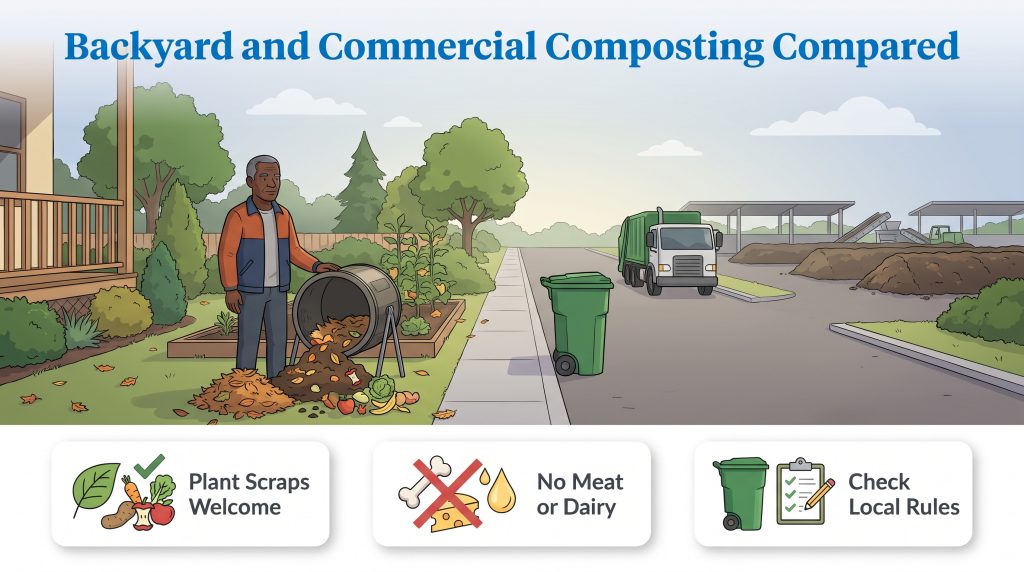
Holiday hosts often run into conflicting advice when looking up commercial versus backyard composting rules. Temperature, scale, and specific municipal guidelines dictate these rules, so knowing which system serves your home is the secret to trouble-free sorting.
How Backyard Composting Works in Late Autumn
A standard backyard bin, wire cage, or tumbler relies on natural microbes, earthworms, and ambient warmth to break down organic matter. While a well-managed backyard pile can reach thermophilic temperatures, a basic home system shouldn’t take meat, dairy, or fats. Tossing turkey scraps or buttery sides into an autumn backyard pile can attract pests, create sour odors, and be difficult to manage reliably. For a basic backyard pile, stick mainly to fruit and vegetable scraps, coffee grounds, and suitable dry materials.
How Municipal Curbside and Commercial Services Differ
Municipal organics programs (often bundled with your city trash utility as a green waste bin) and private subscription pickup services operate on a completely different level. Industrial facilities build massive windrows that process materials your backyard cannot handle. However, temperature alone doesn’t determine whether bones or packaging will process successfully; time, moisture, and facility requirements also matter. Check your specific local collection program rules to see if your community offers an eco-conscious alternative that accepts meat and dairy in the curbside cart.
What Thanksgiving Foods Can Be Composted? (Sorting Your Scraps)
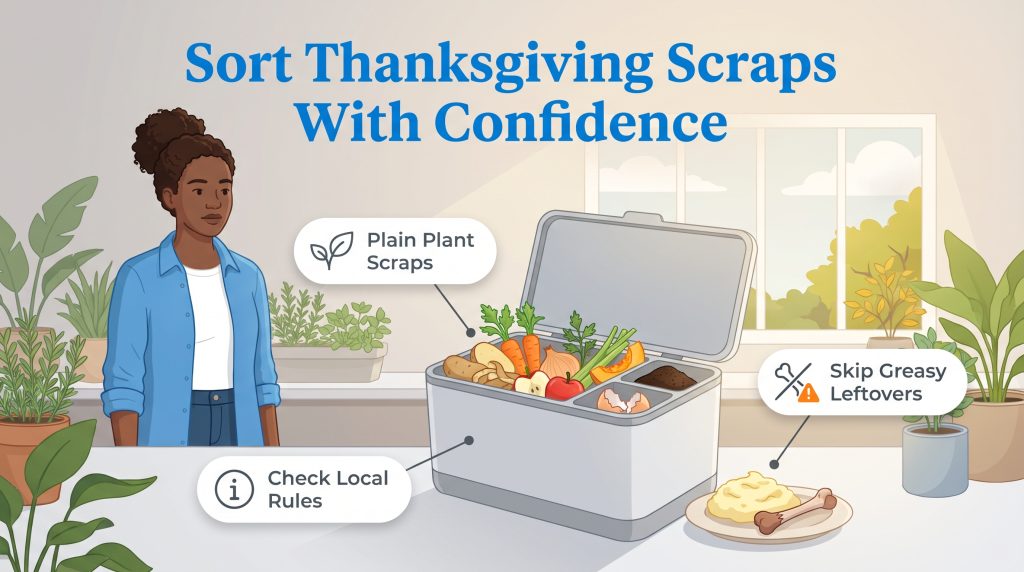
When you are standing by the counter with a full cutting board, the easiest way to remember what Thanksgiving foods can be composted is to focus on the ingredients. Separate plain plant scraps from dishes containing meat, dairy, or lots of fat. Plain cooked vegetables can also be suitable in small amounts, but leave out the greasy dishes. Then, check which materials your backyard system or collection program can handle. Use the quick-reference table below to sort your holiday ingredients at a glance.
| Thanksgiving Item | Backyard Compost Bin | Food-Scrap Collection Program — Check Local Rules | Why / Special Instructions |
|---|---|---|---|
| Raw Veggie & Fruit Peels | Yes | Yes | Clean nitrogen source; chop thick rinds into smaller pieces to speed up decay. |
| Cooked Mashed Potatoes & Casseroles | No | Yes (If accepted locally) | Butter, milk, sour cream, and cream soups go rancid and attract pests in backyard bins. |
| Turkey Meat & Carcasses | No | Yes (If accepted locally) | Industrial facilities process materials differently than home setups. |
| Stuffing & Dinner Rolls | Plain bread only (Bury deep) | Yes | Sausage, poultry broth, and butter rule out stuffing for backyard piles. |
| Cranberry Sauce | Yes (In moderation) | Yes | Safe if dairy-free; bury deep in backyard piles to keep fruit flies away from the sugar. |
| Coffee Grounds & Tea Bags | Yes (Check for plastic) | Yes | Great nitrogen boost; empty leaves and discard the bag unless confirmed plastic-free. |
| Cooking Oils & Turkey Grease | No | No | Large quantities interfere with composting and attract pests; solidify small amounts for the trash. |
Raw Kitchen Prep Scraps (Safe for Most Bins)
Most plain plant materials you trim away while prepping your feast can go straight from the cutting board into either a backyard tumbler or a compatible curbside organics cart. That includes potato skins, sweet potato peels, onion and garlic papery skins, carrot tops, celery ends, green bean stems, apple cores, stringy pumpkin pulp, woody herb stems, and crushed eggshells. Unbleached coffee filters with grounds are also excellent additions. If you have time while prepping, chop thick items like butternut squash rinds or broccoli stalks into smaller one-inch pieces so microbes can break them down faster before winter freezes set in.
Cooked Dishes and Plate Leftovers (Proceed With Caution)
Once dinner wraps up, hosts frequently ask two questions: can you compost mashed potatoes, and can you compost turkey bones? Once potatoes are whipped with butter, heavy cream, or sour cream, they belong exclusively in a municipal or commercial curbside bin if accepted locally — never in your backyard pile. The same rule applies to green bean casserole made with mushroom soup, gravy-soaked stuffing, mac and cheese, and pumpkin pie made with eggs and evaporated milk.
When composting Thanksgiving leftovers that contain no dairy or meat, such as plain steamed vegetables or a dry dinner roll, you can add small amounts to a backyard bin as long as you bury them deep in the center. Turkey bones and poultry skin, however, are not recommended for a basic backyard pile because they can attract neighborhood scavengers, so they should only be handled through an approved commercial organics pickup service.
Pro Tip
Before tossing that turkey carcass into your municipal curbside bin, simmer the bones with leftover onion skins, celery ends, and herb stems to make rich homemade broth — then verify if your local program allows cooked meat scraps before composting the remnants!
How to Find Your New Home’s Municipal Composting Rules
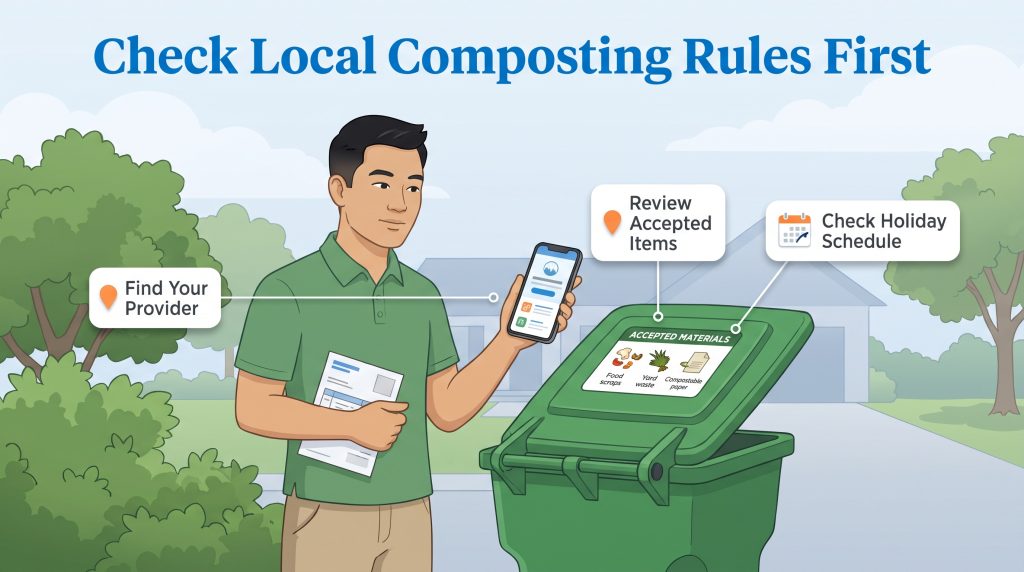
If you recently moved, taking a few minutes to verify your new address’s waste management guidelines can save you from accidental contamination. Check your utility provider’s specific rules before tossing your holiday scraps into an unknown cart.
- Identify your provider: Look at your municipal utility bill or city website to find the waste management company serving your address.
- Find the accepted materials list: Navigate to your provider’s “food scraps,” “organics,” or “accepted materials” page. Confirm whether your cart accepts food waste or if it is strictly limited to yard trimmings.
- Check the specifics: Read the fine print regarding meat, bones, food-soiled paper, compostable packaging, and bin liner requirements. Check for any holiday-week collection schedule changes.
- Look for community drop-offs: If you do not have curbside organics pickup, search for a verified community drop-off location or a private subscription service, and review their rules before bringing your scraps.
How to Set Up a Practical Thanksgiving Compost Station
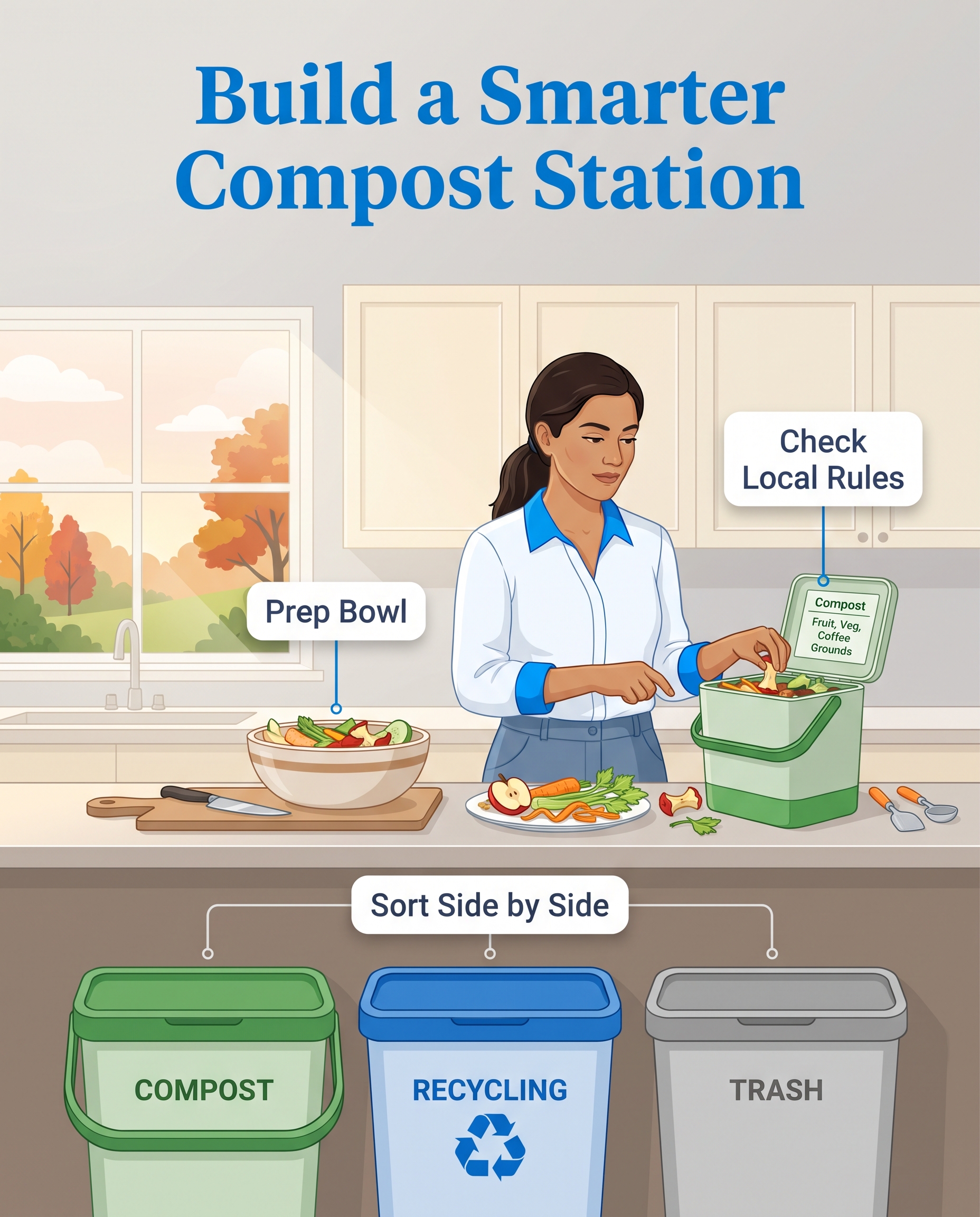
Even the most organized hosting plan can fall apart when relatives jump up to help clear the table. Without clear guidance, people might accidentally toss plastic-coated plates, greasy napkins, and turkey drumsticks into the wrong buckets. Put these practical Thanksgiving composting tips to work before dinner starts to make cleanup effortless:
- Keep a “Prep Bowl” by the Cutting Board: Set a large mixing bowl or countertop caddy right next to your knives while cooking. Collecting plain vegetable peels as you chop keeps clean backyard compost completely separate from buttery stove-top splatters and raw poultry juices.
- Line Up Your Bins Side by Side: Place your trash can, recycling bin, and compost pail right next to each other in the main cleanup zone. When guests can easily access all options in one spot, they are more likely to sort their scraps correctly.
- Use Visual Labels (Or Designate One “Scraper”): Tape a bold index card onto the lid of your compost bin listing three “Yes” items and three “No” items based on your local setup. Better yet, ask guests to stack their dishes on a designated section of the counter so one person in the know can scrape every plate properly.
- Sort Non-Food Kitchen Packaging Properly: Holiday cooking generates plenty of packaging waste alongside food scraps. Rinse out aluminum pie pans and steel cranberry cans for your recycling bin, check whether your local recycling program accepts aseptic broth cartons, and toss plastic turkey netting and greasy butter wrappers directly into the garbage.
Choosing Compostable Tableware for Thanksgiving
Using disposable tableware makes cleanup easier for a massive crowd, but choosing compostable plates and utensils requires reading the fine print. Uncoated, unbleached paper napkins and paper towels soiled only with water or vegetable juices can often be torn up and tossed into a backyard pile as carbon-rich material. However, watch out for plant-based plastics (often labeled PLA). Industrially compostable does not mean backyard-compostable. Look for credible third-party certification like a BPI logo, check conformity to standards like ASTM D6400, and then confirm your local municipal program actually accepts that specific type of serviceware before tossing it in the green bin.
Composting Pumpkin and Gourds After Thanksgiving (Plus Balancing Your Pile)
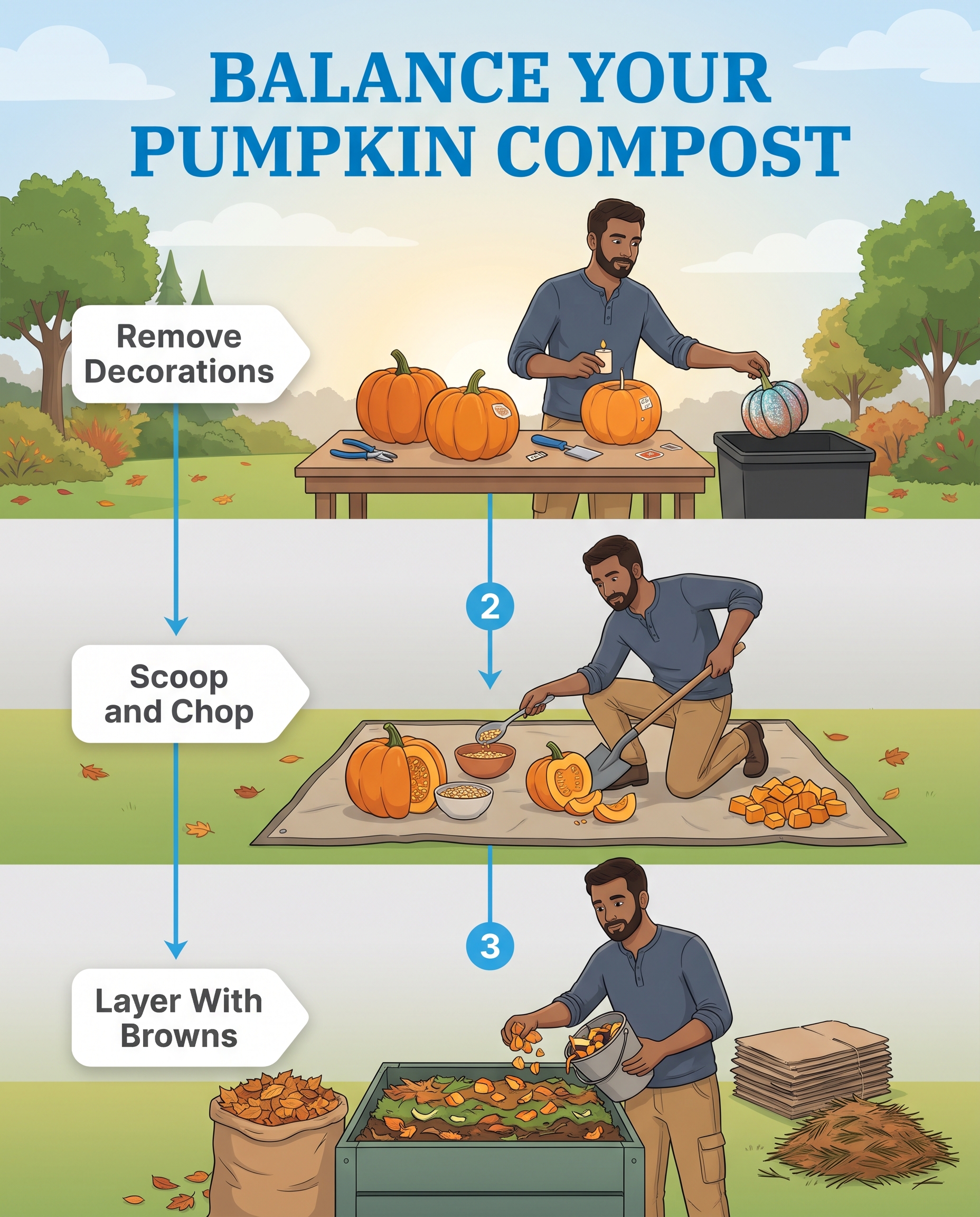
Once the leftovers are packed away and the long weekend begins, many of us turn our attention to taking down autumn porch and table displays. Composting pumpkin and gourds after Thanksgiving is a fantastic way to keep heavy seasonal decor out of the landfill, provided you prep them properly first.
Start by stripping away all non-organic decorations. Pull out candle wicks, scrape off wax drippings, and toss any gourds covered in glitter, acrylic paint, stickers, or hot glue into the regular trash. Next, slice open your unpainted pumpkins and scoop out the seeds; squash seeds love to sprout inside warm compost piles, leaving you with a tangle of volunteer vines next spring. You can roast fresh, sound seeds for a food-safe snack or compost them along with the pulp. Finally, take a shovel to smash whole pumpkins into small chunks so microbes can break down the tough rinds.
Dumping five smashed pumpkins and a massive bucket of holiday vegetable peels into a backyard bin all at once will create a slimy, oxygen-starved mess that smells like ammonia or rotten eggs. To avoid this, you need to balance brown and green compost materials. Kitchen scraps and pumpkins are moisture-rich, nitrogen-heavy “greens.” Follow general composting best practices by balancing these with carbon-rich “browns” by volume. Late November offers an abundant, free supply of browns right outside your door, including dry autumn leaves, shredded cardboard delivery boxes, and pine needles. Layering your fresh Thanksgiving kitchen scraps with dry leaves helps manage odors as the material continues breaking down as conditions allow.
Eco Edge
Bagging up dry autumn leaves while raking your yard in November gives you a ready-made stash of carbon-rich “browns” to layer over wet kitchen scraps all winter long, making it an environmentally mindful choice for maintaining your pile.
How to Reduce Food Waste on Thanksgiving Before It Hits the Bin
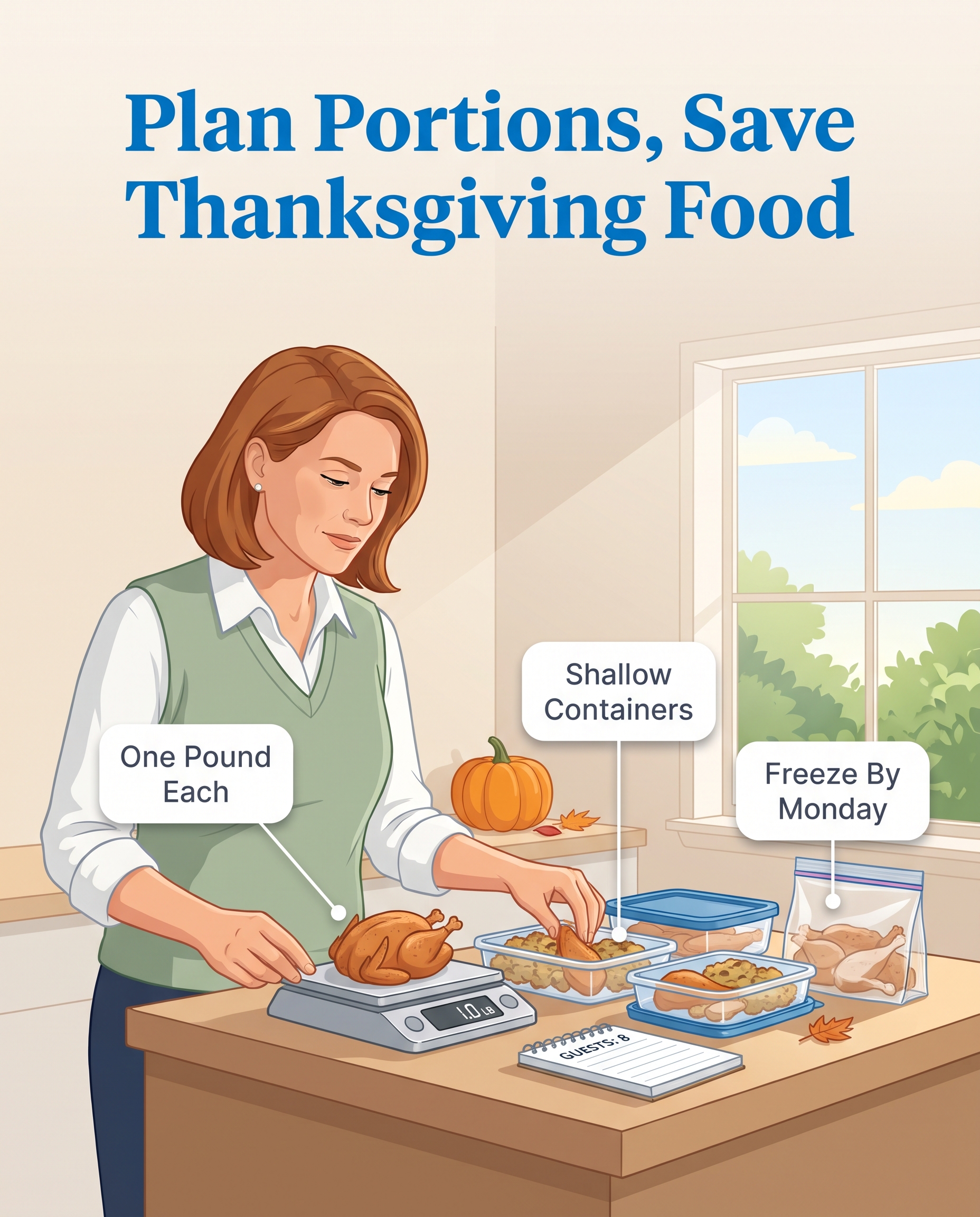
While sorting food scraps is a wonderful safety net for the environment, learning how to reduce food waste on Thanksgiving before it ever reaches the bin saves you both time and grocery money. Preventing surplus food starts before you even push a cart down the supermarket aisle, and continues right through dessert cleanup.
- Right-Size Your Holiday Menu: Stick to the classic rule of thumb of buying one pound of turkey per guest (or 1.5 pounds per person if you want generous weekend sandwiches). Interactive online tools like Save the Food’s Guest-imator can also help you calculate exact side dish portions based on how many people are coming to dinner.
- Ask Guests to Bring Reusable Containers: Let your family and friends know ahead of time to pack a few reusable storage containers in their car. Sending everyone home with a personalized Thanksgiving care package is much better than letting 12 days of leftover casseroles spoil in the back of your fridge.
- Follow the Food Safety Rules: It hurts to throw away good food simply because it sat out while everyone watched football. According to the USDA’s Thanksgiving food safety guide, refrigerate perishable leftovers within two hours, or within one hour when temperatures exceed 90°F. Keep hot foods at 140°F or above and cold foods at 40°F or below. Divide leftovers into shallow containers and use refrigerated leftovers within three to four days.
Money-Saver
Scaling your grocery list to one pound of turkey per guest and freezing leftover portions by Monday can help you manage your post-holiday grocery bills while keeping edible food out of the bin.
Turning Your Holiday Cleanup Into Nutrient-Rich Soil
You don’t have to run a commercial zero-waste kitchen to make a practical impact this holiday season. Simply applying a few smart Thanksgiving composting tips — like separating plain prep peels from buttery plate leftovers, verifying what your municipal green bin accepts, and keeping fibrous scraps out of your drains — will protect your home’s plumbing and reduce the food scraps you send to the trash. Better yet, all those vegetable trimmings and dry autumn leaves you layer into your bin after the feast will continue to break down over the cold winter months, eventually rewarding you with dark, nutrient-packed compost for your garden beds.
Frequently Asked Questions About Thanksgiving Composting Tips
If you are navigating the holiday cleanup rush, you probably have a few lingering questions about what to toss and what to save. Here are the answers to some of the most common holiday composting queries.
Can You Compost Turkey Bones and Skin?
Can You Compost Mashed Potatoes and Stuffing?
Are Cranberry Sauce and Citrus Peels Safe for Backyard Compost?
Can You Put Paper Napkins and Paper Plates in the Compost Bin?
How Do I Stop My Compost Bin From Smelling After a Big Holiday Meal?
What Should I Do With Leftover Cooking Oil From Deep-Frying a Turkey?
About the Author

David has been an integral part of some of the biggest utility sites on the internet, including InMyArea.com, HighSpeedInternet.com, BroadbandNow.com, and U.S. News. He brings over 15 years of experience writing about, compiling and analyzing utility data.

Claudio is a sustainability-focused writer with a background in Anthropology and Psychology from NC State University. He has spent over 15 years working in writing, interpretation, and translation, driven by a deep interest in how human culture shapes the environment. Today, he shares his curiosity with readers by writing about sustainable living solutions and the connection between everyday choices and environmental impact.