

Plan Your Menu, Choose Appliances Wisely, and Handle Leftovers Safely to Reduce Holiday Waste and Energy Use
Key Takeaways
- Plan portions and check your pantry before shopping to reduce food waste and unnecessary spending.
- Match each dish to a suitable appliance and coordinate oven use to avoid unnecessary energy consumption.
- Store leftovers promptly and keep grease out of drains while following your local recycling and composting rules.
Hosting Thanksgiving in a new home brings an exciting rush of warm ovens, clinking glasses, and family chaos. While preparing a massive holiday meal requires significant water and energy, you don’t have to ditch the turkey or lecture your relatives to host an eco-friendly celebration. We’ve rounded up practical ways to help first-time hosts prevent food waste, choose suitable cooking appliances, and handle holiday cleanup according to local utility rules.
How to Prepare for Thanksgiving and Reduce Waste Before You Shop
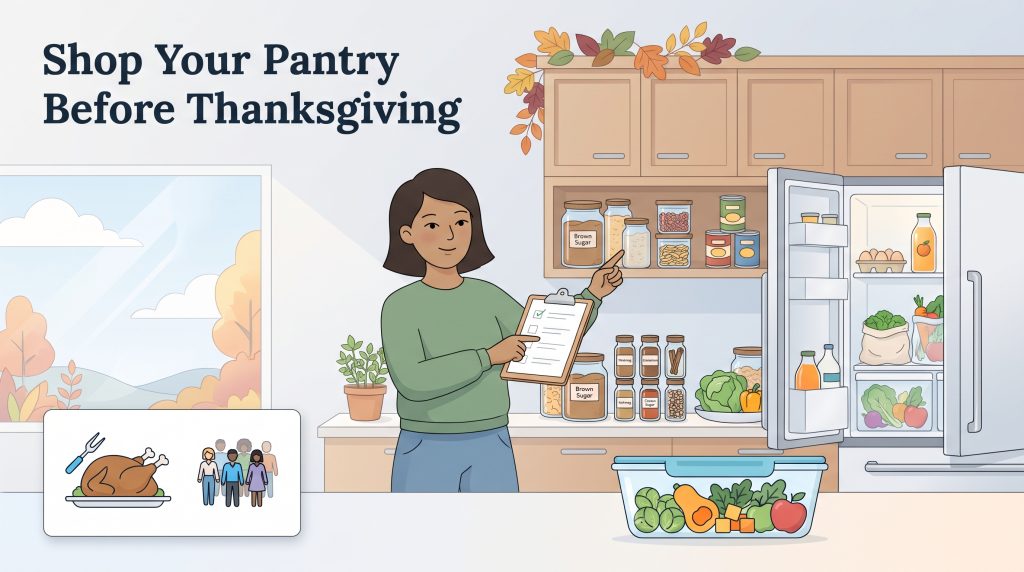
Smart holiday hosting starts long before Thursday morning arrives. Preparing your kitchen and auditing your pantry are the most effective ways to trim your grocery budget while managing the resources needed for your meal.
Follow a First-Time Host Preparation Checklist
Consider these quick preparation steps before finalizing your grocery run:
- Check your oven capacity and locate the appliance manuals.
- Make refrigerator space without discarding usable food.
- Check your refrigerator temperature and find a food thermometer.
- Confirm trash, recycling, and organics pickup changes for the holiday.
- Ask guests about dietary needs and leftover containers.
- Coordinate dishes to avoid duplication.
Right-Size Your Portions and Shop Your Pantry First
Holiday waste actually begins weeks before the feast when hosts panic-clean their refrigerators to make room for bulky platters. Instead of doing a frantic Wednesday purge, plan to “eat down” your refrigerator and freezer the week prior. Audit your baking cabinet and spice racks before writing your grocery list so you don’t accidentally buy a third jar of nutmeg or an extra bag of brown sugar. Choose your turkey size based on the number of guests, whether you’re buying a whole bird or a breast, and how many leftovers you actually want. Use a reputable portion planner rather than automatically buying the largest bird that barely fits on your refrigerator shelves.
Design a Low-Carbon Footprint Menu With Seasonal Ingredients
Nobody is asking you to banish the turkey from your table, though balancing your menu is a smart strategy. Add more plant-forward dishes, choose seasonal produce when practical, and buy quantities you’ll use. Local shopping can support nearby growers, but it doesn’t automatically mean a lower carbon footprint. Load your table with roasted Brussels sprouts, caramelized butternut squash, hearty autumn greens, and spiced apples. Highlighting plant-forward side dishes is an environmentally mindful choice that brings vibrant color to your spread and can help you manage costs at the grocery checkout.
Money-Saver
Assign specific side dishes to your guests potluck-style and ask them to bring their creations in reusable containers. They can take those same containers back home filled with leftovers, helping you coordinate the meal without wasting extra food.
Smart Cooking Habits to Manage Energy Use and Maintain Food Safety
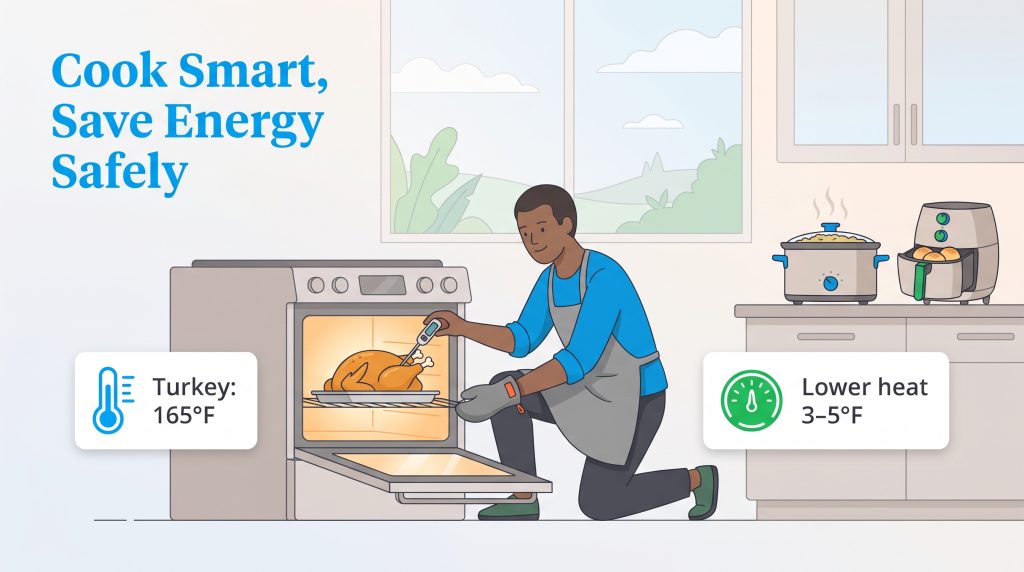
When you cook a large meal, your kitchen appliances draw substantial energy. Using smart cooking habits can help you manage your home electricity usage and natural gas consumption during the holiday.
Delegate Side Dishes to Small Countertop Appliances
To use less electricity while cooking, choose the right tool for each dish. Electric ovens draw substantial power while their heating elements are on, but actual electricity use depends on the model, temperature, preheating, and how often the elements cycle. Shifting side dishes to small countertop appliances is a brilliant energy-saving option that also frees up precious oven rack space. Use a slow cooker to keep already-hot mashed potatoes warm at a safe temperature, a toaster oven or air fryer to crisp up dinner rolls, and an electric pressure cooker to simmer cranberry sauce or homemade turkey stock. If your new kitchen features an induction cooktop, put those burners to work! Induction transfers heat directly to compatible cookware and can use less energy than other cooking methods for some tasks.
Holiday Cooking Appliance Decision Aid
| Cooking Task | Appliance to Consider | Important Limitation |
|---|---|---|
| Roast a whole turkey | Full-size oven | Follow safe cooking instructions and check internal temperature. |
| Cook a small side dish | Countertop oven or air fryer | Repeated batches may reduce the energy advantage. |
| Reheat a small portion | Microwave | Use a microwave-safe container and heat evenly. |
| Hold already-hot food | Suitable slow cooker or warming appliance | Maintain a safe holding temperature. |
Master Oven Efficiency With Smart Baking Habits
When you do fire up the big oven, a little coordination goes a long way toward cutting wasted heat. Follow these three simple kitchen rules to maximize your oven’s efficiency:
- Batch-bake your sides: Group casseroles like sweet potatoes, green bean casserole, and stuffing that all bake around 350 degrees Fahrenheit so they can cook simultaneously on staggered racks.
- Switch to glass or ceramic baking dishes: Follow your recipe and the bakeware manufacturer’s temperature guidance when switching pan materials.
- Use the oven light instead of the door: Use the oven window to check on your food to avoid losing heat.
Prioritize Food Safety While Preparing Your Meal
Handling large poultry and hot dishes requires careful attention to food safety. Always follow USDA safe food handling guidelines to protect your guests. Use a food thermometer to ensure your turkey reaches an internal temperature of 165 degrees Fahrenheit. Once the food is out of the oven, ensure hot-held dishes remain at 140 degrees Fahrenheit or above until you serve them.
Adjust Your Thermostat Before the House Fills Up
If cooking and guests make your home warmer, lower the heating setpoint slightly while keeping everyone comfortable. Don’t block vents or turn off required kitchen ventilation to retain heat. Program your smart thermostat, or manually dial your thermostat down by three to five degrees Fahrenheit, about an hour before your company arrives. Your heating system gets a well-deserved break, your guests won’t overheat in their holiday sweaters, and you save money effortlessly.
Pro Tip
Plan ahead and thaw your frozen turkey in the refrigerator at 40 degrees Fahrenheit or below. Allow approximately 24 hours of thawing time for every four to five pounds of meat, and place the bird on a tray to prevent raw juices from contaminating other food.
Sustainable Thanksgiving Decorations and Tableware That Elevate Your Space

Setting a memorable holiday table doesn’t require buying plastic autumn garlands or mountains of throwaway plates that end up in a landfill by Friday morning. Choosing sustainable Thanksgiving decorations and reusable place settings makes your dining room feel warm and inviting while minimizing your household waste.
Forage Your Centerpiece and Decorate With Edible Gourds
Decorate your table with natural items you can eat or compost, and choose unscented, zero-energy decorations when possible. Arrange whole sugar pumpkins, winter squash, bowls of ruby-red pomegranates and clementines, and pinecone clusters gathered right from your own yard or somewhere collecting is permitted. If you want your new home to smell like autumn, simmer a small pot of leftover apple peels, cinnamon sticks, star anise, and whole cloves in a mini slow cooker for a natural, zero-waste holiday aroma.
Skip Single-Use Plastics — Or Choose Certified Compostable Tableware
Using real ceramic plates, metal forks, and washable cloth napkins is the easiest secret to pulling off a zero-waste Thanksgiving that feels truly special. Of course, if you recently moved in and don’t own 14 matching dinner plates, don’t stress. Borrow a stack of plates and extra chairs from a friendly neighbor, or visit a local thrift store to grab intact, food-safe plates for just a few dollars. If you need disposable plates, look for BPI-certified compostable bamboo or molded fiber (bagasse) tableware, which serve as a sturdy, eco-conscious alternative. Keep in mind that certified compostable plates generally require appropriate commercial composting conditions. Check whether your local organics program accepts the exact product before buying it, as many programs do not accept compostable serviceware, and they typically do not belong in conventional recycling bins.
Smart Cleanup Habits: Dishwashers, Plumbing Protection, and Composting
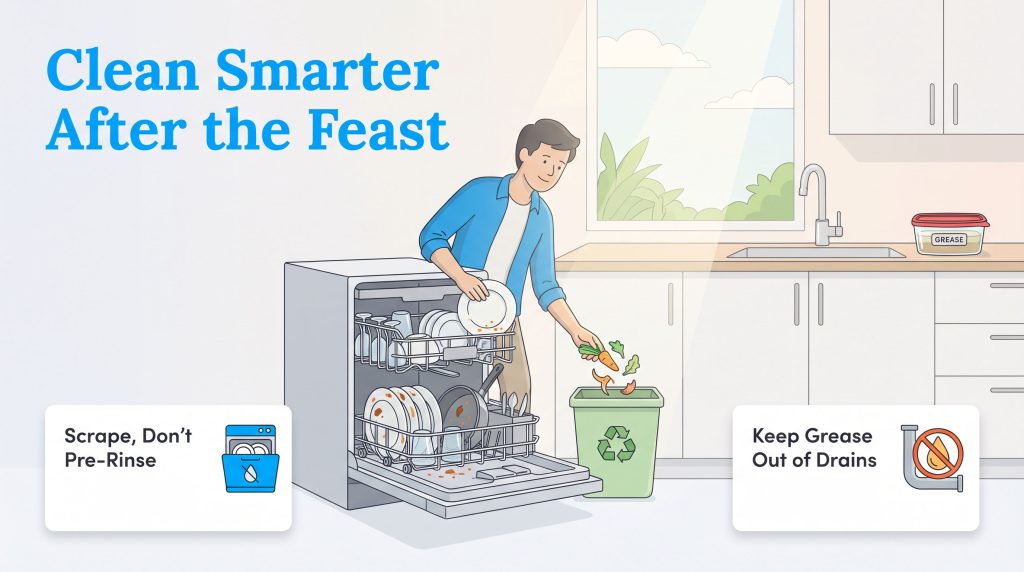
Once the pie plates are empty, how you handle the mountain of dirty dishes and food scraps determines your holiday’s environmental impact. Adopting smart home water conservation habits and managing household waste properly will make your cleanup easier and help prevent plumbing issues.
Let Your ENERGY STAR Dishwasher Do the Heavy Lifting
Many people assume scrubbing a mountain of holiday pots and platters by hand is the greener route, but that’s a classic kitchen myth. Running your kitchen faucet for 30 minutes wastes gallons of hot water and forces your water heater to work overtime. Simply scrape heavy food scraps into the compost or trash without pre-rinsing, then load your dishwasher appropriately. Running a full, properly loaded ENERGY STAR certified dishwasher uses roughly three to four gallons of water per cycle and about half the energy of washing dishes by hand. Remember to select the “air dry” or “no-heat dry” button at the end of the cycle to trim even more electricity use.
Protect Your Garbage Disposal and Drains
When you’re clearing the counters in your home, keep these notorious holiday enemies far away from your kitchen sink and garbage disposal:
- Turkey drippings, butter, and gravy: Let grease cool, collect it in a suitable heat-safe container, and dispose of it according to local rules. Never pour fats, oils, or grease down the drain.
- Potato peels and sweet potato skins: Starchy vegetable peels can jam or damage your disposal. Always follow your garbage disposal manufacturer’s instructions for what can safely go down the drain.
- Stringy celery, onion skins, and poultry bones: Fibrous stalks and hard bones should always go in the trash or an approved organics bin.
Turn Scraps Into a Soil Amendment by Composting
When organic food waste sits in a landfill, it breaks down without oxygen and releases potent methane gas. Before you toss anything out, put your turkey carcass and clean vegetable trimmings into a slow cooker with water to simmer a rich homemade bone broth. From there, follow the EPA’s guidelines for composting at home to turn your remaining scraps into a nutrient-rich soil amendment. When composting in a standard backyard bin, toss in raw potato peels, carrot tops, apple cores, coffee grounds, crushed eggshells, and uncoated, unbleached paper napkins free of unsuitable contamination. Be sure to balance your raw vegetable scraps with dry “brown” material, such as dry leaves or suitable shredded cardboard. Keep turkey bones, leftover meat, buttery mashed potatoes, dairy, and gravy out of your backyard pile so you don’t attract rodents. However, some municipal curbside organics bins accept plain cooked plant foods, meat, dairy, and bones — just check your local waste utility rules first.
Start Green Thanksgiving Traditions After the Meal
Winding down the evening is the perfect moment to start new green Thanksgiving traditions with your guests. Set up a leftover station using reusable glass containers before dessert is even served. Refrigerate perishables within two hours, or one hour if the temperature is above 90 degrees Fahrenheit. Divide large amounts of leftovers into shallow containers for faster cooling in the fridge, and plan to eat or freeze refrigerated leftovers within three to four days. Freeze any extra shredded turkey in individual portions for easy December soups and casseroles. Finally, consider skipping the hectic shopping mall rush on Friday morning in favor of a family walk at a local state park or neighborhood nature trail.
Heads Up
Check whether your recycling program accepts aluminum foil pans first. If it does, remove all food residue and follow its preparation instructions. If it does not, keep the pan out of curbside recycling even when it is clean. Invest in a durable steel roasting pan that will last for decades for a better long-term option.
Making Sustainability Your New Favorite Holiday Tradition
Bringing sustainable Thanksgiving ideas into your kitchen isn’t about chasing perfection or giving up the classic comfort dishes your family loves. It’s all about making a few smart adjustments to how you shop, run your appliances, and clean up so you can manage your energy and water use without adding extra stress to your schedule. Whether you try just two tips from this guide or overhaul your entire hosting routine in your new home, making mindful choices is a tradition worth keeping.
Frequently Asked Questions About Sustainable Thanksgiving Ideas
If you are hosting your first holiday meal or looking for ways to streamline your kitchen routine, you likely have a few questions. Here are answers to common questions about managing your home’s utilities and waste during Thanksgiving.
How Much Electricity Does Cooking a Thanksgiving Dinner Use?
Is It More Eco-Friendly to Wash Thanksgiving Dishes by Hand or Use the Dishwasher?
Can You Put Turkey Bones and Potato Peels in the Garbage Disposal?
Are Disposable Aluminum Turkey Roasting Pans Recyclable?
What Thanksgiving Leftovers Can Be Composted at Home?
How Can I Host a Zero-Waste Thanksgiving on a Tight Budget?
About the Author

David has been an integral part of some of the biggest utility sites on the internet, including InMyArea.com, HighSpeedInternet.com, BroadbandNow.com, and U.S. News. He brings over 15 years of experience writing about, compiling and analyzing utility data.

LaLeesha has a Masters degree in English and enjoys writing whenever she has the chance. She is passionate about gardening, reducing her carbon footprint, and protecting the environment. She also recently served as President of the Board for City Sprouts (a community garden).