

Implementing eco-friendly disposal habits after Halloween keeps local recycling streams clean while lowering your household’s environmental impact.
Key Takeaways
- Composting a jack-o’-lantern helps reduce methane-producing organic waste in landfills.
- Standard recycling bins cannot process candy wrappers, but specialized mail-in programs and local drop-offs can recycle them.
- Properly disposing of e-waste from broken animatronics and string lights prevents batteries and other electronics from creating fire hazards or contaminating the environment.
From candy wrappers to softening pumpkins and broken plastic décor, the post-holiday cleanup can create more trash than you expect. But leaning into a few straightforward Halloween recycling tips can easily transform that daunting pile of refuse into an opportunity to maintain an eco-friendly home without the heavy guilt trip. We put together these practical strategies to help you ditch the waste effectively, keeping those local recycling streams pristine and your household running sustainably.
Quick Halloween Recycling Guide
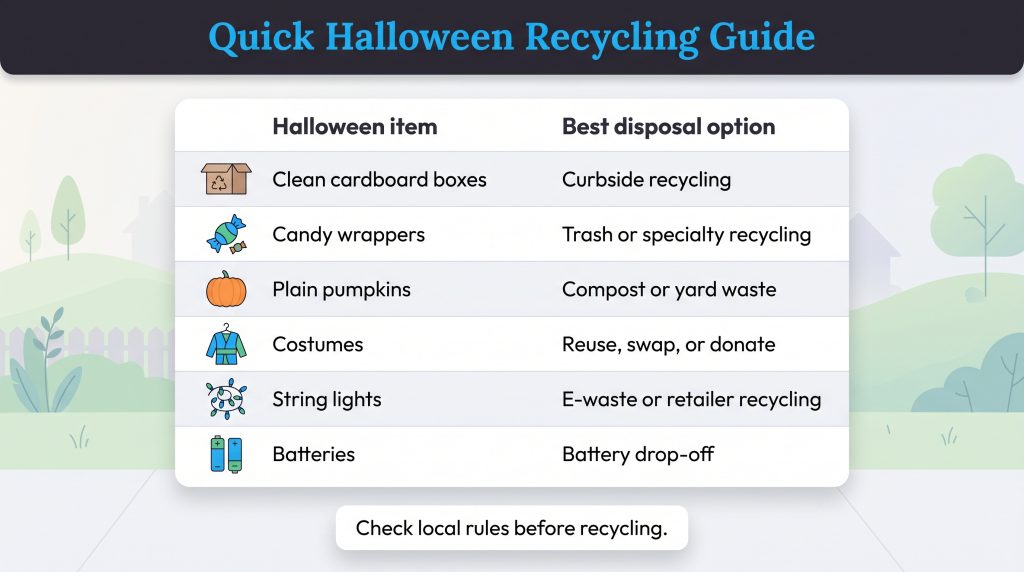
Knowing what items go into your curbside bin and which ones require special drop-offs is the foundation of an eco-friendly Halloween. Use this quick reference guide to sort your post-holiday waste effectively and minimize your environmental impact.
| Halloween Item | Best Disposal Option | Important Note |
|---|---|---|
| Clean cardboard boxes | Curbside recycling | Flatten boxes and remove non-paper packing materials when possible. |
| Candy wrappers | Trash or specialty recycling | Most mixed-material wrappers do not belong in curbside bins. |
| Plain pumpkins | Compost or yard waste | Remove candles, paint, glitter, and decorations first. |
| Costumes | Reuse, swap, or donate | Most costume fabrics are not curbside recyclable. |
| String lights | E-waste or retailer recycling | Never place cords or lights in curbside recycling. |
| Batteries | Battery drop-off | Remove batteries before disposing of electronic decorations. |
What Actually Belongs in the Recycling Bin
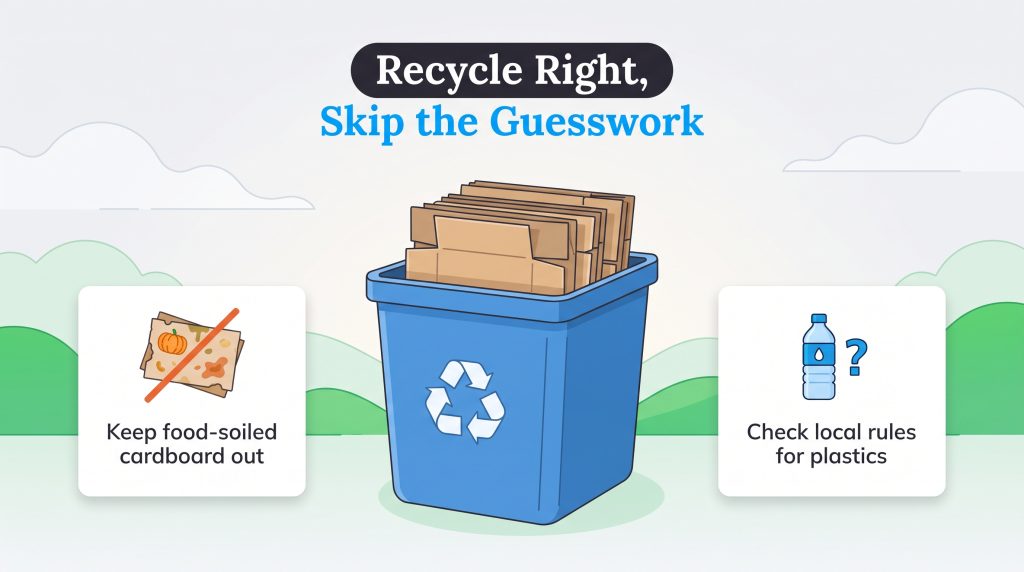
Navigating the cleanup process often leads to “wish-cycling,” which happens when you toss questionable items into the bin simply hoping they are recyclable. Unfortunately, this well-intentioned habit can contaminate local recycling streams, causing widespread issues that force municipalities to send entire truckloads of otherwise good materials straight to the landfill. Knowing exactly what goes where makes a significant difference in keeping our neighborhood recycling programs functioning efficiently.
🌱 Eco Edge: Food residue can contaminate paper and cardboard, making those materials harder or impossible to recycle. Keeping messy food waste — like gooey pumpkin guts and seeds — out of your cardboard recycling bin protects the entire load.
Cardboard Boxes and Paper Packaging
Between shipping boxes for online costume orders and last-minute party supply deliveries, cardboard piles up incredibly fast. Always flatten these boxes to save space in the bin, and try to remove heavy plastic packing tape whenever possible. Soiled paper, however, plays by different rules. Those greasy pizza boxes from your quick Halloween night dinner absolutely cannot go into the recycling bin unless you tear away the oil-stained sections first.
Rigid Plastics and Candy Buckets
Moving toward a zero-waste Halloween means paying close attention to those novelty plastic buckets and rigid yard decorations. Before you toss a cracked faux tombstone into the blue bin, flip it over and check the resin identification code stamped inside the little triangle symbol. Many curbside programs focus on common containers like #1 and #2 bottles and jugs, but accepted plastics vary by location. Check your city or hauler’s recycling guide before placing rigid Halloween plastics in the bin.
Handling Candy Wrappers, Costumes, and Other Tricky Waste
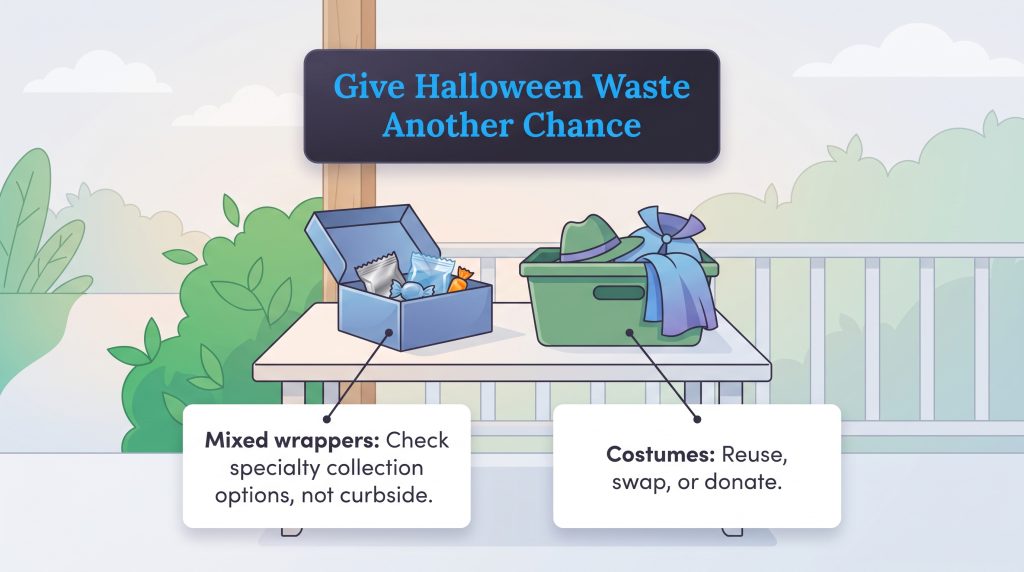
The bulk of the waste generated every October 31 comes from items that are notoriously difficult to process in standard single-stream recycling systems. We consistently see bins overflowing with mixed-material items and cheap fabrics that specialized sorting facilities simply aren’t equipped to handle. Understanding how to manage these tricky refuse categories helps you drastically cut down on your household’s overall landfill contribution.
Why You Can’t Recycle Halloween Candy Wrappers at Home
If you want to recycle Halloween candy wrappers, you’ll usually need to look beyond your standard curbside bin. These small, crinkly packages are almost always manufactured using a fusion of different materials — typically a blend of thin plastic and aluminum foil — which standard municipal sorting facilities cannot separate. Instead of wishing them away in the recycling, you can box them up and send them to specialized mail-in programs, or save them in a jar for specific local drop-off events hosted by environmental groups. Programs such as TerraCycle may be available, depending on current offerings and location.
- Do: Collect your empty wrappers in a dedicated box for a mail-in recycling program.
- Do: Toss foil-only wrappers, like those from chocolate coins, into the recycling if balled up to at least two inches in diameter and if your local program accepts aluminum foil.
- Don’t: Throw mixed-material candy wrappers into your curbside recycling bin.
- Don’t: Leave loose wrappers blowing around the neighborhood streets or storm drains.
Donating and Upcycling Old Halloween Costumes
Textile waste spikes dramatically every autumn because most store-bought outfits consist of cheap, synthetic fabrics like polyester. You cannot recycle these materials in your standard curbside bins. Rather than chucking them out, it makes far more sense to wash and store them away for a future spooky season. If you are ready for a new look, swap outfits with neighbors next year or take the time to donate Halloween costumes to local thrift stores so another family can enjoy them.
How to Compost or Recycle Pumpkins Safely
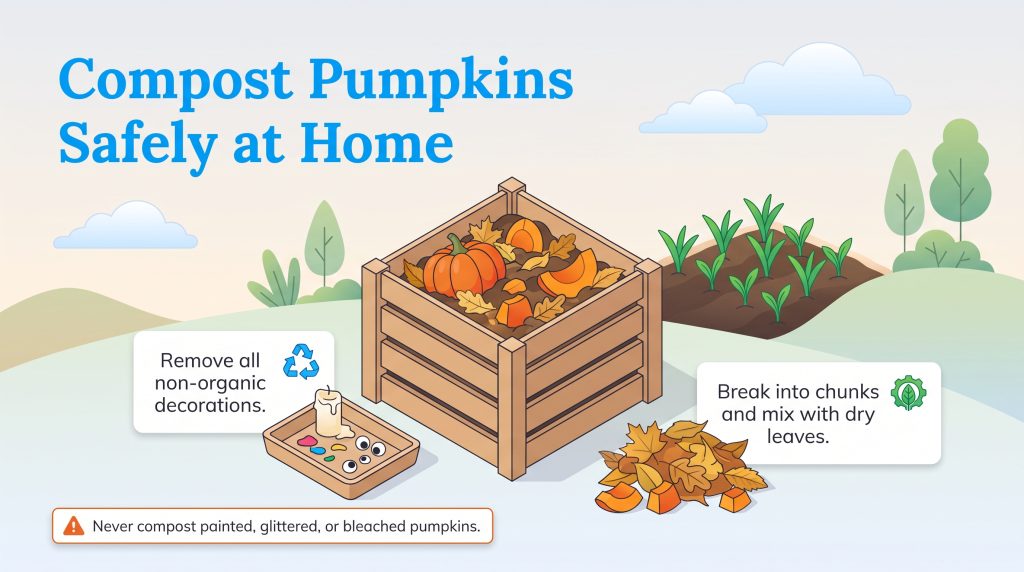
Tossing a rotting gourd into the municipal trash might seem harmless, but the environmental reality tells a different story. When heavy organic matter gets buried deep inside a landfill, it breaks down anaerobically and produces methane, which is a potent greenhouse gas that traps heat in the atmosphere. Learning how to compost a jack-o’-lantern at home is one of the easiest ways to keep seasonal food waste out of the landfill. Plus, figuring out how to recycle pumpkins naturally provides nutrient-dense soil for your spring garden beds.
Preparing Your Pumpkin for the Compost Pile
Taking a few extra minutes to prep your aging gourd ensures your compost stays healthy and balanced. Follow these straightforward steps to safely break things down:
- Remove all non-organic material like wax remnants, candles, artificial lighting inserts, and plastic googly eyes.
- Ensure the pumpkin hasn’t been painted with acrylics or treated with bleach, as these harsh chemicals ruin compost and harm local wildlife.
- Smash the pumpkin into smaller chunks to significantly speed up the natural decomposition process.
- Mix those pieces with plenty of brown materials, such as fallen autumn leaves, right inside your compost bin.
If you need more guidance on balancing greens and browns, checking out the EPA’s home composting guide offers excellent baseline instructions for beginners.
🚩 Heads Up: Paint, glitter, bleach, and other treatments can harm wildlife and contaminate compost, so decorated pumpkins should not be left outdoors for animals to eat.
How to Dispose of Halloween E-Waste and Lights
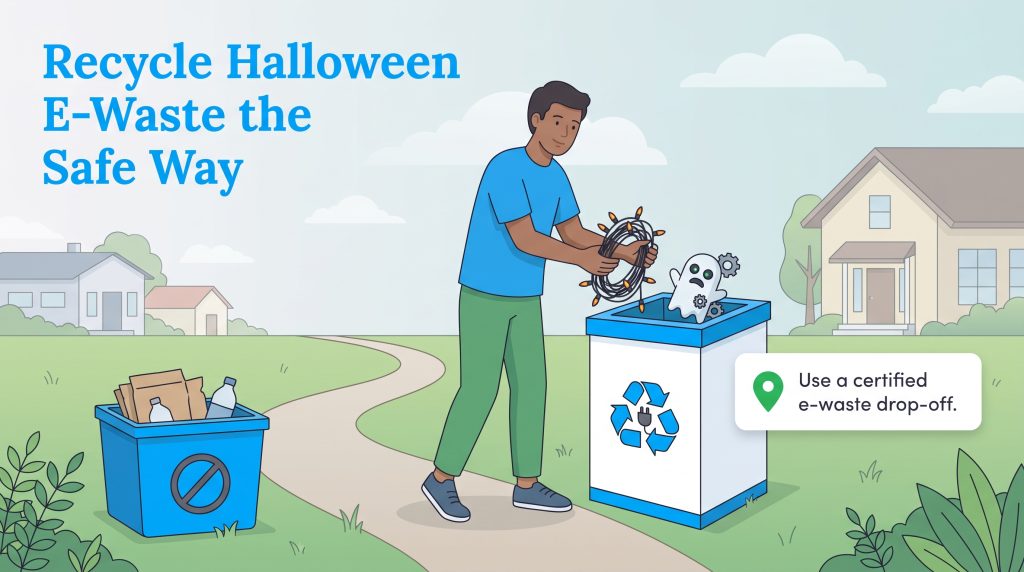
Modern neighborhood displays rely heavily on electricity, batteries, and intricate lighting to pull off those impressive haunts. While sustainable Halloween decorations are growing in popularity, plenty of households still lean on power-hungry, disposable electronics that eventually break down. Properly disposing of Halloween e-waste decorations prevents hazardous materials from contaminating the soil while keeping your home’s storage spaces free from leaking batteries.
Recycling Broken String Lights and Animatronics
Burnt-out string lights and glitchy, battery-operated animatronics officially classify as e-waste. Battery-powered decorations can contain batteries, circuit boards, wiring, plastics, and small electronic parts. Batteries, especially lithium-ion batteries, can create fire risks if crushed in trucks or sorting equipment. Never toss them into your blue bin. Instead, watch your municipal calendar for dedicated e-waste drop-off days, or call local hardware stores that routinely accept old lighting strands. Check your local rules before recycling e-waste, or explore the EPA’s electronics donation and recycling page for certified drop-off locations near your home.
How to Plan a Lower-Waste Halloween Next Year
Treating broken lights as e-waste creates the perfect opening to rethink your overall energy footprint for the upcoming holidays. Planning ahead allows you to incorporate reusable décor, rechargeable batteries, and energy-efficient lighting into your seasonal setup.
Upgrading to LED Decorations
Ditching old, energy-hogging incandescent string lights and replacing them with highly efficient LEDs acts as a fantastic form of long-term waste reduction. Not only do modern lights last significantly longer — meaning less future trash — but they also pull a fraction of the electricity, shielding you from an unnecessarily high November utility bill.
💸 Money-Saver: According to verified LED lighting guidance from Energy.gov, LED lights use up to 75% less energy than traditional incandescent bulbs. This simple hardware swap directly benefits the local electrical grid while putting cash right back into your wallet.
Wrapping Up a Sustainable Spooky Season
Navigating your post-holiday cleanup with the environment in mind really doesn’t require drastic lifestyle changes or endless hours of sorting. By intentionally managing where our trash goes, we make a significant collective impact on local waste systems. Striving for an eco-friendly Halloween simply comes down to choosing better disposal methods for tricky wrappers, composting what the earth can reclaim, and keeping hazardous electronics out of the landfill. Let this be the foundation for an even greener, more energy-efficient celebration next year.
Frequently Asked Questions About Halloween Recycling
These quick answers cover the Halloween cleanup questions readers ask most often. Always check your local recycling program before placing unusual seasonal items in your curbside bin.
Are candy wrappers recyclable in curbside bins?
How do I recycle pumpkins if I don’t have a compost pile?
Can I put fake spider webs in the recycling bin?
What is the best way to dispose of face paint and makeup?
How do I recycle broken battery-operated decorations?
About the Author

LaLeesha has a Masters degree in English and enjoys writing whenever she has the chance. She is passionate about gardening, reducing her carbon footprint, and protecting the environment. She also recently served as President of the Board for City Sprouts (a community garden).

David has been an integral part of some of the biggest utility sites on the internet, including InMyArea.com, HighSpeedInternet.com, BroadbandNow.com, and U.S. News. He brings over 15 years of experience writing about, compiling and analyzing utility data.