

Preparing your home for cooler weather can help lower heating bills, reduce drafts, and make your space more comfortable before winter arrives.
Key Takeaways
- Conducting a home energy audit is a great first step to identify existing drafts and insulation gaps in your new place.
- Optimizing your thermostat settings for fall can save money and ensure your HVAC system runs efficiently.
- Draft proofing windows and doors offers immediate financial and eco-conscious benefits for both renters and homeowners.
Moving into a new place in the fall gives you a short but valuable window to cut drafts, tune up heating habits, and avoid surprise utility bills when winter arrives. Whether you own your home or rent, these fall energy saving tips can help you spot common efficiency problems, make low-cost fixes, and choose smart upgrades that keep your space comfortable without wasting energy. We know that navigating an unfamiliar HVAC unit or older windows can feel daunting right after a move, but adopting a few practical, environmentally mindful habits before the first frost hits ensures your residence remains cozy and cost-effective all season long.
| Fall Energy Task | Best For | Cost Level | Estimated Effort |
|---|---|---|---|
| Seal window and door drafts | Immediate comfort improvements | Low (under $25 per door) | One afternoon |
| Replace HVAC filter | Better airflow and indoor air quality | Low ($10 to $40) | 10 minutes |
| Adjust thermostat schedule | Lower heating costs | Free | 15 minutes |
| Schedule HVAC tune-up | Preventing winter breakdowns | Medium | One appointment |
| Add attic insulation | Long-term efficiency | Medium to high | DIY or contractor |
Start With a Comprehensive Home Energy Audit
Moving into a new space means inheriting the previous owner’s or tenant’s maintenance habits, which often fall short when it comes to insulation and efficiency. Scheduling a professional home energy audit provides a customized baseline of your property’s current performance, pinpointing hidden air leaks or aging ductwork that you might otherwise miss. Some electric and natural gas utilities offer discounted or no-cost home energy assessments, especially before peak heating season. If you rent, ask your property manager whether the building has had a recent energy assessment or HVAC service. While hiring an expert gives you a comprehensive report complete with thermal imaging, you can also perform a basic DIY walk-through to spot glaring issues. Taking the time to assess your property’s vulnerabilities now will eventually help you reduce your overall electric bill once the temperatures plummet.
💡 Pro Tip: To quickly check for sneaky drafts yourself, use an incense stick, smoke pencil, or your hand to check for airflow around windows and doors on a breezy day. Avoid using an open flame near curtains, trim, or insulation to maintain a safe environment while testing.
Compare Low-Cost Fixes Before Big Upgrades
Before replacing a furnace, windows, or major appliances, start with low-cost fixes that reduce waste right away. Air sealing, thermostat scheduling, filter changes, and curtain habits often deliver comfort improvements without a major upfront investment. Once you have handled the basics, use utility bills, audit results, and repair estimates to decide whether bigger upgrades are actually necessary. Taking a cautious approach helps you protect your budget while slowly working toward a more sustainable household footprint.
Optimize Thermostat Settings for Fall Savings
Finding the right balance between comfort and efficiency is the easiest way to manage your utility costs as the days grow shorter. Nailing your ideal thermostat settings for fall requires a bit of strategy, but the financial payoff is often worth the effort. For anyone researching how to lower heating bill costs without sacrificing comfort, the data points clearly toward behavioral adjustments. According to the U.S. Department of Energy, setting your thermostat back seven to 10 degrees from its normal setting for eight hours a day can save up to 10% a year on heating and cooling costs.
New residents can easily automate these energy-saving options by installing a smart thermostat. These intuitive devices learn your daily schedule and automatically reduce energy consumption while you sleep or work at the office, taking the guesswork out of sustainable temperature management. However, if you have a heat pump, avoid extreme temperature setbacks unless your system or thermostat supports efficient recovery. Large setbacks can trigger backup heat in some systems, which may use more energy than you save.
Stop the Chills by Draft Proofing Windows and Doors
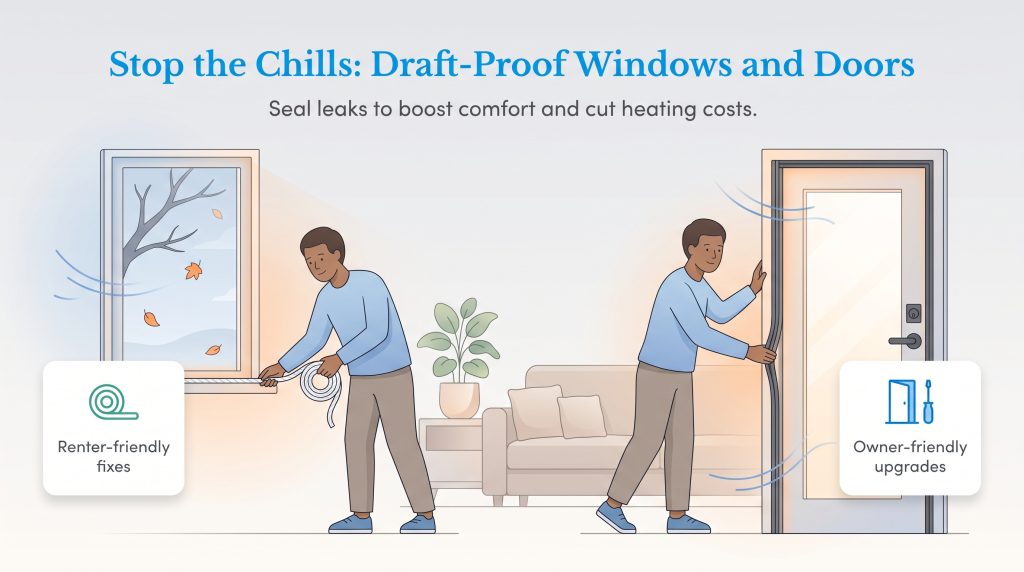
You can quickly elevate your home’s comfort level and block out the autumn chill with a straightforward weekend weatherization project. Draft proofing windows and doors offers immense financial incentives by keeping your expensive heated air locked tightly inside your living space. Sealing up the leaks around your building envelope ensures your furnace does not have to work overtime to maintain a stable indoor climate. The Department of Energy’s official air sealing page stresses that stopping these drafts is one of the most cost-effective ways to cut heating and cooling costs. Whether you own your home or are just renting for the year, targeting specific weak points provides an immediate eco-conscious victory.
- Renter-friendly fixes: Utilize draft stoppers, apply removable rope caulk along leaky frames, hang thermal curtains, or install foam outlet gaskets on exterior walls if your landlord allows it.
- Owner-friendly window updates: Apply a fresh bead of silicone caulk to seal visible cracks along the stationary joints.
- Exterior doors: Install heavy-duty weatherstripping around the door jambs (often under $25 a door) and attach a sturdy draft sweep ($10 to $30) along the bottom threshold.
- Baseboards and floors: Use clear caulk to close up any shrinking gaps where the flooring meets the trim.
- Attic hatches: Attach foam weatherstripping tape around the lip of the access panel to stop warm air from escaping upward into the attic.
Use This Winterize Home Checklist Before the First Freeze
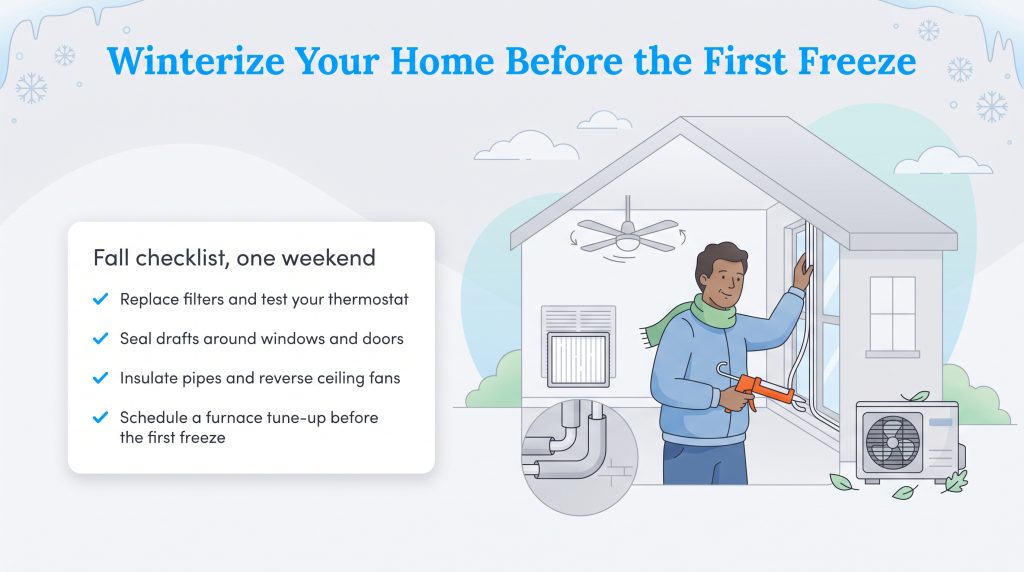
Proactive home maintenance goes far beyond simply paying the utility bills or rent each month. Establishing a solid fall home maintenance checklist empowers you to catch minor mechanical hiccups before they snowball into expensive mid-winter emergencies. Keeping a reliable winterize home checklist fresh in your mind ensures you address essential seasonal chores that prolong the lifespan of your major appliances. By dedicating a single Saturday afternoon to these hands-on tasks, you protect your living space and optimize your daily energy usage.
- Replace your HVAC filter to improve indoor air quality and system efficiency.
- Test your thermostat to ensure it accurately reads the ambient room temperature.
- Seal visible window and door gaps using weatherstripping, caulk, or renter-friendly draft stoppers.
- Check attic insulation levels and air seal the hatch if you have access.
- Reverse ceiling fans to spin clockwise on low, gently pushing warm air downward.
- Schedule a professional tune-up for your furnace or heat pump.
- Insulate exposed pipes in unheated areas like basements or crawl spaces where freezing is a risk.
- Clear leaves and debris from the perimeter of outdoor HVAC units.
- Check fireplace dampers to ensure they close tightly when not actively in use.
- Review utility plans to secure better rates if you live in a deregulated energy market.
Reverse Ceiling Fan Direction for Winter
The simple physics of warm air rising means your furnace’s heat naturally hovers near the ceiling. In many homes, setting a ceiling fan to rotate clockwise on low can gently push warm air down from the ceiling. The comfort boost is usually modest, but it can help you feel warmer without immediately raising the thermostat. Always check your fan manufacturer’s instructions before flipping the switch, as blade pitch and directional controls can vary slightly between models.
Service Your HVAC and Furnace Systems
A struggling heating unit drains power and inflates your utility costs unnecessarily. Scheduling a professional tune-up before winter helps confirm that key components are clean, safe, and working as intended. If you rely on electric heating, staying on top of routine home electricity use keeps your system operating efficiently and safely.
💸 Money-Saver: Regularly replacing dirty air filters prevents your HVAC system from overworking, saving you significant money on monthly energy costs while improving your indoor air quality.
Replace Old Appliances Only When the Numbers Make Sense
Inheriting a basement full of outdated, rattling equipment is a common rite of passage for new residents. If your recently occupied space features an older heating system, rolling appliance replacements into your autumn energy saving tips can yield meaningful long-term savings. We always suggest looking for the familiar blue label when shopping for upgrades. ENERGY STAR certified products meet efficiency criteria set by the Environmental Protection Agency, but savings vary by product type. When replacing older appliances or HVAC equipment, compare the yellow EnergyGuide label and estimated annual energy use before you buy. Whether you are replacing a clunky washing machine or exploring efficient upgrades for your natural gas options for your home, modernizing your core household technology represents a smart step toward lower energy use. Before you purchase new equipment, check your utility provider’s website. Many providers offer rebates for smart thermostats, heat pump upgrades, and professional energy audits.
Embracing Sustainable Habits for a Cozier Winter
Transforming a new house or apartment into a comfortable home requires a blend of intentional care and forward-thinking habits. Proactive fall maintenance sets up your property for a green, undeniably budget-friendly winter season. Every small adjustment you make right now — from sealing up a drafty back door to swapping out an old furnace filter — compounds into meaningful financial and environmental savings down the road. By weaving these sustainable choices into your seasonal routine, you build a resilient home ready to weather any storm warmly.
Frequently Asked Questions About Fall Energy Saving Tips
Winterizing your home can feel overwhelming when you are also trying to unpack boxes and settle into a new routine. We have compiled answers to some of the most common questions new residents ask about optimizing their fall energy usage.
What Are the Best Thermostat Settings for Fall?
What Are the Best Fall Energy Saving Tips for Renters?
How Can I Lower My Heating Bill Without Replacing My Furnace?
Should I Lower My Thermostat at Night in the Fall?
Is a Professional Home Energy Audit Worth the Cost?
Are Smart Thermostats Worth It for Fall and Winter?
Does Draft Proofing Windows Really Save That Much Energy?
When Should I Start My Winterize Home Checklist?
About the Author

LaLeesha has a Masters degree in English and enjoys writing whenever she has the chance. She is passionate about gardening, reducing her carbon footprint, and protecting the environment. She also recently served as President of the Board for City Sprouts (a community garden).

Jared Evans is a licensed electrician and the owner of Full Circuit Electric in Omaha, Nebraska. As an expert reviewer for UtilitiesForMyHome.com, Jared uses his 10+ years of hands-on experience to ensure our electrical advice is safe, accurate, and easy to follow. Whether he's troubleshooting a complex wiring issue or sharing tips on green energy upgrades, Jared is dedicated to helping you power your home efficiently — and safely.