
Solar thermal technology offers a highly efficient way to reduce your monthly water heating bills by harnessing the power of the sun.
Key Takeaways
- Solar thermal systems capture the sun’s heat to warm water for your home, operating differently than solar panels that generate electricity.
- Homeowners can choose between active and passive systems, with options like flat plate or evacuated tube collectors depending on their climate.
- Installing a solar water heater can qualify you for a 30% federal tax credit, significantly lowering the upfront cost and speeding up your return on investment.
Most people immediately picture photovoltaic panels generating electricity when they think of solar power, but there is a more direct and often more efficient way to use the sun to lower your utility bills. Water heating is typically the second-largest energy expense in a home, accounting for a significant chunk of your monthly budget. A solar thermal system attacks this cost directly by using sunlight to heat your water rather than powering a heating element with expensive grid electricity or natural gas. This guide will explain exactly what these systems are, how much they cost to install in 2026, and help you determine if this technology is the right choice for your new home.
What Is a Solar Thermal System?
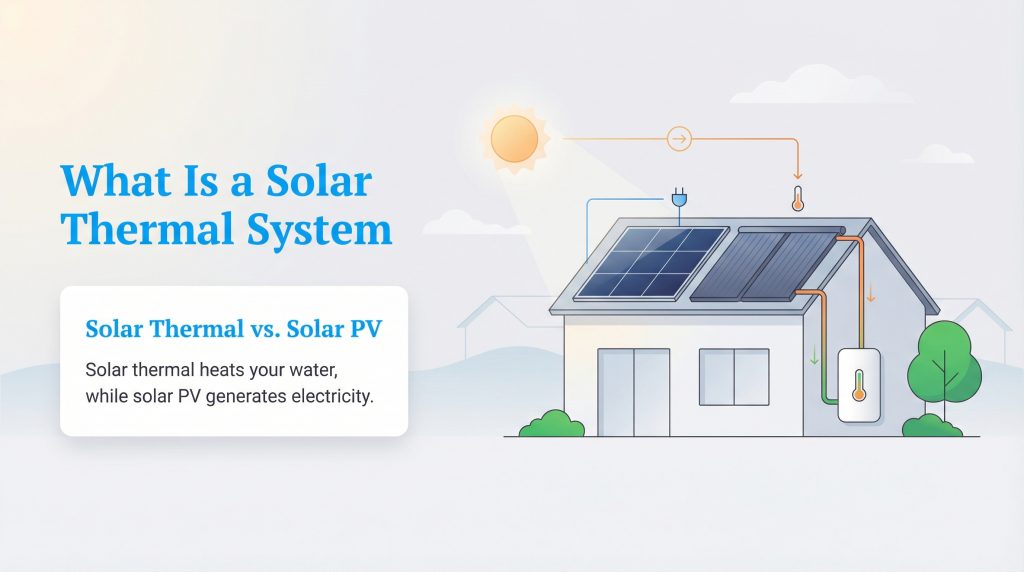
A solar thermal system is a technology that captures sunlight to heat water for domestic use. Unlike solar photovoltaic (PV) systems that convert sunlight into electricity, solar thermal systems simply absorb solar radiation to heat a transfer fluid. This hot fluid is then pumped through a heat exchanger in your water storage tank, giving you hot water for showers, laundry, and dishwashing. Because they are focused solely on heat capture, these systems are incredibly effective; solar thermal collectors can be up to 70% efficient at capturing solar radiation. Actual solar thermal efficiency depends on your climate, collector type, and system design, but it generally remains much higher than standard solar energy solutions like PV panels, which generally hover around 20% efficiency.
Solar Thermal vs. Solar Photovoltaic (PV)
It is important to understand the distinction between these two technologies so you can choose the right one for your energy goals. While a PV system can power your lights and appliances, a thermal system is a specialized workhorse dedicated to water heating. This solar thermal vs PV comparison helps clarify which system suits your needs. Some homeowners even opt for hybrid setups where a small PV array powers the pumps for the thermal system. In advanced applications, you might see hybrid PVT (photovoltaic thermal) collectors that generate both electricity and heat from the same footprint, maximizing energy production from limited roof space.
| Feature | Solar Thermal | Solar PV |
|---|---|---|
| Primary Function | Heats water directly | Generates electricity |
| Efficiency | High (up to 70%) | Moderate (15–23%) |
| Storage Method | Hot water tank | Battery or Grid |
| Space Needed | Less (2–3 collectors) | More (10+ panels) |
How Solar Water Heating Works
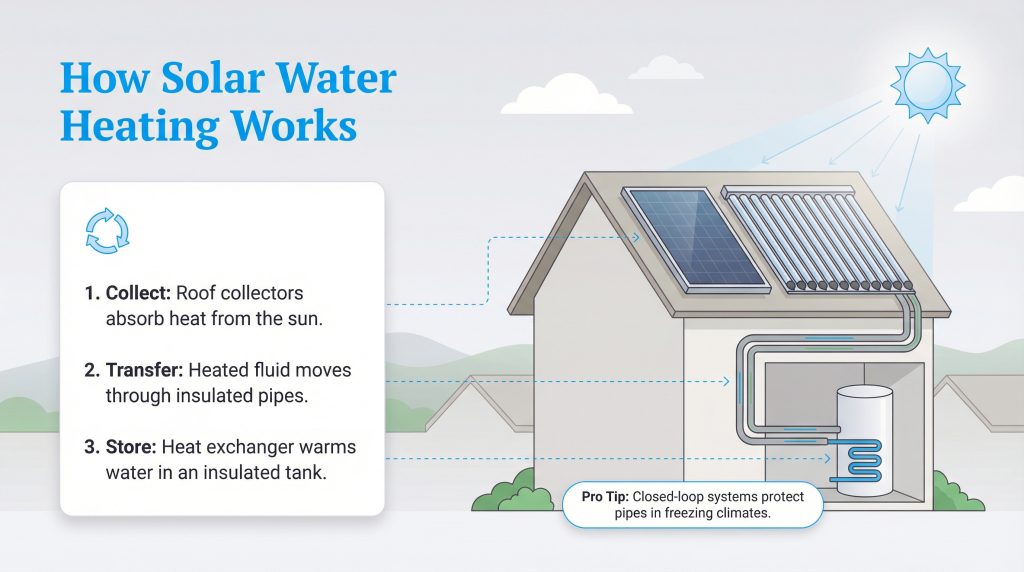
The mechanism behind solar water heating is straightforward and relies on three main steps: collection, transfer, and storage, forming a complete domestic solar hot water system. First, collectors mounted on your roof or ground absorb thermal energy from the sun. Second, a transfer fluid, often a mixture of water and glycol to prevent freezing, circulates through the collectors to pick up this heat and moves it down to your utility room. Finally, a heat exchanger transfers that thermal energy to the water in an insulated storage tank, keeping it hot until you turn on the tap.
Active vs. Passive Solar Thermal Systems
You will need to choose between an active or passive system based on your climate and budget. Active systems utilize electric pumps and controllers to circulate the fluid, making them more efficient and giving you greater control over the water temperature. Passive systems rely on gravity and natural convection to move water, which makes them cheaper and more reliable since they have no moving parts, but they are generally less efficient and can struggle in very cold climates.
Types of Collectors: Flat Plate vs. Evacuated Tube
The hardware you see on the roof comes in two primary forms. Flat plate collectors look very similar to standard solar panels; they are weatherproof boxes containing a dark absorber plate under a glass or plastic cover. They are generally cheaper and are excellent for moderate climates or summer applications like pool heating. Evacuated tube collectors feature rows of parallel transparent glass tubes. Each tube contains a vacuum that insulates the inner absorber, preventing heat loss. This makes evacuated tubes significantly more expensive but much better suited for cold climates and cloudy days where retaining heat is critical.
The Cost of Solar Thermal Systems in 2026
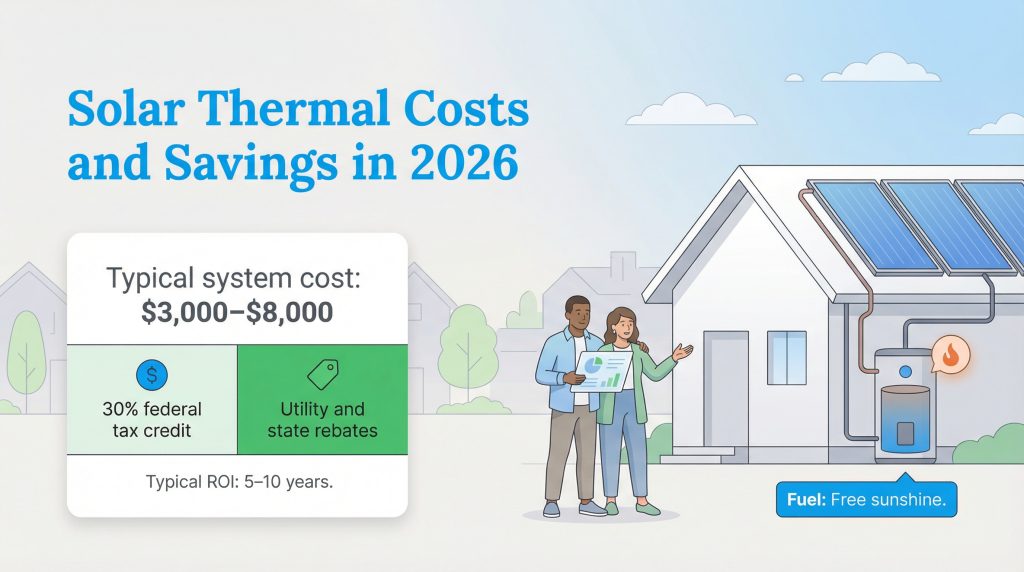
Investing in a solar thermal system involves a significant upfront cost, but the fuel, sunshine, is free forever. In 2026, the cost for a full domestic solar hot water system typically ranges between $3,000 and $8,000, depending on the size of the water tank and the type of collectors you choose. While this is higher than a standard gas or electric water heater, the savings on your monthly energy bill can be substantial, often leading to a return on investment (ROI) period of 5 to 10 years for many homes with moderate to high hot water use and average energy prices.
Solar Thermal Tax Credits and Incentives
The financial picture gets much brighter when you factor in incentives. Under the current Inflation Reduction Act guidelines, homeowners can claim a federal Investment Tax Credit (ITC) equal to 30% of the cost of the system, including equipment and labor. You can find more details on these credits at Energy.gov. This credit significantly lowers your net cost. Additionally, you should explore state-level incentives through the Database of State Incentives for Renewables & Efficiency (DSIRE) to see if your local government offers extra rebates.
Installation and Maintenance Realities
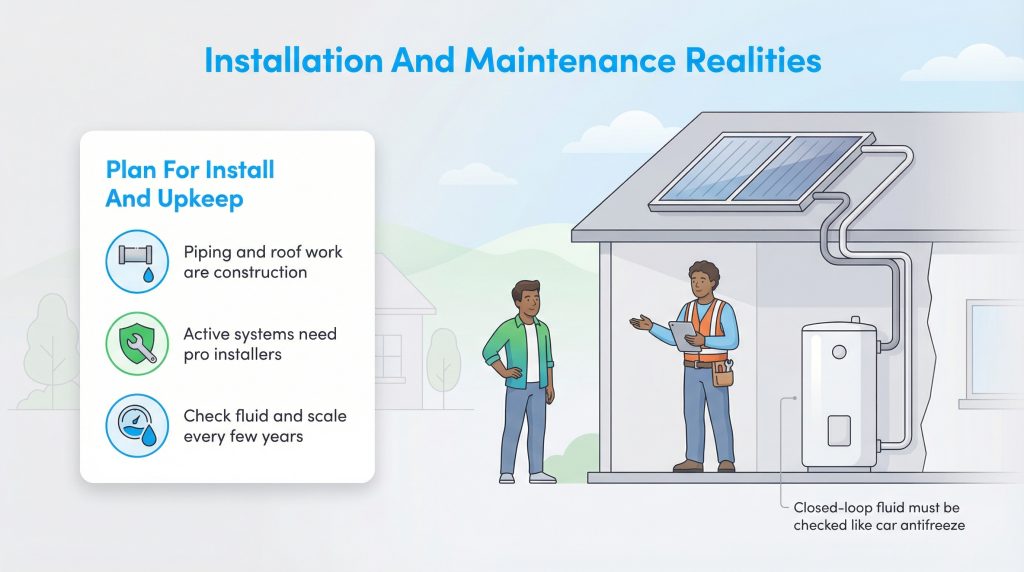
A proper solar thermal installation is more physically intrusive than installing simple PV panels because it involves plumbing work in addition to roof mounting. Installers will need to run insulated pipes from your roof down to your water tank, which may require drilling through walls or ceilings. It is a construction project that usually takes one to three days to complete.
DIY vs. Professional Installation
You might be tempted to install a system yourself to save money, especially with various kits available online. While simple passive batch systems can be a manageable project for a skilled DIYer, active systems require complex plumbing, electrical integration for pumps and sensors, and roof penetrations that must be watertight. We strongly recommend professional installation to ensure your system operates at peak efficiency and to maintain valid equipment warranties.
Maintenance Checklist
Solar thermal systems are durable, but they are not entirely “set it and forget it.” To keep your system running for decades, you need to stay on top of a few maintenance tasks.
- Fluid Check: In closed-loop systems, the glycol (antifreeze) mixture degrades over time and usually needs checking or changing every 3–5 years.
- Scale Buildup: If you live in an area with hard water, mineral scale can block pipes and reduce efficiency, requiring occasional flushing.
- Summer Mode: If you go on vacation in the summer, your system can overheat; ensure you understand your controller’s “heat dump” or stagnation protection settings.
Is a Solar Thermal System Right for Your Home?
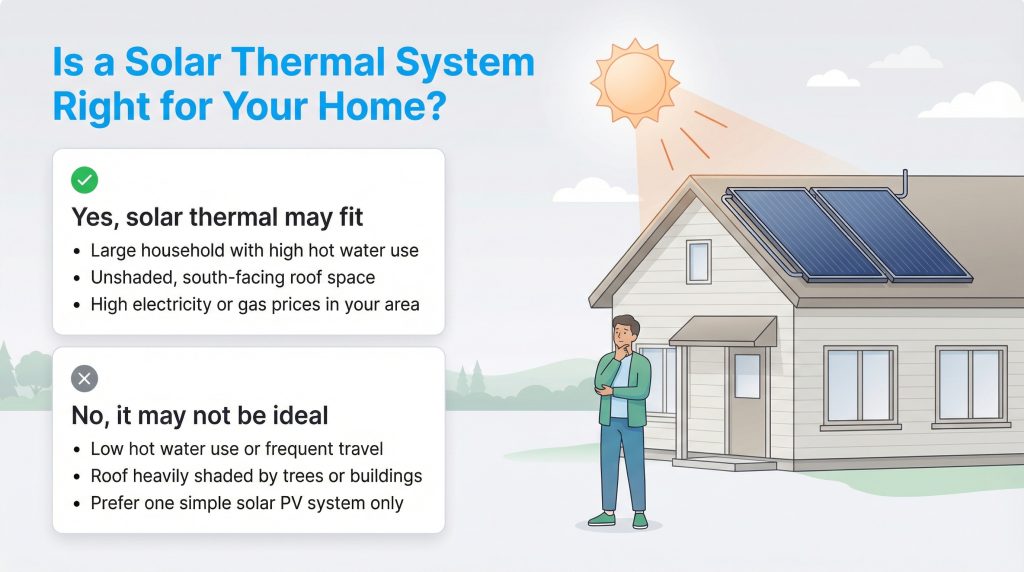
Determining if solar thermal is the right choice depends on your specific household habits and your home’s physical location. It is an environmentally mindful choice that drastically reduces the carbon footprint associated with heating water because much of your demand shifts from fossil fuels to clean solar energy, but the economics must also make sense for you. Use the checklist below to see where you stand.
- Yes, if: You have a large family (4+ people) with high hot water usage for showers and laundry.
- Yes, if: You have unshaded, south-facing roof space available.
- Yes, if: You live in an area with high electricity or natural gas prices, improving your ROI speed.
- No, if: You use very little hot water or travel frequently.
- No, if: Your roof is heavily shaded by trees or other buildings.
- No, if: You prefer a single, simple Solar PV system to handle all your energy needs rather than maintaining two separate systems.
If you are looking for other ways to conserve resources in your new home, check out our guide on water conservation strategies.
Harnessing the Sun for a Warmer Home
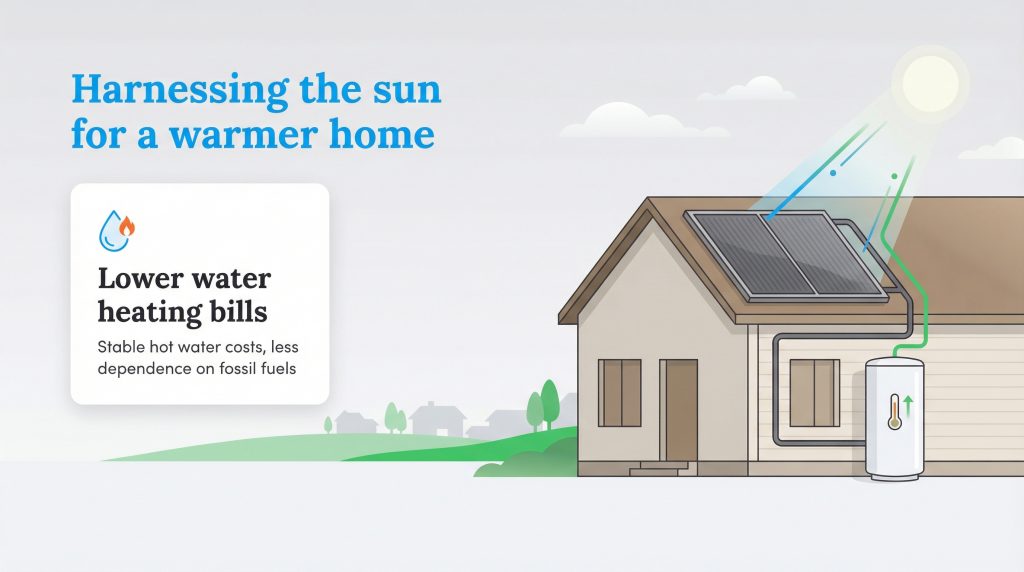
Solar thermal systems are a proven, mature technology that offers exceptional efficiency for one of the home’s most energy-intensive tasks. While solar PV often gets the spotlight for its ability to power lights and electronics, thermal technology remains a cost-effective champion for homeowners specifically looking to slash water heating costs. By taking advantage of current tax credits and choosing the right collector for your climate, you can secure a reliable supply of hot water that is immune to fluctuating gas and electricity prices. If you want lower bills and a more eco-conscious home, a well-designed solar thermal system can be one of the most impactful upgrades you make. We encourage you to get quotes from certified installers to see how the numbers stack up for your specific home.
FAQs About Solar Thermal Systems
Do solar thermal systems work on cloudy days?
Can I use solar thermal for home heating, not just water?
How long do solar thermal collectors last?
What happens if the water gets too hot in the summer?
Is solar thermal cheaper than solar PV?
Can I use solar thermal technology for solar pool heating?
About the Author

LaLeesha has a Masters degree in English and enjoys writing whenever she has the chance. She is passionate about gardening, reducing her carbon footprint, and protecting the environment.