
Amazon’s Upcoming Satellite Service Aims to Provide High-Speed Connectivity for Rural Households, Potentially Offering a Competitive Alternative to Starlink
Key Takeaways
- Amazon LEO officially launched its new brand in November 2025, offering three distinct hardware models designed to fit any household or travel need.
- The LEO broadband constellation will rely on 3,236 satellites to deliver high-speed, low-latency internet capable of reaching 1 Gbps.
- Consumer availability is expanding toward a mid-to-late 2026 rollout, featuring aggressive pricing strategies designed to directly challenge Starlink.
Finding reliable high-speed internet in rural areas is a persistent challenge, but Amazon’s massive satellite initiative is preparing to alter the utility landscape for good. Originally known during its secretive development phase as Project Kuiper, the company officially launched the service as Amazon LEO in November 2025, cementing its status as a consumer-ready utility rather than just a corporate experiment. If you have been frustrated by sluggish connections or are looking for a viable alternative to existing providers, this comprehensive Amazon LEO profile breaks down the official hardware tiers, projected pricing, and the early 2026 waitlist process to help you decide whether to hold out for this new low Earth orbit internet network or act on available options today.
What Is Amazon LEO?
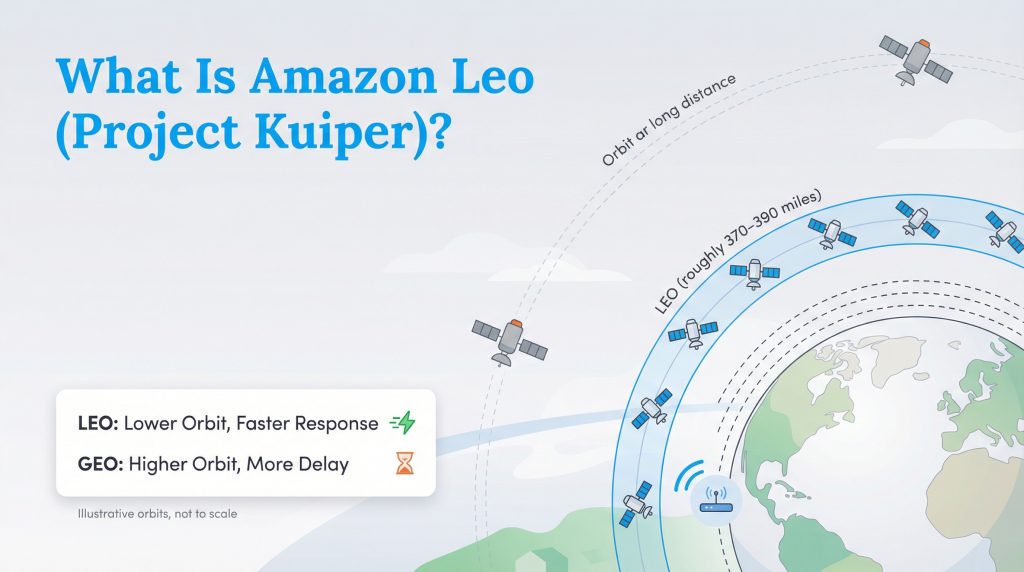
Amazon LEO is the official consumer brand name for Amazon’s ambitious global broadband initiative. For years, tech enthusiasts and industry insiders referred to the endeavor by its research and development codename. With the official rebranding in late 2025, Amazon made its mission crystal clear: to deliver fast, affordable, and highly reliable Amazon LEO satellite internet to unserved and underserved communities around the world.
Unlike traditional satellite internet providers like Viasat or HughesNet, which rely on massive geostationary satellites orbiting more than 22,000 miles away, Amazon LEO utilizes a massive constellation of satellites in Low Earth Orbit (LEO). Operating just 370 to 390 miles above the planet, this closer proximity radically reduces the distance your data has to travel. Building a global internet service from scratch requires an astronomical amount of infrastructure, and the LEO broadband constellation currently boasts over 390 active satellites in orbit out of a planned 3,236 to provide a continuous, uninterrupted signal to your household.
Amazon LEO Plans, Speeds, and Pricing
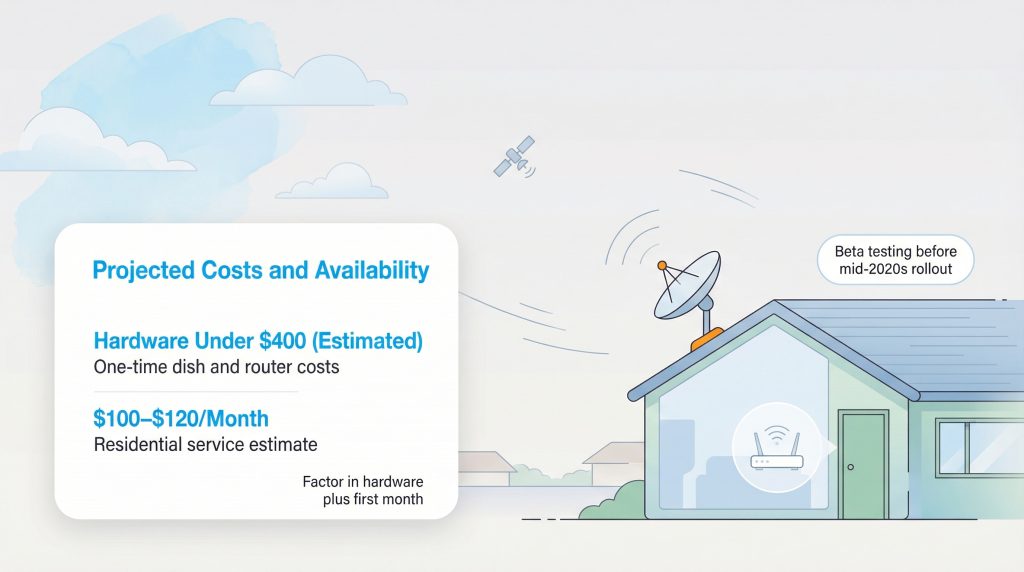
When it comes to internet service, everyday performance metrics and monthly costs are what matter most. Amazon LEO has standardized its speed expectations, moving away from vague promises and committing to robust figures that directly rival current market offerings. While official consumer pricing is still under wraps, industry analysts fully expect Amazon LEO pricing to sit comfortably between $100 and $120, deliberately undercutting or matching Starlink’s standard $120 monthly average.
Depending on the hardware you select, the network is engineered to offer three distinct speed tiers:
- Base Residential Tier: Delivers up to 100 Mbps download speeds, which is more than enough for a family to stream HD movies and browse the web simultaneously.
- Standard Pro Tier: Pushes up to 400 Mbps download speeds, providing robust bandwidth for smart homes running multiple security cameras and connected devices.
- Premium Enterprise Tier: Reaches staggering speeds up to 1 Gbps, designed specifically for heavy-duty commercial operations, aviation, and expansive rural estates.
The real magic of the low Earth orbit internet constellation is the latency, which Amazon is targeting in the snappy 50 ms range. Traditional satellite networks often suffer from 600 ms latency or higher, which creates an annoying delay during phone calls or online gaming. At 50 ms, your real-time activities — like Zoom meetings, telehealth appointments, and fast-paced multiplayer gaming — become completely smooth and reliable. If you are wondering how this fits into your lifestyle, check out our guide on how much internet speed you really need to pick the perfect plan once sign-ups go live.
Amazon LEO Hardware: Nano, Pro, and Ultra Terminals
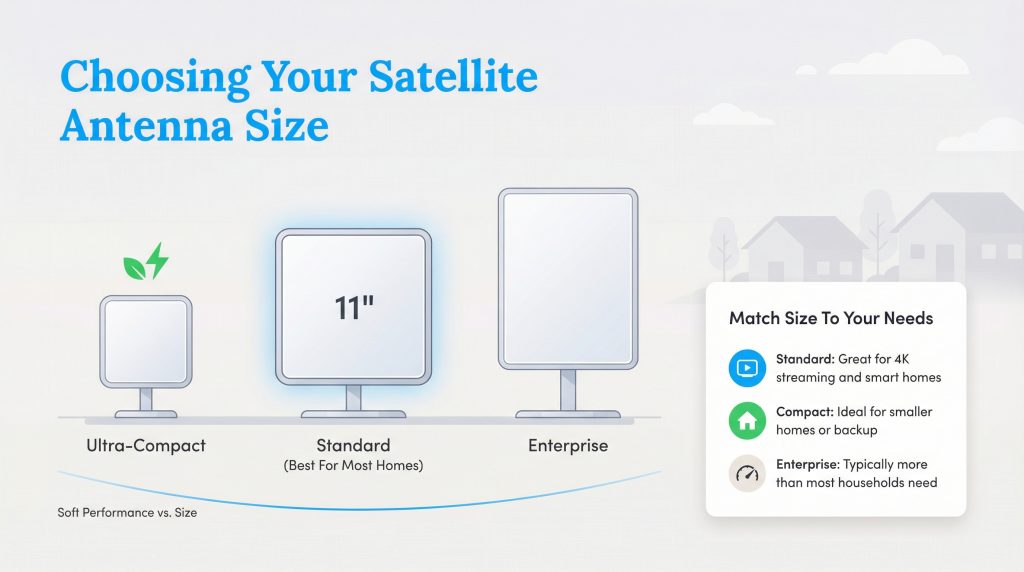
You cannot access the satellite network without the physical terminal that captures the signal. Fortunately, Amazon is leveraging its massive manufacturing footprint to keep hardware costs highly accessible, estimating standard production costs to be under $400 per unit. When you order the service, you will select from three distinct Amazon LEO terminals engineered to fit your specific connectivity needs.
| Terminal Model | Dimensions | Weight | Max Expected Speeds | Best Use Case |
|---|---|---|---|---|
| Amazon LEO Nano | 7 x 7 inches | 2.2 lbs | Up to 100 Mbps | Digital nomads, RV owners, and budget-conscious households |
| Amazon LEO Pro | 11 x 11 inches | 5.3 lbs | Up to 400 Mbps | Standard residential homes and families |
| Amazon LEO Ultra | 20 x 30 inches | TBD (Enterprise) | Up to 1 Gbps down / 400 Mbps up | Rural businesses, aviation, and commercial farms |
The Pro model provides the ideal balance of a discreet roof footprint and robust capacity for the vast majority of homeowners. Meanwhile, the Nano serves as Amazon’s direct answer to the Starlink Mini, giving travelers an ultra-compact solution that easily slips right into a standard backpack.
Coverage Area and Global Release Date
The transition from prototype to public utility is happening rapidly. With the Federal Communications Commission (FCC) mandating that Amazon successfully deploy at least half of its planned 3,236-satellite constellation by July 2026, the company is pushing incredibly hard toward a mid-to-late 2026 target for wider consumer availability in the United States. Limited commercial service is scheduled to begin slightly earlier, starting at higher latitudes where the orbital mechanics naturally provide denser, more reliable early connections.
If you are eagerly anticipating the Amazon satellite internet release date, you do not have to wait to secure your spot in line. The official Amazon LEO waitlist opened in early 2026, allowing prospective customers to register their interest. We recommend navigating directly to leo.amazon.com and inputting your service address. Doing so ensures you receive immediate alerts the moment the expansive Amazon LEO coverage map envelops your specific zip code.
Amazon LEO vs. SpaceX Starlink: Head-to-Head
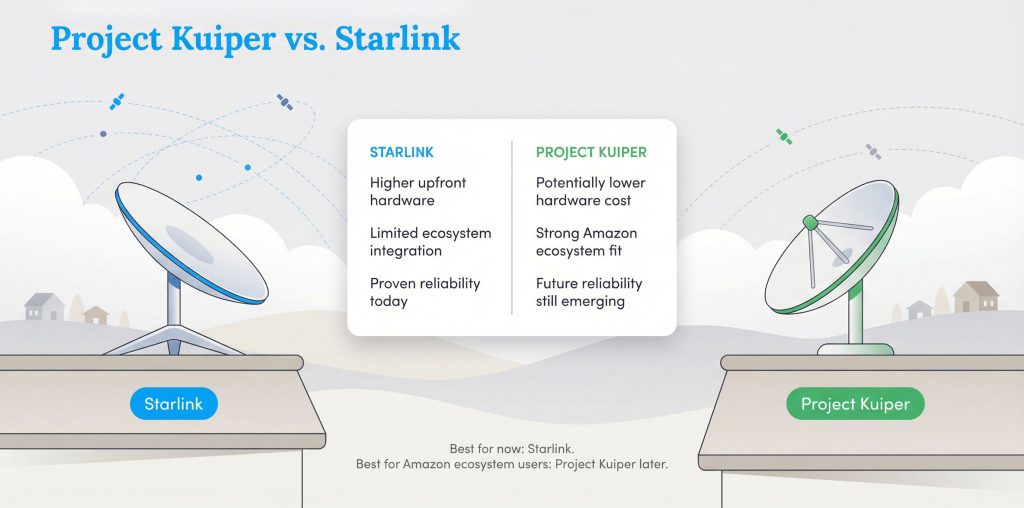
This is the definitive head-to-head comparison every rural homeowner needs to make before signing a contract. Elon Musk’s Starlink currently dominates the consumer market, but Jeff Bezos’s Amazon LEO is arriving with the financial backing and deep logistical network to offer fierce, unprecedented competition. When assessing Amazon LEO vs Starlink, understanding how their underlying networks and capabilities stack up is vital.
| Feature | Amazon LEO | SpaceX Starlink |
|---|---|---|
| Active Satellite Count | 390+ (as of early 2026) | 6,000+ (Operational) |
| Top Advertised Speeds | Up to 1 Gbps (Ultra tier) | Up to 1 Gbps (Enterprise tier) |
| Cloud Integration | Advanced AWS mesh network | Standard data routing |
| Estimated Base Price | $100 – $120 / month | $120 / month average |
Choosing between the two depends heavily on your current ecosystem. Amazon LEO is the ideal choice for users deeply integrated into the Amazon environment — utilizing Ring doorbells, Alexa smart speakers, and Prime Video — who want potential billing discounts and seamless smart home operation via the AWS mesh network. Conversely, Starlink remains the absolute best choice for users who need an immediate, proven, and live internet connection today. For a deeper dive into the current market leader, check out our full Starlink review.
Sustainability and Space Debris Mitigation
With thousands of new objects being launched into orbit, the environmental and astronomical impact is a serious global concern. Amazon LEO has designed its network to be an environmentally mindful choice, prioritizing strict space debris management. They utilize an active deorbiting protocol, ensuring that each satellite safely de-orbits and burns up completely in the Earth’s atmosphere at the end of its lifecycle, preventing the dangerous buildup of space junk that threatens critical infrastructure like the International Space Station.
Furthermore, Amazon has proactively partnered with the global astronomy community to mitigate light pollution. By adding specialized sun shades and advanced anti-reflective coatings to their hardware, Amazon significantly reduces satellite visibility in the night sky, preserving observations for astronomers and stargazers alike. Choosing an eco-conscious alternative like this supports a sustainable approach to the new space economy.
Preparing Your Home for Amazon LEO Satellite Internet
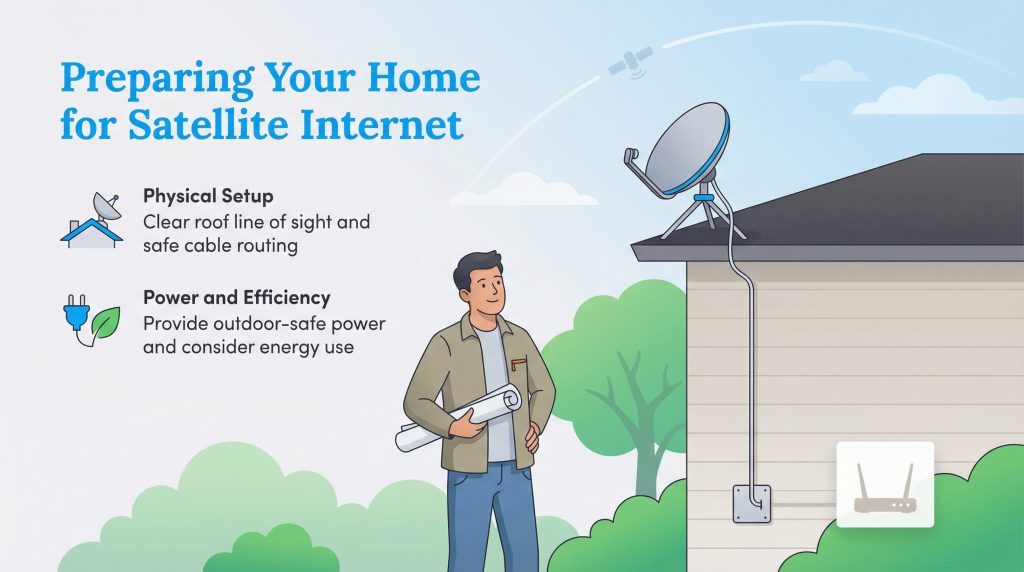
Getting ready for satellite internet involves more than just ordering the kit; you need to plan your physical installation to ensure optimal safety and signal quality. Most residential users will mount the standard Amazon LEO Pro antenna on their roof using a tripod or an eave mount. You will likely need to drill a small hole through your exterior wall to route the proprietary weather-sealed cable from the dish safely down to your indoor Wi-Fi router.
Energy consumption is another crucial consideration. Because satellite dishes are active electronic devices that draw power continuously to track orbital movements and melt winter snow, you must ensure you have a dedicated outdoor-safe power source. Amazon has heavily focused on electrical efficiency during their hardware design phase to prevent utility bill spikes, but planning your cable routing ahead of time ensures a clean, hassle-free installation day.
You can read more about the project’s ongoing regulatory updates and launch missions on the official About Amazon website.
Deciding Between Current Options and the Amazon LEO Waitlist
Deciding whether to wait for the Amazon LEO rollout or choose a current provider ultimately comes down to your personal timeline and your trust in the brand. If you can comfortably manage with your current home internet setup until late 2026, joining the waitlist could reward you with highly competitive pricing and seamless integration with the smart home services you already use. However, if you are moving into a new rural home with zero connectivity today, holding out isn’t practical. In that case, purchasing a system that works right now is the smartest move for your family. Regardless of what you choose, the entry of a massive competitor like Amazon is a definitive win for all consumers, as competition naturally drives innovation and lowers prices across the board.
Find Internet Providers Available in Your Area
Frequently Asked Questions About Amazon LEO
What happened to Amazon Project Kuiper?
Project Kuiper was simply the internal research and development codename for Amazon’s massive satellite internet initiative. In November 2025, the company officially rebranded the consumer-facing service as Amazon LEO as they prepared for public deployment, meaning there is no functional difference between the two names.
How much will Amazon LEO satellite internet cost?
While official consumer pricing has not been explicitly confirmed by the company, industry analysts strongly estimate that the standard residential plan will cost between $100 and $120 per month. Hardware costs for the customer terminals are projected to sit comfortably under $400 for the standard residential Pro unit.
When will Amazon LEO internet be available in my area?
Amazon is targeting a mid-to-late 2026 rollout for wider consumer availability in the United States, starting primarily with regions at higher latitudes where satellite coverage will be densest. You can register your interest directly on the official waitlist at leo.amazon.com to receive immediate notifications when the service goes live in your specific zip code.
How does Amazon LEO compare to Starlink?
Amazon LEO is purposefully designed to directly rival Starlink by offering highly aggressive pricing and seamless AWS mesh network integration. While Starlink currently has a massive head start with over 6,000 active satellites, Amazon LEO promises comparable hardware sizes and high-end enterprise speeds capable of reaching up to 1 Gbps.
Can I use Amazon LEO for mobile or RV internet?
Yes, Amazon has designed the Amazon LEO Nano specifically for portability. Weighing only 2.2 pounds and measuring a compact 7 by 7 inches, this terminal is built to easily fit into a backpack or mount discreetly on an RV, making it an excellent choice for digital nomads and travelers requiring internet on the go.
Can I install the equipment myself?
Yes, the hardware kits are purposefully designed for easy DIY installation. Your delivery package will include the antenna, a sturdy mounting stand, a Wi-Fi router, and all necessary cables. You simply use the accompanying mobile app to help position your antenna for the absolute best view of the open sky.
About the Author

David has been an integral part of some of the biggest utility sites on the internet, including InMyArea.com, HighSpeedInternet.com, BroadbandNow.com, and U.S. News. He brings over 15 years of experience writing about, compiling and analyzing utility data.