
If you live in the Buckeye State, we’ve got a mixed bag of news for your wallet this month. While the spring flowers are starting to bloom, your utility bills are doing a bit of a seesaw act. We’re seeing some of the lowest natural gas rates in months, but unfortunately, electricity costs are heading in the opposite direction.
Key Takeaways
- Natural gas rates are dropping significantly. Columbia Gas of Ohio is reducing its supply rate by nearly 14% for April, providing a much-needed break after a volatile winter.
- Electricity bills are on the rise. Most major electric providers, including AEP Ohio and FirstEnergy, are implementing rate hikes starting Apr. 1 to cover grid upgrades and rising demand.
- You have the power to lock in savings. Between municipal aggregation programs and the state’s “Apples to Apples” comparison tool, you can often find fixed rates that beat the default utility price.
The Good News: Natural Gas Rates Take a Dip
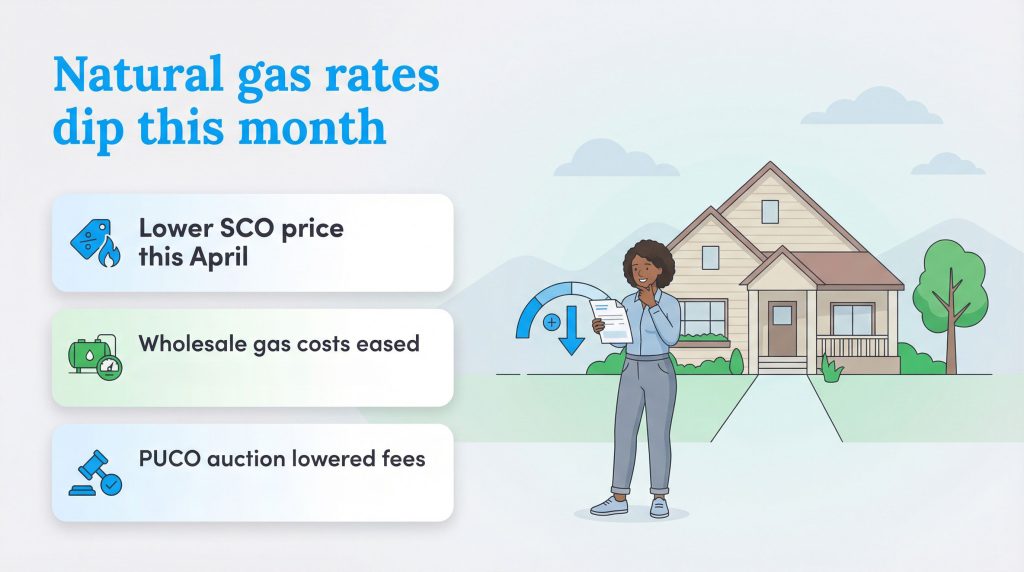
For those of you in the Columbia Gas of Ohio service territory, your April bill should look a little friendlier. The Standard Choice Offer (SCO) — which is the default price you pay if you haven’t chosen a specific supplier — is dropping from $0.6219 per Ccf in March down to $0.5345 per Ccf for April.
Why the sudden drop? It comes down to two main factors:
- Lower Wholesale Costs: The market price for natural gas settled at $3.095 per Mcf (1,000 cubic feet) for the month, thanks to a milder February and healthy storage levels across the country.
- Successful Auctions: Every year, the Public Utilities Commission of Ohio (PUCO) holds an auction to determine the “Retail Price Adjustment”, a fee that suppliers charge to manage your account. The January 2026 auction was a win for consumers, bringing that fee down from $3.25 to $2.25 per Mcf.
This “shoulder season” is a great time for your budget. Demand for heating is falling, but we haven’t yet hit the summer heat that drives up demand for gas-fired power plants.
The Growing Pains: Why Electricity is Getting Pricier
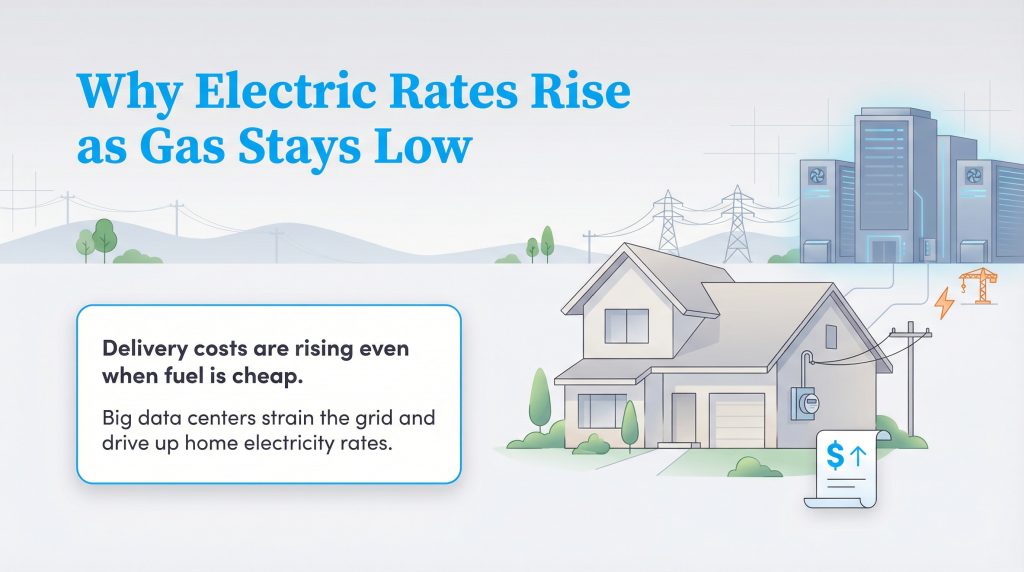
While gas is getting cheaper, the story is different for your electric bill. We’re seeing a “decoupling” in the market, even though the fuel used to make electricity (natural gas) is relatively cheap, the cost to deliver that power is skyrocketing.
- AEP Ohio: Starting Apr. 1, the average residential customer will see their bill increase by about $7.90 per month. This is due to a new rider approved by the PUCO to help the utility recover the costs of high-voltage transmission projects.
- FirstEnergy (Ohio Edison, Toledo Edison, and The Illuminating Co.): These customers are also seeing adjustments to “Rider NMB,” which covers non-market-based transmission services. In the ATSI transmission zone, these rates are up about 3.4% compared to last year.
The biggest culprit behind these hikes? Data centers. The massive growth of AI and hyperscale data centers in Ohio is putting a huge strain on the grid, requiring billions of dollars in infrastructure upgrades that are eventually passed down to you.
Who is Impacted?
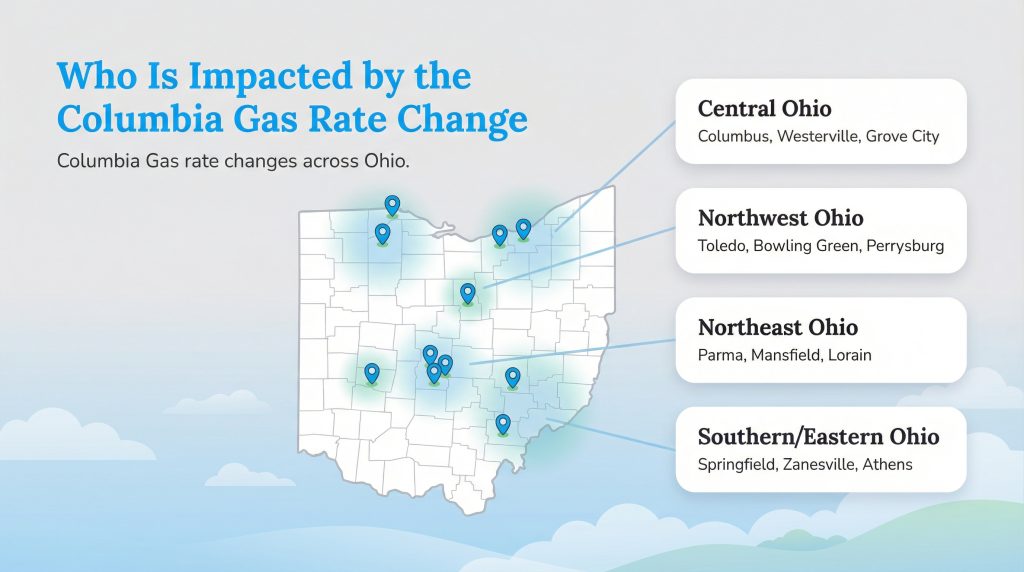
Columbia Gas of Ohio is the state’s largest natural gas utility, serving approximately 1.5 million customers in 61 of Ohio’s 88 counties. This rate change will directly impact residents in:
- Central Ohio: Columbus, Westerville, and Grove City.
- Northwest Ohio: Toledo, Bowling Green, and Perrysburg.
- Northeast Ohio: Parma, Mansfield, and Lorain.
- Southern/Eastern Ohio: Springfield, Zanesville, and Athens.
How You Can Take Control
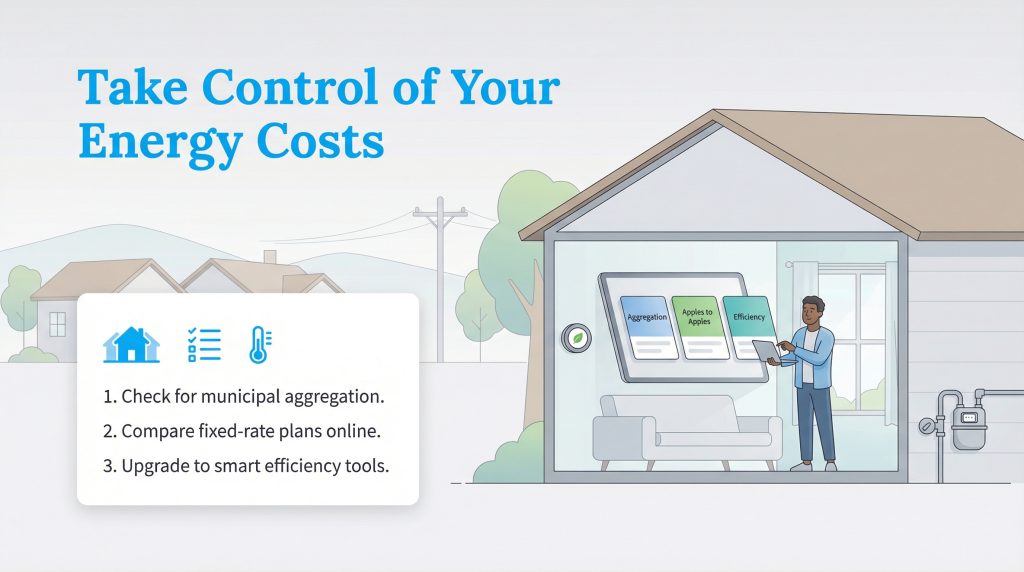
You don’t have to just accept the default utility rates. Here’s how we recommend you handle the April shifts:
1. Check Your Aggregation Status Many Ohio communities use “municipal aggregation” to buy energy in bulk for their residents. For example, the city of Stow recently negotiated a gas rate of $4.95 per Mcf ($0.495 per Ccf) that runs through March 2028. Hamilton Township residents also have a locked-in rate of $0.596 per Ccf starting this month. Check your bill to see if you’re already enrolled in one of these programs, it’s often your best defense against price spikes.
2. Shop the “Apples to Apples” Tool If you aren’t in an aggregation program, visit the Energy Choice Ohio website. You can compare offers from dozens of certified suppliers. We suggest looking for a fixed-rate plan for 12 months or longer. This protects you from the monthly “rollercoaster” of the default SCO rate, especially since gas prices are expected to trend slightly upward as we head into 2027.
3. Watch Out for “Intro” Rates Be careful when shopping! Some suppliers offer a very low rate for the first month, only to hike it significantly once you’re signed up. Always read the fine print for monthly fees or early termination penalties, which can be as high as $150 or $200.
4. Lean into Efficiency Since delivery charges and fixed fees make up a large chunk of your bill, the best way to save is to use less. Columbia Gas offers some great incentives right now, including $75 rebates for smart thermostats and $25 for programmable ones. These small upgrades can help you manage both your gas and electric usage as the weather changes.
Navigating utility choices can feel overwhelming, but a little bit of research goes a long way. If you’re moving into a new home or just looking to trim your monthly expenses, we’re here to help you find the most sustainable and cost-effective path forward.
About the Author

David has been an integral part of some of the biggest utility sites on the internet, including InMyArea.com, HighSpeedInternet.com, BroadbandNow.com, and U.S. News. He brings over 15 years of experience writing about, compiling and analyzing utility data.