

Evaluating Oil Heating Systems Requires Careful Inspection of the Equipment and Storage Tanks
Key Takeaways
- Ordering a specialized heating oil tank inspection before closing helps you identify potential environmental cleanup liabilities.
- Because traditional oil systems require active management, setting up your fuel deliveries before moving in prevents unexpected runouts and property damage.
- You can transition to an energy-saving option over time by weatherizing the home and exploring compatible heat pumps.
Buying a house with heating oil isn’t automatically a deal breaker. Before you commit to a charming older home, check the heating equipment, investigate current and former tanks, confirm insurance availability, and estimate fuel costs using the seller’s delivery records. With the right due diligence, you can properly evaluate the property and plan for maintenance or upgrades. We’ll walk you through pre-closing tank inspections, real-world budgeting considerations, eco-conscious fuel alternatives, and utility setup steps so you can make an informed choice.
The Main Advantages and Drawbacks of Oil Heat
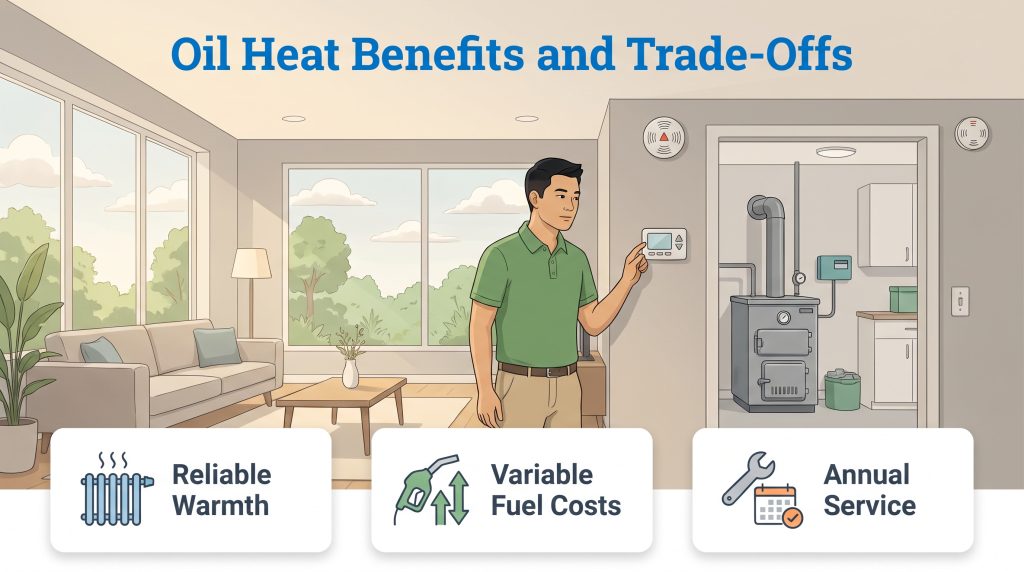
Before an unfamiliar furnace scares you off, it helps to understand why many families rely on this fuel. According to the U.S. Energy Information Administration’s Use of Heating Oil guide, millions of U.S. households use heating oil, particularly in the Northeast. Evaluating the main advantages and drawbacks of oil heat starts with separating outdated myths from reality and understanding how combustion systems operate.
First, let’s address safety. While heating oil is less readily ignited at ordinary temperatures than gasoline, leaks and malfunctioning equipment still create fire, smoke, and carbon monoxide hazards. Well-maintained cast-iron oil boilers and warm-air furnaces can offer reliable performance, but their lifespan varies heavily based on condition, service history, and parts availability. Modern systems can provide robust warmth, though their ultimate effectiveness depends on proper sizing, distribution, and the building’s heat loss.
Of course, oil heat comes with real trade-offs. Because heating oil is refined from crude oil, your winter bills are tied to volatile energy markets. You also have to maintain an on-site storage tank, schedule annual professional servicing, and contend with higher carbon emissions than clean electric systems produce. Instead of paying massive lump sums in January and February, you can estimate your monthly budget by reviewing the seller’s past delivery records. For example, if a home uses 800 gallons annually and you assume a local price of $4 per gallon, fuel would cost $3,200 per year, or about $267 per month when spread over a 12-month budget plan. Keep in mind these are example inputs, not current prices or forecasts, and maintenance contracts are usually additional.
| Pros of Buying an Oil-Heated Home | Cons of Buying an Oil-Heated Home |
|---|---|
| Fuel stability: Heating oil is less volatile than gasoline at room temperature, making it a stable fuel to store on your property. | Price volatility: Retail heating oil rates fluctuate alongside global crude oil markets and seasonal winter demand. |
| Reliable warmth: Properly sized and maintained systems deliver consistent heat during deep winter freezes. | Tank liability: You own the storage tank and may be financially responsible for investigating or cleaning up any leaks. |
| Independent supply: You aren’t tied to a single utility pipeline and can choose your own fuel supplier in competitive markets. | Annual maintenance required: Systems require yearly professional servicing and filter changes following manufacturer instructions. |
| Upgrade potential: Existing ductwork or radiators can often be utilized if you transition to a hybrid system or alternative fuel later on. | Higher carbon footprint: Traditional oil burns with higher greenhouse gas emissions than clean electric systems. |
Heads Up
Install and maintain smoke and carbon monoxide alarms according to manufacturer instructions and local requirements. Don’t rely on odors or visible smoke to warn you of a heating-system problem.
How to Handle a Heating Oil Tank Inspection for Home Buyers
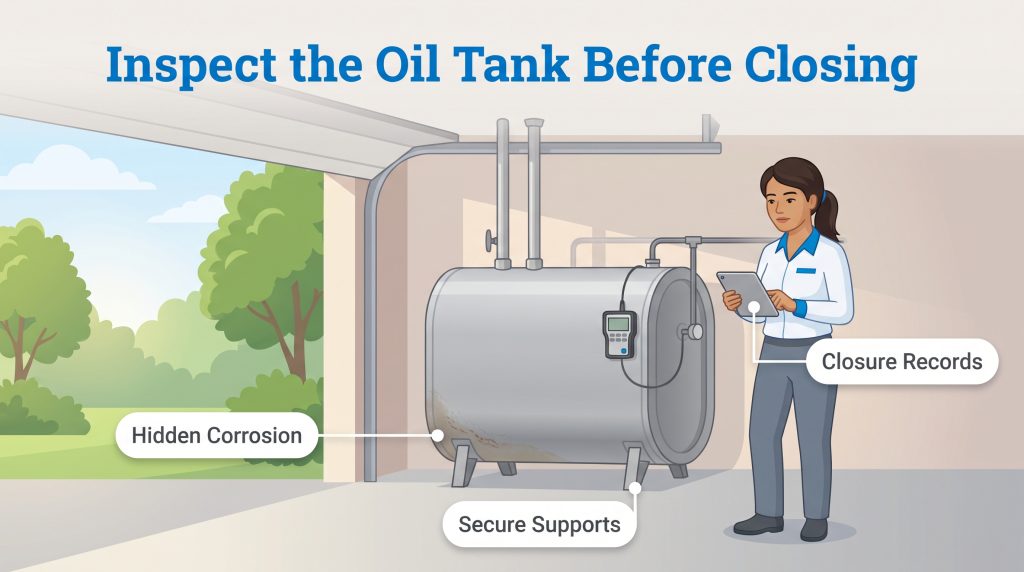
A standard general home inspection doesn’t necessarily include tank-integrity testing, subsurface investigation, or a contamination assessment. Because leaking fuel can trigger substantial environmental cleanup bills, you should book a specialized heating oil tank inspection during your contingency period. Buying a property can expose you to investigation and cleanup obligations, making jurisdiction-specific legal review a smart idea.
| Inspection Finding | Recommended Next Step |
|---|---|
| Documented tank history, satisfactory specialist assessment, and affordable operating costs | Consider proceeding, allowing for routine maintenance and future replacement. |
| Missing records or possible evidence of a former underground tank | Seek additional investigation and discuss an inspection contingency with your real estate attorney or agent. |
| Evidence of leakage, contamination, or unavailable insurance | Pause the transaction until qualified professionals clarify remediation, coverage, and responsibility. |
Aboveground Basement and Garage Tanks
If the house has a standard steel tank in the basement, utility room, or garage, a qualified specialist will inspect it closely for hidden issues. Tanks can corrode internally due to condensation and externally when exposed to moisture or corrosive conditions. Have your inspector assess the supports, anchoring, piping protection, and local code compliance. Look for stains, dampness, corrosion, or fuel odors, but never touch, probe, or move a potentially compromised tank yourself.
Buying a House With an Underground Oil Tank
Nothing requires sharper buyer vigilance than a property that may contain a buried oil tank. Even if the seller converted the home to natural gas years ago, an old tank might still be buried in the yard. During your property walk-through, keep your eyes peeled for visual clues: two metal pipes (a fill pipe and a vent pipe) sticking out of the soil, a brass cap flush with the driveway, or patched holes in the basement concrete wall where fuel lines used to enter.
While federal underground storage tank rules generally exclude tanks storing heating oil for use on the premises, state and local environmental requirements still apply. As the U.S. Environmental Protection Agency’s Underground Storage Tanks program notes, corroding buried tanks pose a severe threat to surrounding soil and groundwater. Don’t let a seller tell you an old tank is safe just because it was emptied. Proper closure procedures differ by municipality, so require approved removal or closure in place under applicable local codes. Request all available permits, environmental reports, and closure approvals before proceeding. Contamination affecting groundwater, neighboring property, or difficult-to-access areas can produce exceptionally high cleanup costs.
Seven Questions to Ask the Seller Before Closing

Gathering documentation from the current homeowner during your inspection contingency window will give you peace of mind and valuable negotiation leverage. Before you finalize your purchase agreement, ask the listing agent for answers to these seven essential questions:
- Has an underground tank ever been removed or decommissioned on the property? If the answer is yes, ask for the official municipal closure permit and the environmental lab report confirming the surrounding soil tested clean.
- How old is the current oil tank and heating unit? Knowing the installation dates and reviewing the service history helps you plan for future maintenance and budget for necessary replacements.
- How many gallons of heating oil were delivered over the past two winters? Reviewing the seller’s actual delivery records is the most practical way to estimate your future heating budget, though your own usage will vary.
- Can you provide the last three years of annual service records? Heating systems require yearly professional service following manufacturer instructions, including appropriate combustion and venting checks.
- Who is the current fuel provider, and is there an active service contract? Finding out who services the system lets you check whether an existing tank protection warranty or annual service plan can transfer to you at closing.
- Is the hot water heater also powered by oil, or is it electric or gas? Homes with tankless coil water heaters built into the oil boiler burn oil year-round, meaning you will use fuel even in July and August.
- How will we adjust for the remaining oil in the tank at closing? It’s standard practice to negotiate an adjustment for fuel left behind, depending on the purchase contract and local real estate customs.
Should You Keep Oil Heat or Convert to an Eco-Conscious Alternative?
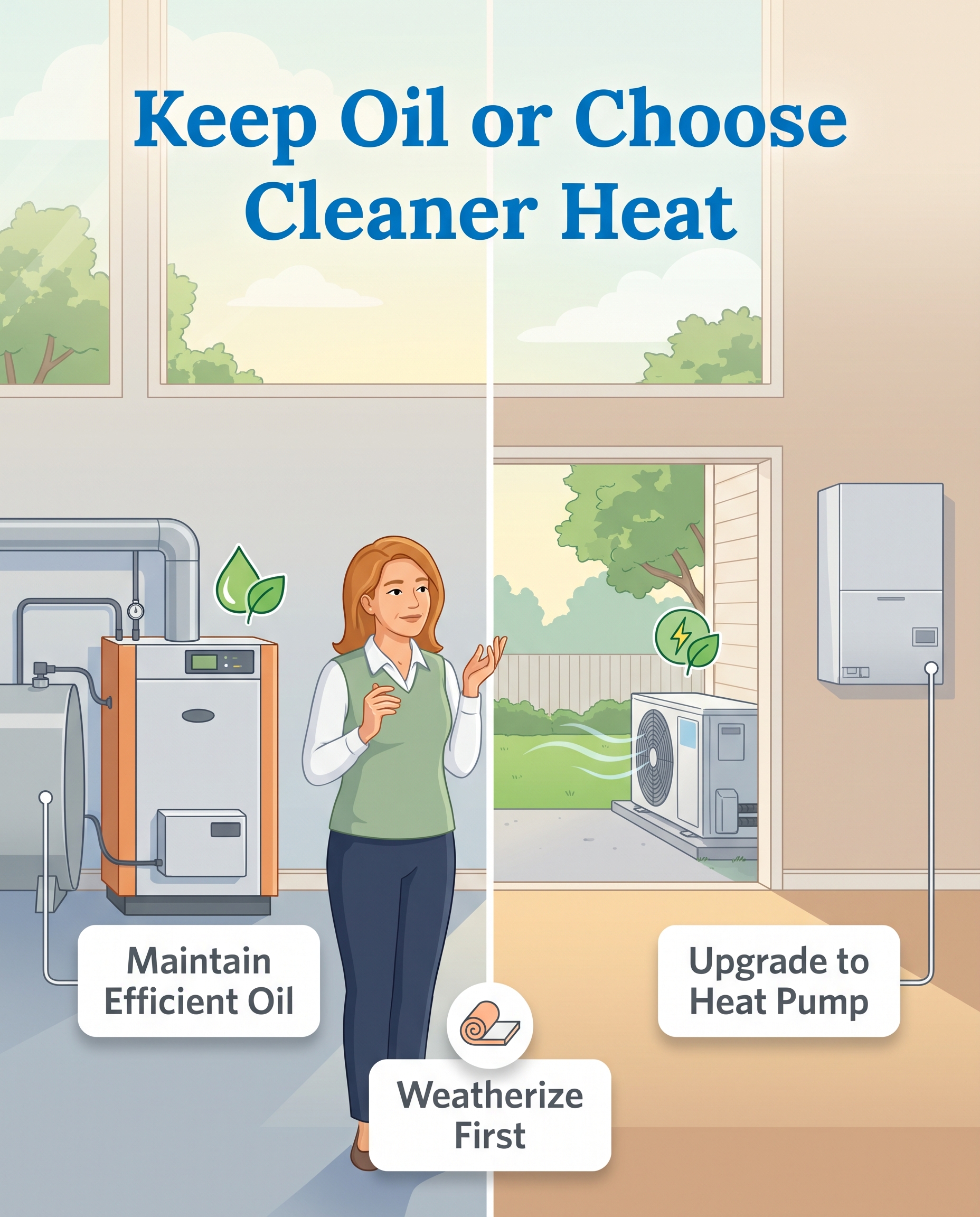
We prefer a practical, middle-ground approach: look closely at the age and condition of your equipment to decide whether you should maintain your oil system for now or upgrade to an eco-conscious alternative. If the existing oil burner is relatively new and achieves a high annual fuel utilization efficiency (AFUE), keeping it professionally serviced while you weatherize the house is often a smart move. However, if the system is nearing the end of its lifespan, moving in presents an opportunity to modernize.
Using Bioheat as a Bridge Fuel
If you plan to keep the oil furnace for a few years, you might wonder about alternative fuel blends. Modern heating oil in many regions includes Ultra-Low Sulfur Heating Oil (ULSHO), which significantly reduces sulfur emissions compared to older fuels. You can often order Bioheat, an environmentally mindful choice that blends traditional oil with renewable biodiesel made from organic feedstocks. However, compatibility depends on your specific burner, tank, seals, and warranty requirements. Always confirm compatibility with a professional before changing fuel blends, as higher blends aren’t automatically suitable for existing equipment.
Switching From Oil Heat to a Heat Pump
When you’re ready to replace aging equipment, installing a cold-climate electric heat pump is a premier energy-saving option. Instead of burning fossil fuels, heat pumps transfer heat energy from the outside air into your home. Their capacity and efficiency vary by model and temperature, so it’s essential to select equipment based on your home’s design temperature and manufacturer performance data. As a bonus, ducted heat pumps can provide central air conditioning, while ductless models cool the specific zones they serve.
According to the ENERGY STAR Air-Source Heat Pumps guide, upgrading from an older oil system to an efficient heat pump can yield substantial energy savings over the unit’s lifespan. If you aren’t ready for a full replacement, a dual-fuel hybrid setup allows a heat pump to handle moderate weather while the existing boiler serves as a backup. The actual heat-pump contribution will depend on your sizing, controls, climate, and local utility rates.
Converting From Oil Heat to Natural Gas
Many buyers also consider natural gas conversions. The feasibility heavily depends on whether a municipal gas main already runs down your street, the required distance for a new service line, and the condition of your chimney flue. Before committing, check out our natural gas utility guide to understand the scope of local connection processes. Regardless of which fuel you choose, you can improve comfort and reduce waste by sealing attic air leaks and adding insulation, topics we cover extensively in our sustainable living resources.
| Feature | Heating Oil | Electric Heat Pump | Natural Gas Conversion |
|---|---|---|---|
| Primary Cost Drivers | Tank condition, fuel prices, and annual service contracts. | Electrical panel upgrades, ductwork modifications, and equipment capacity. | Street connection distance, interior piping, and chimney liner requirements. |
| Carbon Footprint Impact | Moderate to high, though lower-sulfur and biodiesel blends can reduce certain emissions. | Lowest on-site emissions; efficiency depends on climate and equipment ratings. | Lower carbon combustion than oil, but system-wide methane leaks remain a concern. |
| Best For | Buyers with a healthy, well-maintained system who want to avoid immediate conversion expenses. | Eco-conscious homeowners wanting efficient year-round heating and cooling capabilities. | Homes on a street with an active gas main seeking an alternative combustion fuel. |
Eco Edge
Pairing a cold-climate heat pump with a community solar subscription or an EPA Green Power electricity plan allows you to offset your household’s usage with renewable energy attributes.
Setting Up Heating Oil Service Before You Move In
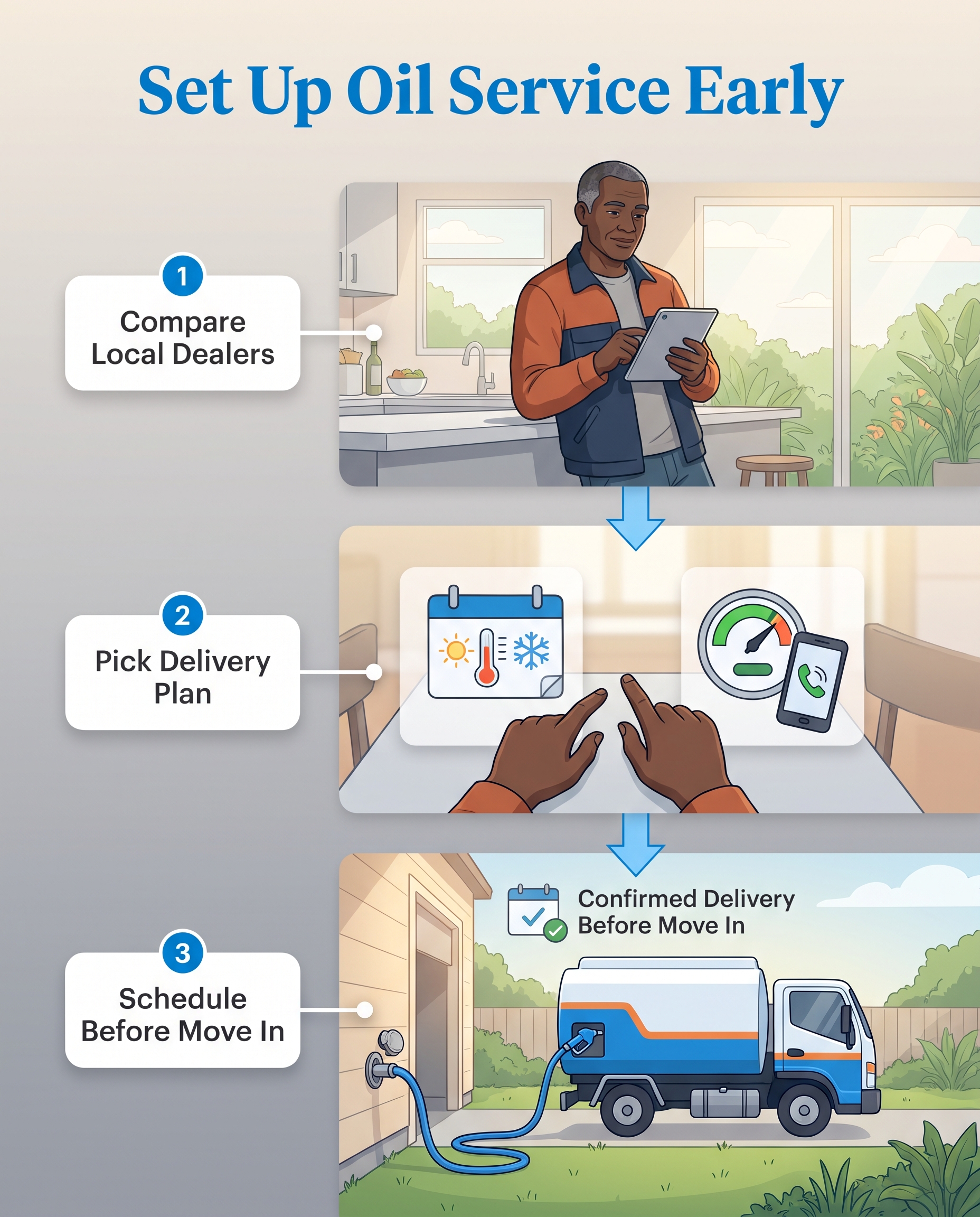
Once you finalize your purchase, setting up your fuel deliveries works differently than turning on municipal electricity or water. Heating oil operates in a retail market where you choose your supplier, though options vary by region. As you work through our moving resources to coordinate your internet and power, secure a fuel supplier before you move in — especially during the heating season — to avoid a preventable runout.
Choosing Between Automatic Delivery and Will-Call Service
Your first major decision as an oil-heated homeowner is selecting how you want to receive your fuel. Both approaches have distinct financial and lifestyle requirements:
- Automatic Delivery: With automatic delivery, your dealer tracks outdoor temperatures and your historical usage to schedule deliveries before your tank gets too low. While providers use different forecasting tools, this hands-off approach offers peace of mind. Keep in mind that annual maintenance, budget billing, and emergency service aren’t always included and may require a separate service plan.
- Will-Call Service: Will-call service lets you monitor your own tank and contact a supplier when you need fuel. Payment methods and contract terms vary, but this option requires vigilance. If you misjudge delivery lead times or severe weather hits, running empty can lead to frozen plumbing and costly emergency restart fees.
Money-Saver
Ask local dealers if they offer a price-cap program that protects you against winter price spikes. Be sure to read the fine print, as these plans may include enrollment fees or minimum purchase requirements.
Evaluating the Whole Property to Make a Confident Decision
An oil heating system shouldn’t automatically rule out a home and neighborhood you love. By ordering a dedicated tank inspection, verifying the property’s environmental history, and estimating your operating costs based on actual delivery records, you can evaluate the property accurately. Unresolved contamination, insurance problems, or unaffordable repairs may justify walking away, but a well-maintained system can provide reliable comfort. Once you settle in, establishing a reliable delivery setup and exploring future energy-saving upgrades will help you manage costs and reduce your environmental footprint over time.
Frequently Asked Questions About Buying a House With Heating Oil
Understanding the details of home heating oil can help you navigate the buying process more smoothly. Here are answers to some of the most common questions buyers have about managing an oil-heated property.
Is Oil Heat a Deal Breaker When Buying a House?
How Do You Read a Heating Oil Tank Gauge Before Closing?
Does Homeowners Insurance Cover a Leaking Oil Tank?
What Happens if Your Heating Oil Tank Runs Completely Empty?
Can I Use Regular Diesel Fuel in My Home Heating Oil Tank in an Emergency?
How Often Does an Oil Furnace or Boiler Need to Be Serviced?
About the Author

David has been an integral part of some of the biggest utility sites on the internet, including InMyArea.com, HighSpeedInternet.com, BroadbandNow.com, and U.S. News. He brings over 15 years of experience writing about, compiling and analyzing utility data.

Claudio is a sustainability-focused writer with a background in Anthropology and Psychology from NC State University. He has spent over 15 years working in writing, interpretation, and translation, driven by a deep interest in how human culture shapes the environment. Today, he shares his curiosity with readers by writing about sustainable living solutions and the connection between everyday choices and environmental impact.