

Understanding market cycles and knowing when to shop for energy can help you manage your annual utility bills.
Key Takeaways
- Spring and fall “shoulder months” are often the best times to compare natural gas rates due to mild weather and decreased demand.
- Switching to a fixed-rate plan during these calmer periods can help protect your household budget from sudden extreme summer and winter price spikes.
- Renters and new home buyers moving during peak seasons can strategically use short-term variable plans to bridge the gap until the shoulder months return.
A high winter gas bill can throw off your budget fast, especially when you’re settling into a new home. The good news is that natural gas rates often follow seasonal demand patterns, and shopping during milder months can help you compare plans before the peak heating season arrives. This guide explains when to switch natural gas providers, how fixed and variable plans work, and what to check before you lock in a rate.
Why Spring and Fall Are Often the Best Times to Shop
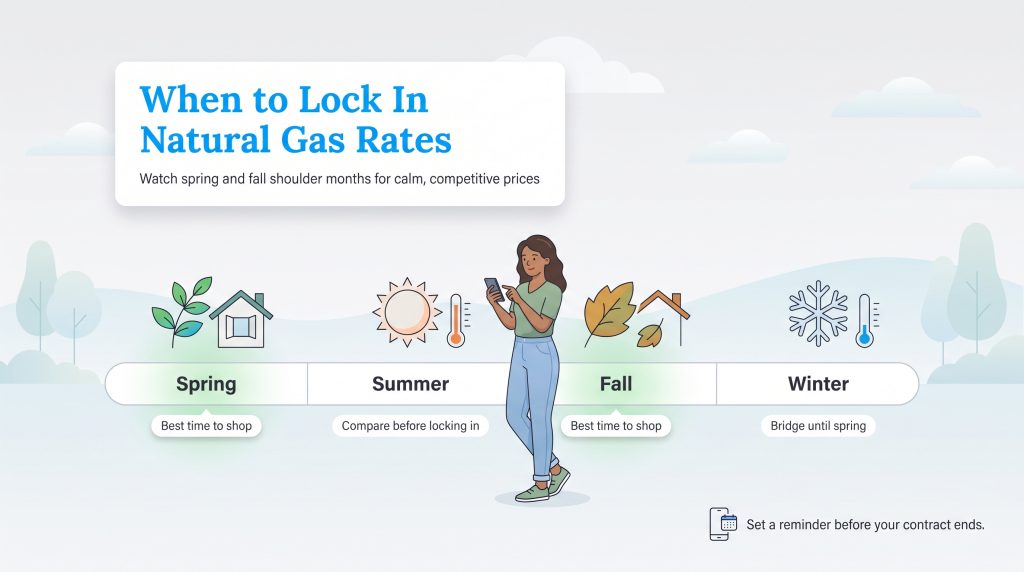
Energy insiders frequently talk about “shoulder months,” a crucial industry term that refers to the mild transition seasons occurring in spring and fall. Specifically, these periods usually land around April and May, then again in September and October. During these gentle weather windows, homes across the country require very little heating. Because electricity-related gas demand is also often less intense than during extreme summer heat waves, spring and fall are commonly strong times to compare natural gas rates.
If you’re wondering when natural gas prices are usually lowest, start by watching these spring and fall shoulder months. While rates can still vary by region, contract terms, storage levels, and market conditions, shopping during shoulder months can help you compare calmer, more competitive offers. Suppliers may offer more competitive fixed-rate plans to attract customers before the intense summer heat or bitter winter cold drives the market back up.
💸 Money-Saver: Set a calendar reminder on your phone for two months before your current contract expires so you can evaluate the market and potentially secure a lower rate during a shoulder month.
| Season | Typical Demand Level | Shopping Strategy | Best For |
|---|---|---|---|
| Spring | Lower demand | Compare fixed-rate offers | Securing a stable, long-term contract |
| Summer | Mixed demand due to gas-fired electricity | Avoid locking in without comparing | Short-term solutions if moving |
| Fall | Lower demand before heating season | Strong time to review contracts | Locking in rates before winter |
| Winter | High heating demand | Consider short-term options if moving | Bridging the gap until spring |
Can You Switch Natural Gas Providers Where You Live?
Before you start shopping for a new energy plan, it helps to know if switching is even an option in your area. Natural gas choice is only available in certain deregulated states and specific utility service territories. In many areas, customers cannot choose a separate natural gas supplier and must purchase their fuel directly through their local utility company. The best time to switch also depends on your state’s rules, so check your state public utility commission or official energy choice marketplace before comparing plans. If supplier choice isn’t available where you live, you can still lower your bills by improving your home’s energy efficiency, sealing air leaks, and maintaining your heating equipment.
Know What Changes on Your Bill
A deregulated utility bill is split into two distinct sections to separate the cost of the fuel from the cost of transporting it. The supply charge reflects the actual market price of the physical gas you consume, which is the portion you may be able to shop for in deregulated markets. The delivery charge is a standardized, regulated fee collected by your local utility company to cover the massive costs of maintaining regional pipelines and responding to emergency leaks. Switching suppliers usually does not mean getting new pipes or scheduling a technician visit, as your local utility continues to deliver the gas to your home.
What Causes Natural Gas Prices to Change?
To truly master your utility budget, it helps to understand the underlying mechanics that push energy rates up and down throughout the year. At its core, the energy market relies heavily on the fundamental economic principles of supply and demand. Whenever a major event disrupts production or forces everyone to crank up their thermostats simultaneously, prices surge. Conversely, abundant fuel reserves and mild weather cause rates to drop. If you look at historical natural gas price data, you’ll notice these pricing shifts generally stem from two primary categories of market drivers.
- Natural Causes: Severe winter blizzards dramatically increase heating needs, while brutal summer heat waves drive up electricity demand for air conditioning, which often relies on gas-fired power plants. Unpredictable weather events, like major hurricanes in the Gulf of Mexico, can also damage infrastructure and severely disrupt regional supply chains.
- Human Causes: Economic factors heavily influence what you pay for fuel. Shifting production rates from drilling companies, regulatory changes in energy policy, storage inventory levels, and sudden international conflicts can all restrict global supply and inflate domestic pricing.
Fixed vs. Variable Natural Gas Plans
Once you decide to start shopping for a natural gas plan, you’ll immediately face a choice between locking in a consistent rate or riding the unpredictable waves of the open market. When evaluating fixed vs. variable natural gas plans, the smartest long-term strategy heavily favors stability. Variable rates might look incredibly appealing for a brief moment when market prices dip, but they expose your budget to enormous risk during extreme weather months. Securing a fixed rate during a mild spring or fall can help ensure you pay the exact same price per unit of energy regardless of blazing heat waves or freezing winter storms.
| Plan Type | Best Used When… | Biggest Drawback |
|---|---|---|
| Fixed-Rate Plan | You want absolute budget predictability and are signing up during a mild spring or fall shoulder month. | You’re usually locked into a contract and may face an early termination fee if you cancel early. |
| Variable-Rate Plan | You need a short-term, month-to-month solution while waiting for seasonal prices to drop. | Rates can suddenly skyrocket without warning during severe winter freezes or summer heat waves. |
How to Switch Gas Providers When You’re Moving
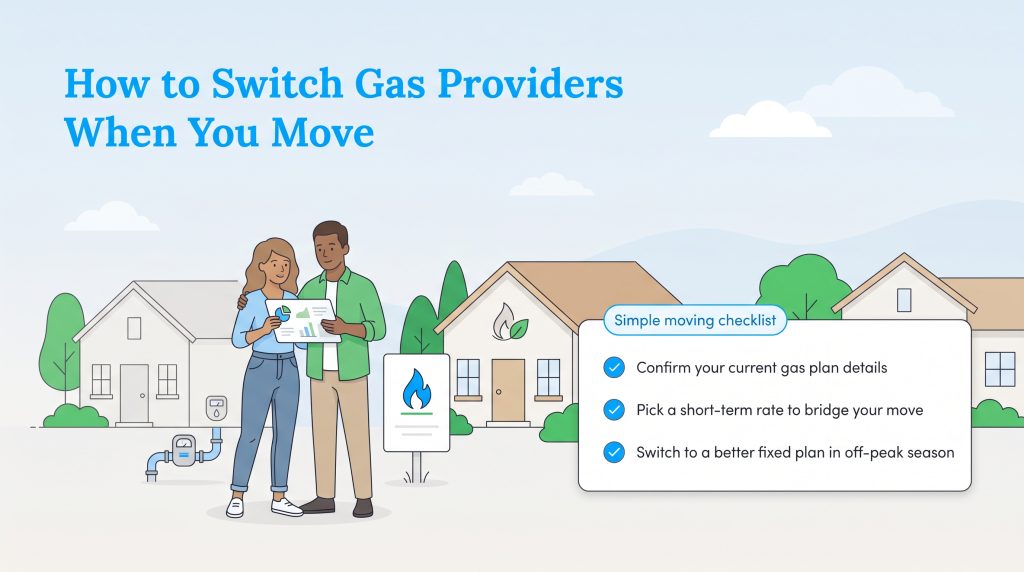
Moving into a new residence rarely aligns perfectly with ideal seasonal energy markets. If you finalize a home purchase in the middle of a blazing August or sign a lease in freezing January, you obviously can’t wait three months to turn on your utilities. Fortunately, you can still strategically navigate this inconvenient timing without trapping yourself in an expensive, long-term commitment.
The best approach is to utilize a brief, three- to six-month fixed plan or a no-contract variable plan to temporarily bridge the gap. This setup keeps your home comfortable while you wait for the milder transition months to arrive. Once April or October rolls around, you can start comparing available utility options to find a more favorable, multi-year fixed agreement. Follow these simple steps and review this checklist to ensure a seamless transition between suppliers.
- Check availability: Verify whether your area allows natural gas supplier choice.
- Know your current price: Find your current price per therm or Ccf on your latest bill.
- Review your contract: Confirm your contract end date and look for any early termination fees.
- Compare terms: Evaluate the rate, contract length, monthly fee, and cancellation terms of new offers.
- Verify the plan type: Confirm whether the rate is fixed or variable, and watch out for introductory teaser rates or automatic renewal clauses.
- Keep records: Save your confirmation number and the scheduled switch date.
- Verify your current contract status to ensure you won’t be hit with an unexpected early termination fee for leaving your current provider.
- Research and compare available seasonal rates in your zip code, paying close attention to the length of the contract and the price per unit of energy.
- Select your new supplier and sign the agreement. Your newly chosen energy company will handle all the back-end communication with your local utility in most cases to seamlessly switch the service without any interruption to your home’s heating.
Lower-Impact Natural Gas Options to Compare
Lowering your monthly utility bill is a fantastic goal, but switching providers also presents a perfect opportunity to make an environmentally mindful choice. The energy landscape has evolved significantly, and eco-conscious consumers now have access to sustainable alternatives that were largely unavailable a decade ago. Natural gas is still a fossil fuel, but when shopping the open market, you’ll likely encounter renewable natural gas. This fuel comes from captured biogas from landfills, wastewater treatment plants, and agricultural waste, which prevents harmful methane from entering the atmosphere.
Many modern energy companies also offer comprehensive carbon-offset plans. Carbon-offset plans don’t eliminate the emissions from burning gas in your home, but they may fund verified projects designed to reduce or capture emissions elsewhere. If you choose one, look for transparent project details, third-party verification, and clear reporting. Taking the time to explore federal resources on renewable natural gas and supporting suppliers who prioritize clean energy helps transition our nationwide grid toward a more sustainable future.
🌱 Eco Edge: Enrolling in a carbon-offset plan is an easy, lower-impact option that actively funds renewable infrastructure projects, allowing you to seamlessly shrink your environmental footprint while maintaining a strict household budget.
How to Time Your Next Natural Gas Switch
Securing a fantastic deal on your home energy doesn’t require a degree in economics, just a bit of strategic timing. By keeping an eye on the calendar and taking advantage of those mild spring and fall shoulder months, you can better protect your household from unpredictable seasonal price spikes. Deciding exactly when to lock in natural gas rates ultimately comes down to finding a fixed-rate plan during these off-peak windows that aligns perfectly with your long-term financial goals.
We encourage you to review your current utility contract today so you’re fully prepared to strike when the market drops. Combining this timely switching strategy with other proactive methods for saving on your monthly utility costs can help you enjoy a comfortable home all year round without the dread of shockingly high winter bills.
Frequently Asked Questions About Switching Natural Gas Providers
These quick answers cover the most common questions people have before switching gas suppliers. Use them to avoid surprise fees, timing issues, and confusion about what changes on your bill.
Does My Gas Get Shut Off When I Switch Natural Gas Providers?
Will I Have to Pay a Fee to Switch Gas Suppliers?
How Long Does It Take for a New Natural Gas Plan to Take Effect?
Can I Switch My Natural Gas Provider in the Middle of Winter?
How Do I Know If a Natural Gas Rate Is a Good Deal?
Is Renewable Natural Gas Available for Homes?
Should I Choose a Short-Term or Long-Term Natural Gas Contract?
About the Author

LaLeesha has a Masters degree in English and enjoys writing whenever she has the chance. She is passionate about gardening, reducing her carbon footprint, and protecting the environment. She also recently served as President of the Board for City Sprouts (a community garden).

David has been an integral part of some of the biggest utility sites on the internet, including InMyArea.com, HighSpeedInternet.com, BroadbandNow.com, and U.S. News. He brings over 15 years of experience writing about, compiling and analyzing utility data.