
Moving off-campus comes with new responsibilities, but setting up your essential services doesn’t have to be a headache with this step-by-step plan.
Key Takeaways
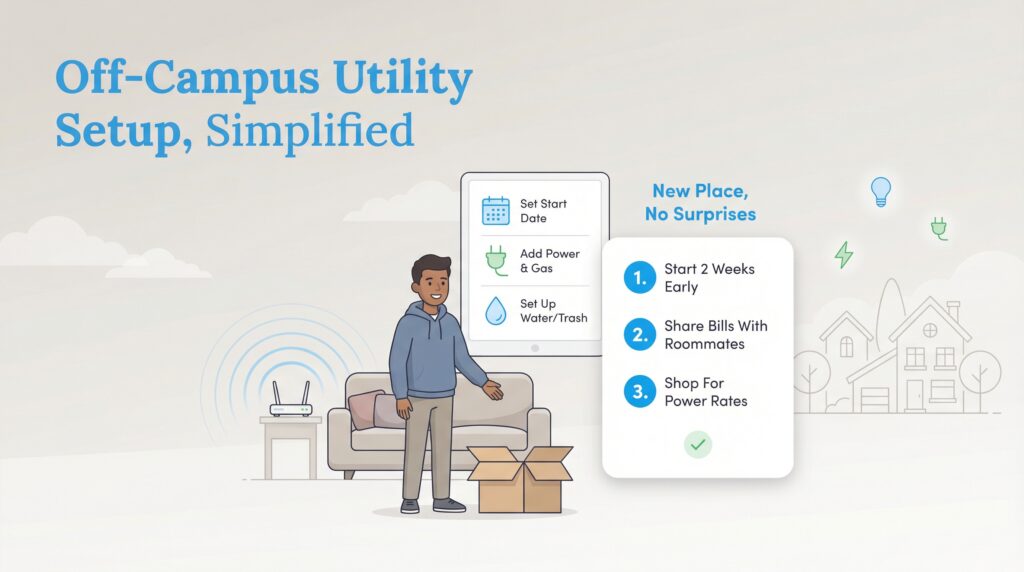
- Start the setup process at least two weeks before move-in to ensure your lights and internet are working the day you arrive.
- Discuss bill-splitting and account responsibility with roommates early to avoid financial conflicts or late fees later in the semester.
- Check if you live in a deregulated energy market to potentially save money by shopping around for competitive electricity rates.
Moving into your first apartment or off-campus house is a massive milestone, offering freedom and space you simply can’t get in a dorm. However, that excitement often comes with a side of anxiety when you realize “adulting” involves tasks you’ve likely never done before, like setting up electricity and internet accounts. You definitely don’t want to spend your first night in the dark or without Wi-Fi because you forgot to make a phone call. This student utility setup guide handles the heavy lifting for you, walking you through everything from mastering your timeline and negotiating deposits to managing roommate finances so you can focus on your classes instead of your bills.
First Apartment Utility Checklist For Students
Compare Utility Providers for Your Home
Find which utilities service your address and connect your home to the best electricity, natural gas, water, internet, and trash companies in your area.
Before you start calling companies, you need to know exactly what services are required for your new place. While some rentals might cover water or trash, most landlords expect you to handle the main utilities yourself. It’s important to know the difference between what you need to survive (electricity and water) and what you want for entertainment (streaming or cable).
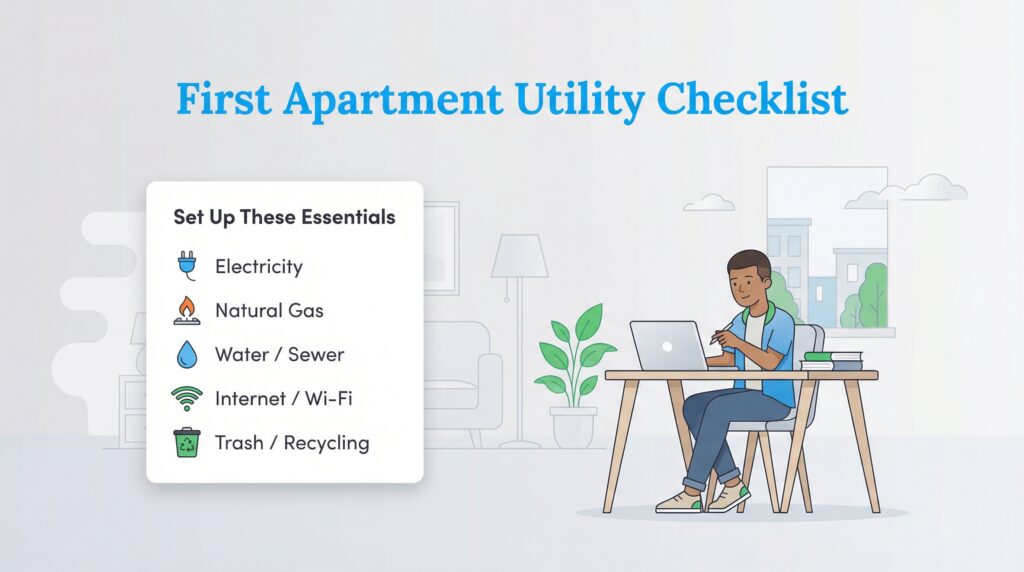
Here are the standard utilities you will likely need to arrange:
- Electricity: Essential for lighting, appliances, and keeping your devices charged.
- Natural Gas: Often used for heating, cooking, and water heaters.
- Water/Sewer: Sometimes included in rent, but frequently a separate bill in single-family rental homes.
- Internet/Wi-Fi: Crucial for submitting assignments, research, and streaming.
- Trash/Recycling: Usually managed by the city or a private waste management company.
When to Start: A Moving Timeline
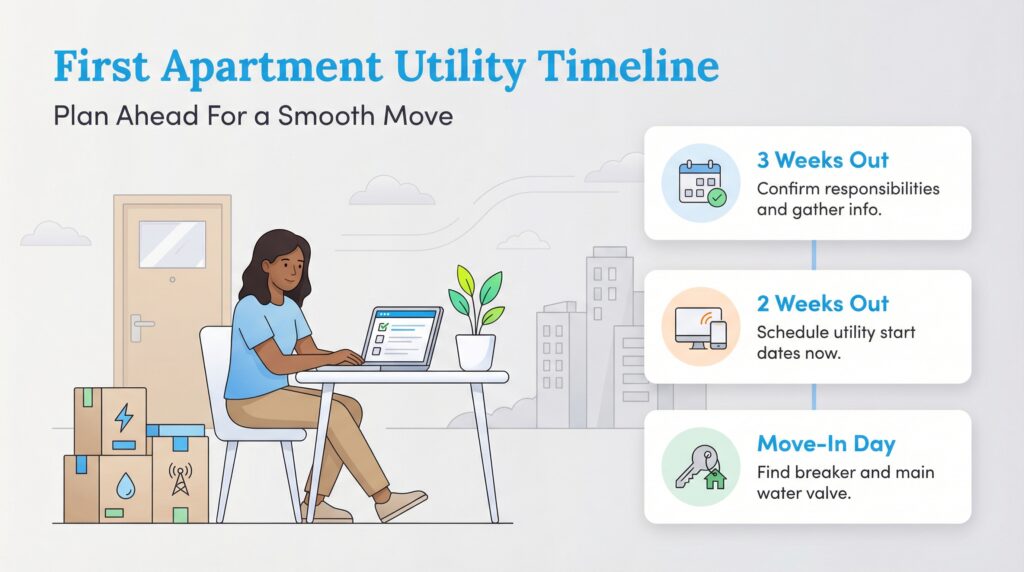
Procrastination is the enemy of a smooth move. Utility providers often need notice to send a technician out or switch on service remotely. Following a timeline reduces stress and ensures you aren’t trying to troubleshoot a modem while unpacking boxes. Here is a first apartment utility checklist timeline to keep you on track.
3 Weeks Out: Read your lease carefully to confirm which utilities are your responsibility. Sit down with your roommates and decide who will call which provider. This is the time to gather necessary information like the exact address and unit number.
2 Weeks Out: Contact providers or go online to schedule your service start date. Waiting until the last minute can result in setup delays, meaning you might move into a dark house. If you require a technician installation for the internet, appointments fill up fast during peak moving seasons like August and September.
Move-In Day: Once you get the keys, locate the circuit breaker box and the main water shut-off valve. Knowing where these are can save you from a disaster if there is an electrical issue or a leak on day one.
How to Set Up Utilities for Off-Campus Housing
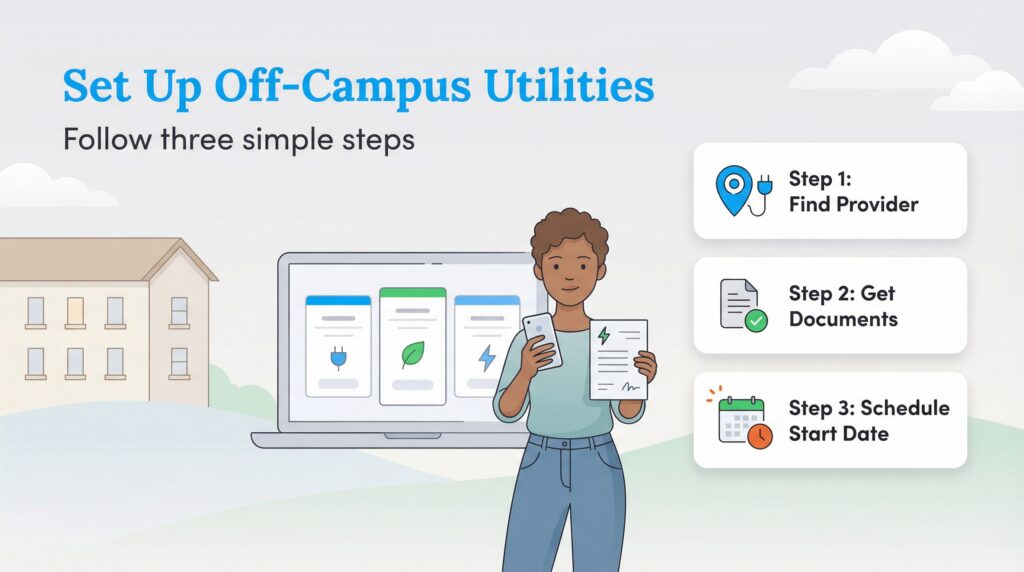
The actual process of setting up accounts is straightforward once you know the steps. We can break down the “how-to” so you feel confident making those calls.
Step 1: Find Your Provider
If you live in a regulated energy market, there is likely only one utility company for your area. You simply call them and set up an account. However, if you are moving to a deregulated market like parts of Texas, Pennsylvania, Georgia, or Ohio, you have the power to shop around. In these areas, you can compare rates from different retail energy providers to find the best deal.
Compare Utility Providers for Your Home
Find which utilities service your address and connect your home to the best electricity, natural gas, water, internet, and trash companies in your area.
For example, in Texas, you can visit the official Power to Choose website to compare electricity plans. Taking time to shop in deregulated areas can save you significant money over the course of a semester.
Step 2: Gather Your Documents
Utility companies need to verify your identity before turning on service. Have these documents ready before you pick up the phone or go online:
- Your signed lease agreement (proving you live there).
- A government-issued ID (Driver’s license or passport).
- Your Social Security Number (for credit checks).
- A method of payment (checking account number or credit card).
Some companies may also ask for proof of prior service or a letter of credit if you’ve had utilities before, so keep any old account numbers handy.
Step 3: Schedule the Service
Give the provider your move-in date as the “start service” date. Ideally, set this for the day before you actually move in to ensure everything is running when you arrive. Always ask for a confirmation number or email so you have proof of your request.
Managing Deposits and Credit History
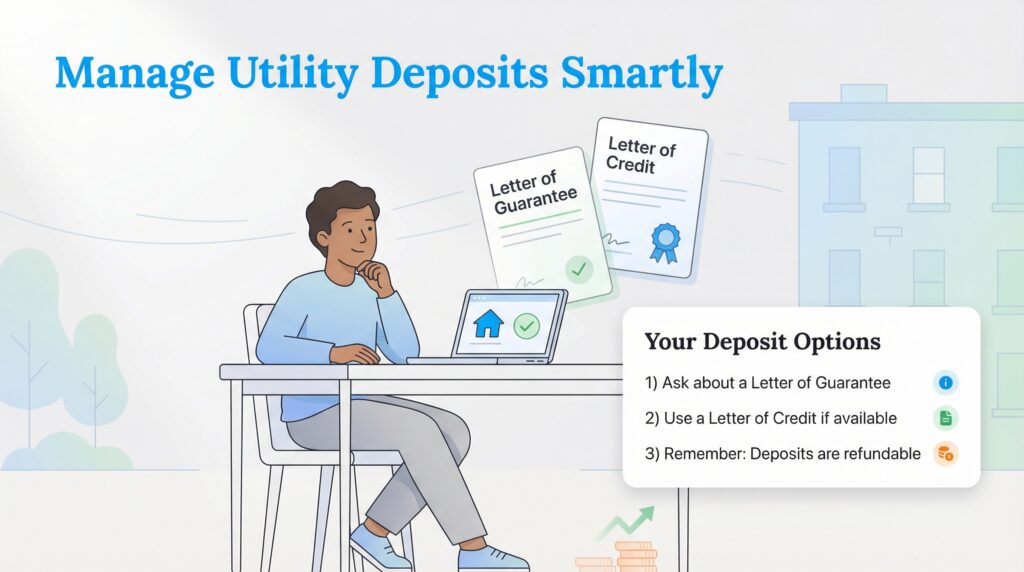
One of the biggest pain points for students is the security deposit. Utility companies often run a credit check to determine if you are a risky customer. Since many students have a “thin file”, meaning little to no credit history, companies may ask for a deposit upfront to protect themselves against non-payment. A utility deposit is a refundable amount you pay upfront that the company holds in case you don’t pay your bill.
You have a few options to handle this. First, ask about a Letter of Guarantee. This may allow a parent or guardian with good credit to co-sign for you, which can sometimes reduce or even waive the deposit requirement, depending on the utility’s policies. Second, if you have paid utilities in your name before, you can ask your previous provider for a Letter of Credit proving you paid on time. If your parents are helping, it’s worth having an honest conversation early about whether they’re comfortable cosigning or fronting a deposit.
If you must pay a deposit, remember that it isn’t a fee, it’s your money held in trust. As long as you pay your bills on time, you typically get the deposit back with interest after 12 months of good standing or when you close the account.
Money-Saver: If a deposit is required and you can’t get a co-signer, ask the representative if the deposit can be split into installments over your first few bills rather than paying the full lump sum upfront.
Splitting Utilities With Roommates
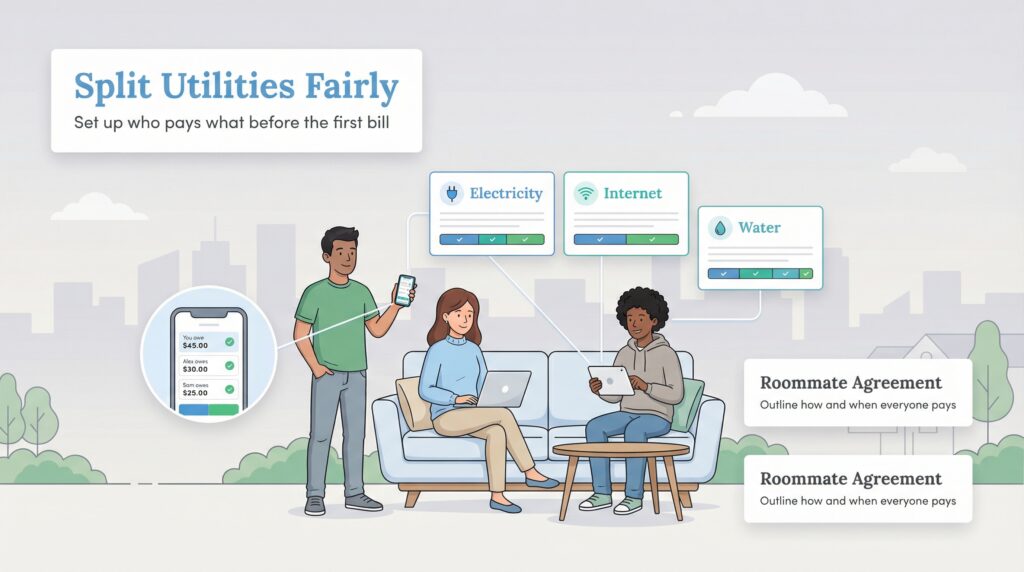
Money is the quickest way to ruin a roommate relationship. Deciding how to split utilities with roommates requires clear communication before the first bill arrives.
You generally face the “Whose Name is it In?” dilemma. You can put all bills in one responsible person’s name, or you can split the burden, with one roommate taking the electric account and another taking the internet. Splitting them up spreads the risk; if one person handles everything and the others don’t pay, that one person’s credit score is on the line.
To keep things fair, use payment apps like Splitwise or Venmo. These apps allow you to input the bill amount and immediately request shares from your roommates. It creates a digital paper trail of who owes what. We also highly recommend drafting a simple Roommate Agreement. Write down exactly how bills will be split (equally? by room size?) and the deadline for sending money to the account holder each month. For example, you might write: “Each roommate agrees to send their share of the electric bill to [Name] by the 5th of every month.”
Average Student Utility Costs
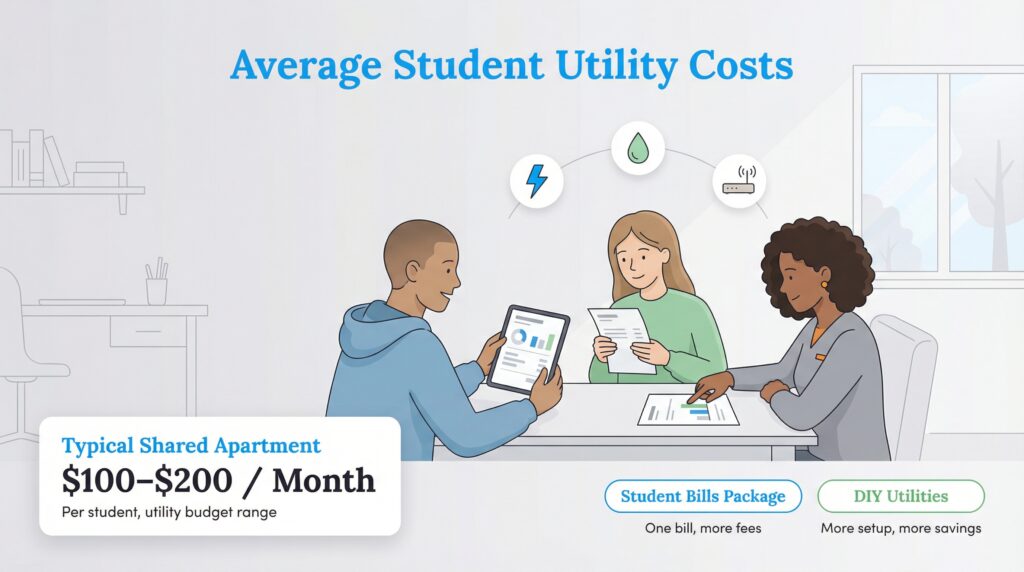
Budgeting is difficult when you don’t know what to expect. While costs vary wildly depending on your city, the size of your apartment, and the local climate, having a ballpark figure helps you plan. These are rough ranges based on typical U.S. student apartments; your actual costs can be higher or lower depending on where you live and how much energy you use.
For many students, total utilities for a shared apartment often land around $100–$200 per person per month, depending on your area and how energy-efficient your habits are. Generally, you should budget for the following monthly ranges in a shared apartment:
| Utility | Estimated Cost (Total Apartment) | Estimated Cost Per Person (4 Roommates) |
|---|---|---|
| Internet | $50–$80 | $12.50–$20 |
| Electricity | $80–$150 | $20–$37.50 |
| Water/Sewer | $30–$60 | $7.50–$15 |
| Natural Gas | $20–$50 | $5–$12.50 |
When looking at average student utility costs, you might see offers for “student bills packages” that bundle everything into one payment. When comparing student bills packages vs DIY setups, bundling offers convenience because you only pay one bill. However, doing it yourself (DIY) is usually cheaper because you avoid the third-party service fees these package companies charge. Before you sign up, compare the package’s monthly price and contract length against what you’d pay by choosing each utility yourself, including any student discounts individual providers offer.
Eco-Friendly Tips to Lower Your Student Bills

You don’t need to own your home or install solar panels to be eco-conscious. Small behavioral changes can lower your carbon footprint and your monthly expenses, leaving you more cash for weekends.
- Swap to LEDs: If your landlord uses old incandescent bulbs, swap them out for LED bulbs. They use 75% less energy. Keep the old bulbs in a box and switch them back when you move out so you can take your efficient LEDs to your next place.
- Use Smart Strips: Gaming consoles, TVs, and laptops suck power even when they are turned off (known as “vampire power“). Plug your desk setup into a smart power strip that cuts power completely when devices aren’t in use.
- Cold Water Wash: Washing your clothes in cold water cleans them just as well as hot water for most loads but saves the energy used by the water heater.
Eco Edge: Check if your electricity provider offers a “Green Plan.” These plans source 100% of your usage from renewable energy like wind or solar, making it an easy way for students to support clean energy without extra equipment.
Successful Utility Setup Means Stress-Free Studying
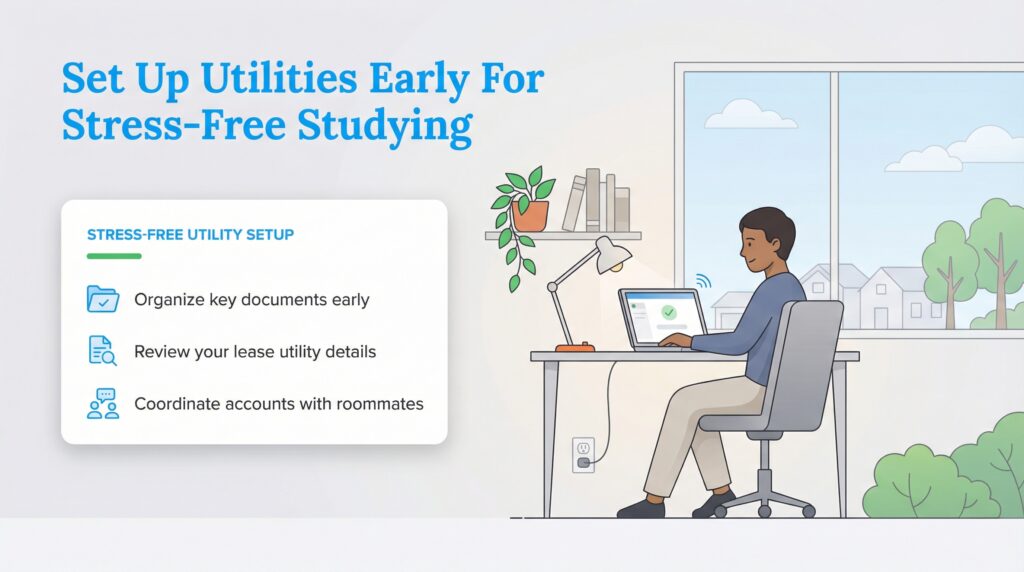
Setting up utilities might feel like a boring administrative chore, but getting it done early is the key to a stress-free semester. By organizing your documents, understanding your lease, and communicating clearly with your roommates, you avoid the panic of power outages and late fees. Once these accounts are active, you can relax, focus on your studies, and enjoy the independence of your new home.
Frequently Asked Questions About Student Utilities
Do students pay a deposit for electricity?
What if I don’t have any credit history yet?
Can I choose my own internet provider in an apartment?
What happens if I forget to set up utilities before move-in?
How do I set up the electric bill in my name?
Is it cheaper to bundle internet and cable?
About the Author

LaLeesha has a Masters degree in English and enjoys writing whenever she has the chance. She is passionate about gardening, reducing her carbon footprint, and protecting the environment.