

Confirm your home’s heating fuel, utility providers, and winter energy needs before you move to North Dakota
Key Takeaways
- Confirm providers by street address, because electricity, gas, water, and internet availability can vary within the same community.
- Review 12 months of utility usage and bills before budgeting, especially if your new home uses propane or electric resistance heat.
- Prepare for freezing weather before move-in by arranging uninterrupted heating service and checking insulation, plumbing, and safety equipment.
Moving to North Dakota means planning for more than a new address. Your heating system, local utility territory, and home’s insulation can make a substantial difference to your monthly budget, especially during winter. We will help you compare communities, identify the services your property needs, and prioritize practical upgrades so you can settle in with fewer surprises.
Living in North Dakota Pros and Cons: What to Expect Before You Pack
Weighing the living in North Dakota pros and cons comes down to a simple trade-off: you get notable financial breathing room in exchange for braving extreme seasonal weather. Before you pack your boxes and load the moving truck, take a look at how the Peace Garden State measures up across key economic and lifestyle metrics.
| Relocation Metric | North Dakota Snapshot | National Comparison & Context |
|---|---|---|
| Population | ~783,926 (2023 Census Estimate) | One of the least densely populated states, offering wide-open spaces |
| Cost-of-Living Index | 89.0 (BEA Regional Price Parity, 2022) | Roughly 11% lower than the national baseline |
| Typical Home Value | ~$291,000 | Significantly below the U.S. typical home value |
| Median Gross Rent | ~$959 (2022 Census ACS) | Significantly more affordable than coastal and major metro averages |
| Personal Income Tax Rate | 0%, 1.95%, or 2.5% | Low graduated brackets based on tax year and filing status |
The Perks: Affordable Housing, Low Taxes, and Booming Jobs
Thousands of people relocate to North Dakota each year, drawn by the overall lower cost of living and robust job opportunities. Residents benefit from a low personal income tax structure, with thresholds depending on filing status and the tax year. Property taxes vary depending on where you buy, but housing savings are common compared to national averages. You will also likely reclaim hours of your week thanks to shorter average daily commutes. The job market is remarkably resilient, fueled by thriving healthcare networks, agriculture, energy production, and a growing technology corridor.
The Realities: Sub-Zero Winters, Long Drives, and Spring Flooding
We won’t sugarcoat the weather. Winter stretches across nearly six months of the calendar, bringing fierce prairie winds and wind chills that routinely plummet well below zero. Outside the primary cities, geographic isolation is real, meaning you might drive an hour or more for specialty shopping or medical care. Once the snow melts, spring snowmelt along the flat Red River Valley can trigger seasonal flooding. Always review a property’s flood exposure and your flood insurance needs before signing a lease or closing on a home. Fortunately, with preparation and a tight, energy-efficient home setup, you can handle every season with reduced risk and uncertainty.
Quick Fact
While total state energy consumption includes substantial industrial and nonresidential activity, extreme winter temperatures mean residential heating efficiency is still crucial for your personal budget when you live on the plains.
Before You Sign a Lease or Purchase Agreement
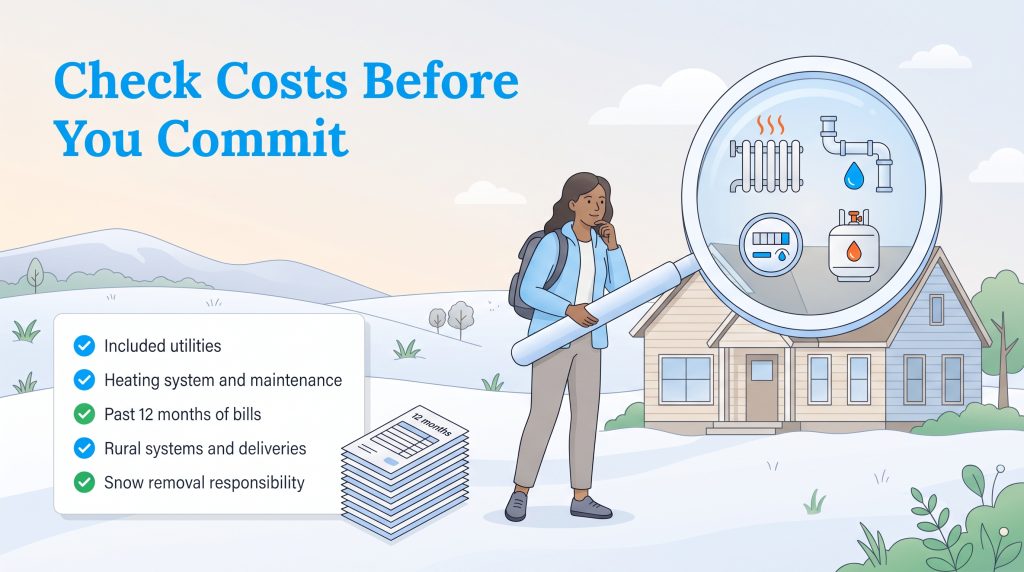
A home’s sticker price only tells part of the affordability story. Before committing to a property in North Dakota, take time to investigate the hidden operational costs of the home.
- Utility inclusions: Clarify exactly which utilities are included in your rent, especially water, heat, and trash collection.
- Heating systems: Identify the heating equipment, fuel source, and who is responsible for seasonal maintenance.
- Historical data: Request the past 12 months of consumption and utility bills for the property to gauge winter energy demands accurately.
- Rural considerations: If moving outside city limits, confirm the condition and maintenance schedules for rural water systems, private wells, septic tanks, or propane deliveries.
- Snow removal: Determine who is legally responsible for clearing sidewalks, driveways, or private access roads after a blizzard.
Best Places to Live in North Dakota: Top Hubs and Utility Availability
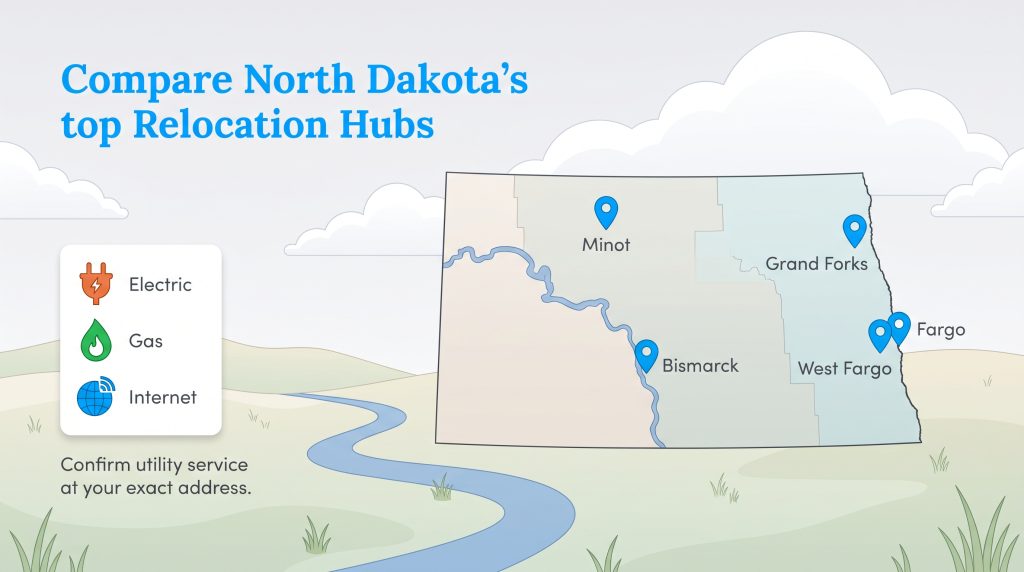
Finding the best places to live in North Dakota starts with understanding the state’s distinct geography. Your day-to-day lifestyle, career options, and even your utility providers shift dramatically depending on whether you settle in the eastern Red River Valley, the central Missouri River corridor, or the western Bakken oil patch. Compare the top five relocation hubs below to see which community fits your household best. Please note that the utilities listed below are examples of typical providers; you must confirm availability by your exact street address.
| City | Vibe & Key Industries | Primary Electric Providers | Primary Gas Providers | Major Internet Providers |
|---|---|---|---|---|
| Fargo | Bustling college town; tech, healthcare, manufacturing | Xcel Energy, Cass County Electric Co-op | Xcel Energy | Midco, Sparklight |
| West Fargo | Family-oriented suburb; schools, retail, remote work | Cass County Electric Co-op, Xcel Energy | Xcel Energy | Midco, Sparklight |
| Bismarck | Scenic river capital; state government, healthcare, energy | Montana-Dakota Utilities (MDU), Capital Electric Co-op | MDU | Midco, BEK Communications |
| Grand Forks | Collegiate and aerospace hub; education, UAS defense, agribusiness | Xcel Energy, Nodak Electric Co-op | Xcel Energy | Midco |
| Minot | Military and trade center; Minot Air Force Base, energy, rail | Xcel Energy, Verendrye Electric Co-op | MDU | Midco, SRT Communications |
Moving to Fargo, ND, and the Red River Valley
If you want urban amenities without big-city headaches, moving to Fargo, ND, puts you right at the cultural heart of the eastern border. Anchored by North Dakota State University (NDSU), Fargo buzzes with revitalized downtown dining, software startups, and major medical centers. Right next door, West Fargo has transformed into a magnet for young families and remote professionals. An hour north up Interstate 29, Grand Forks pairs the collegiate spirit of the University of North Dakota (UND) with a booming unmanned aircraft systems (UAS) sector and budget-friendly starter homes.
Settling in Central and Western Hubs: Bismarck, Minot, and Rural Towns
Head west toward the Missouri River and the flat prairie gives way to rolling hills and dramatic badlands. Bismarck serves as the state capital and healthcare anchor for central North Dakota, offering scenic river trails and a relaxed pace of life. Farther north, Minot blends a proud military community around Minot Air Force Base with regional trade and agriculture. If your job takes you to smaller western hubs like Williston or Dickinson, pay close attention to housing age and heating fuel before signing a lease or mortgage. Older homes or rural acreages outside municipal gas lines often rely on propane or electric baseboards, which can heavily impact your winter utility budget.
Setting Up Utilities in North Dakota: Providers, Co-ops, and Average Costs
Your utility costs in North Dakota will depend heavily on your home’s size, heating fuel, insulation, local rates, and which services your rent includes. Rather than relying on a statewide average, ask the seller or landlord for 12 months of usage data for the property, then confirm current rates and fixed charges with each local provider. According to the U.S. Energy Information Administration’s North Dakota State Energy Profile, the state generates a significant portion of its electricity from coal and an impressive amount from wind power. Thanks to abundant local generation, residential retail electricity rates remain among the lowest in the country, even though frigid winters drive up total kilowatt-hour usage.
Navigating Investor-Owned Utilities vs. Rural Electric Cooperatives
Setting up utilities in North Dakota requires knowing how the state divides its power grid. Unlike deregulated states where you shop for competing power marketers, your electric service is strictly determined by your home’s address. Move into older city limits in Fargo, Grand Forks, or Bismarck, and you will likely set up service with an investor-owned utility like Xcel Energy or Montana-Dakota Utilities (MDU), while Otter Tail Power Company covers dozens of smaller towns. However, if you buy a home in a fast-growing suburb like West Fargo or Horace — or settle on rural acreage — you will join a member-owned distribution cooperative such as Cass County Electric Cooperative, Capital Electric Cooperative, or Verendrye Electric Cooperative. Cooperatives may allocate margins to members as capital credits. When and how those credits are paid depends on the cooperative’s policies and financial position.
Natural Gas, Propane Delivery, Water, and High-Speed Internet
Once you have confirmed your electric provider, arrange your other home services by coordinating with the specific utility providers that service your property:
- Heating Fuel: Urban homeowners typically get natural gas piped directly from Xcel Energy or MDU. In rural areas without gas mains, homes rely on electric heat or delivered liquid propane. If your new home uses a propane tank, verify whether the tank is owned by the seller or leased from a local business. Summer “pre-buy” contracts may offer competitive fuel rates, but be sure to review minimum purchase requirements, fees, and contract terms.
- Water, Sewer, and Trash: Inside city limits, many municipal halls bundle water, sewer, and waste collection into one monthly bill. Rural homes rely on private wells, rural water systems, and septic systems, so always schedule a well water quality test and septic inspection before closing.
- Broadband Internet: Verify broadband availability at your specific address. Regional heavyweights like Midco and Sparklight, alongside rural telecom cooperatives like BEK Communications and Dakota Central, deliver gigabit-speed internet even to remote farmsteads where infrastructure is installed.
Money-Saver
Ask your electric and gas provider about enrolling in “Budget Billing” or “Levelized Billing” as soon as you set up your account. These programs smooth out your payments based on your home’s 12-month historical usage. While they don’t lower your total annual cost, they protect your monthly budget from sudden January heating spikes. Keep in mind that providers will periodically review payments and reconcile balances.
Managing North Dakota Winter Heating Costs With Eco-Conscious Upgrades
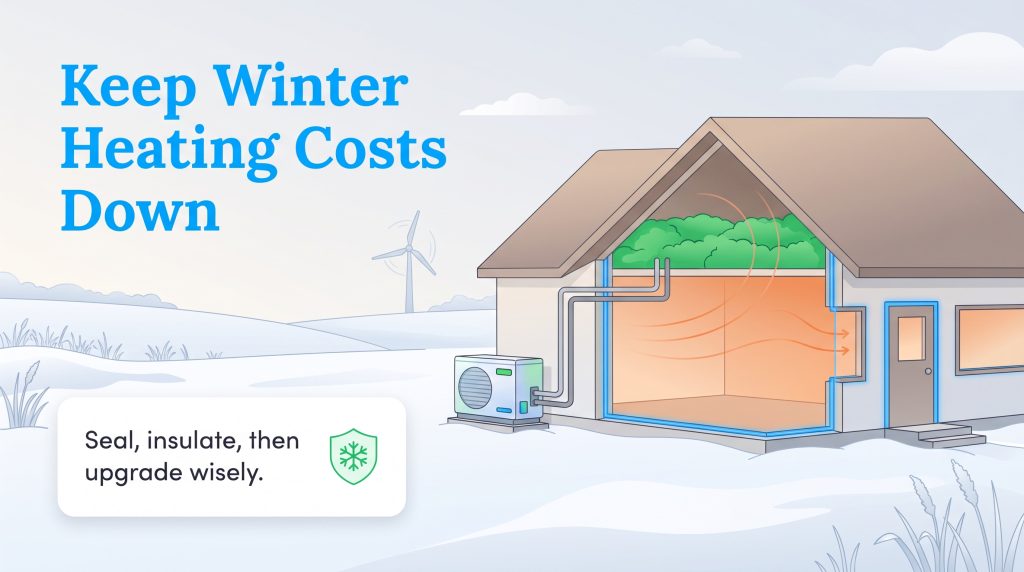
With massive wind energy output and abundant prairie sunshine, you have options to lower your environmental footprint. Making an environmentally mindful choice when prepping your home for winter isn’t just about cutting emissions. It’s the single best strategy for keeping your hard-earned housing savings from vanishing up the chimney.
Weatherizing Your Home for Sub-Zero Prairies
To manage winter heating costs, start with air sealing and insulation before the first October frost arrives. Check your attic first: review the insulation recommendation for your climate zone, note existing insulation levels, and plan your project type to prevent expensive indoor heat from escaping through the roof. Follow the ENERGY STAR Seal and Insulate guidelines to caulk leaky window frames and add weatherstripping around exterior doors. An energy assessment can help you prioritize air sealing and insulation safely. You should also schedule a professional furnace tune-up every fall. If it’s time to upgrade an aging HVAC system, consider a cold-climate air-source heat pump paired with a high-efficiency natural gas furnace. While cold-climate models can operate below freezing, their performance varies. A qualified contractor should properly size the system for local design conditions so that it functions as a smart energy-saving option.
Tapping Into Renewable Energy Incentives and Co-op Rebates
You don’t have to overhaul your whole house at once to benefit from current state incentives and utility rebates. At the state level, homeowners who invest in residential solar, wind, or geothermal heating systems may qualify for a five-year property tax exemption on the value added by the system. Be aware that the federal Residential Clean Energy Credit generally ends for expenditures made after Dec. 31, 2025, so verify installation timing rules with the IRS. For quick, everyday wins in sustainable living, look straight to your utility company. Co-ops like Cass County Electric and investor-owned providers like Xcel Energy frequently offer cash rebates when you install an ENERGY STAR certified smart thermostat or a high-efficiency heat pump water heater. Even better, most North Dakota electric co-ops run “off-peak” dual-heat programs that can offer discounted heating rates if you allow the utility to cycle your electric heat or water heater during peak grid hours. Ensure you have a qualifying backup heating system to participate safely.
Eco Edge
Verify if your utility offers a green power program to residential customers. If available and open for enrollment, these programs let you match a portion of your monthly electricity usage with renewable energy for an additional premium.
Your Step-by-Step Relocating to North Dakota Checklist
Planning a long-distance move across the plains takes coordination, especially when cold weather is on the horizon. Use this North Dakota moving checklist to plan your service transfers, home safety checks, and moving logistics right on track.
- Four to Six Weeks Before Moving: Look up your exact street address to confirm whether your electricity and natural gas are provided by an investor-owned utility or a rural cooperative. Request the past 12 months of utility bills from the seller or landlord so you know what winter heating costs to expect.
- Two Weeks Before Arrival: Contact your electric, gas (or propane delivery), municipal water, and fiber internet providers to schedule service activation. Coordinate account start and stop dates closely with current owners or landlords so you avoid any service gaps.
- First Week in Your New Home: Locate your main interior water shut-off valve immediately in case a pipe ever freezes, and test all smoke and carbon monoxide detectors. Install an ENERGY STAR smart thermostat (if compatible with your specific heating equipment) to automate night setback temperatures, and pack a winter emergency kit for your car.
- Following Your Arrival: Visit the official North Dakota State Government relocation portal to find your nearest Department of Transportation office. Verify the exact legal deadlines to transfer your driver’s license and vehicle registration, as they may require separate appointments. Once settled, book a home energy audit through your utility provider.
Heads Up
If you are moving to North Dakota between October and April, never allow the gas or electric utilities to be disconnected in a vacant home between closing and move-in day. Always coordinate a seamless billing transfer with the previous owner, and winterize all outdoor faucets based on your plumbing configuration before the first hard freeze.
Settling Into Your New North Dakota Home With Confidence
Moving to North Dakota offers a rare combination of career mobility, affordability, and supportive communities. While those sub-zero prairie winds demand respect, they don’t have to drain your bank account or your comfort.
By setting up your utilities early, verifying local services, and making a few eco-conscious weatherization upgrades, you can keep your new home toasty all winter long. Welcome to the Peace Garden State — grab a warm coat, meet your neighbors, and enjoy the wide-open skies.
Frequently Asked Questions About Moving to North Dakota
Preparing for your move requires understanding local utility structures and winter weather demands. Explore answers to common questions about relocating to the state below.
What Is the Average Utility Bill in North Dakota During the Winter?
Can I Choose My Own Electricity Provider When Moving to North Dakota?
Is Solar Power Worth It in North Dakota’s Cold Climate?
How Do I Keep My Pipes From Freezing During a North Dakota Winter?
Do I Need an Engine Block Heater for My Car in North Dakota?
What Is the Difference Between Living in Eastern vs. Western North Dakota?
About the Author

LaLeesha has a Masters degree in English and enjoys writing whenever she has the chance. She is passionate about gardening, reducing her carbon footprint, and protecting the environment. She also recently served as President of the Board for City Sprouts (a community garden).

David has been an integral part of some of the biggest utility sites on the internet, including InMyArea.com, HighSpeedInternet.com, BroadbandNow.com, and U.S. News. He brings over 15 years of experience writing about, compiling and analyzing utility data.