

Preparing for winter heating costs, checking rural services, and planning energy-saving home upgrades will help you settle in without blowing your budget.
Key Takeaways
- While Montana has no general statewide sales tax, heating costs and local housing prices depend heavily on your property’s exact location.
- Setting up rural utilities requires active management, such as checking your address on the FCC National Broadband Map and scheduling delivered propane.
- Planning energy-efficient home upgrades requires comparing installed equipment costs against available rebates and remaining state incentives.
Daydreaming about wide-open spaces and mountain peaks is easy, but settling in takes serious preparation. When you move to Montana, trading predictable suburban billing for delivered propane tanks, rural electric co-ops, and months of heavy heating demand requires adjusting your expectations. Your winter costs depend on the home’s size, insulation, heating equipment, fuel prices, and local weather. Before committing to a property, request its utility history and confirm which services are available at the address. We will walk you through the household costs, regional lifestyle differences, step-by-step utility connections, and eco-conscious upgrades you need to thrive in The Treasure State.
The Benefits and Tradeoffs of Living in Montana
Before packing a moving truck, you need a grounded look at the practical tradeoffs of relocating. Life here pairs outdoor access and a sparse population density of about eight people per square mile with tough logistical realities. You will enjoy a landscape with no general statewide sales tax, yet you also have to prepare for tight housing markets, long drives for groceries in some communities, wildlife safety, and wild temperature swings.
| Pros of Living in Montana | Cons of Living in Montana |
|---|---|
| Unmatched access to public lands, rivers, and national parks right out your back door. | Long, harsh heating seasons with extreme winter cold snaps that can occasionally drop well below zero. |
| No general statewide sales tax on everyday purchases and abundant hydro and wind power. | Scarce housing inventory and high property prices in resort and university boomtowns. |
| Low population density (about eight people per square mile) and tight-knit communities. | Long driving distances to major healthcare facilities, airports, and retail stores. |
| Mild, low-humidity summers, though cooling needs vary by elevation, building design, and wildfire smoke events. | Rural properties often require managing private wells, septic systems, and bear-resistant trash bins. |
What Your Montana Utility Budget Should Include
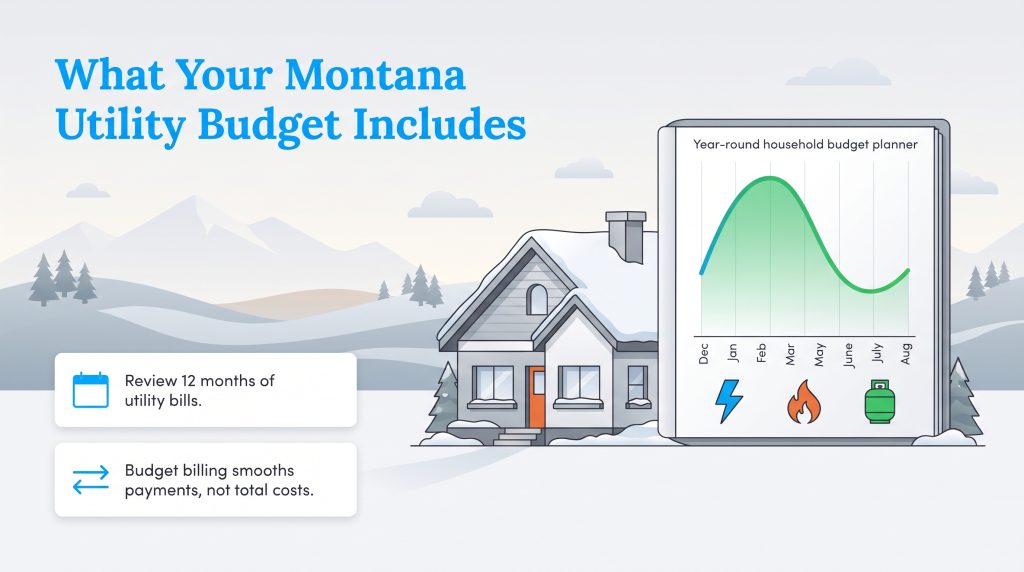
Standard relocation guides often miss the full picture when calculating your household budget. Montana has no general statewide sales tax, but some purchases, accommodations, and resort-area transactions can face other taxes. Because of bitter cold snaps and spread-out rural layouts, your winter costs depend heavily on the home’s size, insulation, heating equipment, fuel prices, and local weather. According to the U.S. Energy Information Administration (EIA), roughly three in 10 Montana households use electricity as their primary heating source, while piped natural gas serves many city residents. Average retail electricity prices stay below the national average, but total winter consumption spikes dramatically.
| Cost & Utility Metric | Montana Average | U.S. National Average |
|---|---|---|
| Average Residential Electricity Rate (2025) | ~13.0 cents/kWh | ~17.2 cents/kWh |
| Statewide General Sales Tax | 0% (resort taxes may apply) | Varies by state |
| Median Gross Rent (2020–2024 Census) | ~$1,081 | Varies by region |
Breaking Down Heating Fuels and Budgeting
Your average utility cost in Montana will swing wildly depending on the calendar. Summer electric bills are pleasantly low because dry mountain nights cool homes naturally, though smoke from wildfires can sometimes make open-window cooling impractical. Once November hits, heating bills take over. If you live in town with piped natural gas, you can expect predictable monthly statements even as usage climbs. If you buy a rural home heated by electric baseboards or liquid propane, the math changes fast. For example, if a supplier delivers 300 gallons of liquid propane at a quoted $3 per gallon, the fuel charge is $900 before applicable fees. This is an example, not a current Montana price quote, but it highlights why you must budget for large upfront deliveries.
Money-Saver
Always ask home sellers or landlords for 12 months of past utility bills during your inspection so January heating costs don’t blindside you. Once you move in, enroll in your utility’s budget billing (equal payment plan) to smooth out steep winter spikes into predictable monthly payments, though this does not inherently reduce your total annual costs.
Choosing a Community That Fits Your Household
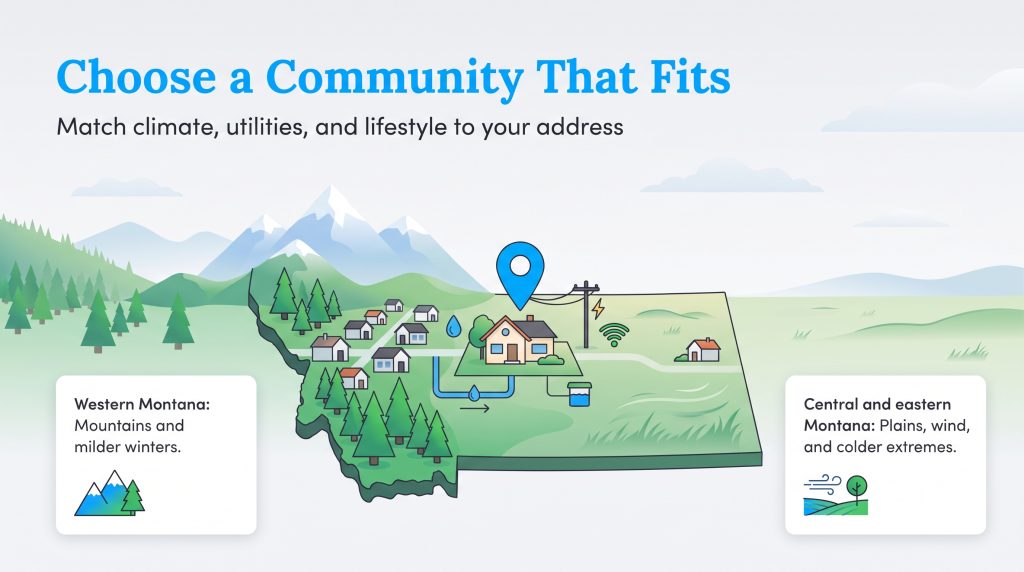
Choosing among the best places to live in Montana means matching your lifestyle to the state’s divided geography. The mountainous western third offers dramatic peaks and milder, damper winters, while the sweeping central and eastern plains bring big skies, intense wind, and colder temperature extremes. Where you drop your anchor dictates both your local climate and the utility infrastructure available at your property line.
Booming University and Tech Hubs: Bozeman and Missoula
Bozeman and Missoula deliver vibrant cultural scenes, top-tier trail access, and booming job markets, though steep housing costs push many workers to commute from surrounding towns like Belgrade, Livingston, or Lolo. However, do not assume city limits guarantee city services. While you might have access to municipal water, sewer, and high-speed fiber internet, you should verify the exact utilities at your address before signing a lease or mortgage.
Practical Urban Centers: Billings, Great Falls, and Helena
If you want your housing budget to stretch further while staying close to major hospitals and retail centers, look toward Billings, Great Falls, and Helena. Billings properties are often served by NorthWestern Energy for electricity and Montana-Dakota Utilities for piped natural gas. Located east of the Continental Divide, cities like Billings and Great Falls experience windier, drier plains climates with classic four-season weather and potential for residential solar power, depending on your home’s roof shading and condition.
Mountain Towns and Acreage: Kalispell, Whitefish, and the Bitterroot Valley
Remote workers and nature lovers often flock to the Flathead Valley around Kalispell and Whitefish or south into the Bitterroot Valley near Hamilton. Buying acreage here gives you elbow room, but it shifts utility management onto your shoulders. Instead of big corporate utilities, you will likely get power from member-owned cooperatives like Flathead Electric Co-op or Ravalli Electric Co-op as examples, alongside managing a private well and septic system.
How to Check Services Before You Sign
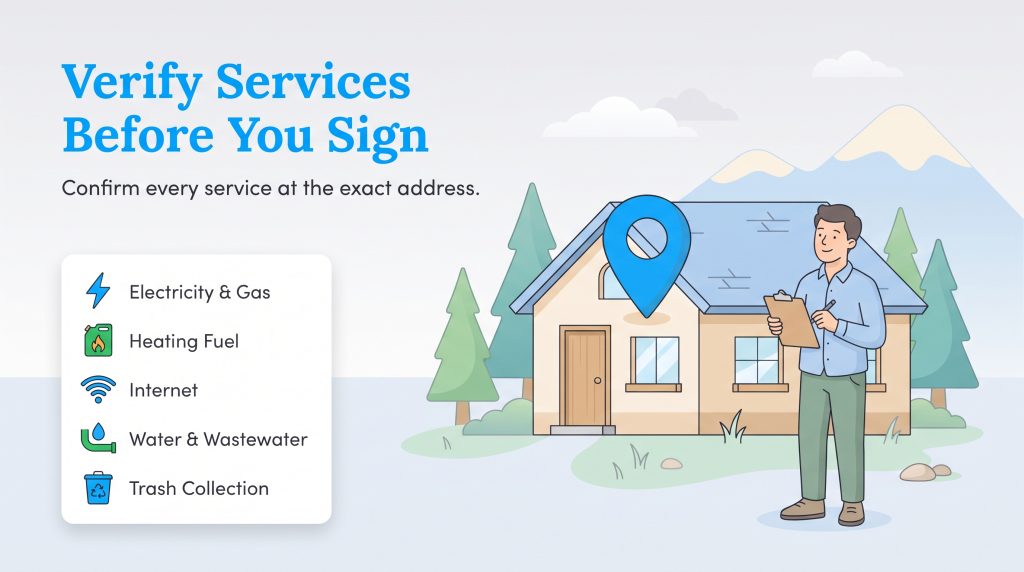
Your first step is verifying exact services at your prospective address. City limits do not guarantee particular utilities, fiber, municipal trash collection, or sewer service. Factoring these variables into your relocation timeline prevents you from arriving at a cold house with no internet connection. If you are a renter, confirm which accounts are your responsibility, whether you need landlord approval for any upgrades, and the exact move-in dates for service transfers.
| Service Checklist | What to Verify Before Moving |
|---|---|
| Electricity & Gas | Identify the specific utility or cooperative serving the address. Check if gas is piped or delivered. |
| Heating Fuel | Ask if the property has a propane tank, verify if it is owned or leased, and check current fuel levels. |
| Internet | Check the FCC National Broadband Map for the address. Confirm installation costs and data policies. |
| Water & Wastewater | Verify municipal connections or schedule well water testing and septic inspections. |
| Trash Collection | Confirm curbside pickup availability or locate the nearest county transfer station. |
Navigating Montana Electricity and Gas Providers
In major cities and towns, you will set up your electricity and natural gas accounts through investor-owned utilities like NorthWestern Energy or Montana-Dakota Utilities (MDU). However, much of the state’s rural landscape is powered by member-owned rural electric cooperatives. When researching Montana electricity and gas providers for a country property without underground gas lines, you might need to lease or purchase a stationary propane tank and schedule autumn fuel deliveries through a local co-op or independent supplier. For most residential movers, the practical first step is to identify the electric utility or cooperative serving the address. Montana has limited electricity-supply choice provisions and legacy eligibility exceptions, so do not assume you can shop among suppliers as you might in a broad residential-choice market.
Finding Reliable Rural Internet Options in Montana
If you work from home, vetting your internet service before signing a lease or mortgage is mandatory. Urban neighborhoods enjoy cable through Spectrum or fast fiber from Quantum Fiber and Blackfoot Communications, but mountain valleys and open prairies require closer inspection. Some rural communities have fiber service, while nearby properties may have limited options. Verify the exact address before relying on a listing’s broadband claims. Check the FCC National Broadband Map first. Beyond fiber territory, fixed wireless networks or low-earth orbit satellite services like Starlink are your most reliable bets. Use the satellite provider’s obstruction tool rather than universally prescribing a northern sky view, and ask about upload speed, latency, data policies, and outages.
Water, Sewer, and Rural Backup Systems
Public systems can serve unincorporated areas, and private services can operate within cities, so independently confirm each service. Out in the county, self-sufficiency is part of the daily routine. You will need to test your private well water annually for relevant contaminants, with additional testing after flooding or changes in water quality. Ensure you arrange septic inspection and pumping based on system condition and professional guidance. You must also haul household garbage to a county transfer station or invest in certified bear-resistant bins if required by local ordinances.
- Identify your electric utility or co-op 30 days out: Call NorthWestern Energy, MDU, or your local rural electric cooperative to transfer service and pay any required membership deposits.
- Check propane tank levels and ownership: Ask the seller if the propane tank is owned or leased, verify current fuel gauges, and set up a delivery account with a local fuel provider.
- Verify fiber availability or satellite line-of-sight: Confirm wired broadband speeds at your exact street address, or use a satellite obstruction tool to check for heavy pine timber blockages.
- Schedule municipal water/trash or well/septic inspections: Open city water accounts two weeks before arrival, or book a certified well flow and water quality test before closing on rural land.
- Test backup power sources: Service your generator safely. Never run a portable generator indoors, in a garage, or near doors, windows, or vents. Follow manufacturer instructions, place portable generators at least 20 feet from the home, and use working carbon monoxide alarms. Never connect a generator directly through a wall outlet; home connections require appropriate professionally installed equipment.
Heads Up
Propane prices fluctuate with seasonal heating demand. Locking in a pre-buy contract or topping off your tank in late summer saves serious cash compared to paying emergency mid-winter delivery fees when mountain driveways are packed with ice.
Winterizing a Home in Montana and Planning Energy Upgrades
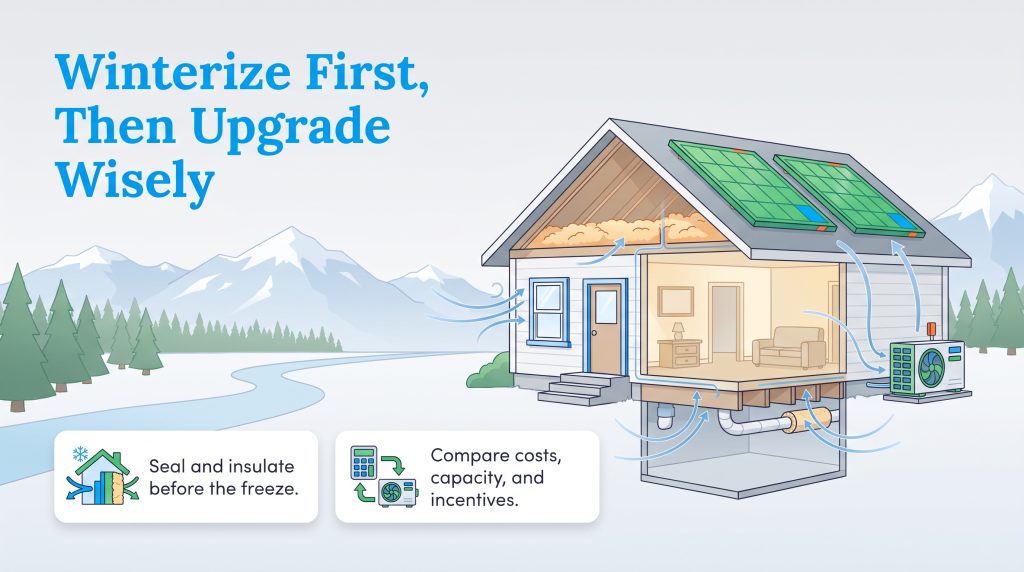
Montanans care deeply about preserving their pristine rivers and mountain air, and that stewardship starts right at home. Pairing thorough weatherization with sustainable home upgrades is an environmentally mindful choice that can help protect your wallet from brutal winter heating spikes. By investing in an energy-saving option or eco-conscious alternative early on, you will keep your indoor spaces cozy without wasting fuel.
Essential Steps for Winterizing a Home in Montana
Properly winterizing a home should top your autumn to-do list before the first September freeze arrives. Start by scheduling a professional home energy audit to pinpoint hidden heat loss. You can tackle major drafts yourself by air-sealing window trim and basement rim joists with caulk and expanding foam, though you should ensure this air sealing does not compromise necessary ventilation or combustion safety. Upgrading attic insulation with a target of R-49 or R-60, wrapping exposed water pipes in unheated crawlspaces, and disconnecting all outdoor garden hoses are also solid steps. When upgrading your HVAC system, installing an ENERGY STAR certified cold-climate air-source heat pump is a proven energy-saving option, though performance and savings depend heavily on proper sizing, installation, low-temperature capacity, and local electricity rates.
Tapping Into Montana Solar Incentives and Renewable Programs
Montana enjoys abundant sunshine, and crisp, cold air actually improves photovoltaic panel efficiency. Adding rooftop solar is an eco-conscious alternative that slashes your personal grid reliance, but project economics depend on your home’s roof shading, orientation, and installation price. While the 30% Federal Residential Clean Energy Credit (Section 25D) generally expired for new expenditures made after Dec. 31, 2025, unused credits generated in prior years can still be carried forward. You should check current IRS guidance before making any purchases. You should also verify the current law, duration, and eligibility limits for state incentives like the 10-year property tax exemption for alternative energy systems or the Montana DEQ Alternative Energy Revolving Loan Program. Finally, check with your specific utility regarding net metering, as participation and credit treatment vary widely between investor-owned utilities and local co-ops.
Eco Edge
Start with air sealing, insulation, and heating controls suited to your equipment. Before buying an eco-conscious alternative like a heat pump, smart thermostat, or low-emission pellet stove, compare installed costs, operating costs, maintenance needs, and any currently available rebates from your utility.
Settling Into Your New Big Sky Home With Confidence
Moving to Montana takes a bit more logistical homework than relocating to a mild-climate suburb, especially when you are navigating winter heating demands, rural broadband options, and member-owned utility co-ops. However, none of these hurdles should slow down your excitement. When you plan your seasonal utility budget early, seal up cold-air drafts before autumn, and take advantage of energy-saving upgrades and available state incentives, you set yourself up for long-term comfort. Get your utility checklist knocked out early so you can keep your monthly bills manageable and spend your weekends exploring Montana’s mountains, trails, and rivers.
Frequently Asked Questions About Moving to Montana
Planning your relocation brings up plenty of questions about navigating utility costs and household setup. Here are answers to some of the most common concerns for newcomers.
How Much Are Utilities in Montana During the Winter?
Can You Choose Your Electricity Provider in Montana?
Is Montana a Good State for Residential Solar Power?
Can You Get Reliable High-Speed Internet in Rural Montana?
What Is the Most Important Home Maintenance Step Before a Montana Winter?
Is It Cheaper to Heat a Home With Natural Gas or Propane in Montana?
About the Author

LaLeesha has a Masters degree in English and enjoys writing whenever she has the chance. She is passionate about gardening, reducing her carbon footprint, and protecting the environment. She also recently served as President of the Board for City Sprouts (a community garden).

David has been an integral part of some of the biggest utility sites on the internet, including InMyArea.com, HighSpeedInternet.com, BroadbandNow.com, and U.S. News. He brings over 15 years of experience writing about, compiling and analyzing utility data.