

Getting Your Electricity, Gas, and Water Connected Before You Unpack Ensures a Smooth Transition Into Your New New Jersey Home
Key Takeaways
- Start transferring your services at least three weeks before moving to avoid lapses in your electricity or natural gas connection.
- New Jersey has a deregulated energy market, which means you can choose your energy supplier while your local utility company delivers the power.
- Water and trash collection are highly localized in the Garden State, requiring you to contact your specific municipality or township to establish service.
Moving often feels like an endless juggling act of packing tape and cardboard boxes, making it all too easy for utility setup to slip right through the cracks. Trying to unpack your kitchen in the dark or taking a cold shower on your first night is the last thing you need after a long day of heavy lifting. This guide walks you through the complete setup timeline for NJ utilities, detailing when to start service, which companies to contact, what to ask your landlord or township, and how to compare energy supply options before move-in. We cover exactly how to set up your essential services and seamlessly transfer utilities to New Jersey so your new home is fully functional the moment you arrive.
Understanding the New Jersey Utility Landscape
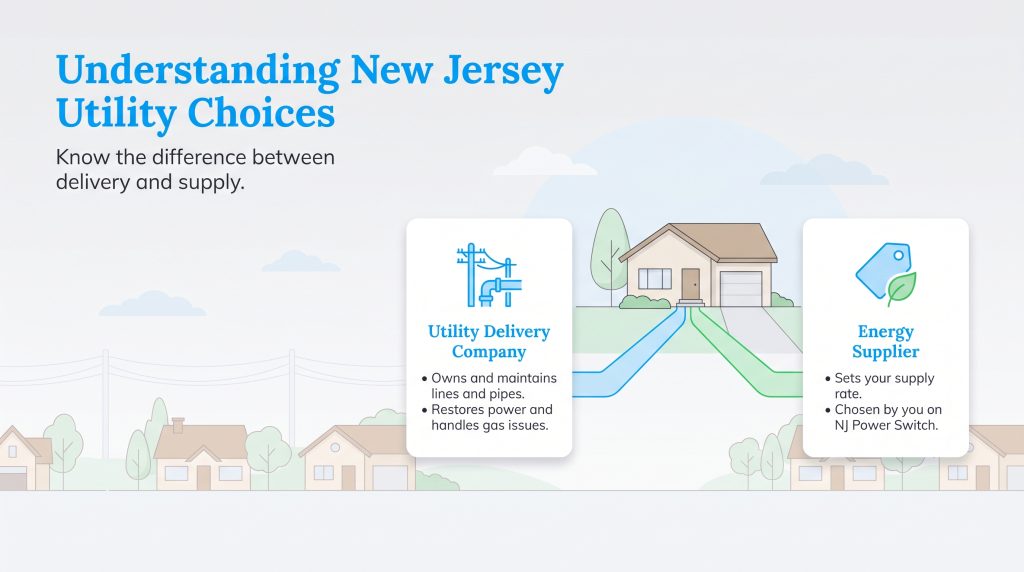
Setting up utilities for a New Jersey move begins with understanding the state’s energy framework, which is closely overseen by the New Jersey Board of Public Utilities (NJBPU). Because the state operates a deregulated energy market NJ, residents have the freedom to shop around for their electricity and natural gas. This means the company that delivers your power into your home isn’t necessarily the same company that generates or supplies it.
Under this system, your regulated delivery utility is assigned based on your geographic location. They own the poles, pipes, and wires, and the NJBPU strictly regulates their delivery rates to ensure fairness and reliability. However, you can stick with your local default provider for your energy supply, or you can pick a competitive third-party energy supplier to potentially lock in lower rates or choose renewable energy options. Knowing the difference between these two roles empowers you to make the best financial and environmental decisions for your household.
| Regulated Delivery Utility | Energy Supplier (The Provider) |
|---|---|
| Owns and maintains the power lines, pipes, and poles. | Purchases the energy on the wholesale market and sells it to you. |
| Restores power during outages and handles gas leaks. | Determines your supply rate (price per kWh or therm). |
| Assigned based on your geographic location. | Chosen by you through programs like NJ Power Switch. |
If you want to exercise your right to choose, you can compare New Jersey electricity suppliers right on the state’s official NJ Power Switch platform.
How to Compare Energy Supplier Offers
When reviewing third-party suppliers on NJ Power Switch, read the fine print carefully before you commit. Compare fixed rates versus variable rates to understand how your monthly bill might fluctuate throughout the changing seasons. You should also check the contract length, early termination fees, and whether any low introductory rates will jump up after a few months. Finally, verify whether the supplier or your local delivery utility will handle the billing so you know exactly who to pay each month.
A Four-Week NJ Utility Setup Checklist
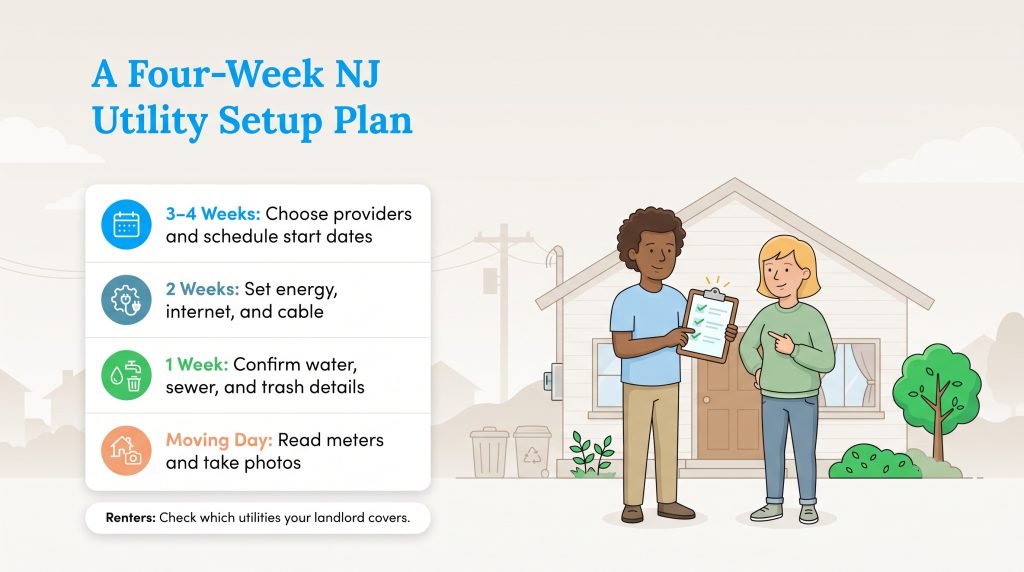
Staying organized is the secret to a smooth transition. When you are busy planning your out-of-state move or jumping across county lines, keeping a strict timeline prevents last-minute panic. Use this moving utility timeline to stay on track.
- Three to Four Weeks Out: Identify your new service providers and schedule activation dates for your new address. Begin to gather your banking routing numbers and proper identification to ensure you can open new accounts smoothly. If you are moving within the state, this is the perfect time to transfer utilities to your new New Jersey address. Schedule the shut-off for your current residence the day after you leave.
- Two Weeks Out: Shop for competitive energy rates if you plan to use a third-party energy supplier. Set up internet and cable appointments, as local broadband technicians often book out weeks in advance.
- One Week Out: Call your local township to confirm water, sewer, and trash collection details. Double-check all confirmation emails from your utility companies to ensure your scheduled activation dates perfectly align with your real estate closing or lease-start dates.
- Moving Day: Read the meters at your old and new homes, snapping clear photos of the numbers with your phone. This protects you from being overcharged on your final bills or inheriting the previous tenant’s unpaid usage.
Renter Versus Homeowner Responsibilities
Your utility setup obligations can shift dramatically depending on whether you are signing a lease or a mortgage. Knowing exactly what you are responsible for prevents surprise bills and service shutoffs down the road.
| If You Are Renting | If You Are Buying |
|---|---|
| Ask your landlord which utilities are included in rent. | Confirm electric, gas, water, sewer, trash, and internet providers before closing. |
| You may only need to set up electric, gas, and internet. | You may need to open municipal water, sewer, and trash accounts. |
| Ask about shared meters in multifamily buildings. | Read meters on closing day and keep photos for your records. |
Required Information to Open a NJ Utility Account
Utility companies need to verify your identity before they turn on the lights or start the water flowing. Having the right documentation on hand before you pick up the phone or open a browser tab will streamline your setup process and help you avoid unnecessary security deposit requests.
To successfully navigate the setup timeline for NJ utilities, keep this documentation checklist nearby:
- Exact Service Address: Include your new unit or apartment number, plus the zip code.
- Activation Date: The specific day you want the service to turn on (usually your move-in or closing date).
- Social Security Number (SSN): Most regulated delivery utilities will run a soft credit check to determine if you need to pay a security deposit.
- Alternative Identification: If you do not have an SSN or prefer not to use it, you can typically provide a U.S. passport, a state-issued driver’s license, or an Alien Registration Receipt Card (Green Card).
- Banking Details: Have your bank routing and account numbers ready if you wish to set up automated monthly payments and waive potential processing fees.
Closing Old Accounts and Forwarding Final Bills
Moving is a two-part process. While turning on the power at your new New Jersey home is vital, you also need to officially cancel utility services at your old residence to stop the billing cycle. Forgetting to close your previous accounts can leave you on the hook for the next occupant’s energy and water usage.
To fully close out your moving lifecycle, follow this straightforward three-step process:
- Schedule Shut-Offs for the Day After Your Move: Moving days rarely go exactly as planned. If you schedule your utility cancellation for the exact day you are packing, you risk losing electricity or internet while you are still loading the moving truck. Set the shut-off date for 24 hours after you plan to leave.
- Provide a Forwarding Address: Your previous utility company will generate a final prorated bill based on your move-out meter read. Give them your new New Jersey address so this final invoice does not go to collections, which could negatively impact your credit score.
- Request Your Security Deposit Refunds: If you paid an initial deposit when you first opened your old accounts, you are legally entitled to get that money back (often with interest) provided your account is in good standing. Ask the customer service representative how and when they will issue your refund check.
Top New Jersey Electricity Providers and Gas Companies
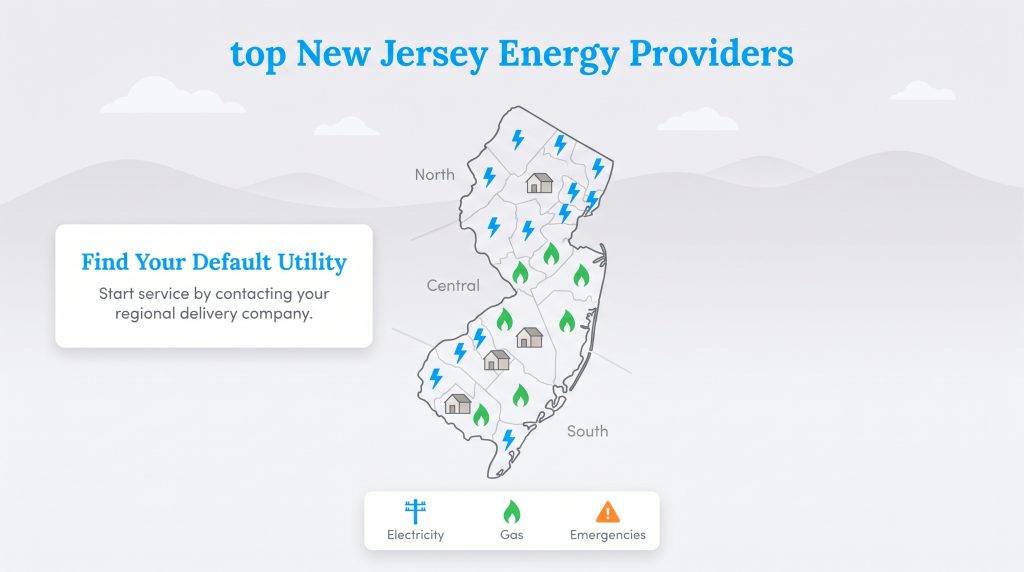
To set up gas and electric service, first identify the delivery utility assigned to your specific address. The state is divided into several distinct territories covering North, Central, and South Jersey. Even if you want to shop around for a third-party energy supplier, you still must contact your regional delivery company to activate the physical meters and turn the power on. If you are looking for guidance on setting up your residential electricity or natural gas service, always start by identifying your default delivery utility.
Here is a breakdown of the primary New Jersey regulated delivery utilities and where they operate. You can start, stop, or transfer service directly on their official websites.
| Utility | Service Type | General Service Area | Deposit Policy |
|---|---|---|---|
| PSE&G | Electric and gas | Much of northern and central New Jersey | Waived with good credit or a Letter of Credit |
| JCP&L | Electric | Northern, central, and Jersey Shore areas | Waived with good credit or a Letter of Credit |
| Atlantic City Electric | Electric | South Jersey | Waived with good credit or a Letter of Credit |
| Rockland Electric Company | Electric | Limited Bergen/Passaic areas | Waived with good credit or a Letter of Credit |
| New Jersey Natural Gas | Natural gas | Central and coastal New Jersey | Waived with good credit or a Letter of Credit |
| Elizabethtown Gas | Natural gas | Northern and central New Jersey | Waived with good credit or a Letter of Credit |
| South Jersey Gas | Natural gas | Southern New Jersey | Waived with good credit or a Letter of Credit |
What to Do During Utility Emergencies
If you smell gas inside or outside your new home, leave the building immediately, avoid using switches or cell phones indoors, and call your gas utility’s emergency line or 911 from a safe location. For electric outages, always contact your delivery utility, not your third-party supplier. Your local regulated delivery utility maintains the physical infrastructure and is entirely responsible for restoring power and resolving active leaks.
Navigating Water and Trash Services in Your Municipality
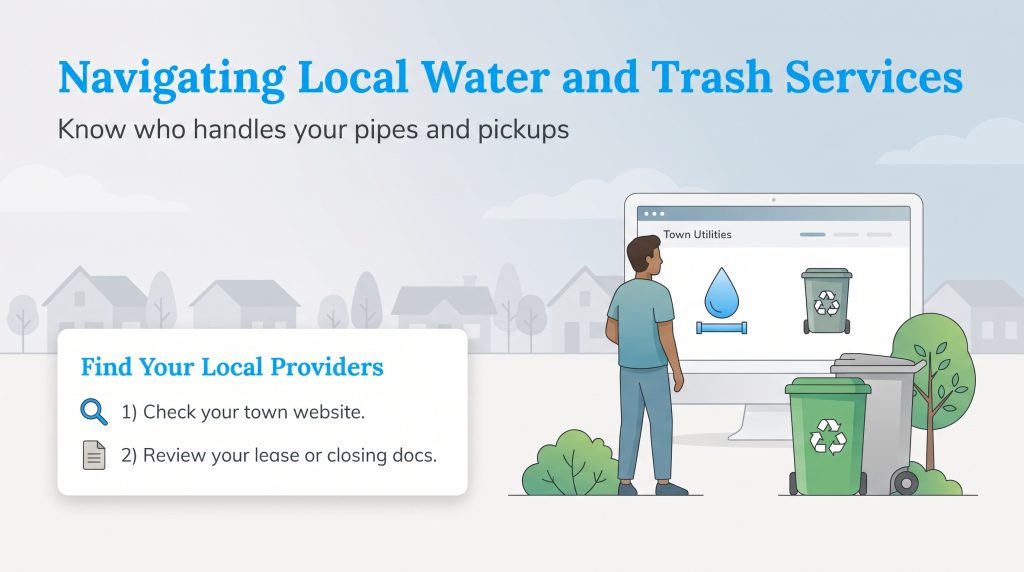
Unlike electricity and natural gas networks that span multiple counties, water and sanitation services in the Garden State are intensely localized. There is no single directory for tracking down water providers by zip code because nearly every township handles these essential services a little differently.
In many towns, the local municipal government owns and operates the water supply. In other regions, a private utility company — such as New Jersey American Water or Veolia — manages the local infrastructure. Trash and recycling collection operates similarly. Some municipalities dispatch city-owned garbage trucks and manage strict recycling calendars, while others require homeowners to hire independent, private sanitation companies for curbside pickup.
If you want a head start on understanding your home water usage, you need to verify exactly who maintains your pipes. Check your township’s official government website for public works details, bulk trash pickup guidelines, and sanitation schedules.
How to Find Your Water and Trash Providers
To avoid service delays when you arrive, follow these quick steps to identify your local providers. Reaching out early ensures your new home has everything you need on day one.
- Search your town’s official website for “water,” “sewer,” “public works,” or “utilities.”
- Check your lease, closing documents, or seller disclosure.
- Ask your landlord, real estate agent, or homeowners association.
- Confirm whether trash collection is municipal, private, or managed by an HOA.
- Ask whether bulk pickup, recycling, and yard waste require separate scheduling.
Setting Up Internet Before Your Move-In Date
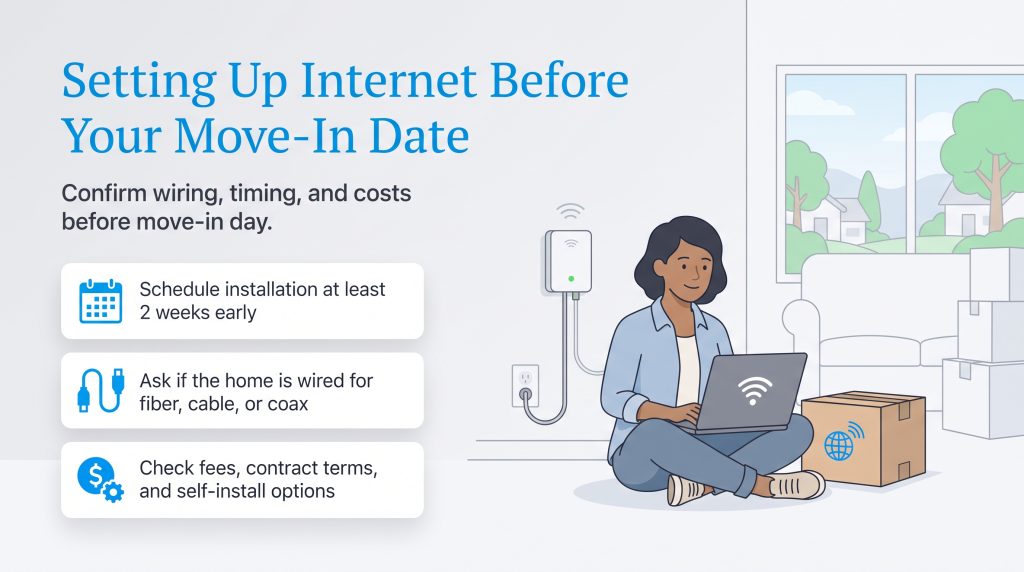
Internet access is just as essential as running water for many households, especially if you work from home or rely on smart home devices. Major internet providers like Verizon Fios, Xfinity, and Optimum operate across New Jersey, but their availability varies greatly by specific street addresses, not just by zip code.
You should aim to schedule your home internet connection installation at least two weeks ahead of your move. When contacting providers, ask whether your new residence is already wired for fiber-optic speeds, traditional cable, or coax connections. Confirm any equipment or installation fees, verify the contract terms, and find out if you qualify for a self-installation kit to save money and skip the technician appointment altogether.
How Much Is the Average Utility Bill in New Jersey?
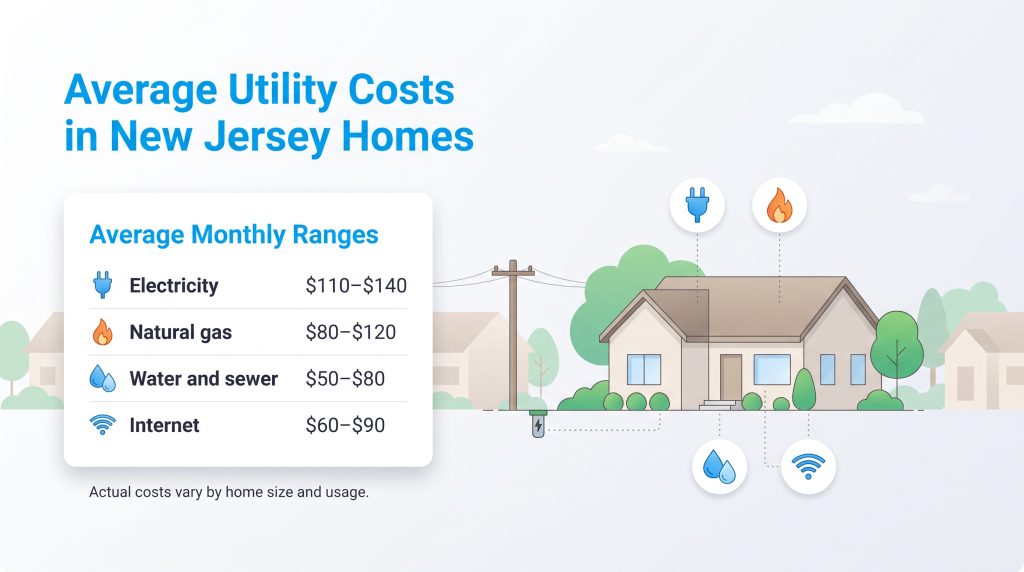
Budgeting for your new home means calculating your anticipated monthly expenses, which prompts many movers to ask: what is the average utility bill in New Jersey? Keep in mind that older homes with drafty windows will run up higher heating costs during freezing February nights, while sprawling suburban houses require serious air conditioning during sticky July afternoons. Renters and homeowners should ask whether deposits, activation fees, or prior balances will affect their initial costs and service start dates.
These are rough monthly planning ranges for a typical New Jersey household. Your actual bills may be higher or lower depending on your home’s size, heating system, insulation, local water rates, and the energy supplier plan you choose. While the state energy consumption data provides helpful context for overall gas and electric rates, costs can spike dramatically during peak summer and winter seasons.
| Utility Type | Estimated Monthly Range | Key Cost Factors |
|---|---|---|
| Electricity | $110 to $140 | Supplier rates and summer air conditioning habits |
| Natural Gas | $80 to $120 | Winter central heating usage |
| Water and Sewer | $50 to $80 | Municipal rates and lawn watering frequency |
| Trash Collection | $20 to $60 | Depends on private subscription vs. municipal tax inclusion |
| Internet | $60 to $90 | Broadband speeds and fiber-optic availability |
Financial Assistance Programs (USF and LIHEAP)
If you are worried about managing the average utility bill in New Jersey, state-sponsored financial assistance programs can provide significant relief for qualifying lower-income households. The New Jersey Board of Public Utilities oversees and partners with specific agencies to distribute these funds.
The Universal Service Fund (USF) helps make natural gas and electric bills more affordable by capping these costs at a set percentage of your household income. If you qualify, you will see a monthly credit applied directly to your delivery utility bill. Additionally, the Low Income Home Energy Assistance Program (LIHEAP) offers crucial financial help with winter heating costs and, in some cases, medically necessary summer cooling expenses. You can learn more about income eligibility, view application deadlines, and apply for assistance directly through the NJBPU utility assistance portal or by calling the state hotline.
Eco-Conscious Choices for Your New Jersey Home
Setting up fresh accounts gives you the perfect opportunity to make sustainable decisions right from the start. Because you have the power to choose your energy supplier, you can deliberately select an eco-conscious alternative. Some suppliers offer renewable electricity plans, including plans backed by renewable energy certificates (RECs) that offset your carbon footprint. Compare the plan details carefully so you understand what portion of the electricity supply is genuinely renewable.
Beyond supplier selection, consider the physical upgrades you can make before unpacking your boxes. Swapping out old incandescent bulbs for LEDs and investing in ENERGY STAR certified appliances can substantially lower your daily energy consumption. You should also check out the New Jersey Clean Energy Program for valuable rebates on smart thermostats, high-efficiency HVAC upgrades, and whole-home energy audits. Taking these environmentally mindful choices helps protect New Jersey’s beautiful coastlines and forests while keeping your monthly bills manageable.
Preparing for Your Garden State Arrival
Transitioning to a new home involves quite a few moving parts, but getting your essential services up and running doesn’t have to be a massive source of stress. By tackling your utility checklist early, shopping for competitive energy suppliers, closing out your old accounts properly, and coordinating with your local township, you position yourself for a remarkably smooth arrival. Once the lights turn on, the internet connects, and the hot water flows, you can finally kick back, relax, and enjoy your first evening in your brand-new New Jersey home.
Frequently Asked Questions About New Jersey Utilities
New Jersey utility setup can vary widely by town, landlord, and delivery utility. These answers cover the most common questions movers ask before opening new accounts in the Garden State.
How far in advance should I contact my delivery utility to start service?
Who do I call during a power outage in New Jersey?
Do I have to pay a deposit when setting up utilities in NJ?
Can I transfer utilities if I am moving within New Jersey?
Can I choose my natural gas provider in New Jersey?
How do I find out who provides water to my new NJ address?
Are water and sewer usually included in rent in New Jersey?
Do I need a Social Security number to set up utilities in New Jersey?
How do I transfer my current NJ Universal Service Fund (USF) benefits to a new address?
Should I schedule my utility turn-on for my exact move-in date?
About the Author

LaLeesha has a Masters degree in English and enjoys writing whenever she has the chance. She is passionate about gardening, reducing her carbon footprint, and protecting the environment. She also recently served as President of the Board for City Sprouts (a community garden).

David has been an integral part of some of the biggest utility sites on the internet, including InMyArea.com, HighSpeedInternet.com, BroadbandNow.com, and U.S. News. He brings over 15 years of experience writing about, compiling and analyzing utility data.