
Everything You Need to Know to Set Up Your Account, Understand Your Pricing, and Choose the Most Cost-Effective, Eco-Conscious Energy Plan in New Jersey
Key Takeaways
- Understand New Jersey’s deregulated energy market to evaluate fixed-rate supply alternatives against default 2026 utility pricing.
- Leverage the latest utility apps and maps to instantly report neighborhood blackouts or smoothly transfer your service to a new address.
- Maximize your energy savings by opting into new Time-of-Use rates or cashing in on smart home efficiency rebates.
Between packing boxes and forwarding your mail, relocating requires serious mental bandwidth, but tackling your utility checklist early guarantees a seamless transition into your new space. PSE&G is New Jersey’s oldest and largest investor-owned utility for both natural gas and electric services, and our goal is to simplify the entire setup process for your new home. From understanding current 2026 PSE&G electric rates and navigating the PSEG outage map to maximizing new Time-of-Use (TOU) plans and scoring energy efficiency rebates, we are here to walk you through securing the most sensible, wallet-friendly energy plan for your household.
PSE&G Coverage Area in New Jersey
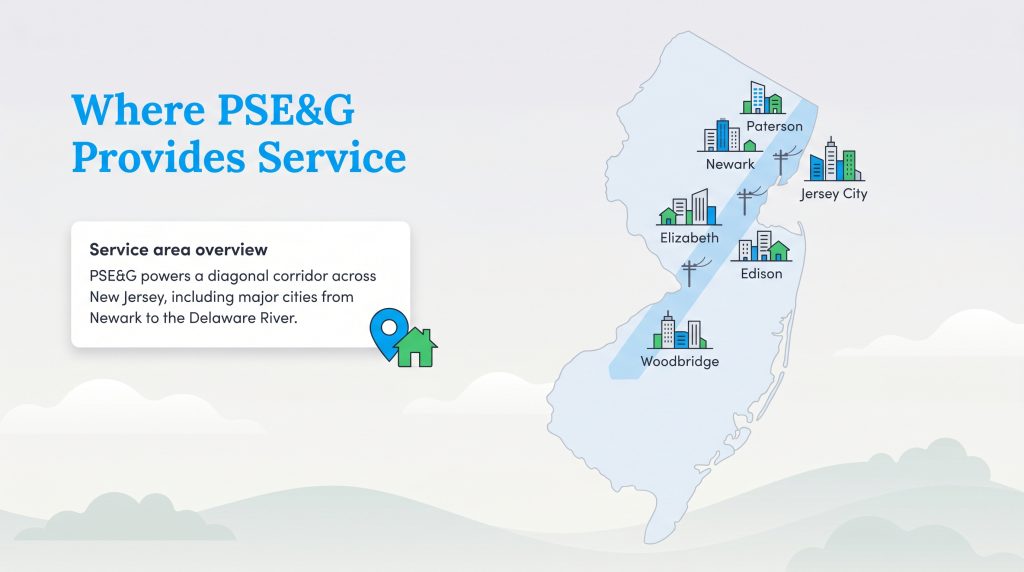
As a regulated utility subsidiary, Public Service Electric and Gas Company operates a massive portion of the regional grid, delivering safe, reliable power to millions of residents. The PSEG coverage area NJ locals rely on spans a distinct diagonal corridor straight across the state, ensuring power delivery from the urban centers near New York City down toward the Delaware River.
You will most likely fall into this service territory if you are moving into major counties such as Essex, Hudson, Union, Middlesex, Passaic, Bergen, or Camden. Specifically, if you are relocating to a bustling municipality like Newark, Jersey City, Trenton, Elizabeth, Paterson, New Brunswick, Edison, Woodbridge, or Camden, this utility will handle your infrastructure. Even if your home uses natural gas for heating and electricity for lighting, you will manage both infrastructural connections through this single, centralized entity.
Current PSE&G Electric and Gas Rates
Budgeting for a new home means knowing exactly what to expect on your first utility invoice. In 2026, standard rates have shifted to accommodate ongoing grid modernization and wholesale energy costs. If you do nothing when you move in, you automatically default to the utility’s Basic Generation Service, which features a variable rate that fluctuates based on state-regulated auctions.
| Service Type | 2026 Price to Compare (Estimated) | Important Details |
|---|---|---|
| Standard Residential Electric | $0.26 — $0.27 per kWh | Default variable rate. Fluctuates periodically based on wholesale market auction prices. |
| Residential Natural Gas | Varies by therm usage | Includes fixed monthly service charges plus the variable cost of the gas commodity itself. |
Standard Residential Rate Versus Time-of-Use (TOU) Plans
While the standard flat rate is easy to understand, it doesn’t reward you for conserving energy when the grid is stressed. To help homeowners save money and ease peak demand, PSE&G time of use rates offer significant discounts if you can shift your heaviest electricity usage — like doing laundry, running the dishwasher, or charging an electric vehicle — to specific off-hours.
The Time-of-Use structure is broken down into three distinct periods:
- Peak Hours (4:00 p.m. — 9:00 p.m. on weekdays): The most expensive time to use electricity, as statewide demand is at its absolute highest.
- Off-Peak Hours (12:00 a.m. — 6:00 a.m. daily): The cheapest time to pull power from the grid. This is the ideal window for overnight EV charging.
- Mid-Peak Hours (All other times and weekends): A moderate, middle-ground pricing tier that covers the majority of standard daytime hours.
Are the PSE&G Time-of-Use rates mandatory? No, they are entirely optional. However, if you have a smart meter installed, opting into this rate often comes with a fantastic 12-month bill protection guarantee. If you end up paying more on the TOU plan than you would have on the standard residential rate after your first year, the utility will credit you the difference, making it a completely risk-free trial.
Understanding Delivery Versus Supply Charges
When you review your first statement, you will notice the costs are split into two main buckets: Delivery and Supply. Delivery charges are the fixed costs regulated by the state that pay for the physical utility infrastructure — the wooden poles, wires, transformers, and gas pipes that bring the energy to your door. PSE&G will always collect this fee. Supply charges, however, cover the actual cost of the electricity or natural gas you consume. Because New Jersey is a deregulated market, this supply portion is entirely open to competition.
How to Shop for Alternative PSE&G Electricity Suppliers
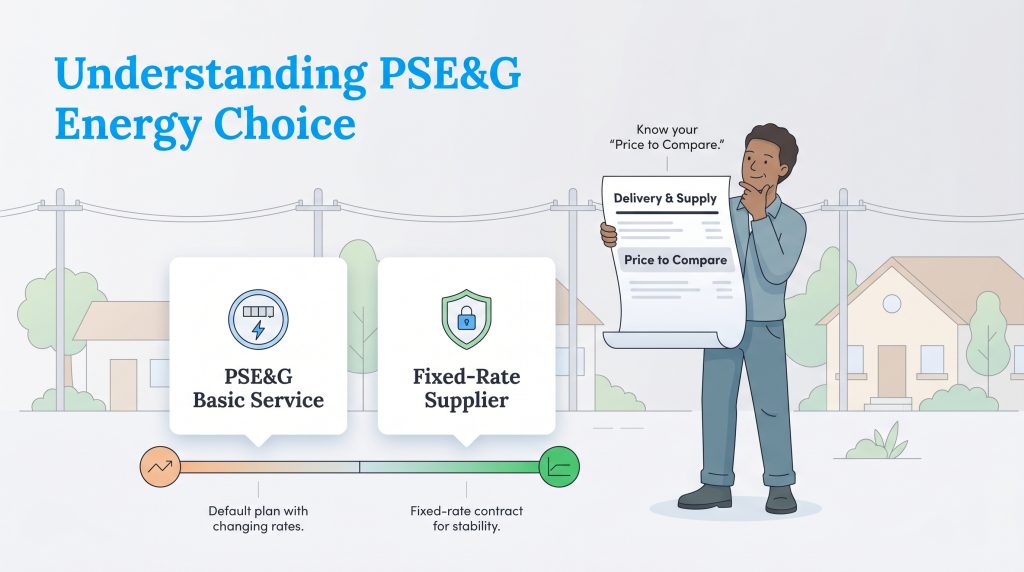
New Jersey’s deregulated energy market gives you the distinct advantage of choice. You aren’t obligated to buy your energy supply directly from the utility. Instead, you have the total freedom to compare PSE&G suppliers and shop for alternative plans that better fit your budget or lifestyle.
To make a financially sound switch, look directly at your monthly invoice to find your specific Price to Compare (PTC). This baseline figure, expressed in cents per kilowatt-hour (kWh), represents exactly what the utility currently charges for your energy supply. Once you know your PTC, you can confidently explore third-party suppliers that offer long-term, fixed-rate contracts. A fixed-rate plan shields your household from unpredictable seasonal price spikes when summer air conditioning or winter heating demands skyrocket. You can evaluate the competitive market by comparing third-party supplier options on the state portal.
You can also use this opportunity to purchase 100% renewable energy plans, allowing you to power your home through wind or solar generation instead of relying on standard fossil fuels. Note that when you do switch suppliers, it generally takes one to two billing cycles for the new rate to physically appear on your invoice.
PSE&G Outage Map and Reporting Power Outages
Experiencing a sudden neighborhood blackout or smelling natural gas in your kitchen is incredibly stressful. Knowing exactly how to contact emergency services and PSEG NJ customer service is a critical part of your home safety plan.
If you smell the distinct rotten-egg odor of a gas leak or notice a downed power line sparking on your property, immediately evacuate the area. Do not flip any light switches or use your cell phone inside the house, as a tiny spark could ignite the gas. Once you are safely outside, call the dedicated gas leak emergency line at 1-800-880-7734 immediately.
For standard, non-emergency blackouts caused by heavy storms or localized grid failures, the absolute fastest way to get real-time updates is by checking the PSE&G NJ Outage Map online. This digital map allows you to view color-coded neighborhood updates, monitor crew dispatch statuses, and see estimated restoration times right from your phone. If you need to officially report your outage, you have three quick options:
- Mobile App: Tap the “Report an Outage” button directly on the home screen.
- Text Message: Text the word OUT to 47734 from the phone number associated with your account.
- Phone Call: Call the automated 24/7 emergency outage line at 1-800-436-7734.
Ways to Save: Energy Efficiency, Solar, and EV Rebates
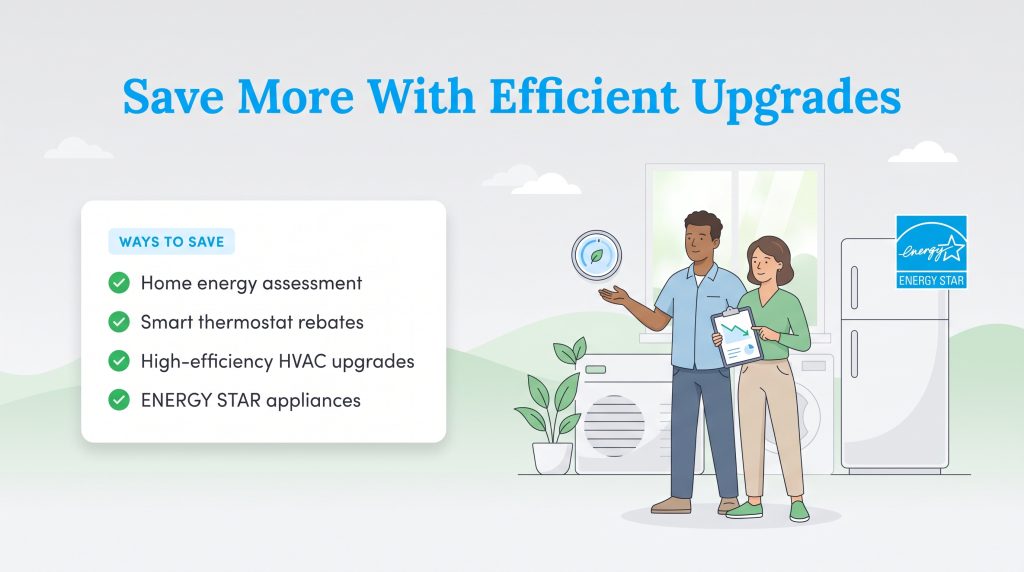
Locking in a competitive supply rate matters, but permanently reducing your household consumption is the most guaranteed strategy for lowering monthly utility costs. To support this, PSEG energy efficiency rebates aggressively target the most power-hungry appliances in your home.
To start, you can apply for an online Home Energy Snapshot. This quick, digital assessment provides personalized energy-saving recommendations based on your specific property footprint. If you want to make larger upgrades, the utility provides instant rebates for installing smart thermostats, upgrading to high-efficiency HVAC units, and purchasing ENERGY STAR certified appliances.
Modern grid initiatives have also introduced powerful new saving mechanisms for eco-conscious homeowners. The SmartFlex Program rewards you with bill credits for allowing the utility to make minor, temporary adjustments to your smart thermostat during extreme peak demand days. Additionally, if you own an electric vehicle, you can cash in on EV charging rebates that help offset the installation cost of a Level 2 home charger. Finally, the GridSmart Battery Program incentivizes solar owners who install home battery storage, offering upfront discounts in exchange for sharing stored power back to the grid during emergencies.
PSE&G Mobile App and Bill Pay Options
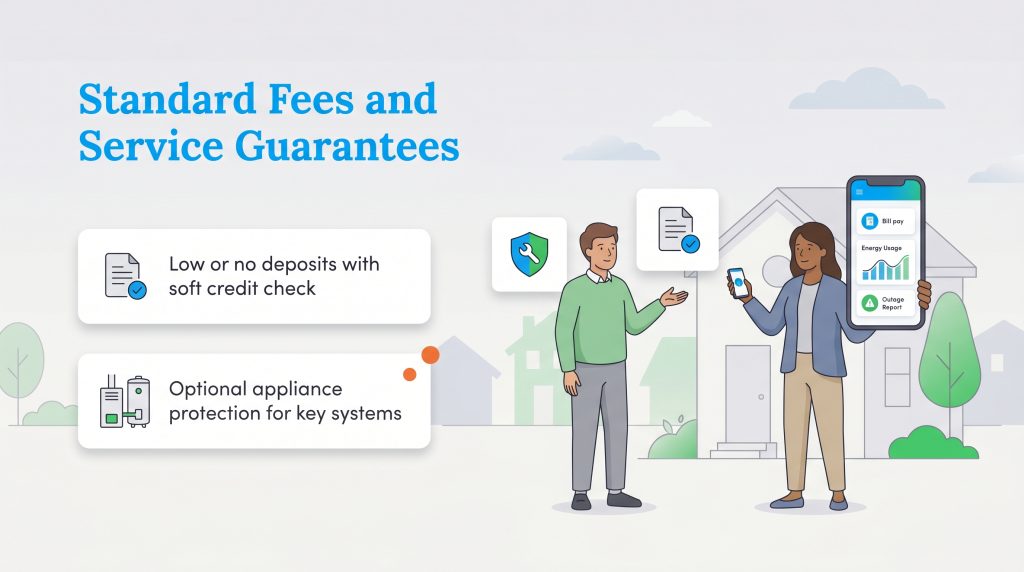
Modern home management happens on your smartphone, and navigating your utility account should be no different. Once you bypass the initial administrative hurdles of establishing service at your new address, you should immediately create your PSEG login credentials online. This grants you full access to a well-rounded digital ecosystem designed to put total control right in the palm of your hand.
The highly rated mobile app acts as your central hub. Using the interface, you can effortlessly track your daily smart meter energy usage by the hour, submit manual meter readings if required, and even initiate a start, stop, or transfer service request if you plan to move again.
When it comes to handling your monthly invoices, the PSEG bill pay system is robust and flexible. Customers can opt into several convenient programs:
- Equal Payment Plan (EPP): A budgeting tool that averages your annual energy usage to create a predictable, flat monthly rate. This eliminates bill shock and prevents massive spikes during sweltering summers or freezing winters.
- Auto Pay and Paperless Billing: Streamline your life by securely linking a bank account for automatic monthly drafts while simultaneously cutting down on household paper waste.
- Deferred Payment Arrangements (DPA): If you fall behind on an invoice, you can quickly explore deferred arrangements via the app to pay down your outstanding balance gradually over time without facing an immediate service disconnection.
Navigating PSE&G Services for Your New Home
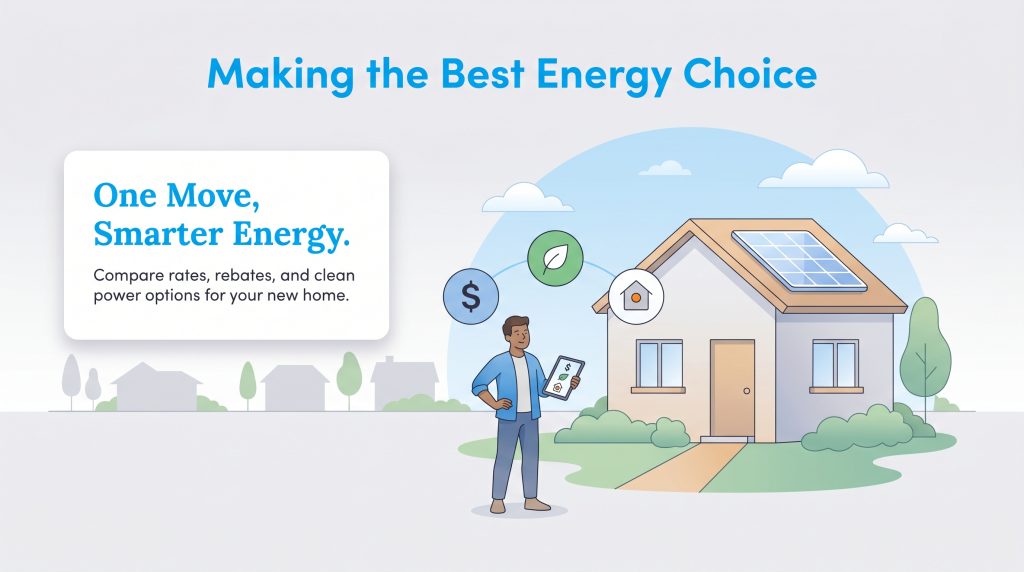
Relocating to a new residence presents the perfect opportunity to conduct a thorough audit of your energy needs from the ground up. By setting up your account efficiently, instantly downloading their feature-rich mobile app, and taking full advantage of New Jersey’s progressive energy choice programs, you can lock in the absolute best rate for your specific lifestyle. Whether you prioritize predictable budget stability through the Equal Payment Plan, rely on the intuitive digital tools for swift outage reporting, or simply want to harness environmentally mindful power sources, understanding your utility options puts you firmly in the driver’s seat. Explore the state’s competitive marketplace, leverage the available smart home efficiency upgrades, and power your new home with total confidence.
Frequently Asked Questions About PSE&G
What is the current PSE&G price to compare for electricity?
As of 2026, the estimated Price to Compare for standard residential electric service sits between $0.26 and $0.27 per kilowatt-hour (kWh). However, this rate fluctuates periodically based on wholesale state auctions. You should always check your most recent billing statement for the exact baseline figure before shopping for third-party suppliers.
Do I have to use PSE&G as my electricity supplier in New Jersey?
No, you do not. Because New Jersey features a deregulated utility market, you are entirely free to shop around for independent energy suppliers. While the utility will always own the local power lines and deliver the energy to your home, you can purchase the actual electricity supply from a third-party company to secure fixed rates or 100% renewable plans.
Are the PSE&G Time-of-Use (TOU) rates mandatory?
No, the Time-of-Use rates are completely optional for residential customers. They are designed as a money-saving tool for households that can shift heavy electricity usage to off-peak hours (such as overnight EV charging). Customers with smart meters who opt into this plan typically receive a 12-month bill protection guarantee to ensure they don’t lose money while testing the structure.
How do I report a PSE&G power outage from my phone?
You can report a power outage directly from your smartphone in a few different ways. The easiest method is to text the word OUT to 47734 from the phone number associated with your account. You can also use the mobile app to report an outage with a single tap, or simply call the automated 24/7 emergency line at 1-800-436-7734.
Does PSE&G provide both gas and electric services?
Yes, within their designated service territory, they operate and maintain the infrastructure for both natural gas and electricity. This makes managing your household utilities incredibly convenient, as you will use a single account portal and login to handle the billing and services for both.
Will switching suppliers affect who I call for outages?
No, changing your energy supplier will never impact your grid reliability or emergency contacts. Even if you purchase your electricity from a third-party company, the utility still owns and maintains the local power poles and wires. You will always contact them directly to report localized outages, downed lines, or natural gas leaks.
About the Author

David has been an integral part of some of the biggest utility sites on the internet, including InMyArea.com, HighSpeedInternet.com, BroadbandNow.com, and U.S. News. He brings over 15 years of experience writing about, compiling and analyzing utility data.