

Navigating local utility systems and preparing your home for the southern climate are essential steps for a successful move to Louisiana
Key Takeaways
- Understanding your specific address utility requirements is crucial because water, waste, and public services can be managed by municipalities, parish agencies, private companies, or even your landlord.
- Budgeting for seasonal energy spikes will protect your wallet, as intense summer heat can drive up cooling expenses.
- Prioritizing energy-efficient household upgrades, such as programmable thermostats and proper weatherstripping, can lower your monthly utility usage and environmental impact.
Whether you’re drawn to the vibrant culture of New Orleans, the booming industrial sectors in Baton Rouge, or the quiet beauty of the bayous, moving to Louisiana requires a bit of strategic planning to ensure your new household runs smoothly from day one. Before you open accounts, ask your landlord, seller, or property manager which companies serve the address and which services are included in your housing payment. Then confirm that information directly with each provider. We want to help you settle into your new home without the stress, which is why we built this comprehensive guide to walk you through everything from estimating your monthly bills to properly setting up your power, water, and internet services.
Weighing the Pros and Cons of Moving to Louisiana
Before packing up the moving truck, weighing the pros and cons of moving to Louisiana helps set realistic expectations for your transition. Life in the Deep South comes with a unique rhythm and a distinct set of environmental considerations. We understand that finding the right balance between lifestyle perks and daily challenges can make or break your relocation experience.
On the positive side, newcomers often celebrate the state’s unique culture and relatively affordable housing. However, the environment can occasionally throw curveballs that demand practical preparation.
- Affordable housing: Compare the full monthly cost of your target home, including housing, insurance, utilities, transportation, and applicable taxes.
- Rich culture: You gain immediate access to world-renowned culinary, music, and festival scenes.
- Challenging climate: High summer temperatures and relentless humidity require a heavy reliance on air conditioning from late spring through early autumn.
- Severe weather: The coastal geography increases the risk of hurricanes, heavy rainfall, and potential flooding during storm season.
While the climate undoubtedly tests your cooling systems, selecting an environmentally mindful choice for home cooling — like installing a high-efficiency heat pump or utilizing natural shading — can help you manage your energy consumption during peak temperatures.
Pro Tip
Check the property’s mapped flood risk and ask about previous flooding, then obtain property-specific insurance quotes before committing. A flood-zone designation alone won’t tell you what coverage will cost.
Breaking Down the Cost of Living in Louisiana
The overall cost of living in Louisiana frequently serves as a primary consideration for individuals migrating from more expensive states like California, New York, or even neighboring regions. If you’re accustomed to spending a huge chunk of your monthly income on rent or a mortgage, you might find significant relief here. The state boasts housing prices and property taxes that fall comfortably below the national average.
Because your housing costs may take up less of your paycheck, you have a much better opportunity to redirect those funds toward personal savings, local entertainment, or home upgrades. However, this financial breathing room doesn’t mean you should ignore your monthly operating expenses. In fact, balancing the books often means shifting your focus from hefty mortgage payments to managing seasonal energy consumption. Because cooling a southern home takes considerable power, discovering smart ways of reducing your utility costs ensures your budget remains intact when August temperatures soar.
Setting Up Utilities in Louisiana Parishes
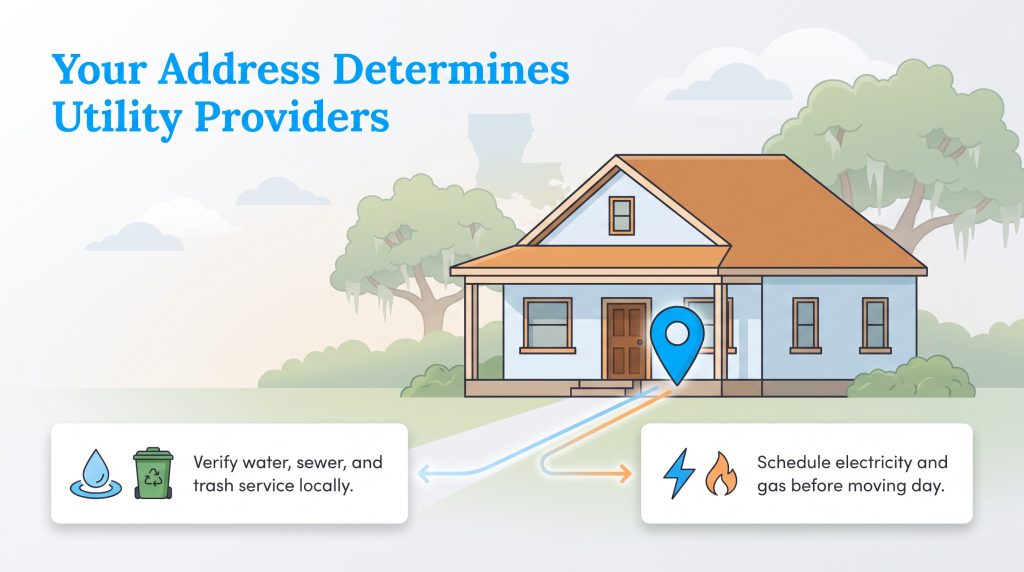
Louisiana uses parishes rather than counties, but your water, sewer, and trash providers depend on your exact address. Services may come from a city, parish agency, utility district, private company, or your landlord. From the moment you sign your lease or closing documents, figuring out your property’s specific utility guidelines should jump to the top of your to-do list.
While local entities handle services like water and waste, larger energy needs fall under different jurisdictions. For most Louisiana homes, the electricity provider is determined by the address rather than selected through a competitive retail marketplace. Your bill can still change because of usage, approved rate changes, fuel charges, and other adjustments. Most electricity and natural gas providers operate under the watchful eye of the Louisiana Public Service Commission. However, there are exceptions, such as Entergy New Orleans, which is regulated by the New Orleans City Council rather than the state commission.
Contacting Your Local Providers for Water and Trash Services
Because water, sewer, and trash collection services vary drastically by address, we highly recommend verifying your providers a few weeks prior to your move. Ask your landlord or real estate agent for the exact names of the companies or municipal departments servicing your new home. Setting up your accounts early ensures your taps are running and your waste bins are delivered by the time you unload the moving truck.
Establishing Natural Gas Connections
Natural gas is commonly used for heating, water heaters, and cooking in many Louisiana homes. Activating this service often requires scheduling an in-person appointment with a technician to guarantee safe activation and properly inspect the lines. Be sure to call your local gas provider well in advance, as appointment slots can fill up quickly during busy moving seasons.
Scheduling Internet and Broadband Installation
Securing reliable internet is essential for remote work, streaming, and managing your new household. Service availability is strictly tied to your street address, with major providers operating in different regional footprints. Compare standard pricing, equipment rental fees, installation charges, and promotional terms before committing to a contract. Since technician appointments can be booked out for weeks, try to schedule your installation as soon as you confirm your move-in date.
Finding the Best Louisiana Electricity Providers
Figuring out your options for Louisiana electricity providers is surprisingly straightforward because the state largely operates under a regulated energy market. You don’t get to pick your utility company, but you do gain the benefit of regulated rates and oversight.
Depending on where you unpack your boxes, your home will likely be serviced by a major investor-owned utility, such as Entergy or CLECO, a municipal electric system, or a member-owned electric cooperative if you move to a more rural community. While base rates remain relatively affordable, the heavy reliance on cooling means your actual monthly bills can still climb. Preparing your home to handle that load efficiently is the best way to keep your energy expenses manageable.
Eco Edge
Check your utility’s current efficiency programs before buying equipment. Eligibility, funding, equipment requirements, and preapproval rules can vary widely for energy-efficient upgrades.
Estimating the Average Utility Bill in Louisiana
When you start crunching numbers for your relocation budget, it helps to look at real data. According to the U.S. Energy Information Administration (EIA), the average monthly residential electricity bill in Louisiana was $140.96 in 2024. However, estimating your total average utility bill requires accounting for extreme seasonal shifts. From May through September, the intense southern heat and heavy humidity can cause cooling demand to rise substantially, driving up energy costs significantly.
While the state’s relatively low per-kilowatt-hour rates help cushion the blow, high consumption will always impact your wallet. Remember that statewide averages aren’t property-specific quotes. To combat seasonal spikes, we strongly advocate for incorporating an eco-conscious alternative to traditional AC usage. Turning on ceiling fans to improve comfort while you are in the room, or programming a smart thermostat to ease up on the cooling when you aren’t home, can help. If you plan to replace outdated appliances, exploring various energy-saving cooling options will give you the upper hand in managing both your comfort and your monthly expenses.
| Expense | Information Readers Should Check |
|---|---|
| Electricity | Annual average bill, summer usage, and applicable charges |
| Natural Gas | Whether the home uses gas and any recurring service charge |
| Water and Sewer | Whether billing is combined and whether the landlord pays |
| Trash | Whether collection is included in another bill |
| Internet | Regular price, equipment charges, installation, and promotional terms |
Your Checklist for Moving to Louisiana
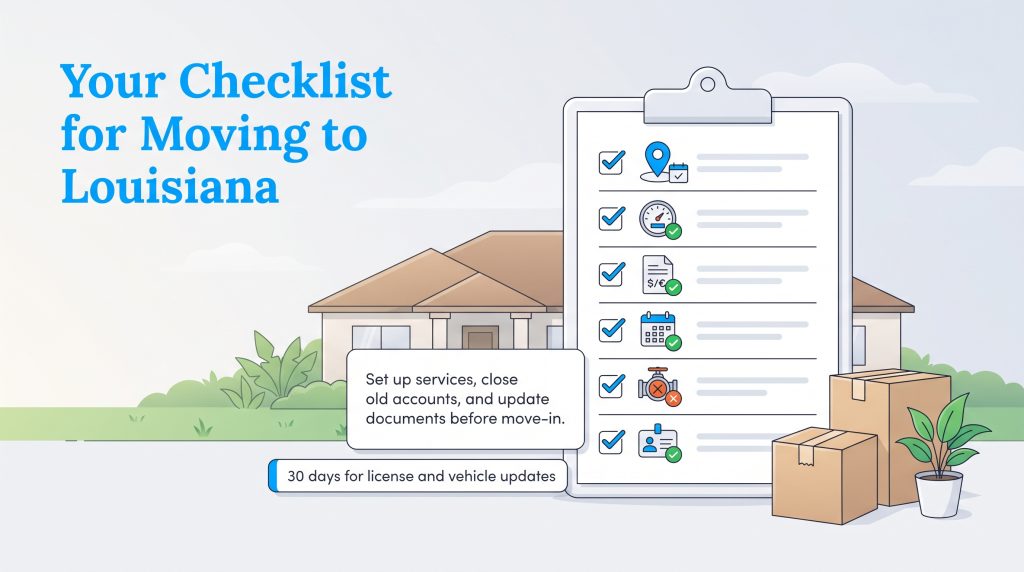
Keeping track of transferring services, updating documents, and securing new accounts can quickly become overwhelming. To simplify your transition, follow this sequence of actions to ensure your household is ready for move-in day.
- Confirm the details: Pinpoint your exact service address, your move-in date, and ask your landlord or property manager which utility services might already be included in your housing payment.
- Identify your providers: Determine exactly which electricity, water, gas, internet, and trash collection companies serve your specific address.
- Check the requirements: Look up the application requirements, fees, potential deposits, and appointment needs for each specific provider.
- Schedule the activation: Request your new service start dates and retain all confirmation details for your records. Try to verify essential services before you actually arrive at the property.
- Coordinate the shutoff: Don’t forget to schedule the final meter readings and utility disconnection dates at your previous residence.
- Update official documents: Change your address with the United States Postal Service (USPS) and prepare to update your driver’s license and vehicle registration.
Quick Fact
New residents have 30 days after establishing residency to transfer an out-of-state driver’s license and register their vehicle at the Louisiana Office of Motor Vehicles (OMV). Depending on your situation, you may need to provide proof of residency, identity, and valid auto insurance.
Preparing for Severe Weather and Power Outages
Louisiana’s coastal geography means residents must be proactive about severe weather and potential power outages, especially during the Atlantic hurricane season. We highly recommend signing up for mobile outage alerts directly through your electricity provider’s app or website as soon as your account is active. This ensures you receive real-time updates on repair times and grid status if a storm knocks out your power.
If you decide to invest in a portable generator to keep your essential appliances running during an outage, strict adherence to safety protocols is non-negotiable. Never operate a generator indoors, in an attached garage, or near open windows, as doing so introduces a severe risk of deadly carbon monoxide poisoning. Always run your generator outside in a well-ventilated, dry area, far away from your home’s air intakes.
Settling Comfortably Into Your New Southern Home
Unpacking that final box and stepping out onto a southern porch is a truly rewarding feeling. While adapting to the Louisiana climate certainly requires some practical preparation, the cultural richness, exceptional food, and welcoming communities make the effort incredibly worthwhile. Embracing the local lifestyle means respecting the environment around you, from the coastal bayous to the humid summers.
By taking a proactive approach to your utilities, you set yourself up for long-term success. Remember that investing in energy-saving options early on — whether that’s sealing drafty windows or upgrading your thermostat — will make your new residence more comfortable and cost-effective. We hope you enjoy everything the Pelican State has to offer, confident in the knowledge that your home is prepared for the seasons ahead.
Frequently Asked Questions About Moving to Louisiana
Relocating across state lines often brings up a wide variety of logistical questions. Review these common inquiries to help you navigate your transition to the Pelican State with ease.
Do I Get to Choose My Electricity Provider in Louisiana?
Why Can Louisiana Electricity Bills Be High Even When Rates Are Relatively Low?
Who Sets Up Water and Trash Service at My New Address?
What Is a Parish and How Does It Affect My Utilities?
Do Renters Need Separate Flood Insurance?
How Can I Make My Louisiana Home More Energy-Efficient?
What Documentation Is Required to Set Up Utilities in Louisiana?
About the Author

LaLeesha has a Masters degree in English and enjoys writing whenever she has the chance. She is passionate about gardening, reducing her carbon footprint, and protecting the environment. She also recently served as President of the Board for City Sprouts (a community garden).

Claudio is a sustainability-focused writer with a background in Anthropology and Psychology from NC State University. He has spent over 15 years working in writing, interpretation, and translation, driven by a deep interest in how human culture shapes the environment. Today, he shares his curiosity with readers by writing about sustainable living solutions and the connection between everyday choices and environmental impact.