

Prepare for your relocation to the Heart of Dixie with this practical guide to housing costs, essential services, and energy-saving home setups.
Key Takeaways
- Secure your utility providers early to ensure your lights, water, and internet are running before the moving trucks arrive.
- Prepare your home for Alabama’s intense summer heat by utilizing energy-efficient cooling strategies to save money.
- Your address determines many Alabama utility providers, so confirm electric, water, internet, and trash service before move-in.
Moving to Alabama offers an appealing mix of affordable housing, rich cultural history, and diverse landscapes ranging from the Appalachian foothills to the Gulf Coast. However, settling into a new state involves much more than simply unpacking boxes and decorating your living room. Moving also means sorting through a new set of utility providers, understanding varying local tax structures, and preparing your home for a distinctly humid climate. This guide breaks down the essential steps for establishing your new residence, providing you with actionable advice to set up your utilities, manage your budget, and implement sustainable practices that will keep your energy-efficient home comfortable year-round.
Understanding the Cost of Living in Alabama
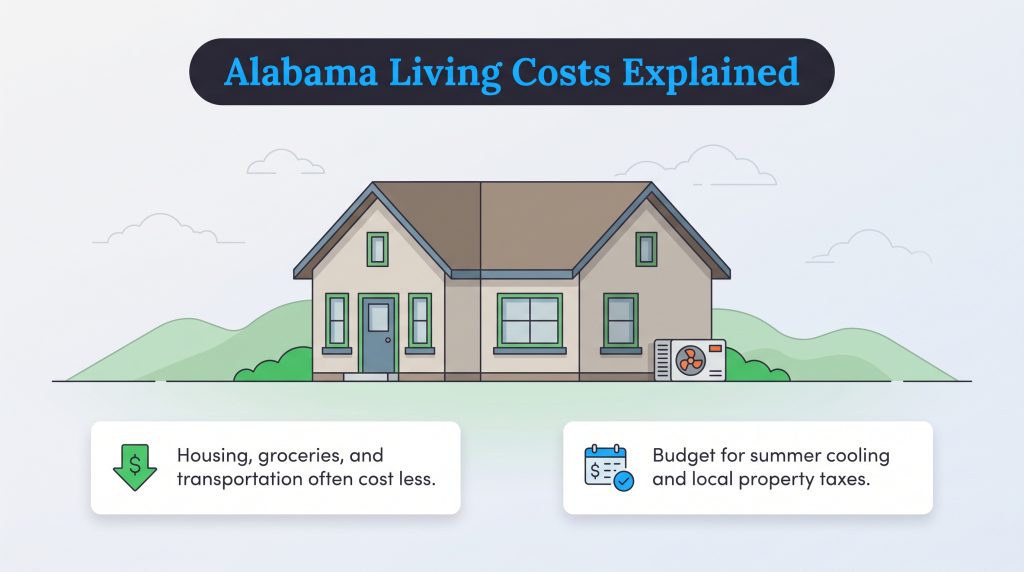
Relocating to the South often brings immediate financial relief for those arriving from coastal metros, and the cost of living in Alabama certainly follows this trend. Housing expenses, groceries, and daily transportation generally fall well below the national average, giving your household budget plenty of breathing room. However, you must factor in the region’s climate when calculating your monthly expenses. Alabama summers can keep your air conditioner busy from late spring into early fall, which can easily offset the money you save on a cheaper mortgage if your new residence lacks proper insulation.
Before purchasing property, it pays to understand exactly how local jurisdictions calculate Alabama property taxes. Under Alabama’s property tax system, owner-occupied residential property is generally assessed at 10% of its fair market value before local millage rates are applied. From there, local county millage rates determine the final amount you owe each year, creating noticeable differences in homeownership costs depending on your exact ZIP code.
Housing and Alabama Property Taxes
While it’s widely known that Alabama boasts some of the lowest property tax rates in the entire nation, your actual annual bill will fluctuate based on where you choose to plant your roots. For example, bustling urban centers in Jefferson County or coastal retreats in Baldwin County assess different millage rates compared to more rural agricultural communities. These local assessments fund public schools, emergency services, and infrastructure projects within the municipality. Even though the statewide baseline remains low, reviewing the specific county millage rate before closing on a home prevents any unexpected tax hurdles when escrow season rolls around.
Your Moving to Alabama Checklist for Utilities
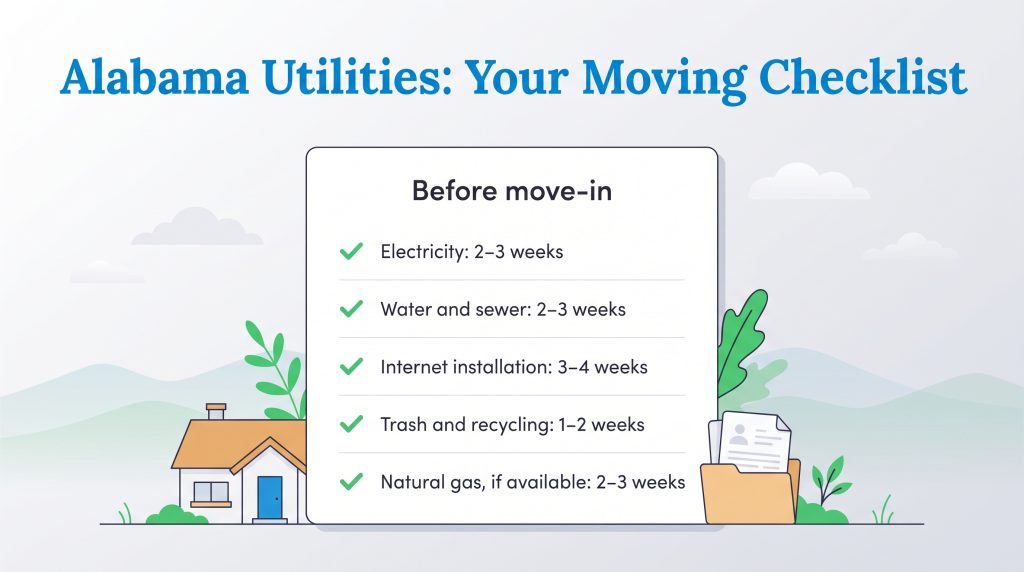
Establishing essential services forms the core of your moving to Alabama checklist, and tackling this step early guarantees a smooth transition into your new space. We strongly recommend scheduling your transfers or new installations at least two weeks prior to your move-in date. The procedure for setting up utilities in Alabama shifts depending on your location, especially since the state features a mix of massive investor-owned monopolies, rural cooperatives, and city-run services. To hit the ground running, focus on handling these immediate connections first:
| Setup Task | Who Usually Handles It | When to Start |
|---|---|---|
| Electricity | Utility by service territory | Two to three weeks before move-in |
| Water and sewer | City, county, or water board | Two to three weeks before move-in |
| Internet | Private internet provider | Three to four weeks before move-in if installation is needed |
| Trash and recycling | City, county, HOA, or private hauler | One to two weeks before move-in |
| Natural gas, if available | Local gas utility | Two to three weeks before move-in |
- Electricity activation for lighting and climate control
- Water and sewer connections through the local municipality
- High-speed internet installation for work and entertainment
- Curbside waste and recycling pickup scheduling
What You’ll Need to Start Utility Service in Alabama
Gathering your documents in advance speeds up the account creation process. Have these items ready before making your calls:
- New service address and move-in date
- Government-issued ID
- Lease, deed, or closing documents
- Social Security number or tax ID, if required
- Contact information and payment method
- Previous utility history, if requested
Choosing Alabama Electricity Providers
Unlike deregulated markets where residents shop around for the lowest rate, the state operates under a regulated utility model. This means your geographic address dictates your options for an electricity provider. Alabama Power serves many central and southern Alabama communities, while northern Alabama often relies on TVA-connected local utilities and rural areas may be served by electric cooperatives or municipal providers. To identify your exact provider, check city or county utility websites, use electric cooperative service territory tools, or ask your seller, landlord, or property manager. You can also review your closing documents or lease onboarding packets.
Because you can’t negotiate your per-kilowatt-hour rate, managing your consumption becomes the primary way to control costs. Reviewing the average energy consumption data for the region reveals just how much electricity Southerners use to combat the intense humidity. Confirming who services your exact address during the inspection phase allows you to register an account and schedule your service start date without delay.
Navigating Water and Waste Management
Handling your water and trash collection requires direct communication with your local government. Almost everywhere in the state, these services are managed by the municipality or the county public works department. You’ll rarely find private companies competing for residential water rights here, which simplifies the decision-making process. Head directly to your local city hall’s website or call the municipal water board to initiate service. They typically require a standard connection fee, and you might need to present a copy of your lease or closing documents to verify residency before they turn on the tap or deliver your garbage bins.
Selecting Alabama Internet Providers
Staying connected is a top priority, and navigating the landscape of Alabama internet providers requires evaluating your specific location. Major cities like Huntsville, Birmingham, and Mobile benefit from rapidly expanding fiber-optic networks, offering blazing-fast speeds ideal for remote work and heavy streaming. Conversely, homes situated further off the beaten path might lack access to these hardwired infrastructure upgrades. In those rural pockets, you may need to explore satellite internet or fixed wireless connections. Always compare download speeds, equipment rental fees, and promotional rates from available providers before scheduling an internet installation.
Common Utility Setups by Alabama Region
Your utility experience will look very different depending on where you settle in the state. While you should always verify services by your exact address, here is what you can commonly expect in various parts of Alabama:
| Region | Utility Notes |
|---|---|
| Birmingham and central Alabama | Often served by Alabama Power for electricity, with city or county water systems. |
| Huntsville and north Alabama | Electricity may come through TVA-connected local utilities. Fiber internet availability varies by neighborhood. |
| Mobile and Gulf Coast | Plan for humidity, storm preparation, and flood-aware home maintenance. |
| Rural areas | Electric co-ops, well water, septic systems, propane, satellite internet, or fixed wireless may be more common. |
Preparing Your Utilities for Alabama Weather
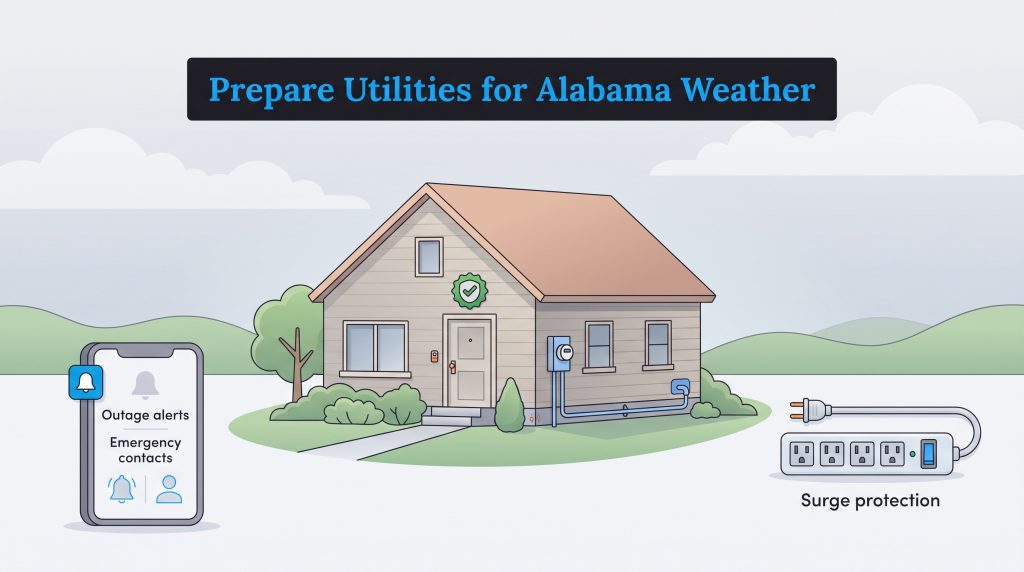
Alabama residents regularly navigate severe thunderstorms, tornadoes, and occasional tropical systems in the south. Building a weather-ready utility plan ensures your household stays safe and connected during unexpected outages:
- Sign up for outage text alerts directly from your electric provider.
- Ask your landlord or inspector whether your property features underground or overhead power lines.
- Keep your utility account numbers and emergency contact lines saved in your phone.
- Invest in high-quality surge protectors for your essential electronics.
- Contact your utility about medical priority or notification programs if you rely on electrically powered medical equipment.
- For Gulf Coast relocations, ask about local flood risks and consider backup power options like a standby generator.
Beating the Heat with Energy-Efficient Cooling
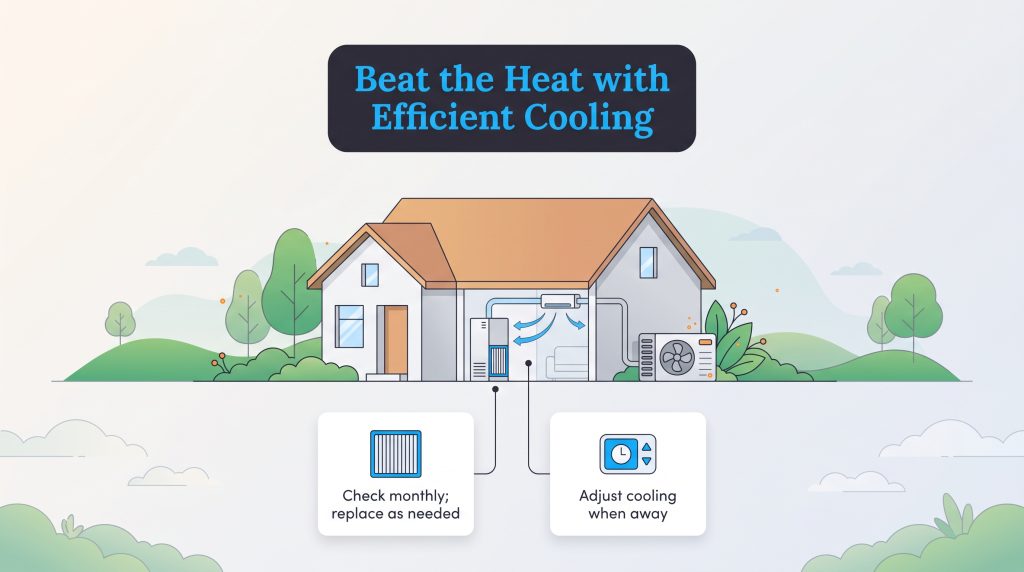
Surviving a Southern summer requires more than just iced tea and a front porch ceiling fan. The intense heat and thick humidity settle in around late May and often refuse to leave until October, forcing HVAC units to work overtime. To avoid high energy bills, prioritizing proper maintenance on your cooling equipment is non-negotiable. Start by checking your filter monthly during peak cooling season and replacing it as needed. Some filters need monthly replacement, while higher-rated filters may last longer depending on use, pets, dust, and manufacturer guidance. A clean filter ensures maximum airflow, reducing the mechanical strain on the compressor and lowering your daily energy usage.
Upgrading aging equipment can noticeably reduce your monthly expenses while improving your home’s environmental footprint. Exploring modern energy-efficient cooling systems guarantees that your home utilizes the latest technology to maximize comfort without wasting excess power. Even if a full system replacement isn’t in the budget right now, a thorough inspection and tune-up by a licensed technician will catch small refrigerant leaks or electrical issues before they escalate into an expensive mid-August breakdown.
Embracing Solar Power in Alabama
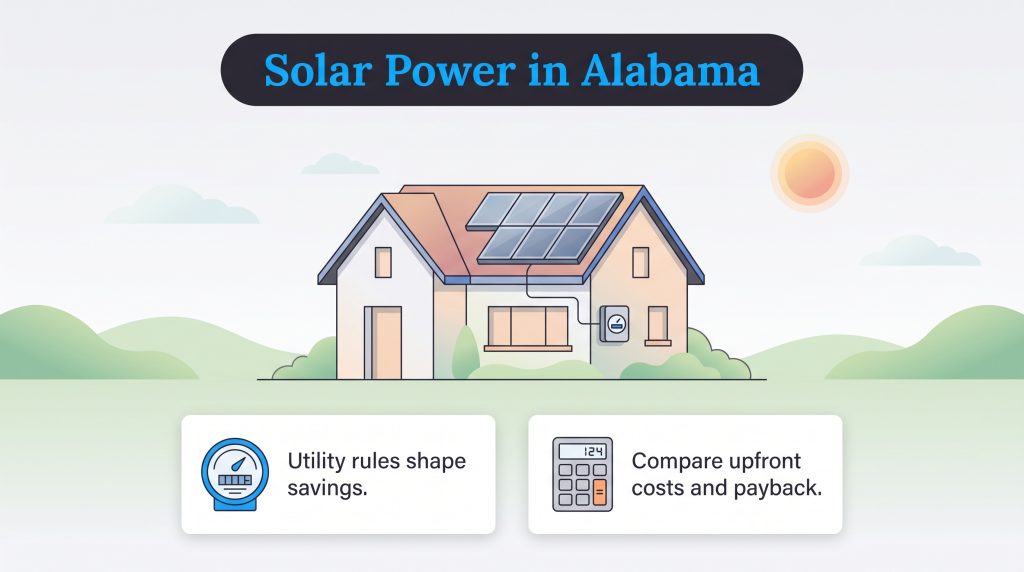
With abundant sunshine throughout the year, generating solar power in Alabama presents an exciting opportunity for forward-thinking homeowners. Transitioning to renewable energy not only shrinks your carbon footprint but also provides a buffer against rising residential electricity rates. While the upfront investment requires careful consideration, installing rooftop panels fundamentally changes how you interact with the local power grid.
Alabama’s solar potential is real, but the financial payoff depends heavily on your utility’s rules. Alabama does not have a broad statewide retail net metering policy like some other states. We recommend asking installers for a written estimate showing expected annual production, the utility buyback rate or credit structure, any applicable monthly fees, the projected payback period, and federal tax credit eligibility. Review the table below to weigh the advantages and potential drawbacks of harnessing solar energy in the South.
| Pros of Solar Power | Cons of Solar Power |
|---|---|
| Potentially lower long-term electricity costs, depending on your utility’s rate structure, system size, roof exposure, and buyback policy | High initial installation and equipment costs |
| Can increase property value, depending on market demand and ownership status | Limited state-level rebates and incentives |
| Reduces reliance on fossil fuels | Effectiveness is dependent on roof angle and shade |
Setting Up Your New Southern Home for Success
Relocating across state lines comes with plenty of moving parts, but establishing your new life in the Heart of Dixie doesn’t have to be stressful. By handling your utility connections early and understanding the local financial landscape, you eliminate the friction that often accompanies a big move. Focus on implementing smart, energy-efficient practices from day one to keep your household running smoothly and affordably. With the logistical hurdles out of the way, you can step out onto the porch, soak in the Southern hospitality, and truly enjoy the comfort of your new Alabama home.
Frequently Asked Questions About Moving to Alabama
How Much Does It Cost to Set Up Utilities in Alabama?
Can I Choose My Electricity Provider in Alabama?
What Is the Best Way to Keep My Cooling Bills Down During an Alabama Summer?
Does Alabama Offer Incentives for Installing Solar Panels?
How Early Should I Contact Utility Companies Before Moving?
Do I Need Natural Gas Service in Alabama?
What Utilities Should I Set Up First When Moving to Alabama?
About the Author

LaLeesha has a Masters degree in English and enjoys writing whenever she has the chance. She is passionate about gardening, reducing her carbon footprint, and protecting the environment. She also recently served as President of the Board for City Sprouts (a community garden).

David has been an integral part of some of the biggest utility sites on the internet, including InMyArea.com, HighSpeedInternet.com, BroadbandNow.com, and U.S. News. He brings over 15 years of experience writing about, compiling and analyzing utility data.