
Planning ahead ensures your lights and internet are ready the moment you walk through the door of your new home.
Key Takeaways
- Start the utility transfer process at least three weeks before your move to avoid service lapses or rush fees.
- Create a master list of all current accounts including electricity, gas, water, internet, and waste management services.
- Ask specifically about “overlapping” service dates to ensure you have power at both locations on moving day.
Moving is famously chaotic, but figuring out how to transfer utilities when moving doesn’t have to be the thing that keeps you up at night. Imagine walking into your new home after a long day of hauling boxes, flipping the switch, and having the lights actually turn on, followed by a hot shower and immediately connecting to working Wi-Fi. This guide provides a clear timeline, a comprehensive checklist, and the right questions to ask providers so you can handle this essential task efficiently and settle in without a hitch.
Start by Building a Master Utility Inventory
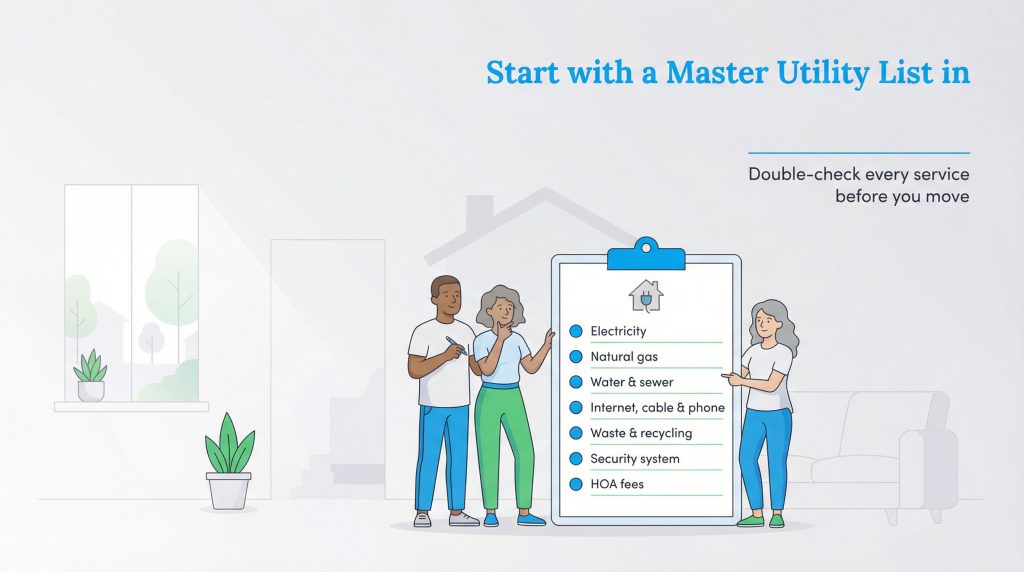
Before you transfer service or schedule a shut-off, you need to know exactly what you currently have. It’s easy to remember the big bills like power, but smaller services often slip through the cracks until the last minute. Use this list as your personal “utilities to cancel when moving” audit to ensure nothing gets left behind.
- Electricity: This is priority number one for lighting and appliances.
- Natural Gas: Essential for heating, cooking, and hot water in many homes.
- Water and Sewer: Often bundled together, but sometimes billed separately depending on your municipality.
- Internet, Cable, and Phone: These often require the most lead time for installation appointments.
- Waste and Recycling: Check if this is handled by the city or a private disposal company.
- Security Systems: You may need to move equipment or cancel monitoring services.
- HOA Fees: If moving into or out of a managed community, dues often cover certain shared utilities.
When to Call Utility Companies: Your 4-Week Timeline

Timing is everything. If you wait until moving week to setup utilities in your new home, you might face delays or expensive expedited connection fees. Here is a quick transfer utilities checklist you can follow to keep your transition smooth:
| Timeframe | Action Items |
|---|---|
| 3-4 Weeks Out | Research providers for your new address. Call current providers to notify them of your move. If you are moving locally, ask if you can transfer service. |
| 2 Weeks Out | Schedule utility shut off for your old home and turn-on dates for the new one. Confirm installation appointments for internet or cable. |
| 1 Week Out | Call to confirm all appointments. Pay any outstanding balances on current accounts to ensure a smooth release. |
| Moving Day | Take a photo of your final meter readings at the old house and the starting readings at the new house for your records. |
For more tips on organizing your relocation, check out our comprehensive moving resources.
The “Overlap” Strategy: Keeping the Lights On
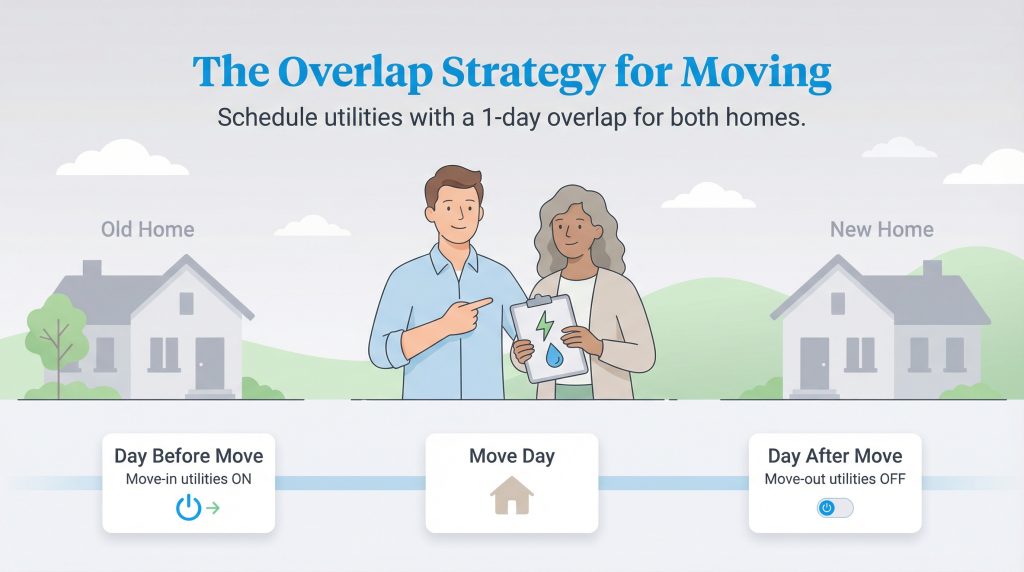
One of the biggest mistakes movers make is scheduling services to stop and start on the exact same day. If there is a delay with the movers or you need to go back to the old house for a final cleaning, you do not want to be doing it in the dark.
We recommend a simple safety margin: schedule your utilities to shut off the day after you move out and turn on the day before you move in. This overlap ensures you have electricity and water available for final walkthroughs and cleaning sessions at both locations.
Transfer vs. New Setup: Knowing the Difference
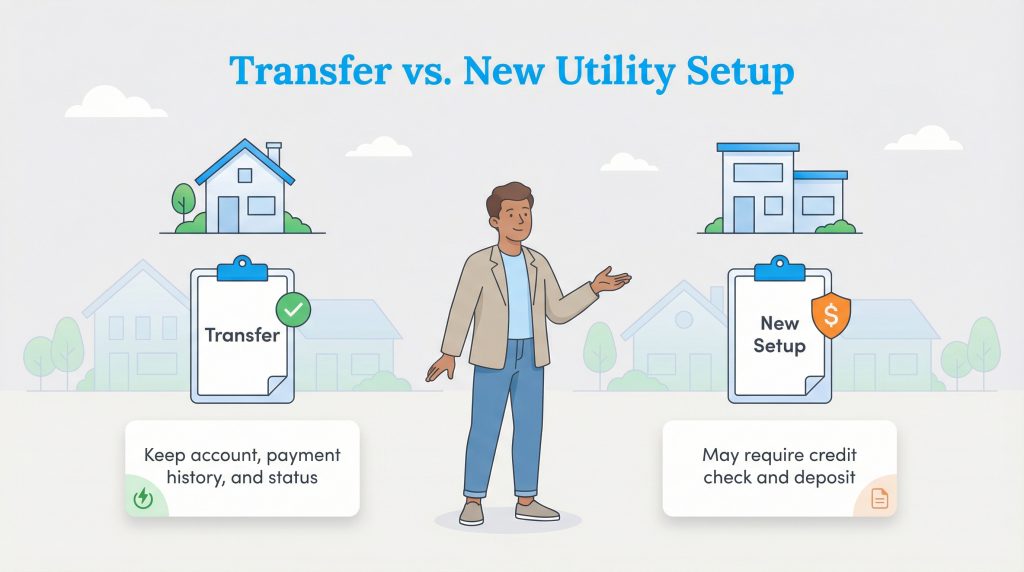
The process of getting your utilities running depends largely on where you are moving. If you are staying within the same city or service territory, you can usually just transfer your existing account. This is the easiest path, as your payment history and account status move with you.
However, if you are moving to a new region or buying your first home, you will likely need a completely new setup. This often involves a credit check and potentially a deposit. Renters usually just need to switch the account holder name, whereas if you need advice on how to transfer utilities when buying a house, you will need to coordinate closely with the closing date to avoid assuming the previous owner’s debts.
If you are renting, clarify early on whether utilities are included in the rent or handled by the landlord, and ask if the complex has preferred providers for internet or cable. For homebuyers, coordinate utility start dates with your closing date to handle potential delays, and verify who is responsible for final bills up to the day of closing.
Making the Call: Scripts and Questions to Ask
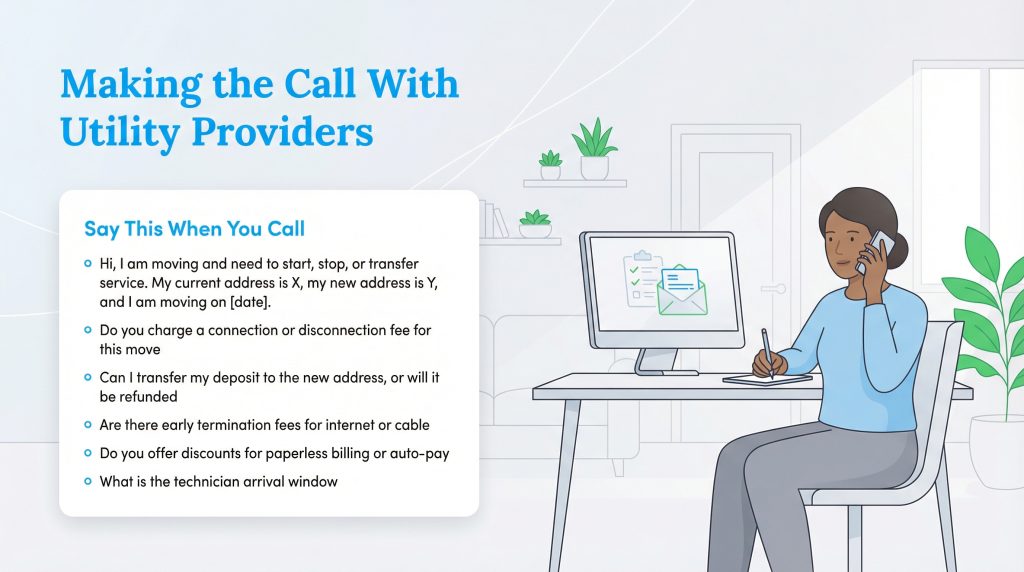
Getting on the phone with utility companies can be tedious, but asking the right questions upfront saves money later. You don’t have to memorize everything. Use this simple script when you call:
“Hi, I’m moving and need to [start/stop/transfer] service. My current address is [X], and my new address is [Y]. I’m moving on [date].”
Then, ask these questions:
- “Do you charge a connection or disconnection fee for this move?”
- “Can I transfer my current deposit to the new address, or will it be refunded?”
- “Are there early termination fees for cancelling my internet or cable contract?”
- “Do you offer any discounts for paperless billing or setting up auto-pay?”
- “What is the window of time for the technician to arrive?”
Anticipating Costs, Deposits, and Hidden Fees
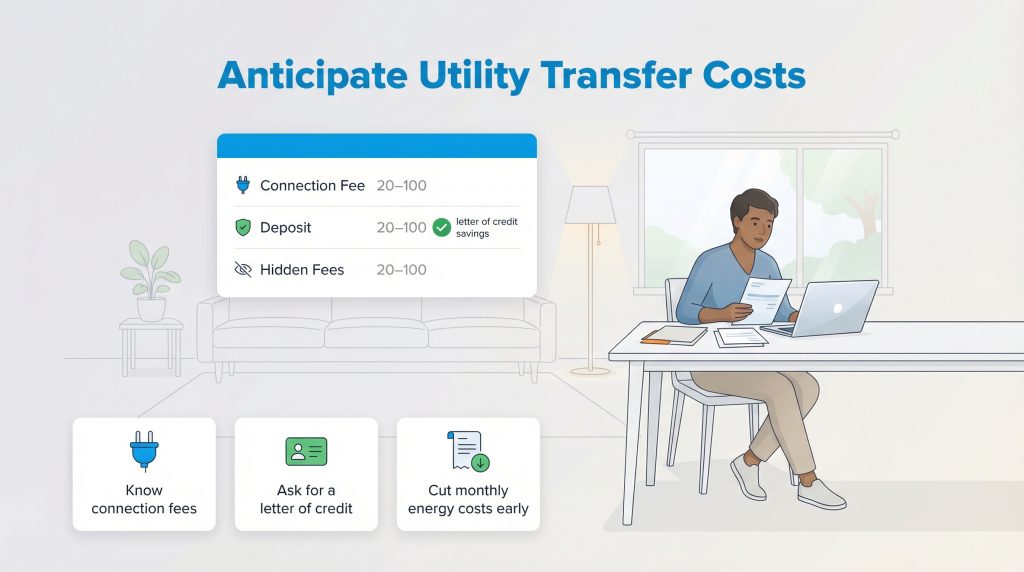
When you ask “how much does it cost to transfer utilities,” the answer varies. Some providers transfer service for free, while others often charge connection fees ranging from $20 to $100 per service. If you are setting up new service, you might be hit with a security deposit if your credit history with that specific utility type is limited.
You can often waive these deposits by asking your previous utility provider for a “letter of credit” showing 12 months of on-time payments. It is also smart to look for ways to lower your monthly expenses from day one. Read our guide on how to save on your electric bill to start your new chapter on a budget-friendly note.
A Chance to Upgrade: Eco-Friendly Service Options
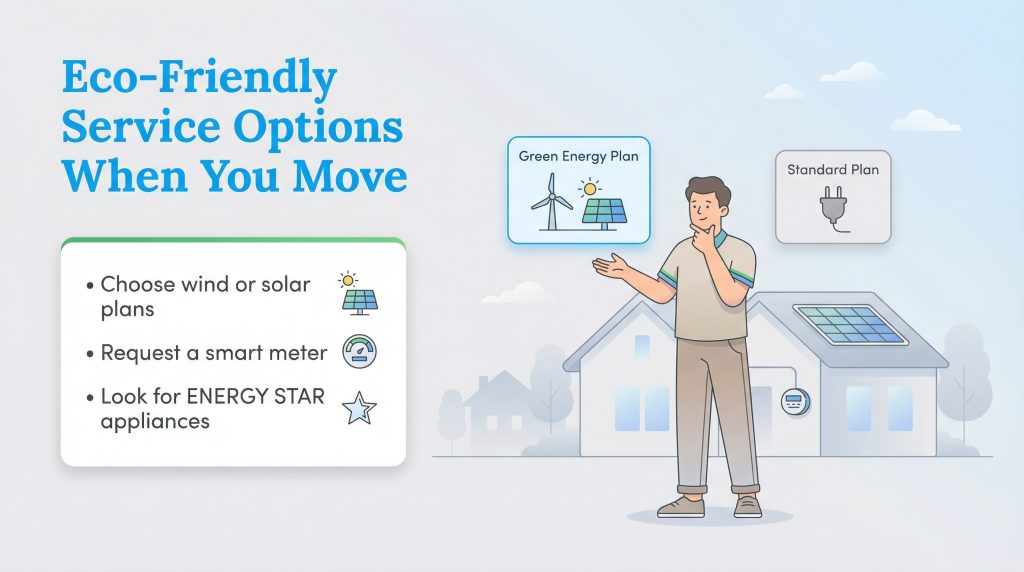
A move is the perfect opportunity to reset your habits and make greener choices. If you are moving to a deregulated energy market, you have the power to choose a provider that sources electricity from wind or solar farms. Look for ENERGY STAR certified appliances or “green pricing” programs on utility websites. Even if you don’t have a choice of provider, you can request a smart meter installation to better track your usage.
You can verify green energy options and learn more about power markets at Energy.gov. If you are interested in generating your own power, explore our solar energy hub.
Final Steps for a Smooth Transition
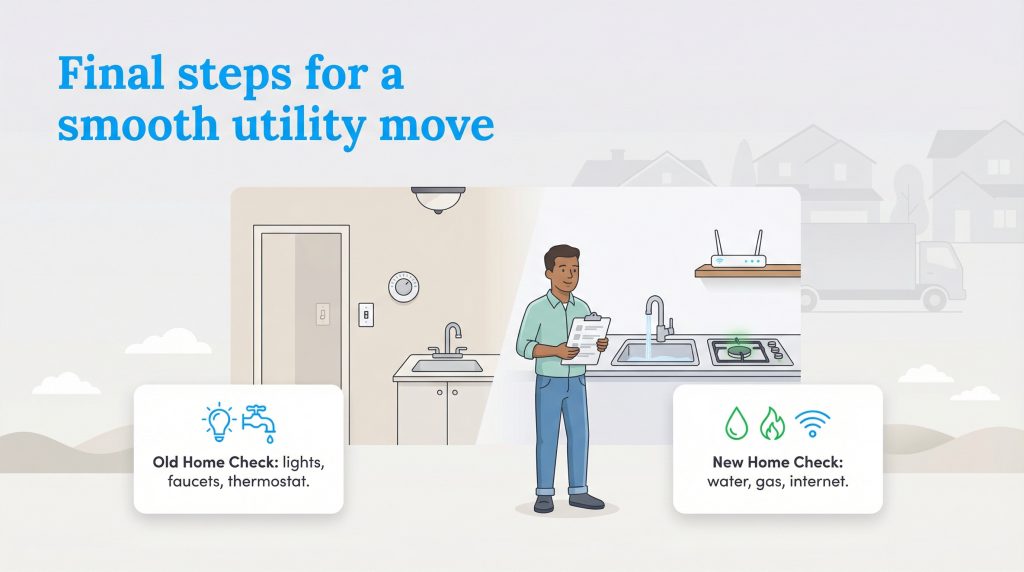
By planning your utility changes ahead of time, you avoid last-minute surprises. Once moving day arrives, take a moment to do a final walk-through of your old home. Check that all lights are off, faucets are tight, and the thermostat is set to a neutral temperature. When you arrive at your new place, verify that the water is running, the gas is working, and the internet modem is ready for setup. A little planning now prevents the headache of trying to troubleshoot service issues while you are unpacking boxes later.
FAQs About Transferring Utilities
Can I transfer utilities on the same day?
Do I need to be home when they turn on the power?
What information do I need to provide?
How much notice should I give utility companies?
What happens if I forget to cancel my utilities?
How is transferring utilities different for renters vs. homeowners?
What should I do if my utilities aren’t on when I arrive?
About the Author

LaLeesha has a Masters degree in English and enjoys writing whenever she has the chance. She is passionate about gardening, reducing her carbon footprint, and protecting the environment.