
A proactive safety strategy protects your family and property from utility hazards, natural disasters, and unexpected emergencies.
Key Takeaways
- Master your utility shutoffs immediately upon moving in to prevent gas leaks, water damage, or electrical fires during an emergency.
- Customize your escape routes and meeting spots based on specific scenarios like fires, severe weather, or power outages.
- Conduct a room-by-room audit to identify hidden hazards, secure furniture, and test safety devices like smoke detectors.
Moving into a new home is an exciting milestone, but it also introduces a set of unknowns regarding security and infrastructure. While you might have thought about fire drills, a comprehensive home safety plan goes far beyond knowing the nearest exit, it requires a deep understanding of your home’s utility systems and a clear communication strategy for your family. We want to help you build a safety net that covers everything from locating your main water valve to assembling a sustainable emergency kit, ensuring you are ready for whatever comes your way in your new space.
Step 1: Master Your Home’s Utility Infrastructure
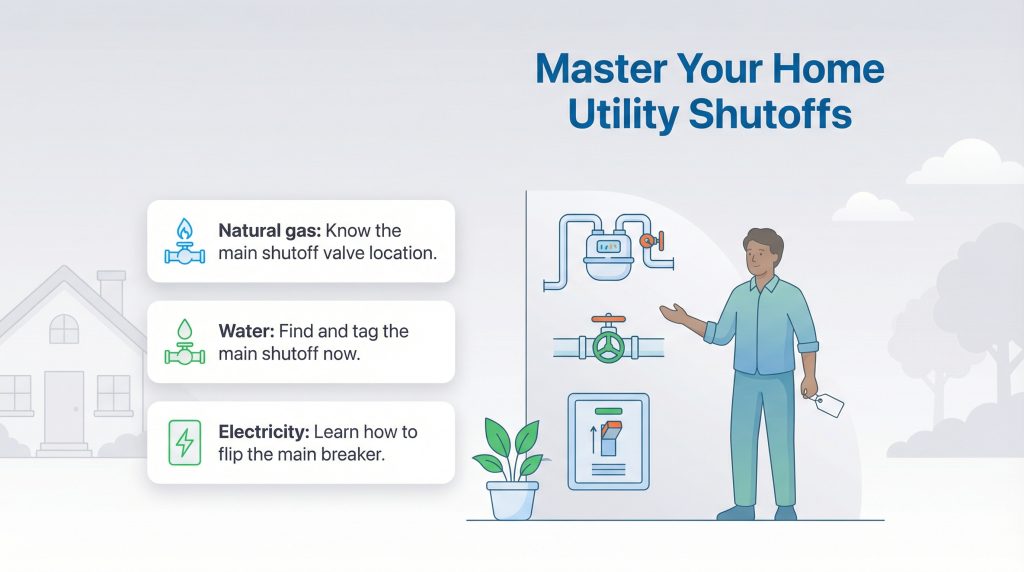
Your home’s utilities, gas, water, and electricity, are the lifeblood of your property, but they can also pose significant risks during a disaster. The first line of defense in any safety plan is knowing exactly how to control these systems. Your first emergency utility shutoff step is learning how to quickly cut power or flow when something goes wrong. We recommend locating and labeling these shutoffs during your first walkthrough after moving in.
If you are renting, ask your landlord or property manager to show you where the main shutoffs are located and clarify which valves or breakers you are authorized to operate yourself.
Natural Gas Safety
If your home uses natural gas, you must know where the main shutoff valve is located, usually on the pipe leading into the gas meter. Be alert for the “rotten egg” smell of mercaptan, an additive used to make gas leaks detectable. If you smell this, leave the house immediately and do not touch any light switches or electronics, as a spark could ignite the gas.
Water Shutoff
Water damage from burst pipes is a common and costly homeowner insurance claim. Find your main water shutoff valve now so you aren’t searching for it while water floods your basement. It is often found in the basement, garage, or in a utility box near the curb. Tag it with a bright label so any family member can find it quickly.
Electrical Panel
Your circuit breaker panel controls the flow of electricity throughout your home. Open the panel and ensure every breaker is clearly labeled for the room or appliance it serves. In the event of a major grid surge, flood risk, or fire, you need to know how to flip the main breaker to cut power to the entire house instantly.
Step 2: Conduct a Room-by-Room Safety Assessment
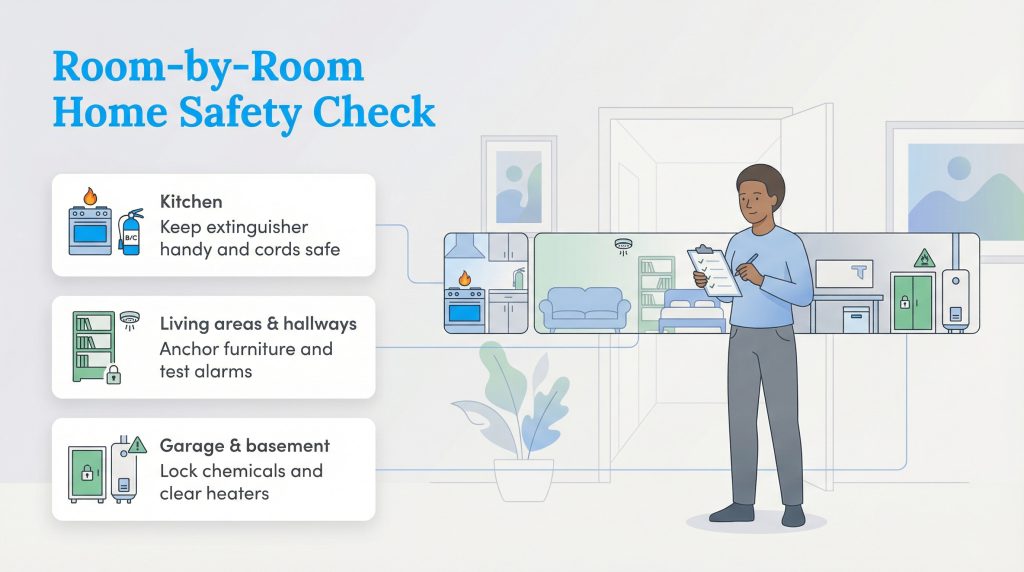
As you unpack and settle in, use this time to look at the living spaces. Walking through your home with a critical eye allows you to spot potential hazards before they cause accidents. Use this quick home safety checklist as you walk through each room:
- Kitchen: Keep a Class B/C fire extinguisher easily accessible, preferably near an exit and away from the stove. Check appliance cords for fraying and ensure flammable items like towels or curtains are not near the burners.
- Living Areas & Bedrooms: Heavy furniture like bookshelves and televisions should be anchored to the wall to prevent tipping during earthquakes or if climbed on by children. Check that all window locks function correctly and that pathways to doors are clear of clutter.
- Hallways: Test your smoke and carbon monoxide detectors. According to the National Fire Protection Association (NFPA), smoke alarms should be installed inside every sleeping room, outside each separate sleeping area, and on every level of the home.
- Garage & Basement: Store hazardous chemicals like paint thinner and pesticides in locked cabinets. Ensure the area around your water heater and furnace is clear of debris and flammable materials.
Step 3: Establish Family Emergency Protocols
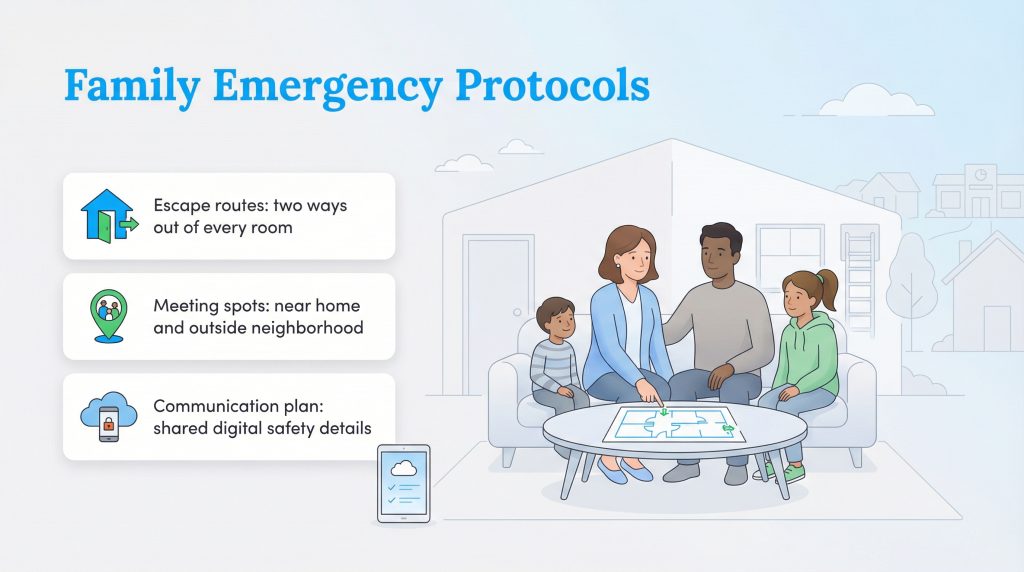
A plan is only effective if everyone knows it. Sit down with your household to define exactly where to go and who to call when things go wrong.
Escape Routes
Identify two ways out of every room. Usually, this includes the main door and a window. If the window is on an upper floor, consider keeping an escape ladder nearby. Walk through these routes physically to ensure windows aren’t painted shut and screens can be easily removed.
Meeting Spots
Select two designated meeting spots. The first should be just outside your home, such as the mailbox or a specific tree, for sudden events like a fire. The second should be outside your immediate neighborhood, such as a community center or a relative’s house, in case you cannot return to your street.
Communication Plan
Create a “Digital Safety Plan” in a shared note app on your phones. This should contain insurance policy numbers, medical information for each family member, and emergency contacts. This ensures that even if you lose your wallet or physical documents, you have crucial data accessible via the cloud.
Step 4: Prepare for Specific Scenarios
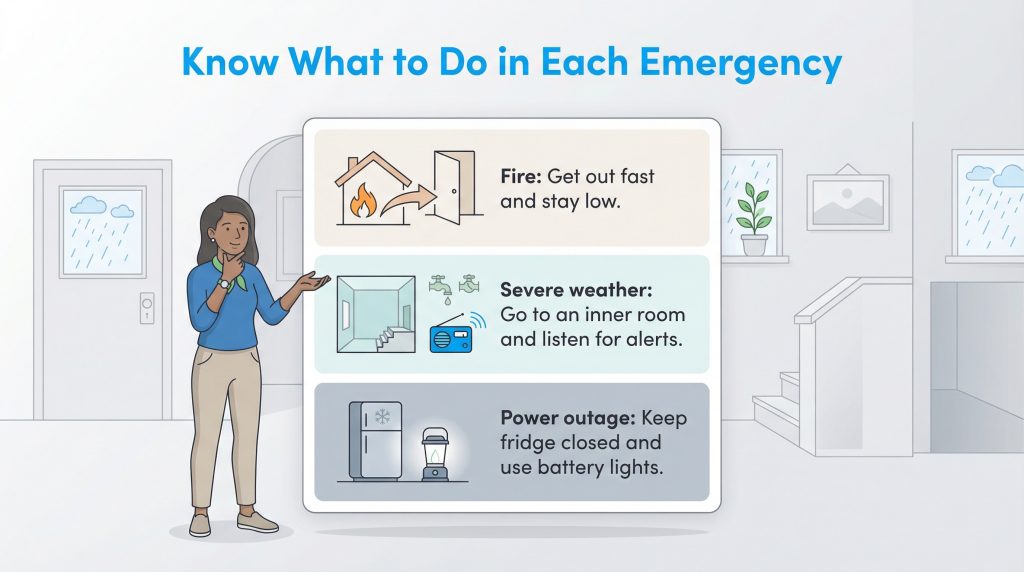
Different emergencies require different reactions. While a fire demands immediate evacuation, severe weather might require you to shelter in place. Discussing these differences helps prevent panic.
- Fire: The priority is speed. Get out, stay low to avoid smoke, and check doors for heat with the back of your hand before opening them.
- Severe Weather: Move to an interior room away from windows or down to the basement. Have a battery-powered radio ready to listen for updates and be prepared to shut off water or gas if local authorities recommend it.
- Power Outage: Keep your refrigerator and freezer doors closed to preserve food. Use battery-powered lanterns rather than candles to reduce fire risk.
For more detailed guidance on specific disaster types, you can reference the resources available at Ready.gov.
Step 5: Assemble Your Emergency Preparedness Kit
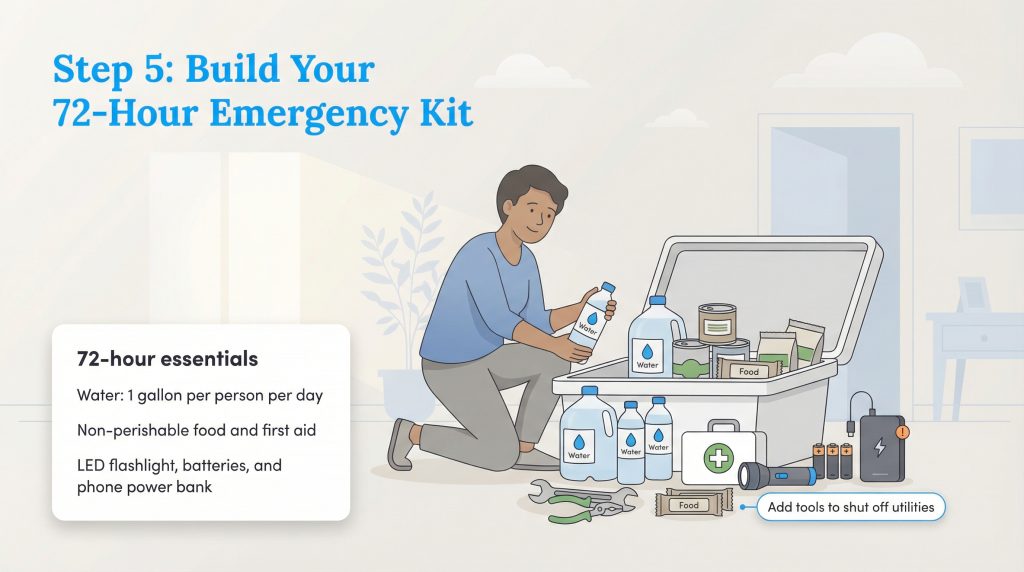
If you are cut off from services for a few days, a well-stocked kit allows you to remain self-sufficient. Aim to have enough supplies to last at least 72 hours.
The Basics
Stock at least one gallon of water per person per day for drinking and sanitation. Include a supply of non-perishable food like canned goods or energy bars. Don’t forget a first aid kit, flashlights, and extra batteries. Consider using LED flashlights, which are more energy-efficient and last longer than traditional bulbs.
The “Utilities” Add-ons
To tailor your kit to your home’s needs, add a wrench or pliers specifically for turning off utility valves. Portable power banks are also essential for keeping cell phones charged so you can receive emergency alerts.
Step 6: Maintenance and Practice
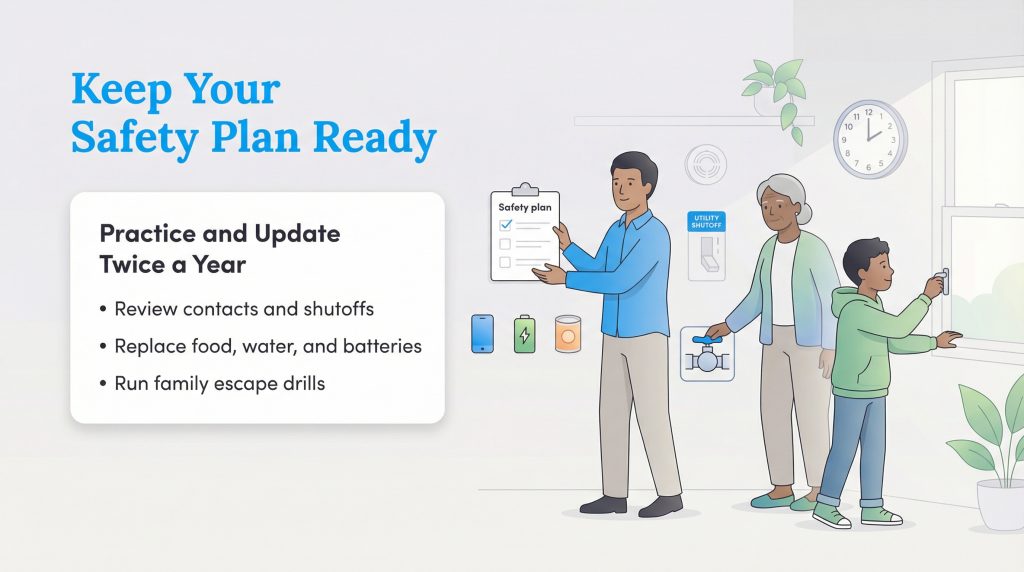
A safety plan that sits in a drawer is useless. We suggest scheduling a review of your plan twice a year, perhaps when you change your clocks for Daylight Saving Time. Use this time to update phone numbers, check the expiration dates on your emergency food and water, and swap out batteries in your detectors. While you are reviewing your plan, double-check that your utility shutoff labels are still visible and that everyone remembers how to use them.
Run practice drills with your family. Ensure children know how to open windows and that elderly family members can physically manage the escape routes. The more you practice, the less likely you are to freeze up when a real emergency occurs.
Building Resilience Starts With a Single Step
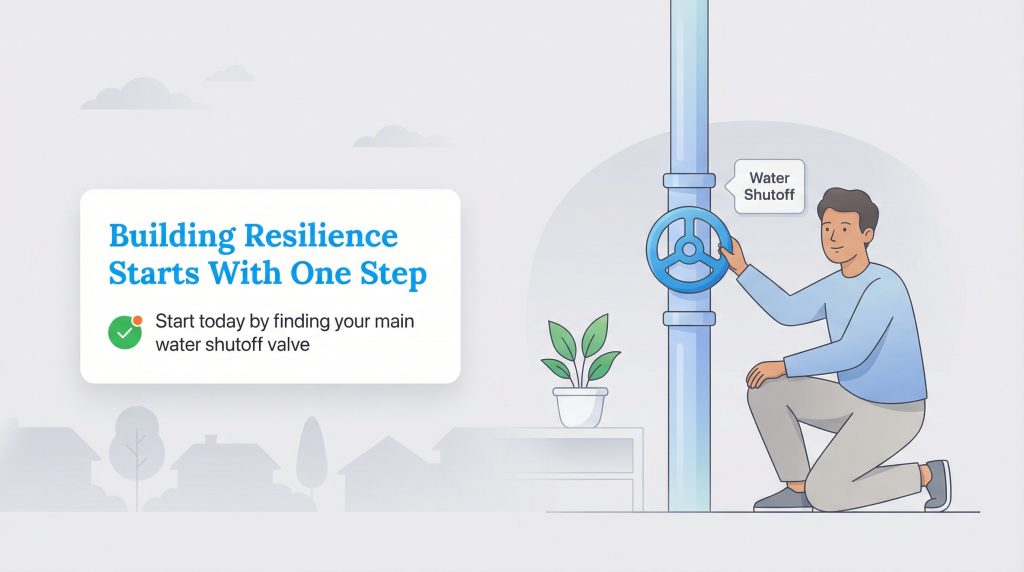
Creating a comprehensive home safety plan offers peace of mind and resilience against the unexpected, transforming a house into a true sanctuary. Safety is a continuous process rather than a one-time checklist, so don’t feel pressured to do it all at once. Start by taking one small step today, like locating your main water shutoff valve, to begin building a safer future for your household.
FAQs About Home Safety Plans
What should be included in a home safety plan?
How often should we practice our family emergency plan?
Where is the safest place to store a fire extinguisher?
Do I need a different safety plan for natural gas vs. electric homes?
How do I make a safety plan for elderly family members?
How should I update my home safety plan when I move to a new place?
About the Author

Claudio is a sustainability-focused writer with a background in Anthropology and Psychology from NC State University. He has spent over 15 years working in writing, interpretation, and translation, driven by a deep interest in how human culture shapes the environment. Today, he shares his curiosity with readers by writing about sustainable living solutions and the connection between everyday choices and environmental impact.