
Don’t let “zombie bills” haunt your bank account, learn exactly when and how to disconnect or transfer your essential services.
Key Takeaways
- Give yourself a buffer by contacting utility providers at least two weeks before your move-out date to schedule service stops.
- Take a timestamped photo of your meters on your final day to prove usage and dispute any incorrect billing after you leave.
- Return all leased equipment, such as cable boxes or modems, immediately to avoid expensive replacement fees on your final bill.
Moving day brings enough chaos with endless boxes and heavy lifting, making it incredibly easy to overlook invisible tasks like managing your electricity or water accounts. Whether you meticulously planned your exit strategy weeks in advance or just unpacked your first box and realized you forgot to make the call, this guide covers everything you need to know. We will help you navigate the process of scheduling shut-offs, securing final meter readings, and returning equipment so you avoid paying for lights and heat in a home you no longer occupy.
When to Cancel Utilities When Moving (Timeline)
Timing is everything when you coordinate a move. If you call too early, you pack in the dark; call too late, and you pay for the next tenant’s long showers. Contact utility companies two to four weeks prior to your move date to ensure a seamless and stress-free transition. This advance notice gives providers enough time to process your request and dispatch technicians for final readings.
| Timeline | Required Action |
|---|---|
| 30 Days Prior | Audit your accounts and compile a list of all current providers. |
| 14 to 28 Days Prior | Contact companies to schedule service shut-offs or transfers. |
| 1 Day Prior | Verify your appointments and ensure forwarding addresses are on file. |
| 1 Day After Move | Schedule the actual utility shut-off to allow for final cleaning and inspections. |
Schedule the shut-off for at least one day after you vacate the property. Keep the electricity, gas, and water active for that extra 24 hours so you are not scrubbing floors in the dark or using a bathroom with no running water. If you juggle multiple tasks, checking our moving hub keeps you organized with other essential to-do items during this busy window.
Utility Transfer vs. Cancellation: Which Do You Need?
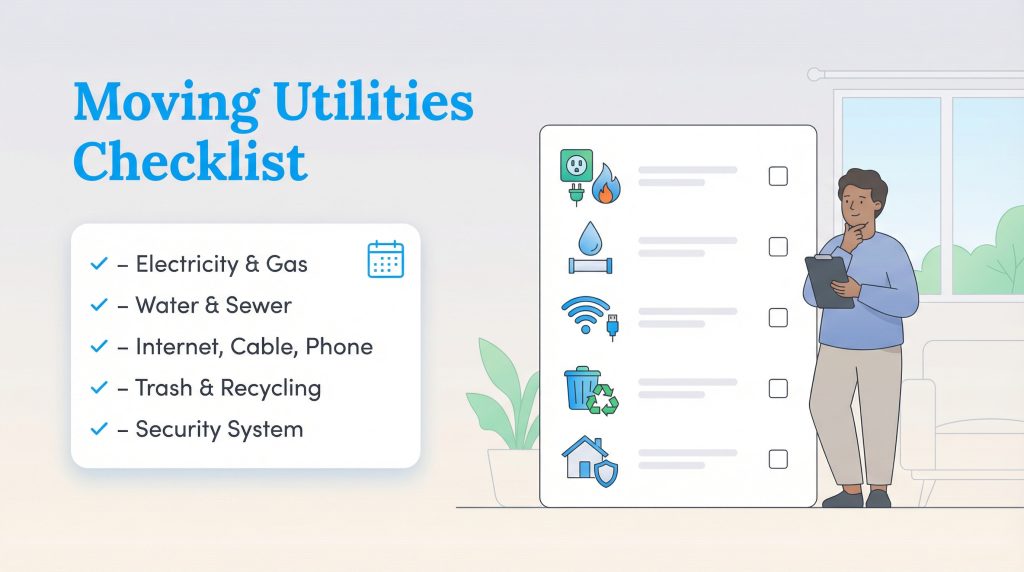
Depending on where you relocate, you must decide between a utility transfer vs cancellation. Use the provided checklist above to determine which service model fits your move. If you stay within the same city or region, transferring service saves you time and money. Transferring service shifts your existing account to a new address, whereas canceling completely closes the account. Many providers waive new connection fees for loyal customers who simply move their service locally.
| Utility Transfer | Utility Cancellation |
|---|---|
| Best for local moves within the same provider’s service area. | Required for interstate moves or relocating to a deregulated market. |
| Keeps your current account and billing history active. | Closes your account completely and generates a final bill. |
| Often waives new setup and connection fees. | Requires you to set up brand new accounts and pay new deposits. |
| Equipment (like routers) can sometimes travel with you. | Mandates the immediate return of all leased equipment. |
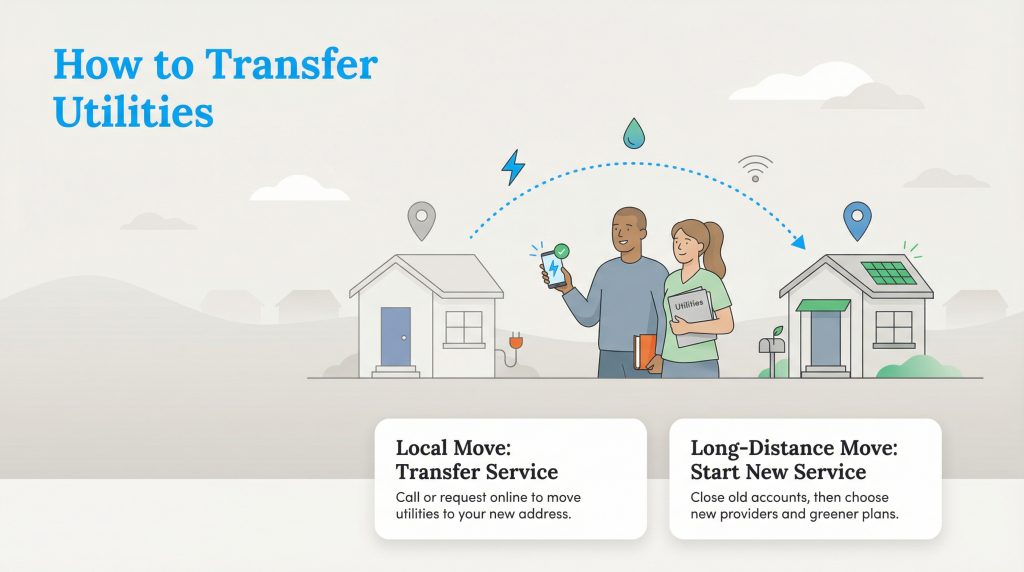
For local moves, submit an online request or make a simple phone call to shift your service. However, for interstate moves, you must close your existing accounts and establish new relationships with different regional providers. For example, if you move to a deregulated energy market, shop for a provider in your new state, such as checking available plans in Texas. This is also a great opportunity to look for solar or green energy options to make your new home more sustainable.
Step-by-Step Guide to Disconnect Utilities Moving Out
1. Compile Your Utility Provider List
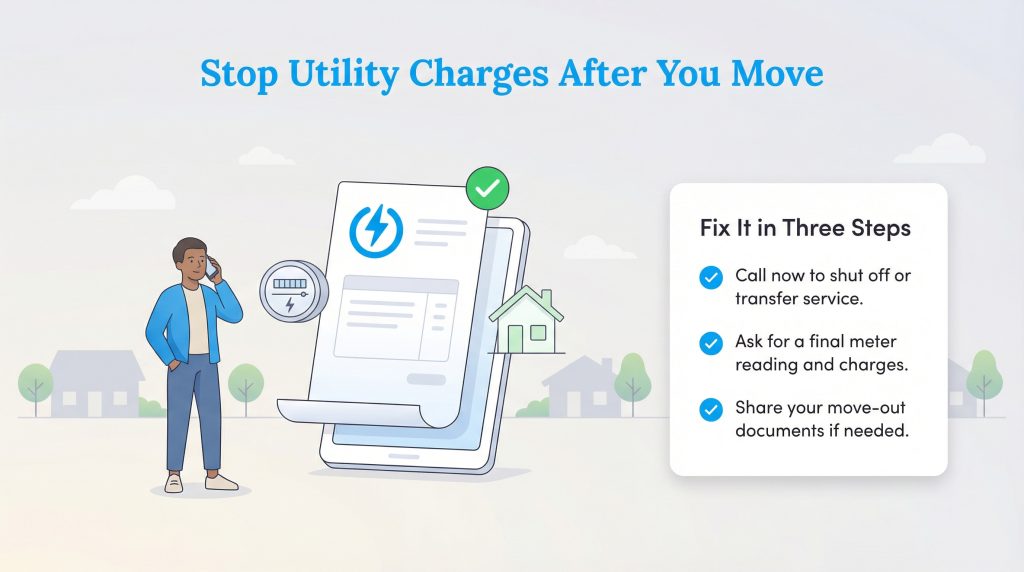
Follow these exact steps to disconnect utilities moving out. Proper execution ensures you avoid overlapping bills and expensive penalties. Gather your account numbers and contact each provider directly:
- Electricity: Call your energy provider (or compare electric providers if you need a new plan) and request a final meter reading to ensure accurate billing.
- Gas: Ensure your natural gas lines are safely capped or transferred to the incoming occupant.
- Water: Contact your local city or municipality early, as municipal water and sewer processing is often slower than private entities.
- Internet: Schedule your disconnection and make a plan to drop off modems, or check out our guide on how to set up home internet service at your new place.
- Trash: Cancel your private waste management and recycling bin service to avoid charges for the upcoming quarter.
2. Set Up a Forwarding Address for Your Final Utility Bill
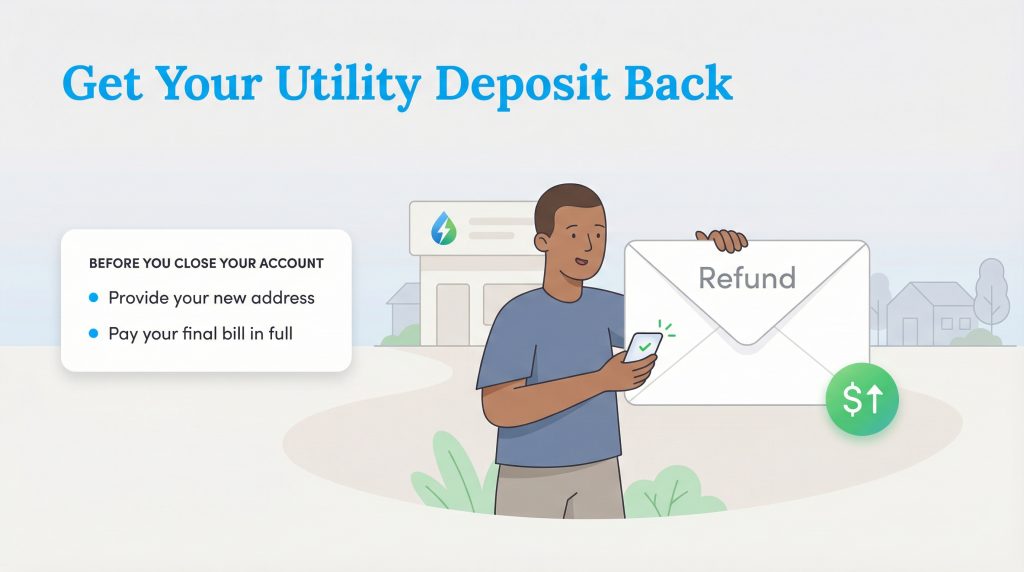
Provide a clear forwarding address for your final utility bill to guarantee you receive your closing statements and any deposit refunds. If you paid a security deposit when setting up your service, you are entitled to get that money back once your account is settled. If providers do not know where to send the check, the funds turn into unclaimed property. Pay your final bill in full immediately to prevent the company from using your deposit to cover the remaining balance.
3. Record the Final Utility Meter Reading
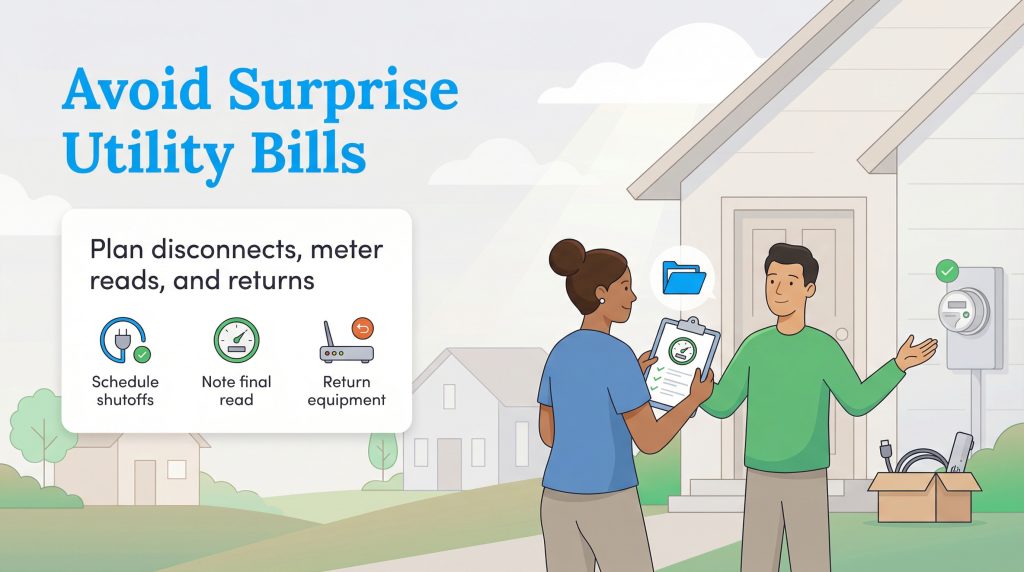
Take a time-stamped photo of the water, gas, and electricity meters on moving day. This final utility meter reading moving serves as indisputable proof of your exact usage when you locked the door for the last time. If a utility company bills you for usage after you vacate, submit these photos to quickly resolve the dispute and avoid unfair charges.
4. Return Utility Equipment
Return all leased modems, routers, and cable boxes within 48 hours of your move. Hand the hardware directly to a store representative or use a provider-issued prepaid shipping label. Keep the return receipt safe; this document is your only defense against an expensive utility cancellation fee or unreturned equipment charge.
Stopping Utility Service When Selling a House vs. Renting
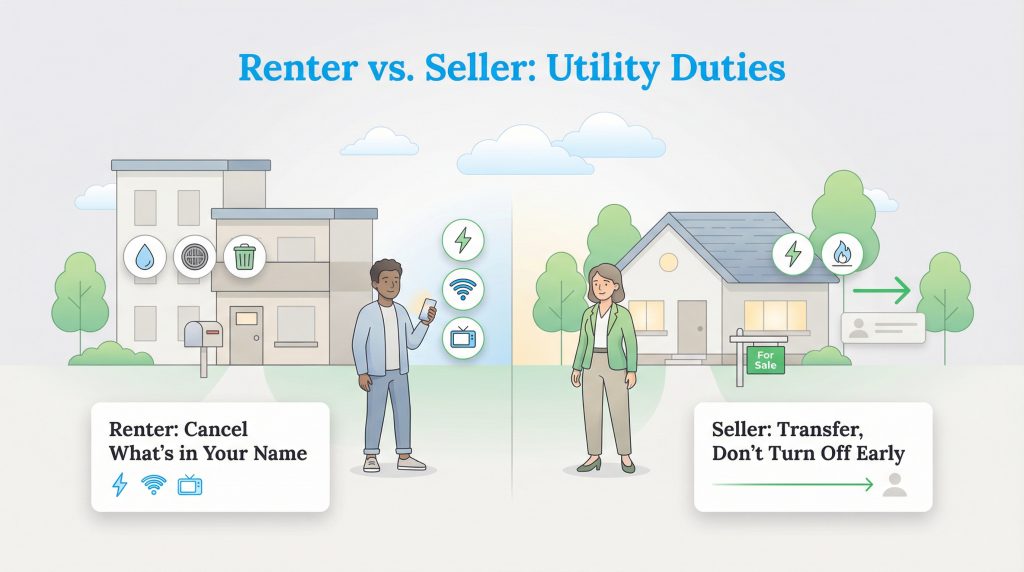
Your responsibilities look very different depending on whether you are leaving a rental unit or selling a home you own. Properly stopping utility service when selling a house prevents costly closing delays.
For Homeowners and Sellers
Home sellers must keep utilities active through the closing date and final walkthrough. Do not shut off essential services like electricity or heat until the sale is officially finalized. If you cut the power too early, you risk frozen pipes in winter or inhibiting final inspections, which delays your closing. Coordinate closely with your real estate agent to time the switch perfectly with the transfer of ownership.
For Renters
Renters must keep utilities active through the final day of their lease agreement. Leaving them active past your lease means you pay the bill for the next tenant or the cleaning crew. Always save your confirmation numbers, as some landlords require proof of utility cancellation before returning your security deposit.
What Happens If You Forget to Cancel Utilities?
What happens if you forget to cancel utilities? You remain legally responsible for all usage at the property until you notify the provider. If you handed over the keys and realized you never called the power company, take immediate action to stop the bleeding:
- Call immediately: Request a shut-off or transfer as soon as possible to prevent future charges.
- Ask for a final reading: Confirm the exact date and the estimated final amount with the representative.
- Check for “Landlord Revert”: Ask if the service automatically reverted to the property owner’s name when your lease ended. If an agreement exists, you drop off the hook for the extra days.
- Provide proof: Send a copy of your lease termination agreement or final closing documents to argue against paying for days after you legally vacated the property.
Transitioning to Your New Service Setup
Moving represents a fresh start, and you do not want old financial baggage following you to your new doorstep. By taking the time to properly schedule your disconnects, documenting your final readings, and returning your equipment promptly, you close this chapter cleanly. A few minutes of planning today prevents hours of phone calls and billing disputes tomorrow, leaving you free to focus on settling into your new home.
Frequently Asked Questions About Canceling Utilities After Moving
How far in advance to cancel utilities?
Do I have to cancel utilities when moving if I am renting?
Can I cancel utilities online?
How do I return my internet equipment when moving?
What happens if you forget to cancel utilities after moving?
Do utility companies charge a cancellation fee?
How do I get my utility security deposit back after moving?
About the Author

Claudio is a sustainability-focused writer with a background in Anthropology and Psychology from NC State University. He has spent over 15 years working in writing, interpretation, and translation, driven by a deep interest in how human culture shapes the environment. Today, he shares his curiosity with readers by writing about sustainable living solutions and the connection between everyday choices and environmental impact.