
Prioritize safety, efficiency, and peace of mind with these critical steps before your first night in the new home.
Key Takeaways
- Secure your new home immediately by changing locks and resetting garage codes before moving your belongings inside.
- Schedule utility transfers early to ensure electricity, water, and internet are active and optimized for energy efficiency on moving day.
- Locate emergency shut-offs for water and electricity during your initial walkthrough to prevent future disasters.
Holding the keys to a new property is one of the most exciting moments in life, but that excitement often shifts quickly to the realization of how much work lies ahead. We’ll walk you through the most important things to do before moving into a new house so you can focus on what truly matters: feeling safe, comfortable, and in control. By prioritizing these specific things to do before moving into a new house, you can turn a chaotic transition into an organized, manageable process that sets you up for success from day one.
1. Secure the Perimeter and Change the Locks
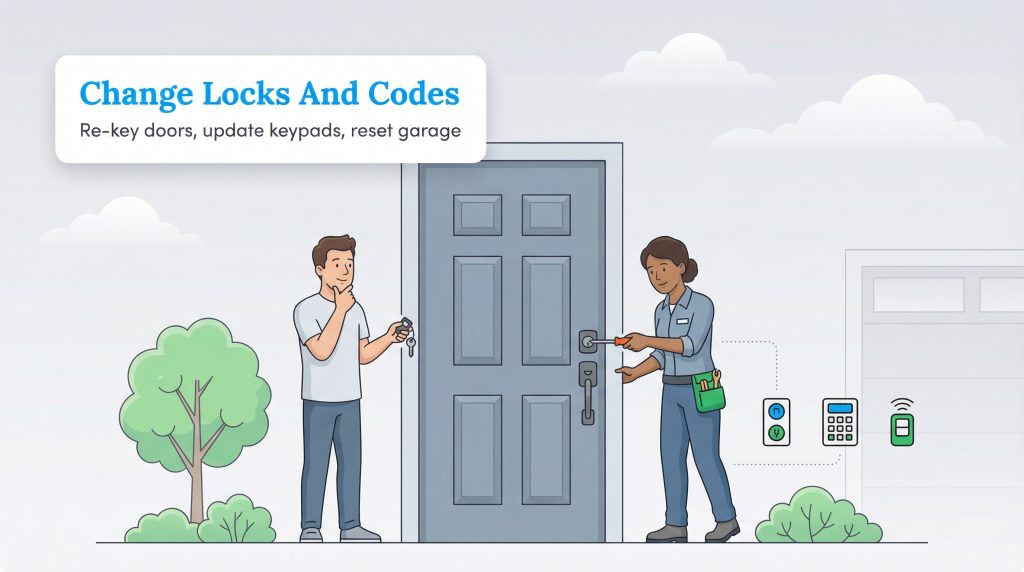
Security is the very first step you should take when you get access to your new property. You simply cannot know who has a copy of the old keys, from previous owners and their family members to contractors, dog walkers, or neighbors. To ensure you and your family are the only ones with access, you need to change the locks on new house doors immediately.
You don’t necessarily have to replace the entire handle set if the hardware is in good condition; a locksmith can often re-key the cylinders for a fraction of the cost. Additionally, don’t forget to reset any keypads or garage door opener codes. This simple step draws a clear line between past owners and your new life in the home.
If you are upgrading your security, consider installing smart locks. They allow you to change access codes instantly and can often integrate with your phone, so you never have to worry about losing keys during the move.
2. Transfer Utilities and Optimize for Efficiency
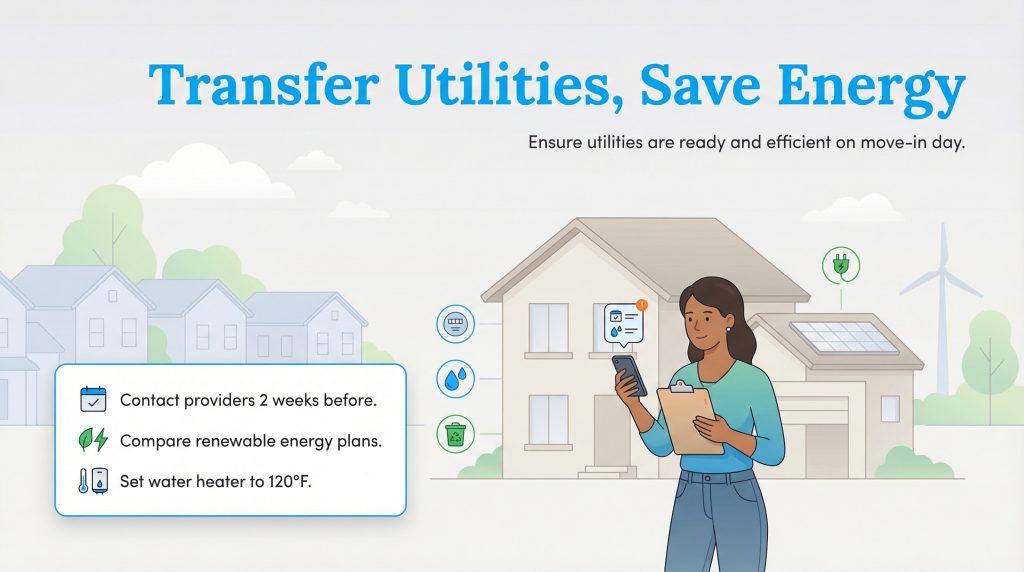
Nothing ruins moving day faster than realizing the lights won’t turn on or the water isn’t running. You should contact utility providers at least two weeks before your move date to schedule service transfers for electricity, natural gas, water, and waste management. This ensures your new home utility setup is active the moment you walk through the door.
If you are moving to a deregulated energy market, this is also the perfect time to compare electricity rates and choose a provider that aligns with your values. Many suppliers offer plans powered by renewable sources like wind or solar, allowing you to make an environmentally mindful choice from the start. Once you are in, check your water heater temperature. Lowering it to 120°F is safer for your skin and saves energy.
For more information on renewable energy options in your region, you can review the EPA Green Power Partnership or your state’s official energy choice website.
Read more about Transferring Your Utilities
3. Map Out Your Digital Infrastructure
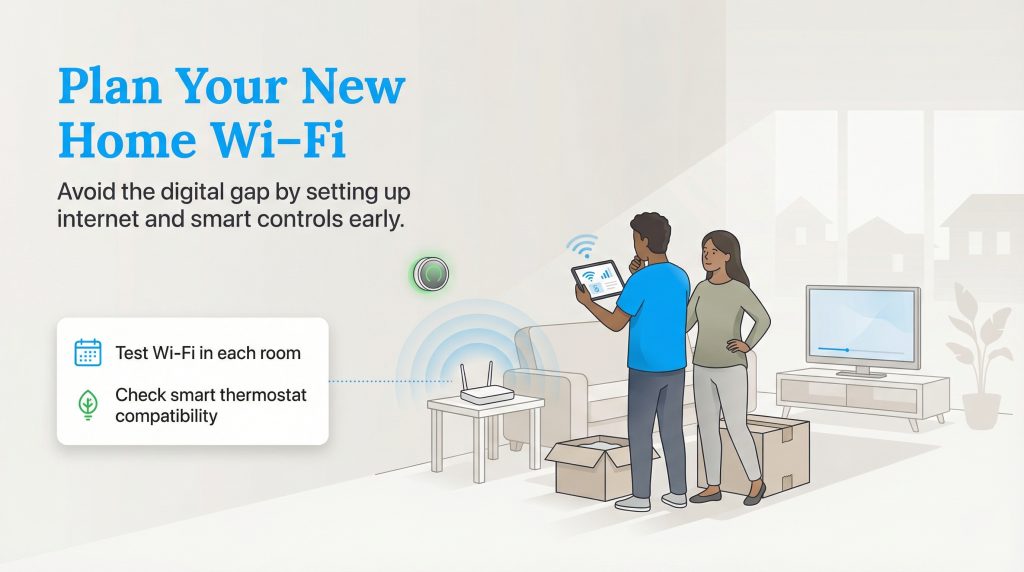
These days, it’s hard to function in a new home without internet. There is often a “digital utility gap” where new residents have power but no Wi-Fi, leaving them unable to work or stream entertainment while unpacking. To avoid this, setup internet and cable new home services well in advance, as technicians can be booked out for days or weeks.
Once you have access to the house, test Wi-Fi speeds in different rooms to identify dead zones before you arrange your furniture. This is also the right time to check if the existing thermostat works with your smart home ecosystem. Upgrading to a smart thermostat immediately can help you manage your climate control more efficiently.
If you need help finding the best connection for your needs, we can help you explore high-speed plans available in your new area.
4. Deep Clean Every Nook and Cranny
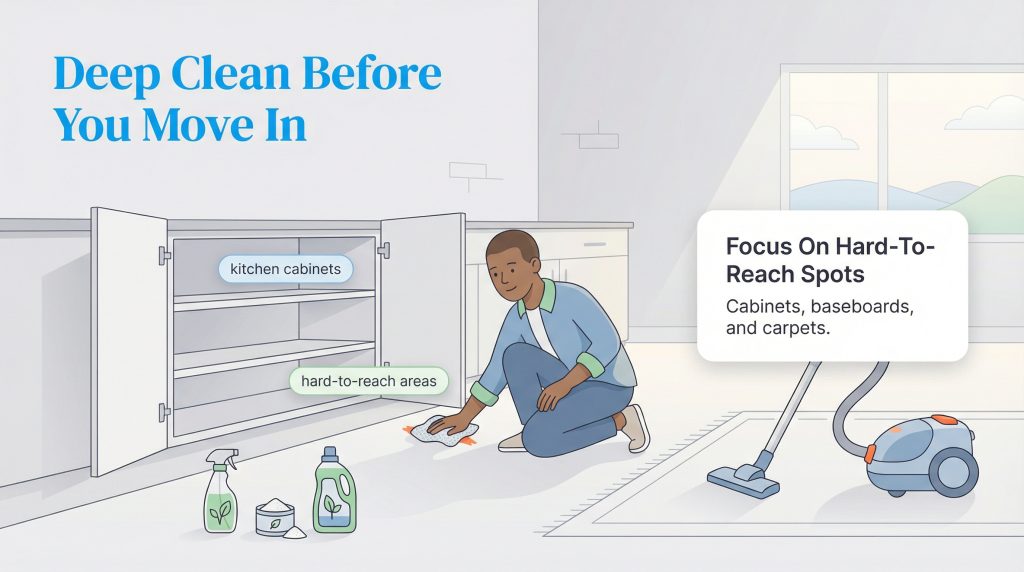
It is infinitely easier to clean a house when it is completely empty. Before the moving truck arrives, run through your deep cleaning new house checklist. Focus on areas that will be difficult to reach later, such as inside kitchen cabinets, along baseboards, and deep within carpets.
For an eco-conscious approach, skip the harsh chemicals and opt for vinegar, baking soda, or non-toxic plant-based cleaners. These products can remove grime effectively without introducing volatile organic compounds (VOCs) into your indoor air. Starting with a clean slate improves your indoor air quality and makes the space truly feel like yours.
5. Locate Main Water and Electrical Shut-Offs
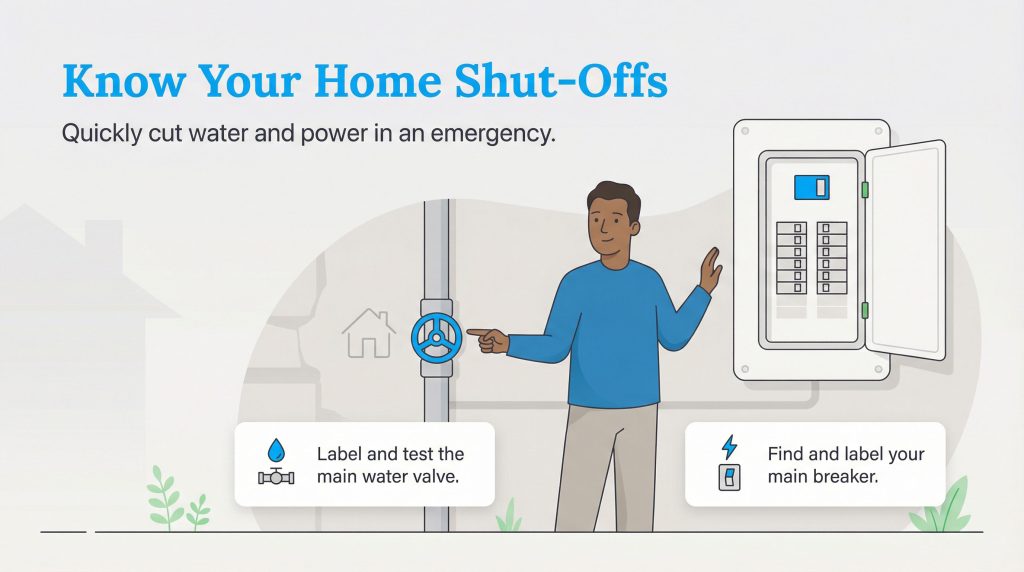
In the event of a burst pipe or an electrical spark, you need to know exactly how to cut power and water to your home. During your initial walkthrough, find the main water valve and the circuit breaker box. If the previous owner did not label the switches in the breaker box, take the time to do it yourself with a partner.
Test the main water shut-off valve to ensure it is not seized up from years of disuse. Knowing where these controls are located can prevent minor issues from turning into major, expensive disasters involving water damage or fire hazards.
6. Test Smoke and Carbon Monoxide Detectors
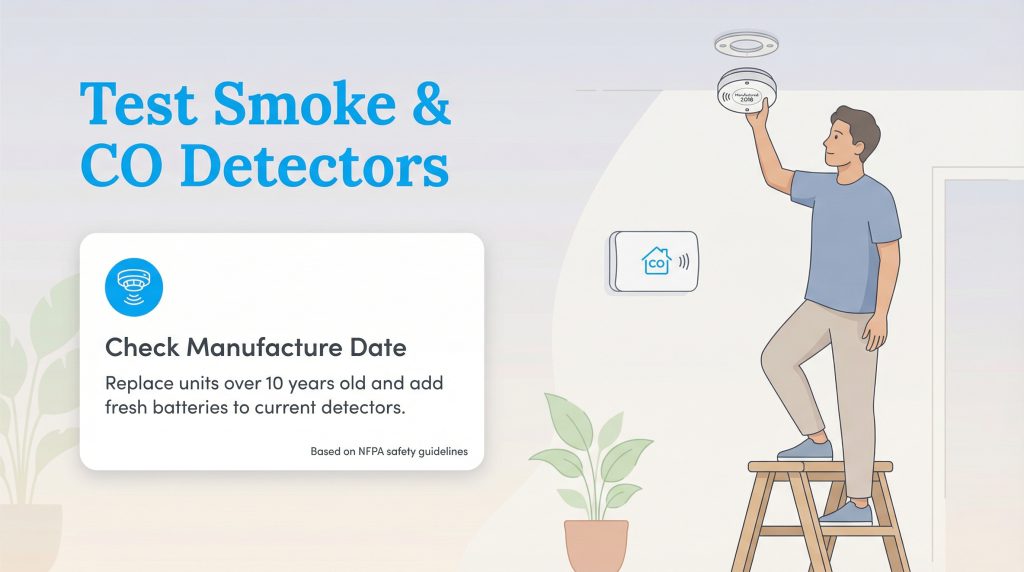
Safety devices are often overlooked during a move, but they are critical for your protection. Don’t just press the test button to see if it beeps; remove the device and check the manufacture date on the back. Smoke and carbon monoxide sensors degrade over time and usually need to be replaced after about 10 years.
If the units are old, replace them right away. If they’re still current, put in fresh batteries to establish a baseline maintenance schedule. This new home safety checklist item ensures your family is protected from the very first night you sleep in the house. For more details on placement and safety standards, you can refer to the National Fire Protection Association (NFPA).
7. Service the HVAC System and Change Filters
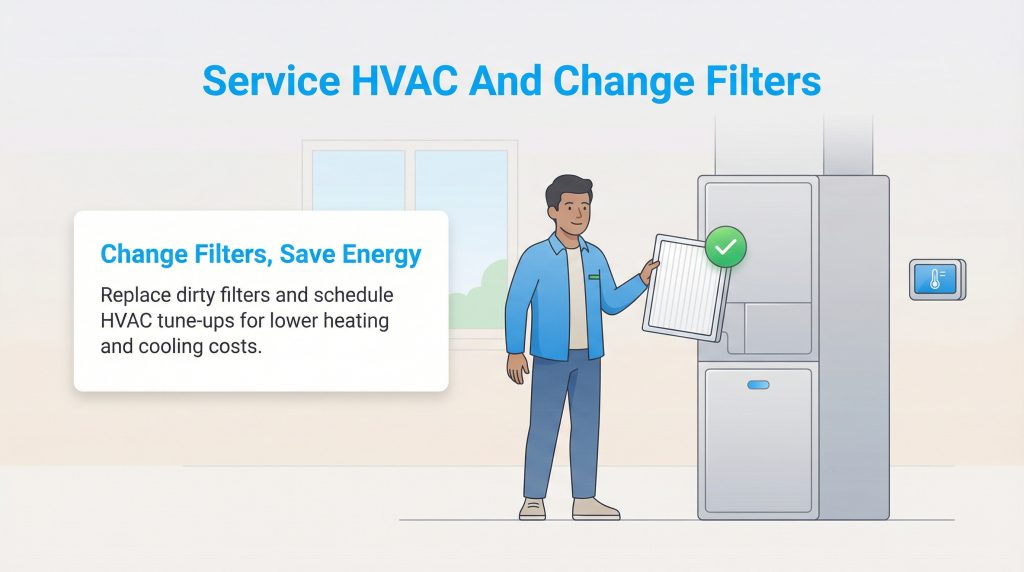
Heating and cooling systems are often neglected by sellers during the chaos of moving out. A dirty air filter restricts airflow, forcing your system to work harder and driving up your energy costs. Swap out the old filter for a new, high-efficiency one as soon as you move in.
If the HVAC unit looks aged or hasn’t been serviced in a while, schedule a professional tune-up. A well-maintained system runs more efficiently, which is a key strategy for saving on heating and cooling bills throughout the year.
8. Update Your Address and Notification List
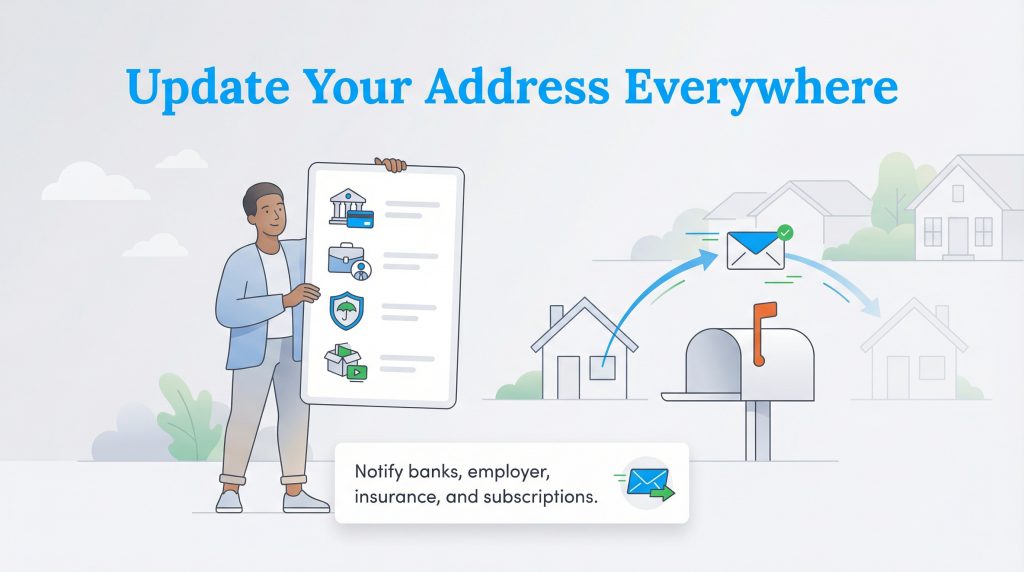
The administrative side of moving is tedious but necessary to prevent identity theft and missed bills. You need to know who to notify when moving house beyond just friends and family. This list includes your bank, employer, insurance providers, and subscription services.
Visit the official USPS Change of Address site to forward your mail. Doing this online is secure and ensures that any mail sent to your old address catches up with you at your new home.
9. Pack a “Moving Day Essentials” Box
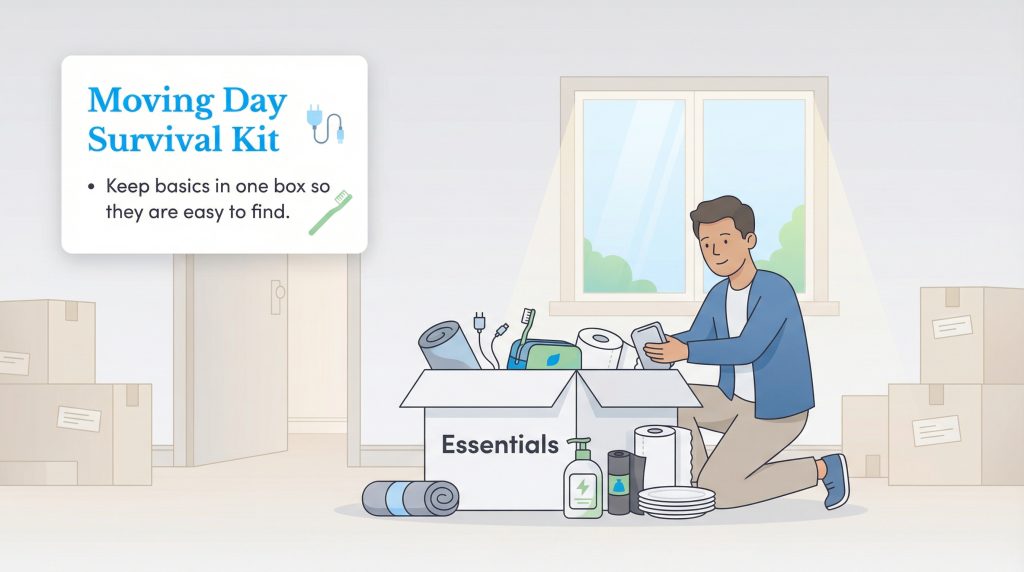
By the time the moving truck is unloaded, you will be too exhausted to dig through dozens of taped boxes for a toothbrush or a phone charger. Pack a specific moving day essentials box that travels with you in your car, not the truck. This is one of the first things to do in a new home to preserve your sanity.
Include items like toilet paper, hand soap, paper towels, trash bags, paper plates, basic toiletries, a change of clothes, and chargers. Having these items instantly accessible allows you to use the bathroom, eat a meal, and get a good night’s sleep without stress.
10. Conduct a Final Walkthrough for Repairs
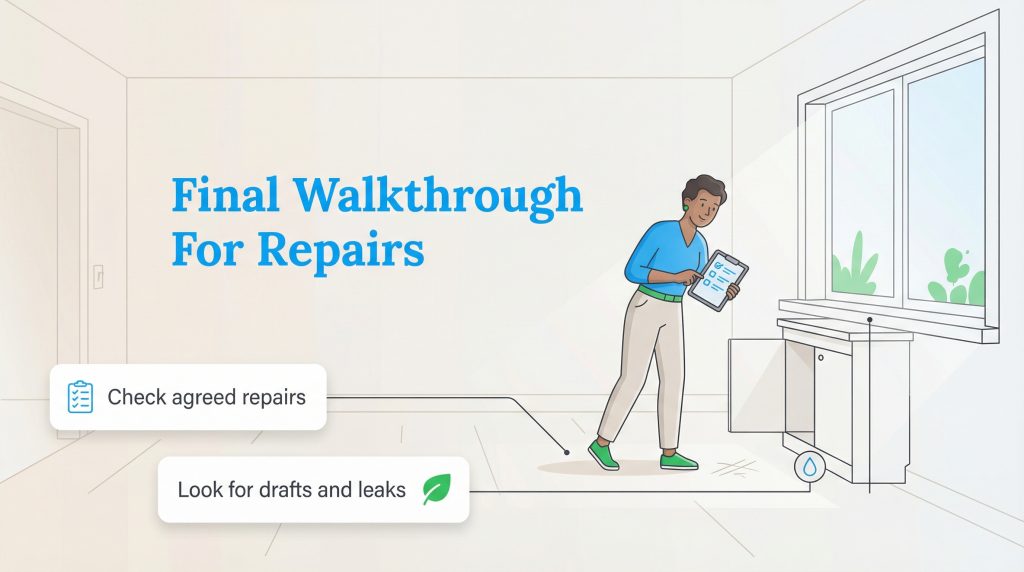
Before you move a single piece of furniture in, do one last inspection of the empty space. Look for scratches on floors, leaks under sinks, or any repairs the seller agreed to fix but may have missed. It is much easier to document these issues and take photos when the house is empty.
While you are looking around, check for drafts around windows and doors. identifying these air leaks early allows you to seal them with caulk or weatherstripping, improving your home’s energy efficiency before you even settle in.
Settling Into Your New Home With Confidence
Moving is a marathon, not a sprint, but ticking these boxes early will save you from headaches down the road. While the list of things to do before moving into a new house might seem long, these ten steps are the firewall between a chaotic move and a peaceful one. Once you have secured the house, set up your utilities, and ensured everything is safe and clean, take a moment to stand in your empty home and breathe. You have done the hard work; now you can look forward to making memories in a safe, efficient, and comfortable space.
FAQs About Moving Into a New House
What is the very first thing to do when moving into a new house?
When should I notify utility companies about my move?
Do I really need to clean a house that looks clean?
How do I check if my new home is energy efficient?
What should be in my first night box?
About the Author

LaLeesha has a Masters degree in English and enjoys writing whenever she has the chance. She is passionate about gardening, reducing her carbon footprint, and protecting the environment.