

Understanding The Science, The Costs, And The Environmental Impact Of This Controversial Energy Source
Key Takeaways
- Clean coal technology aims to reduce harsh emissions through methods like carbon capture and storage (CCS).
- Despite the name, clean coal is not renewable and still relies on mining finite fossil fuel resources.
- Implementation of these technologies can increase the cost to generate electricity, and utilities may pass some of that cost to customers.
When navigating the complexities of your home’s energy mix, you might wonder if clean coal is a legitimate eco-friendly solution or just a clever marketing buzzword. To be clear, “clean coal” is an industry term used to describe a suite of pollution-mitigating technologies, not a newly discovered type of naturally occurring clean fossil fuel. Understanding what this technology actually entails — and what it costs — is crucial for eco-conscious homeowners who want to know exactly where their electricity comes from and how it impacts both the planet and their monthly bills. If you are looking to understand the broader basics of power generation, check out our guide to traditional coal power.
The Definition: What Does Clean Coal Actually Mean?
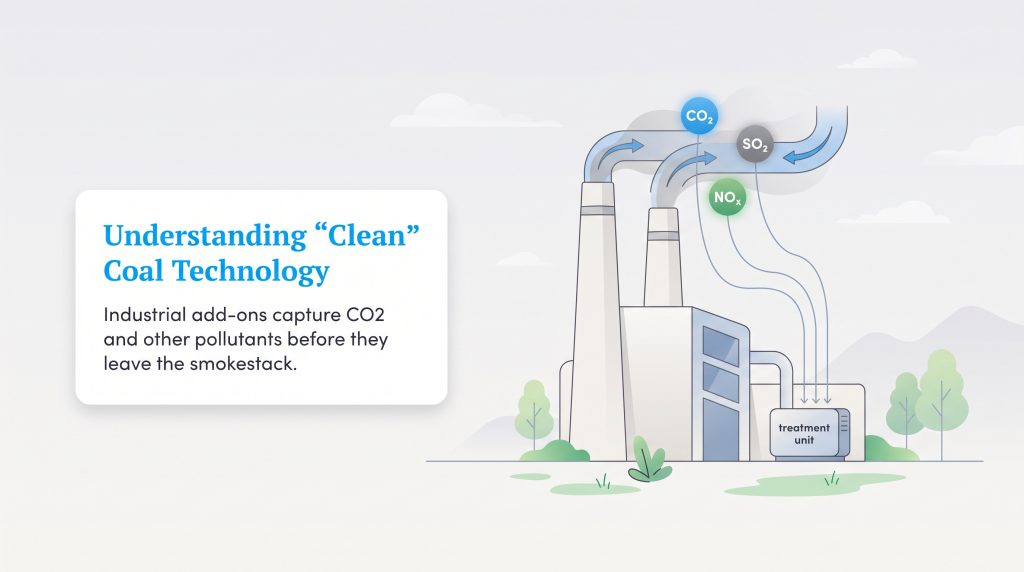
Contrary to what the name might suggest, clean coal does not refer to a magical, naturally occurring mineral that burns without pollution. Instead, it distinguishes between the physical fuel, which remains inherently dirty, and the complex technological processes applied at power plants to reduce atmospheric emissions. The primary goal of these systems is to capture harmful pollutants before they escape the smokestack, heavily utilizing carbon capture and storage (CCS). Historically, this fossil fuel was the absolute backbone of the global electrical grid. Today, as the energy sector rapidly shifts toward natural gas and renewable grids, energy producers utilize these mitigation technologies to curb their massive environmental footprint and avoid greenwashing accusations, though the physical execution remains a highly complex and incredibly expensive undertaking.
Core Clean Coal Technologies Explained
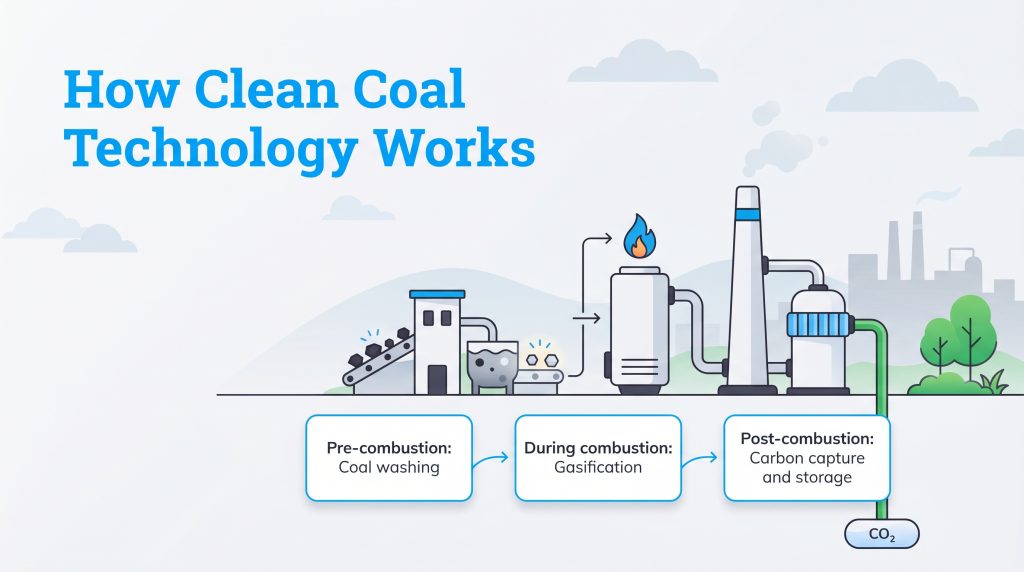
Engineers have spent decades developing methods to clean up this fossil fuel, tackling the pollution problem at entirely different stages of the power generation lifecycle. To truly understand clean coal technology, you have to look at the exact mechanics of how these power plants attempt to reduce greenhouse gas emissions before, during, and after combustion.
Coal Washing
Before combustion even begins, raw coal is crushed and washed in a massive liquid bath. Because coal is slightly lighter than many of the rocky impurities it gets mined with, the valuable fuel floats to the top while heavy pollutants like raw sulfur and non-combustible debris sink to the bottom. This coal washing process ensures the fuel burns slightly more efficiently when it finally reaches the furnace.
Flue Gas Desulfurization (Scrubbers)
Modern power plants must actively manage a variety of dangerous chemical impurities using specialized equipment. Flue gas desulfurization relies on massive chemical scrubbers installed directly inside the exhaust smokestacks. These towering scrubbers continuously spray a precise mixture of pulverized limestone and water directly into the rising exhaust gas. This deliberate chemical reaction effectively strips out sulfur dioxide — the primary compound responsible for acid rain — before it can drift into nearby communities.
Carbon Capture And Storage (CCS)
Post-combustion intervention is currently the most heavily discussed technology in the energy sector today. According to the Department of Energy, successfully capturing greenhouse gas emissions is essential if we intend to reduce the ecological impact of fossil fuel plants. The mechanical process of handling these emissions generally follows three distinct, highly engineered phases:
- Capture: Instead of letting smoke billow out freely, power plants use specialized chemical solvents to separate carbon dioxide from other exhaust gases just before it leaves the smokestack.
- Transport: Once the gas is successfully captured, the plant compresses the CO2 into a dense, liquid-like state. This physical transformation allows the carbon to be moved safely and efficiently, usually via an extensive, highly pressurized network of underground pipelines.
- Storage (Carbon Sequestration): Finally, the compressed carbon is injected thousands of feet underground into deep geological rock formations. This permanent storage aims to lock the carbon away safely beneath the earth’s surface.
Coal Gasification
Alternatively, coal gasification completely flips the script by tackling the pollution problem before the raw fuel is ever burned. Integrated Gasification Combined Cycle (IGCC) systems utilize extreme heat, intense pressure, and highly pressurized steam to forcefully convert solid rock into a combustible synthetic gas, commonly known as syngas. By dramatically transforming the physical state of the fuel, engineers can easily filter out harsh sulfur, heavy nitrogen, and other hazardous impurities prior to combustion. This proactive filtration process results in a significantly cleaner burn compared to tossing raw, pulverized coal directly into a traditional furnace.
The Environmental Reality: Is Clean Coal A Myth?
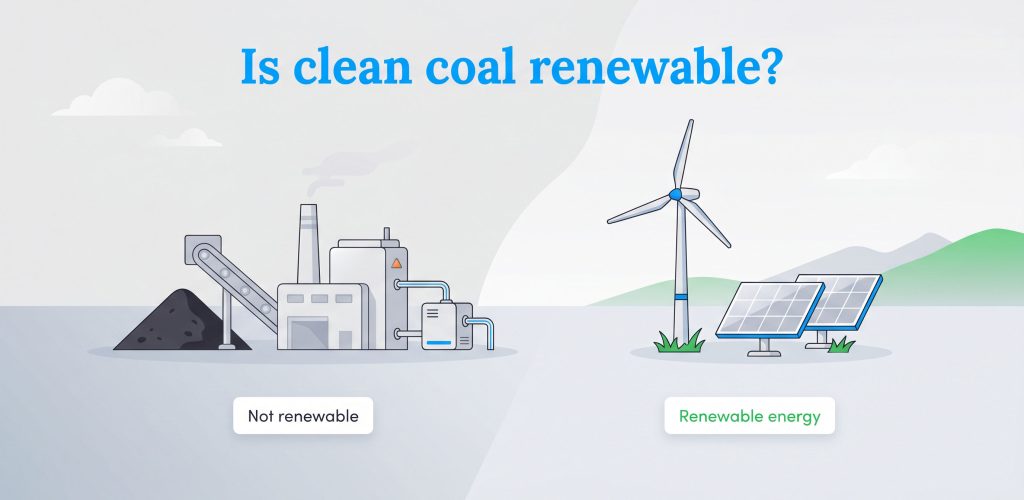
When assessing if this technology is actually sustainable, many experts point directly to the clean coal myth. The term heavily implies a zero-impact energy source, but even if advanced power plants eventually manage to capture every single ounce of tailpipe emissions, the sheer upstream environmental impact of coal extraction cannot be fixed with a fancy smokestack scrubber. Coal remains a finite, non-renewable fossil fuel, and relying on it inherently requires continuous, highly destructive mining operations that permanently alter our natural landscapes.
Beyond the staggering visual destruction associated with mountaintop removal, the physical mining process frequently leads to severe water contamination. Heavy metals and toxic runoff regularly leach into the local water tables that nearby communities desperately rely on for safe drinking water. Furthermore, the persistent threat of spontaneous coal combustion inside abandoned underground mines continuously releases massive, unmonitored amounts of greenhouse gases directly into the air.
Then there is the issue of downstream waste, specifically the creation of toxic coal ash. When you burn this fossil fuel, even with advanced filtration, you are left with millions of tons of heavy ash laden with arsenic, lead, and mercury. Wide-scale habitat destruction and dangerous waste management remain devastating, unavoidable consequences of this extractive industry. This clearly proves that while the final combustion might look cleaner on paper, the fuel source itself is fundamentally damaging to the earth.
📌 Quick Fact: Don’t confuse “clean” with “renewable.” While clean coal technology reduces emissions at the power plant, it still fundamentally relies on extracting finite fossil fuels from the earth.
The Economics Of Clean Coal Versus Renewable Energy
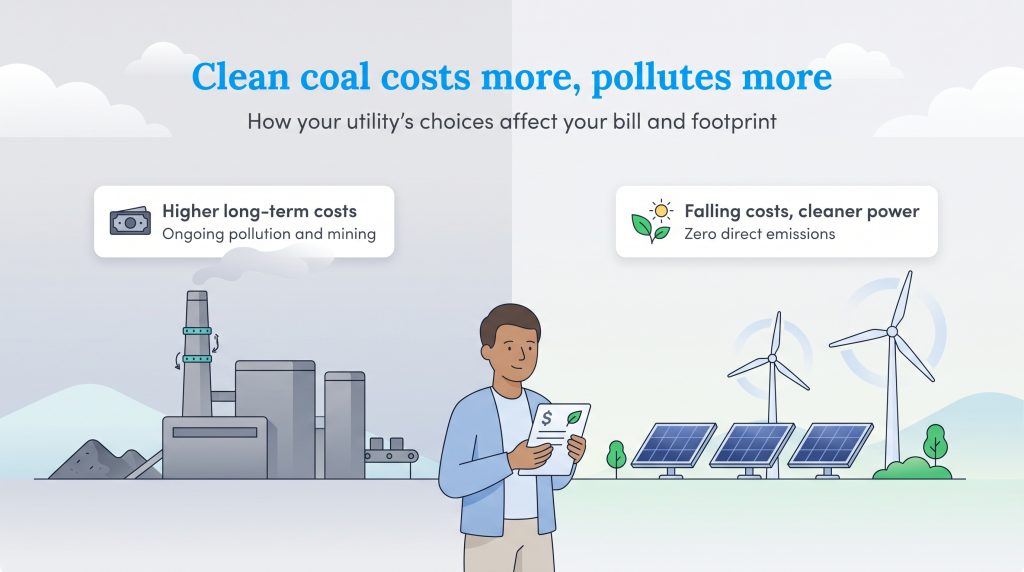
For eco-conscious homeowners, the choice often comes down to balancing cost with environmental values. While you might not directly purchase a smokestack scrubber, your local utility provider makes massive infrastructure decisions that dictate your monthly rates and personal carbon footprint. When analyzing clean coal versus renewable energy, it is abundantly clear that fossil fuel alternatives like wind energy and solar power offer completely different economic and ecological profiles.
| Energy Source | Levelized Cost of Energy (LCOE) | Environmental Impact |
|---|---|---|
| Modern CCS-Equipped Coal Plant | High (Driven by expensive plant retrofits, complex scrubbers, and ongoing mining expenses) | Severe upstream mining impact; produces toxic coal ash and residual emissions |
| Utility-Scale Solar Energy | Low and consistently falling across the modern market | Zero direct operational emissions; moderate land use requirements |
| Utility-Scale Wind Power | Low and consistently falling across the modern market | Zero direct operational emissions; minimal footprint once installed |
The Cost Factor And Your Electric Bill
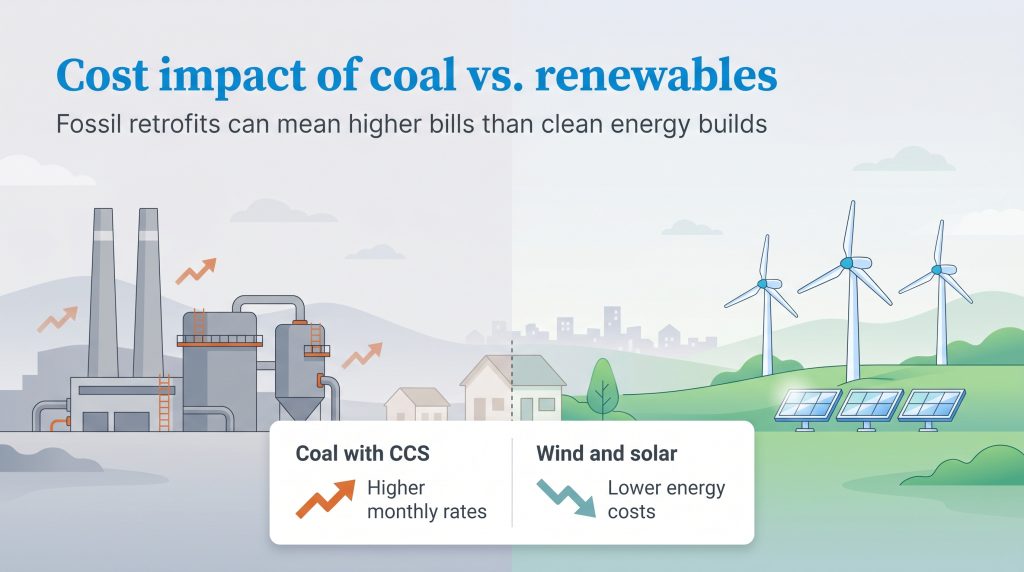
To meet standards to reduce fossil pollution set by the EPA, legacy plants must invest heavily in mitigation infrastructure. However, installing carbon capture technology is prohibitively expensive, which is why very few plants use it globally. Because utilities operate as businesses, they generally recover these massive capital expenditures by passing the costs directly down to ratepayers, leading to noticeable hikes in your monthly electricity bill.
In stark contrast, the cost to deploy wind and solar infrastructure has dropped dramatically over the last decade. In a rapidly growing number of regions across the country, it is actually cheaper to build a brand new wind farm than it is to keep an aging coal plant running with expensive environmental retrofits. This trend is consistently supported by rigorous analysis from financial firms like Lazard, showing the continued decline in the cost of clean energy generation.
💸 Money-Saver: In competitive electricity markets, always check your plan’s disclosures. Energy plans sourced from 100% wind or solar are frequently more affordable than fossil-fuel-heavy plans burdened by expensive plant retrofits.
The Verdict On Coal’s Future
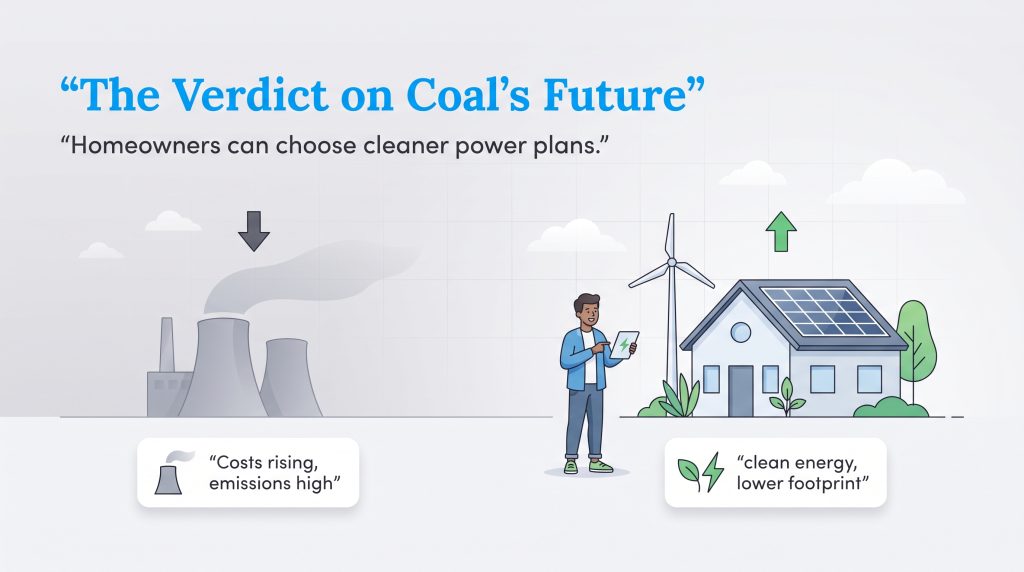
When deciding how to responsibly power our future, the trajectory of the grid is abundantly clear. While clean coal technologies exist to make legacy plants slightly less polluting and maintain short-term baseline stability, the future of home utilities and global energy lies squarely in fossil fuel alternatives. The immense capital required to capture and bury carbon simply cannot compete with the rapidly falling prices of true, zero-emission renewable resources.
While very few homeowners actually have the ability to select their power plant technology directly, you definitely have control over your personal energy footprint. We strongly encourage you to review your local utility provider’s integrated resource plan or fuel mix summary to see exactly where your home’s power originates. If you live in a deregulated market and have the distinct power to choose your own supplier, actively look for electricity plans backed by authentic renewable energy certificates (RECs), such as the 100% renewable plans offered by Green Mountain Energy. For more actionable ways to reduce your environmental impact at home, explore our comprehensive sustainable living guide.
Frequently Asked Questions About Clean Coal
Why do people say clean coal is a myth?
How much carbon does clean coal technology actually capture?
Does clean coal produce toxic ash?
Are there any clean coal power plants in the United States?
What is the difference between regular coal and clean coal?
Can I choose clean coal for my home energy plan?
Is clean coal better for the environment than natural gas?
About the Author

LaLeesha has a Masters degree in English and enjoys writing whenever she has the chance. She is passionate about gardening, reducing her carbon footprint, and protecting the environment. She also recently served as President of the Board for City Sprouts (a community garden).

Claudio is a sustainability-focused writer with a background in Anthropology and Psychology from NC State University. He has spent over 15 years working in writing, interpretation, and translation, driven by a deep interest in how human culture shapes the environment. Today, he shares his curiosity with readers by writing about sustainable living solutions and the connection between everyday choices and environmental impact.