
From blinking clocks to food safety, here is everything you need to know about navigating a blackout.
Key Takeaways
- Understanding the mechanics of a power outage helps you react calmly and prioritize safety for your home and family.
- Most home appliances will pause safely, but sensitive electronics and smart devices may require specific attention to prevent damage.
- Preparation is key, so keeping a basic emergency kit and knowing your main breaker’s location can save you stress when the lights go out.
There is a specific kind of silence that falls over a home when the power goes out. The hum of the refrigerator stops, the Wi-Fi lights blink off, and you are suddenly left in the dark wondering how long it will last. While power outages are inconvenient and often frustrating, they are rarely a cause for panic if you know what is happening behind your walls and on the electrical grid. By understanding how your home systems react to a loss of power and having a solid plan in place, you can turn a stressful situation into a manageable minor event, keeping your household comfortable until the lights come back on. At UtilitiesForMyHome, we want you to feel confident, not panicked, when the lights go out.
The Science Behind the Blackout: Why Power Goes Out
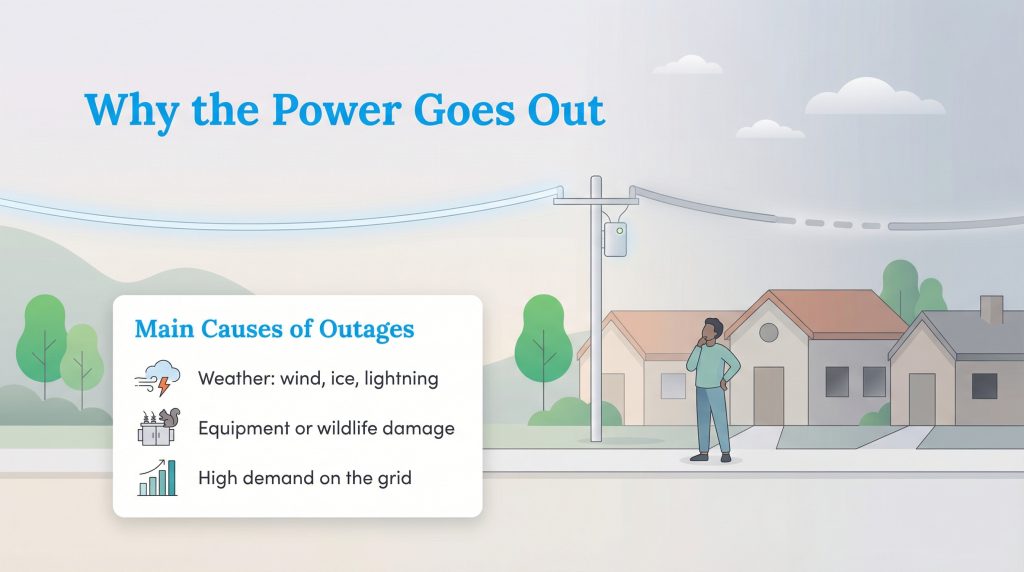
To understand what happens during a power outage, it helps to know how the grid works. This vast, delicate ecosystem must constantly balance energy supply with real-time demand. When that critical balance is disrupted, automated safety mechanisms instantly trip to protect the broader infrastructure, effectively cutting off power to your home to prevent widespread damage. While the general mechanics are similar everywhere, restoration timelines will always vary by region and utility provider. The four main causes of these disruptions include:
- Weather: High winds, lightning strikes, and heavy ice storms can snap power lines or blow vital fuses.
- Wildlife: Animals like squirrels or birds frequently come into contact with lines and short out transformers.
- Grid Overload: Unprecedented energy demand during extreme summer heatwaves or winter freezes severely strains the system.
- Equipment Failure: Aging municipal infrastructure at local substations can unexpectedly malfunction without warning.
According to the U.S. Energy Information Administration (EIA), the average U.S. electricity customer experiences just over five hours of power interruptions per year, mostly due to major weather events.
The Immediate Impact: What Happens to Your Home Systems?
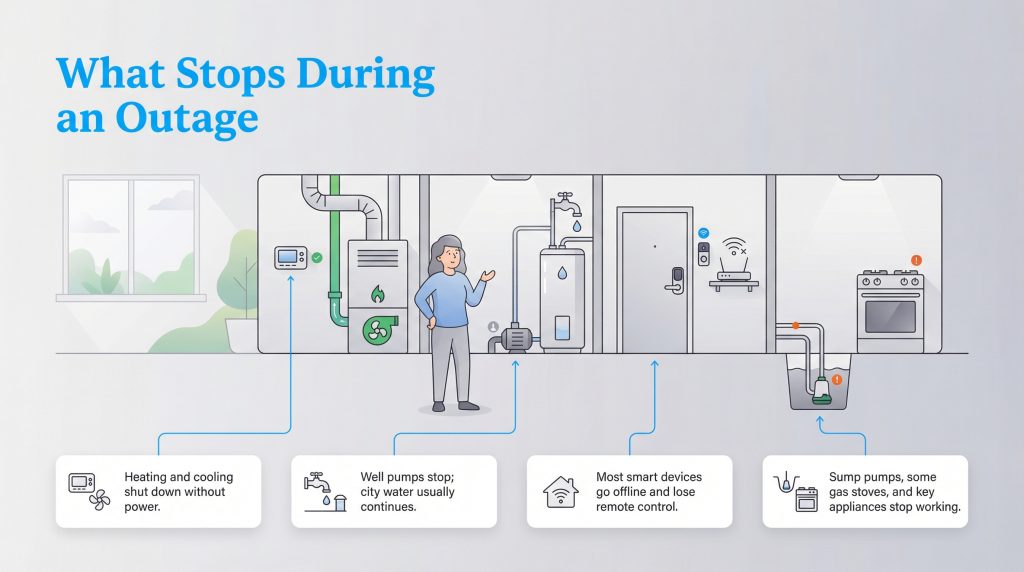
When you are figuring out what happens during a power outage in your home, it helps to think in terms of systems: heating, water, smart devices, and appliances. When the flow of electricity stops, most of us notice the lights first, but several other systems in your home are affected immediately. Understanding which appliances stop working helps you prioritize your next steps safely.
Heating and Cooling
Many homeowners are surprised to learn that their gas furnace won’t work during a power outage. Even though it burns natural gas to create heat, the system relies on electricity to power the blower fan that circulates the warm air through your ducts. Without electricity, the safety valve closes, and the heat shuts off completely. Never attempt to use a gas oven or stovetop to heat your home during a blackout. Burning natural gas without proper, powered ventilation drastically increases your carbon monoxide poisoning risk, which can rapidly turn deadly in enclosed spaces. For more ways to protect your electric service and reduce bills, see our guide to cutting your electric costs.
Water Systems
If your home is connected to a municipal water supply, you will likely still have running water, as city systems usually rely on gravity or large backup generators. However, if you have a private well, your electric pump will stop working immediately, meaning you won’t have water at the taps or the ability to flush toilets once the tank is empty. You can learn more about how these systems work in our guide to home water systems.
Smart Home Tech
Your smart home devices, from video doorbells to Wi-Fi thermostats, will generally go offline. While some smart locks have battery backups that allow them to function securely, other automated devices may become completely inaccessible. If your internet goes down, you lose remote control over these systems. It is helpful to know how to manually operate your smart locks and garage doors before an outage occurs. For more on keeping your connection running, check out our tips on home internet resilience.
Appliances and Other Systems
Beyond the basics, other critical home systems can be affected. If you have a basement with a sump pump, it will stop removing water during an outage, which can lead to flooding during a heavy storm. Additionally, gas stoves with electronic ignitions will not light automatically, though many can be lit carefully with a match. Always check your manufacturer’s manual for safety instructions before attempting this.
Immediate Action Plan: What to Do When the Power Goes Out
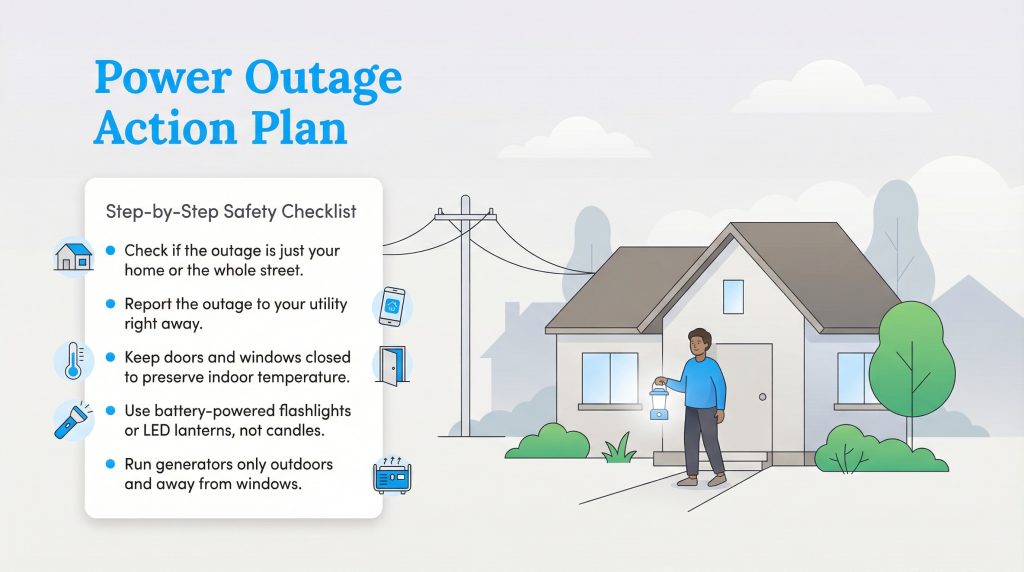
Knowing exactly what to do during a power outage can keep your family safe and prevent severe damage to your home. Think of this as your simple blackout checklist — a chronological set of steps you can easily follow every time the lights suddenly go out.
- Assess the area: Look out the window to see if your neighbors still have lights. If only your home is dark, check for a tripped breaker or blown fuse in your own electrical panel.
- Report the outage: Contact your local utility provider using their mobile app or automated phone line. Never assume they already know your street is out of power, as reporting helps them pinpoint the location of the fault.
- Unplug major electronics: Disconnect heavy appliances, computers, and televisions to protect them from incoming surges, but leave a single lamp turned on so you know exactly when power is restored.
- Stay clear of downed power lines: If you spot a downed line outside your property, practice strict downed power line safety by maintaining a minimum distance of at least 35 feet. Assume every fallen wire is fully live and immediately report it to local authorities.
- Preserve indoor temperatures: Keep exterior doors and windows firmly shut. In the winter, a drafty house loses heat quickly. In the summer, you want to trap that cool air inside as long as possible.
- Switch to safe lighting: Rely on battery-powered LED lanterns or heavy-duty flashlights rather than open candles. Open flames pose a significant fire hazard, especially if you are distracted or fall asleep.
- Practice generator safety: If you utilize a backup generator, never run it indoors, inside a garage, or near open windows. Generator safety during a power outage is critical, as these machines produce lethal carbon monoxide gas.
Food Safety and Medication: The 4-Hour Rule and Beyond
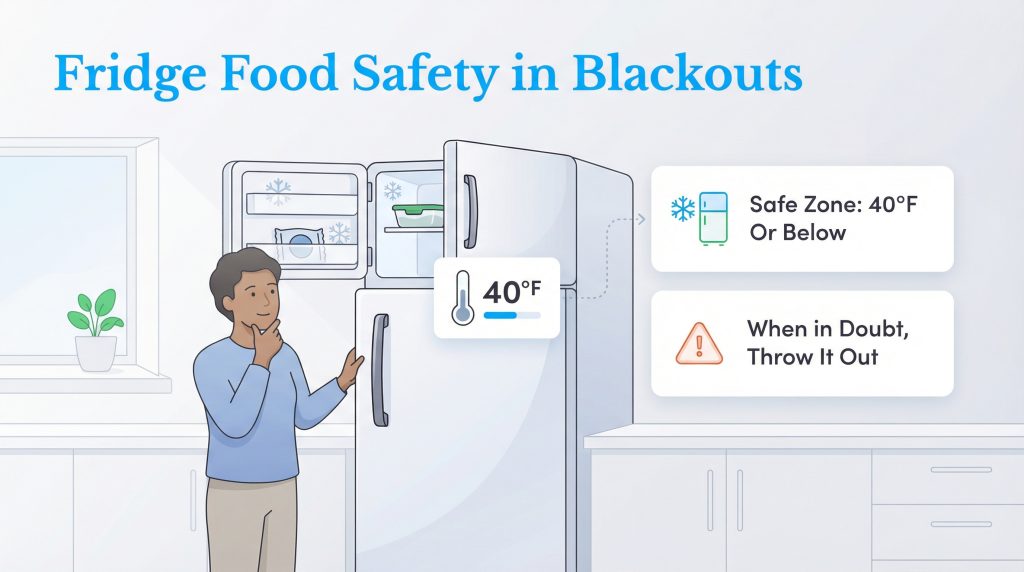
One of the biggest concerns during a blackout is food safety. How long does food last in the fridge without power? The answer heavily depends on how well you keep the cold air trapped inside. Following strict food safety during a power outage can save your family from illness and unnecessary waste.
| Appliance | Safe Duration (Closed Door) | Action to Take |
|---|---|---|
| Refrigerator | 4 Hours | Keep door closed; move milk/meats to a cooler with ice if the outage lasts longer. |
| Freezer (Half Full) | 24 Hours | Group frozen items together to create an “igloo” effect that retains cold. |
| Freezer (Full) | 48 Hours | Do not open the door unless absolutely necessary. |
Once power is restored, immediately check the temperature of your perishables. Most experts recommend that if food in the freezer still has ice crystals or remains below 40°F, it is generally safe to refreeze or cook. However, the golden rule of food safety applies here: when in doubt, throw it out. You can find highly detailed charts and guidelines at FoodSafety.gov.
Beyond groceries, you must also carefully evaluate refrigerated medications. If your home loses power and vital medicine like insulin is exposed to temperatures above 40°F for an extended period, consult a pharmacist before using it. The efficacy of certain prescription drugs can rapidly diminish when improperly stored, so it is always better to double-check with a medical professional.
Managing Medical Devices and Accessibility Needs
For individuals who rely on electricity for their baseline health and well-being, a blackout is far more than a minor inconvenience — it is a critical emergency. If you or a family member depend on medical devices during a power outage, such as life-support equipment, an oxygen concentrator, or a CPAP machine, you must register your medical needs with your local utility company immediately. Many utility providers maintain a dedicated medical baseline or critical care registry designed to prioritize power restoration for vulnerable households and provide early warnings before scheduled outages.
To guarantee the continuous, safe operation of your essential health equipment, we strongly recommend purchasing an uninterruptible power supply backup explicitly rated for medical devices. A high-capacity UPS backup seamlessly takes over the moment the grid fails, granting you precious time to either secure a longer-term power solution, like a generator, or safely relocate to a facility with active power.
Restoration: How Utilities Bring the Power Back
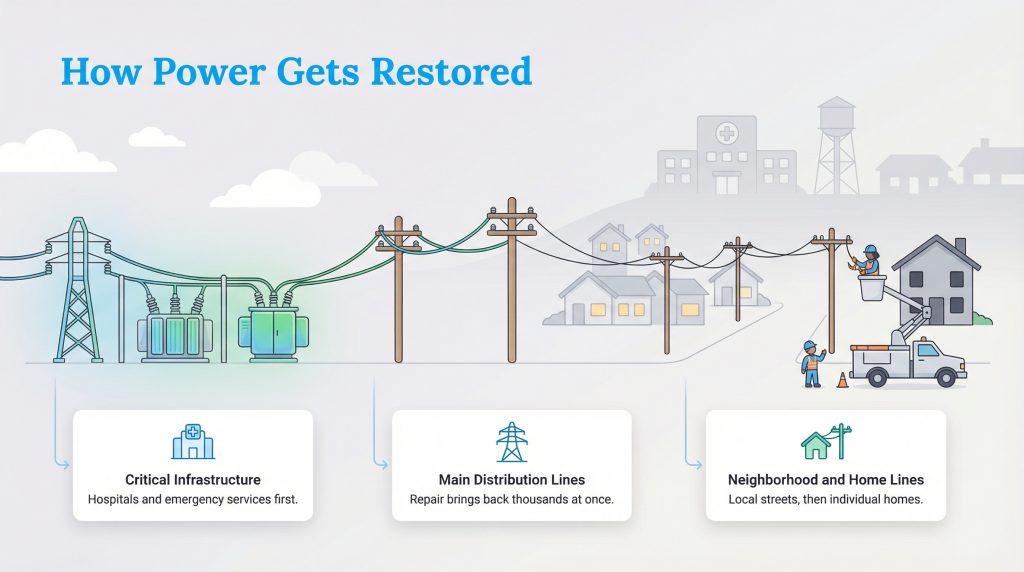
It can be frustrating to see lights on in the next neighborhood while you are still sitting in the dark. Utility companies follow a highly specific hierarchy of repair to restore power to the greatest number of people and critical services first.
- Critical Infrastructure: Crews prioritize hospitals, police and fire stations, and water treatment plants to ensure public safety.
- Main Distribution Lines: Next, they repair the high-voltage lines coming from substations. Fixing one of these can bring thousands of customers back online at once.
- Neighborhood Lines: Crews then move to the lines that serve local streets and subdivisions.
- Individual Service Lines: Finally, they repair the lines connecting individual homes to the pole. This is why you might be the last one restored if the damage is specific to your house connection.
Eco Edge: Consider a Battery Backup. If you experience frequent outages, consider installing a solar-charged home battery system. It provides a silent, eco-conscious alternative to gas generators and can keep your essential circuits running during a blackout. Learn more about energy storage in our solar guide.
After the Storm: Resetting and Checking for Damage
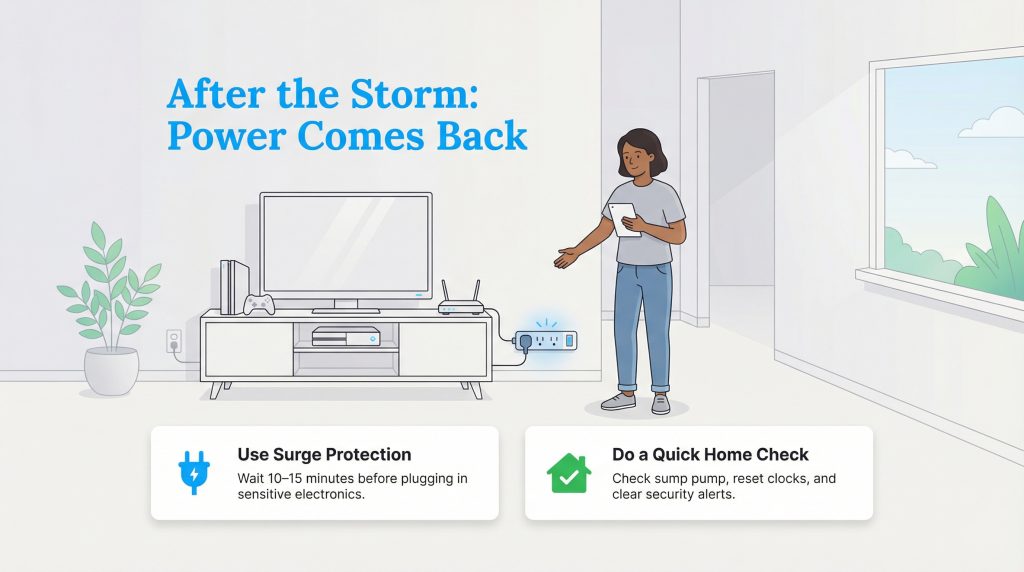
Once the lights flicker back on, there are a few more steps to ensure everything returns to normal safely. Don’t rush to plug everything back in at once.
Protecting Electronics From Power Surges
When the grid comes back online, the voltage can briefly spike, creating a transient overvoltage that may permanently damage sensitive electronics like computers, gaming consoles, and televisions. To ensure proper surge protection after power is restored, wait exactly 10 to 15 minutes before plugging these valuable items back into the wall. We also highly recommend using surge-protecting power strips or installing a whole-home surge protector to safeguard your devices against future voltage fluctuations.
If the outage occurred during a heavy storm, check your sump pump immediately to ensure it hasn’t overflowed and is working correctly again. Finally, take a tour of your home to manually reset digital clocks, irrigation timers, and smart home hubs. If you have a security system, you may need to enter a master code to clear the “power failure” trouble signal from the keypad.
Your Power Outage Emergency Kit Checklist
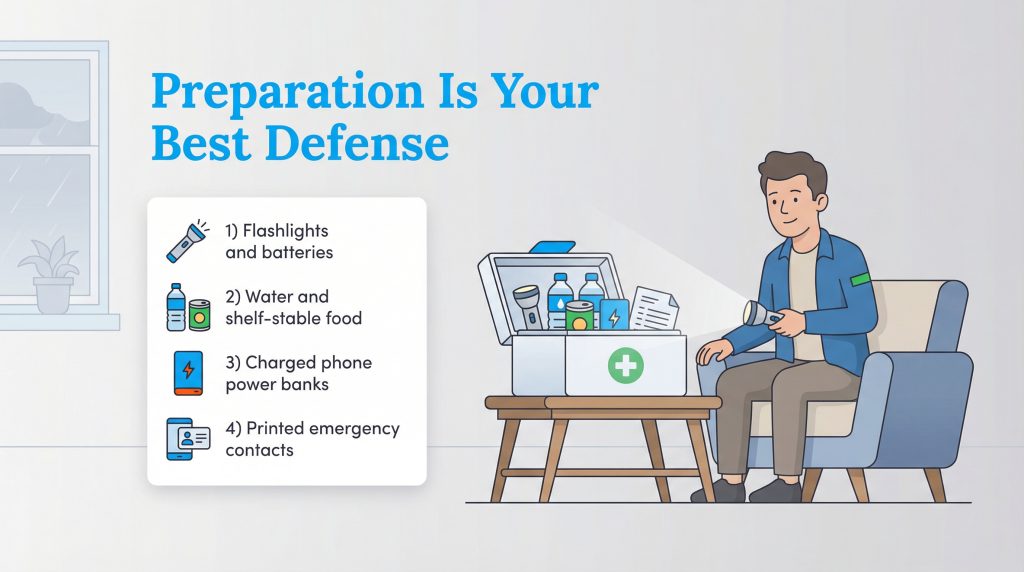
Power outages are an inevitable part of homeownership, but they don’t have to dictate your comfort or cause widespread panic. Having a dedicated power outage emergency kit checklist ensures you remain completely calm and in control when the lights cut out. A simple, well-stocked emergency kit with the following items makes all the difference:
- At least one high-lumen flashlight per bedroom equipped with fresh, backup batteries
- A multi-day stash of shelf-stable food and bottled water (aiming for at least one gallon per person, per day)
- Portable power banks kept fully charged and ready for mobile phones and essential devices
- A comprehensive first-aid kit stocked with necessary bandages, medications, and sanitizers
- A printed list of critical emergency contacts, including your utility’s 24-hour outage reporting number
Preparing Your Home for the Next Blackout
Preparation is undeniably your best defense against unpredictable grid failures. While you cannot control severe weather or aging municipal infrastructure, you can fully control how your household responds to the challenge. Take just 15 minutes this weekend to bookmark your local utility’s live outage map on your web browser and program their emergency reporting numbers directly into your phone contacts.
Don’t wait until the storm clouds gather to scramble for batteries and bottled water. Build out your emergency kit this weekend so you are completely prepared for the next disruption. By taking these simple, proactive steps today, you ensure your home remains a safe, resilient sanctuary no matter what happens on the broader electrical grid.
FAQs About Power Outages
How do I report a power outage?
Is it safe to use a generator in the garage during a power outage?
How do I open my electric garage door without power?
Can I flush the toilet during a power outage?
Will my cell phone and internet still work during a power outage?
Will my tankless water heater work in a power outage?
What should I keep in a basic power outage kit?
How can I charge my phone during a power outage?
Why do my lights flicker before the power goes out?
Does homeowner insurance cover food spoilage?
“`
About the Author

LaLeesha has a Masters degree in English and enjoys writing whenever she has the chance. She is passionate about gardening, reducing her carbon footprint, and protecting the environment.