

Smart meters operate using low-level radiofrequency emissions that fall well below federal safety limits, making them a safe and energy-saving option for your home.
Key Takeaways
- Smart meters emit less radiofrequency (RF) energy than many common household devices, including cell phones, baby monitors, and Wi-Fi routers.
- Leading health organizations have found no proven link between the RF emissions from smart meters and cancer or other serious health symptoms.
- Some U.S. utility customers can opt out of smart meter installations, depending on their state, utility, and local regulatory rules. Opt-out programs often include a one-time fee and a monthly manual meter-reading charge.
Are smart meters dangerous? The short answer is no, as major health organizations and regulatory bodies consistently find them safe for everyday household use. Receiving a notice that your utility company is swapping out your old analog meter for a digital one can understandably prompt questions about bringing new wireless technology near your living space. Our goal is to provide objective, science-backed smart meter health risks facts so you can make an informed decision without unnecessary stress. By cutting through the noise and examining verified research regarding smart meter radiation exposure, we can help you understand exactly how these modern devices interact with your home and your family’s well-being.
What Is a Smart Meter and How Does It Work?
Before diving into safety data, it helps to understand how these devices actually function on the side of your house. When learning what a smart meter is, you will find they are digital utility devices that measure your electricity use and send encrypted consumption data directly to your utility provider at specific intervals. To accomplish this, they rely on a built-in cellular transmitter that communicates via radiofrequency (RF) signals, completely eliminating the need for manual, in-person meter readings.
This communication method produces low-level electromagnetic radiation, similar to the signals used by the wireless networks and mobile devices already operating inside your home. Because they do not need to push data continuously, smart meters only actively transmit for a few fractions of a second throughout the day, keeping your overall exposure incredibly low.
The Science of Radiofrequency (RF) Radiation
To truly gauge the safety of this technology, you need to understand the basic physics behind radiofrequency (RF) radiation limits. RF radiation is simply a form of electromagnetic energy used to transmit information through the air, and while you encounter it daily, not all radiation is created equal. Understanding this fundamental difference is the key to dispelling common myths about wireless technology and feeling more secure in your own home.
Ionizing vs. Non-Ionizing Radiation
When evaluating the electromagnetic spectrum, the scientific community divides radiation into two distinct categories based on its power and potential to cause biological harm:
- Ionizing Radiation: This high-energy category includes X-rays, gamma rays, and ultraviolet (UV) light. It carries enough power to remove electrons from atoms, which can break chemical bonds and directly damage human DNA.
- Non-Ionizing Radiation: This low-energy category includes radio waves, microwaves, cell phones, Wi-Fi routers, and smart meters. It does not have enough energy to break chemical bonds or alter DNA, meaning its primary biological effect is merely minor tissue heating — and only at extremely high, continuous exposure levels.
The critical takeaway for your home’s safety is that smart meters exclusively emit non-ionizing radiation. When assessing FCC radiofrequency safety guidelines, you will notice that non-ionizing devices are heavily regulated to ensure they stay far below any threshold that could cause thermal heating or physical damage.
Fact-Checking Smart Meter Health Risks
It is entirely normal to encounter conflicting claims online about analog vs smart meter health impacts. We want to separate verified scientific consensus from anecdotal claims to give you a clear, objective picture of what these devices mean for your household.
Cancer Risk and Smart Meters
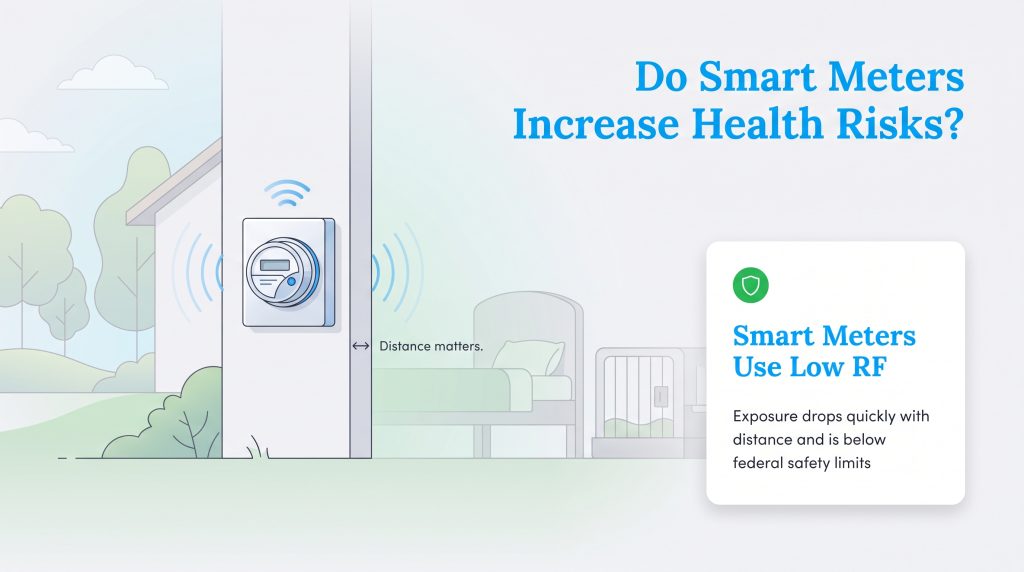
It is a common concern for homeowners to wonder about smart meter cancer risk. Health experts and scientific panels worldwide have studied this exact question extensively over the last two decades. Because the non-ionizing radiation emitted by these meters lacks the energy to damage DNA, there is no proven biological mechanism for them to trigger cancerous mutations. Public health guidance on smart meters and cancer notes that RF exposure from these devices is typically far below federal limits and is not known to increase your cancer risk.
Electromagnetic Hypersensitivity (EHS) and EMF Symptoms
Another topic that frequently surfaces in community forums is the fear of smart meter EMF symptoms, often referred to as electromagnetic hypersensitivity (EHS). Some individuals report experiencing headaches, fatigue, memory loss, or dizziness when exposed to wireless networks. While these physical symptoms are undoubtedly real and distressing to those suffering from them, double-blind scientific studies have consistently failed to link these issues directly to RF exposure from utility meters. Public health agencies generally report that studies do not show a consistent link between RF exposure and these symptoms. If you are experiencing ongoing health issues, it is always best to consult a medical professional for an accurate diagnosis rather than assuming the digital meter is the root cause.
Comparing Smart Meter Radiation to Everyday Devices
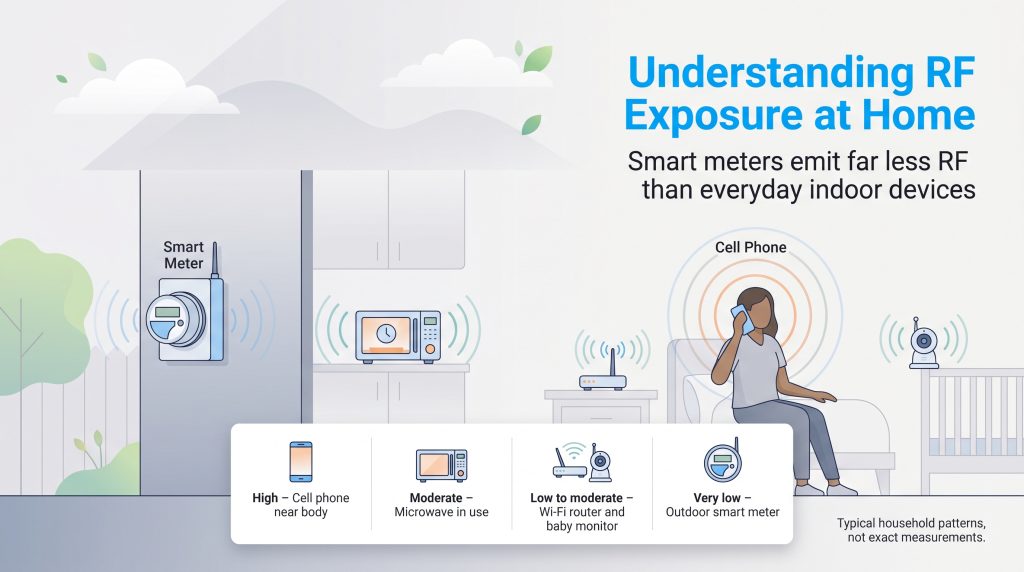
Providing visual context and scale to smart meter radiation exposure can significantly reduce unnecessary anxiety. A smart meter is usually mounted on the exterior wall of your house, meaning the physical barriers of wood, brick, and drywall absorb and weaken the signal before it ever reaches your living spaces. Managing your home’s electric service becomes much less stressful when you realize these outdoor devices expose you to less RF energy than the gadgets currently sitting on your nightstand.
| Device | Emission Frequency | Typical Distance from Body |
|---|---|---|
| Cell Phone | High (Continuous during active use) | 0 to 1 foot (Against head or in pocket) |
| Microwave Oven | Moderate (During active heating) | 1 to 3 feet |
| Wi-Fi Router | Moderate (Continuous background) | 5 to 20 feet (Often in the same room) |
| Smart Meter | Very Low (Brief, intermittent bursts) | 10+ feet (Outside an exterior wall) |
Note: Exposure varies by model, distance, signal strength, and usage time. The comparison above reflects typical household exposure patterns, not exact measurements for every specific device.
📌 Quick Fact: Smart meters only transmit data for a fraction of a second at a time, often adding up to less than 1% of the day. This means your exposure is incredibly brief compared to active consumer electronics like smartphones.
Official Safety Guidelines (FCC, FDA, and WHO)
Injecting critical facts from major regulatory bodies is essential for establishing non-ionizing radiation safety. These organizations base their policies on decades of peer-reviewed scientific research, and their guidelines incorporate a massive safety margin designed to protect everyone, including vulnerable populations like children and the elderly.
The Federal Communications Commission (FCC) sets and enforces the national safety limits for all RF-emitting devices in the United States. According to FCC smart meter guidelines, the RF emissions from digital utility meters are strictly regulated and must remain well below the established safety threshold for human exposure. Because smart meters transmit data intermittently, their actual operational emissions are a tiny fraction of the allowable federal limits.
The Food and Drug Administration (FDA) works alongside the FCC to monitor the health effects of wireless communication devices. The FDA routinely evaluates scientific literature regarding RF exposure and has consistently stated that the available scientific evidence does not show that any health problems are associated with using wireless technology within the current safety limits.
On a global scale, the World Health Organization (WHO) has conducted extensive reviews on the potential health risks of electromagnetic fields. The WHO’s International EMF Project actively monitors worldwide research to ensure that international exposure guidelines remain protective. Their findings consistently reaffirm that devices like smart meters are safe for community deployment and pose no threat to the general public.
How to Minimize Exposure and Opt-Out Options
Even with robust safety data, you might still feel uneasy about having a transmitting device near your newborn’s nursery or your primary living spaces. Distance is your best defense, as smart meter distance safety is built into the simple fact that RF energy dissipates rapidly as it travels through the air. You can naturally minimize exposure by rearranging your furniture so that beds, cribs, or pet crates do not sit flush against the specific exterior wall where the utility box is mounted.
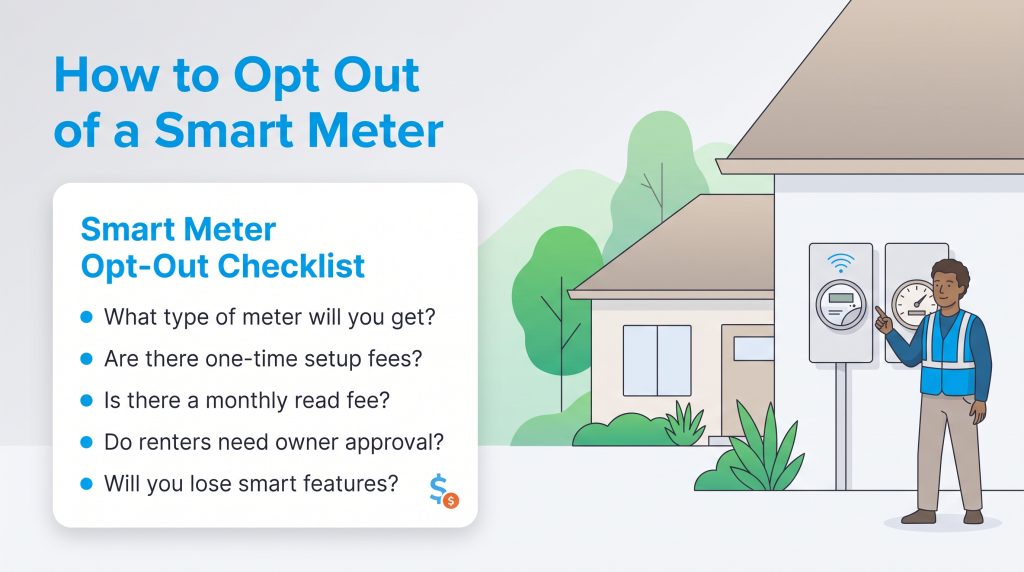
If you weigh the facts and want to learn how to opt out of smart meters, the process is straightforward but varies heavily by location. Depending on local regulatory rules, many utility companies offer an alternative program for residents who prefer legacy analog equipment. Follow these step-by-step instructions to request a change:
- Step 1: Contact Your Provider. Call your utility company’s customer service line or search their official website for a “smart meter opt-out form.”
- Step 2: Understand the Replacement. Ask the representative whether they will leave your old analog meter in place, or if they will install a digital meter with its radio transmitter completely deactivated.
- Step 3: Review the Fees. Utility companies often charge residents who refuse digital meters to cover the cost of dispatching workers for manual readings.
Opt-out programs typically come with a financial catch. You should prepare for potential utility fees associated with opting out, which frequently include a one-time administrative or installation fee (often ranging from $50 to $100) and a recurring monthly manual meter-reading fee (typically $10 to $20 per month).
💸 Money-Saver: Always verify your local utility provider’s exact opt-out rates before finalizing your decision. Choosing to opt out means you will also lose access to real-time usage tracking, which can make it harder to spot wasteful energy habits.
Making the Best Choice for Your Home’s Energy Future
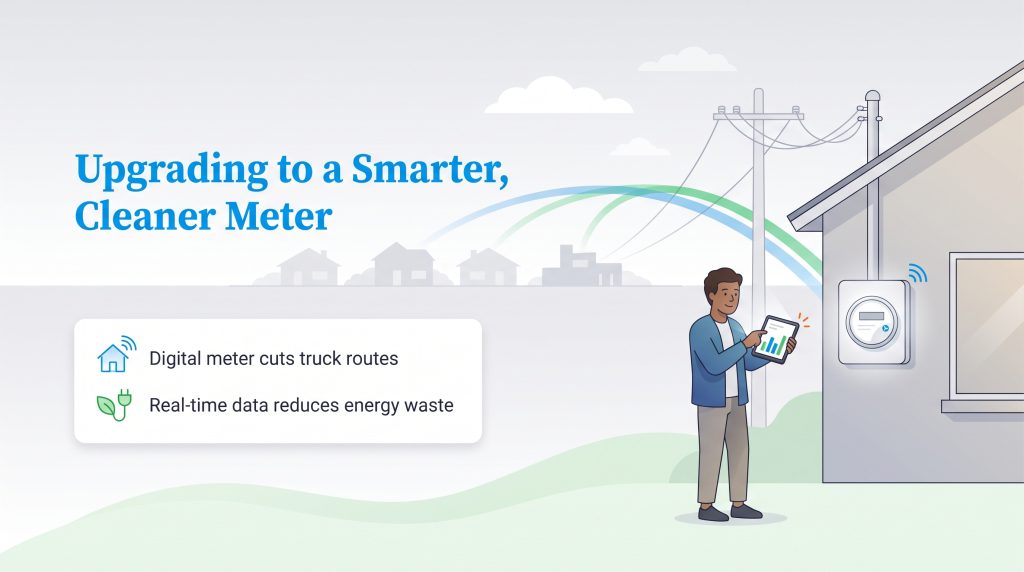
Navigating the switch to modernized home utilities requires balancing the incredibly low health risks against the clear privacy, environmental, and practical utility benefits. The scientific consensus remains definitive: smart meters are highly regulated devices that emit negligible levels of non-ionizing radiation. Beyond safety, upgrading to a digital meter serves as an eco-conscious alternative to outdated grid technology, significantly reducing the carbon emissions of utility trucks that no longer need to physically drive through neighborhoods to collect manual readings.
Upgrading to this technology also empowers you with unprecedented access to your own energy data. Knowing how to read a smart meter provides granular insight that helps you easily identify new ways to save on your electric bill by monitoring your daily consumption habits and pinpointing energy-hogging appliances. You can further explore the Department of Energy’s smart grid resources to understand how modernization benefits your community. Ultimately, if you remain uncomfortable with the technology, you are fully empowered to pursue an opt-out. Reach out to your utility provider today to request an exemption form, confirm the associated manual reading fees, and secure a legacy meter for your residence. Whether you embrace the energy insights of a digital meter or pay the premium for an analog setup, the choice is entirely yours.
Frequently Asked Questions About Smart Meter Safety
Reviewing the most common questions about digital utility meters can help you feel more confident about your home’s energy setup.
Do smart meters cause cancer?
What is a safe distance to be from a smart meter?
Can I refuse a smart meter installation?
Do smart meters emit radiation constantly?
What are the symptoms of smart meter EMF exposure?
Are smart meters dangerous for people with pacemakers?
How do smart meter EMF levels compare to a cell phone?
About the Author

LaLeesha has a Masters degree in English and enjoys writing whenever she has the chance. She is passionate about gardening, reducing her carbon footprint, and protecting the environment. She also recently served as President of the Board for City Sprouts (a community garden).

Jared Evans is a licensed electrician and the owner of Full Circuit Electric in Omaha, Nebraska. As an expert reviewer for UtilitiesForMyHome.com, Jared uses his 10+ years of hands-on experience to ensure our electrical advice is safe, accurate, and easy to follow. Whether he's troubleshooting a complex wiring issue or sharing tips on green energy upgrades, Jared is dedicated to helping you power your home efficiently — and safely.