

Reducing Your Monthly Energy Consumption Starts With A Few Simple Habit Changes And Smart Home Upgrades
Key Takeaways
- Audit your energy usage first to identify top culprits like your HVAC system, water heating, and phantom loads.
- Shift your heavy appliance usage to off-peak hours to take full advantage of cheaper electricity rates.
- Target vampire energy by unplugging unused electronics and investing in simple upgrades like smart power strips and LED bulbs.
Implementing strategic daily habits and energy-efficient home upgrades can help you lower your electric bill and save up to $500 per year — roughly 25% of your total energy costs, according to the U.S. Department of Energy. Opening your utility bill during a peak usage month often leads to sticker shock, especially since the average U.S. household consumes nearly 900 kWh per month. Saving money doesn’t require sitting in the dark or sacrificing your personal comfort; it is entirely about adopting efficiency and using electricity smarter. Whether you are a renter in a studio apartment or a homeowner in a large house, these 10 actionable tips to lower your electric bill and save energy will help you reclaim control of your household budget. For more help understanding your baseline usage, familiarizing yourself with electricity basics is a great place to start.
1. Audit Your Energy Usage First
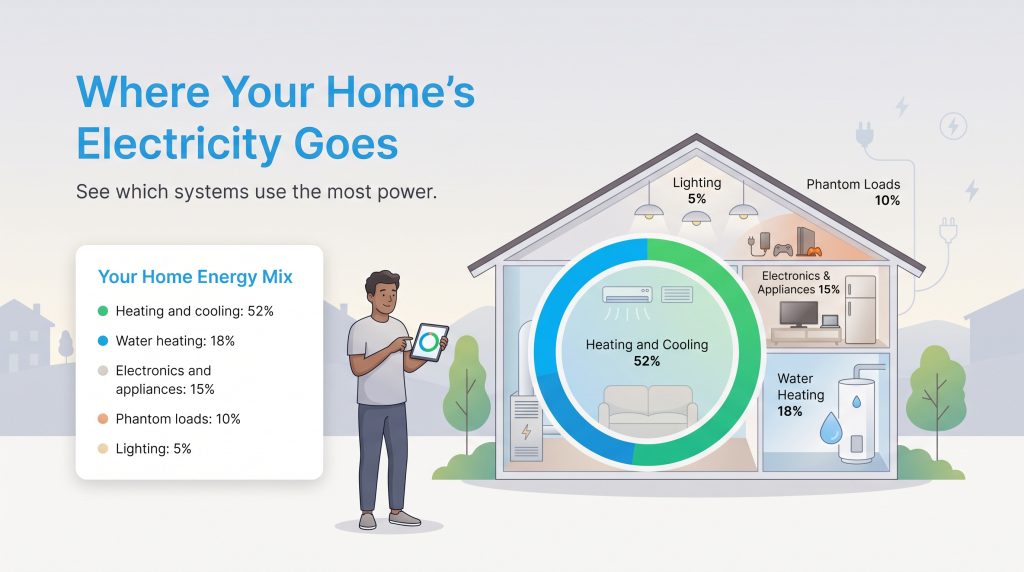
Before you can effectively lower your utility bills, you must understand where your power is actually going. Cooling and heating heavily dominate your household usage, but everyday appliances silently drain power in the background. Seeing exactly how your consumption breaks down makes it much easier to target the biggest offenders in your home.
| Household Category | Average Electricity Usage |
|---|---|
| Heating and Cooling (HVAC) | 52% |
| Water Heating | 18% |
| Phantom Loads | 10% |
| Lighting | 5% |
| Electronics & Appliances | 15% |
Conducting a DIY home energy audit allows you to spot glaring inefficiencies before you ever need to call in a professional. Set aside just 15 minutes to evaluate your home’s performance using this simple, four-step checklist:
- Check your attic insulation. Poke your head into the attic space, and if your insulation rests below or perfectly level with the floor joists, you likely need to add another layer to keep heat securely trapped inside.
- Hunt for active air leaks. Carefully inspect the edges of your baseboards, electrical outlets, and exterior window frames for noticeable breezes that let conditioned air escape.
- Identify outdated lighting. Walk room by room to locate any remaining incandescent or halogen bulbs so you can swap them for highly efficient LEDs.
- Examine your HVAC filters. Check your furnace and air conditioning filters for heavy dust buildup, as clogged filters force your system to overwork and consume excess electricity.
2. Optimize Your Thermostat For Seasonal Savings
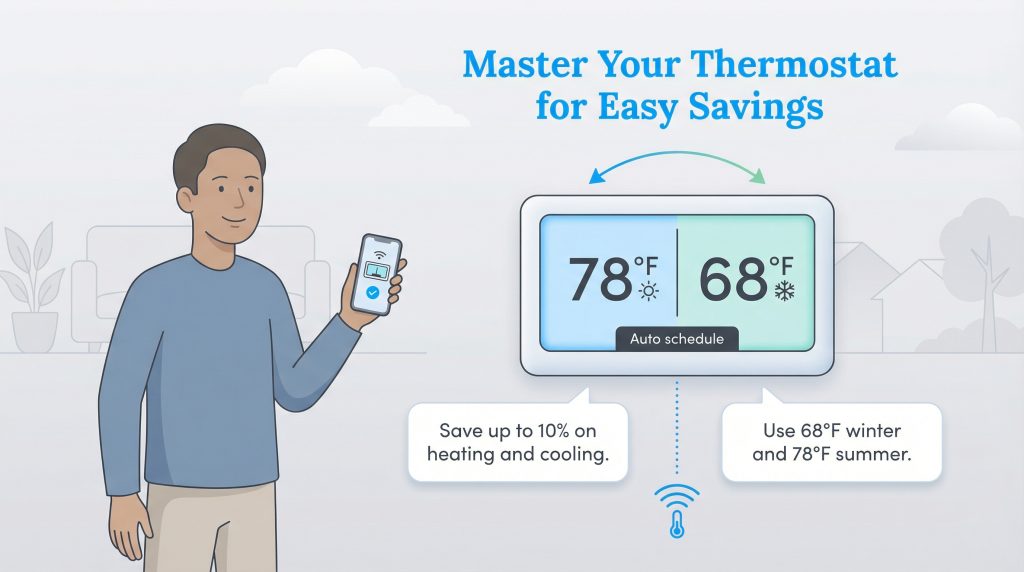
Heating and cooling your home requires massive amounts of power, making your air conditioner and furnace the undisputed heavyweights of your electric bill. Fortunately, according to the Department of Energy, you can save as much as 10% a year on heating and cooling simply by adjusting your habits.
To maximize your comfort while actively lowering heating and cooling costs, set your thermostat to 78°F in the summer and 68°F in the winter. Utilizing a ceiling fan alongside these settings creates a wind-chill effect, allowing you to raise your summer thermostat setting by an extra degree or two without feeling warmer. If managing these adjustments manually sounds tedious, upgrading your climate control technology is a brilliant alternative. Equipping your home with a smart thermostat takes the guesswork out of household efficiency by automatically implementing these temperature setbacks for you.
3. Slay The Phantom Load Electricity Drain
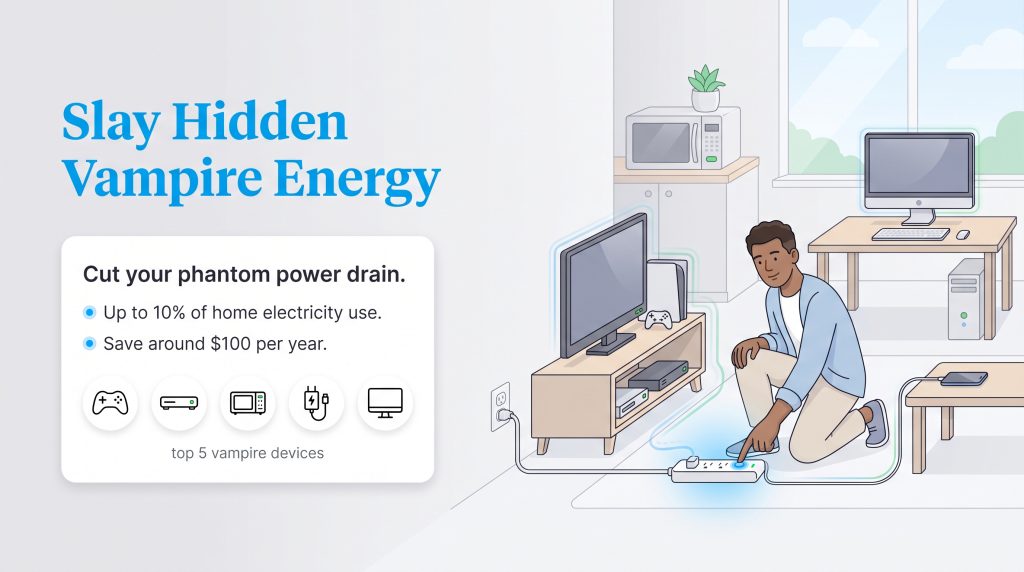
Also known as vampire energy, a phantom load electricity drain refers to the continuous power consumed by electronics while they are technically turned off but still resting in standby mode. This hidden energy waste quietly accounts for up to 10% of a typical home’s total electricity use. Devices draw standby power to maintain internal clocks, connect to Wi-Fi, or await remote control signals. By pulling the plug when devices aren’t in active use, you eliminate this waste entirely and can save around $100 per year.
4. Shift High-Drain Appliances To Off-Peak Hours
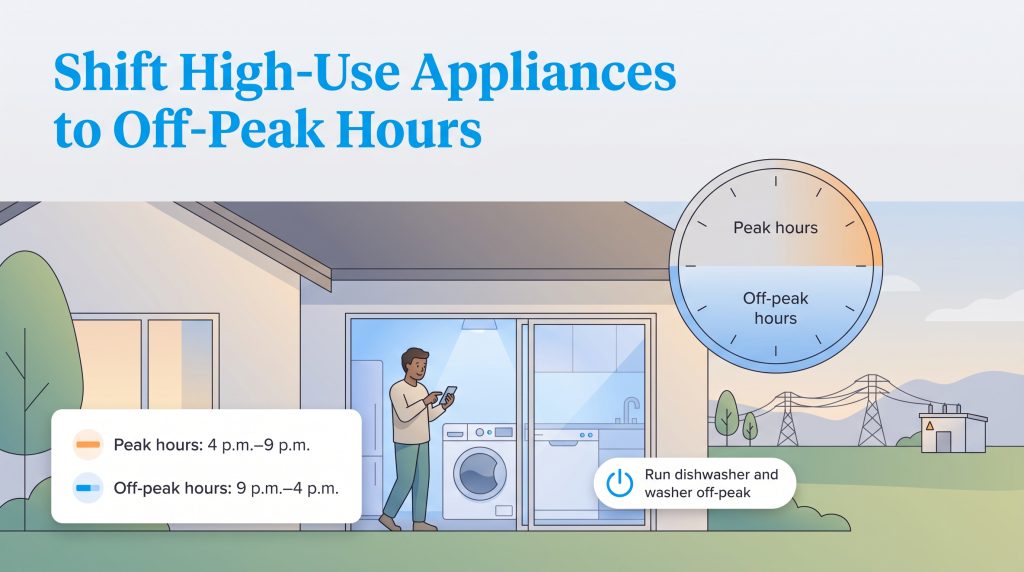
Many homeowners don’t realize that the cost of electricity often fluctuates depending on the time of day, provided you are enrolled in a time-of-use (TOU) plan. Under these billing structures, you pay far less during off-peak electricity hours when the overall demand on your local power grid is significantly lower.
| Time Period | Typical Hours | Cost Impact |
|---|---|---|
| Peak Hours | 4:00 p.m. – 9:00 p.m. | Highest electricity rates |
| Off-Peak Hours | 9:00 p.m. – 4:00 p.m. (Next Day) | Lowest electricity rates |
To instantly take advantage of these lower rates, commit to running high-drain appliances — like your dishwasher and clothes washer — exclusively during off-peak electricity hours. We highly recommend calling your utility provider to verify if a TOU plan is available for your address. If your current provider doesn’t offer favorable terms, explore alternative options like Gexa Energy or Reliant Energy, or check competitive rates in specific regions like Houston.
5. Lower Your Water Heater Temperature
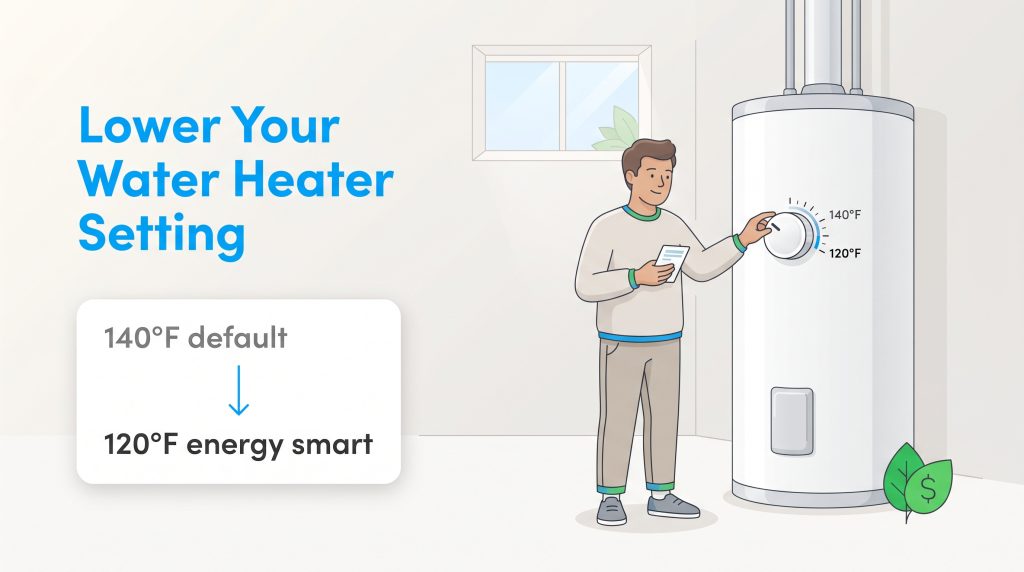
Heating water is a constant household expense that quickly adds up, responsible for about 18% of your overall energy consumption. Lowering your baseline heating demand is an incredibly effective, zero-cost trick. Manufacturers often set water heaters to a scalding 140°F by default, but reducing the dial to 120°F is an eco-conscious alternative that provides plenty of hot water for most families. This minor adjustment slows mineral buildup in the tank and yields an estimated annual savings of 4% to 22% on your total water heating costs. For more ways to manage your home’s water systems efficiently, exploring available water utility resources can further lower your bills.
6. Maximize Efficiency With LED Lighting
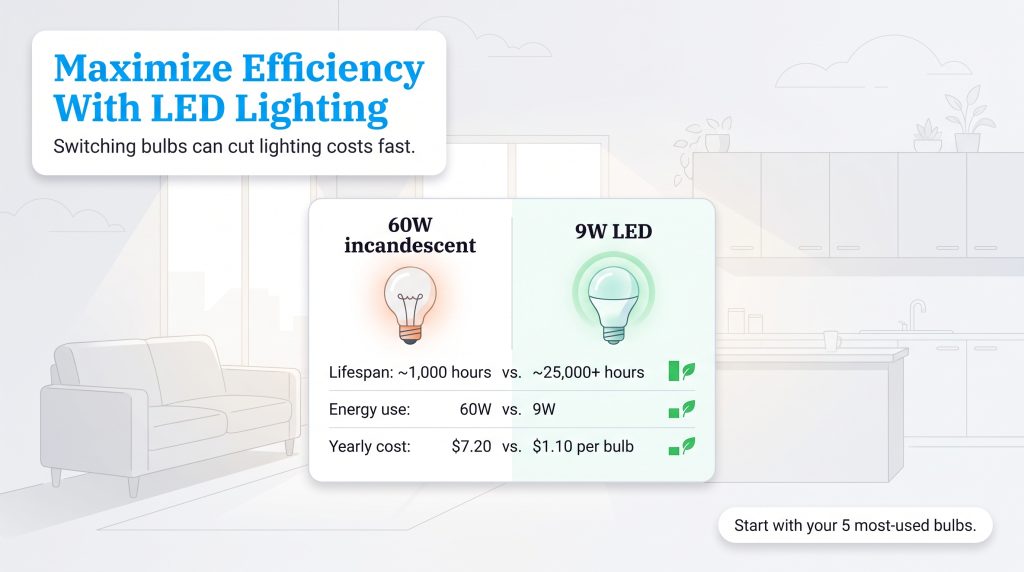
If you want one of the easiest home upgrades with the quickest payoff, modernizing your illumination is the perfect place to begin. Light Emitting Diode (LED) bulbs use at least 75% less energy and last up to 25 times longer than traditional incandescent technologies. Because they use a fraction of the electricity to produce the exact same brightness, upgrading to LEDs pays for itself in under six months.
| Metric | 60W Incandescent Bulb | Equivalent LED Bulb |
|---|---|---|
| Lifespan | ~1,000 hours | ~25,000+ hours |
| Energy Usage | 60 Watts | 9 Watts |
| Estimated Yearly Cost | $7.20 (per bulb) | $1.10 (per bulb) |
Start by replacing the five most frequently used bulbs in your living room and kitchen. You will immediately notice the lighting electricity savings without sacrificing the warm glow you are accustomed to.
7. Switch To Cold Water Laundry Cycles
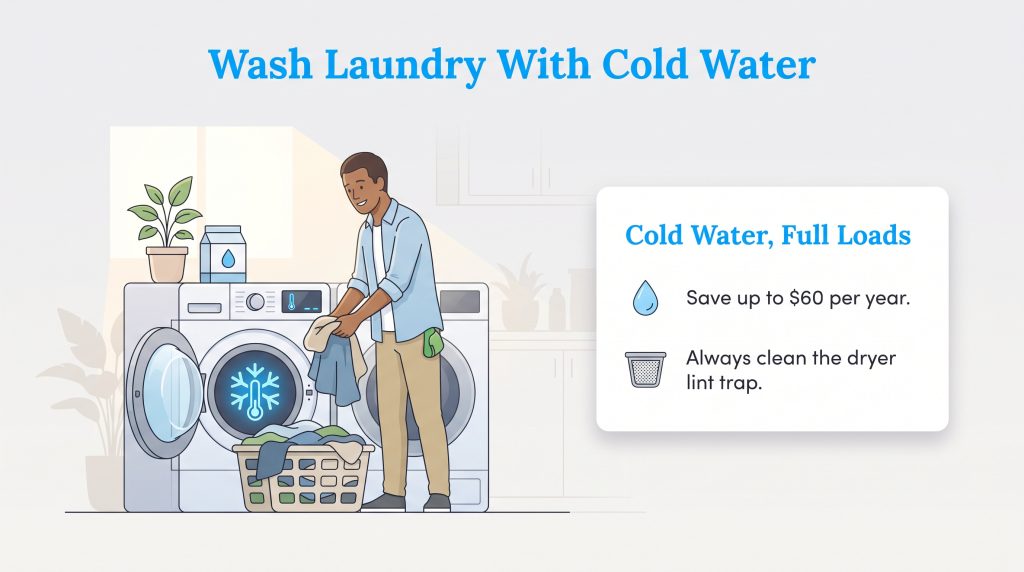
Your clothes washer and dryer are essential everyday appliances, but they quickly turn into major energy hogs if used inefficiently. First, always wash your clothes in cold water. Modern detergents are specially formulated to break down stains perfectly in cold temperatures, and heating the water itself accounts for roughly 90% of the energy needed to run a single wash cycle. This simple temperature switch alone can save up to $60 per year.
Additionally, command a strict rule in your household to only run full loads of laundry, as running partial loads effectively doubles your operational cost per garment. Finally, consistently clean your dryer’s lint trap before every single load to improve internal airflow, dry clothes faster, and reduce dangerous fire risks.
8. Seal Drafts And Improve Home Insulation
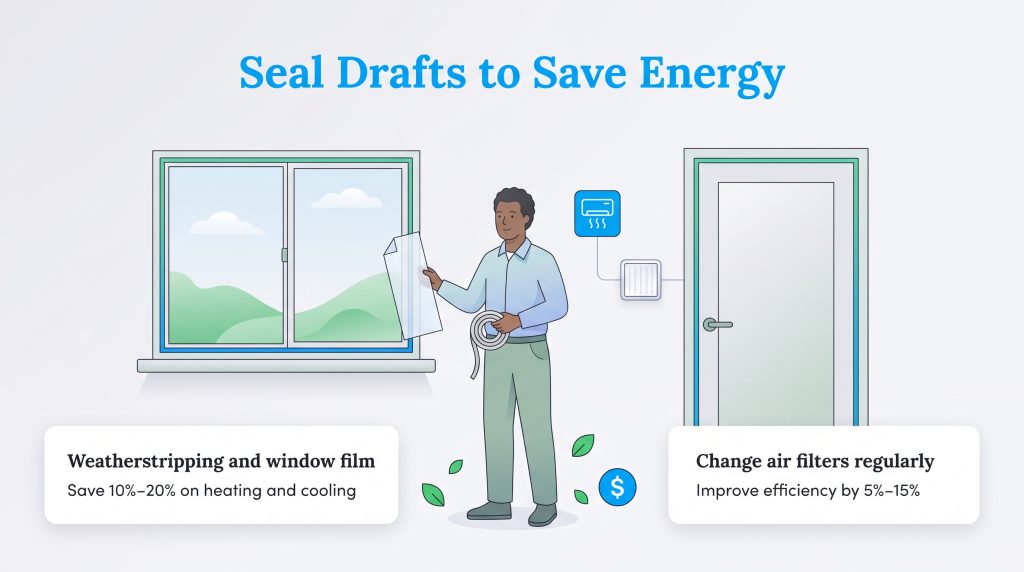
Keeping the air you have already paid to heat or cool securely inside your living space is vital for long-term savings. If your house suffers from poor insulation or active air leaks, your HVAC system is forced to run constantly to maintain your desired indoor temperature. Adding fresh weatherstripping around drafty exterior doors or applying removable window film creates a powerful insulating barrier. These budget-friendly materials yields an estimated savings of 10% to 20% on your seasonal heating and cooling bills.
You should also prioritize regular HVAC maintenance to complement your newly sealed home. Changing your air filters every one to three months prevents the system from overworking, resulting in a 5% to 15% improvement in overall efficiency. For more ideas on cutting costs, explore our comprehensive guide to saving on your electric bill.
9. Upgrade To Energy-Efficient Appliances
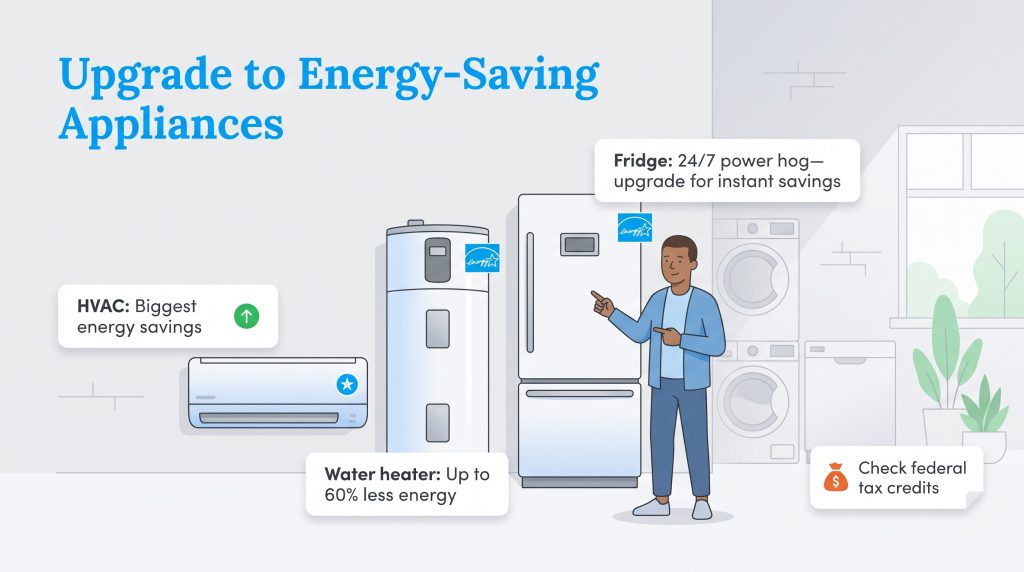
When aging household systems start to fail, replacing them with modern, ENERGY STAR-rated equipment is one of the best ways to secure lasting efficiency. These appliances meet strict environmental guidelines mandated by the Environmental Protection Agency. Here are the biggest culprits to focus on, sorted from highest to lowest typical energy drain:
- Heating and cooling systems (HVAC): Upgrading to an energy-efficient heat pump can drastically cut into the 52% baseline usage typical for climate control.
- Water heaters: Switching to a heat pump water heater can use roughly 60% less energy than standard electric resistance models.
- Refrigerators: Because they run 24 hours a day, an older fridge is a massive energy hog. Upgrading to a new model provides instant efficiency gains.
- Washing machines and dryers: Front-loading, high-efficiency models use significantly less water and electricity than top-loading legacy machines.
- Dishwashers: Modern models feature advanced soil sensors and use less hot water, lowering both your water and electric bills.
10. Compare And Switch Electricity Providers
If you live in a deregulated energy market, your most powerful tool to reduce utility bills is the ability to shop around. Sticking with the same provider year after year often leads to gradual rate hikes that inflate your monthly costs. Take a few minutes to review your current contract, specifically checking your rate per kilowatt-hour (kWh). Compare that figure against current introductory rates from competing suppliers in your zip code. Switching to a cheap electricity provider takes less than 15 minutes online and requires no physical changes to your meter or power lines, yet it can instantly slash your bill by securing a lower fixed rate.
Preparing For A More Energy-Efficient Home
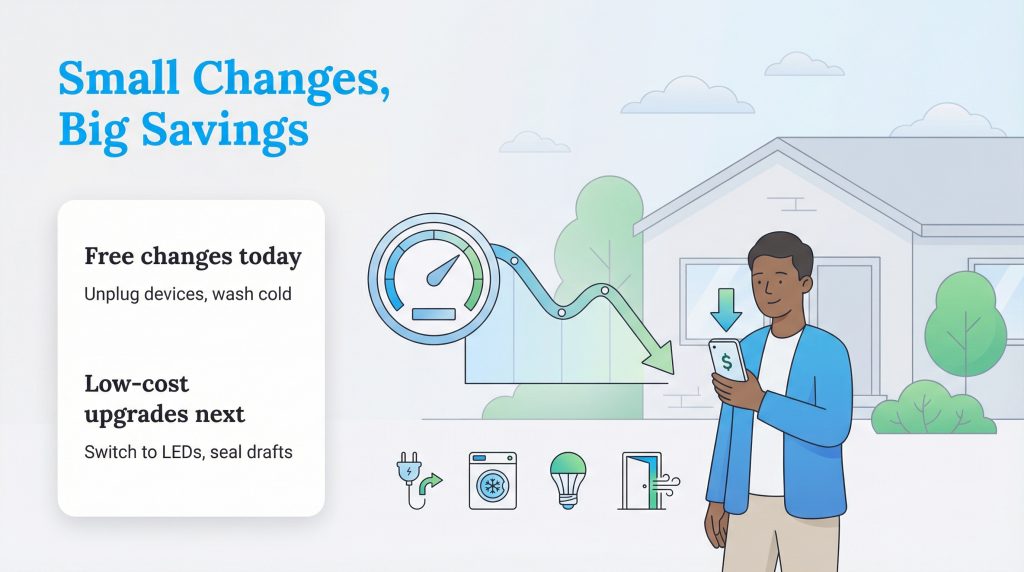
Lowering your electric bill is an ongoing journey, but the financial rewards are well worth the initial effort. You certainly do not have to implement all 10 of these tips simultaneously to see a noticeable difference on your monthly statement. We suggest starting with the free behavioral changes, such as running cold water laundry cycles and adjusting your thermostat. Once those become ingrained habits, confidently tackle low-cost physical upgrades like LED lighting and smart power strips. Over time, these small, consistent actions compound into significant financial savings, leaving you with a more comfortable and sustainable home. To fully grasp how your daily habits impact your costs moving forward, taking the time to read about understanding your electric bill is essential.
Frequently Asked Questions About Saving Energy at Home
What appliances use the most electricity in a home?
What is the best temperature to set my thermostat to save money?
Do unplugged appliances still use electricity?
How can I lower my electric bill immediately?
What are off-peak hours for electricity?
At what temperature should I set my water heater to save energy?
Do smart power strips actually lower electric bills?
About the Author

David has been an integral part of some of the biggest utility sites on the internet, including InMyArea.com, HighSpeedInternet.com, BroadbandNow.com, and U.S. News. He brings over 15 years of experience writing about, compiling and analyzing utility data.

Jared Evans is a licensed electrician and the owner of Full Circuit Electric in Omaha, Nebraska. As an expert reviewer for UtilitiesForMyHome.com, Jared uses his 10+ years of hands-on experience to ensure our electrical advice is safe, accurate, and easy to follow. Whether he's troubleshooting a complex wiring issue or sharing tips on green energy upgrades, Jared is dedicated to helping you power your home efficiently — and safely.