


Setting Your Refrigerator Between 35°F and 38°F and Your Freezer at 0°F Keeps Groceries Safe While Preventing Unnecessary Spikes on Your Monthly Electric Bill
Key Takeaways
- Start your refrigerator at 37°F, then check that perishable foods stay at 40°F or below.
- Keep your freezer at 0°F, and verify its temperature with an appliance thermometer.
- Check your model’s dial instructions, because numbered settings aren’t temperatures and don’t guarantee the same results across appliances.
Your refrigerator is one of the only appliances in your home that runs 24/7, yet most of us never touch the temperature settings after moving in. We’ll explain how to find a practical starting target so you never have to deal with frozen lettuce, spoiled milk, or a bloated electricity bill. Dialing your fridge into a reliable range of 35°F to 38°F (with 37°F as a common starting point) and keeping your freezer at 0°F is an easy energy-saving option for your kitchen.
Recommended Refrigerator and Freezer Temperatures
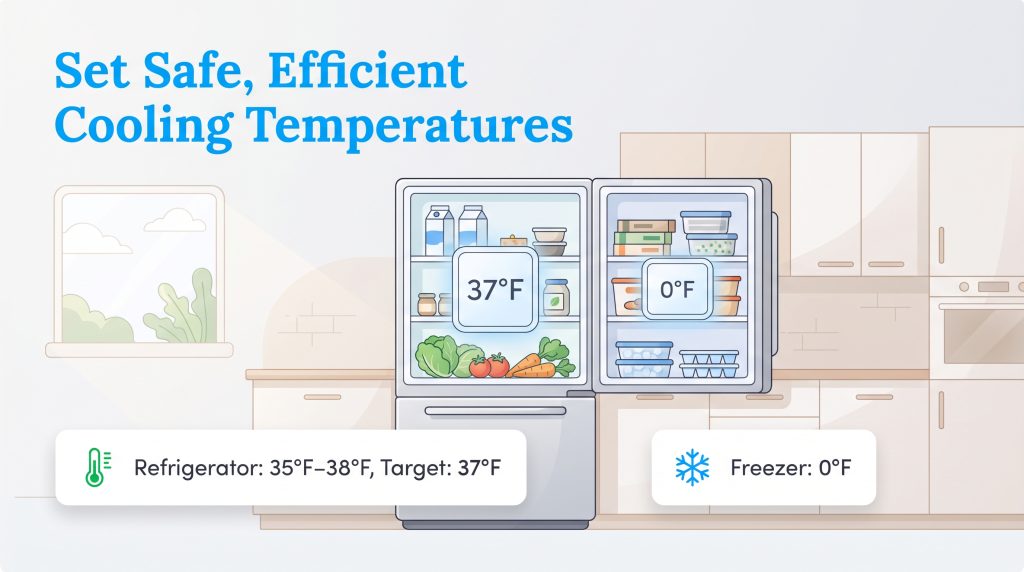
Figuring out the right settings comes down to balancing FDA food-safety guidance against everyday energy efficiency. According to the U.S. Food and Drug Administration (FDA) refrigerator thermometer guide, the agency recommends keeping your refrigerator at 40°F or below. Some bacteria can multiply rapidly when food isn’t kept properly chilled, and crossing that 40°F threshold puts your groceries squarely in the bacterial danger zone. However, setting your thermostat right at 40°F leaves zero margin for error when you open the door to grab a snack or load warm groceries.
To protect your food without overworking your compressor, the U.S. Department of Energy (DOE) kitchen appliances guide recommends an ideal refrigerator operating range of 35°F to 38°F, while the recommended storage setting is 0°F for the freezer. If you want a single target, 37°F (or approximately 2.8°C) is a practical starting target to prevent ice crystals from ruining crisp produce while keeping dairy fresh.
| Compartment | Ideal Temperature (°F) | Temperature (°C) | Usage Guidelines |
|---|---|---|---|
| Refrigerator (Fresh Food) | 35°F to 38°F (Target: 37°F) | 1.7°C to 3.3°C (Target: 2.8°C) | 40°F (4.4°C) maximum safety limit |
| Freezer | 0°F | -18°C | Recommended storage temperature |
Understanding Refrigerator Energy Costs
Cranking your thermostat down to 32°F might sound like a clever way to keep milk fresh, but it is a costly mistake. If you are currently setting up electricity in your new home, locking in an energy-efficient refrigerator temperature right away is an easy win for your budget. To understand your appliance’s impact, you can estimate its annual electricity cost. For example, if your refrigerator uses 500 kilowatt-hours per year and your electricity rate is $0.18 per kilowatt-hour, your estimated annual electricity cost is $90. Keep in mind that your appliance’s specific use and your local rate may differ.
How to Measure and Adjust the Temperature
You shouldn’t blindly trust the digital readout on your refrigerator door or assume a factory-set dial is accurate. Built-in thermistors usually sit near a single wall vent, meaning the display often shows the selected setting rather than the continuously measured air temperature inside the cabinet.
Decoding Numbered Dials on Older Refrigerators
Moving into a rental apartment or older house often means inheriting a refrigerator with an unlabeled analog dial. On a dial numbered one through five, higher numbers usually mean colder settings. Check your model’s instructions to confirm. These numbers represent cooling power, not exact temperatures, so testing the interior with a freestanding appliance thermometer is the best way to verify your setting.
Heads Up
A rare handful of older fridge dials label their settings in reverse, so always check inside the control housing for an embossed arrow pointing to “Colder” before cranking the knob all the way up.
Safe Guidelines for Using an Appliance Thermometer
Whether your fridge lacks a degree display or you want to verify a digital panel, buying a simple appliance thermometer takes the guesswork out of kitchen calibration. Follow these steps for a stable reading:
- Place an appliance thermometer near the center of the refrigerator, away from walls and cooling vents, and follow its instructions for reading and stabilization time.
- If you use a water-temperature method, choose a thermometer or probe specifically approved for immersion by the manufacturer.
- For the freezer, tuck a dry appliance thermometer snugly between two frozen food packages near the center shelf.
- Leave the thermometers undisturbed according to the manufacturer’s recommended adjustment interval — often around 24 hours.
- Adjust your digital panel or manual dial in small increments and wait another 24 hours to re-verify.
If your refrigerator remains too warm after multiple adjustments, the unit may require maintenance. Renters should notify their landlord or property manager promptly to address potential appliance failures rather than repeatedly turning the dial colder.
Where to Store Food Safely
Even when your thermostat sits locked at 37°F, temperatures can vary across shelves and compartments because of forced-air circulation and natural settling. Organizing your groceries around these zones keeps air circulating freely around the vents and prevents premature spoilage.
| Fridge Zone | Best Foods to Store | What to Avoid |
|---|---|---|
| Upper and Middle Shelves | Leftovers, drinks, and ready-to-eat foods | Raw meats |
| Lower Shelves | Raw meat, poultry, seafood, milk, and other refrigerated dairy products | Delicate leafy greens |
| Door Bins | Condiments, hot sauce, and butter | Milk, eggs, and perishable pasteurized juices |
| Crisper Drawers | Produce (adjust humidity settings based on the fruit or vegetable) | Overpacking, which blocks airflow |
Eco Edge
Keeping milk and eggs on the lower shelves instead of the door bins can help extend their freshness, making it an environmentally mindful choice that cuts down on household food waste.
Getting Your Refrigerator Ready on Move-In Day
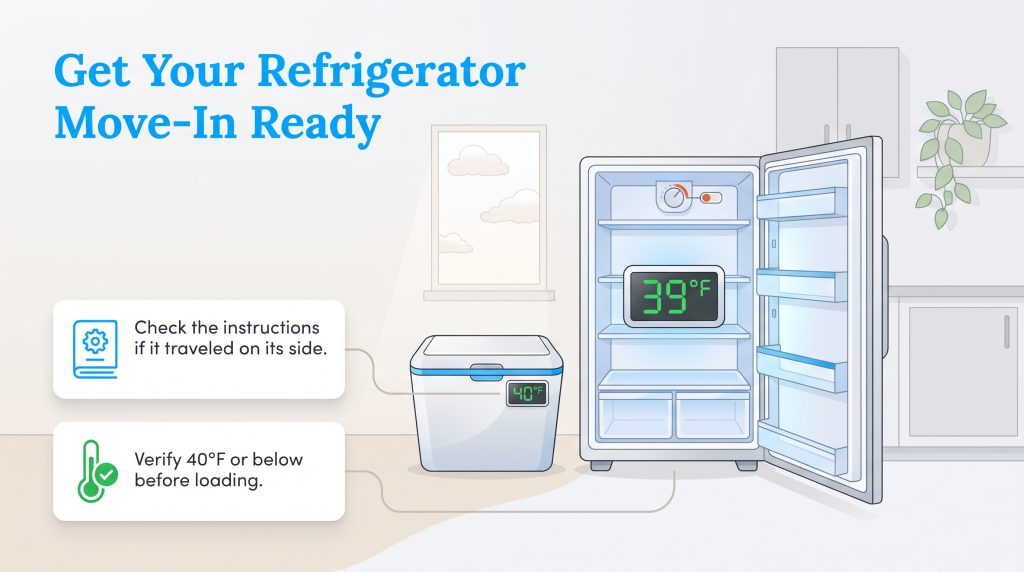
When setting up a kitchen in a new home, it’s important to establish a clear move-in verification routine. When you are busy setting up utilities when moving into a new home, it is tempting to plug in the refrigerator and immediately unload a cooler full of groceries. If your refrigerator was transported on its side, check the manufacturer’s instructions before plugging it in, as required upright waiting times vary widely by model.
Once you’ve set the controls to the recommended starting position, wait for the interior to cool. Confirm a safe temperature with an appliance thermometer before transferring perishables from a cooler kept at 40°F or below. Packing a warm cabinet traps ambient heat and forces the compressor to work continuously, leaving your food in the bacterial danger zone.
Maintenance That Supports Efficient Cooling
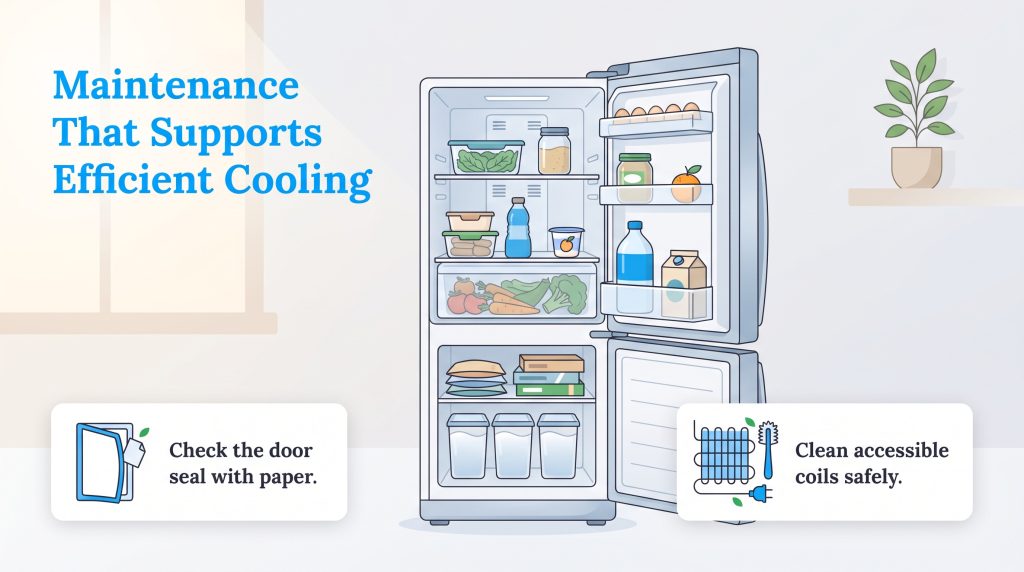
Punching in a practical starting target is only half the battle if your appliance is fighting against clogged vents or leaky door gaskets. Even when your display reads 37°F, poor physical upkeep will force the motor to use more electricity.
- Follow the “Three-Quarters Full” Rule: A refrigerator needs breathing room around its air vents to circulate cold air, making two-thirds to three-quarters full the ideal capacity. Conversely, a tightly packed freezer holds cold air like an ice chest whenever the door opens. If your freezer is half-empty, you can fill the dead space with freezer-safe water containers, making sure to leave room for expansion. Keep required airflow paths clear.
- Try the Door Seal Test: Close the fridge door on a slip of paper so it sits half in and half out, then pull it out. If it slides out with zero resistance, your rubber gaskets may need a warm soapy scrub or an inspection. This easy paper removal is a helpful reason to check your seals, though not conclusive proof they need replacement.
- Vacuum Accessible Condenser Coils: Clean accessible coils as directed by the manufacturer. While some units don’t require routine consumer cleaning, dirty coils on older units trap heat and force the compressor to work harder. Unplug the unit before brushing them clean.
- Let Leftovers Cool Briefly Before Storing: Divide large batches of hot food into shallow containers and refrigerate promptly. Don’t leave perishables out longer than two hours, or one hour when the surrounding temperature is above 90°F. Small quantities of hot food can go directly into the refrigerator, but large pots need portioning for rapid cooling.
- Know When to Upgrade to ENERGY STAR: According to the ENERGY STAR certified refrigerators page, certified models run more efficiently than standard models, serving as a smart eco-conscious alternative when an aging fridge struggles to hold temperature.
Money-Saver
If you inherited an old second refrigerator in the garage of your new home, unplugging and recycling it through your local utility’s haul-away rebate program can save you money on your annual electricity costs.
Dialing In Your Kitchen for Lower Bills and Fresher Groceries
Finding a practical starting target doesn’t require high-tech gadgets or an engineering degree. By setting your refrigerator to 37°F (within the 35°F to 38°F range), keeping your freezer at 0°F, and verifying those numbers with an appliance thermometer, you help reduce the risk of foodborne illness while giving your compressor a well-deserved break. Small, five-minute adjustments in a new home quickly add up to crisp produce, less food waste, and better energy habits. When you are ready to tackle the rest of your house, explore more of our sustainable living tips for your home to keep your utility costs low all year round.
Frequently Asked Questions About the Best Fridge Temperature
We know that managing your kitchen appliances can raise plenty of questions. Here are a few common answers about adjusting and maintaining your refrigerator’s temperature.
Is 3 or 4 Colder on a Fridge Dial?
Should I Change My Refrigerator Temperature in the Summer or Winter?
What Is the Safest Temperature for Storing Perishables?
How Long Does Food Stay Safe in the Fridge During a Power Outage?
Why Is My Fridge Freezing Food Even When Set to 37°F?
Does an Empty Fridge Use More Electricity Than a Full One?
About the Author

Claudio is a sustainability-focused writer with a background in Anthropology and Psychology from NC State University. He has spent over 15 years working in writing, interpretation, and translation, driven by a deep interest in how human culture shapes the environment. Today, he shares his curiosity with readers by writing about sustainable living solutions and the connection between everyday choices and environmental impact.

Jared Evans is a licensed electrician and the owner of Full Circuit Electric in Omaha, Nebraska. As an expert reviewer for UtilitiesForMyHome.com, Jared uses his 10+ years of hands-on experience to ensure our electrical advice is safe, accurate, and easy to follow. Whether he's troubleshooting a complex wiring issue or sharing tips on green energy upgrades, Jared is dedicated to helping you power your home efficiently — and safely.

LaLeesha has a Masters degree in English and enjoys writing whenever she has the chance. She is passionate about gardening, reducing her carbon footprint, and protecting the environment. She also recently served as President of the Board for City Sprouts (a community garden).