
Understanding your AEP Texas delivery charges helps you navigate your electricity bill and lower your overall energy costs.
Key Takeaways
- AEP Texas separates its delivery charges into two distinct utility zones: AEP Texas North Company and AEP Texas Central Company.
- Delivery charges are regulated by the state and cannot be changed by switching retail electric providers.
- You can lower your overall electricity bills by locking in a fixed-rate supply plan and using eco-conscious energy-saving habits.
Moving to a new home in Texas usually brings some unique surprises, especially when you open your first deregulated utility bill and notice two distinct charges. If you live in an area serviced by American Electric Power, those AEP Texas delivery charges might catch you off guard. We know it feels frustrating to see unexpected costs tacked onto your monthly statement. That is why we are breaking down exactly what these fees cover, walking you through the current rates, and providing straightforward strategies to help you manage your monthly energy budget.
What Is a Delivery Charge on My Electric Bill in Texas?
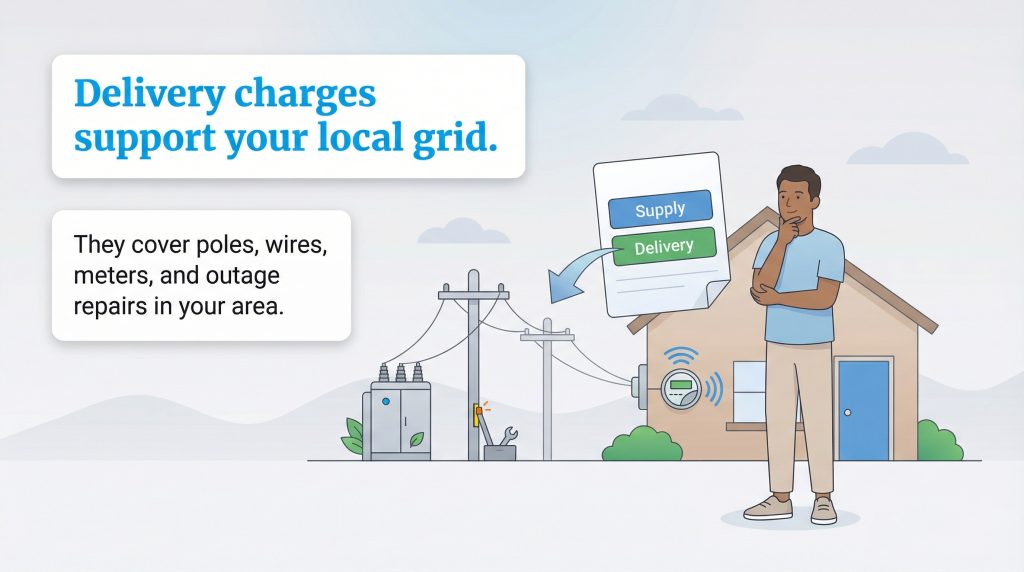
Navigating the deregulated Texas energy market feels a lot simpler once you understand the players involved. Think of your electricity service like your mobile phone plan. You actively shop around and choose a Retail Electric Provider (REP) based on their rates and perks, much like picking a wireless carrier. However, your chosen REP doesn’t actually own the physical infrastructure that brings power to your outlets.
Instead, a Transmission and Distribution Utility (TDU) manages the local poles, wires, and meters. They act as the physical network of cell towers that carry the signal to your device. You cannot shop around for a different TDU; the state assigns them based on your geographic location. If you frequently find yourself wondering, “what is a delivery charge on my electric bill Texas,” it essentially pays your local utility company to maintain that grid infrastructure, read your smart meter, and restore power during outages.
When you start comparing Texas electricity plans, you will notice that retail providers list their supply rates separately from these regulated delivery fees. The retail energy charge pays for the actual electricity you consume, while the delivery fee pays to transport it safely to your home.
How to Identify Your Utility Service Area
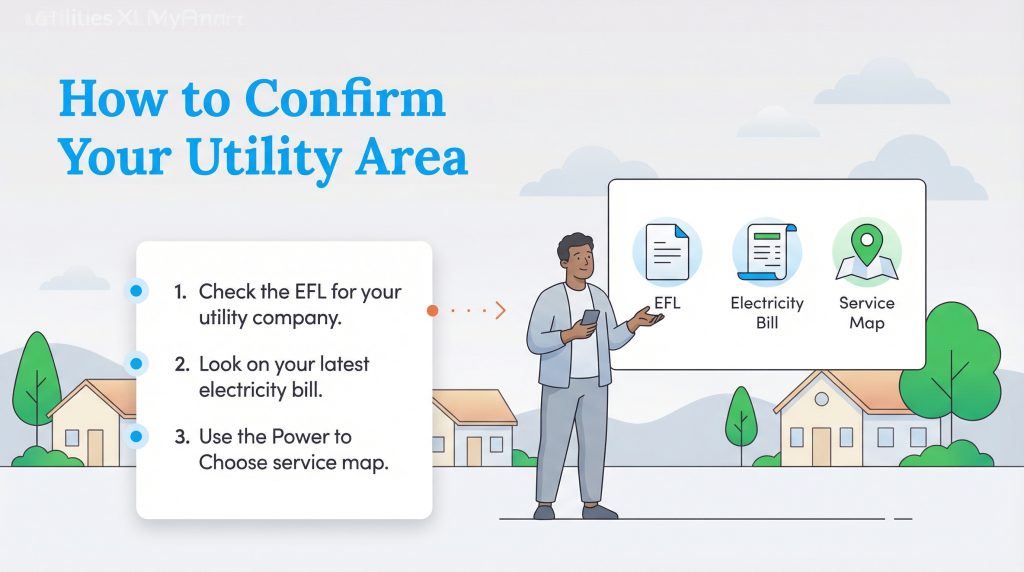
Since you cannot choose your delivery utility, figuring out which AEP zone covers your specific address is the first step when setting up service. If you are unsure whether you fall under the North Company or Central Company, you have a few easy ways to verify your territory.
You can check the Electricity Facts Label (EFL) of any prospective energy plan before signing up, which will clearly list the utility company assigned to your ZIP code. If you already have active service, your recent electricity bill will name your specific Transmission and Distribution Utility in the itemized charges section. Additionally, the official Power to Choose service map allows you to search your address and confirm your local utility.
Current AEP Texas Delivery Rates: North Company vs. Central Company Zones
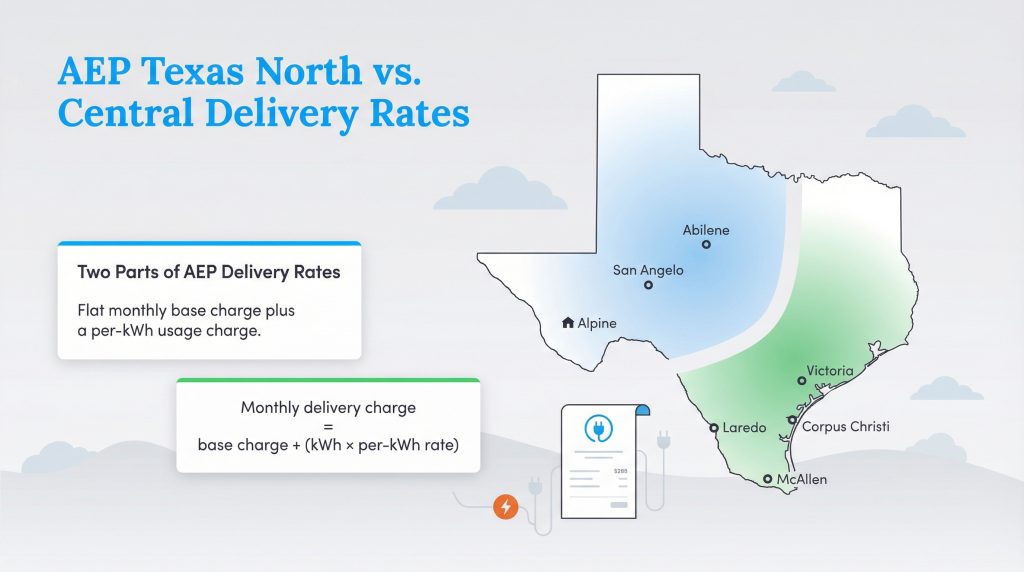
Because the state is so massive, AEP splits its geographic service territories into two distinct zones with completely separate pricing structures. Depending on where you live, you will pay either AEP Texas North Company delivery charges or AEP Texas Central Company delivery charges. The state evaluates and adjusts these rates frequently, but they always consist of two main parts: a flat monthly base charge and a variable per-kWh usage charge.
If you reside in West Texas, including cities like Abilene, San Angelo, or Alpine, you fall under the North Company zone. Meanwhile, residents in cities further south, like Corpus Christi, Victoria, Laredo, or McAllen, fall under the Central Company zone. Before reviewing the current AEP delivery rates per kWh, it is always a good idea to verify your specific service territory and tariff details on the official AEP Texas website.
Rates below were verified against the latest publicly available AEP Texas tariff information and are accurate as of March 1, 2026.
| Service Territory | Flat Monthly Base Charge | Variable Rate Charge (Per kWh) |
|---|---|---|
| AEP Texas North Company | $3.24 | 5.91¢ |
| AEP Texas Central Company | $3.24 | 5.86¢ |
Estimated AEP Texas Delivery Charges by Monthly Usage
To figure out exactly how much you will pay each month, you can use a straightforward formula:
- Monthly delivery charge = base charge + (usage in kWh × per-kWh delivery rate)
Here is how those estimated delivery charges add up based on common monthly energy usage tiers:
| Monthly Usage | AEP Texas North Company Estimated Charge | AEP Texas Central Company Estimated Charge |
|---|---|---|
| 500 kWh | $32.79 | $32.54 |
| 1,000 kWh | $62.34 | $61.84 |
| 2,000 kWh | $121.44 | $120.44 |
Locating the Delivery Charge on Your Electricity Bill
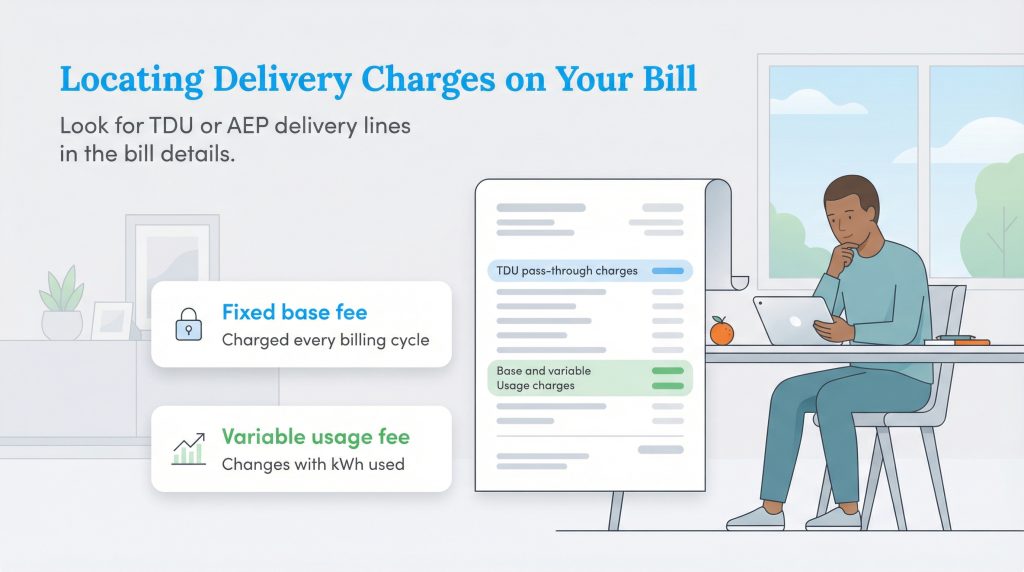
Finding these specific fees on your monthly statement usually just requires scanning the itemized breakdown provided by your retail electric provider. Depending on your supplier’s billing format, the AEP base charge vs rate charge might be bundled together into one line item labeled “TDU Pass-Through Charges” or “AEP Delivery Fees.”
If your provider itemizes the bill, you will see the cost split into two distinct categories:
- The fixed base fee: This flat amount is charged every single billing cycle, regardless of whether you use 100 kWh or 2,000 kWh. It covers administrative costs like meter maintenance and customer service infrastructure.
- The variable usage fee: This charge fluctuates based entirely on your energy consumption. The utility multiplies your total kilowatt-hours used during the month by the approved per-kWh rate.
Why Are AEP Delivery Charges So High?
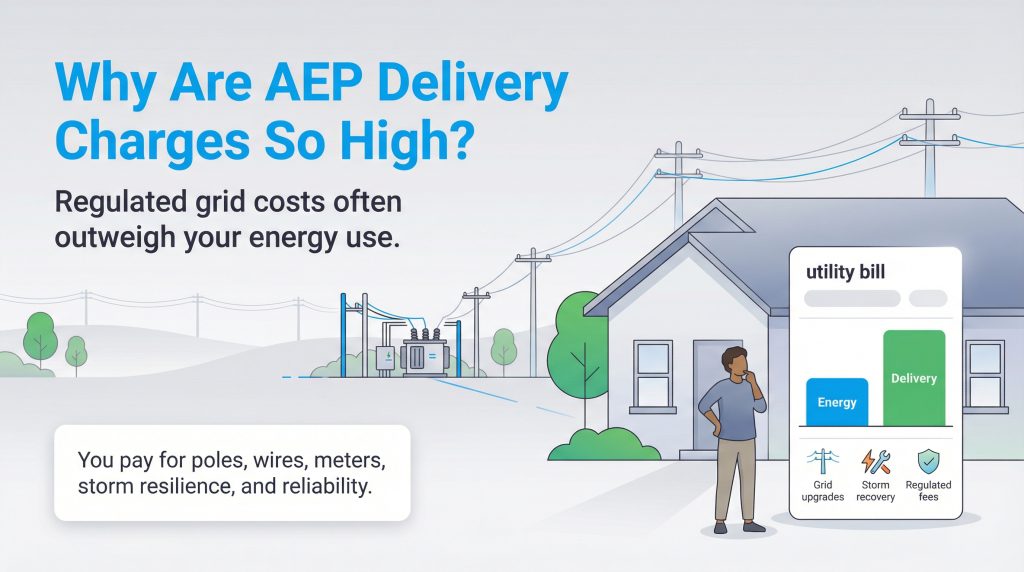
We often hear from frustrated homeowners asking, “Why are AEP delivery charges so high?” It usually feels frustrating to see the delivery portion of your bill rival or even exceed the cost of the actual energy you used. However, maintaining a sprawling, reliable power grid across brutal Texas weather conditions demands massive, ongoing financial investment.
Every time you see an AEP Texas delivery charges increase, it typically reflects approved utility costs. Delivery charges can rise when approved utility costs increase, including investments in poles, wires, metering, storm recovery, and other grid-related infrastructure and compliance programs. These adjustments cover everything from base delivery charges and transmission cost recovery factors to energy efficiency programs and rider adjustments.
Fortunately, local utilities cannot simply raise these fees whenever they want to boost profits. The Public Utility Commission of Texas (PUCT) carefully reviews, regulates, and approves these rate hikes. They evaluate the utility’s operating costs and infrastructure investments, with standard rate updates typically occurring twice a year on March 1 and Sept. 1.
Actionable Ways to Lower Your Overall Electricity Costs
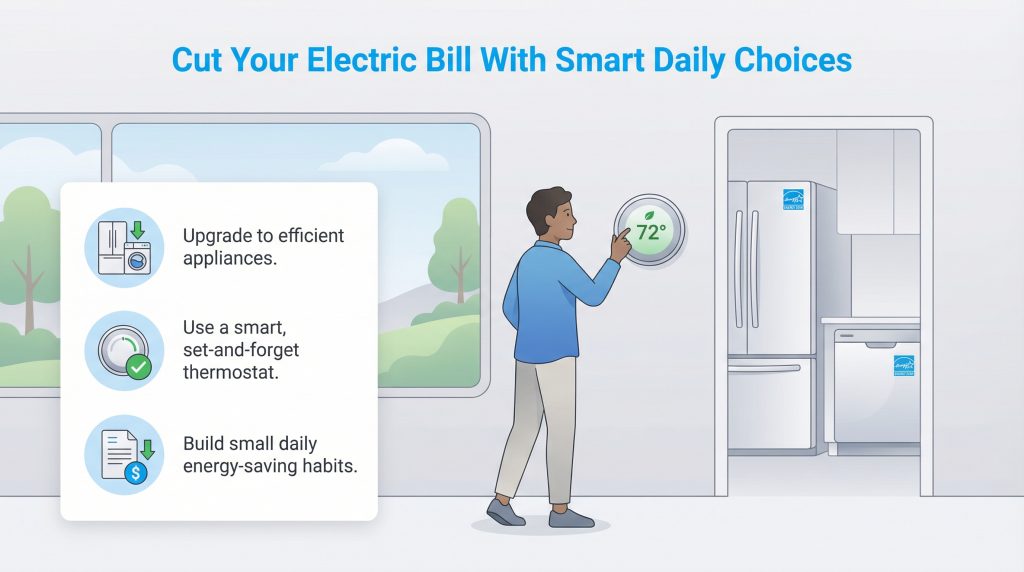
While you can compare provider energy rates, contract terms, renewable content, and bill credits, you cannot shop around for a cheaper utility company to lower your AEP delivery fees. However, you absolutely hold the power to shrink your total monthly statement. Since the largest portion of your delivery cost scales directly with your energy usage, reducing your consumption lowers both your retail supply charge and your variable TDU charge simultaneously.
Adopting a few strategic habits can noticeably reduce the number of kilowatt-hours you use each month. If you want to know exactly how to save on your electric bill, start with these straightforward adjustments:
- Upgrade to ENERGY STAR appliances: Swapping out an ancient, energy-hogging refrigerator or washing machine for a modern, efficient model drastically reduces your baseline power draw.
- Install a smart thermostat: Automating your home’s climate control prevents your HVAC system from running constantly while you are at work or sleeping, which is one of the fastest ways to curb variable usage fees.
- Lock in a competitive fixed-rate supply plan: Use the official Power to Choose website to compare retail electric providers securely. Securing a low fixed energy rate insulates you from wholesale market spikes, keeping your baseline costs predictable even if delivery rates shift.
- Adopt daily energy-saving habits: Simple lifestyle tweaks, like running the dishwasher only when it is completely full, switching to LED lightbulbs, and utilizing natural sunlight during the day, compound into significant long-term savings.
Taking Control of Your Texas Energy Costs
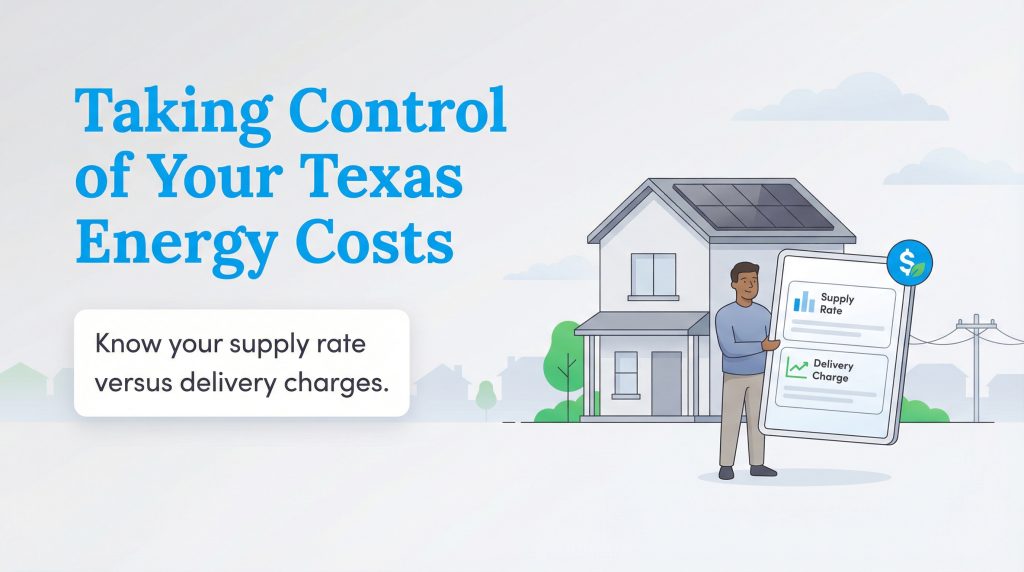
Your electricity bill does not have to feel like a mysterious, uncontrollable monthly expense. Understanding the distinct difference between your chosen retail supply rate and your regulated AEP delivery charge empowers you to make smarter, more sustainable financial decisions for your home. While you cannot opt out of funding grid maintenance, actively managing your household consumption and securing a competitive energy plan ensures you never pay a penny more than necessary for your family’s comfort.
Frequently Asked Questions About AEP Texas Delivery Charges
Can I opt out of AEP Texas delivery charges?
Can switching providers lower my AEP Texas delivery charge?
How do I know whether I am in AEP Texas North or AEP Texas Central?
How often do AEP delivery rates change?
What happens if I experience a power outage at my home?
Why is my AEP delivery charge sometimes higher than my energy charge?
Is a TDU the same thing as a TDSP?
About the Author

LaLeesha has a Masters degree in English and enjoys writing whenever she has the chance. She is passionate about gardening, reducing her carbon footprint, and protecting the environment.