

Recycle your real Christmas tree through an approved local program, and check separate rules for artificial or flocked trees
Key Takeaways
- Check your local utility schedule early: Your city or hauler may offer seasonal tree collection, year-round yard-waste service, or designated drop-off sites.
- Put pine needles to work in your yard: Untreated real evergreens make an eco-conscious alternative to store-bought mulch, helping you insulate garden beds or create habitat cover.
- Keep artificial and flocked trees out of the recycling bin: Many tree-recycling programs don’t accept flocked or artificial trees, so you’ll likely need to schedule a bulky waste pickup or donate intact fake trees.
To recycle a real Christmas tree, remove all decorations, lights, and the stand, then check your city or hauler’s current collection or drop-off rules. Dates, size limits, and flocked-tree policies vary by location. If you’ve recently moved, we’ll help you find the right instructions, compare reuse options, and handle an artificial tree that’s no longer usable.
Comparing Christmas Tree Disposal and Recycling Options
Figuring out what to do with an old Christmas tree starts with comparing the services available in your zip code. Whether you want the fastest way to get a brittle evergreen off your property or hope to put those fragrant branches to work in your own backyard, your ideal path depends on your tree type, budget, and local utility rules.
| Disposal or Recycling Method | Best For | Typical Cost | Prep Required |
|---|---|---|---|
| Municipal Curbside Pickup | Fast, hands-off disposal | Varies by local hauler | Remove all decor; check local rules for size limits |
| County Drop-Off Recycling Center | Renters or homeowners who missed curbside pickup dates | Free at many municipal sites | Bare tree; must transport yourself |
| Nonprofit or Scouting Hauling | Busy households wanting charitable convenience | A requested donation or collection fee may apply | Follow organizer’s booking and payment instructions |
| DIY Backyard Mulch and Habitat | Homeowners with gardens, ponds, or acreage | Free | Clip branches or rent a woodchipper |
| Farm or Zoo Donation | Eco-minded locals near agricultural areas | Free | Requires facility pre-approval and must be untreated |
| Bulky Trash Pickup | Flocked trees and broken artificial trees | Varies by local utility | Check bagging requirements for flocked trees; bundle artificial parts |
How to Prepare Your Live Tree Before Taking It Outside
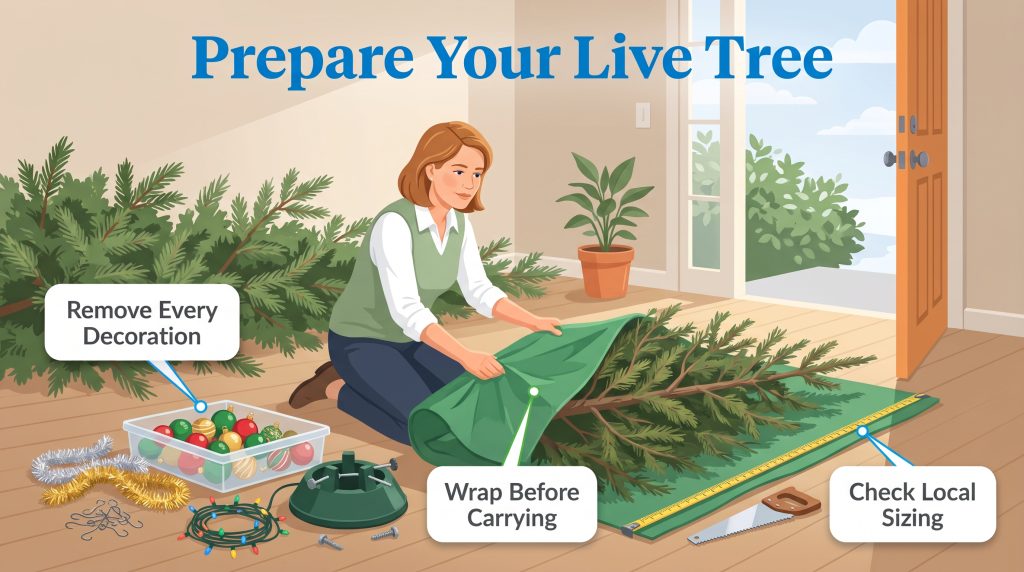
Before you drag your evergreen through the front door, taking a few minutes to prep it properly will keep sap off your floors and prevent your local sanitation crew from leaving an annoying rejection tag on your curb. Knowing how to dispose of a real Christmas tree means stripping it down to 100% natural wood and needles so it doesn’t damage industrial mulching equipment.
Every single strand of tinsel, wire ornament hook, light string, garland, and metal or plastic tree stand must come off. Even a few stray strands of metallic tinsel can wrap around municipal woodchipper blades or contaminate community compost piles. Many tree-recycling programs don’t accept flocked trees (those sprayed with fake snow), so check your local program’s rules before placing one in a collection pile or yard-waste cart. If it isn’t accepted, ask your hauler how to prepare it for trash or bulky-item collection.
To get a brittle tree out the door without leaving a trail of debris, wrap a reusable tarp or an old sheet around the branches and carry it out. For the aftermath inside, sweep up the bulk of the fallen pine needles and follow your vacuum manufacturer’s instructions for any remaining cleanup. Finally, check your city’s sizing rules, as some municipal haulers require taller trees to be sawed in half so they fit inside collection trucks or green yard-waste bins.
Navigating Curbside Pickup and Local Drop-Off Events
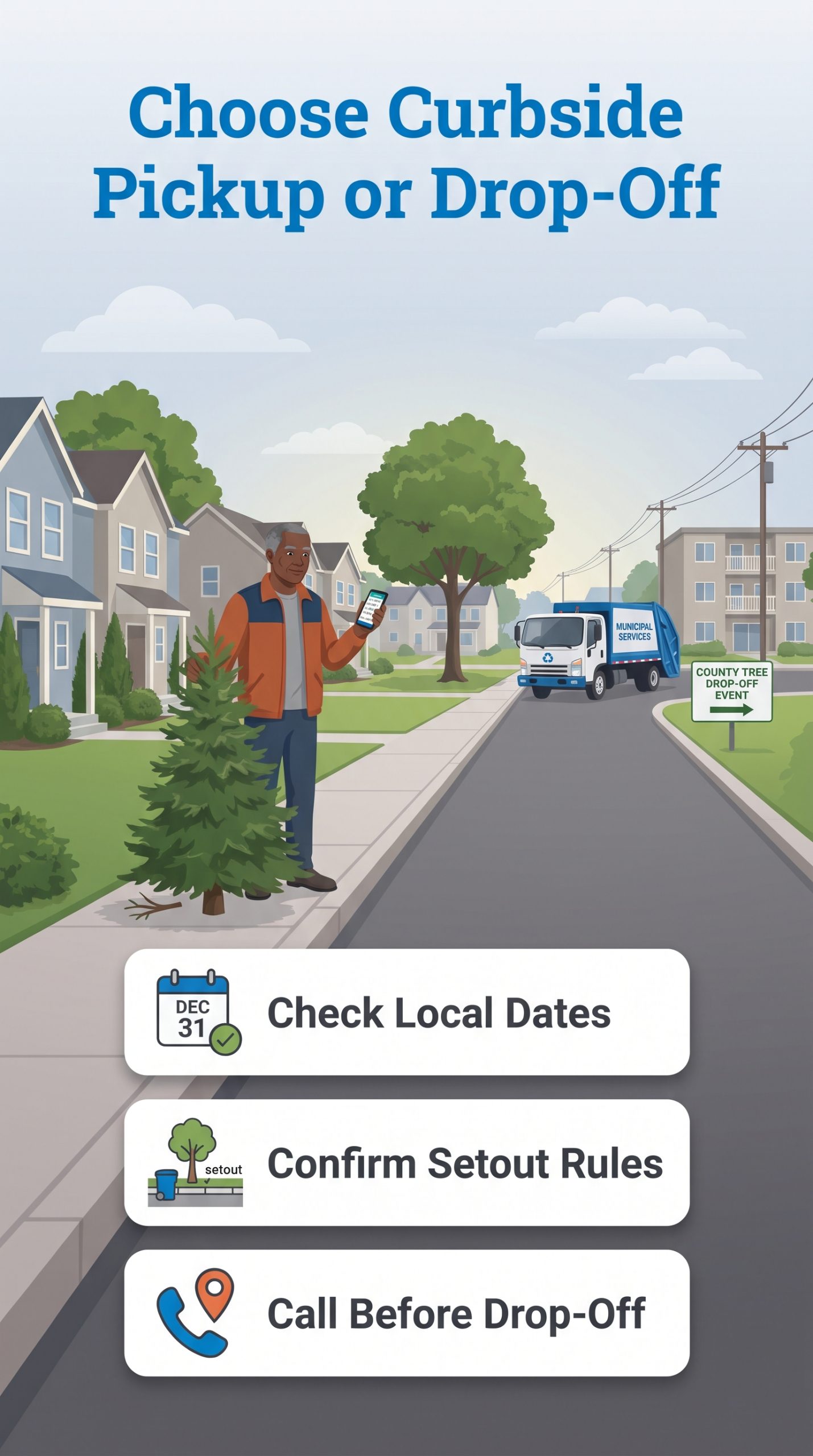
If you recently moved into a new neighborhood, you probably haven’t memorized your local utility’s seasonal quirks yet. Your city or hauler may offer seasonal tree collection, year-round yard-waste service, or designated drop-off sites. Check the current schedule for your address, including fees, tree-size limits, preparation requirements, and whether flocked trees are accepted.
To find the right disposal strategy for your home, follow these five steps:
- Identify whether your building, city, county, or private hauler manages collection.
- Search the official provider’s site for its current Christmas tree instructions.
- Confirm address eligibility, dates, fees, size limits, and flocking rules.
- Check whether collection requires an appointment.
- If the deadline has passed, ask about an approved drop-off or alternative service.
If you rent an apartment or house, check with your property manager before placing trees in shared bins or collection areas.
Checking Your Municipal Waste Utility Schedule
Your first stop should be your city’s municipal solid waste department website or your private hauler portal, such as WM or Republic Services. When setting up your municipal trash and recycling utilities, it pays to bookmark your neighborhood’s holiday collection calendar. Many cities run dedicated tree collection routes during January on your regular yard-waste or trash day, but exact dates vary by location.
Two local details often catch new homeowners off guard. First, if you miss the whole-tree collection window, some municipalities allow you to chop the branches and trunk into smaller pieces and place them directly inside your green organics or yard-waste cart. Second, if you live in a community with a Homeowners Association (HOA), check the community set-out rules before dragging your tree to the street, as some HOAs have strict timelines for curbside placement.
Free County Drop-Off Centers and Retail Events
What if you live in an apartment complex without curbside yard-waste service, or you love keeping your holiday lights glowing past mid-January? Many county parks departments and municipal sanitation authorities open drop-off mulch sites. Seasonal deadlines vary, so check your local schedule before loading up your car.
Some hardware store locations partner with local organizations to host community drop-off events in early January, though you should always call your local store first since participation varies by city. To find verified drop-off locations near you, plug “Christmas trees” and your zip code into Earth911’s Recycling Search Database.
Nonprofit Pickups and Local Farm Donations
If you don’t want to haul a sticky pine tree inside your car, community groups and local farms offer two high-impact alternatives:
- Youth and Nonprofit Hauling: Local nonprofits, such as Scouting America troops or high school athletic clubs, frequently offer porch-side tree pickup during January. A requested donation or collection fee may apply. You simply register online and follow the organizer’s booking and payment instructions to let volunteers haul the tree to the county chipper.
- Donating to Local Farms and Zoos: Some farms and zoos accept Christmas trees for approved enrichment or other uses. Contact the organization before visiting, and ask which tree species and treatment histories it accepts. Don’t feed animals or leave trees at a facility without permission.
Five Ways to Reuse a Christmas Tree at Home
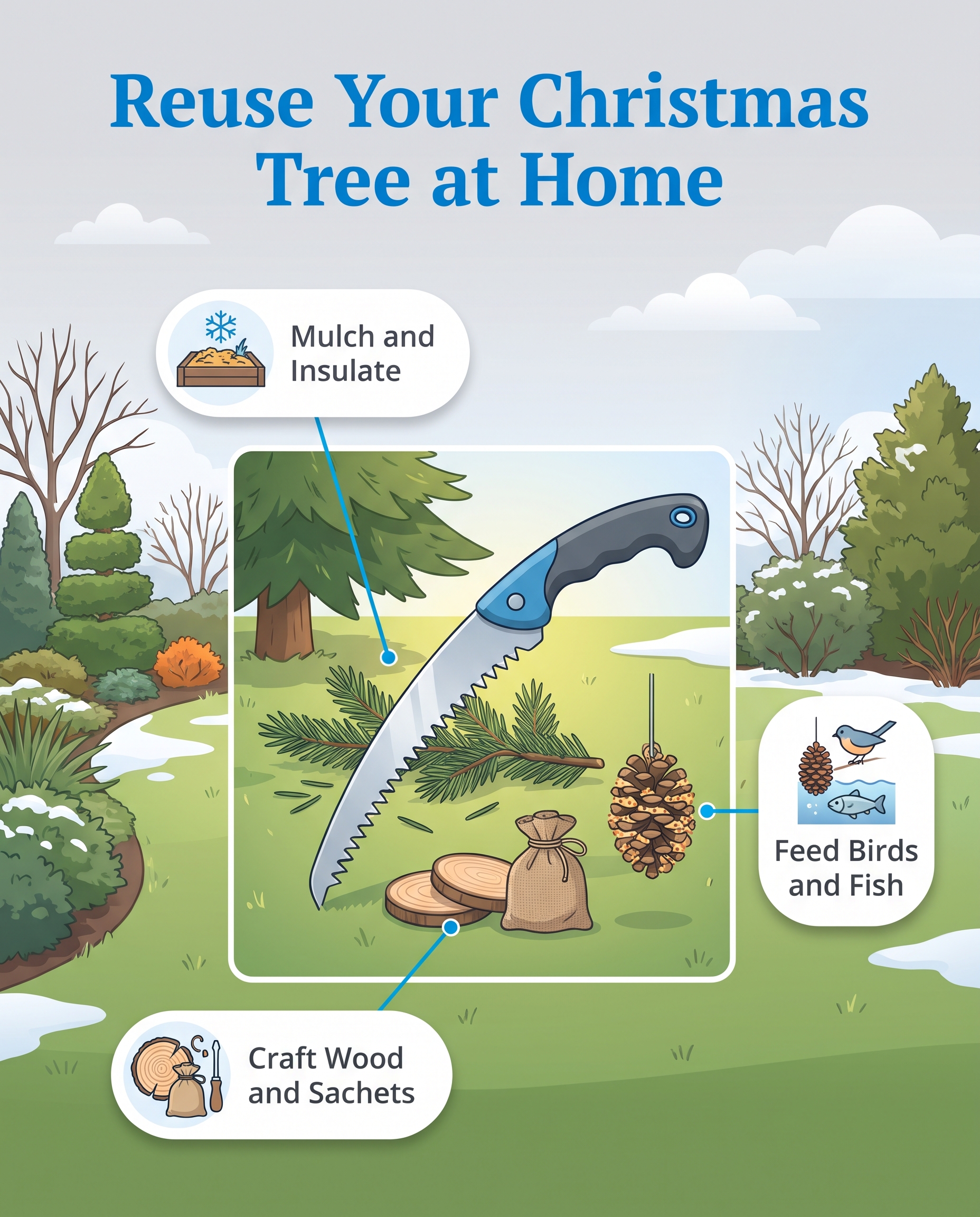
If you have a yard or garden, keeping your evergreen on your property is a zero-transportation, environmentally mindful choice. Looking into ways to reuse a Christmas tree at home also raises a common question for gardeners: can you compost a Christmas tree? While evergreen wood and needles are completely biodegradable, woody material breaks down slowly and smaller pieces decompose faster. To speed up the process and put your tree to work right away, try one of these five backyard projects:
- Chip It Into Nutrient-Rich Mulch: Needles and chipped branches can serve as mulch, helping retain moisture and suppress weeds. Don’t rely on pine needles to change your soil’s pH. Community chipping or professional services are safer default options than renting a woodchipper yourself. For more tips on balancing carbon-rich woodchips with nitrogen in your yard, check out the U.S. Environmental Protection Agency’s composting at home guide.
- Insulate Perennials With Evergreen Boughs: Use pruning saws to remove flat evergreen branches and lay them directly over your garden beds. The thick needles trap insulating air pockets, protecting perennial roots and winter vegetables from frost heaves and freezing winds.
- Create a Backyard Bird Sanctuary: Prop the bare tree up in a sheltered corner of your yard, staking the trunk so winter gusts don’t knock it over. String the branches with pinecones rolled in peanut butter and birdseed, fresh orange slices, and suet cakes to give songbirds safe cover from winter predators.
- Sink It as a Pond Fish Feeder: If you own a private pond or lake, weighting an untreated tree with cinderblocks and sinking it into shallow water creates an instant underwater refuge. Algae and aquatic insects quickly colonize the submerged branches, providing a thriving feeding ground and shelter for juvenile fish. Contact your local fisheries or environmental agency before placing trees in the water to ensure you comply with environmental regulations.
- Craft Rustic Coasters and Scent Sachets: Saw the bottom of the trunk into one-inch discs and sand them smooth to create natural wooden coasters or garden path rounds. Before tossing the branches, strip aromatic needles into small burlap bags to tuck inside closets and gym bags as natural scent fresheners.
Heads Up
Never burn your Christmas tree in an indoor fireplace or wood stove. Evergreen trees contain high levels of flammable terpenes and sap that burn quickly, throw dangerous sparks, and coat your chimney flue with sticky creosote.
How to Recycle an Artificial Christmas Tree (And Flocked Trees)
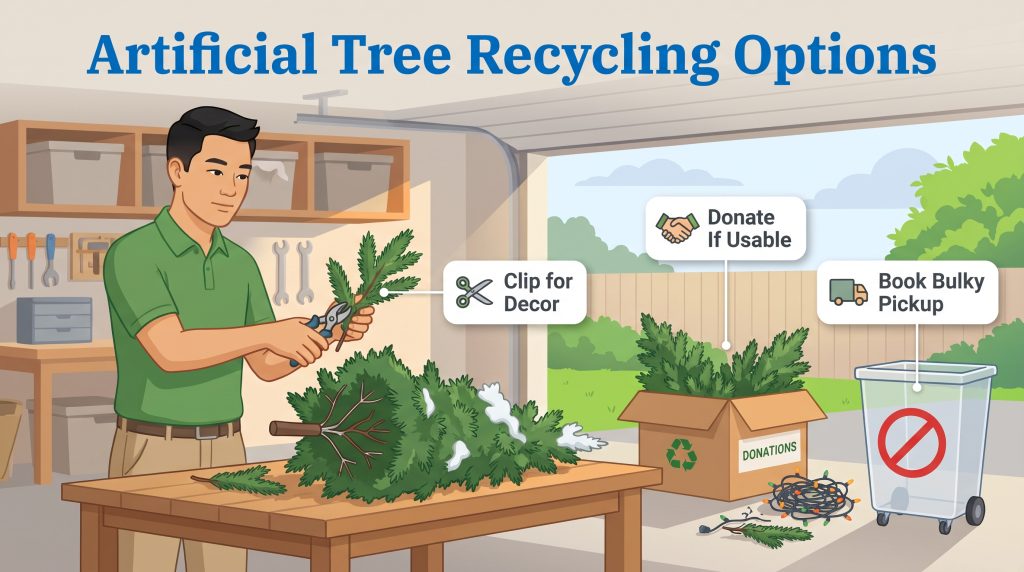
Figuring out how to recycle an artificial Christmas tree is trickier than handling a live pine, largely because of how fake trees are manufactured. Most artificial evergreens commonly combine plastics and metal. Because municipal Materials Recovery Facilities (MRFs) cannot separate those bonded plastic needles from the metal branches, don’t put an artificial tree in your curbside recycling cart unless your program explicitly accepts it.
Instead of tossing a fake tree into your recycling cart and risking a municipal fine, use one of these three practical disposal pathways:
- Donate Intact Artificial Trees: If your tree still looks full and sturdy (even if the pre-lit bulbs have burned out), keep it out of the landfill by donating it to Goodwill, The Salvation Army, a Habitat for Humanity ReStore, local schools, community theaters, or a neighborhood “Buy Nothing” group. Acceptance depends on condition, storage space, and location, so always call ahead to confirm they can take your donation.
- Upcycle Branches Into Holiday Decor: Before throwing out a broken or wobbly fake tree, use wire cutters to snip off the best-looking branches. You can twist those durable wire boughs into evergreen front-door wreaths, mailbox swags, or mantel garlands for future holiday decorating.
- Schedule a Municipal Bulky Waste Pickup: If an artificial tree is shedding brittle plastic everywhere, contact your trash utility to schedule a large-item or bulky waste pickup. If you have a flocked tree, check with your local program about bagging requirements and whether it needs to be processed as regular trash.
Eco Edge
Did your string lights burn out for good? Don’t toss them in your curbside recycling bin, where cords tangle around sorting machinery (a problem waste pros call “tanglers”). Instead, check with local hardware stores to see if they offer seasonal collection bins for broken holiday string lights — but always call ahead to confirm participation before making a trip — or mail them to a specialty copper-and-plastic recycler.
Making Post-Holiday Cleanup Simple and Sustainable
Saying goodbye to your holiday decor doesn’t have to mean sending another bulky item to the local landfill. Whether you set a phone reminder for your neighborhood’s early-January curbside pickup, drop your evergreen at a county mulch-fest, or turn those fragrant boughs into winter garden insulation, giving your tree a second life is one of the easiest eco-conscious habits you can build in your home. Take two minutes today to bookmark your local waste utility’s holiday schedule so this January’s takedown is easier to plan.
Frequently Asked Questions About How to Recycle a Christmas Tree
Can I Cut Up My Christmas Tree and Put It in My Regular Yard Waste Bin?
Why Are Flocked Christmas Trees Often Excluded From Recycling?
How Late Into January Do Cities Pick Up Christmas Trees?
Is It More Eco-Friendly to Buy a Real Christmas Tree or Keep an Artificial One?
Can I Leave My Christmas Tree in the Woods or a Public Park to Decompose?
About the Author

David has been an integral part of some of the biggest utility sites on the internet, including InMyArea.com, HighSpeedInternet.com, BroadbandNow.com, and U.S. News. He brings over 15 years of experience writing about, compiling and analyzing utility data.

LaLeesha has a Masters degree in English and enjoys writing whenever she has the chance. She is passionate about gardening, reducing her carbon footprint, and protecting the environment. She also recently served as President of the Board for City Sprouts (a community garden).